




SPACE October 2026 (No. 707)
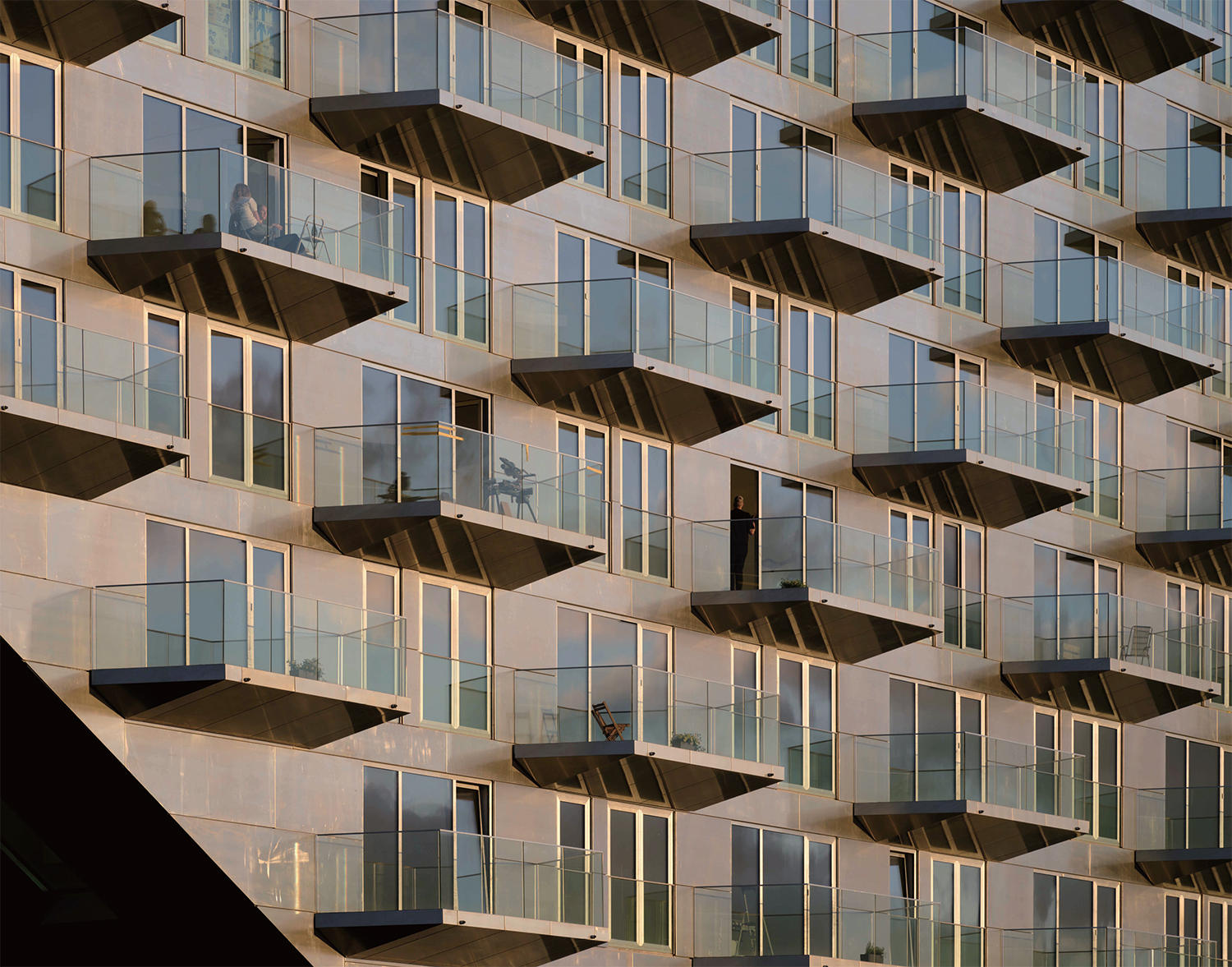
Sluishuis Residences (2022) ©Ossip van Duivenbode
Neoliberal Affirmativity
BIG is one of the most innovative and influential architectural practices of our time. While accommodating building codes, regulations, budget constraints, and the demands of developers and clients, BIG turns the forces of these restrictions and demands to its advantage, like a judoka, transforming them into creative proposals. The idea encapsulated in ‘Yes Is More’ – that the avant-garde need not simply negate or resist the existing world, but can remain affirmative while generating new ideas – runs throughout BIG’s work. This idea also aligns with the logic of neoliberalism. In the ideological era of the Cold War, certain things were forbidden, and the negation of the other served as an affirmation of the self; in a world smoothed over by neoliberal capital, however, there is no longer any room for negation, and boundless affirmation has taken its place.
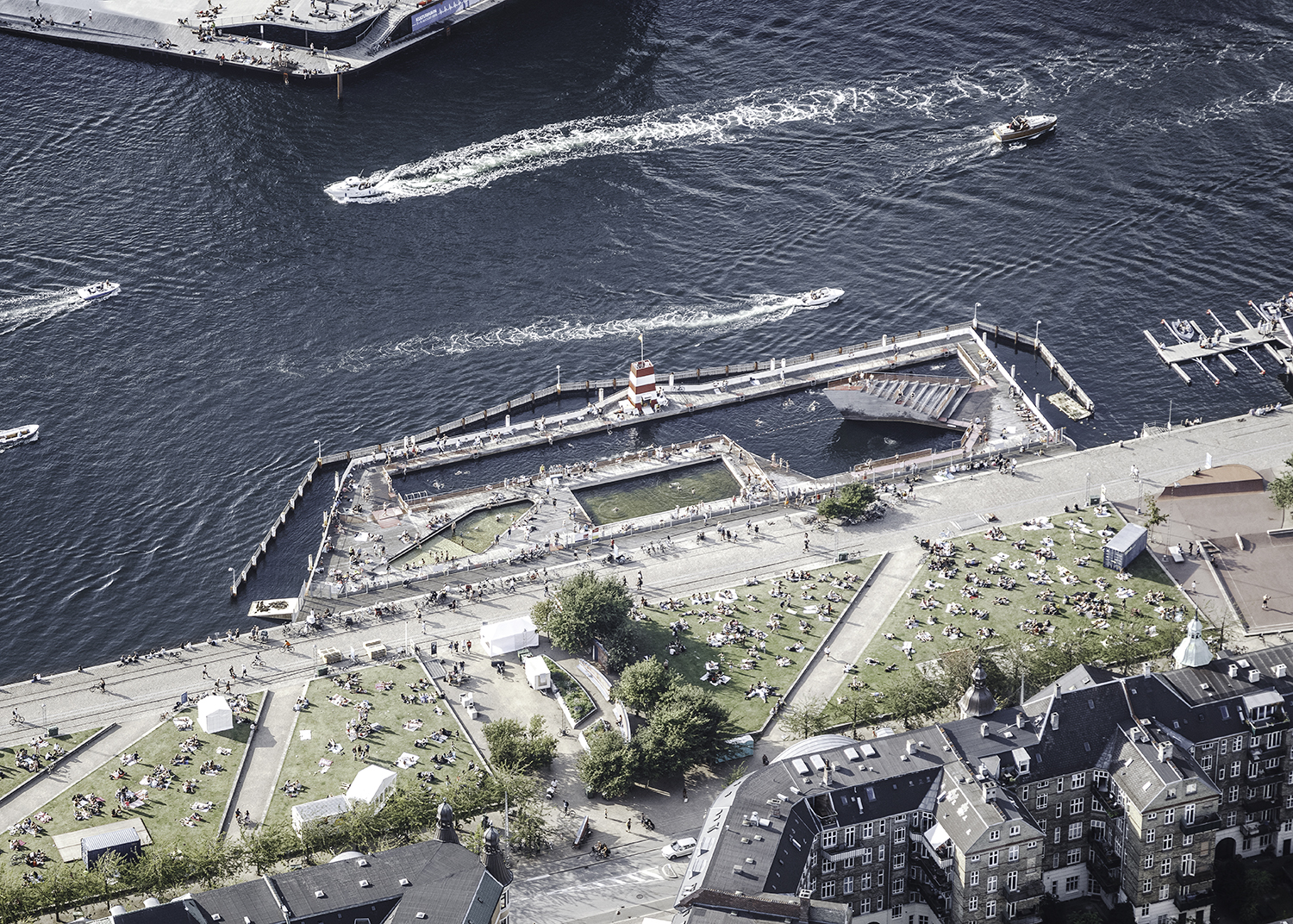
Copenhagen Harbor Bath (2002) ©Rasmus Hjortshøj – COAST
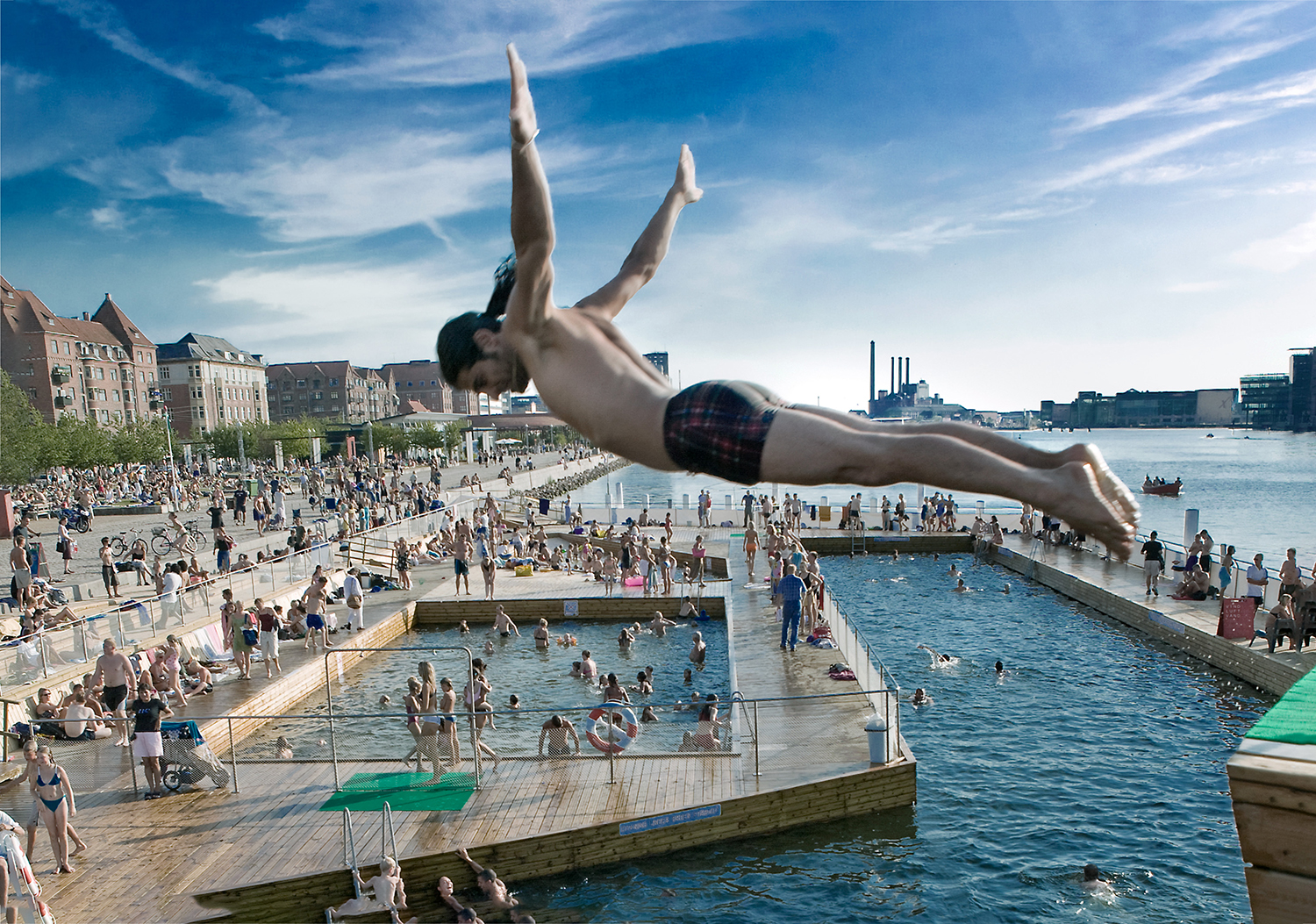
Copenhagen Harbor Bath ©Claus Logstrup
The Logic of the Oxymoron
Bjarke Ingels describes his architecture through an oxymoron (the idea that seemingly contradictory things can in fact become one). Ski slope + power plant = CopenHill; Robert Moses + Jane Jacobs = The BIG U; New York skyscraper + European courtyard building = VIA 57 West; hedonistic sustainability; and pragmatic utopia—all follow the logic of the oxymoron. In explaining the Danish Maritime Museum, Bjarke’s phrase ‘To be and not to be’ aptly describes his conception of the oxymoron. It is a play on Hamlet’s words, ‘To be or not to be’. It succinctly expresses an inclusive affirmativity rather than an exclusive either-or choice.In BIG’s work, two opposing elements are merged into one, and the opposition is thereby reconciled and dissolved. Philosophical concepts that have explored opposing elements in depth include Hegel’s dialectic and Cusanus’s ‘coincidence of opposites’. (These concepts remain open to interpretation as to whether the opposing elements disappear or the opposition continues to persist.) The juxtaposition of opposing elements is a method frequently employed in the work of De Stijl, Le Corbusier, and Rem Koolhaas, but it varies depending on how it is used. Koolhaas’s OMA also composes its projects through contrasting elements such as void/solid, nature/artifice, and heterogeneity/homogeneity, but these oppositions are never completely reconciled and remain in a state of tension. OMA corresponds to a Cold War system in which opposition is maintained, while BIG aligns with a neoliberal system of thought in which opposition disappears.
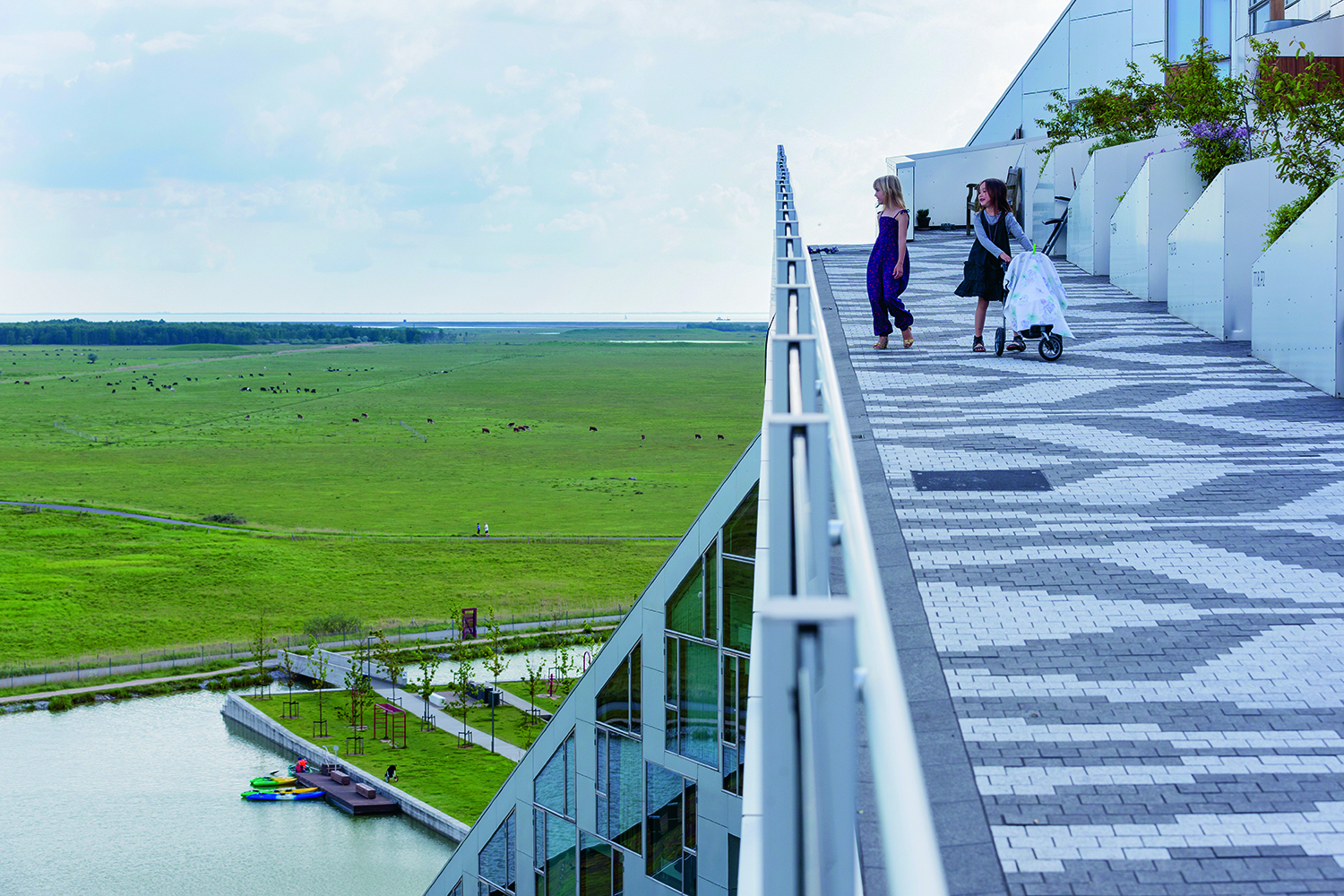
8 House (2010) ©Iwan Baan
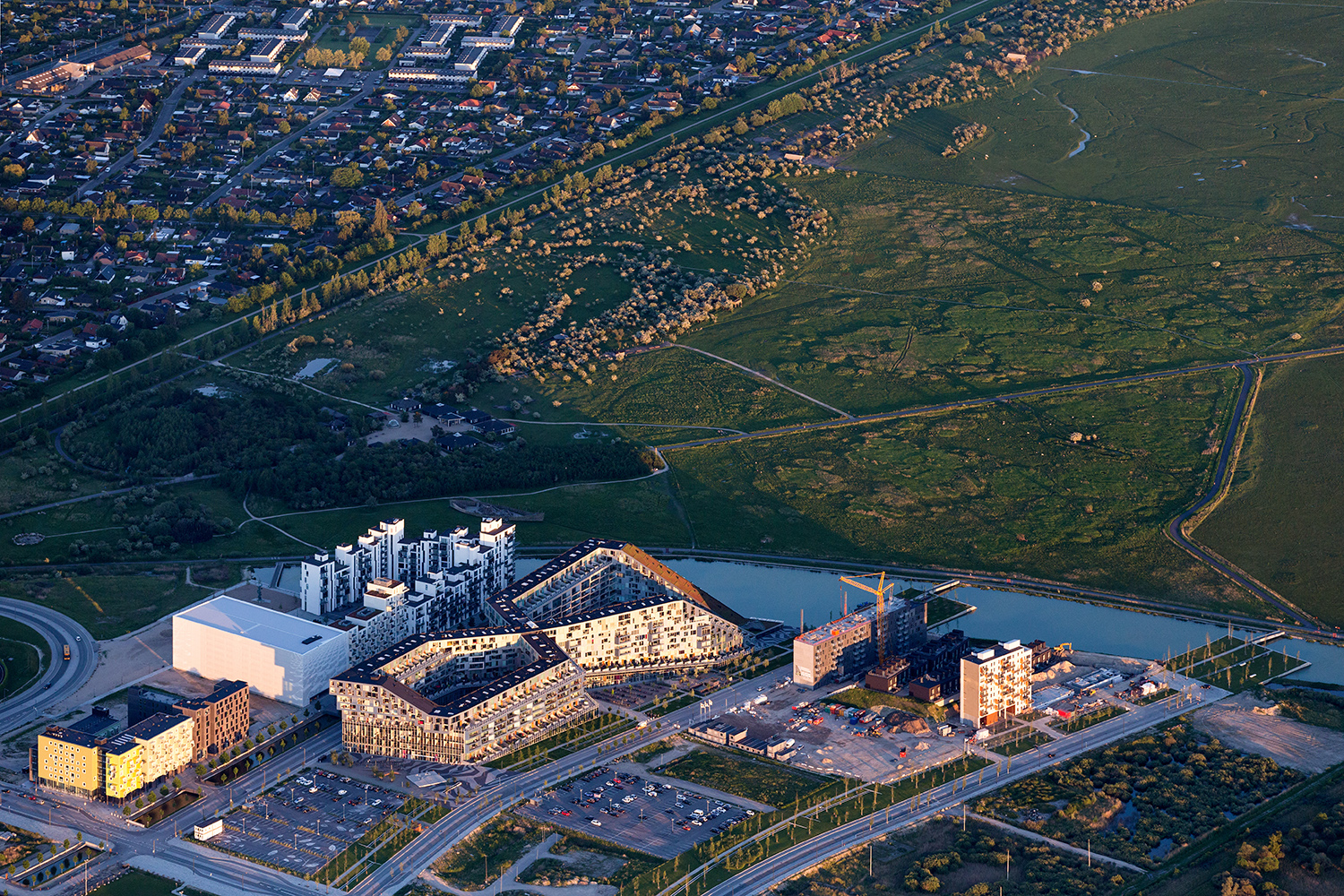
8 House ©Iwan Baan
Hedonistic Sustainability
Another theme that runs throughout BIG’s work is hedonistic sustainability. Rooted in a Nordic logic, it is a strategy Bjarke adopted to persuade both clients and theorists as the world entered an era of global climate crisis. Copenhagen Harbor Bath marks the starting point of hedonistic sustainability, while CopenHill is its representative work, applying the logic of the oxymoron. In Plan for the Planet, BIG explores sustainability on a planetary scale through a data-driven method similar to that of MVRDV.The term ‘hedonistic’ can be traced philosophically as far back as the Epicurean school, but its architectural origins can be found in Koolhaas. Koolhaas uses the word in the famous scene of the oyster-eating boxer in Delirious New York (1978), as well as in ‘Exodus, or the Voluntary Prisoners of Architecture’ (1972). Challenging the architectural virtue that architecture should be ascetic, the concept originated in the social programmes Koolhaas discovered in Ivan Leonidov, which coordinated people of different genders, ages, and classes. Bjarke interprets this concept through a Nordic sense of enjoyment, turning it into something enjoyable. If Koolhaas’s pleasure is a form of jouissance accompanied by pain and a price to pay, shadowed by social darkness and suffering, Bjarke’s pleasure is endlessly bright—a joy that stands in contrast to pain.
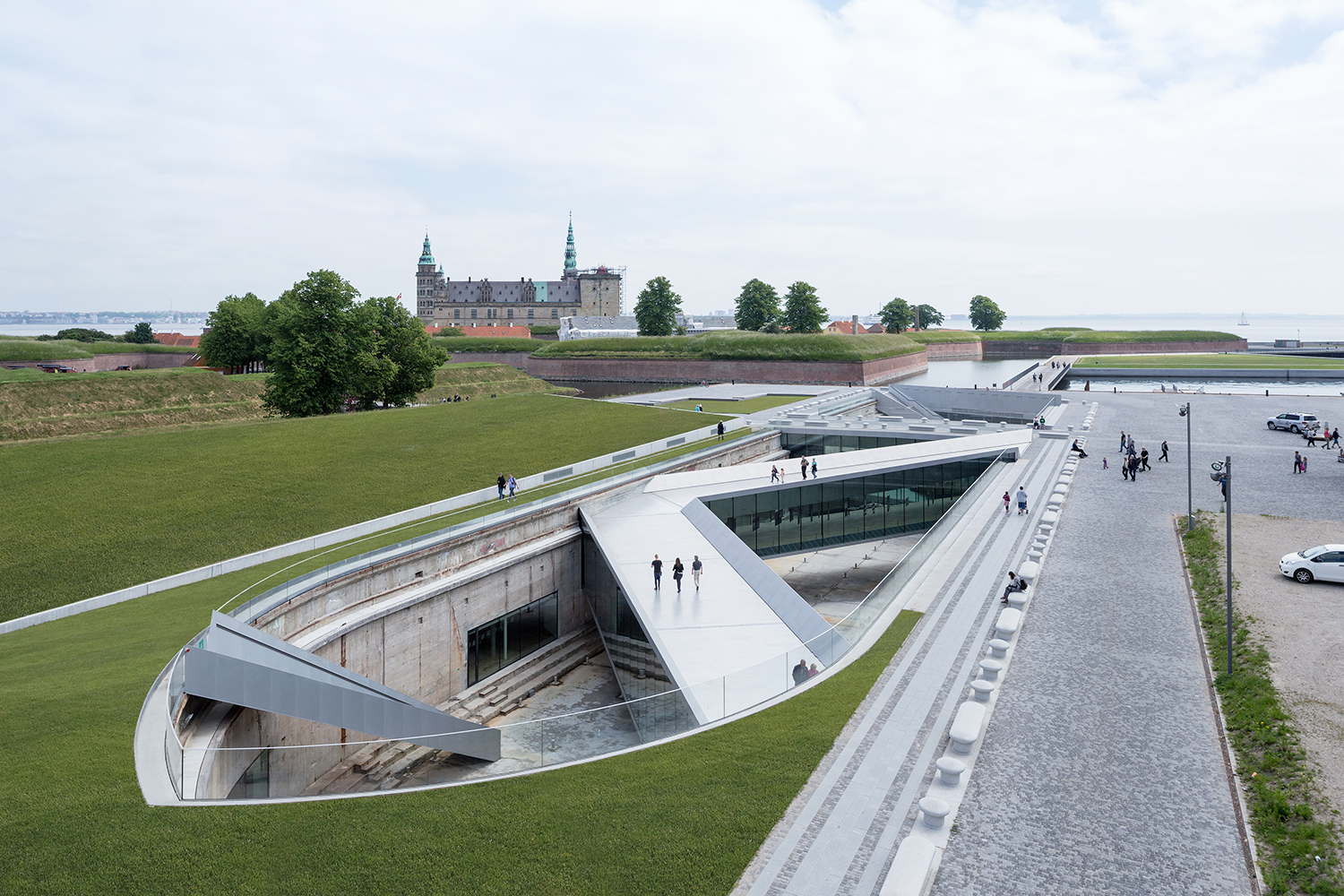
Danish Maritime Museum (2013) ©Iwan Baan
Evolution, Natural Selection, and the Logic of Life
Darwin’s theory of evolution, which Bjarke repeatedly invokes when explaining his architecture, was also employed by Foreign Office Architects (FOA), an architectural group founded by former OMA architects Alejandro Zaera-Polo and Farshid Moussavi. In its monograph Phylogenesis (2003), FOA explains its entire body of projects through an evolutionary tree. Bjarke describes his design process as one in which, among numerous variations, or design proposals, an individual or alternative adapted through natural selection to an environment of regulations, constraints, and budgets ultimately survives to become the final scheme. This evolutionary account can be understood as part of the biological paradigm that emerged in the late twentieth century. It can also be seen as contemporaneous with poststructuralist thought, which places greater emphasis on the influence of the environment than on the will of the subject.
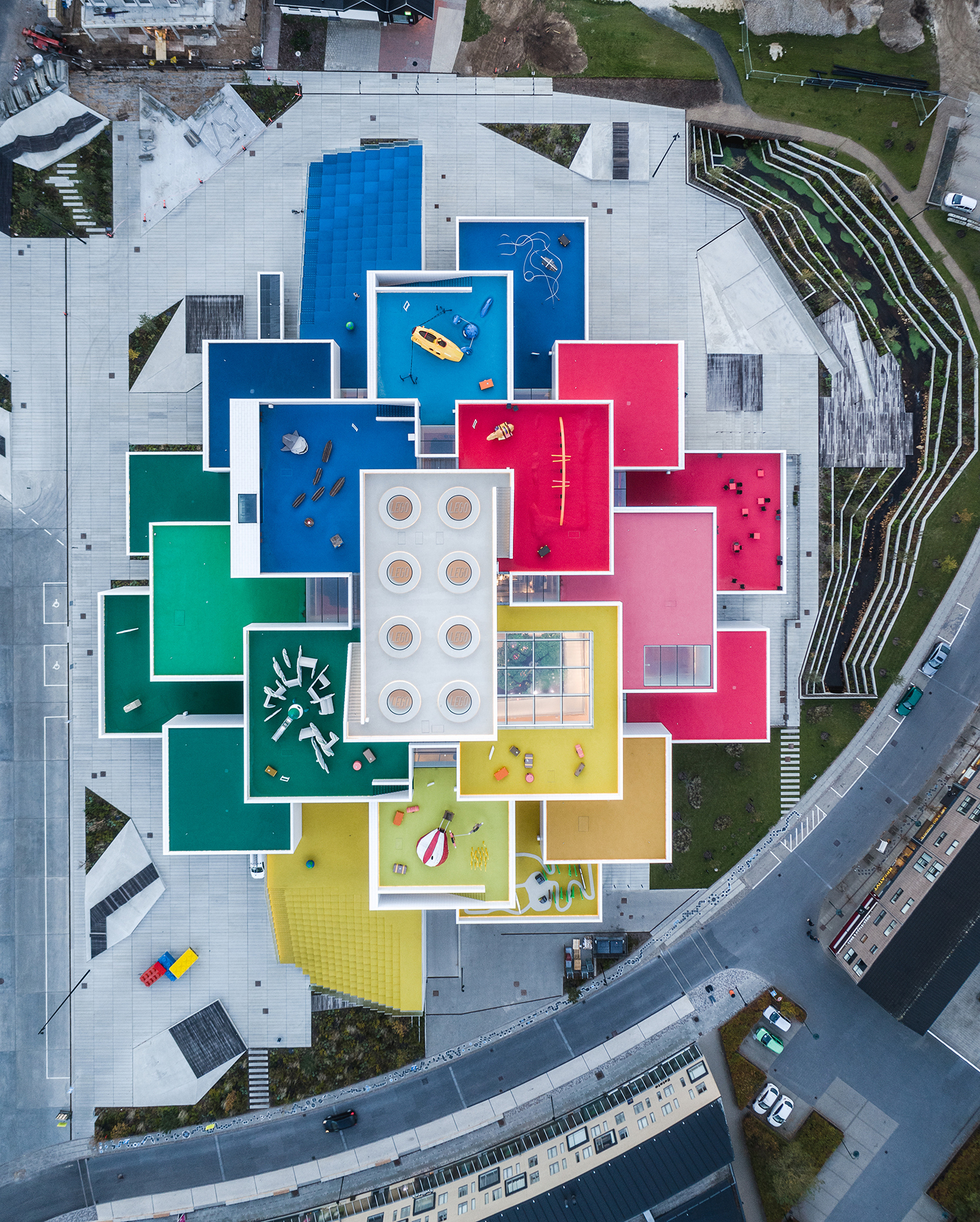
LEGO Brand House (2017) ©Rasmus Hjortshøj – COAST
Metabolism, Megastructure, Pixels, and LEGO
Another important aspect of BIG is its continuation of the traditions of Metabolism and megastructure. Many of BIG’s projects are composed of pixels. This is why so many of its buildings evoke Moshe Safdie’s Habitat 67.Where did BIG’s concept of the pixel originate? Its origins can be found in LEGO. If Le Corbusier and Wright learned the principles of geometric composition by playing with Fröbel toys, Bjarke, as a Dane, grew up playing with LEGO. The method of assembling a whole from combinations of pixels resembles the logic of LEGO. While OMA is connected less to the traditions of pixels and Metabolism than to the Dutch tradition of constructing artificial ground, BIG’s architecture, inheriting the pixel-based character of LEGO, is naturally linked to Metabolism, megastructure, and Structuralist architecture.(...)
