
SPACE October 2026 (No. 707)
Park Kyong (1955‒) served as Co-Artistic Director of the Korean Pavilion at the 2023 Venice Biennale. It is less widely known that his career trajectory began more than forty years ago at StoreFront for Art and Architecture (hereinafter StoreFront).▼1 StoreFront, the alternative exhibition space in New York that Park, who trained in architecture, founded in his late twenties and led for sixteen years, was a dynamic laboratory for thinking about the city through architecture and raising social issues to the attention of public debate. The exhibitions and projects it presented through multilayered collaborations with architects, artists, and curators from around the world who were then beginning to gain recognition in the 1980s and 1990s came to be seen not as one-off events but as initiatives with wide social impact. In particular, the curatorial methodology Park developed at StoreFront carried into a series of international exhibitions and projects, offering an important way of understanding how architecture can intervene in urban realities and effect change through the medium of exhibitions. Having archived and studied this process, Eunjin Regina Shin (curator) and Yim Dongwoo (Professor, Hongik University) reconstruct the early history of Park and StoreFront in depth, examining the legacy this work has left to the field of architecture and the questions it continues to pose for us today.▼2 Editor
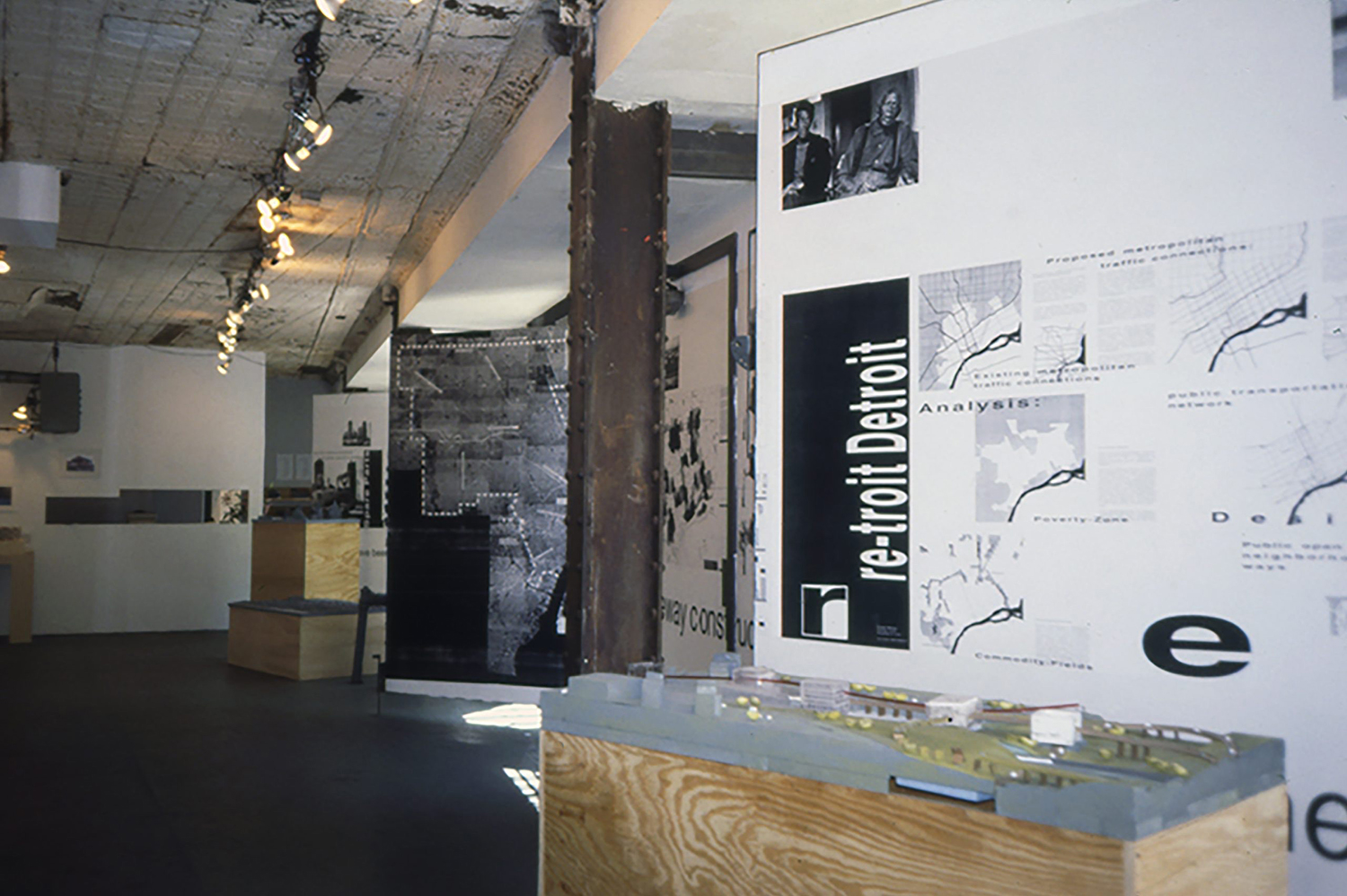
Installation view of ‘Detroit is Everywhere: Post-Urban Landscape’ (1995) at StoreFront for Art and Architecture / Image courtesy of Storefront for Art and Architecture
New York, where StoreFront began in 1982, was a city resistant to straightforward categorisation. The shock of the 1975 fiscal crisis still lingered, and traces remained of a city left neglected as industry and population moved away, while at the same time capital was beginning to flow back into the city, particularly through finance and real estate. This instability also affected the ways in which culture was produced. By the 1980s, alternative spaces in New York such as The Kitchen, Artists Space, and P.S.1 were already experimenting with exhibitions, performances, artistic practices, and encounters outside museums and commercial galleries, while similar alternative activities were also flourishing in the field of architecture, where opportunities for professional practice were limited. IAUS, founded by Peter Eisenman in his thirties, published Oppositions for more than a decade through the 1970s and 1980s, as theory and criticism began to attract attention as forms of alternative practice, while Pamphlet Architecture, launched in 1978 by Steven Holl and William Stout when they were also both in their thirties, was likewise an alternative publication presenting experiments by young architects rarely covered in established magazines or journals. Young Architects Forum, still regarded almost as a gateway for architects in North America, was also established in 1981, at a time when a culture of producing architecture through publishing, exhibitions, lectures, and education was becoming increasingly active in New York, particularly among young architects. Architecture was no longer explained solely as the act of designing and constructing buildings.
StoreFront emerged precisely within this context. In 1982, Park Kyong rented a tiny storefront measuring on Prince Street in Manhattan and founded StoreFront. For its inaugural exhibition, he organised ‘Performance A–Z’ with Robert L. Seltman and Arlene Schloss. Rather than relying on universities, museums, or professional institutions, it was an attempt to create their own space and programmes, and to establish an independent venue where young architects and artists could present their work and exchange ideas. Yet StoreFront soon began to distin...