




SPACE October 2026 (No. 707)
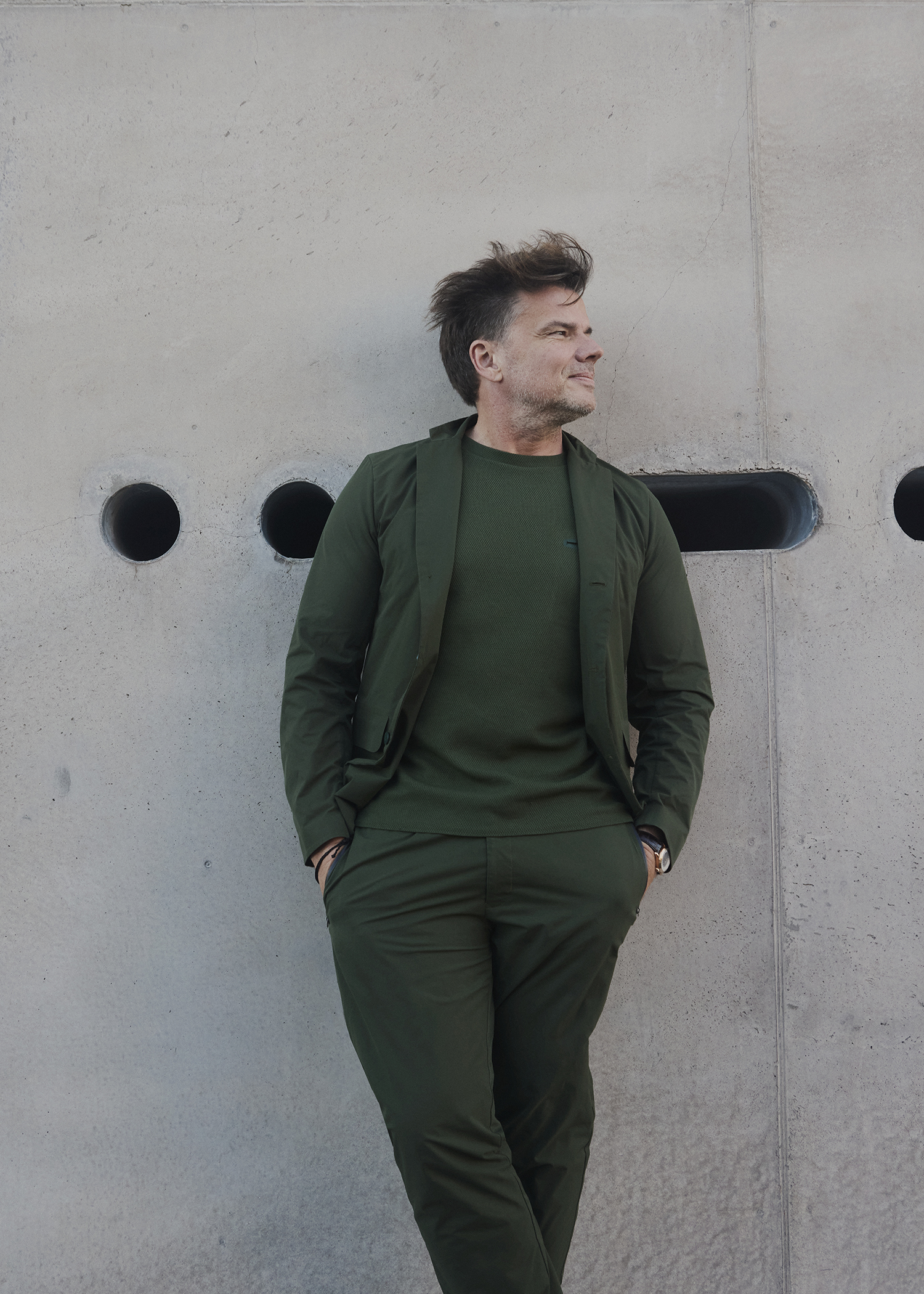
©Claus Troelsgaard
Interview Bjarke Ingels Principal, BIG × Kim Bokyoung
Utopian Pragmatism
SPACE: You’ve said the architect’s job is to make the world a little more like what we encounter in our dreams. What does the world in your dreams look like?
Bjarke Ingels (Bjarke): I’d describe our philosophy of architecture as utopian pragmatism. Utopia is a place so perfect it can only exist in fiction or imagination. Pragmatism, on the other hand, deals with the world as it actually is, with all its irregularities and imperfections. Combine the two and something happens: whenever we design a space or a place, we try to bring that little corner of the world closer to its dream version. The dream is always specific, so our dream world in Seoul is very different from our dream world in Copenhagen, which is different again from our dream worlds in Italy or New York.
SPACE: The idea of an architect who asks the world to meet the one of our dreams sounds almost fantastical, and it seems to be related to your childhood dream of becoming a graphic novelist. What graphic novels, animation, or sci-fi did you love back then?
Bjarke: I didn’t have much access to Asian comics, but I read plenty of European ones – Liberatore, Hugo Pratt, and Milo Manara – as well as Americans like Frank Miller and Alan Moore. I was mostly attracted to the line art.
The beauty of science fiction is that imagining a different world allows you to reflect on our own world and all that you take for granted. Similarly, a great way to understand your own society and your own architecture is to see that the things we take for granted are done completely differently elsewhere. As a Dane, you assume bicycle lanes are everywhere and always have a curb. Go somewhere else, you find bicycles poorly integrated with no level change for the bike lane at all.
SPACE: Do you still return to any of your old favourites? What are you into these days?
Bjarke: I’d like to, but I’ve got two young boys, two and seven, so there isn’t much time left to read for myself. (laugh) But I’m always interested in biographies. My two boys are named Darwin and Leo. I’ve been reading biographies of Charles Darwin and Leonardo da Vinci. It’s interesting to understand the journey that takes people to certain places, and to see that the breakthroughs never come out of the blue. The process is always far more gradual and persistent than one imagines.
Darwin’s theory of evolution through adaptation grew partly out of his interest in geology. We already knew adaptation was possible, from breeding horses or cultivating flowers, but people of the time, including biologists and naturalists, were still thinking in biological time. Because Darwin had started thinking in geological time, he made a conceptual leap that eluded his contemporaries. It’s worth understanding that his leap was more an ‘evolution’ of thinking than a ‘revolution’. Even though that sounds less dramatic, it’s simply a gradual change in how we see things.

©Phaidon
SPACE: You really love Darwin! (laugh) You’ve described BIG as an ‘archive of architectural biodiversity’, drawing on Darwin’s thinking to explain how the office and the design process work. So, where do your own design intentions actually fit into that process?
Bjarke: The first thing you have to do is free yourself from what we might call the standard solution. The problem with the universal style of modernism was this idea that there was a perfect, universal answer to everything. But I think, in reality, the right answer ends up looking very different in different places, because the question is always different. When we understand a place or a space we’re designing for, we try to fall in love with it, even with its imperfections and particularities.
Something doesn’t become a standard by being bad. It becomes a standard by being incredibly good at delivering a certain set of qualities at a certain cost. What we try to do is identify why, in any given case, the standard solution isn’t enough.
SPACE: The projects where you’re actually the client yourself – your home, the decommissi...
