




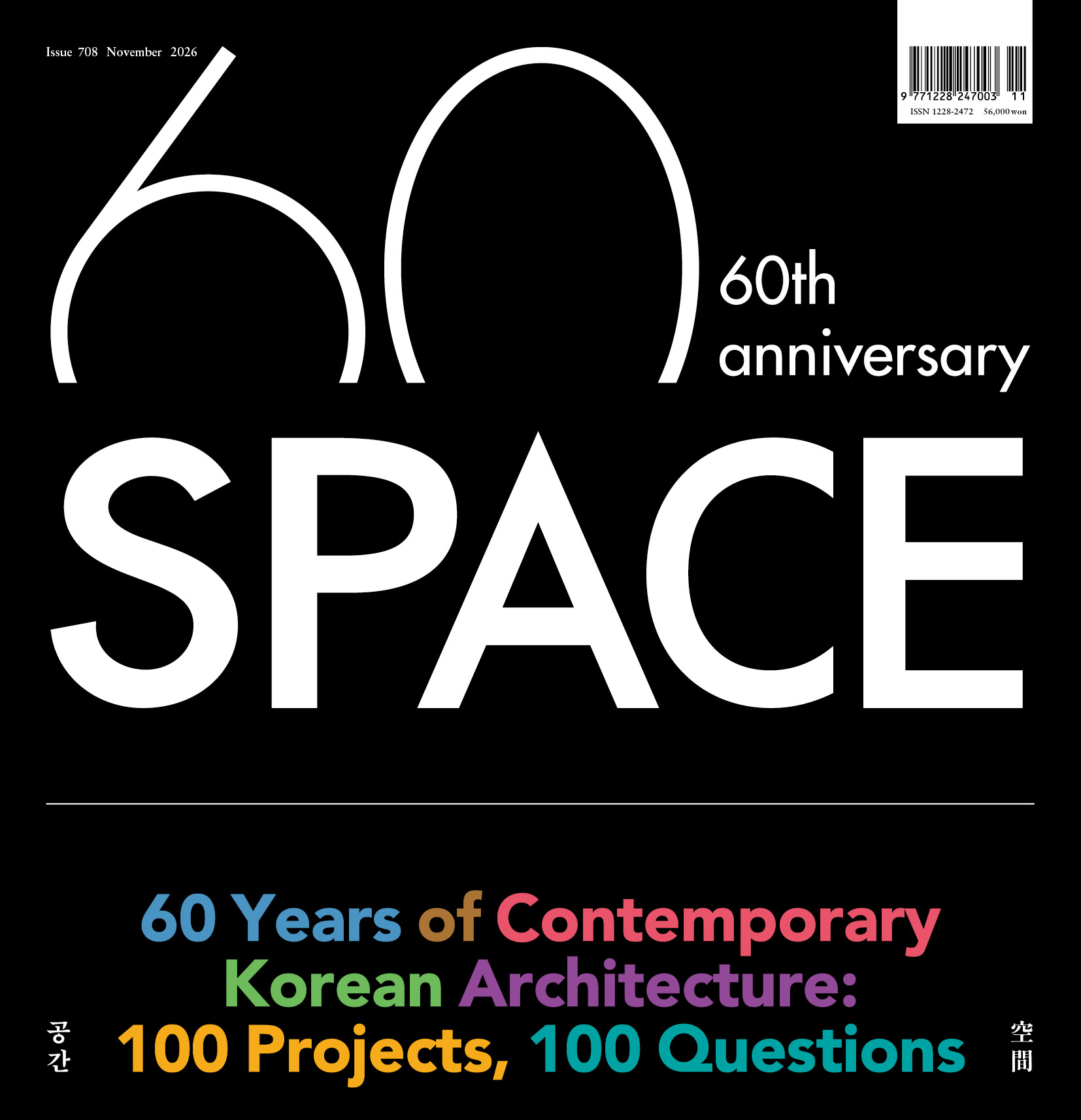
SPACE November 2026 (No. 708)
THEME 6.History and Memory
How Should We Inscribe New Memories on Old Buildings?
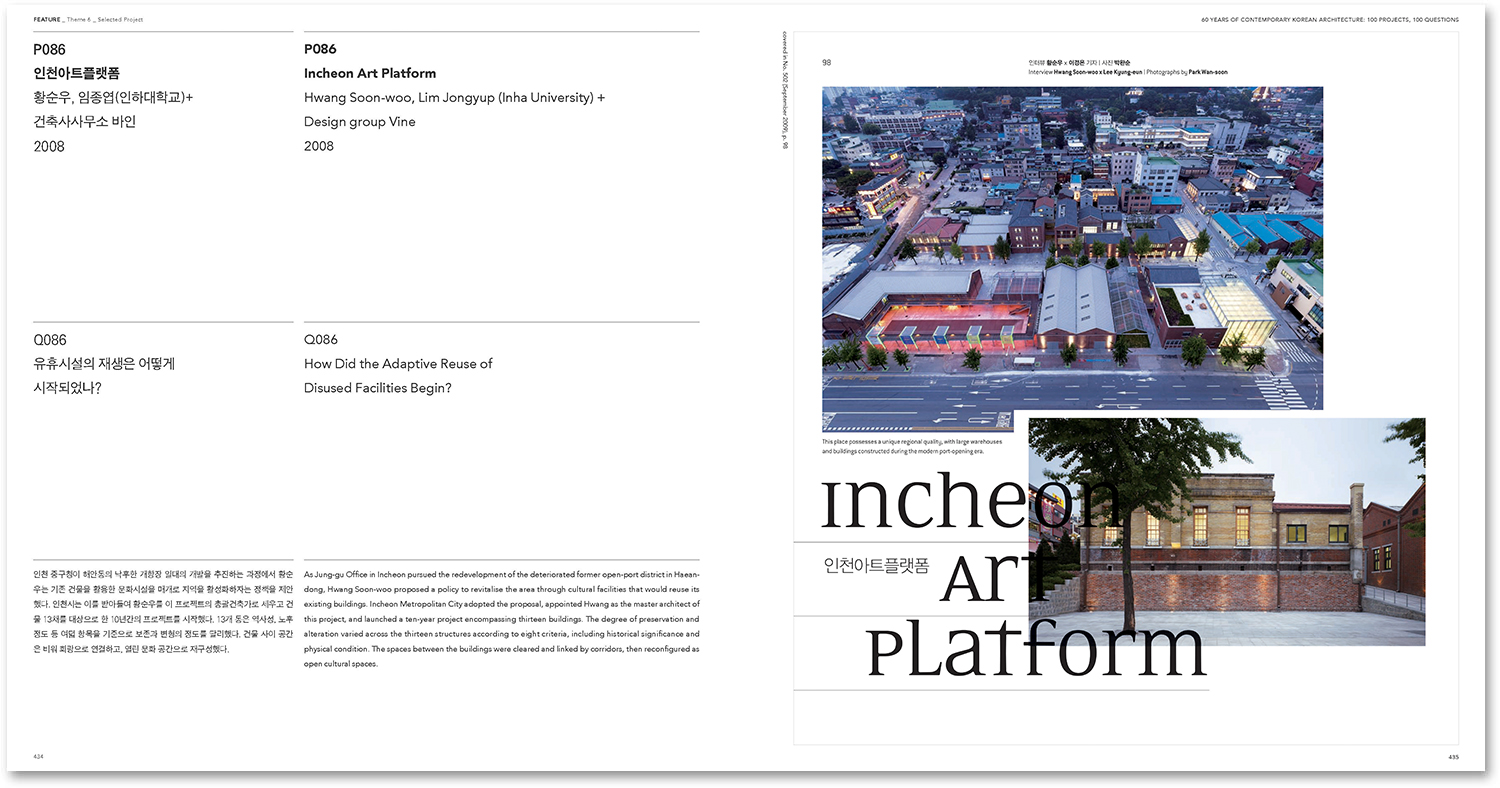
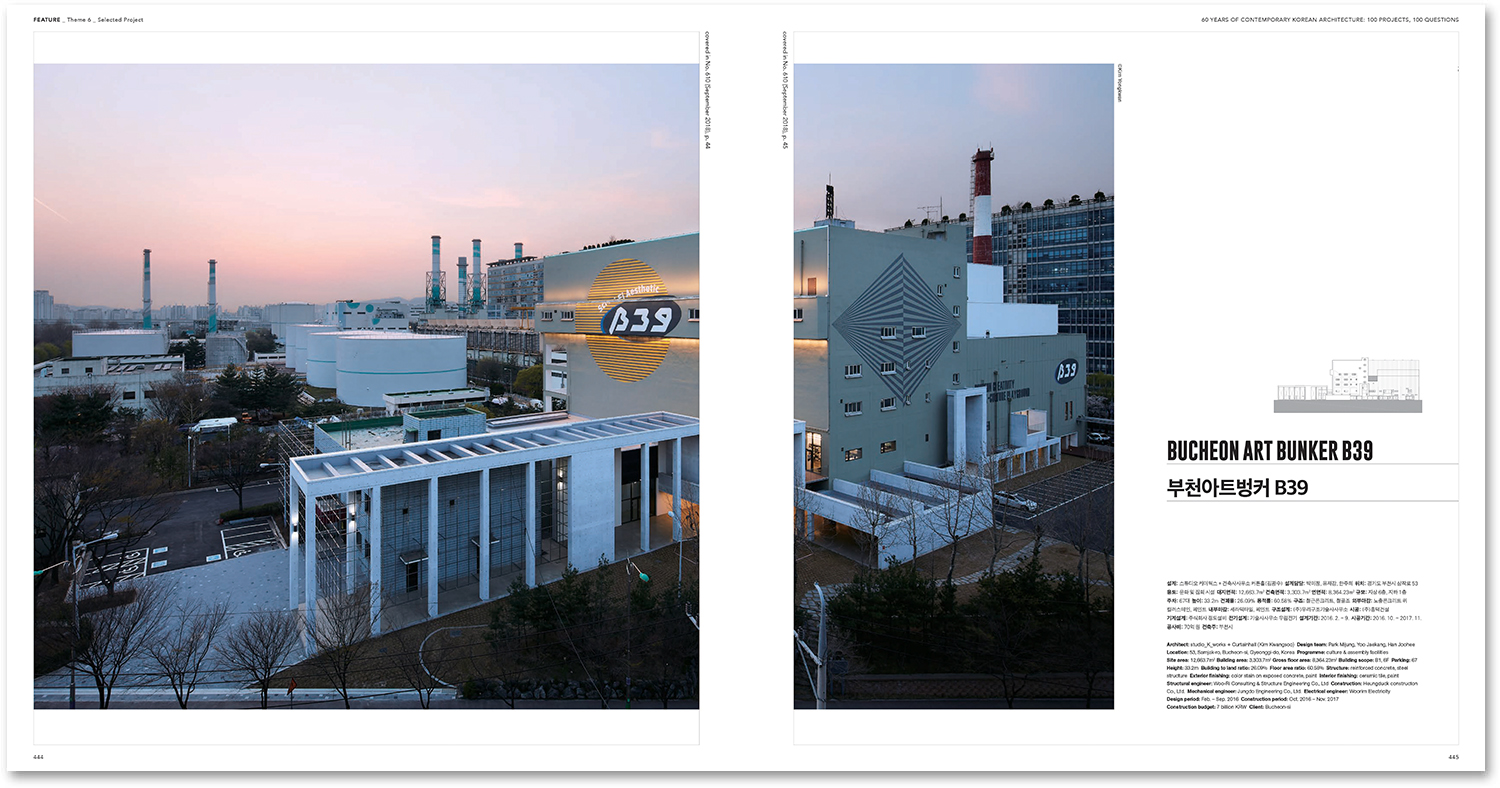
Following Japanese colonial rule and the Korean War, Korea faced the urgent task of rebuilding the nation. Buildings were therefore seen less as structures to be repaired and reused indefinitely than as objects to be built quickly, demolished when necessary, and replaced with new ones. By the 2010s, however, the limits of quantitative expansion driven by new construction had become apparent. As the pace of economic growth also slowed following the global financial crisis in 2008, ‘preservation and regeneration’ emerged as a new focus. The Incheon Art Platform (2008) stands out as an exceptional early example, originating in an architect’s proposal in 1999 to preserve the surrounding area. In 2014, the Ministry of Culture, Sports and Tourism launched a programme to regenerate disused industrial facilities through cultural use. Industrial infrastructure, including incinerators, factories, and warehouses, began to be repurposed as cultural spaces through design competitions. Bucheon Art Bunker B39 (2017) was created through this programme, and the trend continues with projects such as Donghae Crushed Stone Factory Remodeling (2021), selected for the programme in 2019 and again in 2023. Independently of the ministry’s programme, local governments also undertook public projects to turn abandoned facilities into cultural venues, as exemplified by the Yoon Dongju Literature Museum (2012). Similar transformations of industrial facilities into cultural and commercial spaces emerged throughout the private sector as well, including Daelim Changgo (2011) and Seongsu Yeonbang (2019).
In the 2020s, steep increases in construction costs brought on by the pandemic and the war between Russia and Ukraine also began to make renovation and reuse more common for economic reasons. As the Painter N’s House (2024) illustrates, reusing worn, aging buildings that might once have seemed unnecessary to retain, rather than demolishing them, has become a more natural choice. How much of an old building’s memory should be preserved, and in what ways? How can it accommodate new memories? Beyond simply asking why buildings should be reused, it is now time to ask how can they be reused well.
P086 Incheon Art Platform | Q086 How Did the Adaptive Reuse of Disused Facilities Begin? |
P087 Yoon Dongju Literature Museum | Q087 How Does Industrial Infrastructure Become Poetic Space? |
P088 The Museum of War & the Woman’s Rights | Q088 How Does an Ordinary House Become a Space for Memory and Commemoration? |
P089 Bucheon Art Bunker B39 | Q089 How Does an Undesirable Urban Facility Become an Everyday Cultural Space? |
P090 Donghae Crushed Stone Factory Remodeling | Q090 What Are the Synesthetic Possibilities of Landscapes Shaped by Abandoned Industry? |
P091 Painter N’s House | Q091 What Are the Limits and Aesthetic Possibilities of Reuse? |
You can see more information on the SPACE No. November (2026).
0
NO. 708
November 2026
FEATURE
60th aniversary special issue
History and Memory
industrial infrastructure
industrial heritage
regeneration
reuse
remodelling
renovation
Incheon Art Platform
Yoon Dongju Literature Museum
The Museum of War & the Women’s Right
Bucheon Art Bunker B39
Donghae Crushed Stone Factory Remodeling
Painter N’s House