




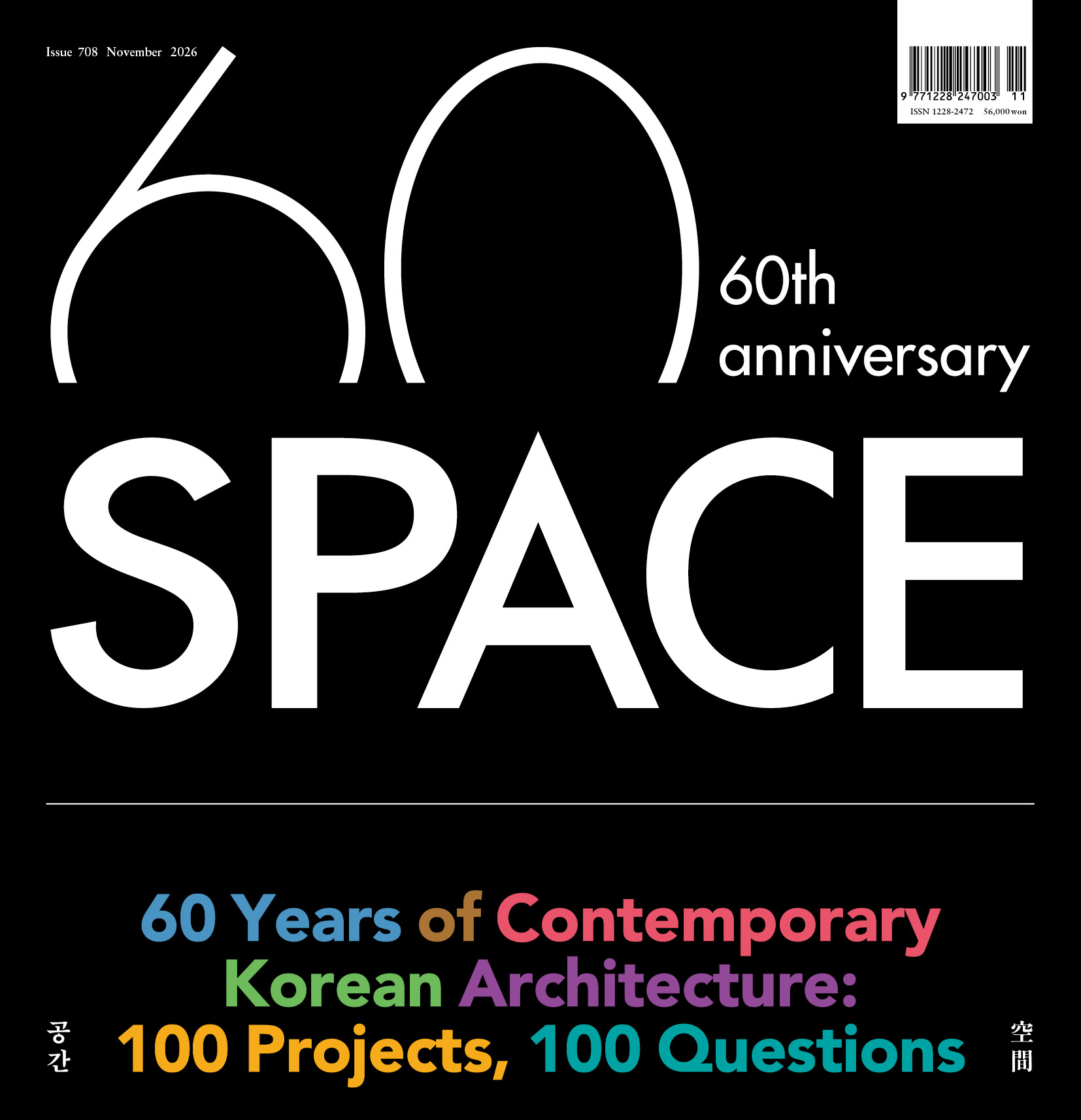
SPACE November 2026 (No. 708)
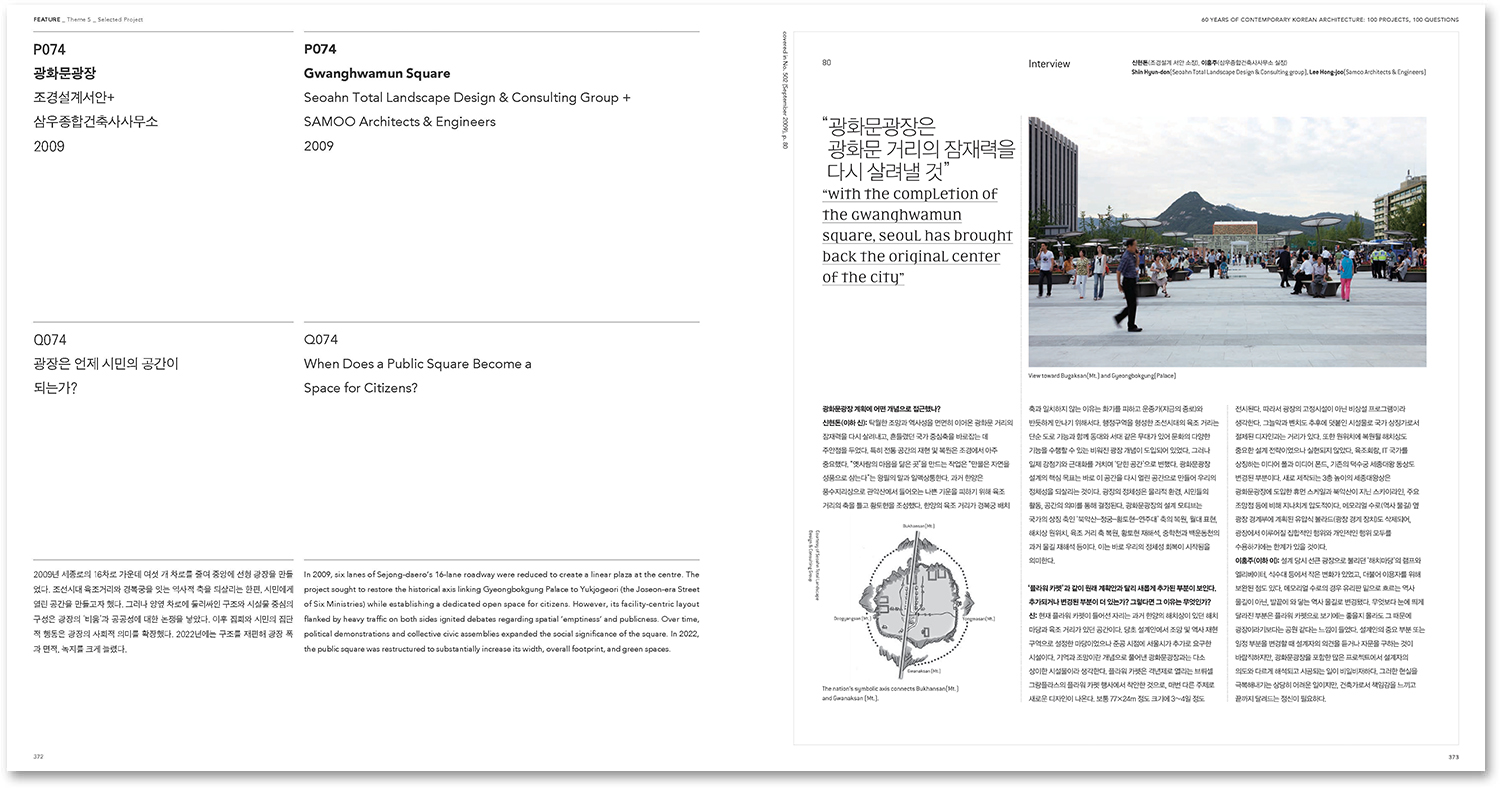
Originating from the ancient Greek agora and the Roman forum, the ‘public square (gwangjang)’ is defined as ‘a large open space designed to accommodate crowds’ and as ‘a place where people may gather under a united purpose’. The essence of a public square lies between these two definitions: a square is both a physical spatial form and a social stage created through human connection. Consequently, even an unstructured space can become a public square through collective action; conversely, a space may fail to function as a square despite possessing all of its formal attributes.
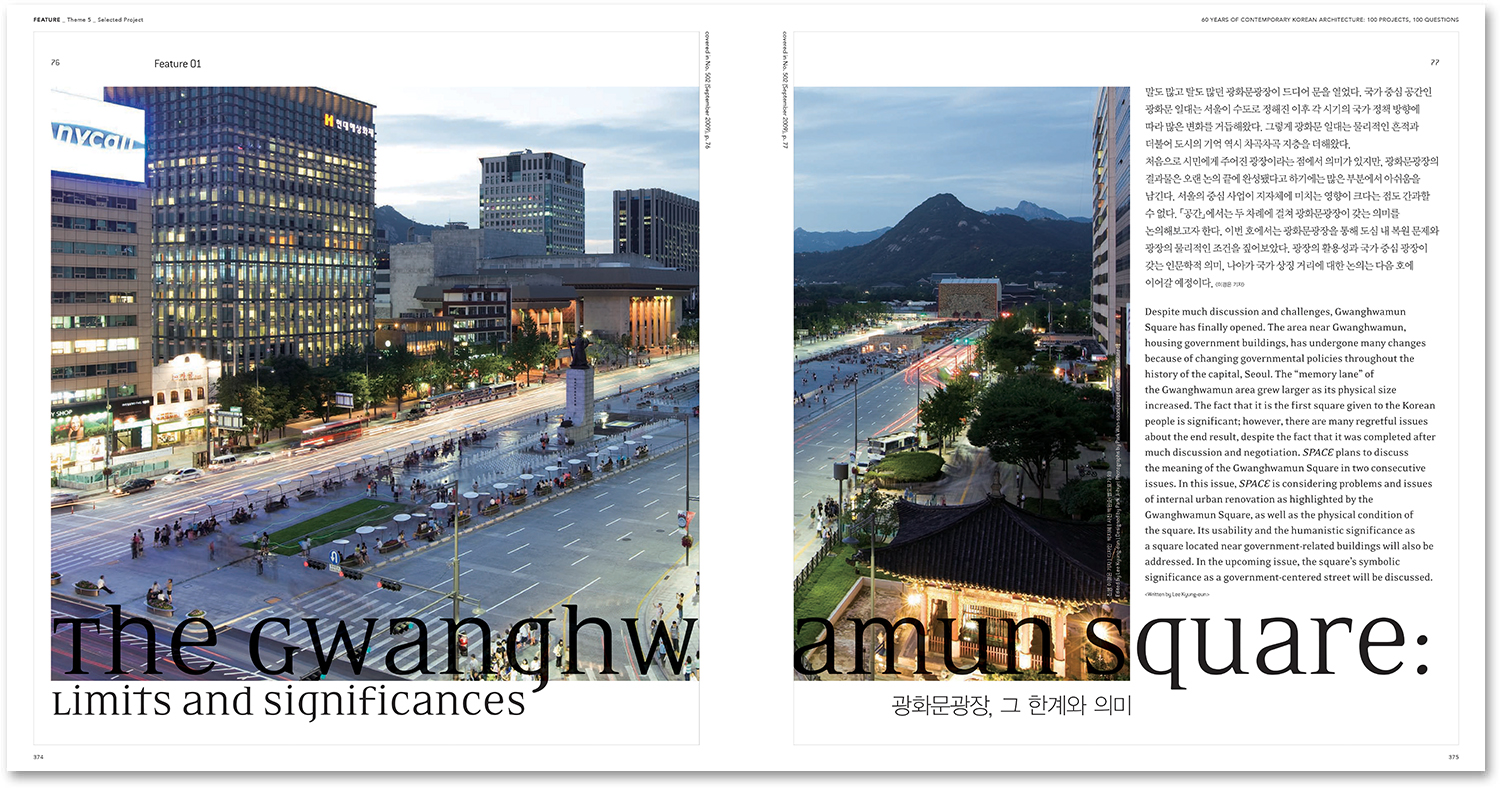
Although public squares have become a universal urban feature found in most cities today, they do not all function in the same way. Their form, meaning, and the experience they offer vary according to a city’s history, political context, and the culture shaped by its citizens’ way of life. Understanding what the public square signifies in Korean society requires examining when, where, how, and why these spaces have been created. Gwanghwamun Square (2009), the Asia Culture Center (2015), and the Seoul Hall of Urbanism & Architecture (2018) – all selected for this FEATURE’s 100 projects – each feature a public square with distinct context and form. Tracing the trajectory of how these projects were created and utilised offers a glimpse into the answer to the question: ‘What is the public square in Korean society?’
In Korean society, practice has always preceded planning when it comes to the public square. Whenever the need arose, citizens transformed spaces on their own terms, stepping beyond their original functions and...
*You can see more information on the SPACE No. November (2026).
*Subscribers can browse through E-Magazine right now. >> Available Here
Park Kyungsun
Park Kyungsun graduated from the Korea National University of Arts, majoring in architecture, and received a M.A. and urban design from Columbia University, New York. She subsequently planned numerous urban and architectural projects for the Seoul Metropolitan Government over a period of ten years, including the operation of the Seoul Center for Architecture & Urbanism and the Seoul Hall of Urbanism and Architecture, as well as the planning of the Seoul Biennale of Architecture and Urbanism and the Seoul Architecture Festival. She received her Ph.D. from the Department of Geography at Seoul National University with research on the political production and political assetisation of urban space, and published Nodeul Island and Sewoon Sangga (2026) based on this research. She currently conducts research into the multilayered processes through which urban space is produced at the Institute for Korean Regional Studies, Seoul National University.
0