




SPACE November 2026 (No. 708)
What Is the Public Square in Korean Society?
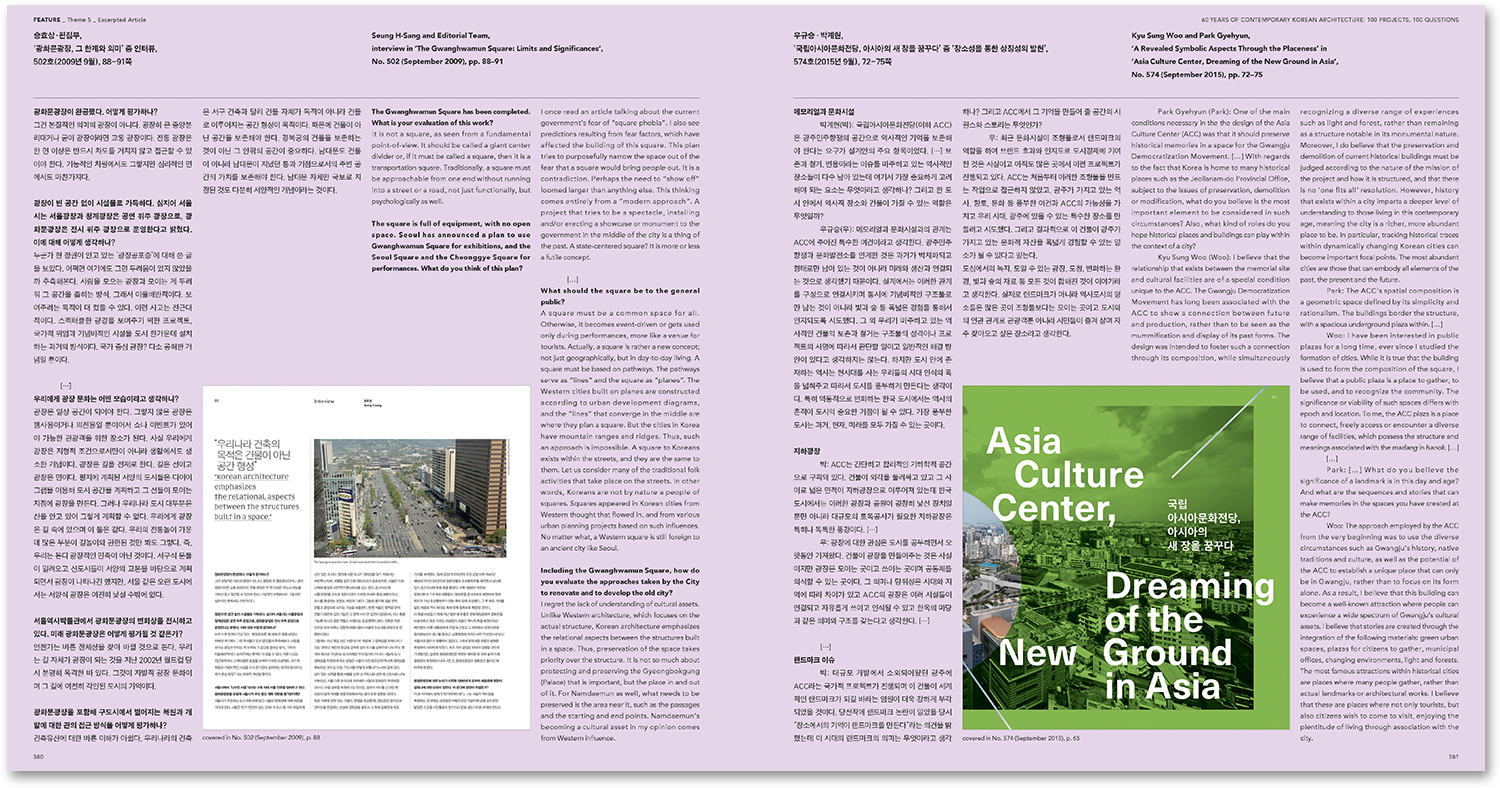
Openness alone does not make a plaza, and nor does filling it with things. It must be left open in a manner attentive. to its circumstances, but emptiness alone does not complete it. As demonstrated by May 16 Square and Seoul Station Square, Korean plazas long functioned as arenas for state power and national symbolism. However, evolving social dynamics began requiring different functions of civic space. When Gwanghwamun Square opened in 2009, SPACE questioned whether an island stranded between roadways could truly be called a plaza accessible to citizens, or whether its facilities and programmes displaced everyday use. Furthermore, projects like the Asia Culture Center (2015) and the Seoul Hall of Urbanism & Architecture (2018) proposed an alternative plaza typology by submerging their architectural masses underground and opening the surface to the public. Critiques surrounding programming and operational shortfalls around their openings highlighted that emptying out physical space and enabling it to function in practice are separate tasks.
We witnessed in street gatherings during the 2002 World Cup – which served as the catalyst for the creation of Seoul Plaza – how a street never designed as a plaza could function as one; likewise, at Songhyeon Green Plaza in 2022, we saw how a vast, vacant tract of land in the city centre could generate an entirely new public experience. The crucial issue is not whether to fill or empty space, but to determine with what it should be filled and for what reasons, and what to leave definitively vacant. As Park Kyungsun (Researcher, The Institute for Korean Regional Studies, Seoul National University) noted, ‘emptiness is not neglect, but an active design strategy to accommodate diverse possibilities.’ Stepping away from the drawing board, the plaza continuously evolves through those who occupy the space, breathing together and encountering one another.
P074 Gwanghwamun Square | Q074 When Does a Public Square Become a Space for Citizens? |
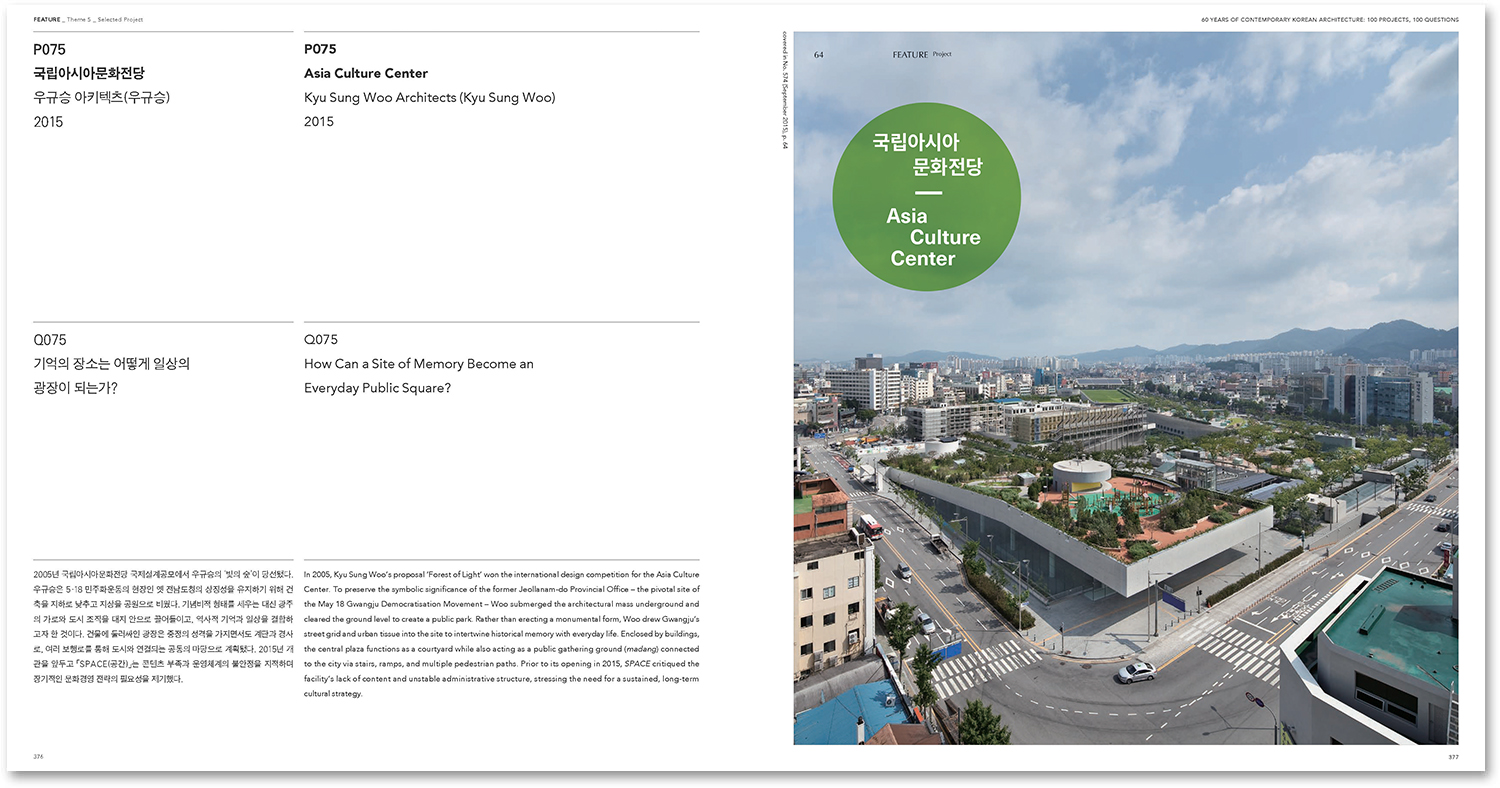
P075 Asia Culture Center | Q075 How Can a Site of Memory Become an Everyday Public Square? |
P076 Seoul Hall of Urbanism & Architecture | Q076 How Can the Architecture That Forms a Public Square Become a Backdrop for Historic Scenery? |
You can see more information on the SPACE No. November (2026).
0