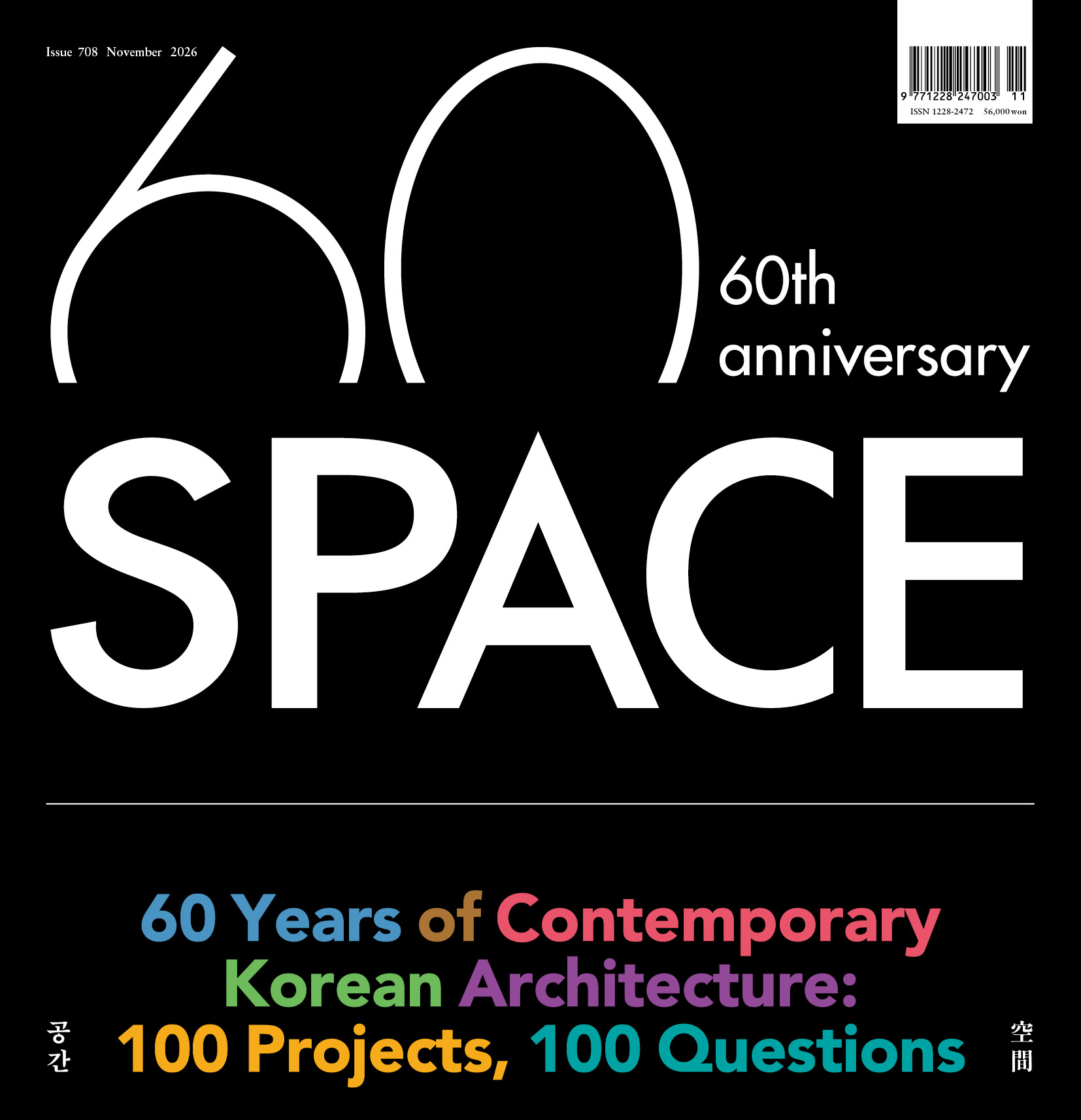

SPACE November 2026 (No. 708)
THEME 5.Urban and Region
What City Does an Architect Dream Of?
Looking back some six decades to 1960s Seoul, in the wake of Liberation and the Korean War, Korea was experiencing urban expansion at an unprecedented rate. The city boiled over as state development policies, the logics of land and capital, and utopian dreams and ideals all took on a new vigour. Adapting contemporary urban architectural discourse encountered on the international scene, architects laid the foundations for their respective urban imaginations. The eight projects collated here demonstrate how such imaginative flights have been honed and reshaped across time.
Originating from attempts to reorganise the city centre through monumental structures – such as Sewoon Sangga (1968) and the Yeouido Master Plan (1969) – these architectural endeavours sought alternative modes of living through novel new-town planning models. Around the early 2000s, developments in areas like Paju shifted away from finalised master plans towards the establishment of sets of rules and typologies designed to orchestrate a given urban context. Meanwhile, recent practices have continued to read parts of the city as distinct urban units – whether an agglomeration of downtown lots, a declining island village, or a forgotten historical block – re-examining the relationships between people, architecture, and the city from the scale of these individual units.
The six decades of archival materials compiled by SPACE coincide with the trajectory of Korean urban development, from industrialisation to the present day. However, the path documented by SPACE is not exactly synonymous with the history of Korean cities. By examining what was highlighted and what remained outside its perimeter, we reflect upon the forces and visions that built the land and cities we inhabit today.
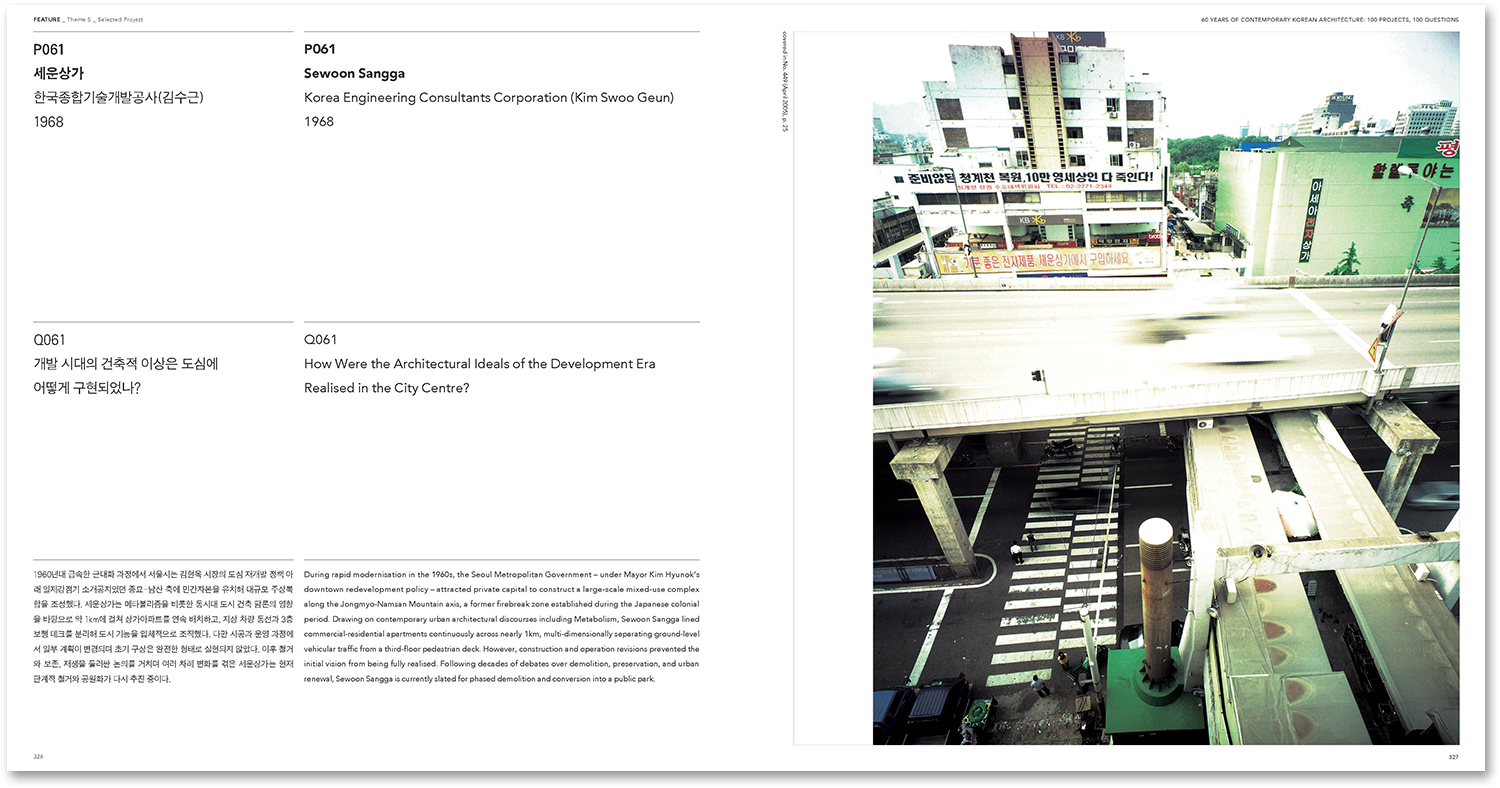
P061 Sewoon Sangga | Q061 How Were the Architectural Ideals of the Development Era Realised in the City Centre? |
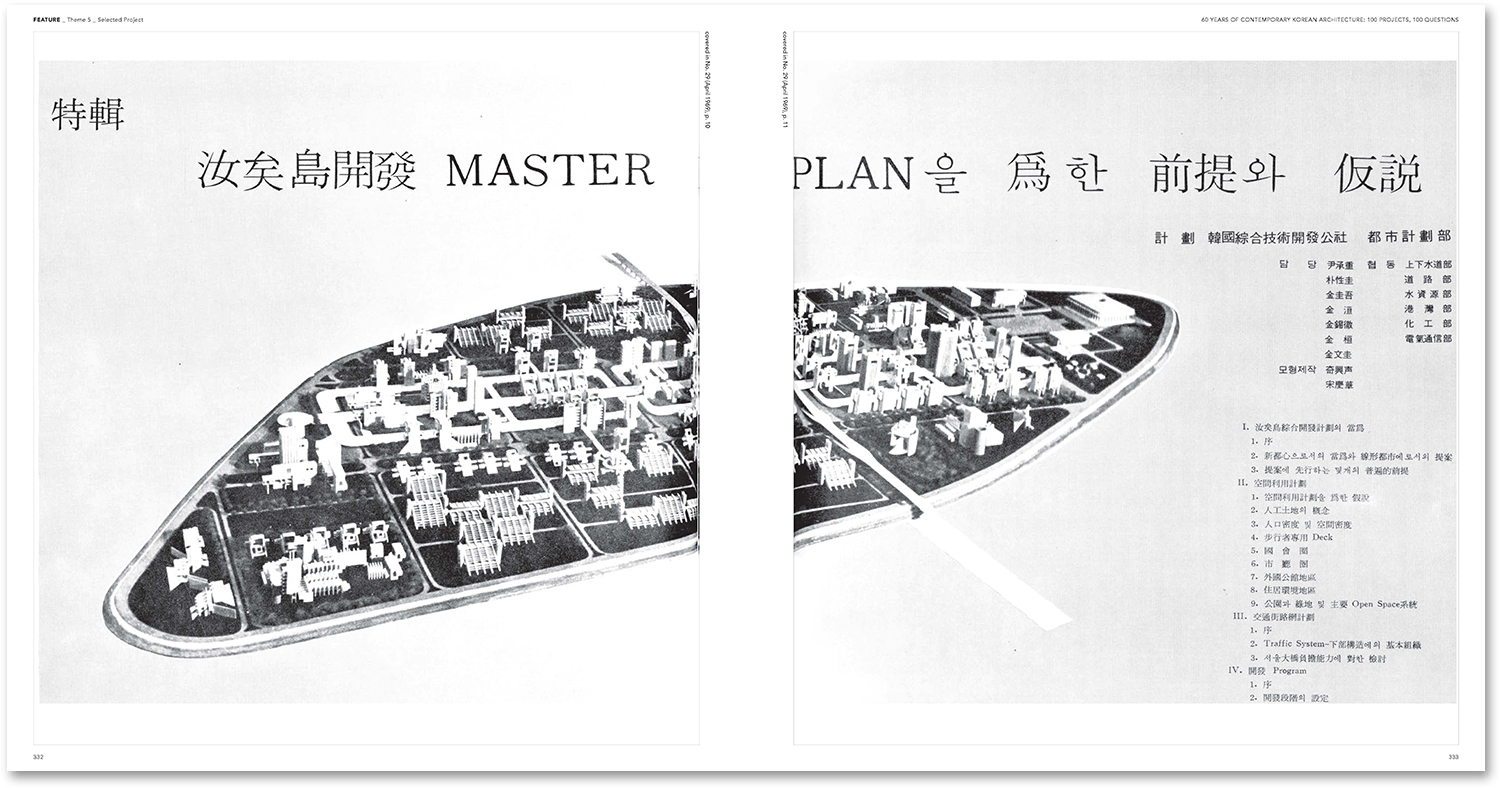
P062 Yeouido Master Plan | Q062 How Were the Architectural Ideals of the Development Era Incorporated into Korea’s Urban Growth Model? |
P063 Competition for the Master Plan of Mok-dong New Town Development | Q063 How Were Early New Town Plans Conceived? |
P064 Paju Book City Master Plan | Q064 With What Does One Create a Cohesive Urban Context? |
P065 International Urban Ideas Competition for the New Multi-Functional Administrative City | Q065 How Does Democracy Become an Urban Concept? |
P066 ZWKM BLOCK | Q066 How Can Architecture Form a Block in Harmony with the City? |
P067 Gapado Project | Q067 How Can a Village and Its Community Be Preserved? |
P068 Project Re\turning Gunsan | Q068 How Can Historic Urban Blocks Be Revitalised? |