




SPACE November 2026 (No. 708)
THEME 4.Collective Life
What Are the Alternatives to the Apartment?
Urban-development regulations and floor-area-ratio systems premised on large-scale, high-density development enabled Korea to gain expertise in efficient apartment construction and complex planning in a short period of time, helping apartments become the country’s standard form of housing. At the same time, these systems also hindered the development of other forms of collective housing.
In spite of its popularity, have been efforts to find alternatives to the apartment. In 2005–2006, the Korea National Housing Corporation (now Korea Land and Housing Corporation) held an international design competition for the first time to experiment with low-rise townhouses in Pangyo. In the 2010s, new forms of collective housing began to emerge: shared houses responding to the steadily growing population of one-person households, co-housing intended to address shared concerns such as childcare, and cooperative housing made possible by the 2012 Framework Act on Cooperatives. In the 2020s, co-living brands such as Mangrove, Local Stitch, and EPISODE appeared, extending experiments once led by individual architects and nonprofit foundations into the realm of capital.
The projects selected here are rare attempts, led by architects, public institutions, and citizens before shared houses and cohousing became understood as products, to seek alternatives to the apartment. They range from Pangyo Housing (2010) – one of the first public-sector efforts to pursue an apartment alternative, despite initial unsold units caused by controversy over privacy at its transparent entrances – to Malli-dong Public Housing (2015), where residents participated from the design stage; Third Place Hongeun (2020), where the architect integrated the roles of designer, client, and operator to show that privacy and community does not necessarily have to be opposites; and Jaegi (2022), where multiple property owners cooperated to transform the streetscape of an alley. Together, these projects invite us to ask what new questions they pose to the ‘forms of living together’ that apartments have long dominated.
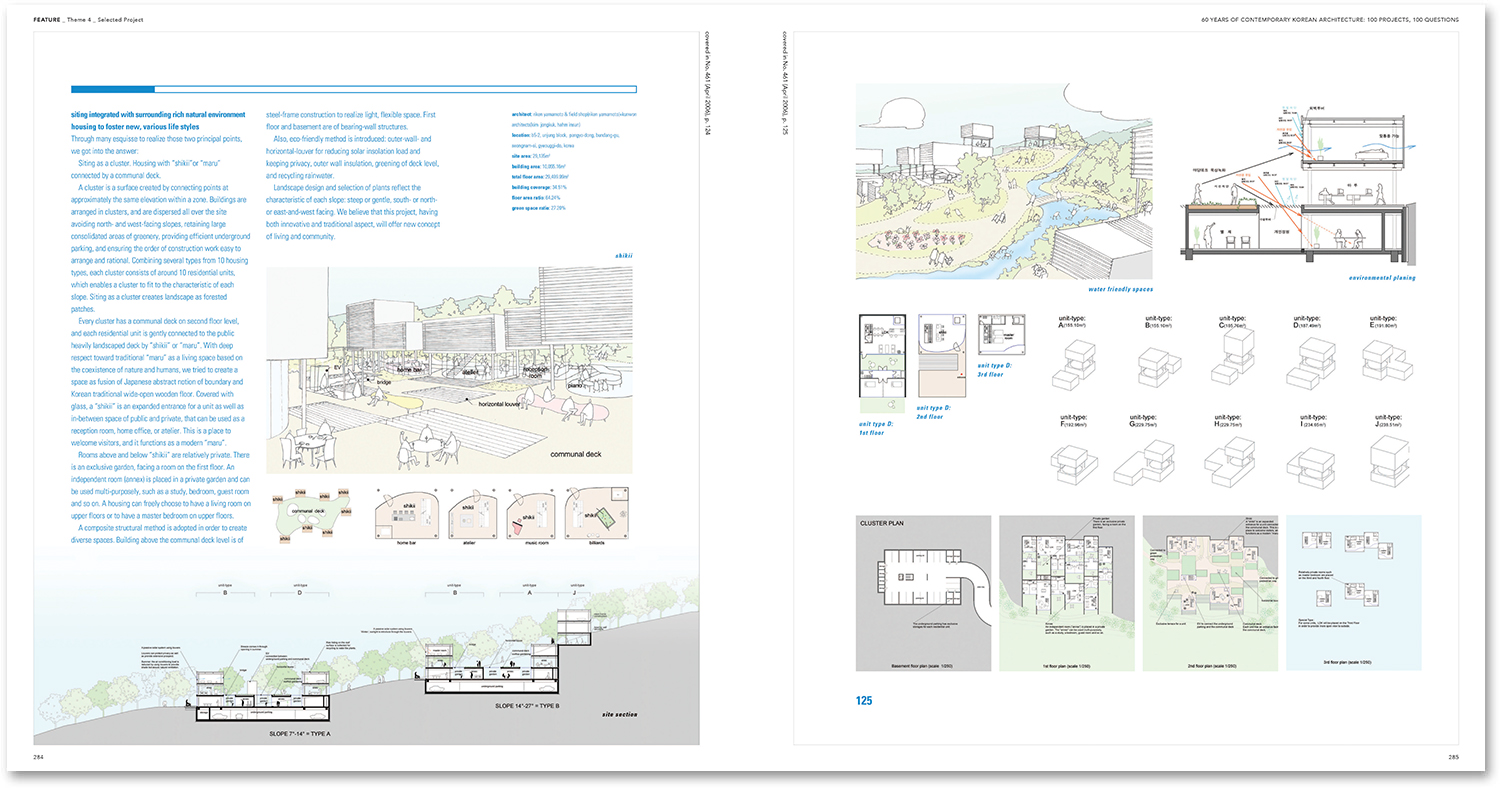
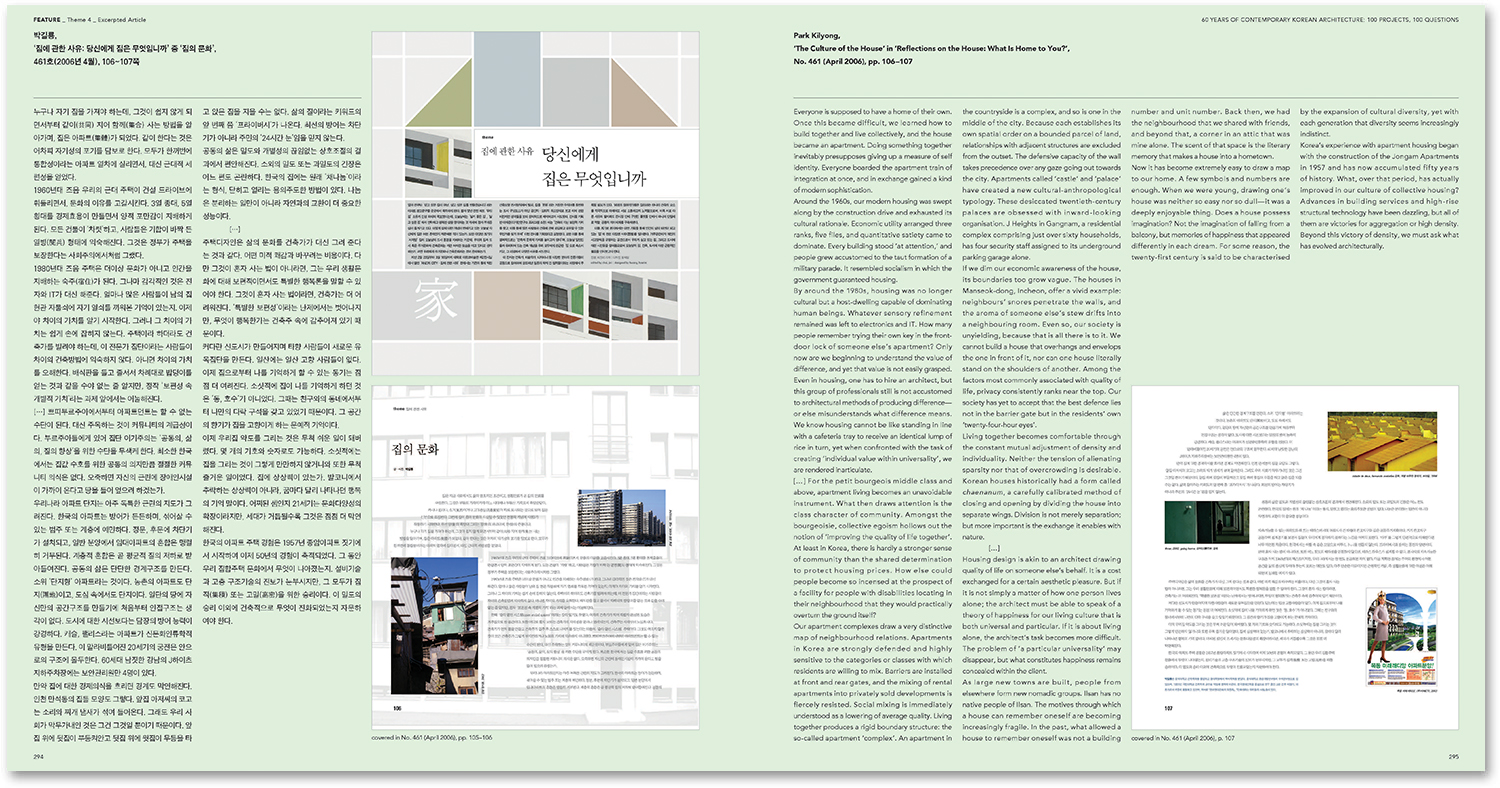
P051 Pangyo Housing | Q051 How Can Public Space Inside the Home Transform Relationships with Its Neighbours? |
P052 Malli-dong Public Housing | Q052 How Do Communal and Shared Spaces Shape One Another? |
P053 Third Place Hongeun | Q053 Can Community-Building and Privacy Coexist? |
P054 Jaegi | Q054 Can a Coherent Streetscape Emerge on Small Plots with Complex Ownership? |
You can see more information on the SPACE No. November (2026).
1