




SPACE November 2026 (No. 708)
THEME 4.Collective Life
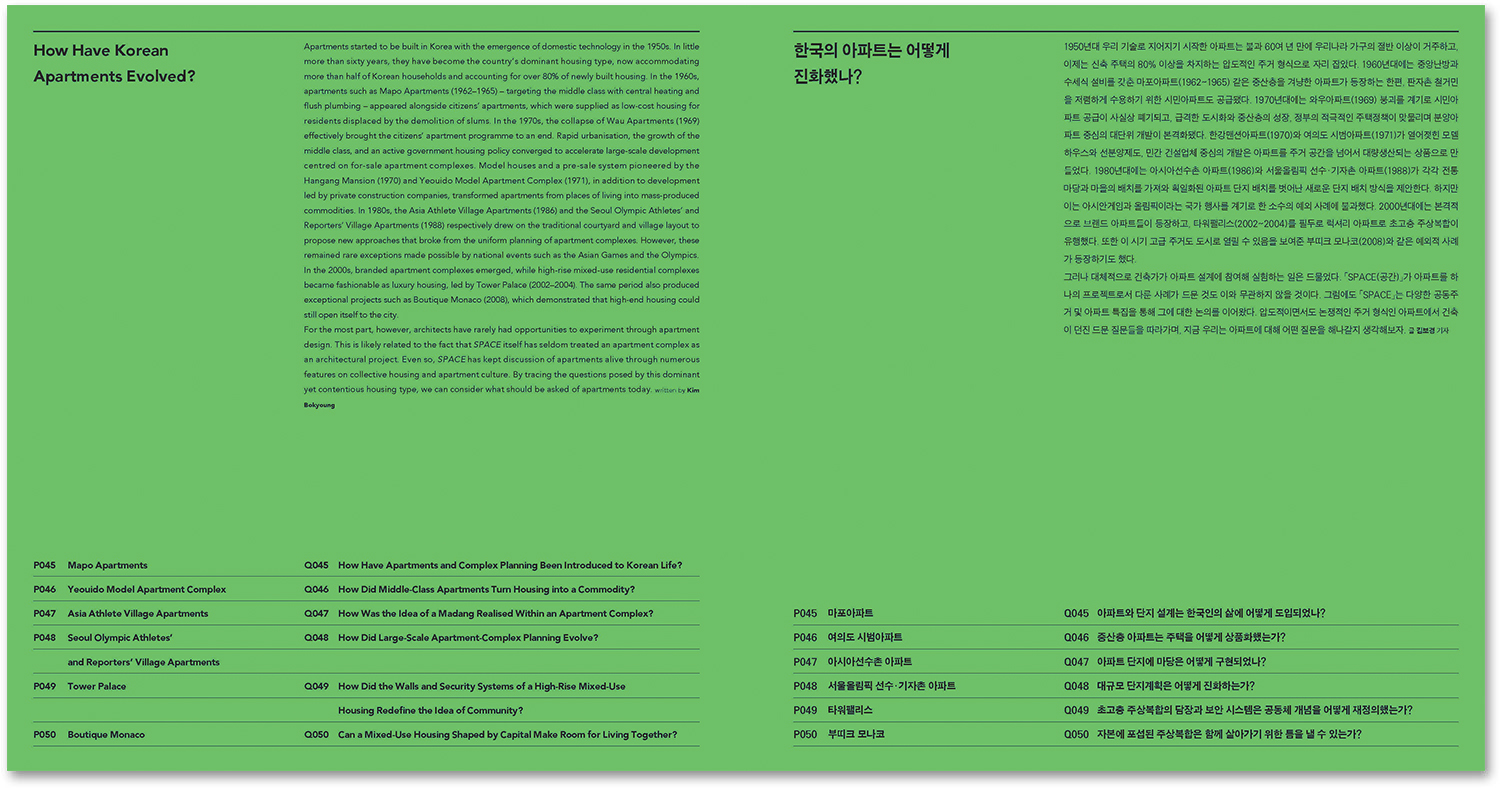
How Have Korean Apartments Evolved?
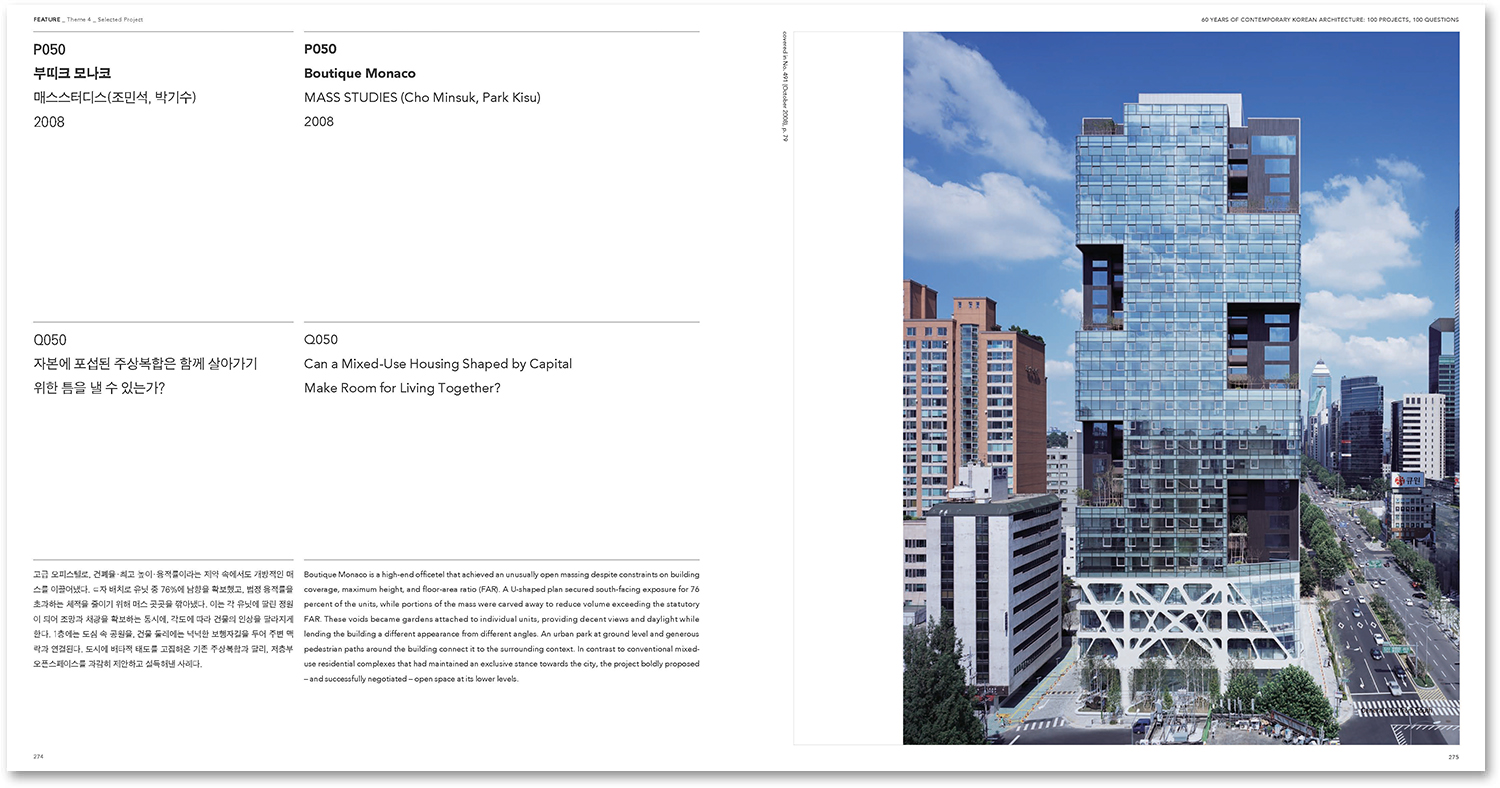
Apartments started to be built in Korea with the emergence of domestic technology in the 1950s. In little more than sixty years, they have become the country’s dominant housing type, now accommodating more than half of Korean households and accounting for over 80% of newly built housing. In the 1960s, apartments such as Mapo Apartments (1962–1965) – targeting the middle class with central heating and flush plumbing – appeared alongside citizens’ apartments, which were supplied as low-cost housing for residents displaced by the demolition of slums. In the 1970s, the collapse of Wau Apartments (1969) effectively brought the citizens’ apartment programme to an end. Rapid urbanisation, the growth of the middle class, and an active government housing policy converged to accelerate large-scale development centred on for-sale apartment complexes. Model houses and a pre-sale system pioneered by the Hangang Mansion (1970) and Yeouido Model Apartment Complex (1971), in addition to development led by private construction companies, transformed apartments from places of living into mass-produced commodities. In 1980s, the Asia Athlete Village Apartments (1986) and the Seoul Olympic Athletes’ and Reporters’ Village Apartments (1988) respectively drew on the traditional courtyard and village layout to propose new approaches that broke from the uniform planning of apartment complexes. However, these remained rare exceptions made possible by national events such as the Asian Games and the Olympics. In the 2000s, branded apartment complexes emerged, while high-rise mixed-use residential complexes became fashionable as luxury housing, led by Tower Palace (2002–2004). The same period also produced exceptional projects such as Boutique Monaco (2008), which demonstrated that high-end housing could still open itself to the city.
For the most part, however, architects have rarely had opportunities to experiment through apartment design. This is likely related to the fact that SPACE itself has seldom treated an apartment complex as an architectural project. Even so, SPACE has kept discussion of apartments alive through numerous features on collective housing and apartment culture. By tracing the questions posed by this dominant yet contentious housing type, we can consider what should be asked of apartments today.
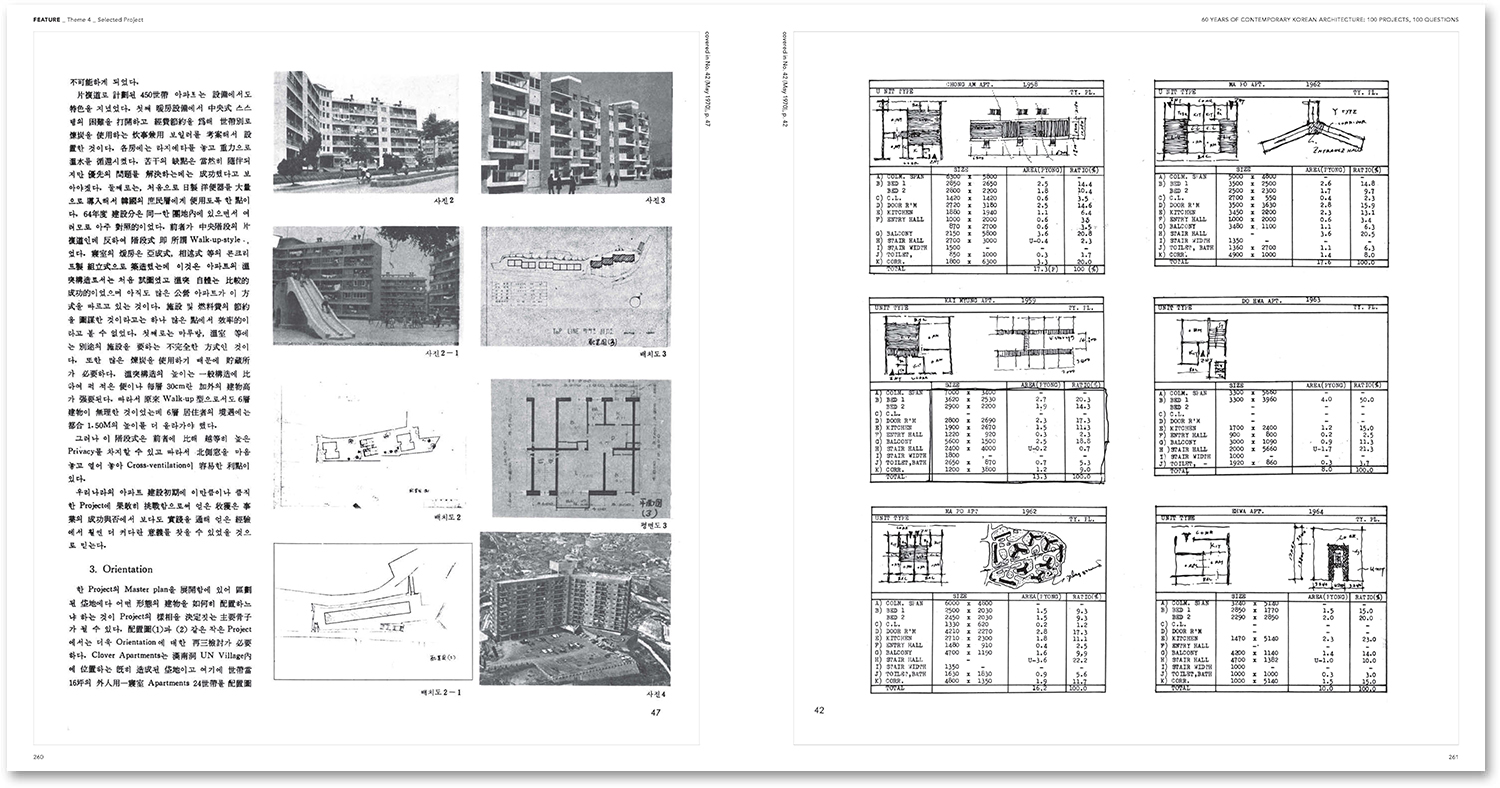
P045 Mapo Apartments | Q045 How Have Apartments and Complex Planning Been Introduced to Korean Life? |
P046 Yeouido Model Apartment Complex | Q046 How Did Middle-Class Apartments Turn Housing into a Commodity? |
P047 Asia Athlete Village Apartments | Q047 How Was the Idea of a Madang Realised Within an Apartment Complex? |
P048 Seoul Olympic Athletes’ and Reporters’ Village Apartments | Q048 How Did Large-Scale Apartment-Complex Planning Evolve? |
P049 Tower Palace | Q049 How Did the Walls and Security Systems of a High-Rise Mixed-Use Housing Redefine the Idea of Community? |
P050 Boutique Monaco | Q050 Can a Mixed-Use Housing Shaped by Capital Make Room for Living Together? |
You can see more information on the SPACE No. November (2026).
0