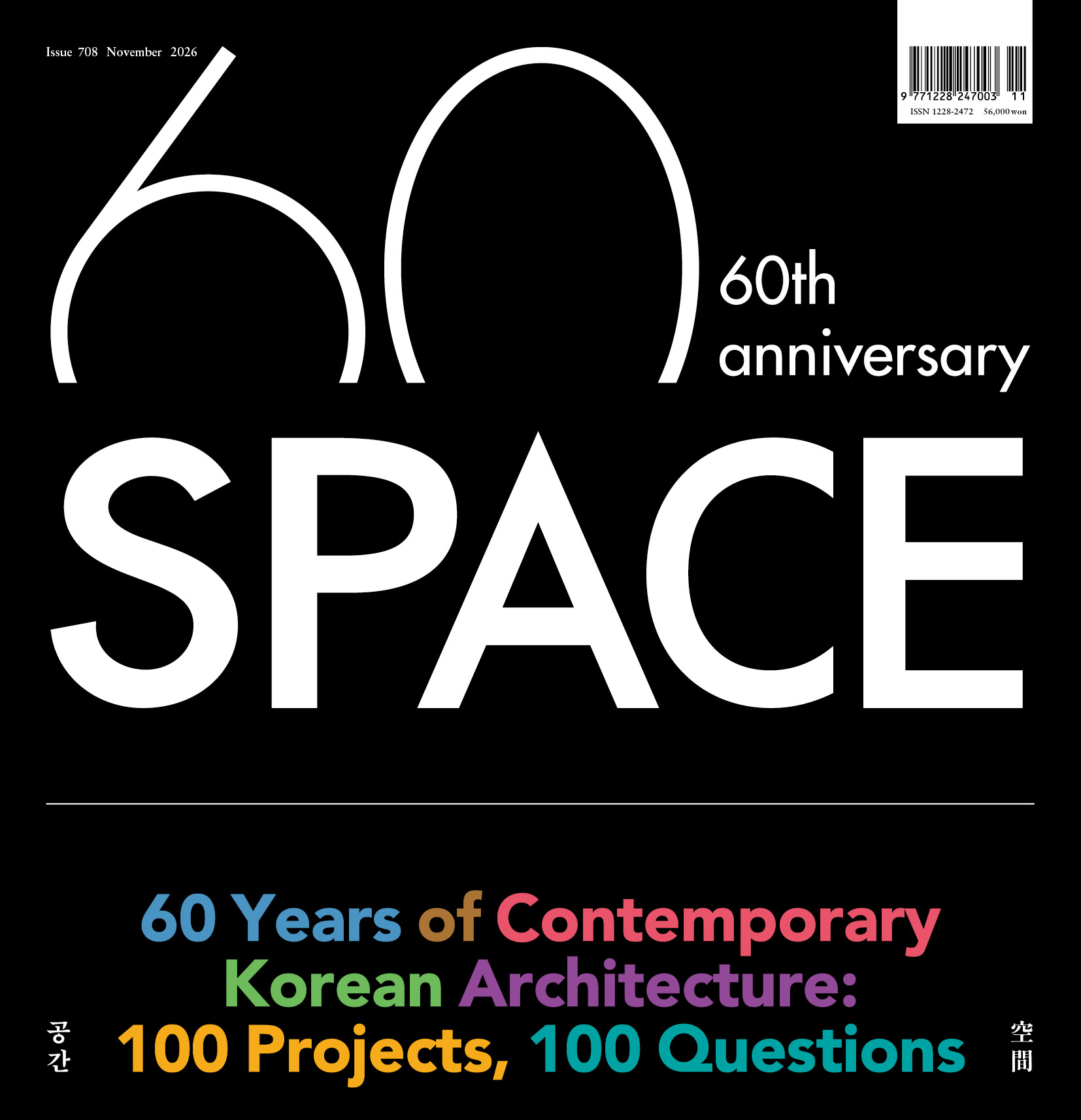

SPACE November 2026 (No. 708)
How Do Materials Shape Experience?
Even so, the achievements that have transformed the properties of materials into architectural effects are encouraging. Although the exploration of materiality has sometimes been considered relatively limited, might it be that, in Korea, this exploration has developed – and been discussed – in conjunction with practices concerned with space and place? During the selection process for this special FEATURE as well, works highly regarded under ‘Materials and Materiality’ were assigned to other themes because other values were given priority. Considering these works together allows us to see how the ways in which materials shape experience through their surfaces have become more diverse.
Three modes of exploration can be discerned. First are works that give tangible form to the atmosphere of a space through texture and presence. This approach, which might be called classical, appears across different periods. While Kyungdong Presbyterian Church (1982) combined rough brick and exposed concrete with light and circulation, the Yoon Dongju Literature Museum (2012, ‘History and Memory’) used water stains left on concrete walls as material, creating a contemplative space that brings out the effects of limited light and reverberating sound.
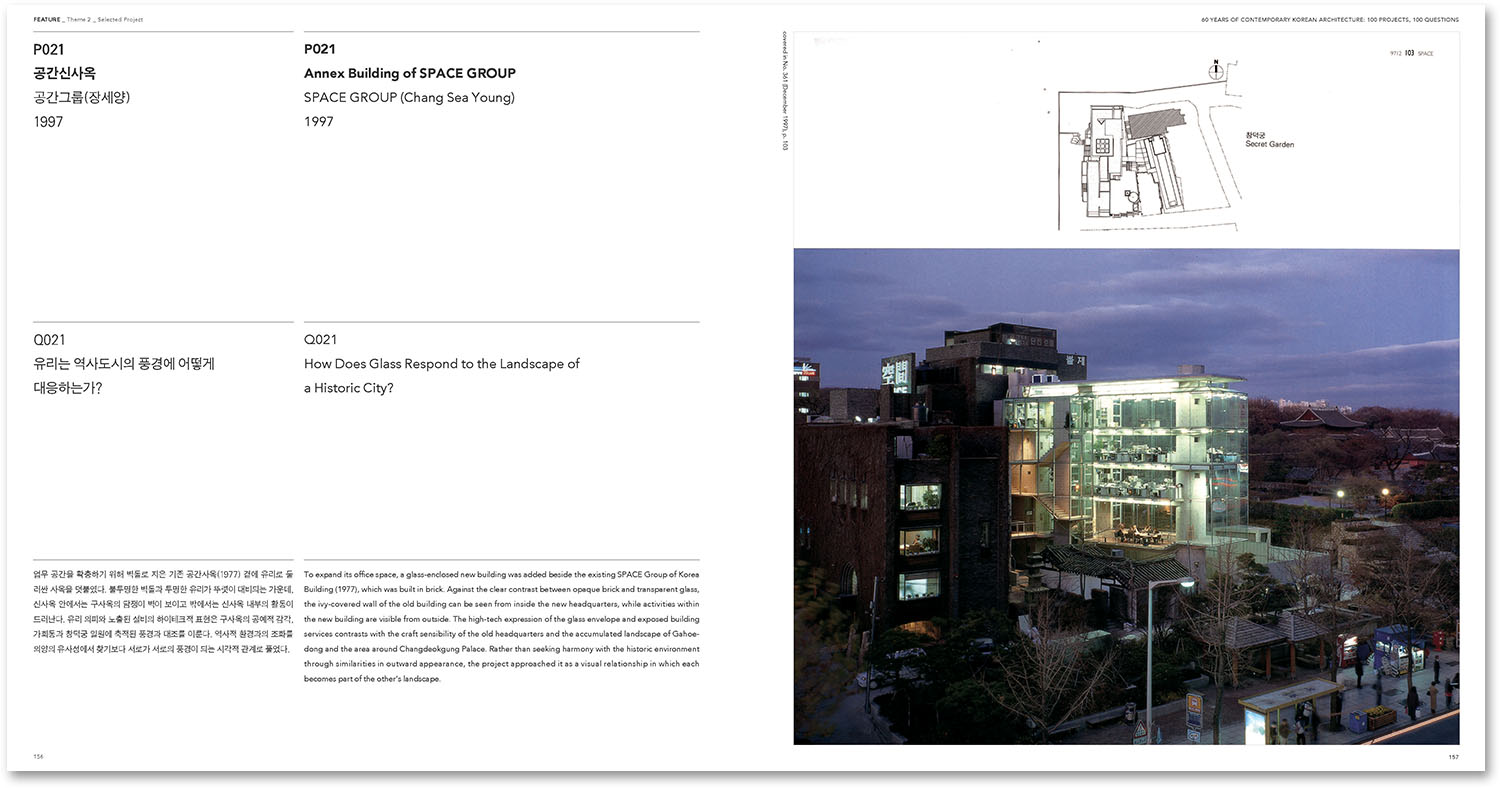
The surface has also been treated as a medium that reveals changes in the surroundings and the passage of time. The glass of the Annex Building of SPACE GROUP (1997) brought the surrounding architecture and interior activities into view as landscapes for one another, while the weathering steel of Welcomm City (2000, ‘Space and Composition’) leaves time on its surface as it rusts. The effects of a surface are influenced not only by the material itself but also by light and viewpoint. At the Herma Parking Building (2010), smooth and reflective surfaces alter the impression of the architecture from moment to moment in response to changes in light over the course of the day and the movement of the observer.
Other works prompt a renewed perception of the materials or of the environments surrounding them. In Yoonseul (2017), the actual landscape and its reflected image overlap, altering the perceived depth of space. In CONCRETEWALL (2023), the similar textures of stone and concrete prompt us to reconsider the familiar distinction between the natural and the artificial. In Wind Museum, Pinx Art Museum (2005, ‘Human and Nonhuman’), gaps between timber elements are used to display the sound of the wind.
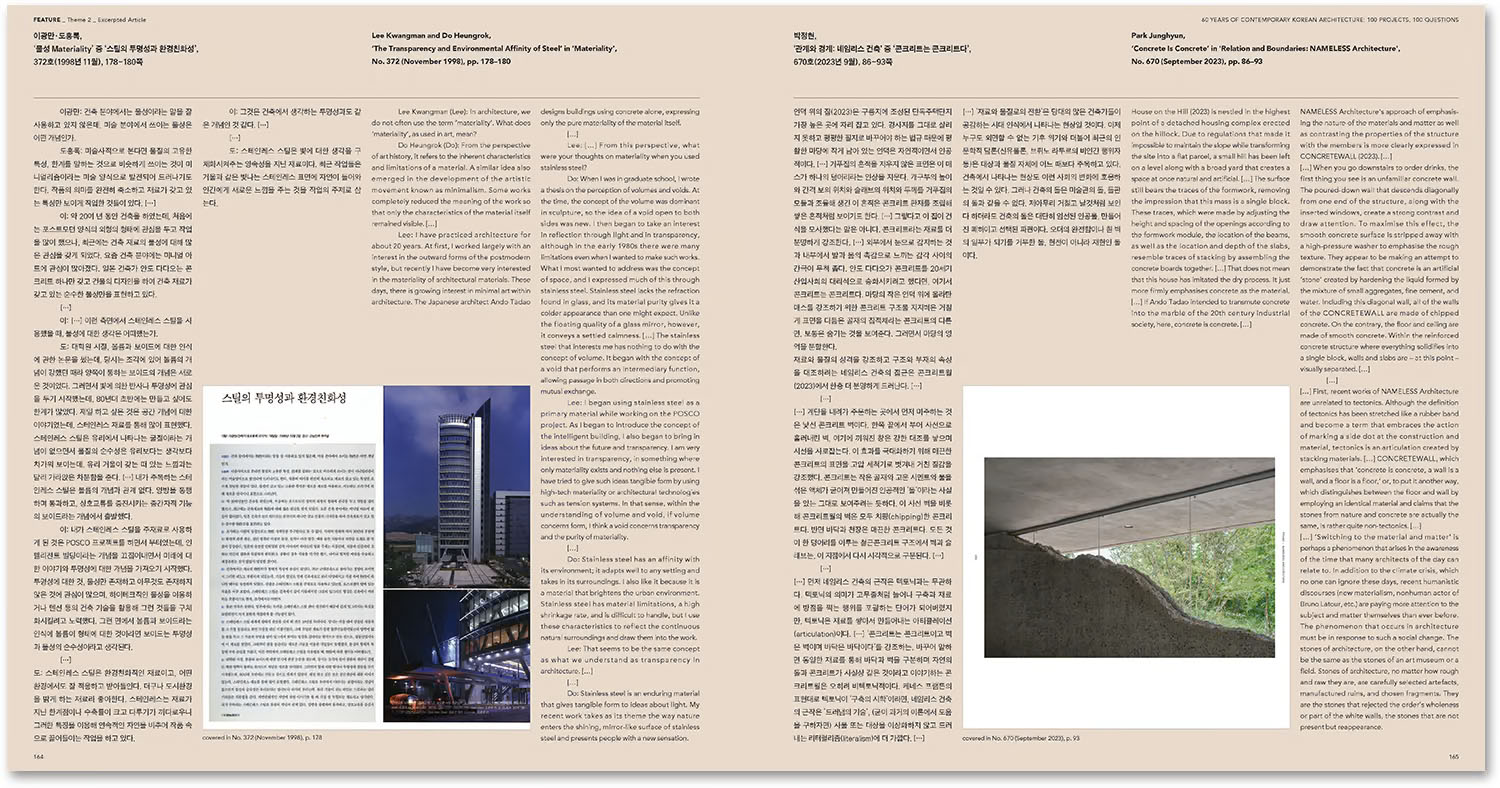
P020 Kyungdong Presbyterian Church | Q020 How Does Brick Create a Sense of the Sublime? |
P021 Annex Building of SPACE GROUP | Q021 How Does Glass Respond to the Landscape of a Historic City? |
P022 Herma Parking Building | Q022 How Does a Reflective Surface Change the Impression of a Building? |
P023 Yoonseul | Q023 What Kind of Spatial Experience Does a Mirror Create? |
P024 CONCRETEWALL | Q024 What Is the Difference Between Stone and Concrete? |