
SPACE October 2026 (No. 707)
I AM AN ARCHITECT
‘I am an Architect’ was planned to meet young architects who seek their own architecture in a variety of materials and methods. What do they like, explore, and worry about? And how are architects in various regions expanding their own worlds in different ways? SPACE is going to discover individual characteristics of them rather than group them into a single category.
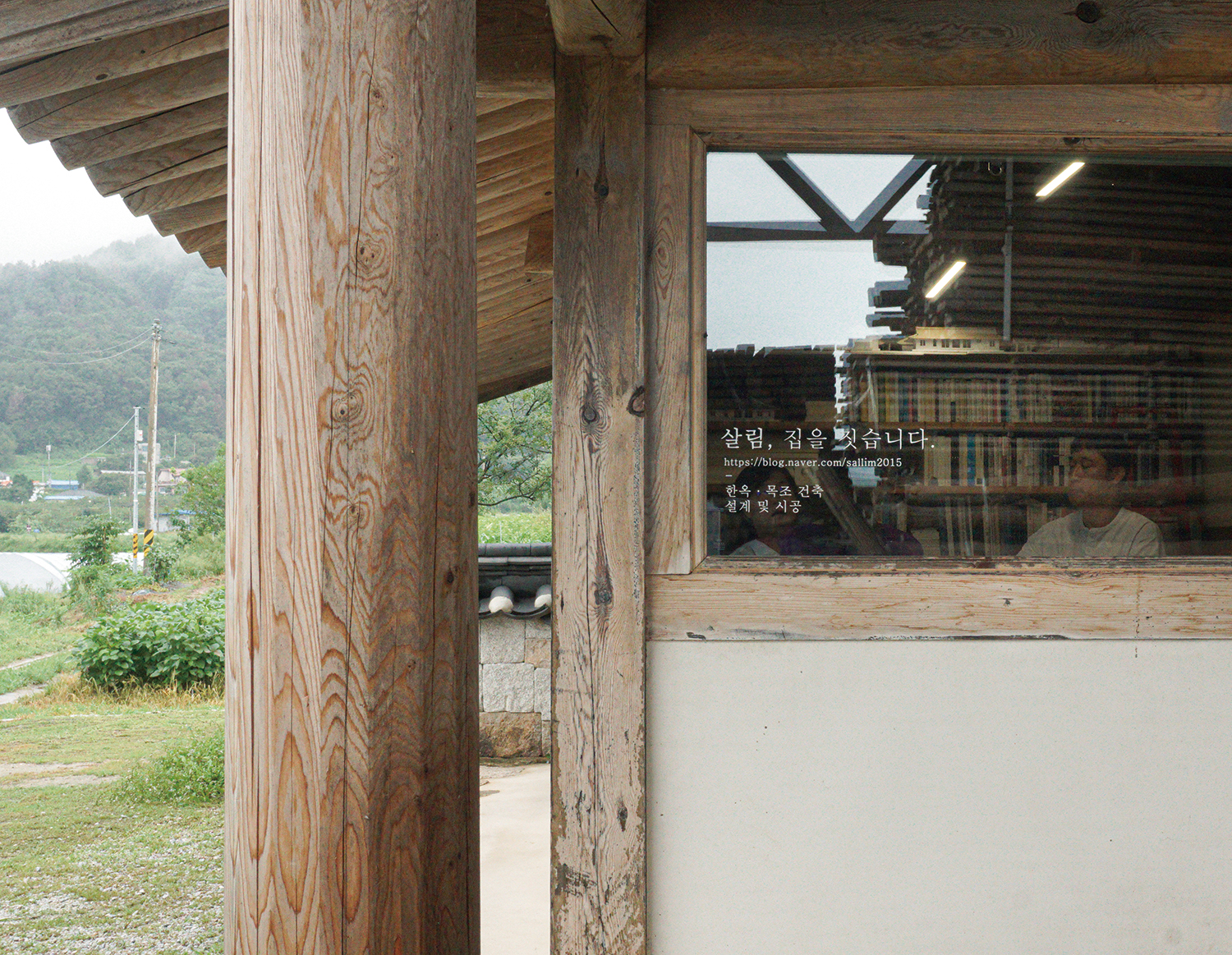
The entrance to sallimhanok workshop (front) and the hanok where Cho Jungsun and Choi Sungsoon live with their family (back)
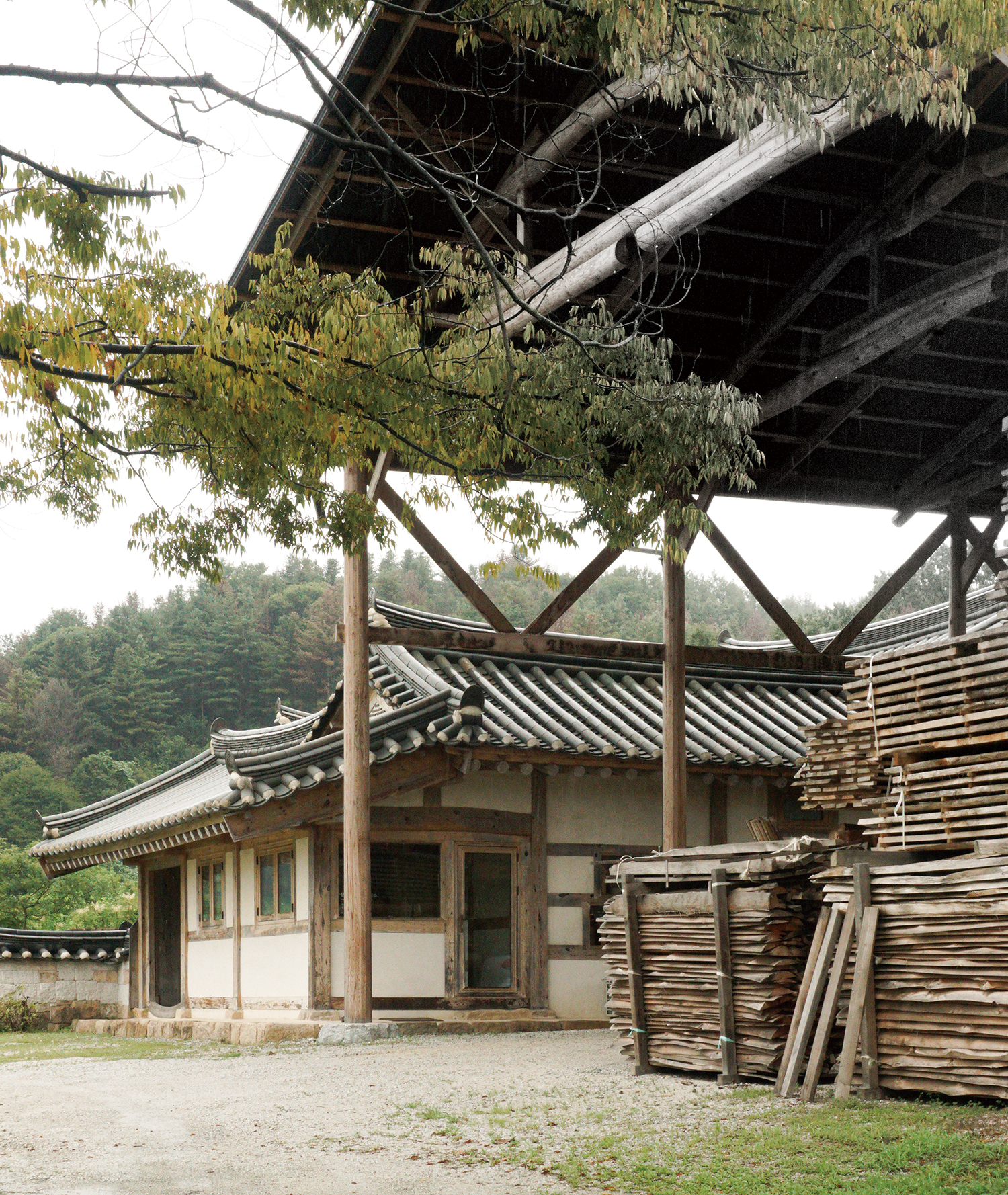
sallimhanok office viewed from outside, with an interview taking place inside.
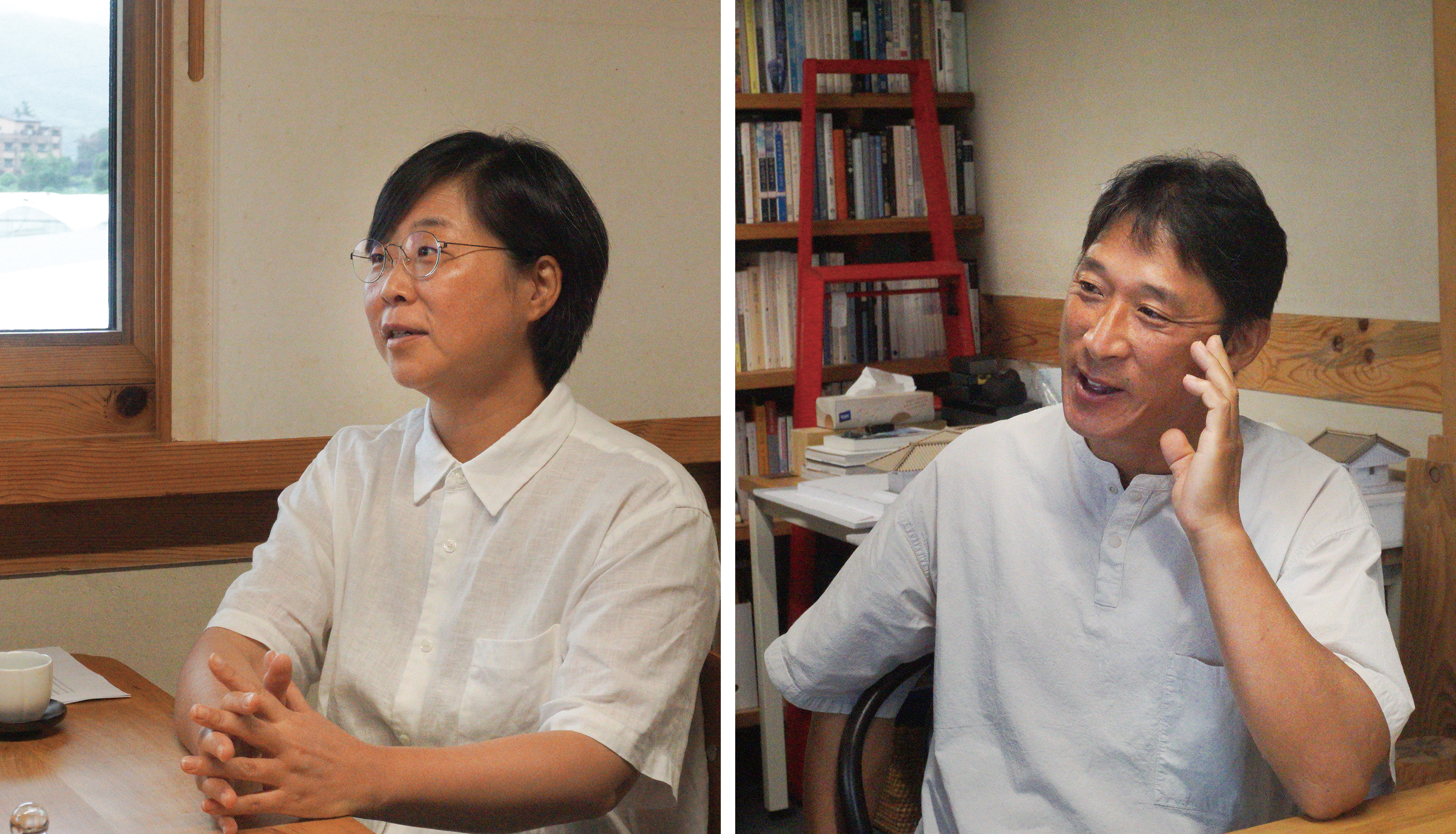
interview Cho Jungsun, Choi Sungsoon Co-Principals, sallimhanok × Lee Sowoon
Sallimhanok and Hanok
Lee Sowoon (Lee): You originally worked in quite different fields. How did the two of you come together to build hanok?
Cho Jungsun (Cho): My husband continued working as a traditional Korean carpenter, while I worked at an architectural practice, mainly designing apartment complexes and large-scale buildings. At some point, I began to feel that I was doing work I could never quite get my hands on. A large building might not actually be built until ten or twenty years after it was designed, and, as I became more senior, I found myself increasingly occupied with administrative work.
Choi Sungsoon (Choi): I spent many years working on the restoration of cultural heritage. However, I found it increasingly difficult to see the meaning in continually building and repairing houses that nobody actually lived in.
Cho: That was when we began talking about building houses together—houses that people would actually live in.
Lee: So, the ‘sallim’ in the name sallimhanok refers to the sallimjip, the home as a place of everyday life?
Cho: Yes, it comes from the Korean word sallimjip. There is also a sense in the Korean verb sallida, ‘to bring to life’; allowing something’s inherent character to reveal itself as it is. That is fundamental to the way we work. We hope to build homes suited to each person’s particular way of life—homes that people can enjoy living in, and through which everyday life might become more vital and enriching.
Lee: If the aim is simply to make a good home, why does it have to be a hanok?
Cho: I wondered about that myself at first, but then realised it was not a question we needed to answer immediately. What matters is that the hanok is what we most want to work on, and what we are best able to do. Perhaps our clients already have the answer when they simply say, ‘I like hanok.’ It is a kind of space that feels familiar to us, consciously or otherwise, and one that seems naturally suited to the way we live.