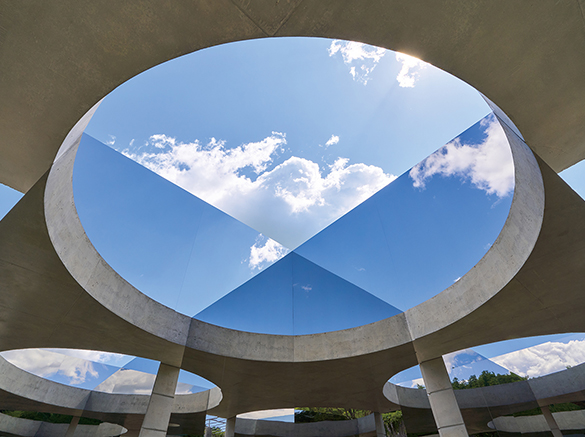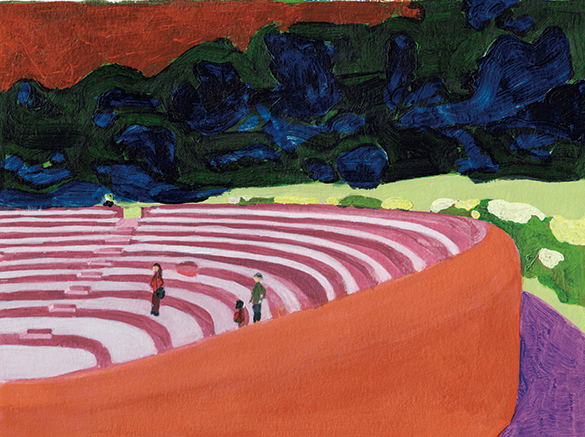

SPACE July 2026 (No. 704)
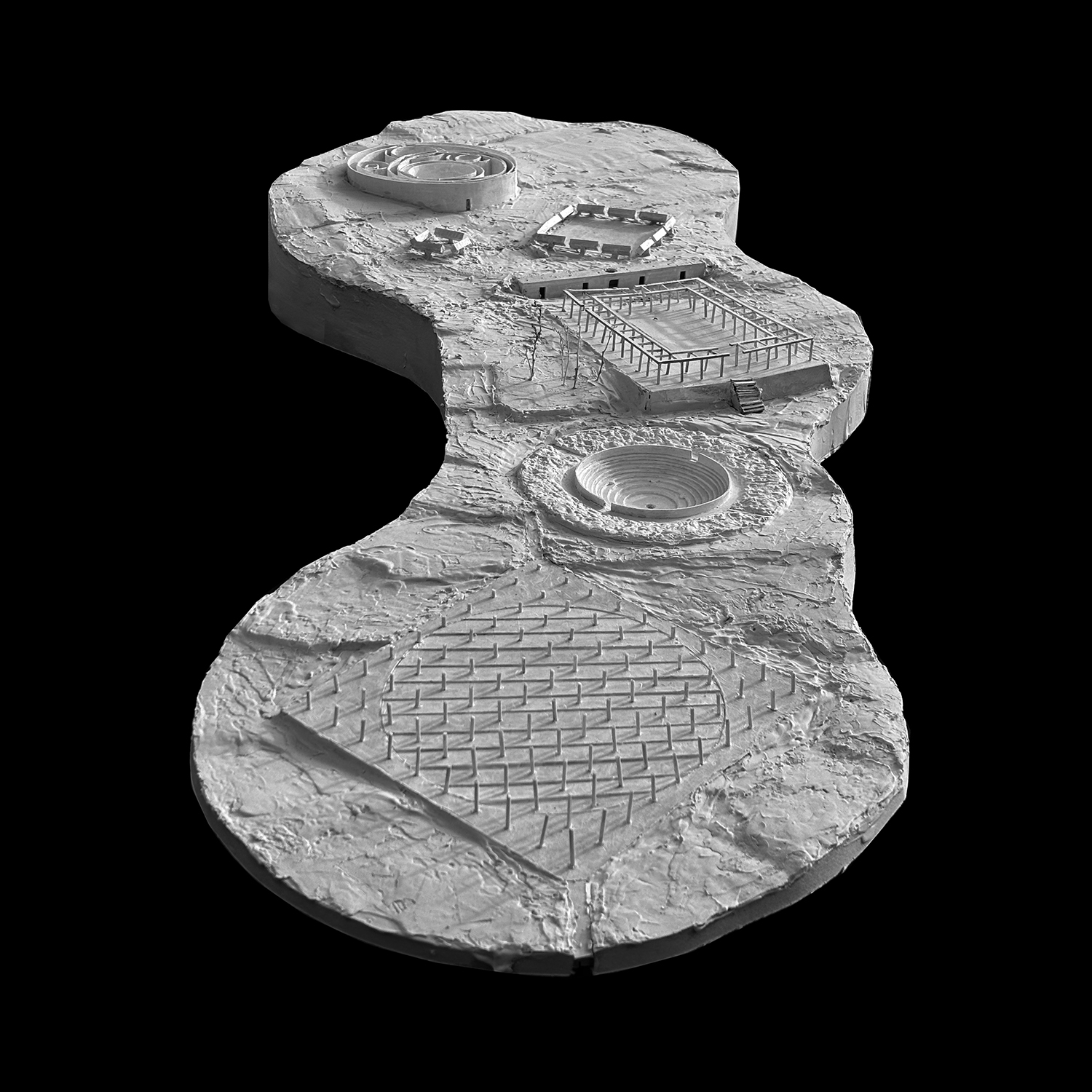
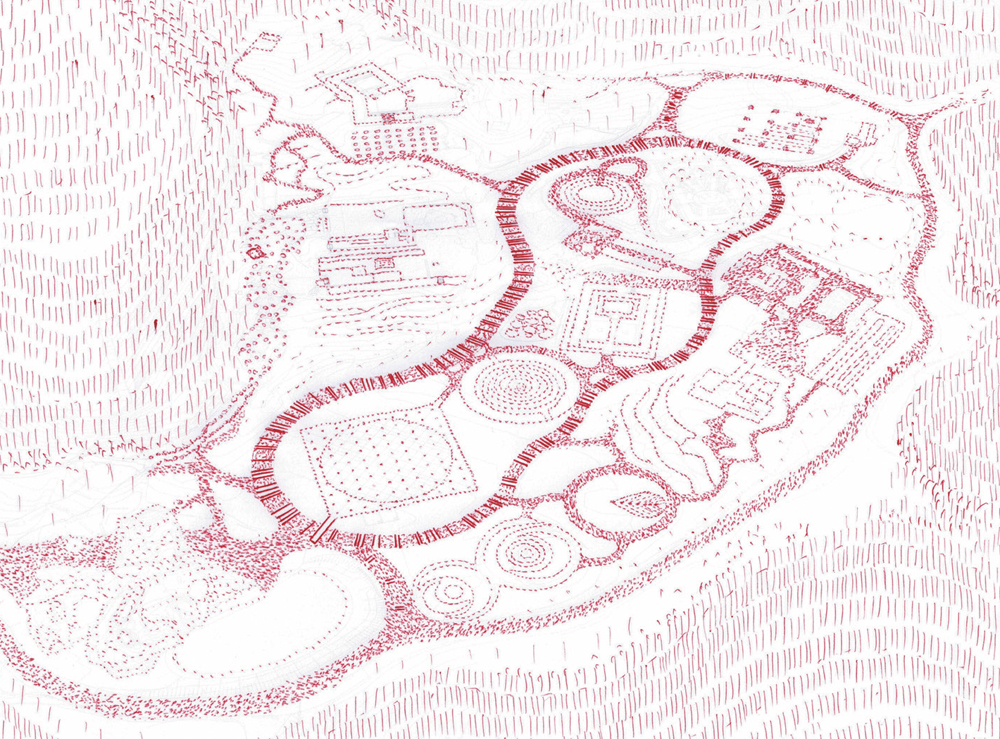
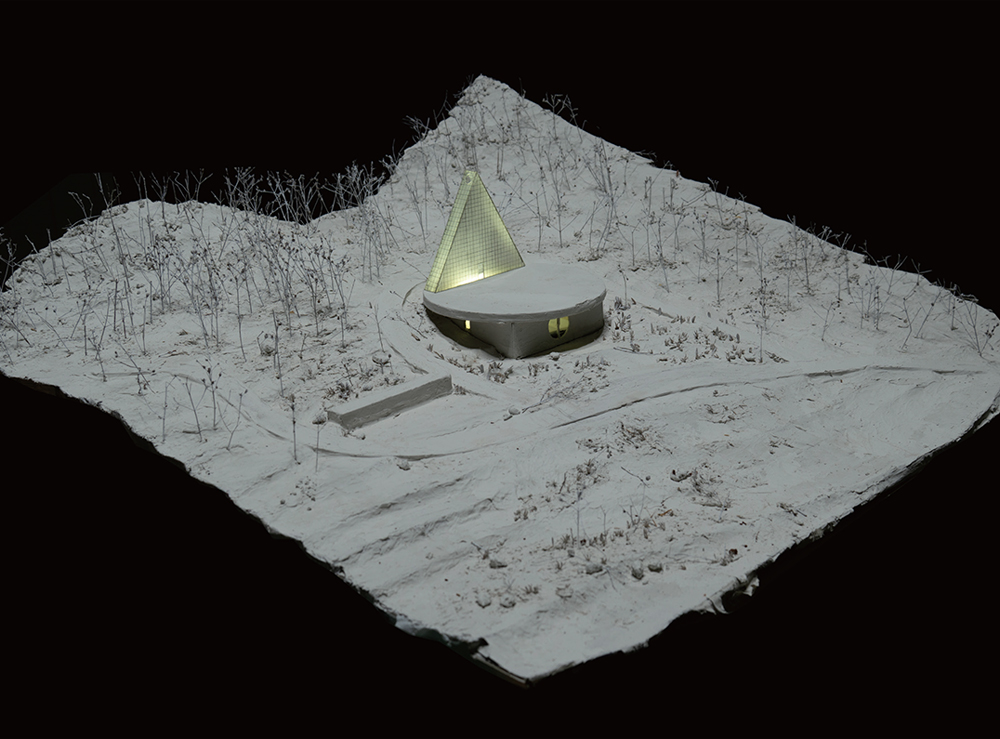
Partial model of the Médongaule Contemporary Gardens. Image courtesy of Pezo von Ellrichshausen
Geometry is the foundational language of architecture. For Vitruvius, the circle and the square embodied the cosmic proportions inherent to the human body. This conception demonstrated the influence of Pythagoras, who sought a world of mathematical ratios that underpin what is seen by the eye and heard by the ear. As if engaged in a dialogue with Pythagoras across time and space, a comparable symbolic system emerged in East Asia in the form of Cheonwon Jibang—the notion that Heaven is round and Earth is square. After the Enlightenment, however, the character of geometry changed. Rather than serving as a symbolic medium, it became an instrument of rational production and control. Squares and circles could be scaled up or down at will. Primary and secondary axes organised geometric forms into orderly arrangements. Architects moved freely between the infinitesimal and the monumental. Contemporary parametric modeling, which combines algorithmic regularity with individual variation, has opened a new paradigm of ‘mass customization’. Geometry has thus been transformed into a tool that supports frictionless production, detached from site, body, community, custom, ritual, and history. It reduces the irreducible world of everyday life – what Husserl and Merleau-Ponty called the ‘lived world’ – to abstract models that can be controlled. Abstract representation replaces concrete reality. The endless proliferation of formal differences erodes meaning. Thus arrived the ‘age of production’.
In this age of production, the work of Pezo von Ellrichshausen (hereinafter PvE) compels us to reconsider the meaning of geometry. Their projects begin with elementary geometric figures such as circles and squares, and yet this is not the geometry that pursues efficiency of production regardless of place. Rather, their geometry reawakens qualities that modern architecture has steadily sought to eliminate: the tension between building and ground, the damp and shaded realm beneath, the sensation of gravity, and the buoyant feeling of ascending to the sky. They stand tall while accepting the ravages of climate and weathering. Rather than existing as autonomous objects detached from the world, they acquire meaning through an active dialogue with the earth. They do not forget the body that climbs and descends sloping paths, seeks balance, searches for direction, looks for shade, or moves toward spaces flooded with light. They address human beings as embodied subjects who engage the world through pre-reflective perception. Above all, PvE’s geometry operates as a device of orientation. It re-situates human beings within space and time—within climate and history. It recalls the fundamental questions: where am I and in what age do I stand? Their geometry is a primal gesture that reconnects the gap between abstract models and lived experience, representation and dwelling, production and life, object and world. It is a geometry of re-orientation, helping human beings rediscover their place in the world.
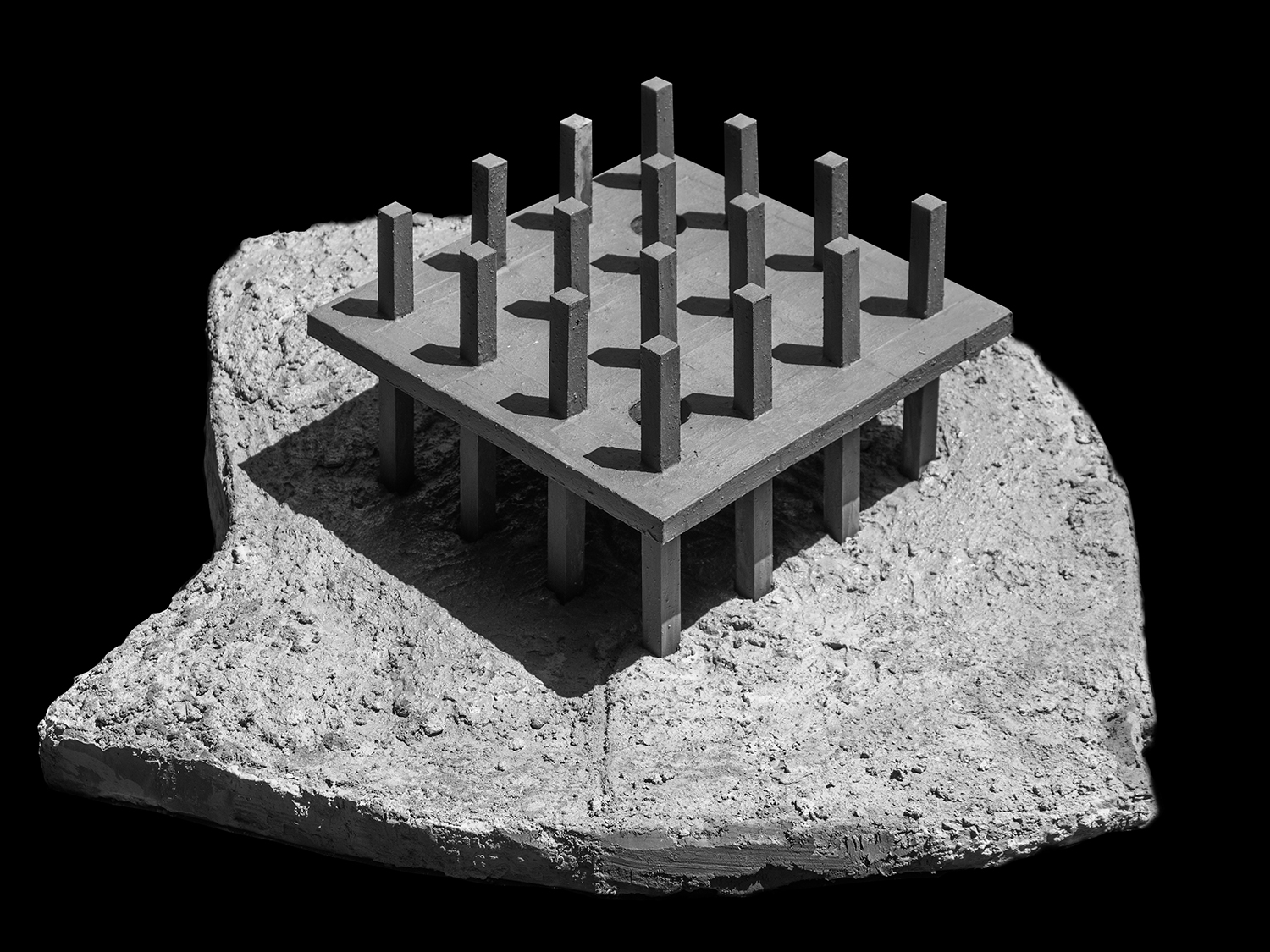
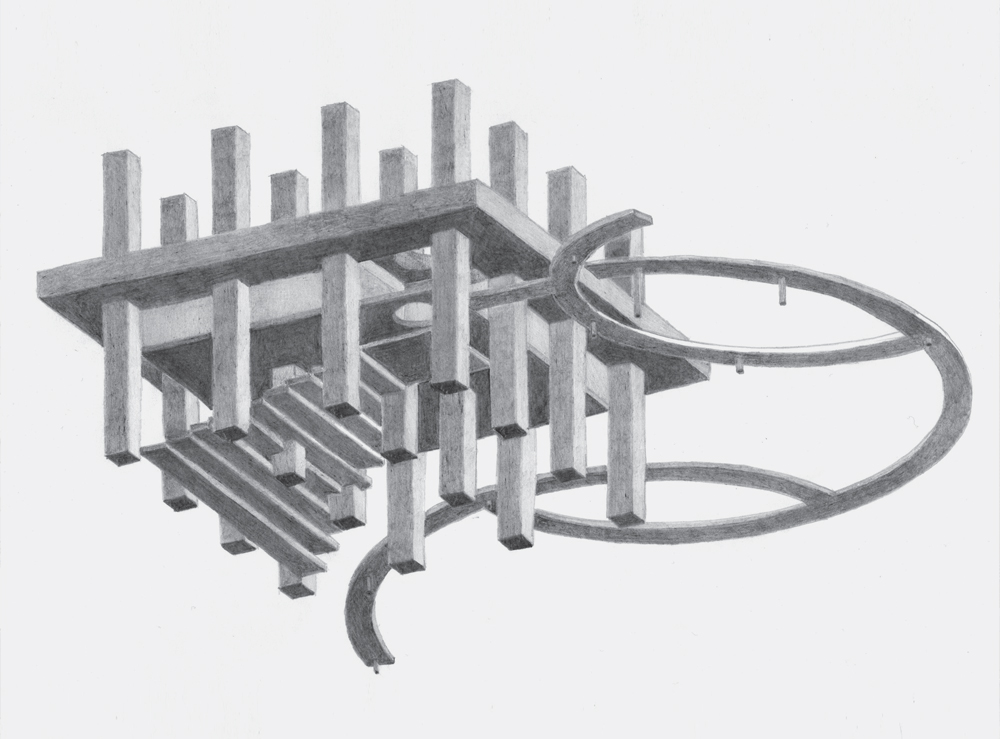
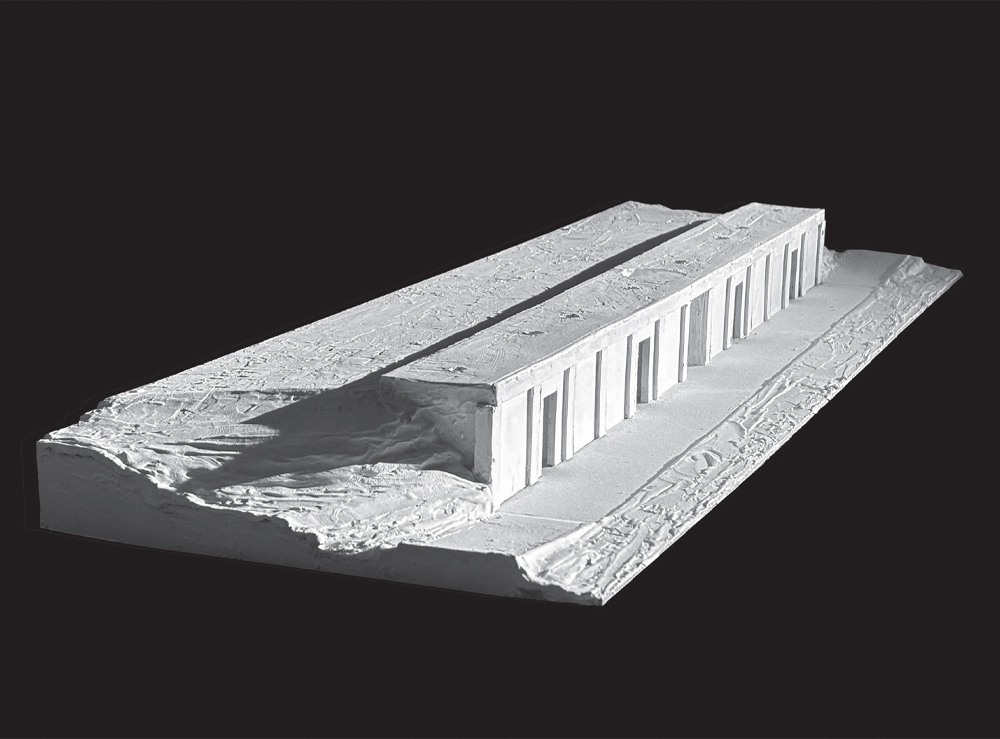
Model image of the REST (2025). Image courtesy of Pezo von Ellrichshausen
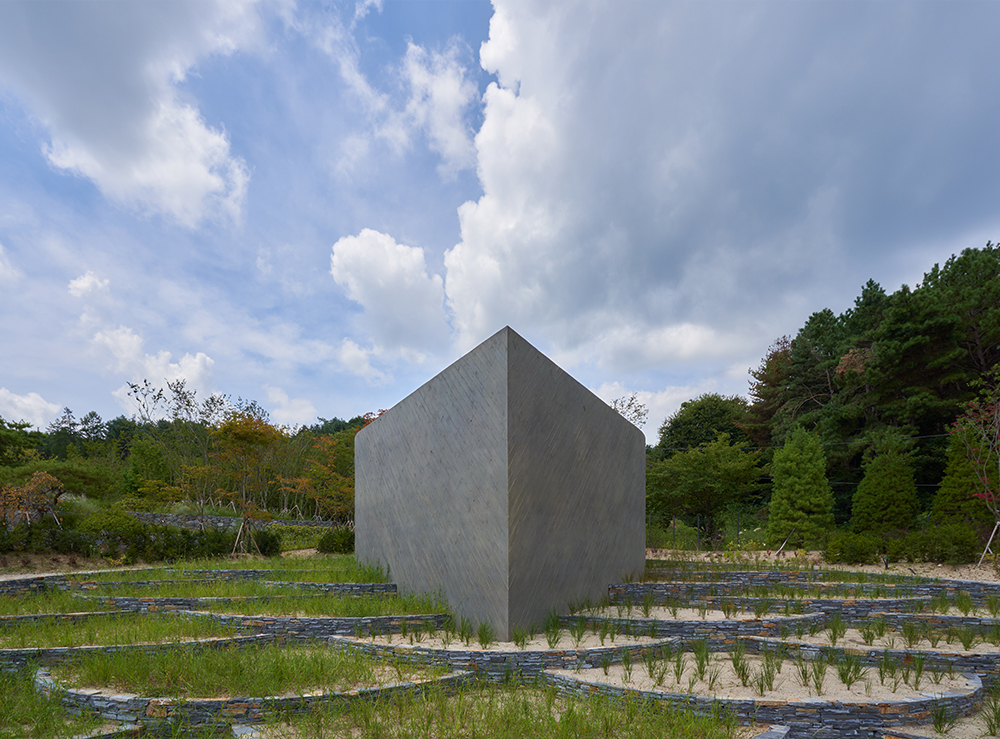
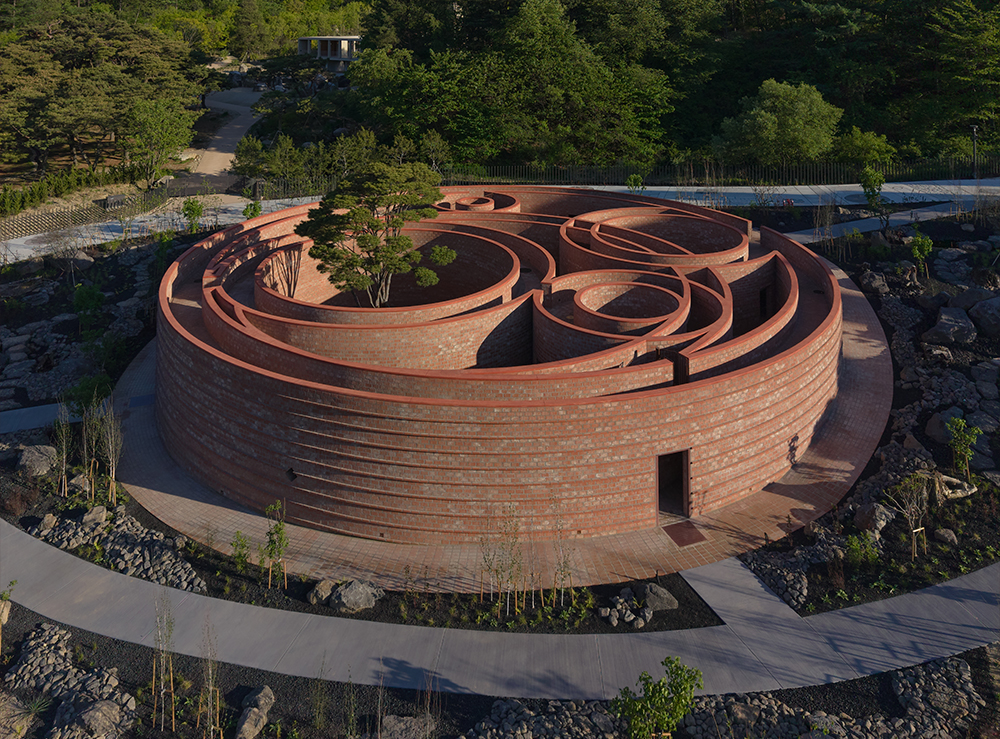
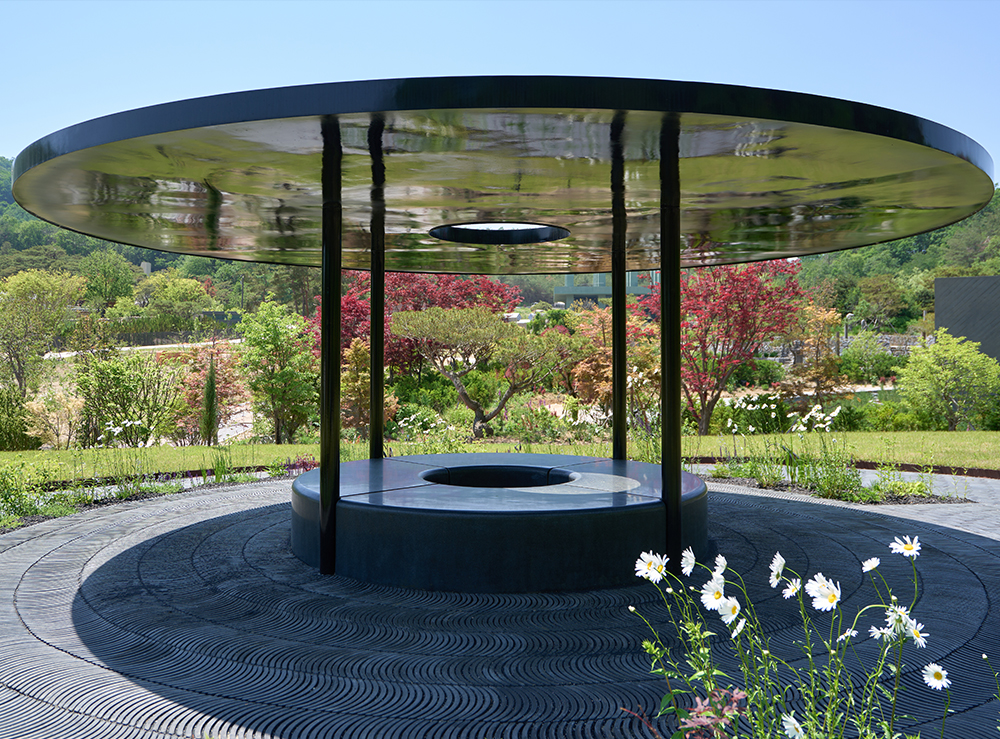
LAND (2025) is a small circular pavilion situated on a mound. Four slender circular columns support a circular roof. Its centre is also hollowed out in a circular form. It is an outward-looking pavilion that invites visitors to sit and survey the garden. SHIP (2025) combines the circle and the triangle. Entering through an opening cut into a tall, curved wall, one encounters a fortress-like open-air theatre. The garden disappears from view and only the sky remains, yet a reversal soon occurs. Ascending the stepped platform that cuts through the theatre, the garden reappears as part of a dramatic unfolding of space. Leaning against the upper edge of the wall, one can quietly contemplate the landscape below. It is a roofless cave, yet also an open pavilion that frames the garden in a striking manner; interior and exterior, centre and periphery, sky and earth converge. POND (2026) combines the square and the circle. Following the sloping terrain, a square platform orchestrates the ground space, within which a circular stepped water court has been inserted. One hundred columns – ten along each side – stand at regular intervals within a grid. Their repetitive arrangement naturally evokes a sense of infinity; stainless steel surfaces that reflect light like mirrors further amplify this effect. JEUX (2025) is an open-air theatre composed of meticulously cut marble arranged along countless concentric circles. Entrances are aligned with the four cardinal directions—north, south, east, and west. At its centre lies a circular well concealing a mirror. (...)