
SPACE July 2026 (No. 704)
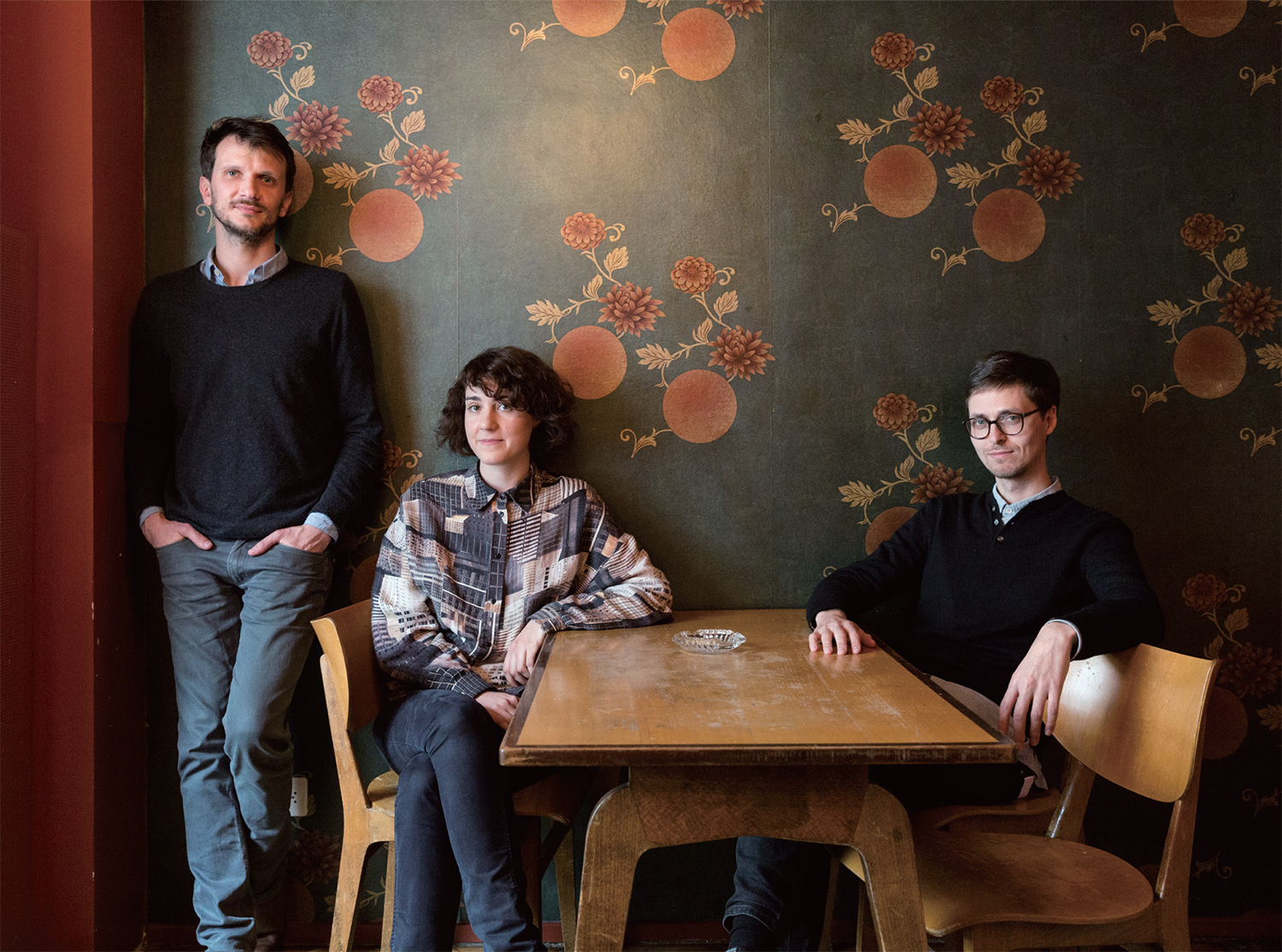
Cristina Gonzalo Nogués (middle), Marco Neri (right), Markus Weck (left) ©Anne Morgenstern
Swiss architects generally practice architecture in the region to which they belong, building close local relationships as they do so. GNWA (Co-Principals, Cristina Gonzalo Nogués, Marco Neri, and Markus Weck) is different. Founded in Zurich by three individuals who had each left their respective homelands – Spain, Portugal, and Germany – at different times to move to Switzerland, the office has pursued projects across Switzerland through competitions, rather than practising from a specific regional base. GNWA seeks to establish a shared elementary architectural grammar that transcends region and era, and the architecture that the office designs is clear and simple. At the same time, it accepts the complexities arising from each site, programme, and so on. This simple structure thus derived serves as a frame for embracing diverse uses and communities. Editor
interview GNWA Co-Principals, Cristina Gonzalo Nogués, Marco Neri, Markus Weck × Kim Bokyoung
Kim Bokyoung (Kim): Cristina Gonzalo Nogués studied architecture in her hometown of Barcelona, Spain; Marco Neri was born in Portugal and moved to Switzerland as a child; and Markus Weck grew up in Hamburg after his family left Leipzig in the former East Germany. What brought the three of you together in Zurich to found GNWA in 2015?
GNWA: Marco and Cristina first crossed paths at EPFL in Lausanne in 2007, where they were part of the same studio team for a year. Cristina had come from Barcelona on an Erasmus exchange before moving to Zurich for an internship. Markus and Cristina then met at E2A Architekten in Zurich, where they worked closely together across several competitions, while Marco was gaining experience in Geneva. By 2013, all three of us had left our respective offices and begun collaborating independently, entering competitions together as an informal collective. That partnership crystallised when we won the competition for a new cultural and sports centre in Romont—a project that gave us both the confidence and the concrete workload to formalise our collaboration.
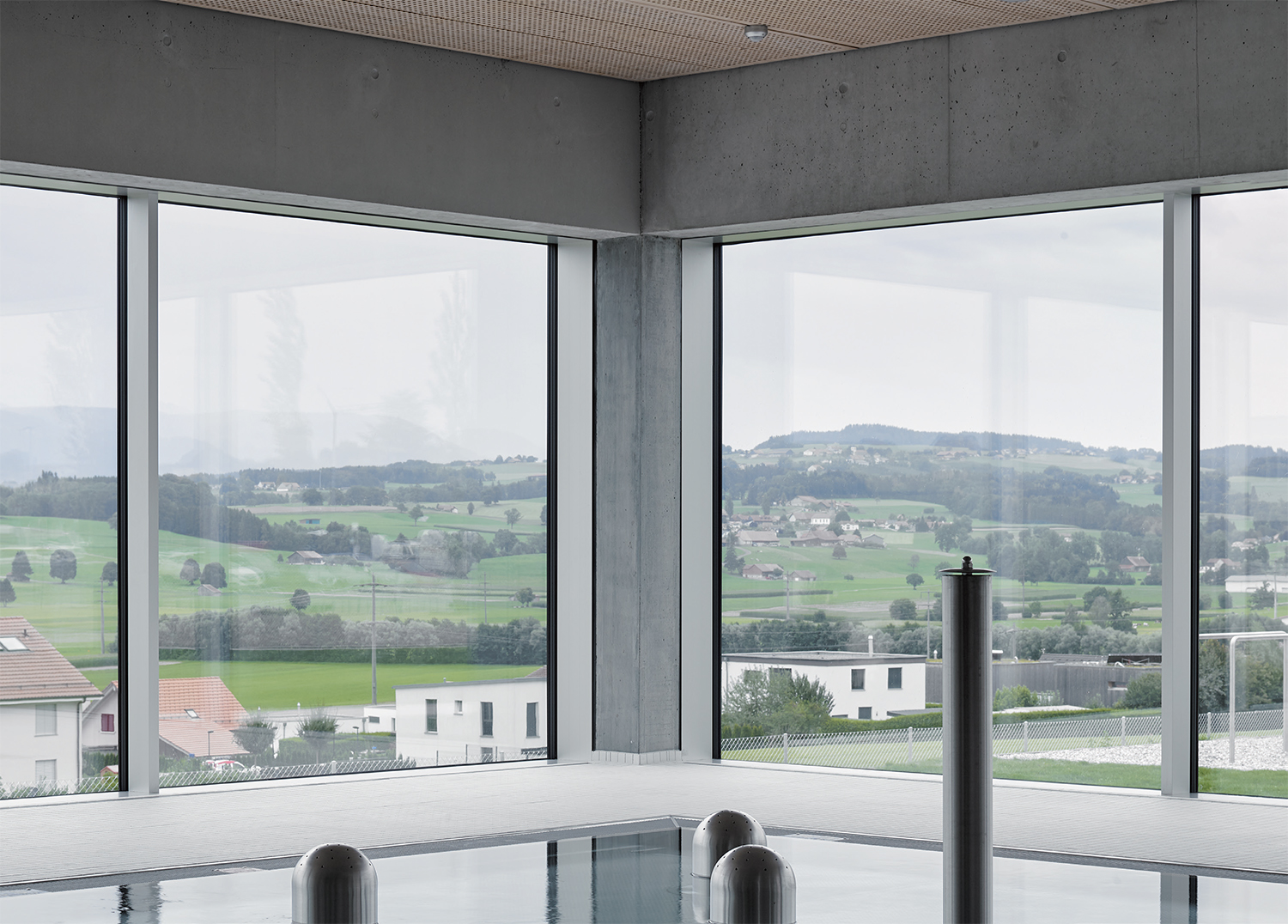
©Juan Fabuel
Kim: Given that a competition win was the catalyst for founding the office, it’s no surprise that most of your projects have been acquired through open or invited competitions—and that your work is almost entirely public architecture. What does that mean to GNWA—both the commitment to competitions and to public programmes? And how does it differ from competition culture elsewhere?
Kim: My understanding is that many Swiss architects tend to work within a particular region. GNWA, by contrast, has taken on competitions held throughout country—crossing the line between the French-speaking and German-speaking parts of Switzerland. What led you to work at that kind of national scale?
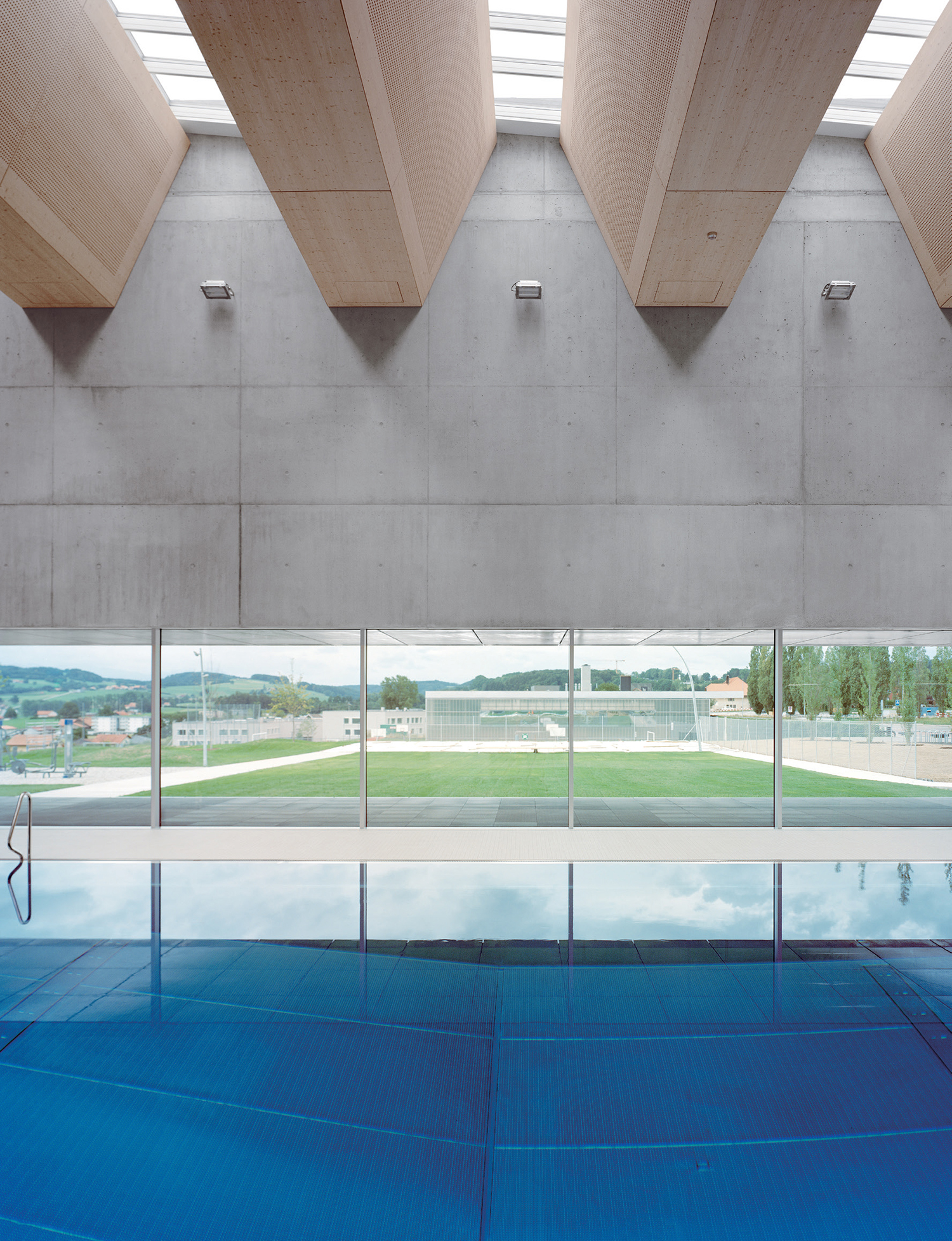
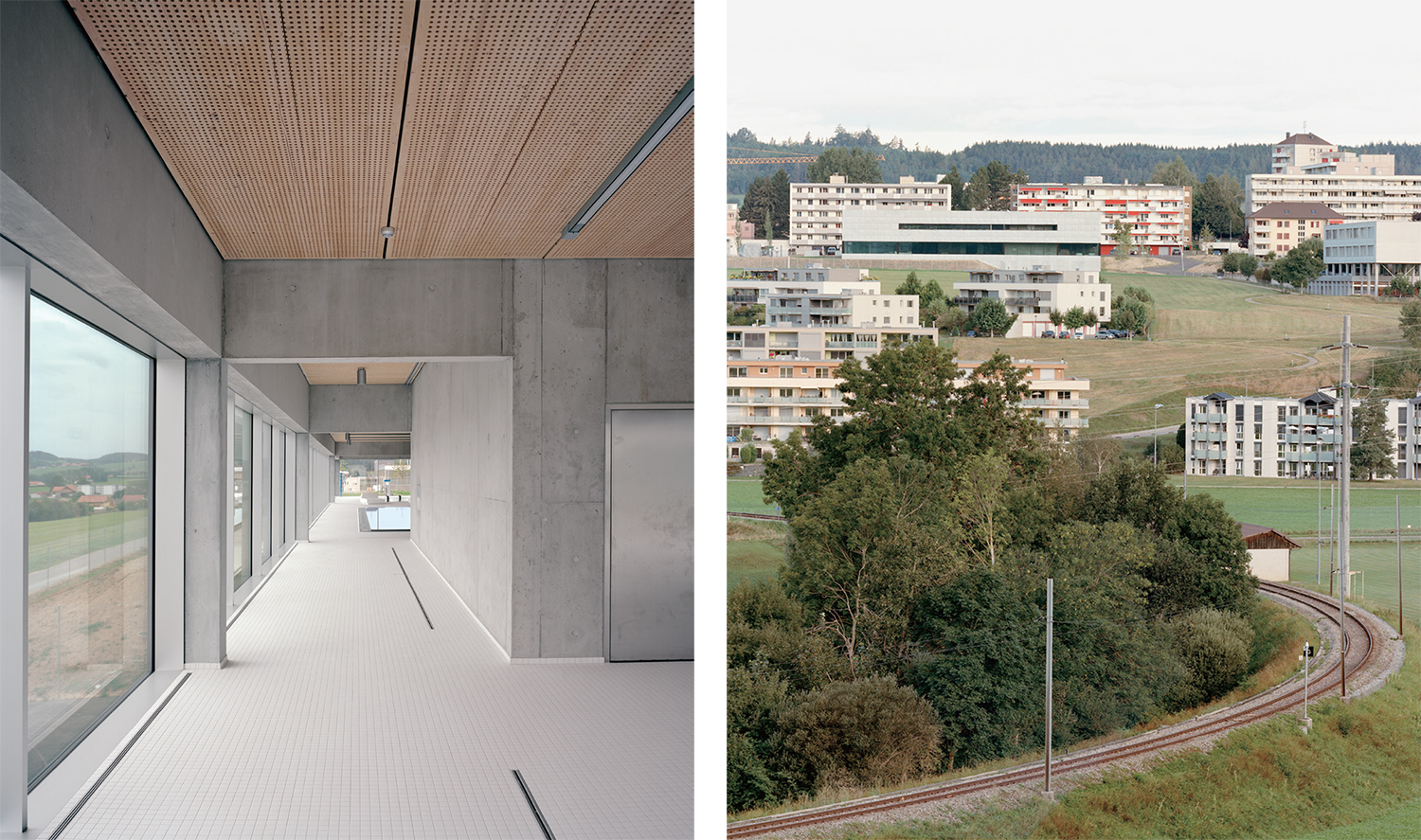
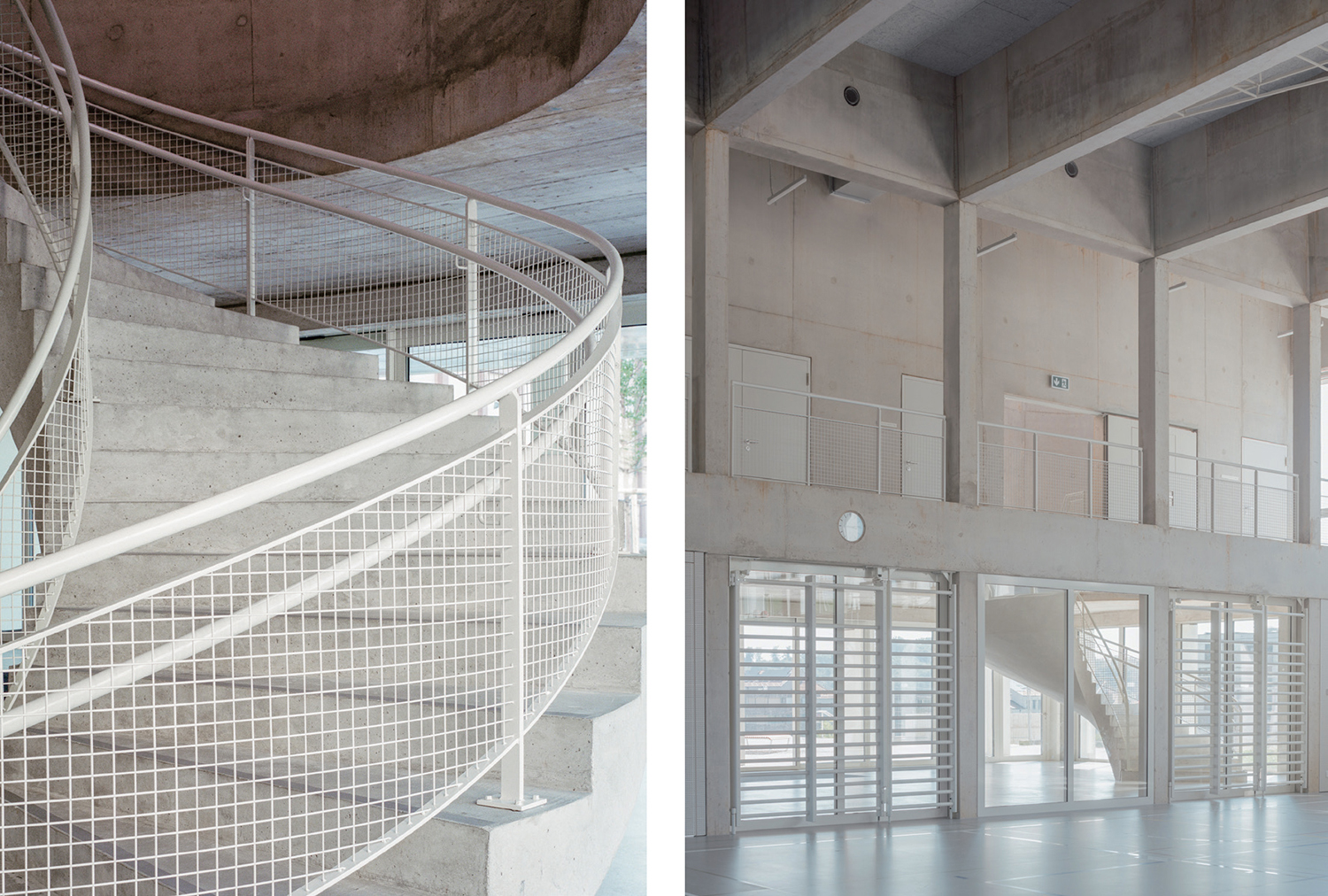
Romont Cultural and Sports Center (2020)
Designed with a square footprint, it integrates diverse programmes, extending the concept of a linear school campus along the street. The project’s design is based on a vertical tripartite concept: a basement in contact with the terrain; a transparent first floor, acting as a belvedere overlooking the Fribourg Pre-Alps, which houses the aquatic facilities, a lobby, and a cafeteria; and an introspective upper floor, containing the Fribourg conservatory, sports facilities and a wellness area. The structure is defined by the interplay of two opposing systems: an open floor plan supported by minimal points on the first floor, and a framework of concrete walls forming a cohesive grid on the upper level. The lintels on the first floor, revealing the structure above and expressing the building’s structural logic, create a sense of enfilade within the open layout. The spatial sequence is further emphasised by varied ceiling heights. On the upper floor, the wall-structured layout creates introspective spaces, with views of the landscape framed through panoramic or punctuated windows. The façade reflects the tripartite concept, with a galvanised steel base and upper floor, while the open-plan middle level remains fully glazed.
Kim: 2025 marks ten years since the office was founded—congratulations! GNWA reflected on that decade through two exhibitions: ‘Structures de la contingence’ in Paris at the end of 2024, and ‘Structures pour l’altérité’ in Lausanne in early 2026. What do contingency and alterity (or otherness) mean to GNWA?
©Federico Farinatti
Kim: Structure is clearly central to GNWA’s architecture. And yet it seems less about finding new or technically challenging structural solutions, and more about choosing a structure that most clearly expresses the spatial logic of a project. What role does structure actually play in the way GNWA designs?
And yet, despite these different entry points, we found a shared understanding underneath: structure, for all of us, is a frame—but also a shared conceptual ground. It is something resistant and enduring that allows change and variation to occur within it. It holds things together over time without determining everything.
That is why we chose to speak of formal elementary structures ‒ structures formelles élémentaires ‒ rather than simply structural systems. In architecture, the word structure is most commonly associated with statics, and we wanted to reach beyond that. Architecture is ultimately about form and spatiality, but it is also a language—and we are interested in whether architecture, like language, might have underlying patterns that operate prior to cultural coding. These would be shared spatial experiences that transcend particular contexts. Structures formelles élémentaires is our attempt to name that convergence: the technical, the spatial, the symbolic, and the linguistic, understood as a single, coherent system.
©Federico Farinatti
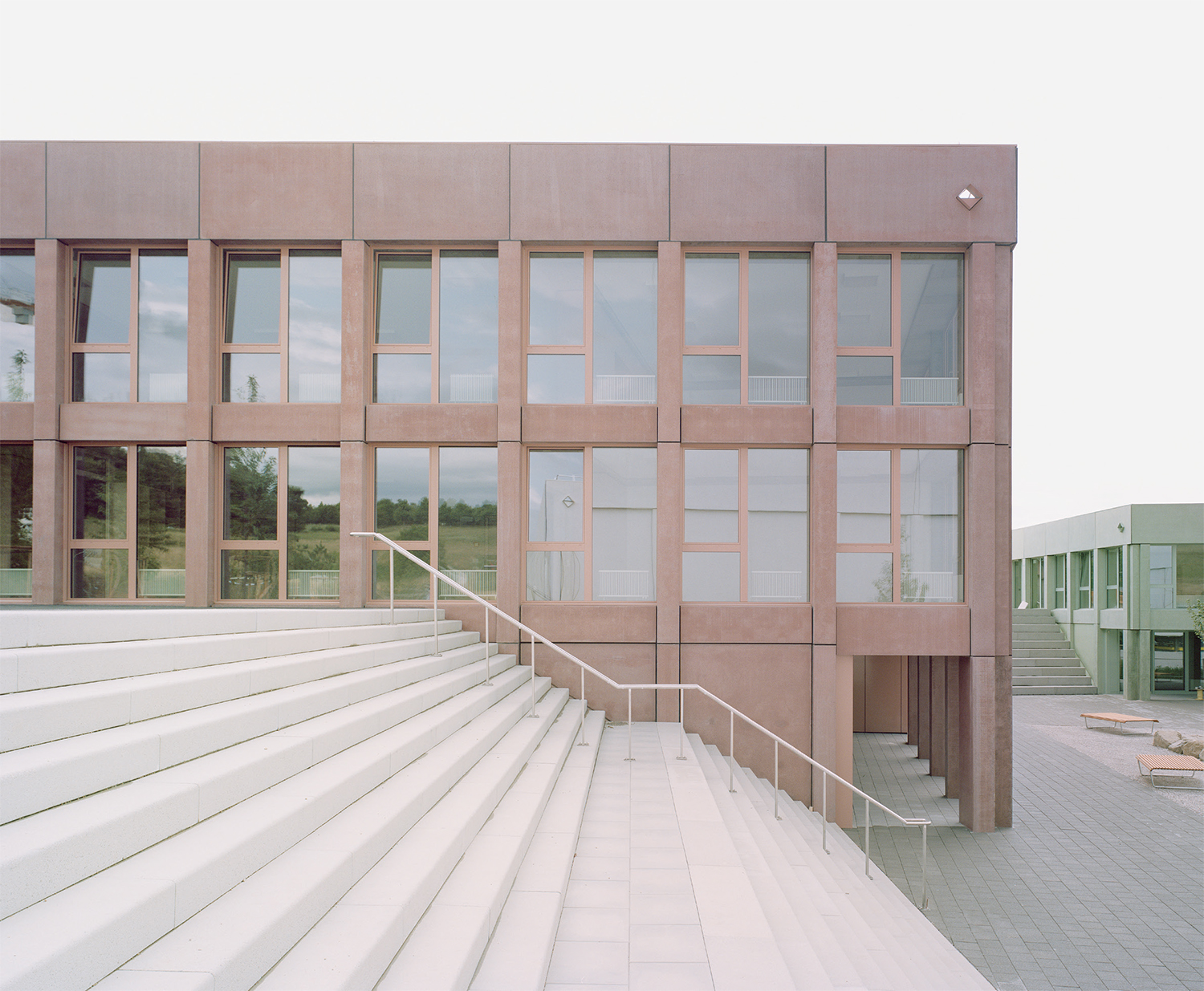
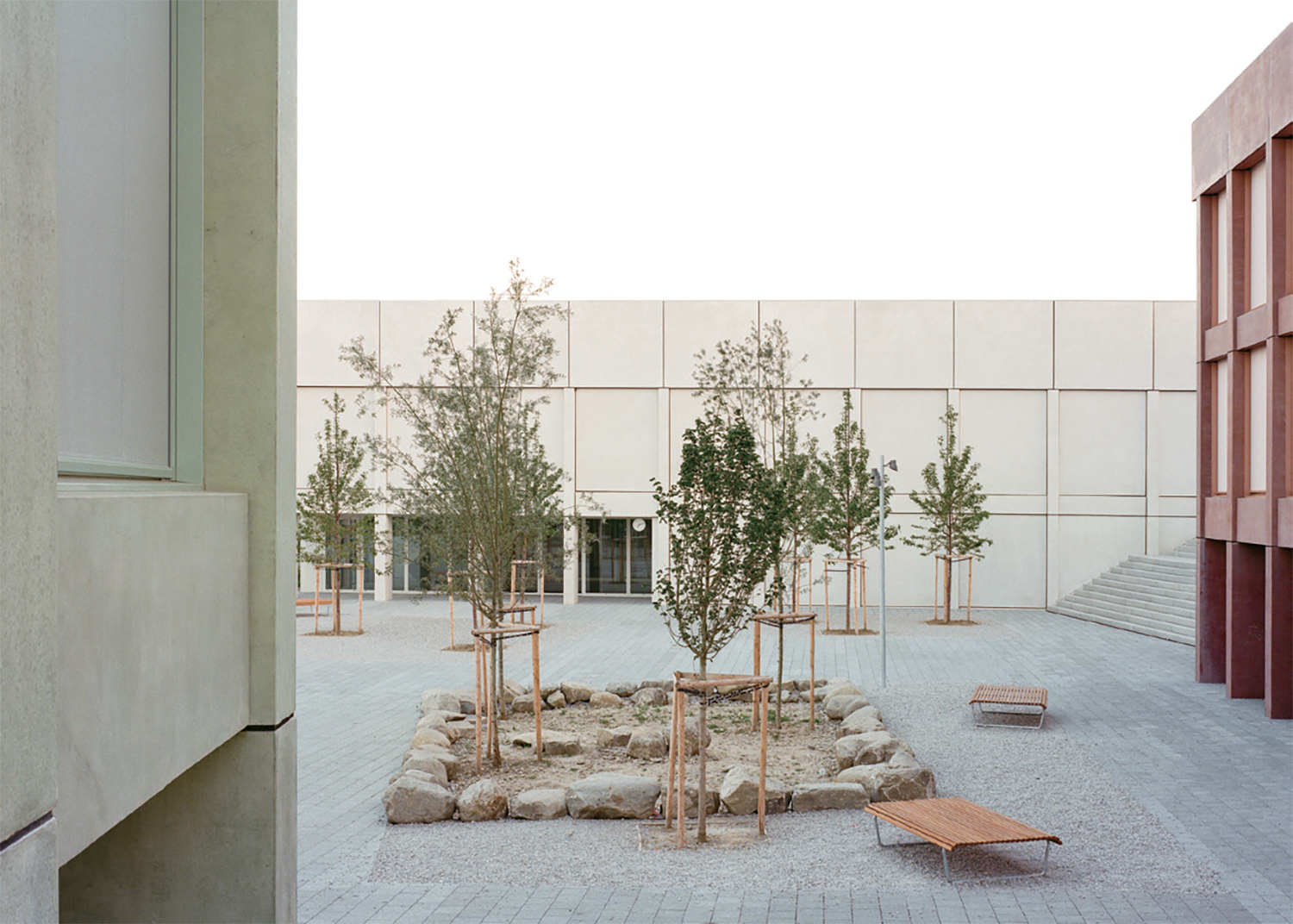
Bussigny School Campus (2023)
The new school complex is located in a dynamic neighbourhood at the transition from Bussigny’s urban fabric to the surrounding rural landscape. The campus includes a primary school, a kindergarten, and a sports hall. The project is structured around the concept of a central void, which forms the foundation of its spatial organisation. This core is an Agora, an open space that defines and unifies the complex. This void not only connects to the public square below but also integrates a diagonal pathway that traverses the site from north to south, enhancing permeability and accessibility. Surrounding the buildings, a park links to the Agora through a series of stairways, reinforcing the integration between architectural and natural elements. The Agora itself is conceived as an abstract, neutral space, adaptable to a wide range of uses and appropriations. Framed by three distinct buildings with colonnaded entrances, it establishes a cohesive architectural language while emphasising the autonomy of each structure through varied uses and heights. Each building stands out with its unique colour, yet they are tied together through a common façade principle, creating a complex that balances identity and coherence.
Kim: You’ve described these formal structures as spatial organisations that carry no prior meaning. But architecture is always situated within social and cultural context. Is ‘space before meaning’ actually achievable? And how does the pursuit of elementary formal structures sit alongside GNWA’s stated commitment to building for society?
Kim: Beyond structure, GNWA’s spatial organisation also tends to be strikingly clear and direct. In the Romont Cultural and Sports Center (2020), a square plan is divided vertically into three distinct layers. In the Saint-Prex Garden Pavilion (2021), the Bussigny School Campus (2023), and the Goumoens Elderly Housing (ongoing), the mass is split into two or three parts and brought together at ground level. The approach differs from project to project, but there always seems to be a single, legible parti (or corsé) at the centre of it. How do you arrive at that organising principle when you begin a project?
©Olivier Campagne × ArtefactoryLab
©Olivier Campagne × ArtefactoryLab
©Olivier Campagne × ArtefactoryLab
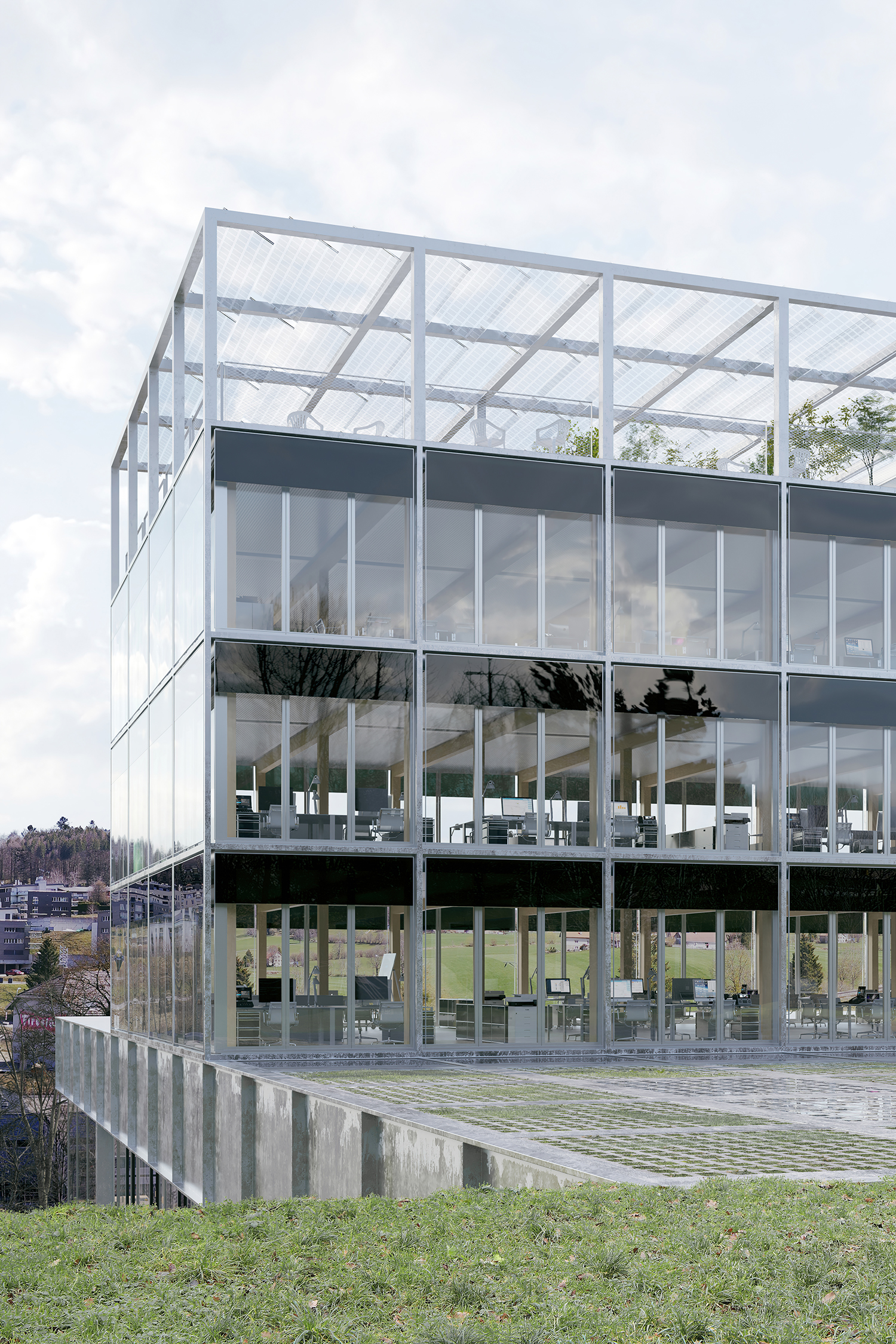
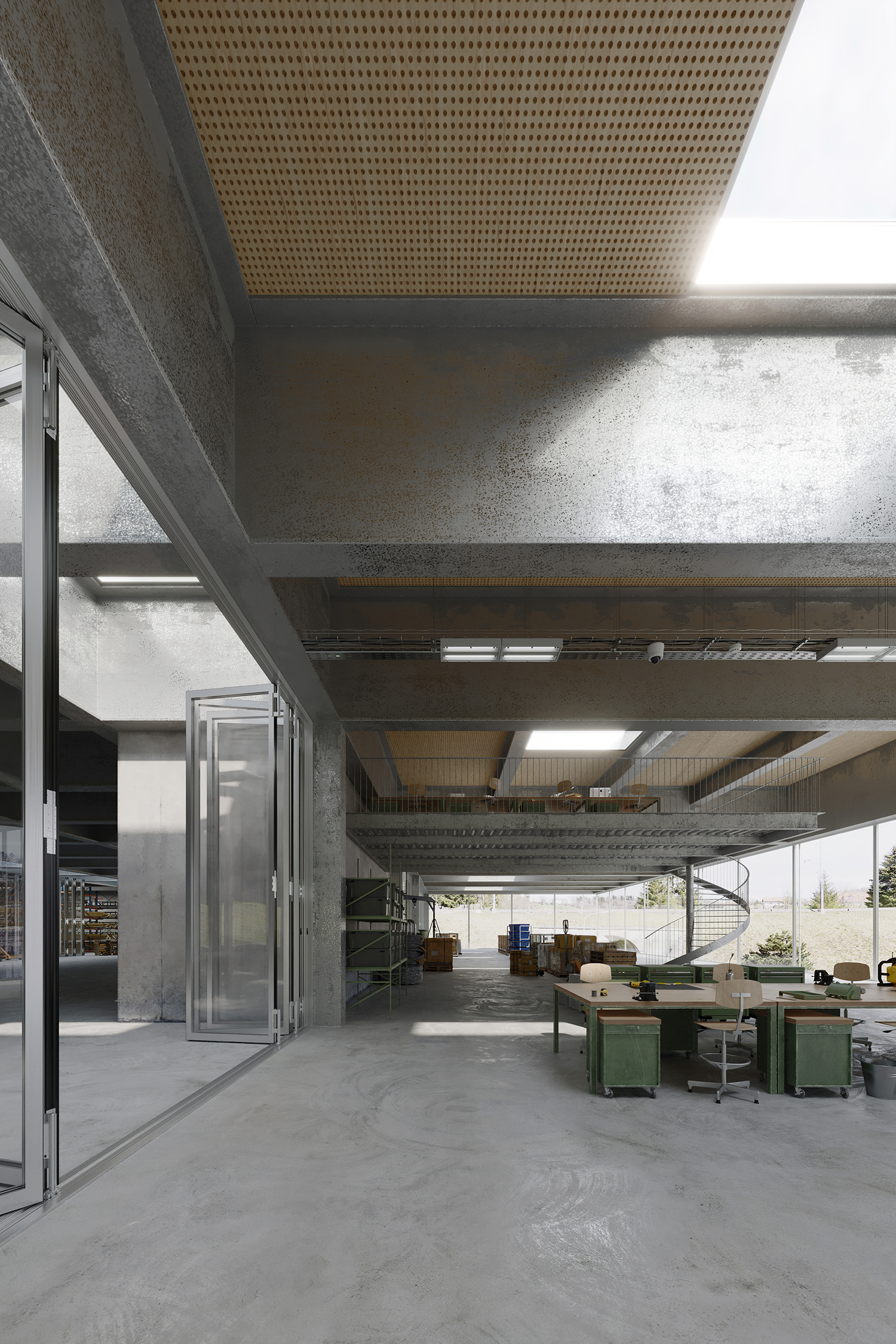
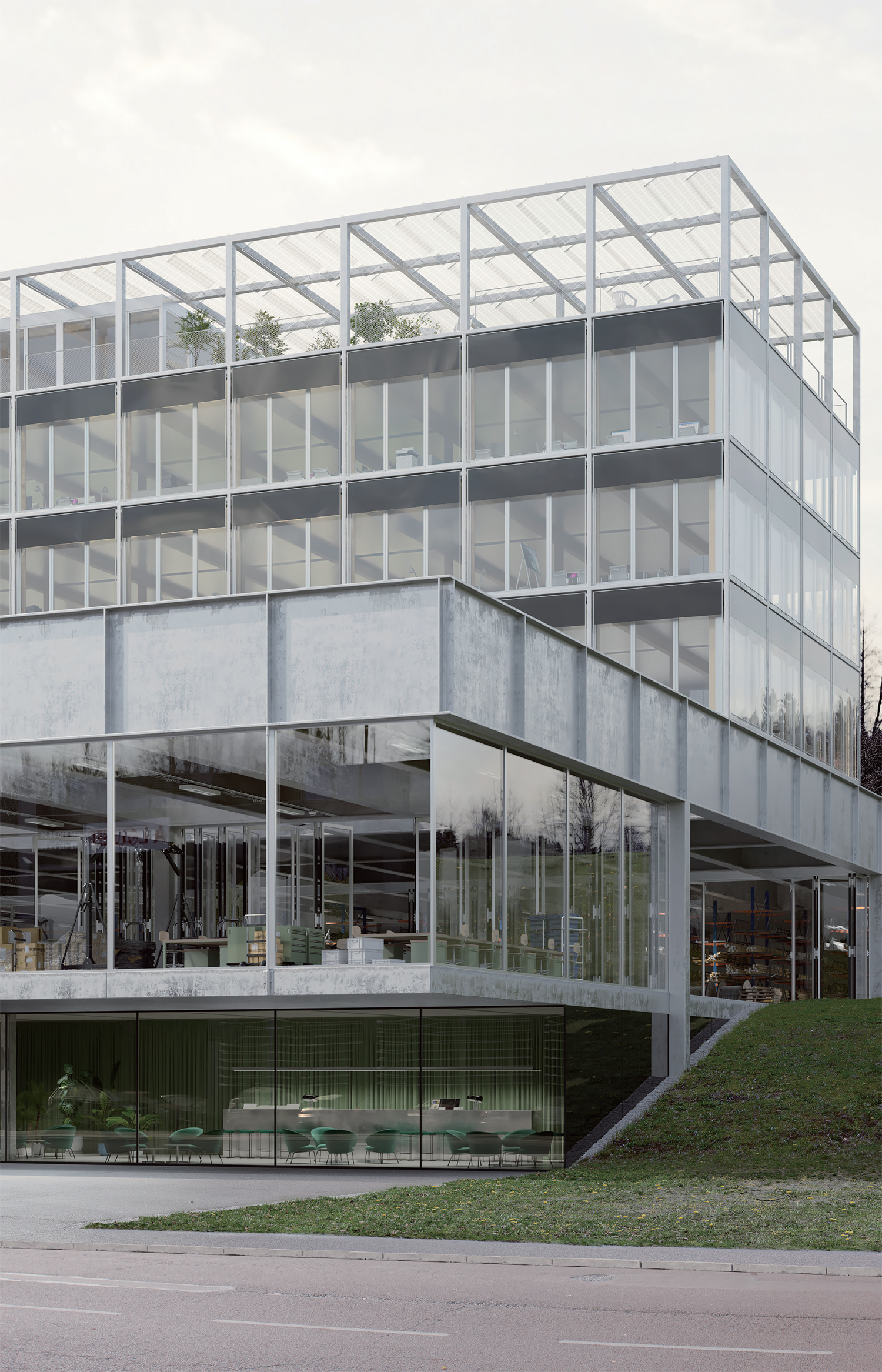
La Chaux-de-Fonds Viteos SA (ongoing)
The new headquarters of Viteos is located at the entrance to La Chaux-de-Fonds. Designed as an iconic showcase for Viteos’ operations, the building highlights not only the company’s internal processes and products but also its strong commitment to sustainable practices. The building reflects the diversity of the company’s activities through the superimposition of different functional programmes, each expressed through its own typology, structural concept and material. The first floor houses the entrance and showroom, while the base accommodates workshops and storage. The upper levels are dedicated to office spaces, laboratories, and common areas. This stacking of distinct structural archetypes is unified by a common grid and façade. The transparent envelope ensures that the building’s activities and employees are equally highlighted, promoting a sense of openness and engagement. The building embraces low-tech principles, an economy of means, and the visible integration of energy systems and climate control devices on the façade. Additionally, the use of low-carbon materials significantly reduces the building’s environmental impact. Rendering.
Kim: In more recent work ‒ the ongoing La Chaux-De Fonds Viteos SA and Lausanne La Sallaz School ‒ a concern for sustainability becomes more visible. At Viteos, energy systems are exposed on the façade; at La Sallaz, photovoltaic modules are integrated as part of the structural expression. Rather than concealing these devices or absorbing them into the finish, you’ve brought them into the architectural language itself. How is sustainability expressed in GNWA’s architectural language?
GNWA: Ten years ago, we began our work primarily with concrete structures, such as the Romont Cultural and Sports Center and the Bussigny School Campus. Concrete has always fascinated us—it is a material of extraordinary performance and remarkable plasticity. But sustainability has introduced new challenges that have genuinely changed how we work. Over time, we have been reducing our use of concrete, exploring hybrid solutions such as those at Viteos and timber structures like the one at La Sallaz.
On the question of energy systems, our approach follows a principle that has actually been consistent throughout our work: we prefer to dissociate the different layers of a building rather than merge or conceal them. We like to show structure, installations, and cladding as distinct things—each assuming its own presence and temporality. Structure, for us, is the element conceived to last; the technical systems are more like software—replaceable, upgradeable, but no less important for that. Making them visible is partly a matter of architectural honesty, and partly a form of social consciousness in the face of the climate crisis: when energy systems are legible, the people who inhabit a building can understand and engage with how it works, and grasp the symbolic meaning embedded in that relationship.
But this dissociation also generates something more than clarity—it creates a productive tension. This approach resists a contemporary myth: that technology must either be hidden or celebrated. We refuse that binary. By showing structure and devices as distinct but coexisting layers, we maintain a critical distance. Out interest is not in oppositions, but dualities: what endures and what evolves, necessity and contingency, the primordial and the technological. What is perhaps crystallising now is an architectural language where the primordial and the technological meet—not merged as one but maintaining a dialogue while preserving the autonomy of each layer. Each informs the other without losing its distinct identity.
At the same time, we are deliberately pursuing a low-tech architecture—one where technological devices are not indispensable to the functioning of the building. Just as the deep structures we work with attempt to reach an elemental, almost primordial state, we believe buildings should also return to greater autonomy. They should not depend on technology to perform. The structure itself carries the spatial and environmental logic: natural ventilation, thermal mass, orientation, daylight. Technology becomes contingent—an addition, not a necessity. This return to autonomy is part of the permanence we are looking for.
©Vu doppia
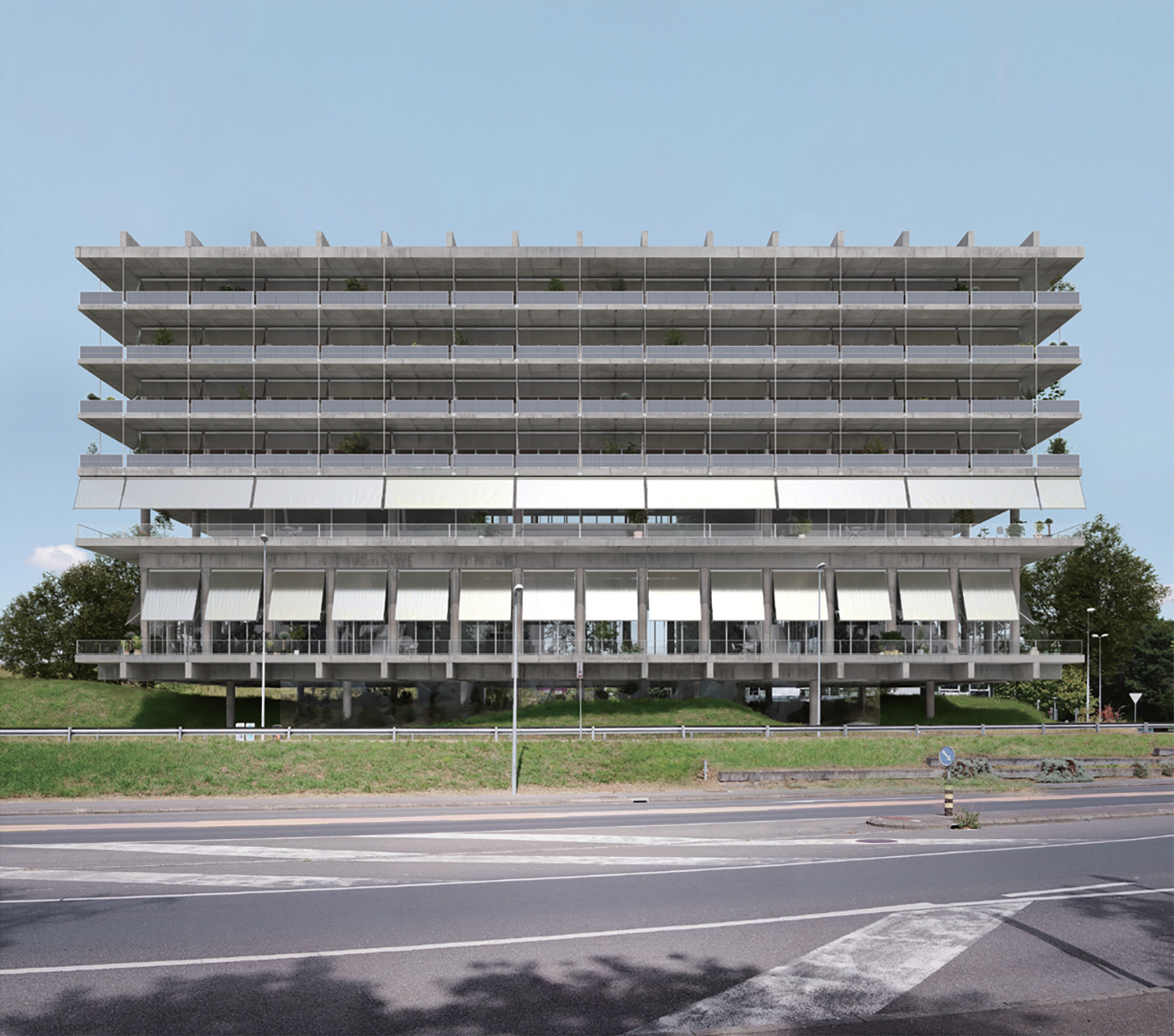
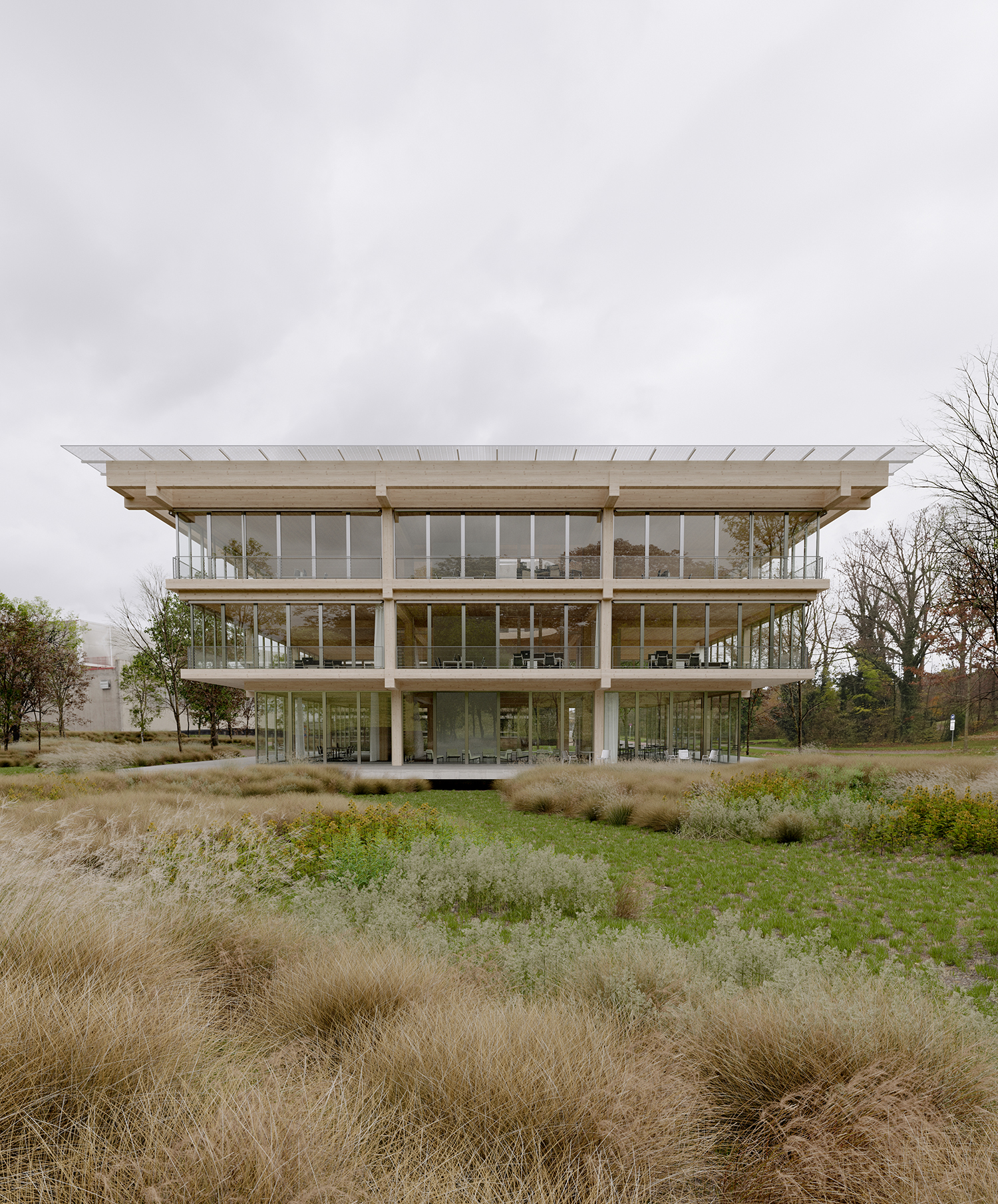
UNIL (2021), competition entry for the open design competition: New Building for Human Sciences (NBSH) on the UNIL Campus; rendering ©Olivier Campagne × ArtefactoryLab
Kim: In the exhibition introduction text, you used the phrase ‘technological devices regarded as provisional, expected to evolve.’ The same could be said of the sustainability technologies embedded in your buildings. So when the solar panels are eventually replaced and the façade systems updated, what is it that keeps the building meaningful over time?
GNWA: This is a question that has occupied more and more of our time and thought. We think what keeps a building meaningful must be related to permanence—but the question then becomes: are there different forms of permanence beyond what we have been taught?
We have all accepted that technological devices are conceived with obsolescence built in. If contemporary architecture relies primarily on this dimension, in thirty years we will have little heritage worth preserving. What endures, for us, is the spatial and formal organisation that underpins these layers. The technological devices are provisional by design, plugged into the structure. But the spatial framework itself should be conceived for permanence and should be able to stand even when stripped bare.
The occidental idea of permanence often relies on material continuity—stone or concrete that resists time through sheer durability. There is also the idea of typological permanence, as theorized by Rafael Moneo, Carlos Martí Arís, or Aldo Rossi—the type as a structure that endures beyond specific materials or construction systems. This has helped us understand our formal elementary structures as operating beyond statics and construction alone.
However, we have also been thinking about other models. The Ise Shrine in Japan has endured for over 1,300 years not through material fixity, but through repeated dismantling and rebuilding. What is carried forward is not matter but knowledge—the transmission of how to construct, and the values embedded in that ritual. Permanence, in that model, is cultural and symbolic rather than material, yet still remains rooted to the site.
Understanding this led us to wonder whether there might be alternative forms of permanence, ones that operate at multiple levels simultaneously. This remains, for now, an intuition—something we hope to develop through further research. Increasingly, we are asked in competitions to design buildings with a projected lifespan of only thirty years, while the norms are thought for only 60 years. We understand the political and economic pressures behind this, but it troubles us. If buildings are conceived as temporary from the outset, architecture risks becoming instrumental rather than symbolic or meaningful—a purely functional response with no expectation of carrying long-term cultural value.
But if we must accept this pressure, then the question is ever more urgent: how can a building remain meaningful even if the physical structure itself is dismantled and rebuilt elsewhere? What would endure across that transformation? Perhaps the depth of the spatial logic embedded in the building ‒ what we call the primordial ‒ and the capacity to accommodate multiple meanings over time without losing those fundamentals.
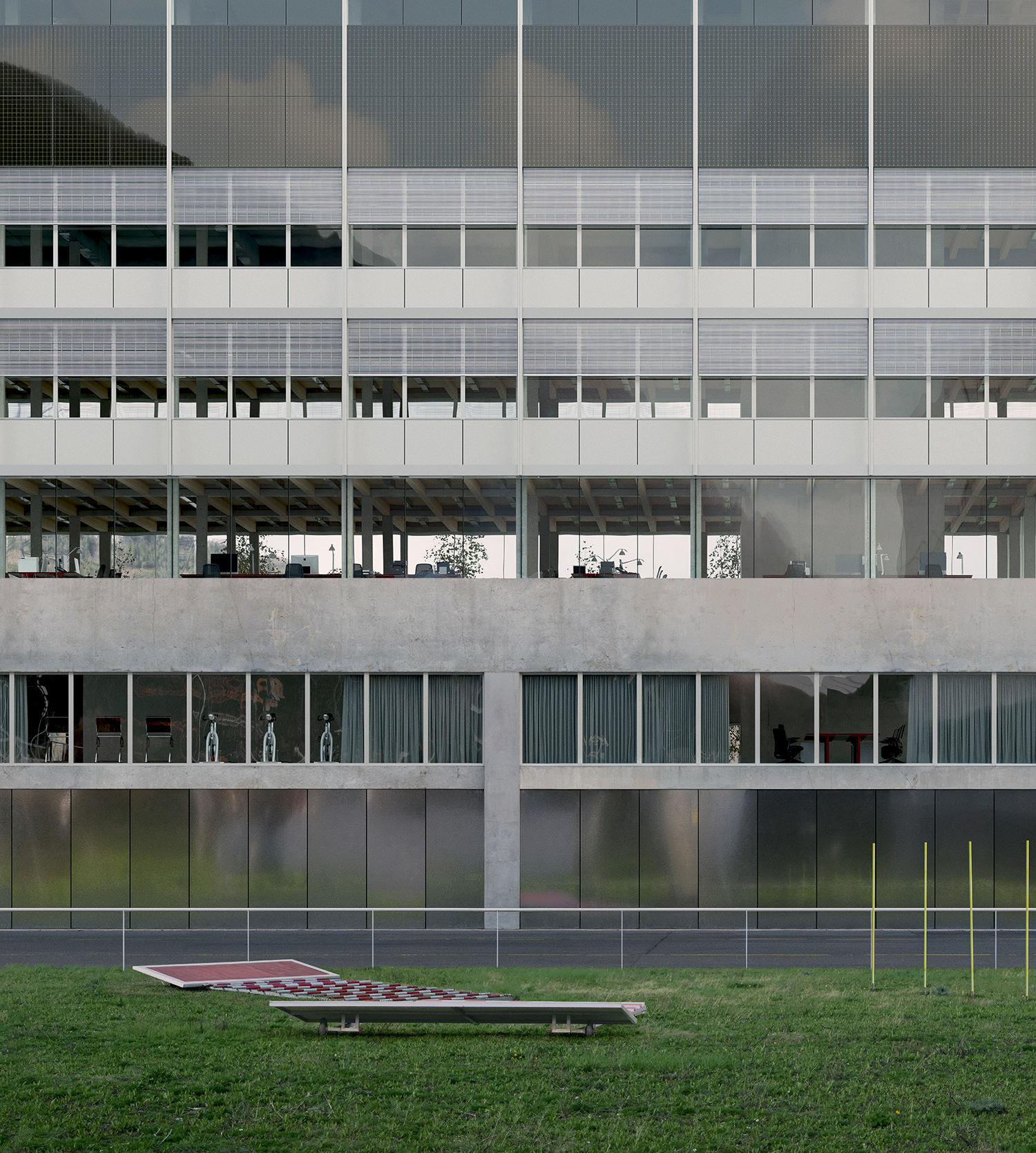
Oensingen KAPO (2023), competition entry for the selective competition: New Building for the Cantonal Police and Rescue Services Headquarters in Oensingen; rendering ©Olivier Campagne
Kim: Looking ahead—how do you see GNWA’s work developing from this point onwards?
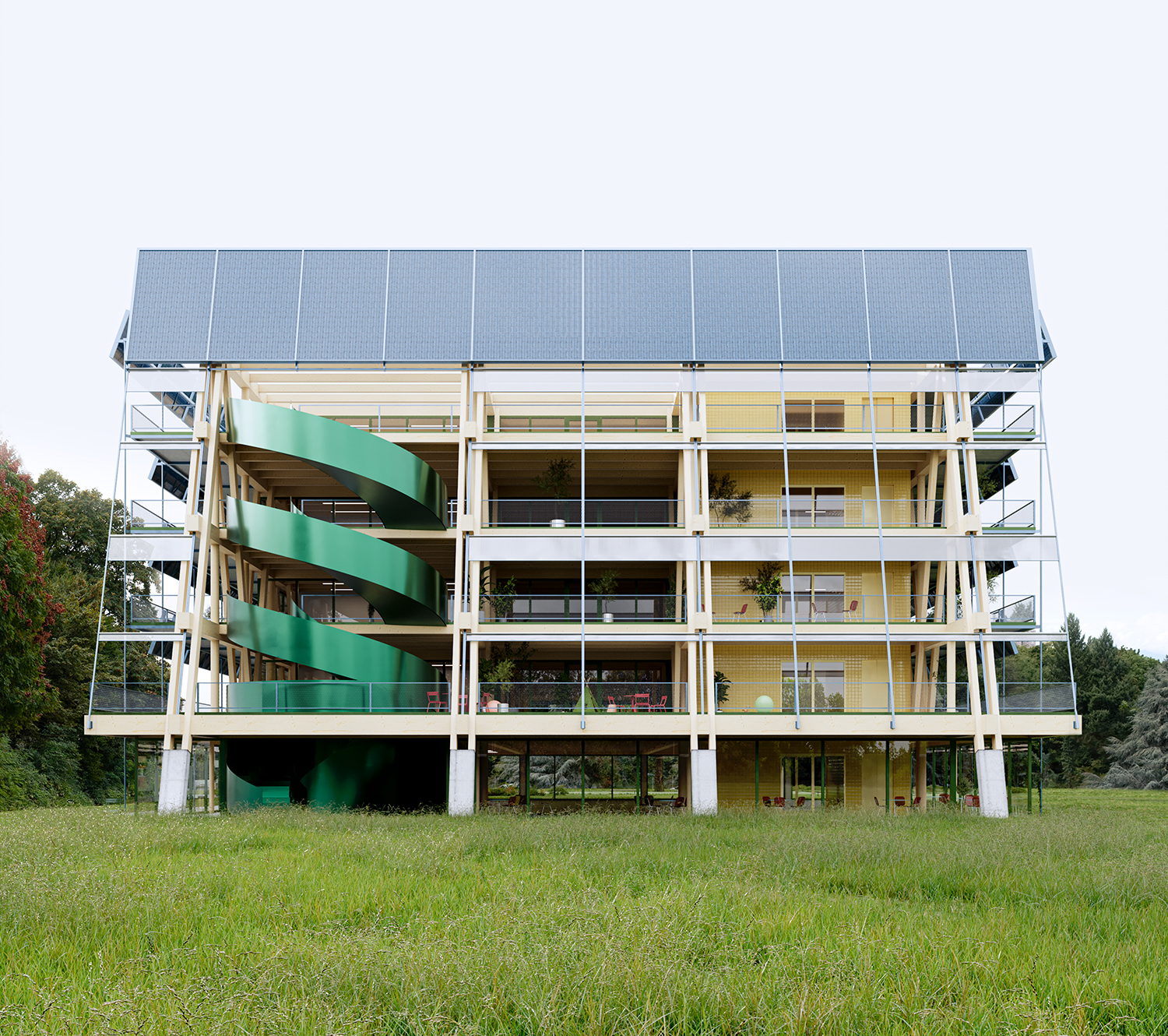 Malley School (2025), competition entry for the open design competition: New School Building in Malley, Renens; rendering ©Vu doppia
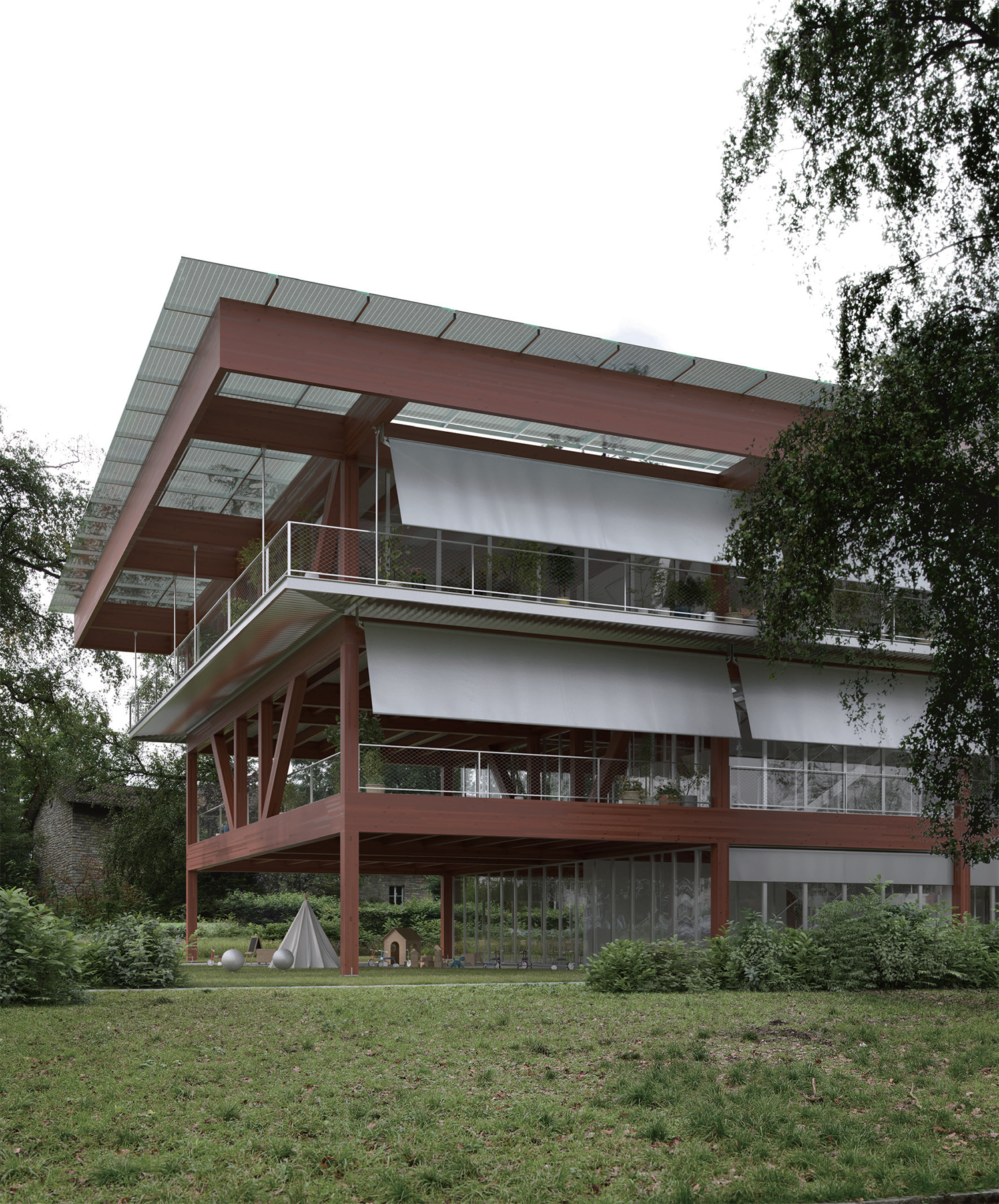
Entlisberg School (2022), competition entry for the open design competition: Extension of the School Complex Entlisberg; rendering ©Olivier Campagne × ArtefactoryLab
Kim: You teach at the University of Fribourg. How does teaching inform your practice? And more broadly, what do you hope to transmit to the next generation of architects facing very different conditions than those you encountered ten years ago?
GNWA: Teaching has changed significantly over the past decade—and the shift mirrors what has happened in our practice. Ten years ago, the climate crisis was not at the centre of our concerns in the way it is today. Now it is unavoidable, and rightly so: it is one of the main focuses of our teaching.
Our approach is not simply to add sustainability as a new layer on top of existing methods. We believe that a return to the fundamentals already contains, inevitably, much of what is needed—both ecologically and in terms of alterity. If we are willing to re-learn what was forgotten, to look carefully at what architecture knew before it became dependent on limitless resources, we find that a great deal of what we need is already there.
And yet the fundamentals alone is not enough. Architects need to challenge established codes, question received ideas, and assume risk. Without risk, change is not possible. What we try to transmit, then, is not a choice between these two positions, fundamentals or transformation, but a third form of thinking that holds both at once. The capacity to be rooted and restless simultaneously, to know what endures while still asking what needs to change.
This is perhaps the most difficult thing to teach, because it resists reduction. But we believe it is essential—and that it connects directly to what we have spoken about throughout this conversation: the refusal of polarisation, the search for what is shared, the openness to alterity. That kind of thinking does not change with the conditions—if anything, it becomes more necessary when conditions are more uncertain. The next generation of architects will face challenges we cannot fully anticipate. What we hope to give them is not a set of answers, but the critical tools to keep asking the right questions.
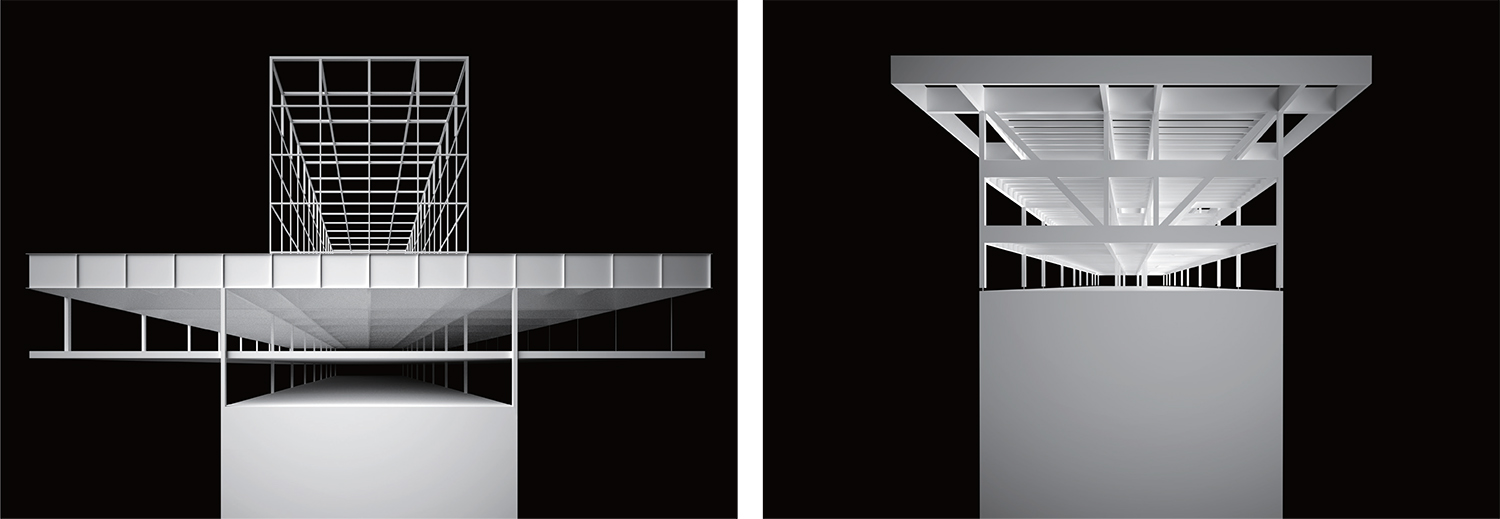
Structure concept images of La Chaux-de-Fonds Viteos SA(left) and Entlisberg School(right) ©GNWA
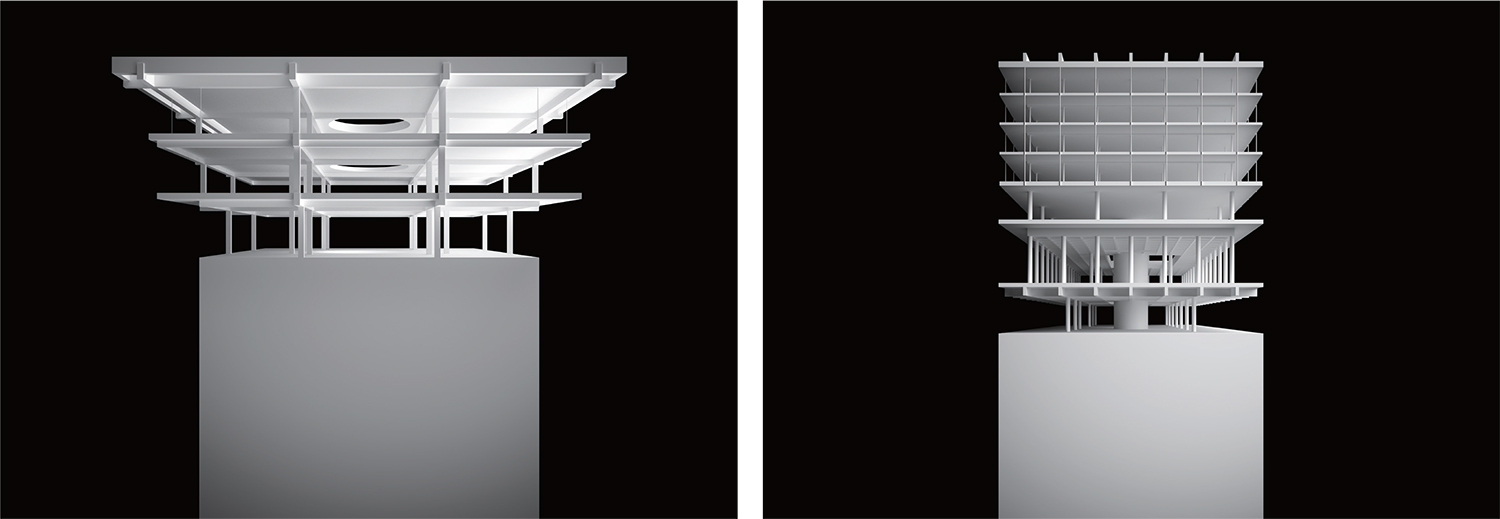
Structure concept images of Epura Headquarters(left) and UNIL(right) ©GNWA
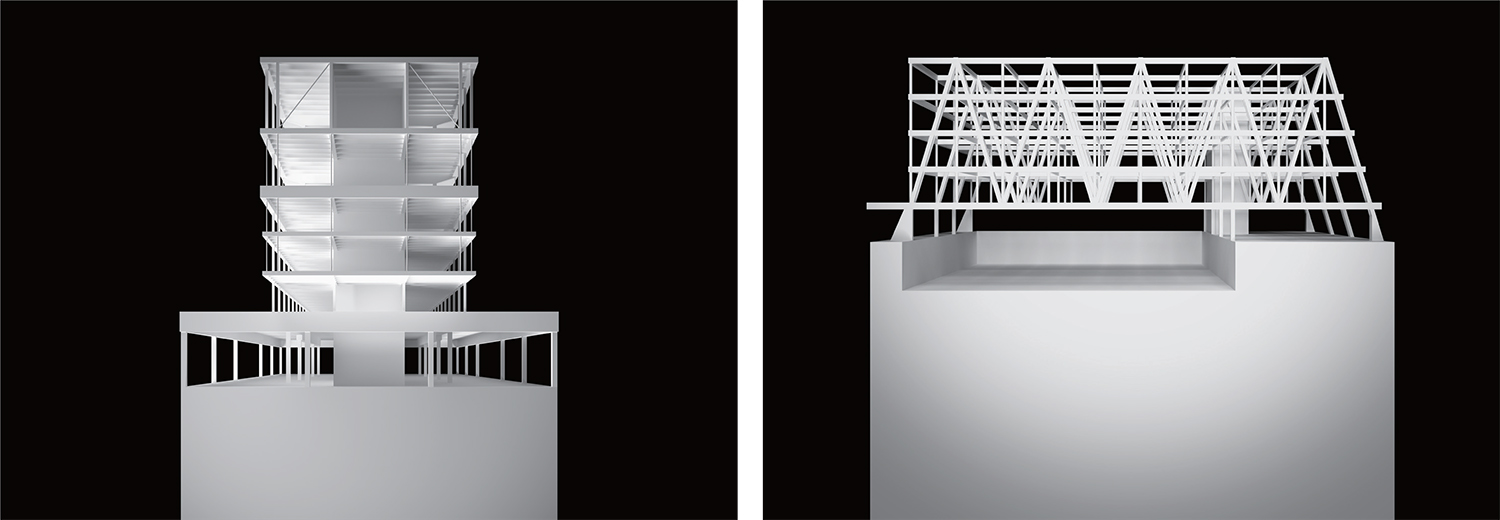
Structure concept images of Oensingen KAPO(left) and Malley School(right) ©GNWA