
SPACE July 2026 (No. 704)
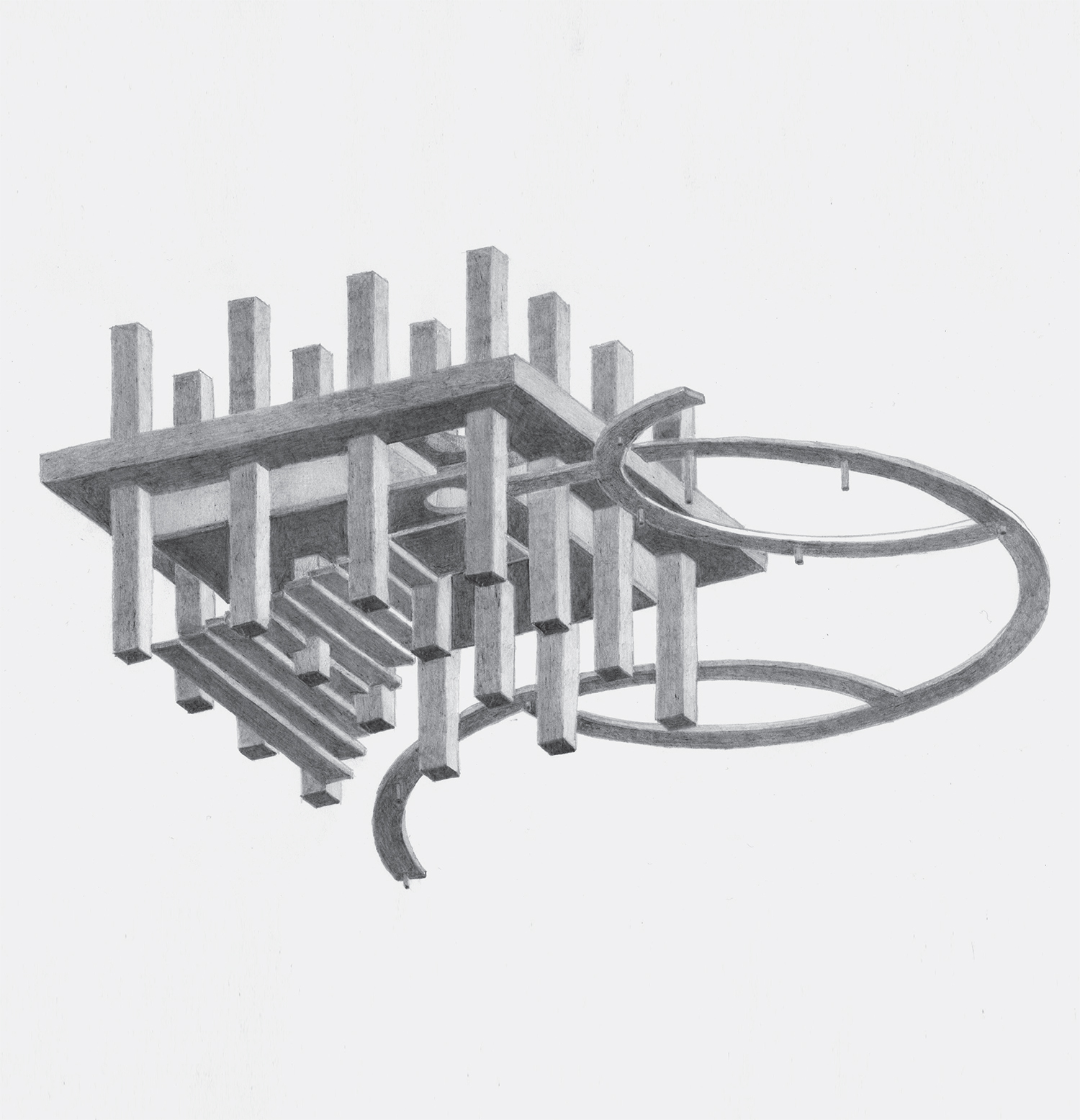
Sketch of the REST (2025)
Mauricio Pezo, Sofía von Ellrichshausen Co-Principals, Pezo von Ellrichshausen x Kim Jeoungeun Editor-in-Chief, SPACE, Park Jiyoun Editor, SPACE
An Assembly of Singular Pavilions
SPACE: Les Jardins de Médongaule (hereinafter Médongaule) are situated in the foothills of Yangpyeong, Korea. How did you interpret this natural landscape compared to those you’ve encountered in Chile; an approach which forms the basis of your work?
Sofía von Ellrichshausen (Ellrichshausen): Chile is a very long country, with a geography and climates that go from desert to forest to Patagonia. It would be too simplistic, even unfair, to establish any comparisons between the two countries. Perhaps the only general observation one can claim is that the south of Chile and Argentina are huge territories, with a vast sense of native monumentality. The landscape in South Korea, as far as we have visited, is on a more intimate scale.
Mauricio Pezo (Pezo): In fact, the landscape surrounding the Médongaule has its own particular beauty. It is a simple, gentle and silent backdrop.
SPACE: The Les Jardins de Médongaule has a relatively dense pavilion layout. Was there any discussion about expanding the site or removing some of the pavilions?
Ellrichshausen: We cannot answer this question either. When we were invited to participate in the project, the master plan was already defined by a landscape team.
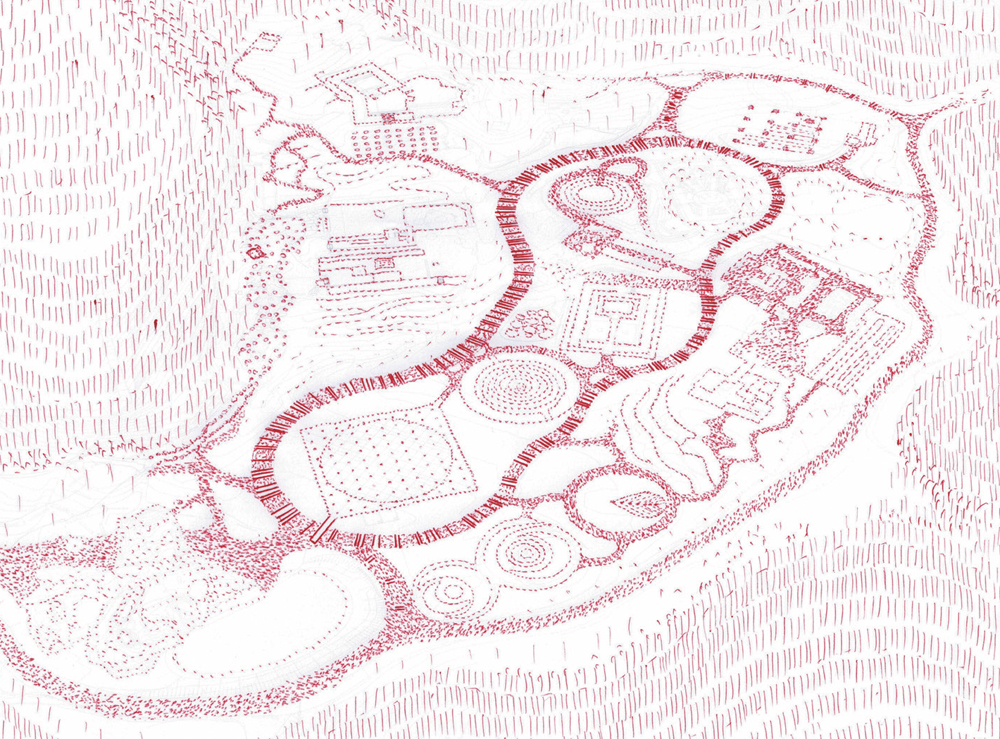
Pezo: The master plan was for us a kind of ‘fait accompli’, a decision already taken and made fact. We thought of it as something between a collage, a patchwork and an archipelago; an assembly of singular parts.
SPACE: As far as I know, you initially joined the Médongaule project with POND (2026), the pavilion, and REST (2025), the restaurant, but later became involved in a wider range of components, including the logo, circulation paths, paintings, and additional pavilions. Did you work on any aspect of the relationship between the two buildings in the early stages?
Ellrichshausen: The initial invitation was for POND. A year later we were invited to think about the restaurant. Thus, POND had a life in itself, as a symbolic landmark announcing one’s arrival and departure from the garden. The running water, falling with the natural slope of the ground, is the key element. The water cascades down, drawn by gravity, which marks a clear difference to the experience up or down hill. However, POND is still not finished without the water, without its stream and its cloud of mist.
Pezo: Since REST came later, we had a better idea of the possible connections to other elements in the garden. That said, the gardens themselves also changed along the way. I believe this ‘organic growth’ is literally and metaphorically what makes a garden a living organism. In any case, the two buildings are unique in their own manner. They do share a horizontal format, a more or less visible line, that works as a reference point, perhaps even as a measuring device, against the irregular undulations of the topography.
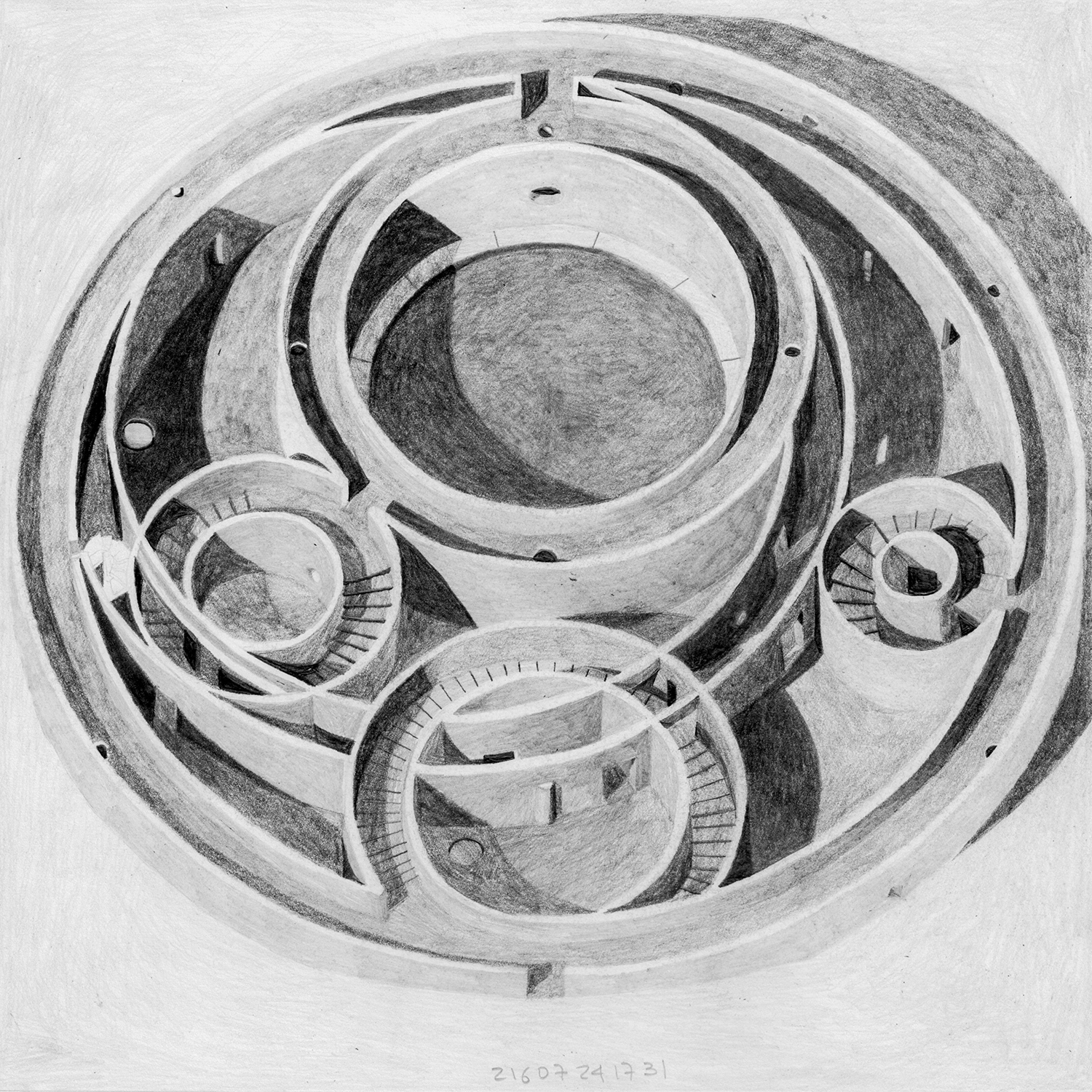
Sketches of the NIET (2026)
SPACE: In what sequence did you design the subsequent eight pavilions, and what were your key considerations when accounting for the relationships between them?
Ellrichshausen: I think they were activated not only at different times but also with different intensities. Sometimes they were overlapped, so we had to work on two at the same time.
Pezo: We accept each piece as a discrete unit. Each one affects all the others both for what it is and for what it is not. And yet, we didn’t participate in the landscape work in between those pieces. In a way, they became what they are from within.
SPACE: In LAND (2025) and SHIP (2025), the sequence that delays entry and the reworking of the site’s levels were aspects more deliberate in their construction than what informs the other pavilions. These projects also appear to be the result of your closest collaboration with landscape architect Guillaume Gosse de Gore. Could you tell us about that collaborative process?
Ellrichshausen: That is a clear example of what we call a ‘self-referential’▼1 approach. The landscape design around LAND and SHIP is 100% from the landscape team. We were asked to proposed an object in a specific position. The transitions and paths and vegetation were beautifully articulated by Guillaume and his team.
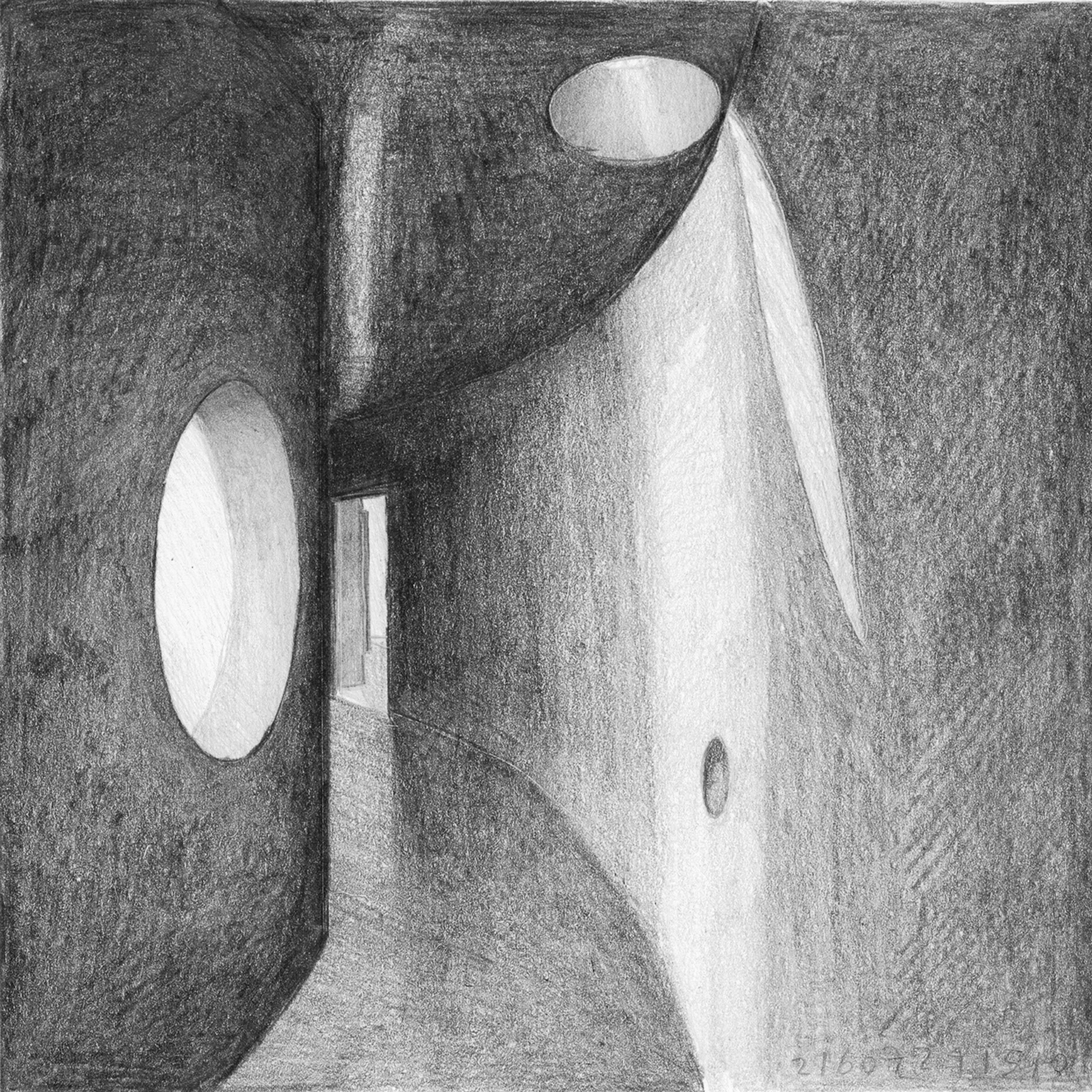
Sketches of the NIET (2026)
Figuration
SPACE: LAND and SHIP respectively take inspiration from the gat (traditional Korean hat) and the Geobukseon, the iconic Korean turtle-shaped warship. Since these projects transform existing forms into architecture, were there any particular strategies to avoid accusations of a direct or literal translation of these references?
Pezo: Not really. They are still quite literal. One volume has a shape that is reminiscent of a boat and the other in the shape of a hat. The figurative dimension is relevant for the overall narrative of that section of the garden, as if it is an open four-dimensional book. In terms of the architectural integrity of our proposition, the narratives are secondary, they are subordinated to spatial and material attributes. In our view, the form of architecture should be specifically architectural. Even if the starting point can be almost anything, it is rather obvious to us that a flower is not a building, as much as a hat is not a building and that a building is not a boat, although in this case it is much, much closer in kind.
SPACE: LAND is open toward its surroundings, whereas SHIP is inward and enclosed, resulting in contrasting spatial qualities.
Ellrichshausen: The sky is also ‘the surroundings’ of architecture. So, one could argue the opposite; while LAND covers the sky, enclosing the small hill with a deep shadow that protects from the sun or the rain, SHIP is totally open to the sky, so it fosters a much more focused experience, or a more liberating one. Again, both pavilions responded to different concerns, at different times.
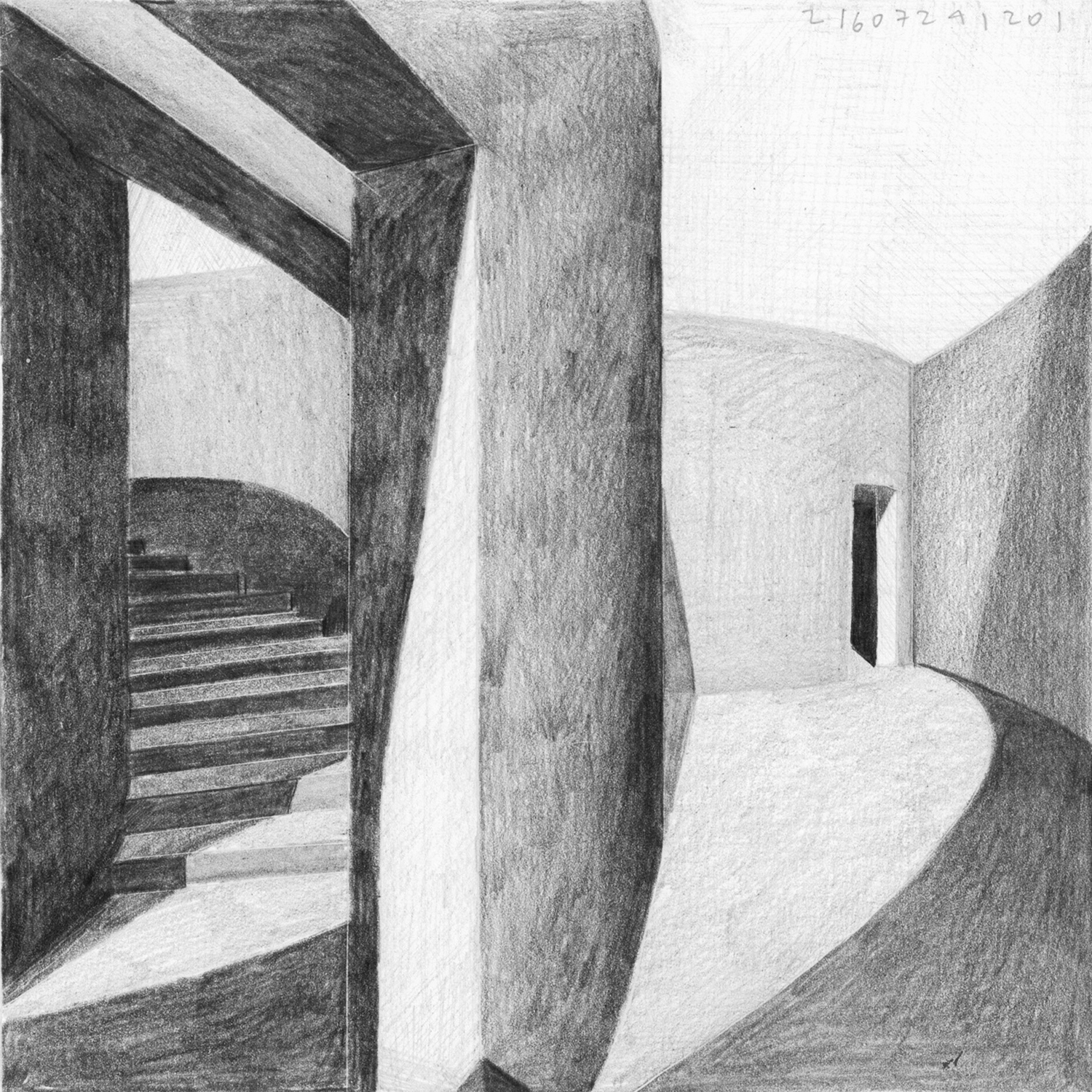
Sketches of the NIET (2026)
Drawing and Architecture
SPACE: You have said that drawing, including paintings and sketches, features throughout the entire project process. How do drawings differ before design begins, during the design process, and after completion? For example, in the painted images of JEUX, the units of construction materials are not represented, whereas they appear in the pen drawings. Is this due to the stage at which the drawing was made, or to the difference in medium?
Ellrichshausen: It is both. We produce many more handmade drawings and paintings than what we are able to present in a lecture or article. They are basic tools for us. Paintings are thinking tools.
Pezo: As thinking tools, they allow us to alter the time of the project. Sometimes they compress time, they work as shortcuts. Sometimes they expand time, more like a detour from the contingencies. It is never lineal or predictable.
SPACE: What aspects of your drawings are most actively explored – atmosphere, impression, spatial quality, detail, scale, and so on – and how do these explorations influence architecture? Do different media lead to different ways of exploring these qualities?
Ellrichshausen: Every technique works better for certain studies. What matters to us is that they are instrumental for the studies we are developing. This intellectual dimension is where, in our view, painting and architecture overlap. The image might be poetic, as poetic as an architectural experience.
Pezo: Both paintings and buildings have the capacity to build a world. They are worldmaking tools. Those images exceed the merely visual. They are mental images. Thus, it is not only what you see but what you know, or don’t know, about what you see.
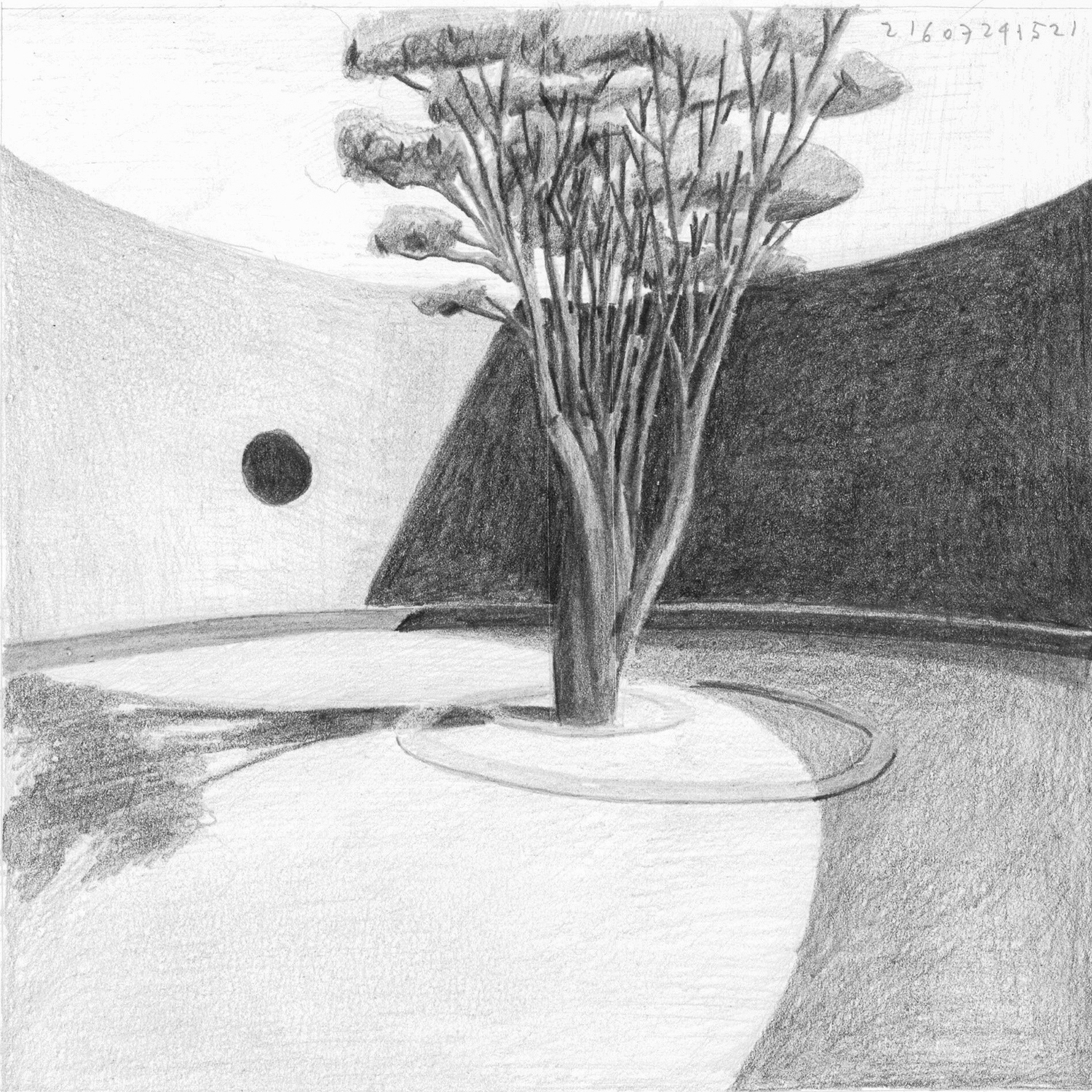
Sketches of the NIET (2026)
Geometry
SPACE: Pezo von Ellrichshausen’s work often begins with geometry and proceeds through the calibration of scale, units, materials, and finishes to produce distinctive experiences, at times even sacred ones. In your architecture, does geometry primarily serve to establish architectural order, or is it ultimately directed toward shaping experience and atmosphere?
_
1. Mauricio Pezo mentioned that ‘We assume the production of a new building as what it is; as the naïve attempt of inventing an original artefact, of bringing something new to our known world. Therefore, we have been explicit about our refusal to use any reference for what we do.’ Aaron Paterson, ‘Interview: Pezo von Ellrichshausen’, Architecture Now, 1 April 2016, https://architecturenow.co.nz/articles/pezo-von-ellrichshausen/, accessed 11 June, 2026.