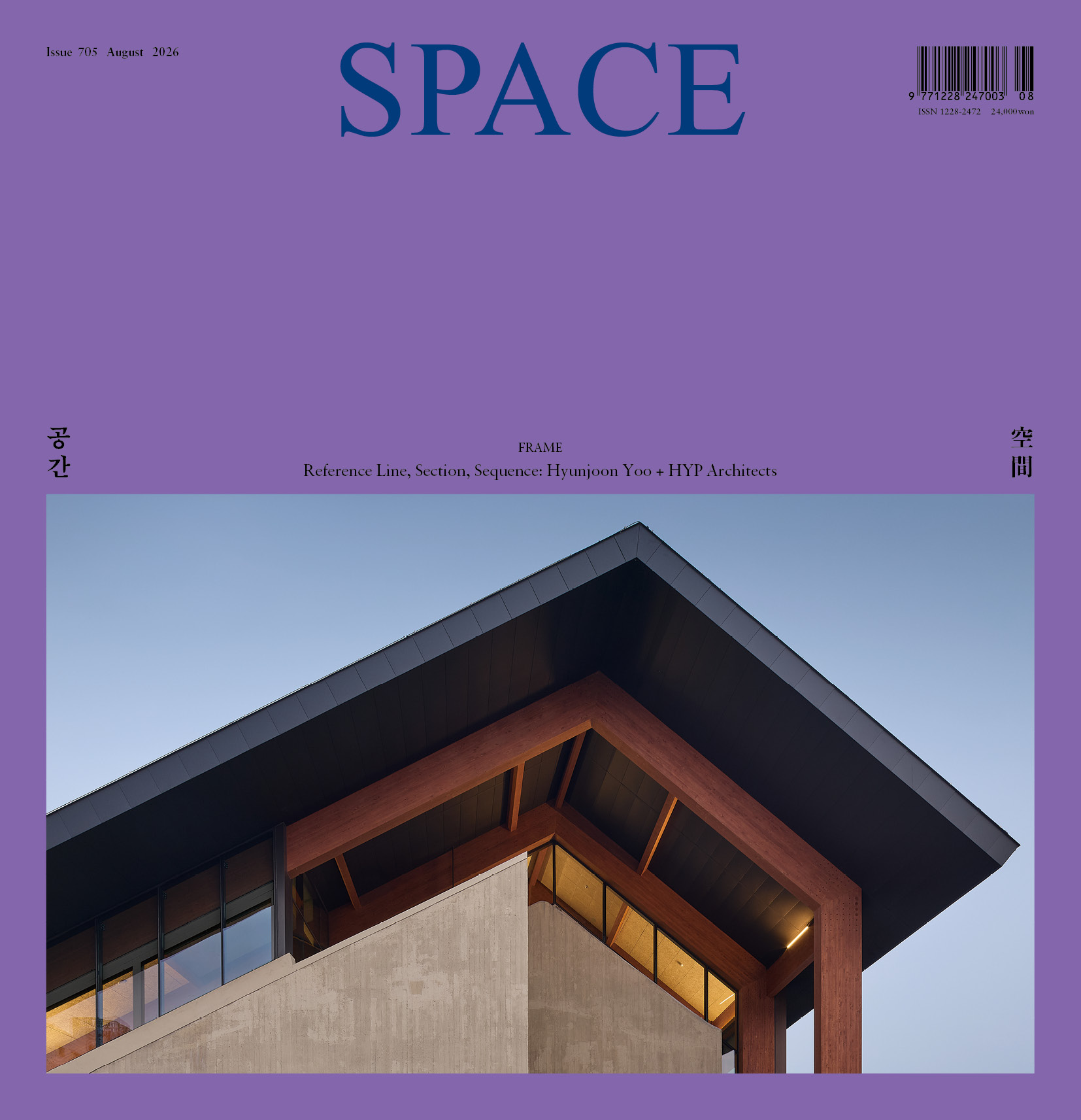

SPACE August 2026 (No. 705)
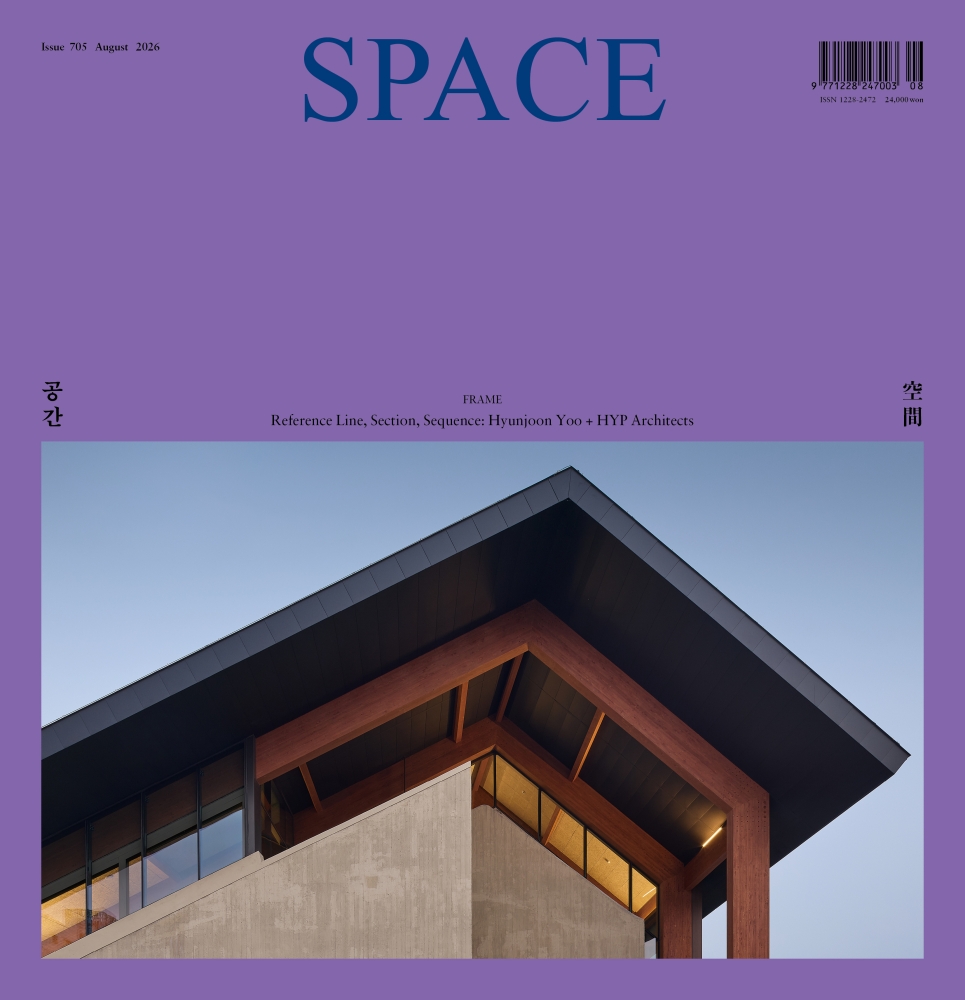
Ways of Relating
The height of summer. For some, it is the season of school breaks and holidays, for others, it is simply too hot to work. Yet no matter the temperature ‒ or the destination of the vacation ‒ the magazine must greet the world anew every month without fail. And so the editors find their own gaps between deadlines: heading back to their hometowns, crossing the sea to play volleyball in a park beside a museum, or flying to another country to run a marathon.
Last June, I took an early summer holiday to Helsinki, Finland. What comes to mind when you think of this northern city? The homeland of Alvar Aalto and its breathtaking natural scenery, perhaps. The aurora, the midnight sun, endless forests and lakes, and the log sauna. Indeed, Finland is a country that puts saunas even in its libraries. Finland, where library usage and national reading rates rank among the highest in the world, has developed its libraries into multifunctional cultural spaces, underpinned by robust library legislation and strong state support. A key goal of Finnish library policy is ‘to provide all library users ‒ including immigrants ‒ with equal access to the knowledge and culture of a new era’, and ‘expanding the community’ to strengthen solidarity across regions and generations is a central policy objective.▼1 Completed in 2018 and awarded the Public Library of the Year Award in 2019, the Oodi Helsinki Central Library (hereinafter Oodi Library) originally featured a sauna in its early design proposal. Although it was later removed by those in charge of the library, the original intention was said to have been connected to the Finnish tradition of relaxing while engaging in serious discussion (covered in SPACE No. 617).
During my holiday, I visited the Oodi Library hoping to spend a few hours enjoying it as a local would. I settled onto the terrace overlooking Finlandia Hall and took out my tablet—only to find myself soon surrounded by tourists taking commemorative photos. I quietly packed up my things, slipped inside, and wandered through every corner of the library. The most iconic image of the Oodi Library is perhaps the third-floor view: a wave-like ceiling that unfolds above a seamless expanse where the children’s reading area flows into the general reading area without any distinct physical boundary. Wherever the different zones intersect, a single carpet is all it takes to create a cosy lounge. In practice, the image of people immersed in their own activities within this vast space was as colourful as a Where’s Wally? illustration—and seemed to offer a new archetype for the modern library: appropriately solemn, yet appropriately lively. The design competition brief called for spatial programmes ‒ such as a multipurpose hall, a public sauna, a café, and a restaurant ‒ that could serve as venues for local residents to meet and connect, to be planned as independent public facilities operating regardless of the library’s opening hours. Some programmes, such as shared kitchens and Fab Labs, are now commonly found in Korean public facilities; but initiatives like setting up a sewing machine corner in the lobby invite us to imagine the extent to which a library can become a community anchor, one that embraces the widest possible range of people and activities.
The possibilities for openness do not end with the library. The FRAME section of the SPACE August issue introduces the work of Hyunjoon Yoo (Hongik University) + HYP Architects (Jon Jiyoung), whose projects engage with place, people, and nature in a variety of ways. The OAR Contemporary Art Museum embraces the landscape of royal Silla tombs in Gyeongju; the Gochang Hwang Yunseok Library aspires to be a shared living room for all; the Musical Staff in Seongju invites visitors to experience the slow rhythms of nature; and Sungsil Church in Yeokchon-dong connects with the neighbourhood through an open courtyard. Yoo argues that in an age when opportunities for encounter with others are increasingly scarce, new typologies for the library, community centre, church, and art museum must emerge—ones capable of fostering shared experience and sustaining community. All four projects presented here are works in which a sense of ‘publicness’ is paramount, and together they demonstrate the ways of relating that have long defined his practice. These are all ways of creating new openings near us, without having to travel too far.
Kim Jeoungeun Editor-in-Chief
---
1 Jeon, Phil Gue·Lee, Ji-Yeon·Chan-Il Park, ‘Characteristics of Spatial Program and Design Method of Helsinki Central Library based on the Directivity for Library Policies of Finland’, Journal of the Korean Institute of Culture Architecture, 79 (2022): 15 ‒ 26.
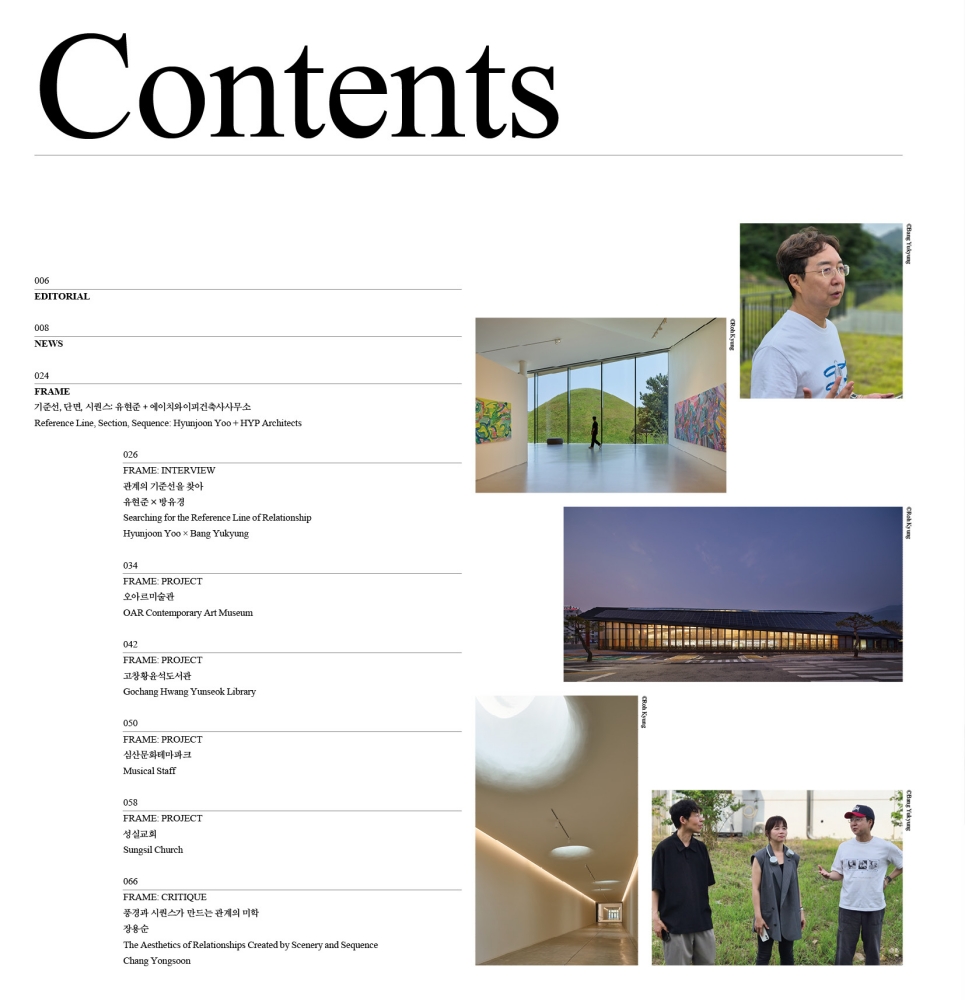
Contents | SPACE August 2026 (No. 705)
006 EDITORIAL
008 NEWS
024 FRAME
Reference Line, Section, Sequence: Hyunjoon Yoo + HYP Architects
026 FRAME: INTERVIEW
Searching for the Reference Line of Relationship_ Hyunjoon Yoo × Bang Yukyung
034 FRAME: PROJECT
OAR Contemporary Art Museum
042 FRAME: PROJECT
Gochang Hwang Yunseok Library
050 FRAME: PROJECT
Musical Staff
058 FRAME: PROJECT
Sungsil Church
066 FRAME: CRITIQUE
The Aesthetics of Relationships Created by Scenery and Sequence_ Chang Yongsoon
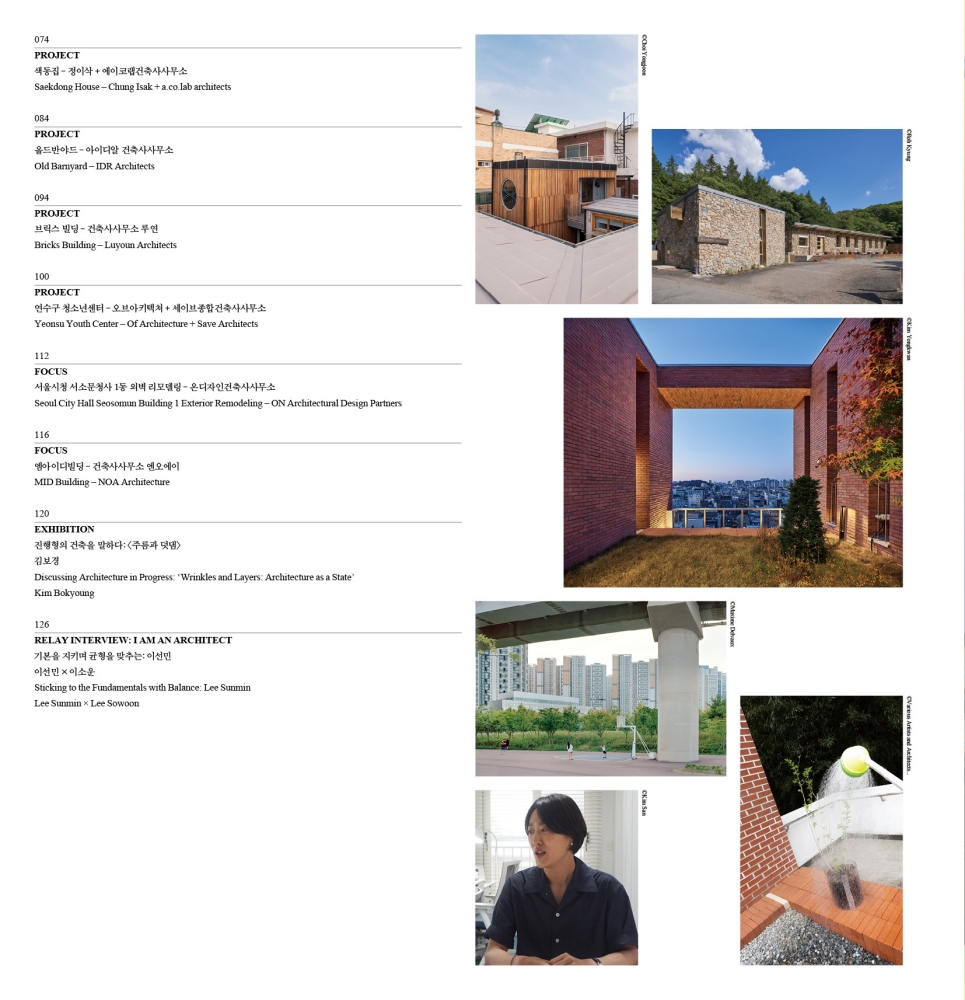
074 PROJECT
Saekdong House ‒ Chung Isak + a.co.lab architects
084 PROJECT
Old Barnyard ‒ IDR Architects
094 PROJECT
Bricks Building ‒ Luyoun Architects
100 PROJECT
Yeonsu Youth Center ‒ Of Architecture + Save Architects
112 FOCUS
Seoul City Hall Seosomun Building 1 Exterior Remodeling ‒ ON Architectural Design Partners
116 FOCUS
MID Building ‒ NOA Architecture
120 EXHIBITION
Discussing Architecture in Progress: ‘Wrinkles and Layers: Architecture as a State’_ Kim Bokyoung
126 RELAY INTERVIEW: I AM AN ARCHITECT
Sticking to the Fundamentals with Balance: Lee Sunmin_ Lee Sunmin × Lee Sowoon