
SPACE May 2026 (No. 702)
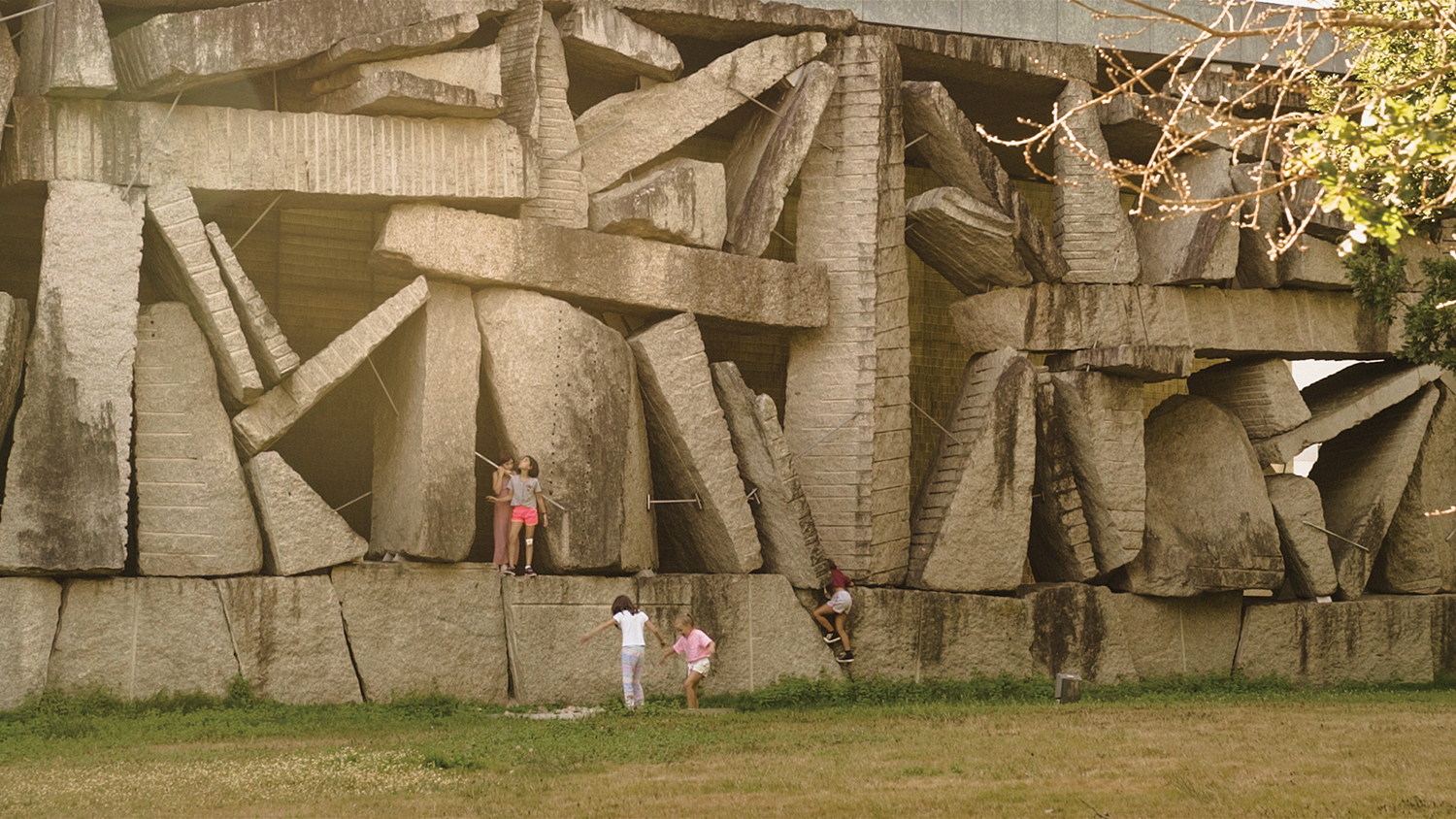
Still from No Leftovers No Left Out (2023, film, 2’34’’)
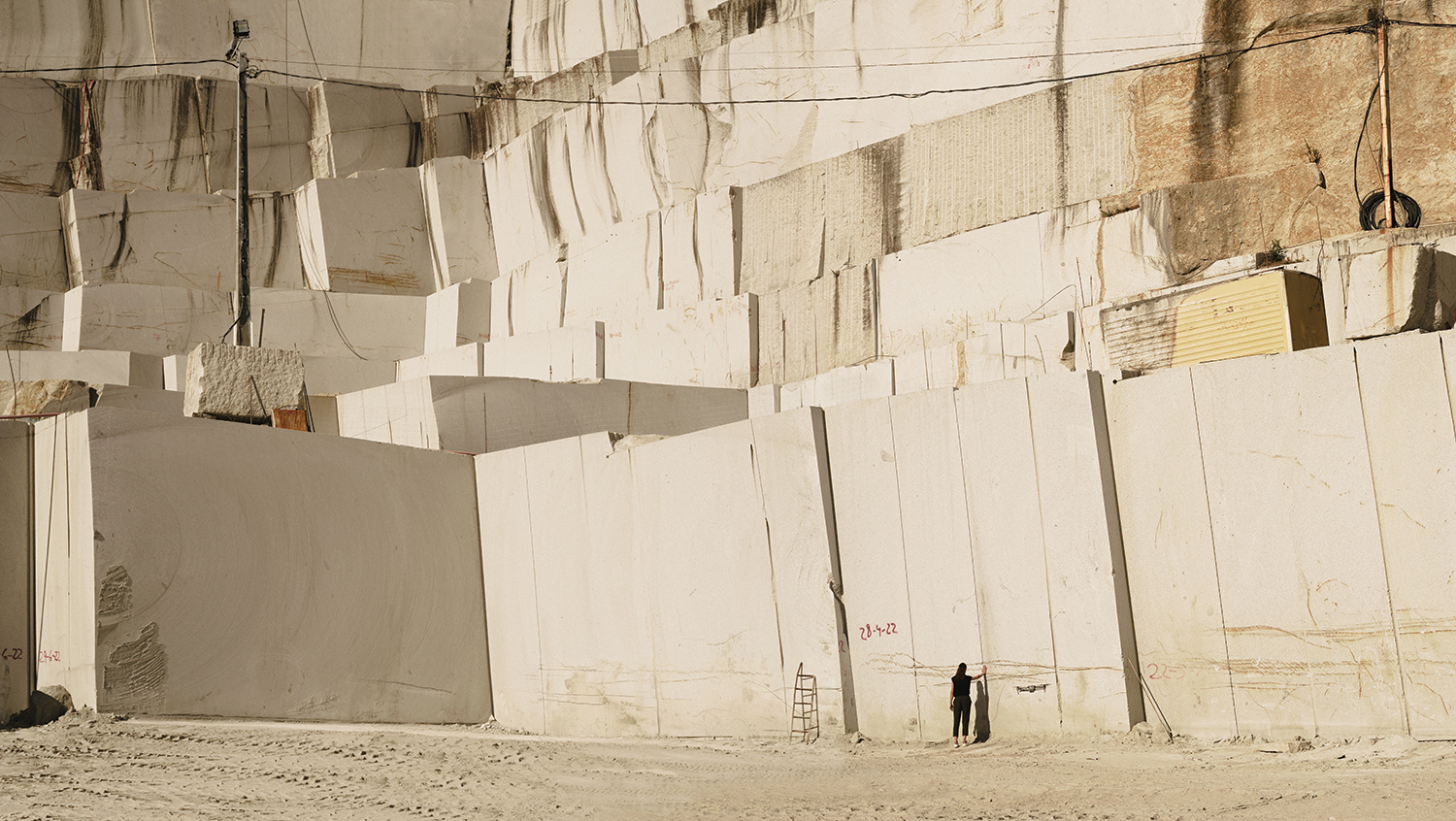
A photograph taken by the director, of a scene similar to a still from No Leftovers No Left Out
Standardised ways of building inevitably produce offcuts. No Leftovers No Left Out turns its attention to materials discarded for being too irregular or obsolete. Centring on a serene and playful public space designed by Ensamble Studio using leftover quarry stones and recycled CD cases, the film invites viewers to reconsider the value of this space through a sensual experience.
This is not the documentary-style ‘architecture film’ that we are used to seeing; it’s a film about the work of Daisy Ziyan Zhang, an architect who studied at the University of Sydney and MIT, and a filmmaker who has won an award at the International Short Film Festival Oberhausen and a finalist spot at the Venice Architecture Film Festival. She turns her lens on anonymous buildings, and even when she films the work of celebrated architects, she never includes the architect’s voice. Instead, her camera lingers beside people who sweep floors, tend to plants, and grow old alongside the buildings they inhabit—and beside the spaces themselves. Why did she choose film as her medium? Why does she focus on architecture without architects, and on the unvarnished life of buildings? We sat down with her to hear about the beauty of what gets pushed out of the frame.
Interview Daisy Ziyan Zhang × Kim Bokyoung
Kim Bokyoung (Kim): What drew you to film/video as a medium for architectural expression?
Daisy Ziyan Zhang (Zhang): What draws me to this medium is its capacity for intimacy, something that resists full articulation. I see myself as an observer; filmmaking is my act of translation. I approach it the same way I approach design: beginning with the mundane and making tiny interventions, just enough to shift how we might see or feel. It is those slight provocations that open up imaginative alternatives for what we tend to overlook.
Working in non-fiction has nourished how I understand connection, the way we relate to one another and to the built environment. It creates a safe space of understanding and shared vulnerability. It isn’t always comfortable; sometimes it’s even confrontational. But there is something deeply inspiring in those coarse, unguarded moments that polished choreography can never touch. Film allows me to stay in those fleeting moments a little longer. Maybe that’s why I’ve come to think of film as both a liquid and a frozen architecture.
When I was practicing as an architect, I was always secretly amused by the ‘standards’ of architectural photography. We stage a building to look pristine, even though we all know it didn’t look like that an hour before the shoot and never will again. You make a pilgrimage to see a ‘masterpiece’ based on its most famous photo, only to find it covered in moss, laundry, or patinas—but to me, that is compelling. A building’s ‘original state’ is just an infinitesimal, ephemeral point in time, if it even exists. The real life of a building is much more glutinous, and I’m drawn to everything that escapes the frame: construction, maintenance, aging, afterlives. Film is the small crack through which I can enter that space.
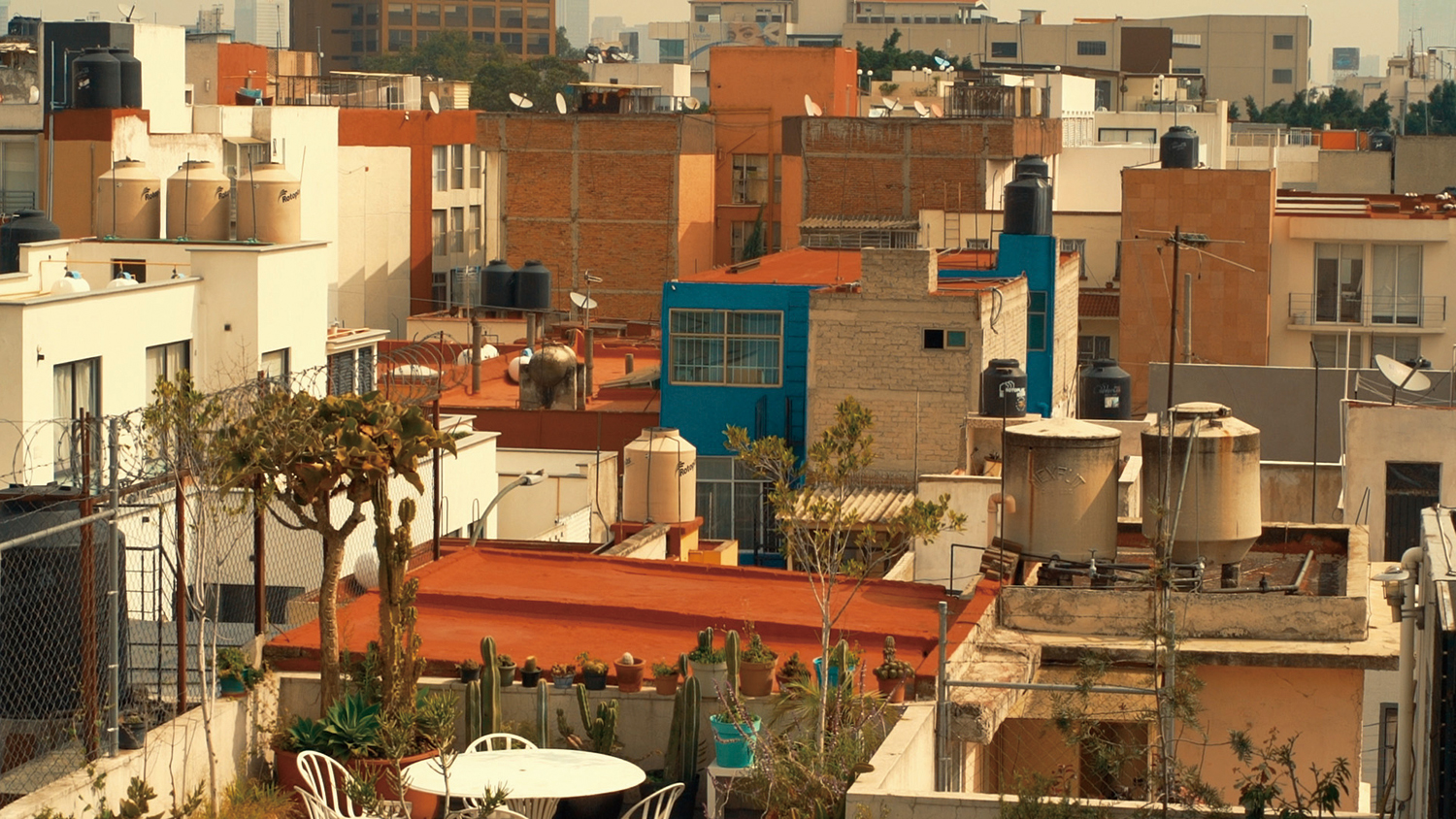
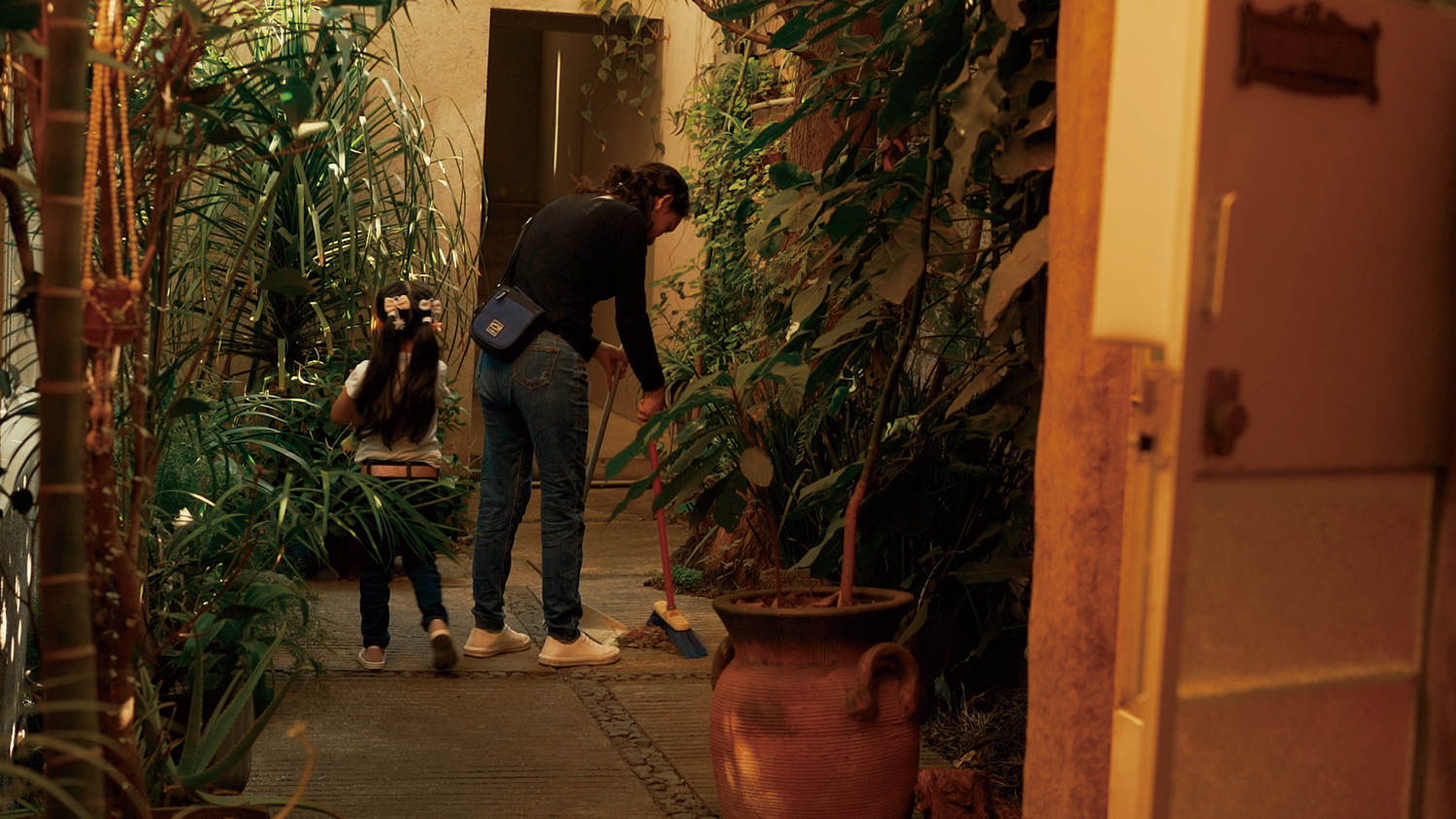
Still from Wrinkles (2022, research and film, 10’00’’)
Kim: When making film/video as a means of architectural expression, do you have distinctive methods or techniques that set your work apart from conventional filmmaking?
Zhang: When She Crossed (2024) won an award at Oberhausen last year, someone told me it felt ‘refreshing’ because it broke certain ‘do’s and don’ts’ of filmmaking. I laughed and said, ‘It’s probably because... I just don’t know enough of the rules!’
I didn’t grow up with film. I was raised in a small rural town in China with no cinema nearby. My first time sitting in a theatre was around the end of high school, watching Titanic (1997). I was very impressed but not converted. It wasn’t until graduate school that I started to take film classes on the side—first out of curiosity, then quite quickly out of a deepening fascination. I spent most of my spare time bundled up watching films in the Harvard Film Archive, which became a pivotal place for me. I can’t quite express the charm it held for me, and for years I resisted taking it more seriously. I was terrified of ‘making Art’. That concept felt alien and suspicious. Where I grew up, art was something obscure, only for geniuses or kids who weren’t smart enough for school. I didn’t feel I was either. In what is often called ‘architecture film’ – a category I’m slightly wary of – I find some recurring tendencies underwhelming: static shots that resemble animated photographs, the overuse of ambient music, or the sit-down interview explaining everything directly into the camera. I trust that every space can speak for itself, if we allow it to.
Sound is not a kind of make-up; it is an essential layer of design. Alongside moving images, it forms a duet. I love recording on-site myself, weaving those sounds together, from that place, for that place. I also never choreograph. I ask my collaborators to ‘just be’ in their space, and I take the time to exist with them. This process is slow, discursive, and unpredictable. But the texture of an un-intervened moment is impossible to counterfeit. There’s an honesty that cannot be staged, and every pair of eyes can tell the difference. Watching Frederick Wiseman’s Hospital (1970) was an epiphany. It showed me that with enough attention, patience, and agility, you only need to be present. Stories will unfold with their own pace and velocity.
Kim: Your work covers a remarkably wide range of subjects, from digital fabrication and the reuse of architectural waste, to the aging of buildings or aging itself, the relationship between consumption and living space, and maintenance labour. How does each project begin? I’d love to hear about how you come across a subject and how you develop an idea into a work.
Zhang: Usually, a project starts before I even realise it. It begins as a flicker—a gesture, a detail, or a bit of friction between what I see and what I feel is being hidden. It took me years to understand that my way of working is not about ‘thinking it up’, but about moving closer and working through proximity.
For example, with Wrinkles (2023), I spent three months in Mexico City intending to make a film about the aging of architecture. I started with some very well-known buildings, but something felt off. Meanwhile, every night when I walked back to my apartment, I became more and more drawn to the building I was living in. Behind its concrete facade, it felt like a jungle, full of plants, modifications, and improvised systems. A rooftop laundry, compost garden, walls built with embedded wine bottles. As I got to know the residents better, I learned the history of the building: 70 years of damage, abandonment, earthquakes, and repair. When I saw a photo of it newly built, it looked nothing like the living thing it had become. That was the ‘This is it!’ moment. Everyone knows about Barragán’s work, but no one looks at this anonymous building that looks like any other on the street.
She Crossed began even more accidentally; it was never intended as a project. When I moved into my dorm at MIT, I noticed plants thriving everywhere in the corridors. As a gardener myself, I secretly watched for the caretaker and found M, the cleaning lady. She was the voluntary custodian of ‘orphans’, collecting plants students had left behind when they moved out. One day I asked for the secret of her green thumb, and she winked at me: ‘In Colombia, we soak banana skins in water to nourish the soil.’ That’s how we started to become friends. I filmed her for two years, partly for practice, partly for fun, until at some point it hit me: this wasn’t an exercise. This was the film.
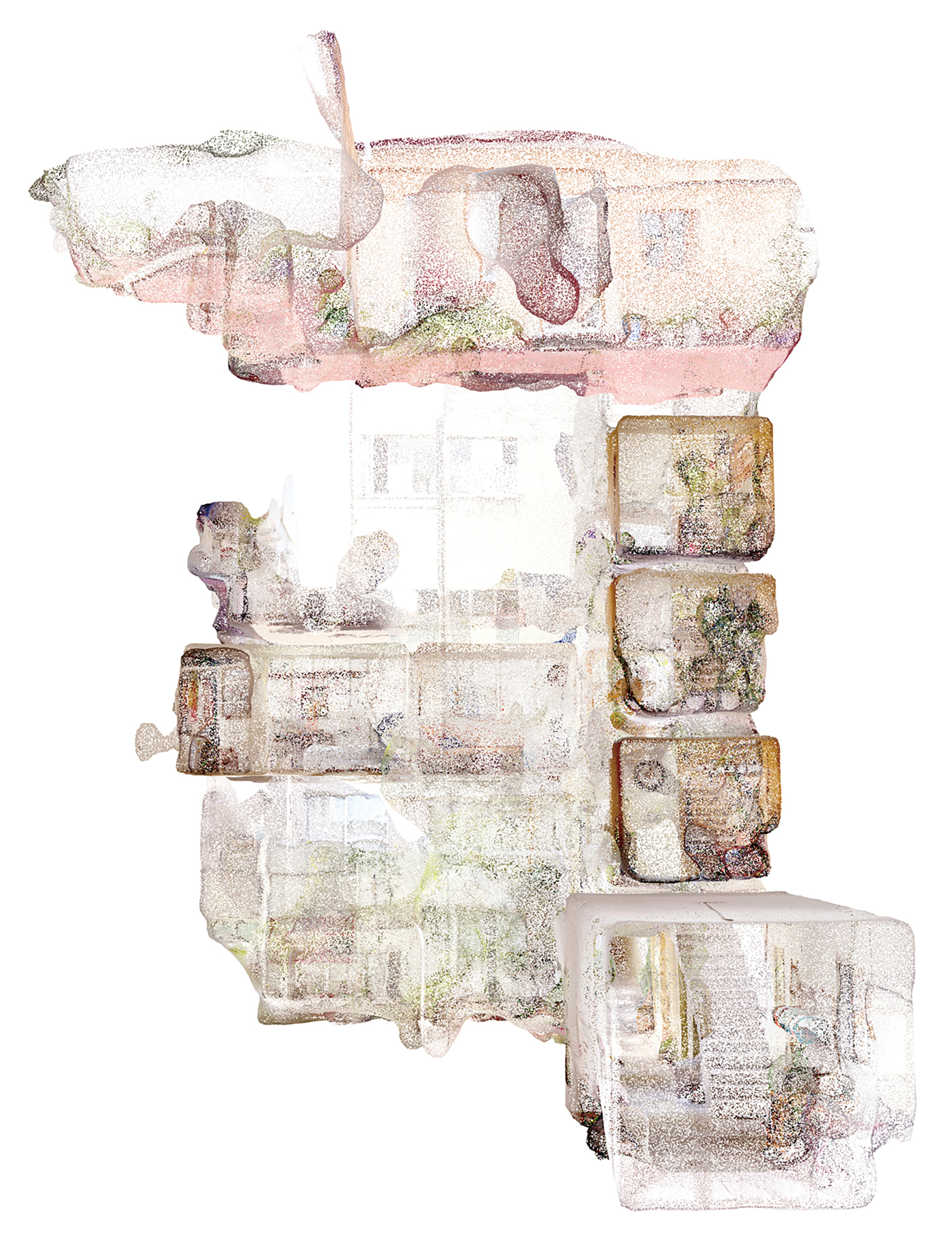
Wrinkles of Time (2023), prints processed from 3D scanned data
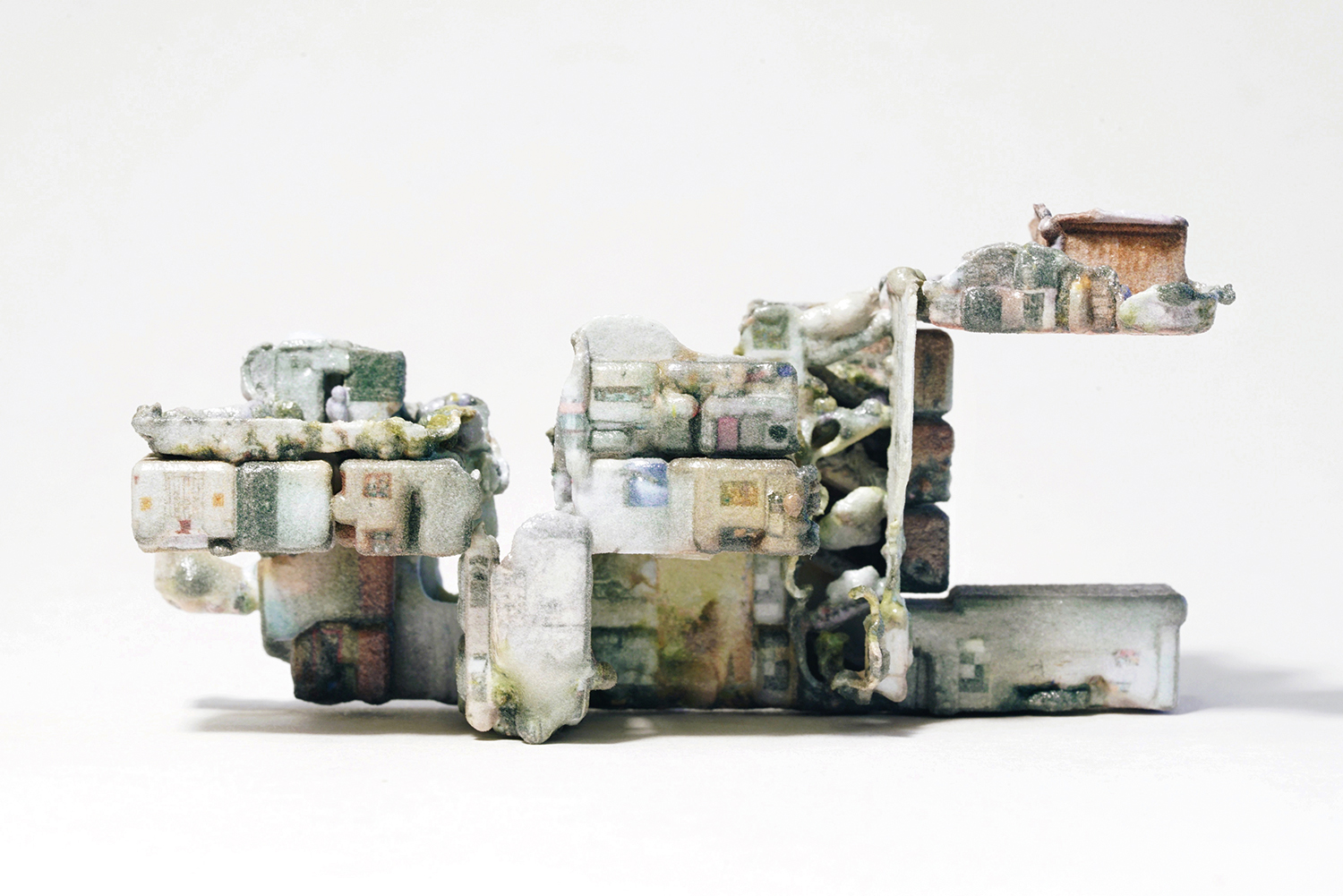
Traces of Growth (2022), a coloured resin model processed from 3D scanned data
Wrinkles traces a standard residential building in the centre of Mexico City through a range of media—film, 3D scanning, and digital fabrication. Through a building that carries seventy years of history ‒ inhabitation, earthquakes, abandonment, repair, and care ‒ the work argues that architecture is not a finished object but a living being in constant transformation. For Daisy Ziyan Zhang, the everyday acts of upkeep ‒ sweeping floors, replacing pipes ‒ are not a byproduct of architectural design, but a creative and political force in their own right.
Kim: Across such a wide range of subjects, is there a consistent attitude that runs through your work? It seems to me that your work ultimately lands on prioritising everyday practice over grand architectural theories or design methodologies.
Zhang: For a long time, I felt there wasn’t much coherence across my work, and that bothered me. But over time, I started to notice some connections. Thin, almost invisible, like spider silk. You’re right: it is the ‘everydayness’ that grounds everything. Not as something ordinary, but as something dense, charged, and consequential. At the centre of this is the sensual body: adaptive, resilient, and fragile. Whether it’s a person sweeping the floor or a tree inclining, I’m drawn to how bodies endure, negotiate, and transform their environments. For a long time, I shied away from working with the body and emotion—I much preferred the technical, the structural. But it kept coming back in subtle ways. I’m becoming more comfortable in following it as a process.
I remember watching Chantal Akerman’s Jeanne Dielman, 23 Commerce Quay, 1080 Brussels (1975) in the film archive. Sitting through that potato-peeling scene actually made me sweat. By the end of those three hours, I was totally in awe. I didn’t know cinema could hold that kind of attention. It was liberating to realise one could be allowed to stay with what is usually passed over, to mine that marrow and channel that energy into a quiet implosion. I admire that kind of courage.
Kim: What is it that you ultimately want to say through your works? Personally, I get the sense that these works are an effort to expand the boundaries of architecture. In particular, the fact that She Crossed focused on the life of a female cleaning worker rather than the MIT dormitory as a building felt to me like a radical declaration that maintenance workers are also subjects of architecture.
Zhang: I don’t really know where the boundary of architecture is at the moment, and I’m not sure if I’m expanding it or blissfully ignoring it. What I keep returning to is beauty. Not the glamorous or curated kind, but something raw, genuine, sometimes even a bit harsh. For me, beauty has to do with dignity; it is a quiet, stubborn act of resistance. I’ve realised that the power to define what is beautiful is a real, tangible power, and it’s one we need to hold onto tightly. Confusion is also a major driving force for me. I’m always confused when I start a project, and I’ve come to accept that as my compass. It keeps me from arriving with easy answers and challenges my own prejudice.
Working across different places, I’ve encountered very different situations that continue to haunt me: extractive labour, political precarity, lingering colonial structures, forms of survival that rarely enter dominant narratives. I work very closely with people, and I’ve realised the presence of a camera could be an intrusion, sometimes even a form of violence. It has tremendous power. I haven’t figured out a ‘right’ way to navigate this power yet. How do we tell the stories of others without turning their lives into ‘material’ or spectacles? How do we remain attentive without claiming authority?
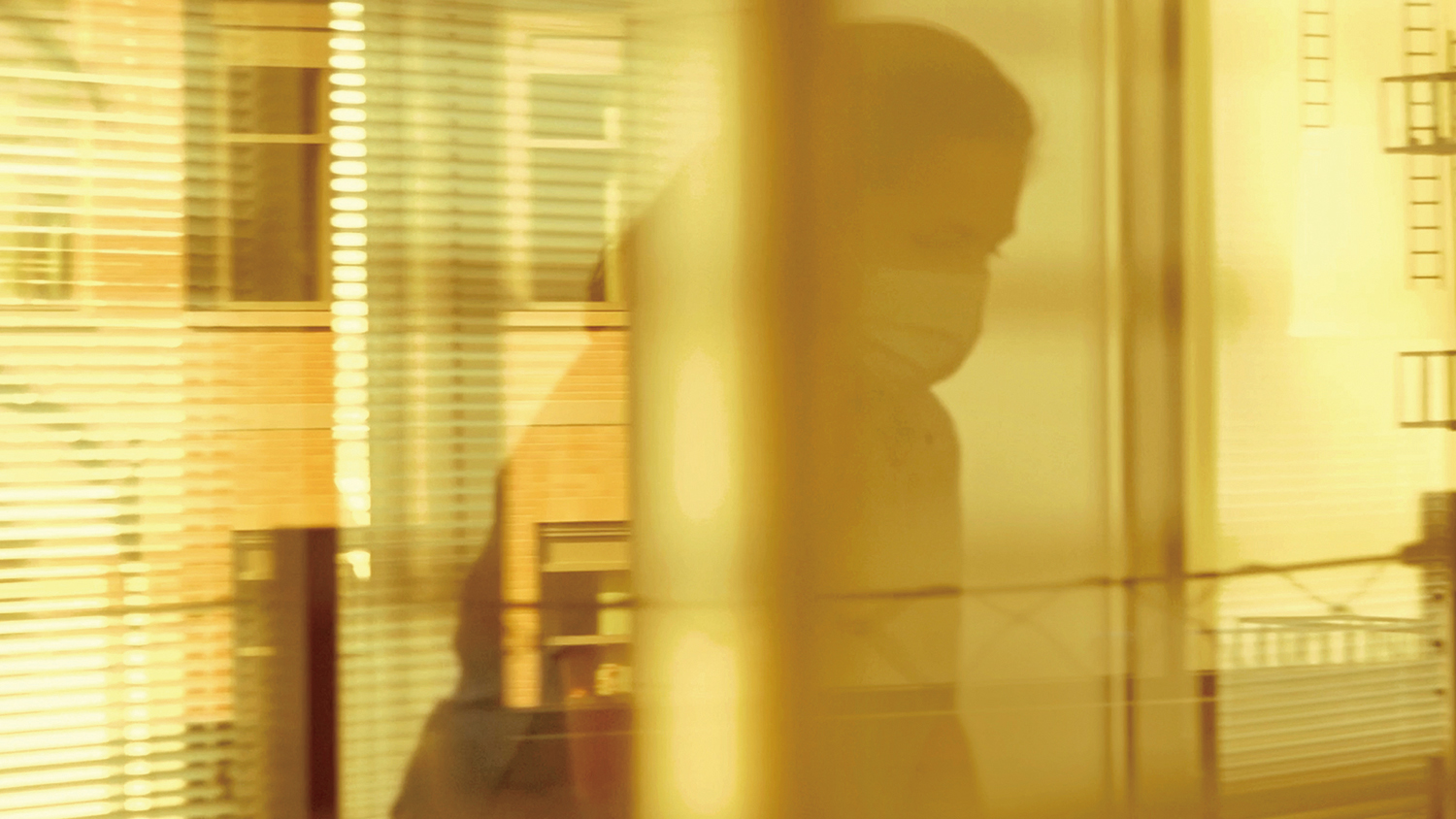
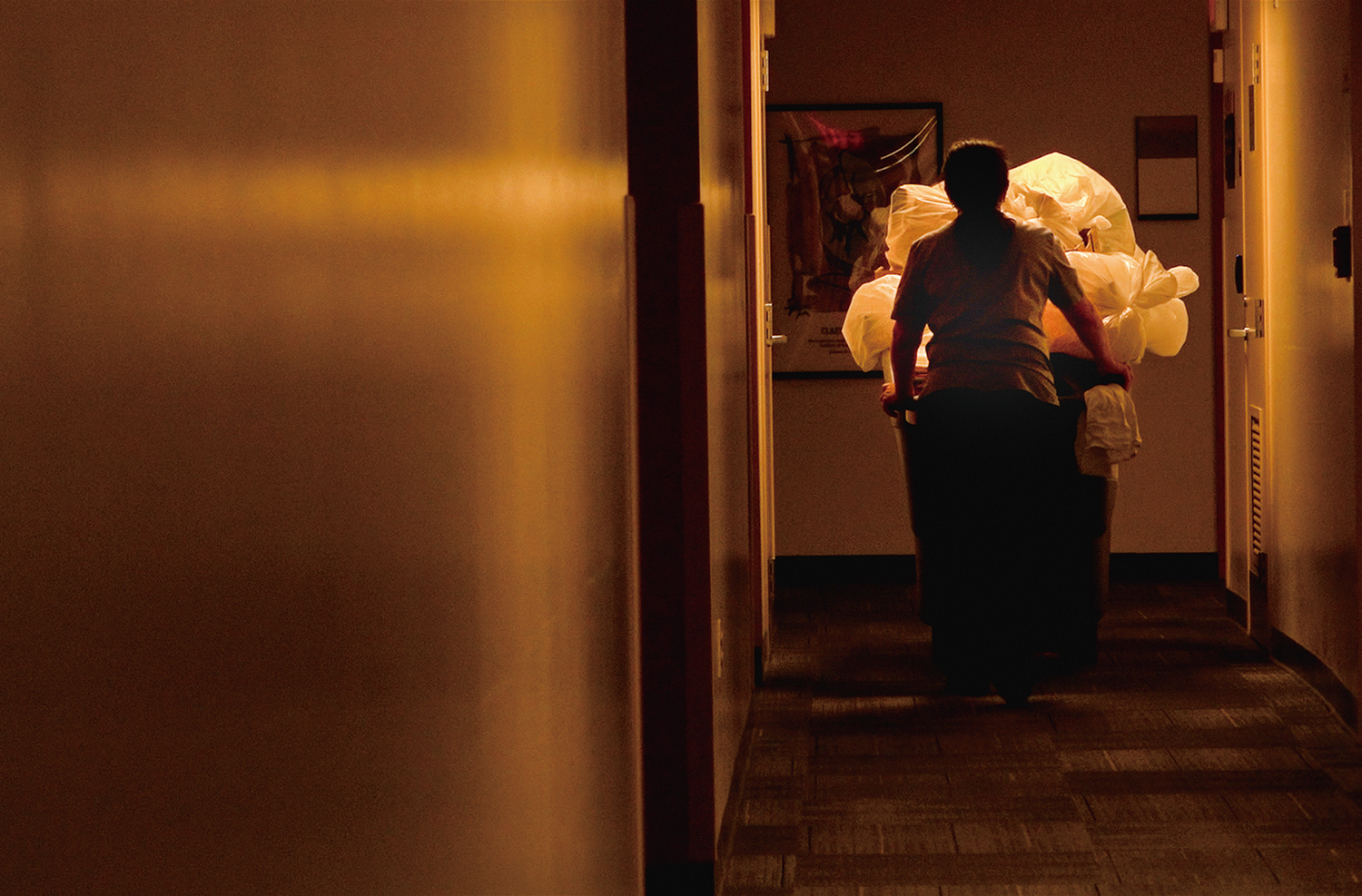
Still from She Crossed (2024, film, 20’00’’)
She Crossed examines the entangled realities of labour and borders through the lives of building caretakers—particularly migrant women whose work remains largely invisible. Noticing a cleaning worker, M, tending to abandoned plants along the corridors of an MIT dormitory, Daisy Ziyan Zhang slowly became her friend. Filmed over four years, the work follows two women building their lives in a foreign land, tracing the quiet kinship that emerges through small, everyday acts—cleaning, tending to plants.
Kim: You studied architecture in Australia and the U.S., went through residencies in Mexico, Brazil, and the U.S., and worked as a researcher in Switzerland. Now you are based in China, and your recent ongoing project How Green? deals with China and broader Asia. What brought you to shift your base, and what works are you planning to pursue going forward?
Zhang: My movement across the world wasn’t strategic at all; I just followed my curiosity. But in recent years, that movement has started to feel different.
The small town where I grew up was built around a coal mine, where everything and everyone revolved around mining. There were industrial facilities in the middle of crop fields, then another mine, then more fields. My formative years were completely detached from any institutional ideas of ‘art’ or ‘beauty’ in the way I later encountered them. As a kid, I couldn’t wait to leave the stigma of that landscape. For almost two decades, I kept walking away without ever looking back. Leaving is rejuvenating, but at some point I realised it created a quiet void. It felt like the right time to look at what I left, or what had left me.
I’m very aware of the luck that made my mobility possible: the education, the scholarships, perhaps even the elite systems I’ve benefited from. It raises many questions about authorship and responsibility, about who gets to speak, from where, and under what conditions.
The process of filmmaking has convinced me that despite cultural or linguistic differences, there are forms of connection that persist, a shared sense of togetherness in a world of constant flux. I want to keep channelling that energy into my work, growing it into a platform where different voices can be heard without being flattened. I remain a permanent student—of film and of architecture.
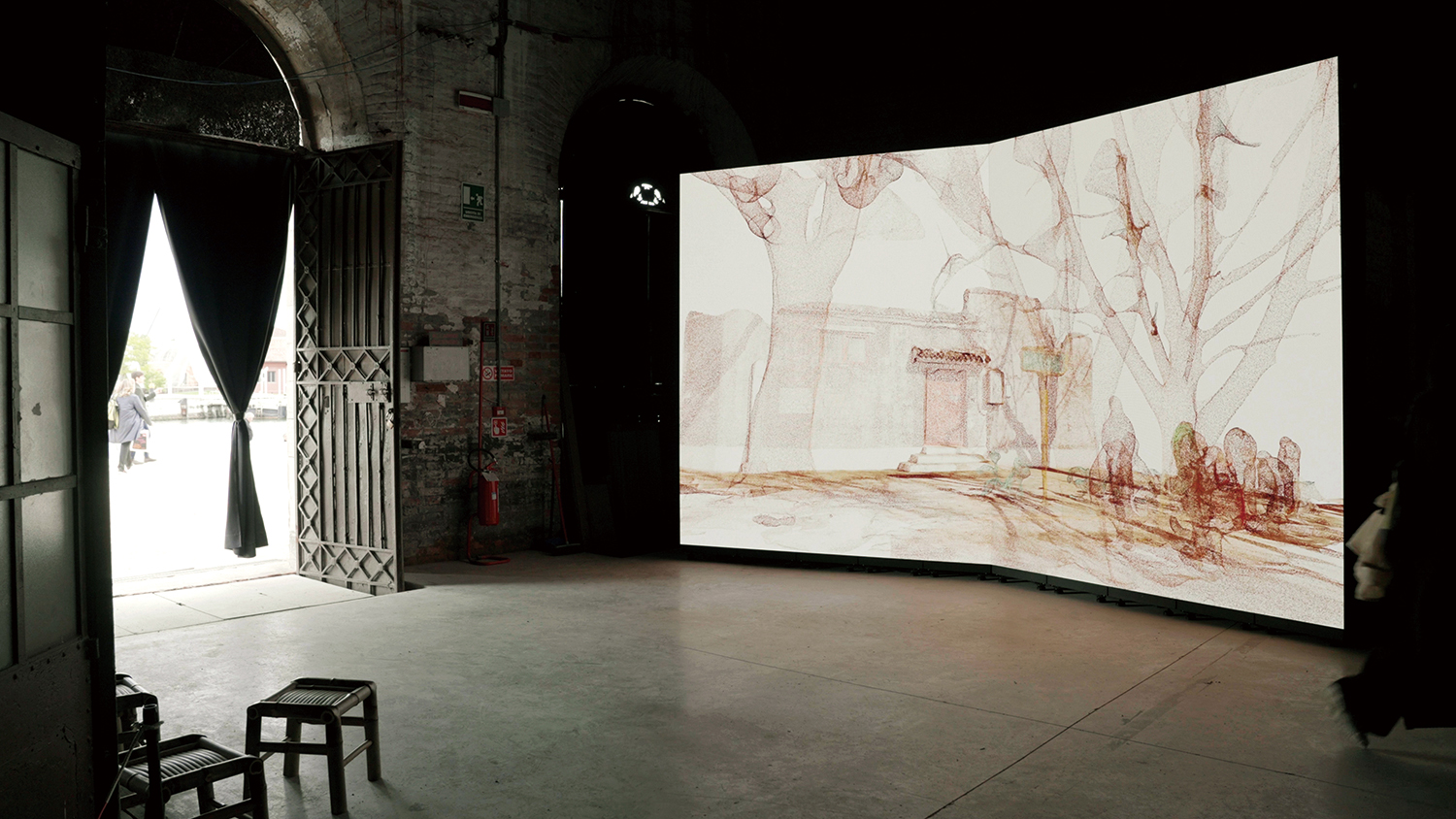
Installation view of Spring, Along Beijing Central Axis [2025, video installation, in collaboration with Dunes Workshop (Li Yalun, Chen Feiyue)] at the Chinese Pavilion, Venice Architecture Biennale 2025.
Spring, Along Beijing Central Axis captures the 7.8km central axis that has structured Beijing’s urban space since the 13th century ‒ designated a UNESCO World Heritage Site in 2024 ‒ through a video work visualising point-cloud 3D scan data, accompanied by an on-site recorded soundscape. Rather than dwelling on monumental landmarks such as the Forbidden City, the work turns its attention to chess games in the park, street vendors, and residents practicing tai chi, tracing how a historic space continues to live and breathe through the rhythms of everyday life.