
SPACE May 2026 (No. 702)
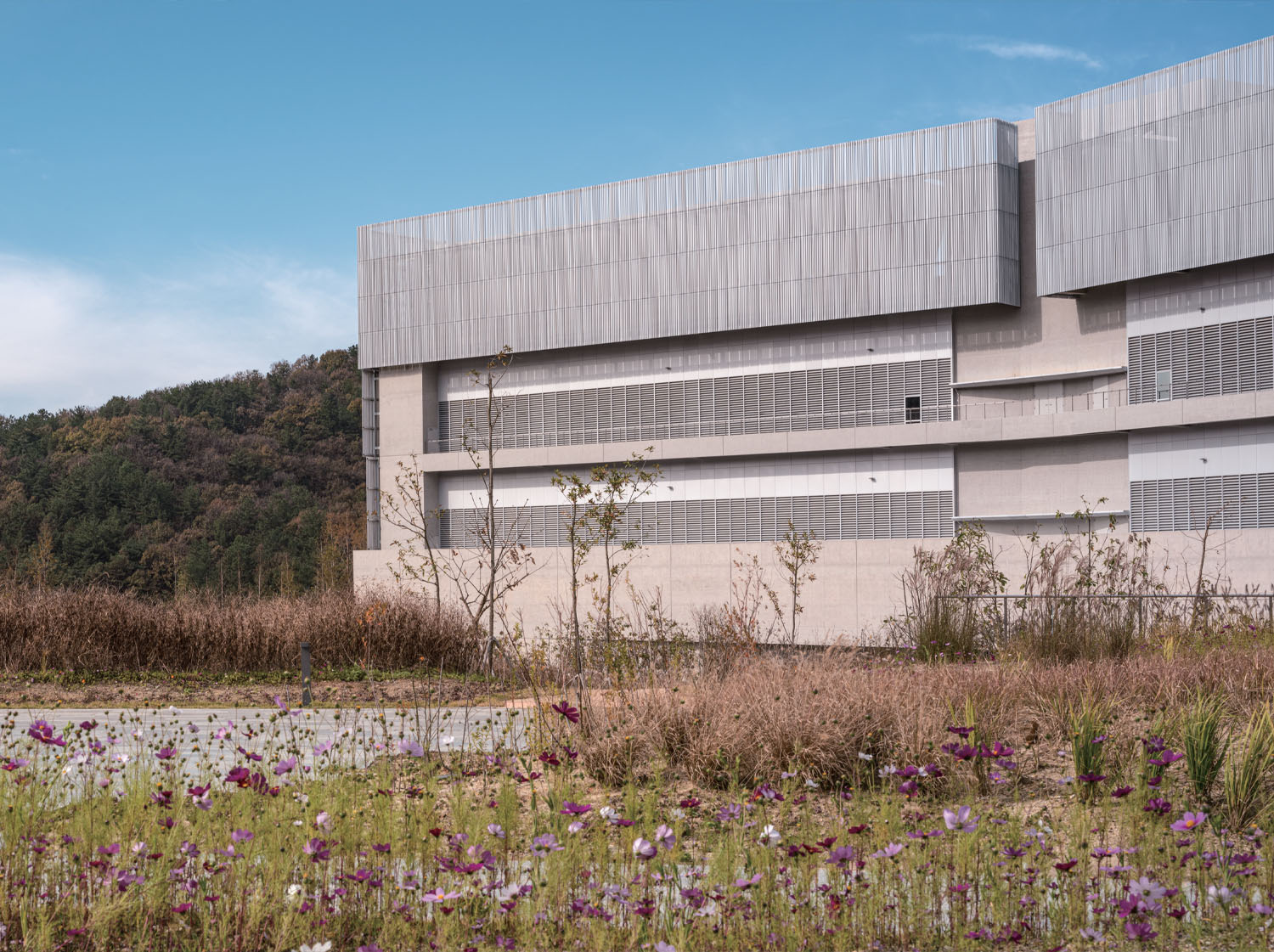
©Jang Mi
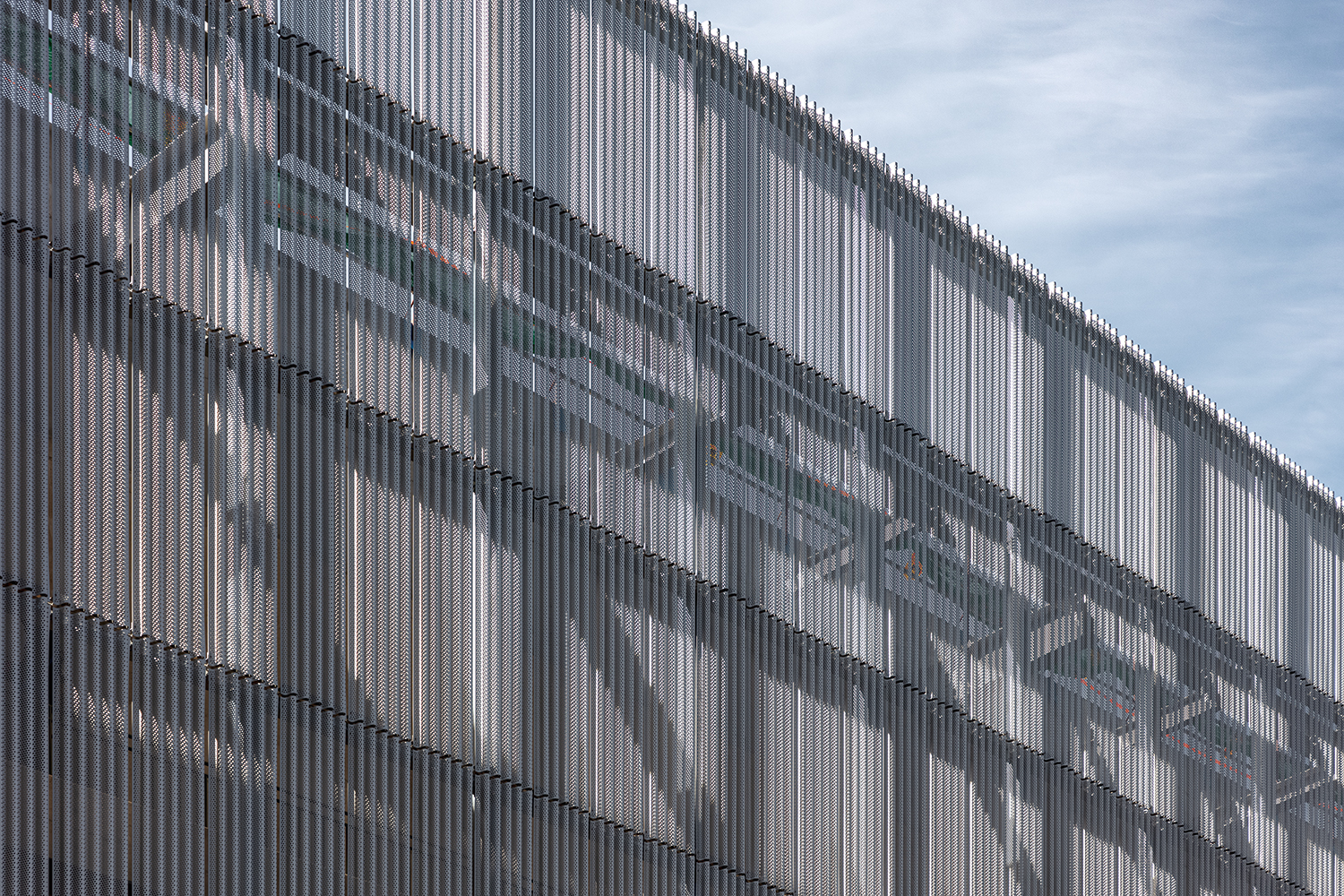
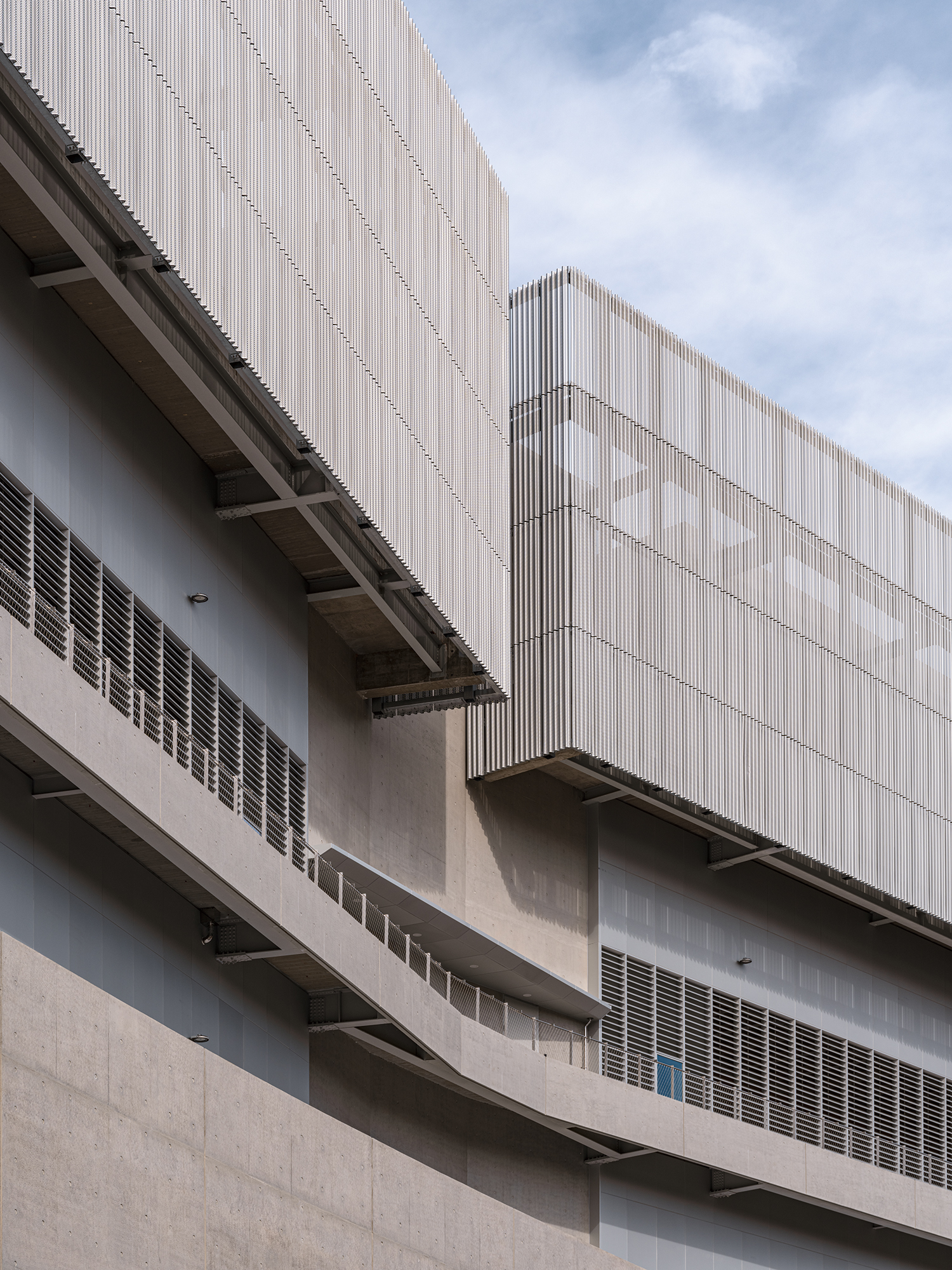
Anodised panel façade installed on the roof of the Server Building ©Jang Mi
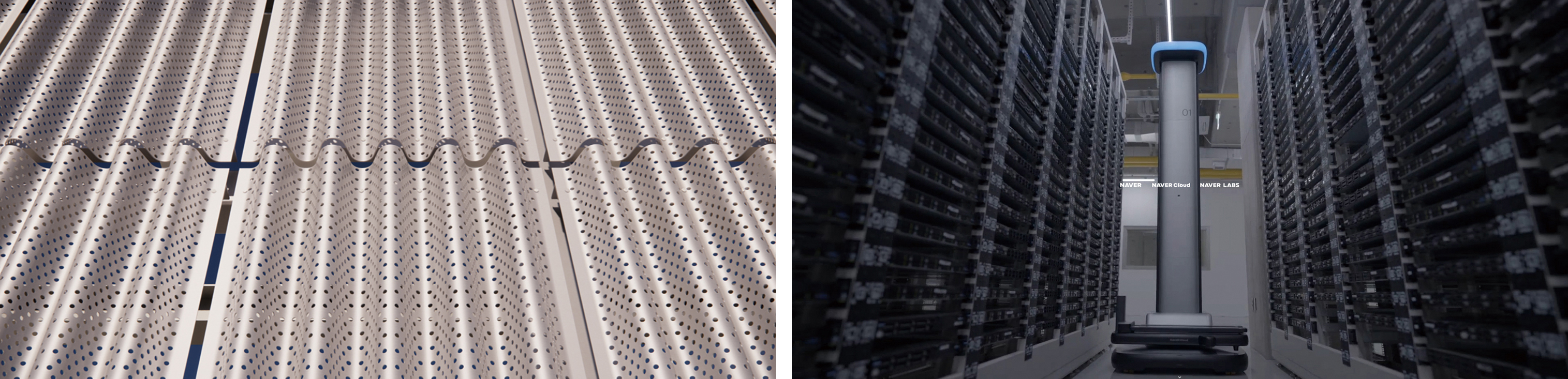
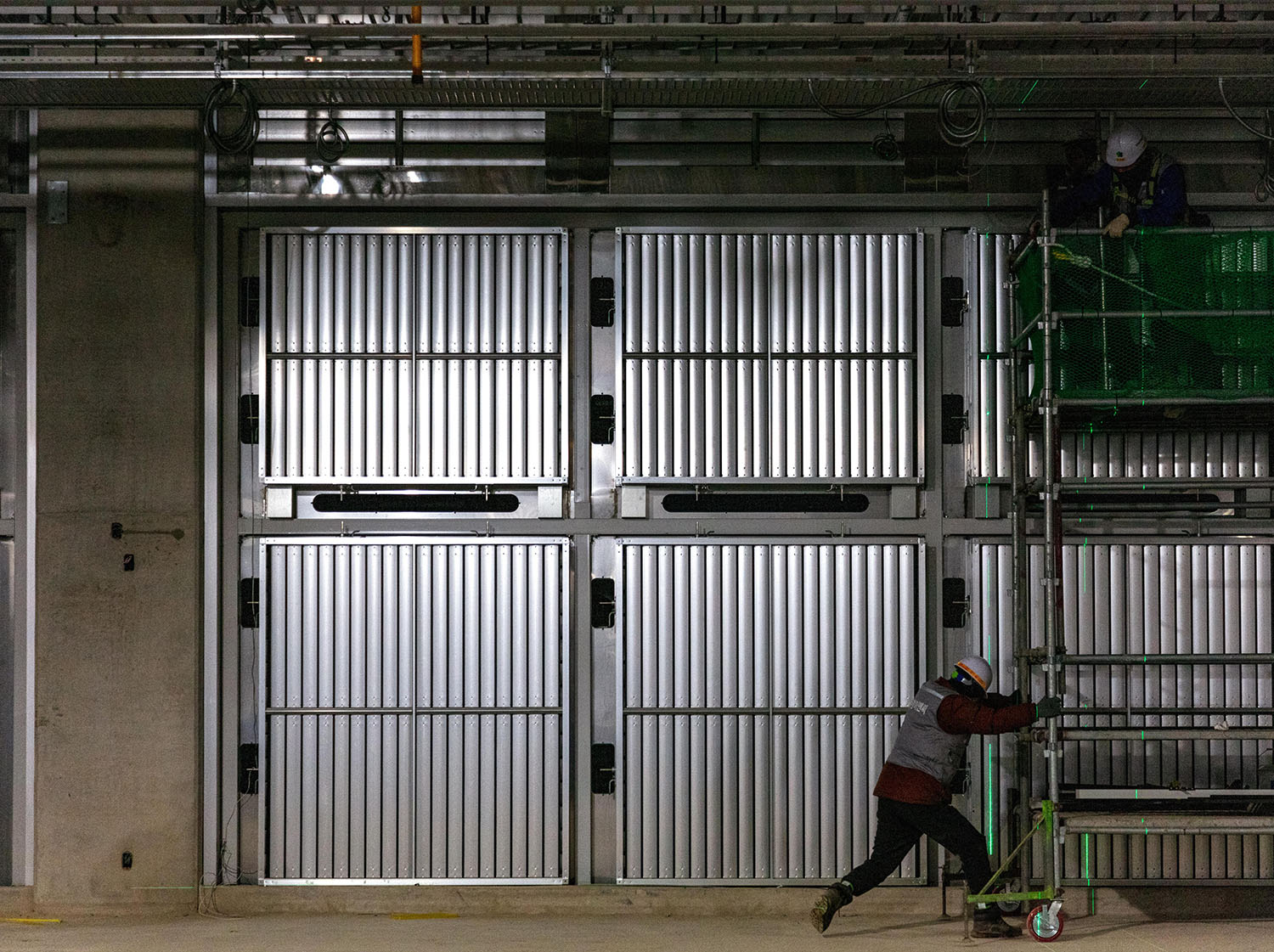
Perforated anodised panels ©Junglim Architecture (left), server racks in the server room. Screenshot form NAVER Corporation’s YouTube (right)
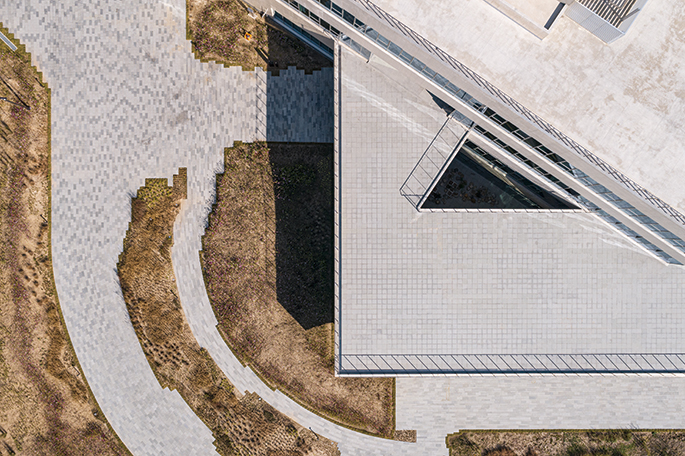
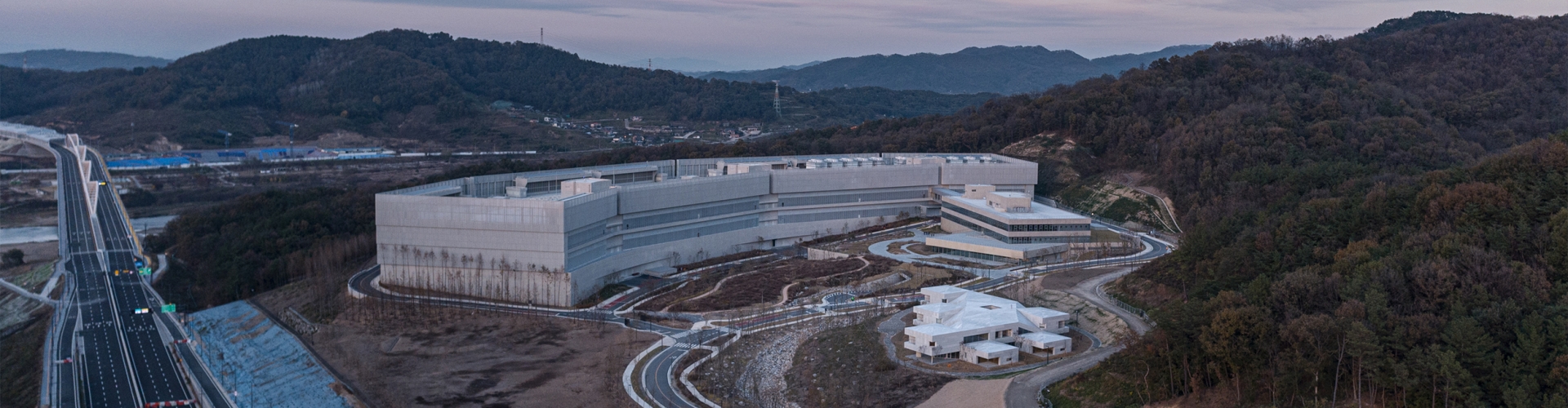
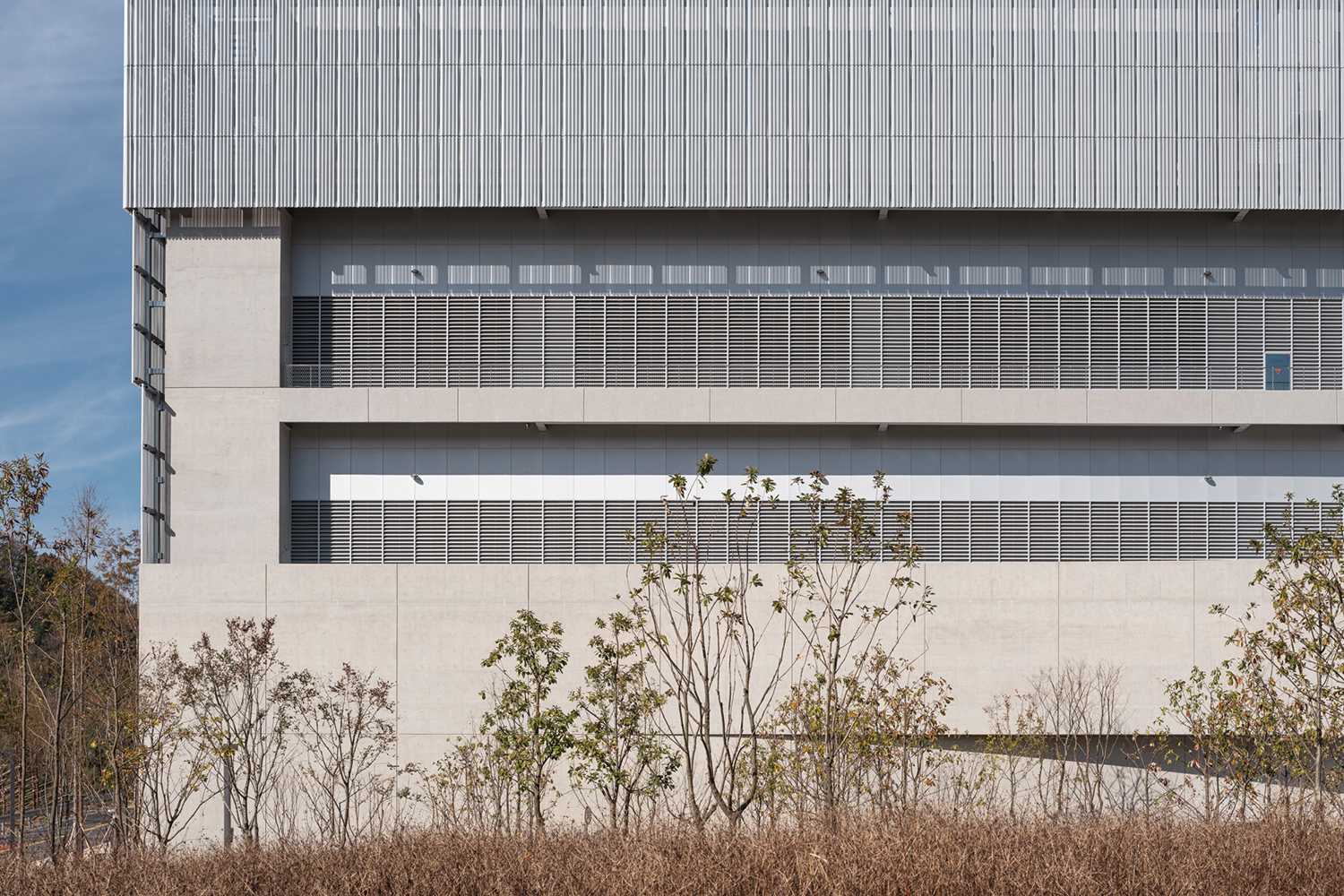
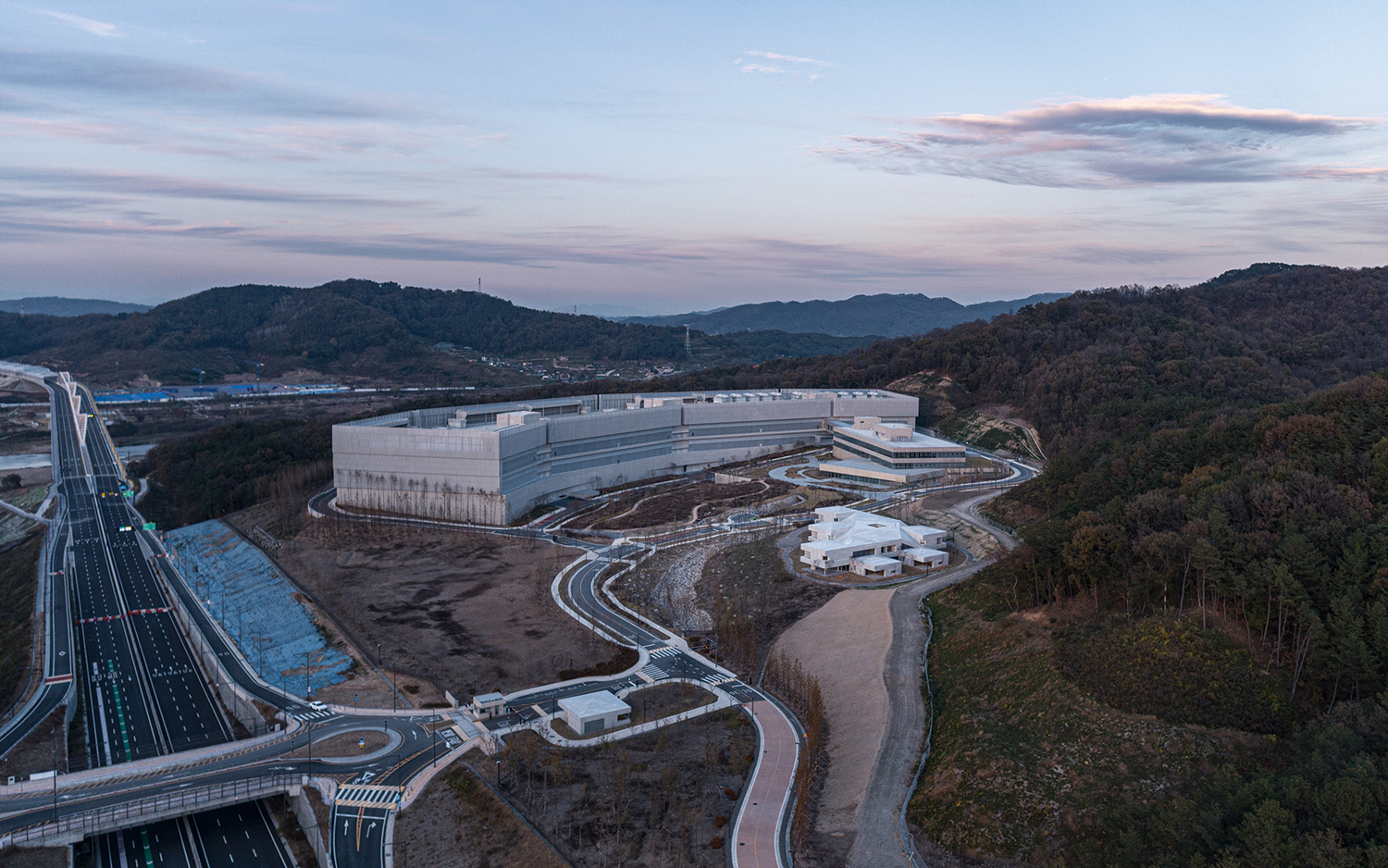
As Korea’s largest hyperscale data centre, NAVER Data Center GAK Sejong offers an architectural solution to the challenges of massive power consumption and environmental impact. Given that data centers are highly sensitive to energy use, their architectural integrity depends heavily on technological and sustainable design capabilities. In designing the master plan, server buildings, and operations centre, Junglim Architecture integrated the site’s topography, wind patterns, and existing ecosystem as core elements of the layout and landscaping. This approach minimised forest disturbance and established a plan for post-development ecological restoration, utilising native plant species in consideration of vegetation recovery. Plan and façade modules were engineered to minimise waste, and the massing of the server buildings was defined by the rack modules and their arrangement. Furthermore, the facility employs a natural cooling system using outdoor air to dissipate server heat, while repurposing waste heat and rainwater to promote energy efficiency and resource circularity.
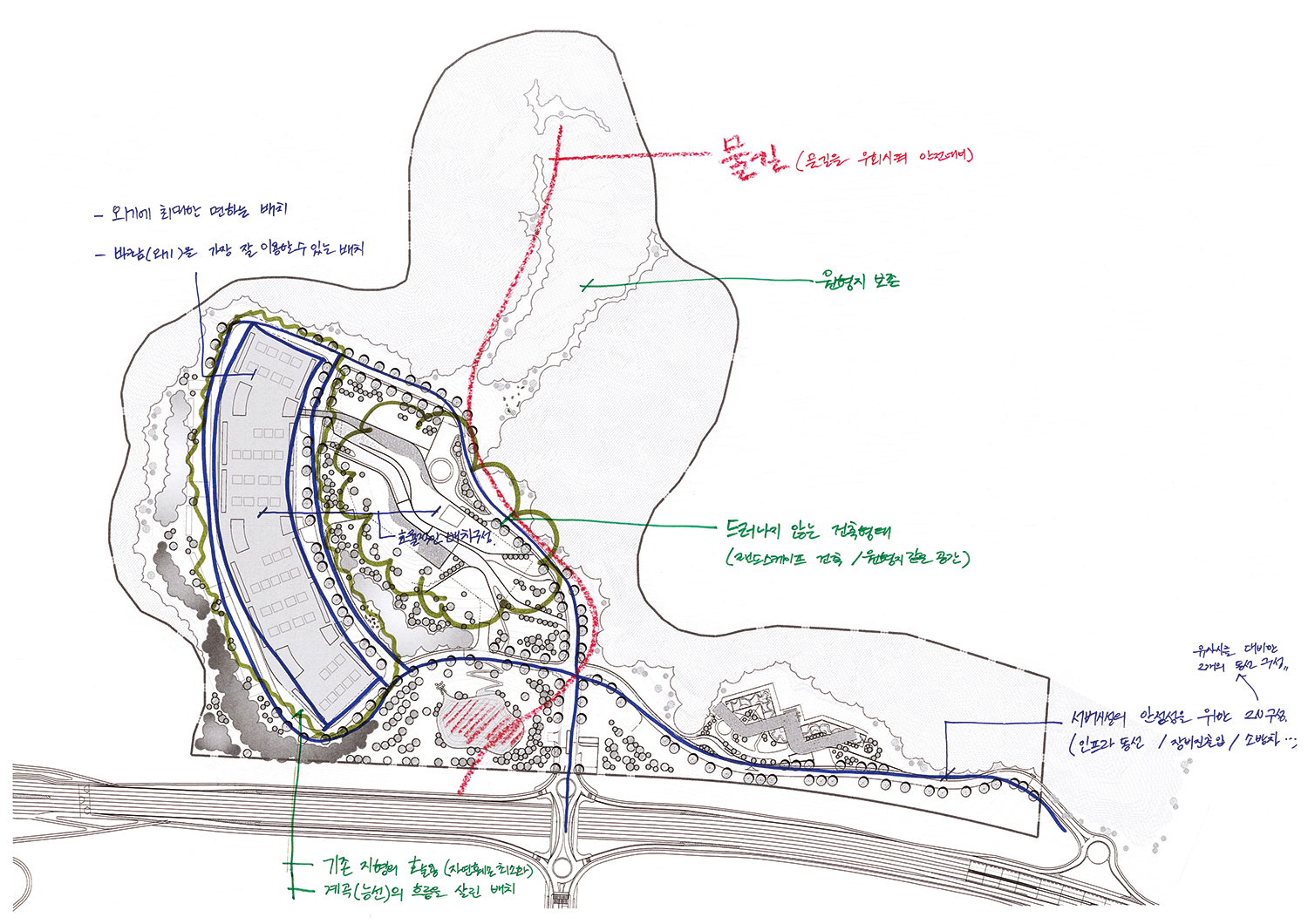
Sketch of layout study in early stage
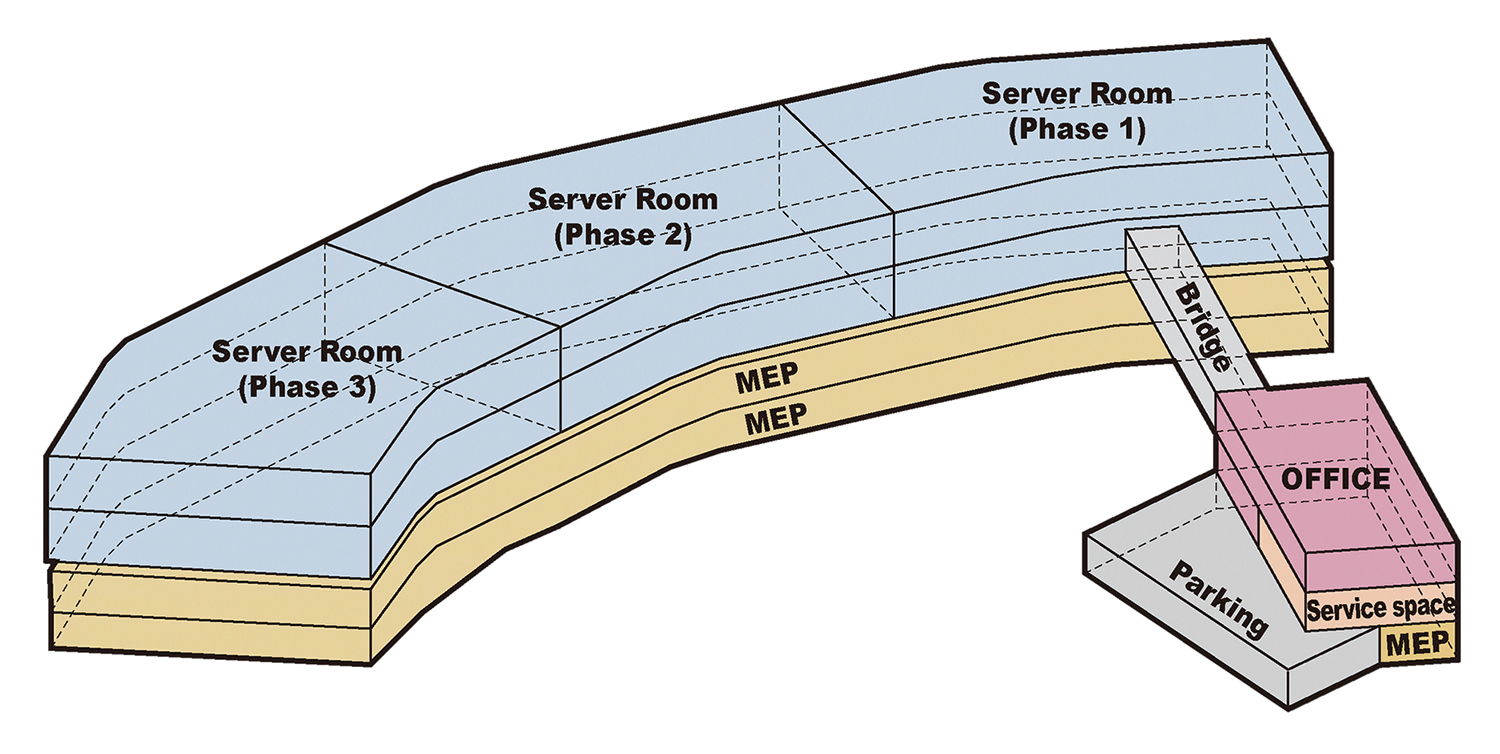
Currently programme diagram
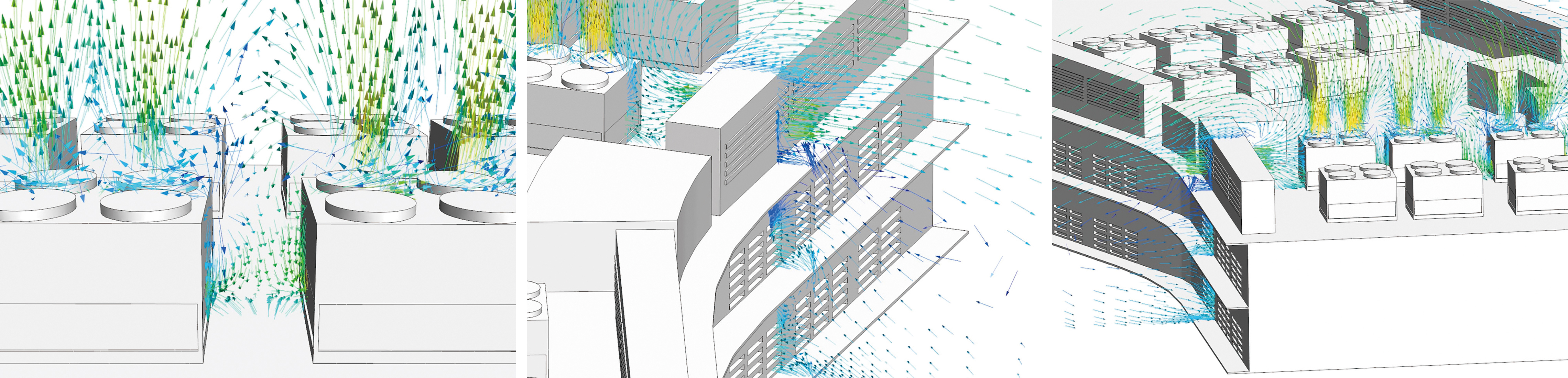 Computational fluid dynamics (CFD) simulation of outdoor air (OA) / exhaust air (EA) flow

Annual wind simulation for the Server Building layout
©Jang Mi
©Jang Mi