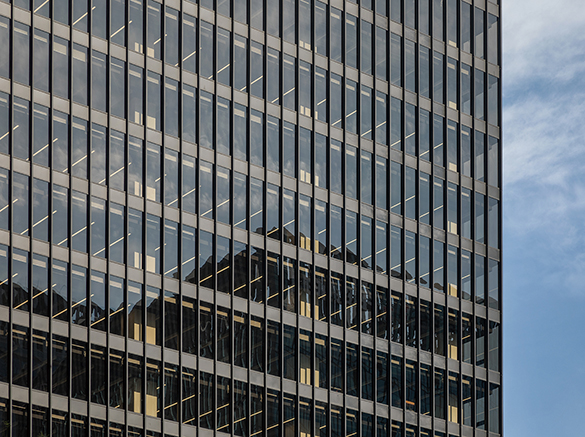

SPACE May 2026 (No. 702)
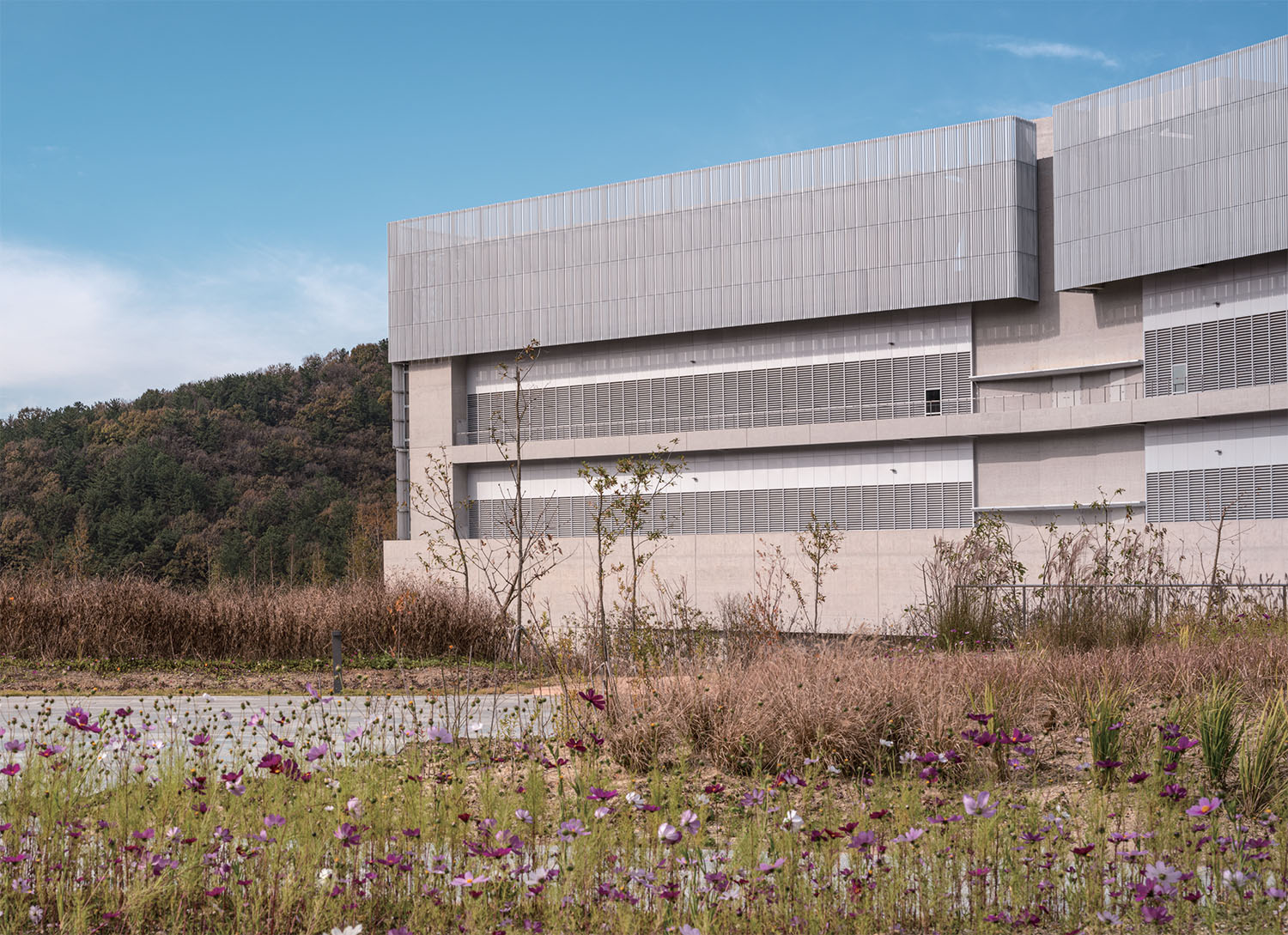
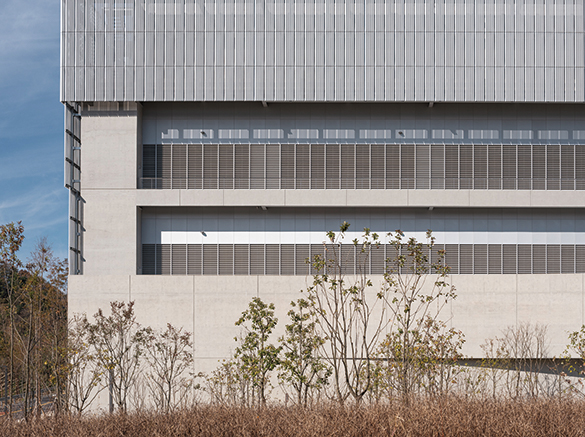
NAVER Data Center GAK Sejong ©Jang Mi
For over 60 years, Junglim Architecture has presented architectural solutions to the contemporary challenges faced by the nation (in terms of its cities, markets, culture, and wider society) informed by collaborative intelligence and organisational design. Our history is not merely an accumulation of the achievements of individual architectures, but rather an attitude and a process of translating, spatially, the structural demands of our epoch. Since our foundation in 1967 we have been implementers, spatially realising state-led growth strategies and urban development during the transition from post-war recovery to the pursuit of policies of developing nations, industrialisation, technological modernisation and urban redevelopment. Following the end of the Cold War and Korea’s democratisation in the late 1980s, alongside the reconfiguration of national symbols, we played a role in designing public infrastructure and the nation’s image in light of the flow of globalisation. From the late 1990s onwards, following the IMF financial crisis, society was restructured around a neoliberal and private-sector-led economy, and the demand for specialised, subdivided architectural design to support the qualitative growth of cities increased rapidly. Consequently, Junglim Architecture shifted its focus from state-led architecture to market- and industry-centred architecture, evolving into specialist designers of spatial platforms for office, IT, exhibition, tourism, leisure, commercial and medical infrastructure. Following the global financial crisis of the late 2000s, cities were restructured around consumption, leisure, and experiential activities, with architecture expanding to become both a commodity and a public stage for the city. In the face of these changes, we have designed cities of experience by transforming office, commercial, residential and leisure facilities into new public spaces through large-scale, mixed-use developments and urban regeneration projects.
Since the late 2010s, following the 2015 Paris Agreement on Climate Change and emergent discourse on the Fourth Industrial Revolution in 2016, we have been contending with structural changes across the environment, technology, industry, society, cities, and lifestyles. Due to a response to the climate crisis and the need to reduce carbon emissions, the rise of artificial intelligence (AI) and the digital transition, the restructuring of advanced industrial ecosystems, an ageing population and the decline of local communities, as well as increasingly diverse ways of life, architecture is now under pressure to operate as a complex system that goes beyond providing single-function solutions. At Junglim Architecture, we tune into to these changes and seek to proactively interpret the future through architecture.
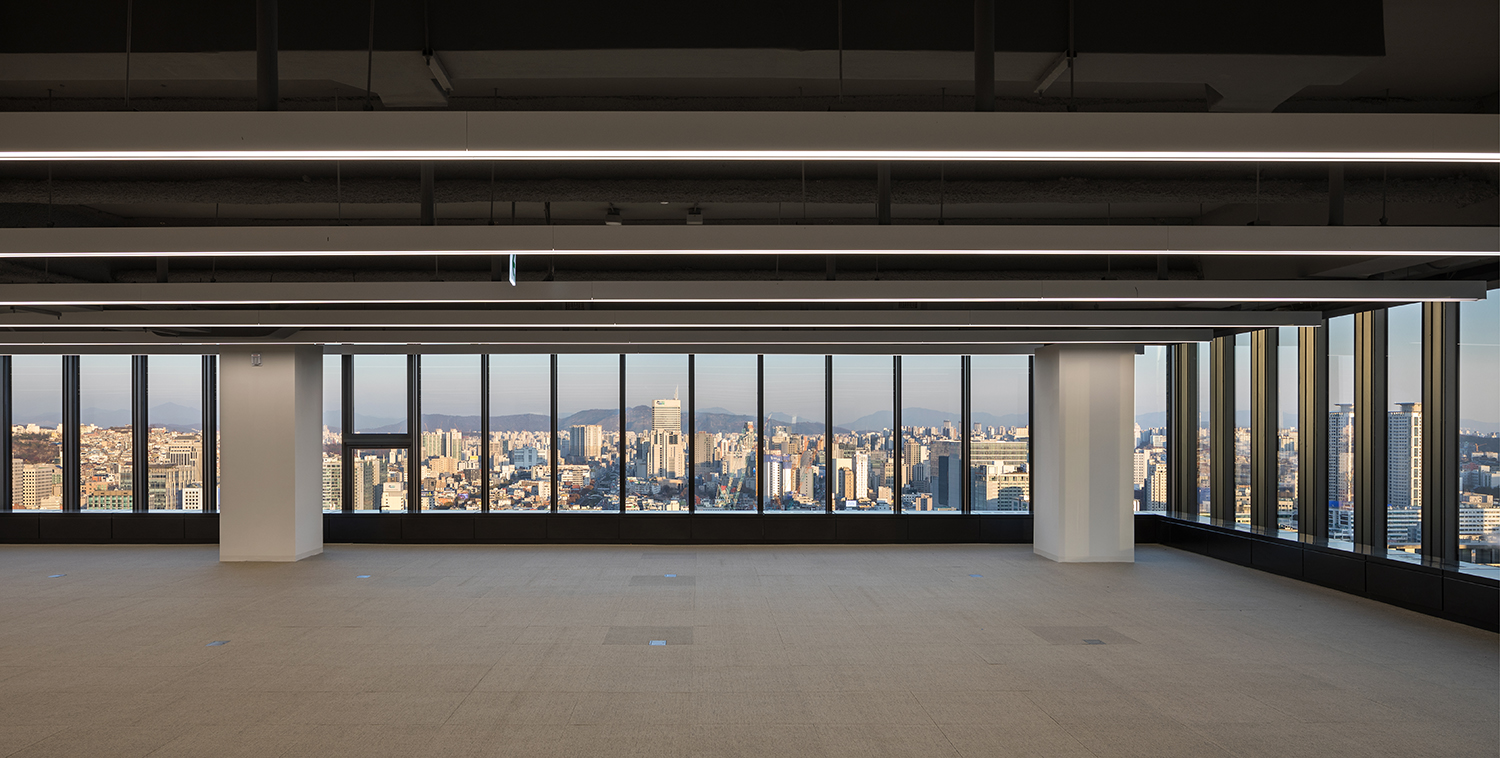
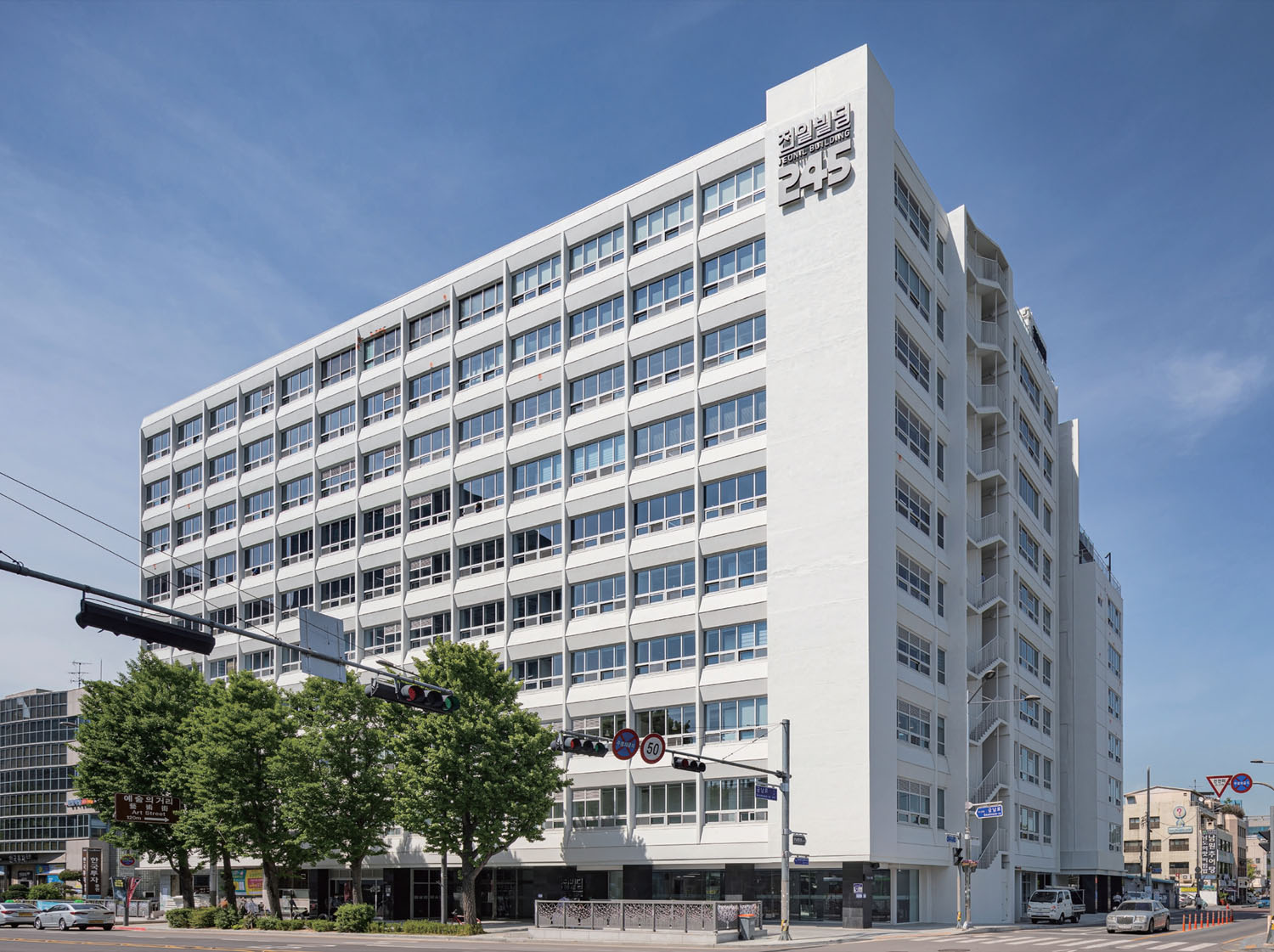
Samil Building Renovation
Sustainability
The year 2027 marks the 60th anniversary of Junglim Architecture. This is an opportune moment to reflect on our past and look ahead to a new beginning. Rather than just looking back on our past activities and works, we intend to redefine their significance and value of the times, establish our current position, and set the direction for the next 100 years. In this context, we have chosen ‘sustainable architecture’ as our first theme for the future. This is not just a technical approach, but an integrated response that combines collective intelligence and organisational design in order to address the demands of our time and society. The background to the choice of this theme is as follows:
The first is the climate crisis, and the resulting shift in the global agenda. The Paris Agreement at COP21 and the Glasgow Climate Pact at COP26 signify a transition from setting targets to executing and implementing them. Architecture is now establishing itself as a core means of realising a carbon-neutral society.
The second is changes in demand from clients and society. Global initiatives such as RE100 and Net Zero are spreading on the basis of the voluntary participation of institutions and companies, and they directly impact corporate survival strategies and value systems, going beyond mandatory standards for eco-friendly architecture.
The third is changes to the global design market. Architectural associations in Europe and the United States, along with global design firms, are independently establishing Life Cycle Assessment (LCA)-based designs, ways of managing embodied carbon, and strategies to achieve Net Zero at an organisational level, while also developing and implementing the design technologies necessary to realise these strategies. This shows that sustainability is no longer an option but a core element of design competitiveness.
The fourth is the social and environmental responsibility and identity of Junglim Architecture. Our mission statement, ‘Creating healthy spatial environments to support a world of living together’, serves as the starting point for recognising sustainability as not just a technical matter but a social responsibility and an ethical imperative. This is evident in the sustainable design R&D and social contribution initiatives we have pursued since the mid-2000s; our non-profit cultural foundation; the Junglim Architecture Awards for Student; our recent eco-friendly and digital architecture education programme (JADU); and the proclamation of ESG management. This process of integrating our entire corporate activities into a single value system – going beyond the accumulation of projects and technologies – is both evidence of our commitment to putting our beliefs into practice, and a foundation for the sustainability that we strive towards.
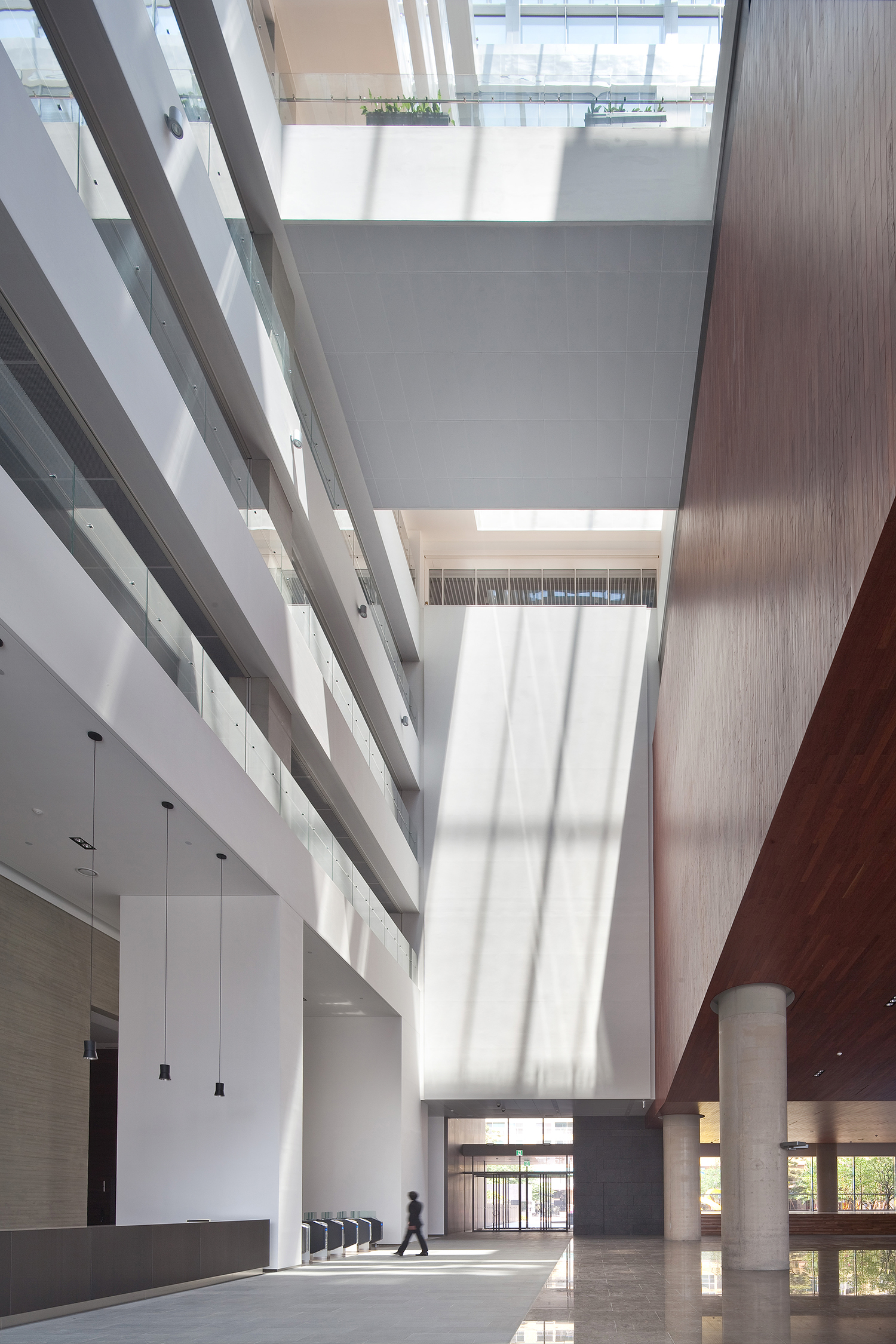
The lounge of Daegu Bank Second Headquarters
9 Solutions for Sustainable Architecture
Our aim is to define sustainable architecture not as a single concept, but as a concrete system of feasible design solutions. Although priorities may vary depending on the conditions and circumstances of each project, we are dedicated to ongoing research, development, and discourse to lay the groundwork for these solutions and their implementation. We are developing these solutions into a design and management framework alongside the establishment of objectives for every project.
1. Energy Performance
This solution aims to minimise energy consumption and carbon emissions throughout a building’s entire life cycle. Passive design, high-efficient building systems, and renewable energy are applied to achieve Net Zero. To this end, we are redefining the design process itself by integrating it with existing design procedures and using it as the basis for decision-making and design development.
2. Low-Carbon Materials
This solution reduces carbon emissions throughout the entire process, from the production and transport of materials, to their construction, use, and eventual disposal. It also actively uses recycled and bio-based materials. The embodied carbon of each material is quantified and catalogued (library-ised), and then the design proceeds while carbon levels are verified from the design stage onwards.
3. Adaptive Reuse
This solution goes beyond simply preserving or repairing existing buildings, by reinterpreting them and giving them new functions. Simultaneously, it achieves economic efficiency, saves resources, and restores a sense of place. The key lies in adapting spaces to meet current and future needs through functional transition and creative transformation.
4. Circular Design
By moving away from the linear consumption structure of architecture, this solution minimises resource waste and creates circulation structures by considering the entire life cycle (design, construction, operation and dismantlement). Taking a long-term perspective, it reconfigures resource flows by designing structures that are reusable, recyclable, easy to dismantle and convert. This ensures that the building itself becomes part of resources.
5. Vernacular Design
This solution takes into account the local climate, materials, and culture in order to achieve both harmony with nature and energy conservation. It uses local materials and traditional techniques to minimise energy consumption and reduce the impact on the local ecosystem. Furthermore, social sustainability is ensured by reflecting the community’s way of life and culture.
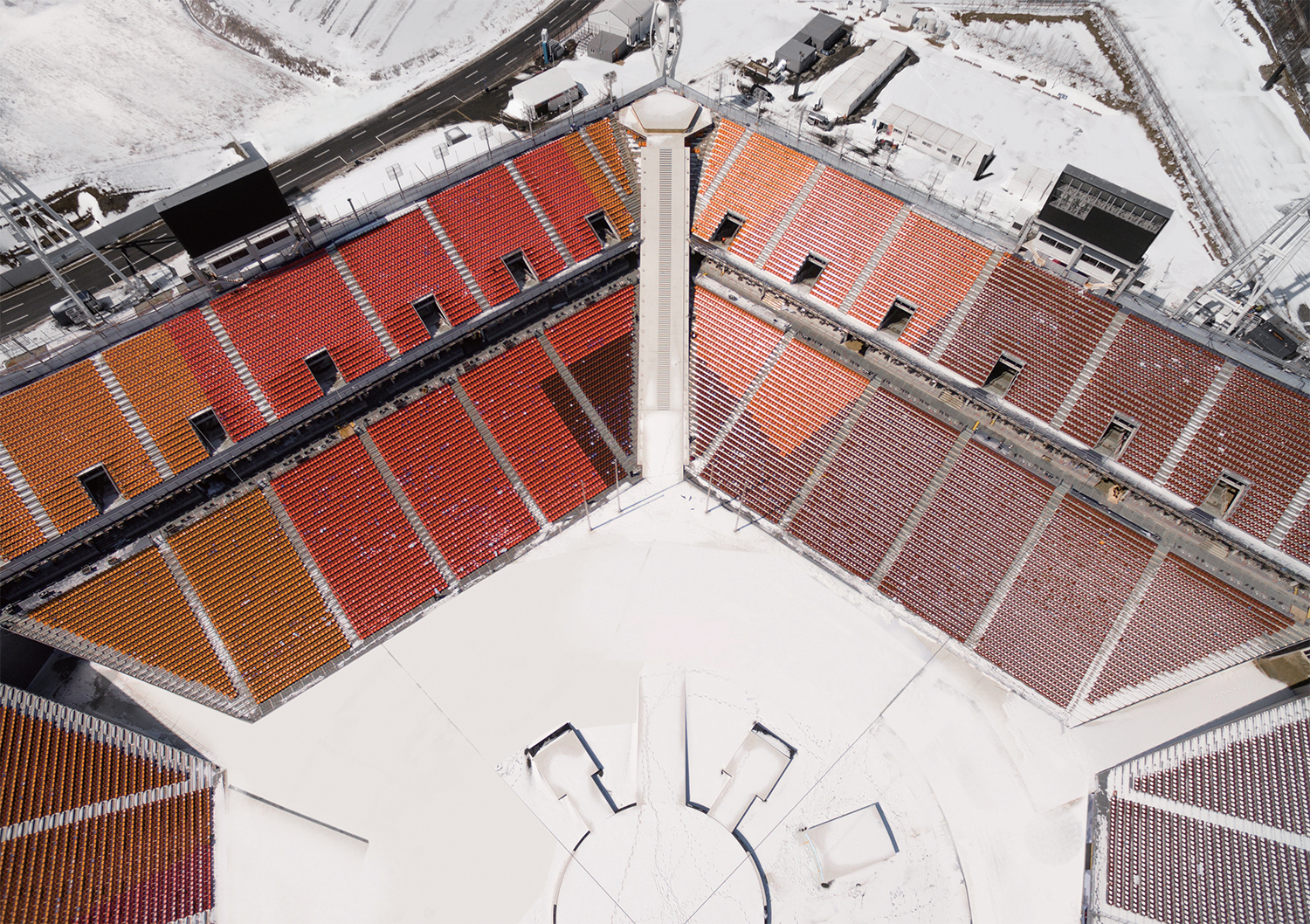
PyeongChang Olympic Stadium ©Mobit
6. Locality & Community
This solution strengthens social sustainability by creating architecture that connects with the local community, grounded in the memory and context of the place. While preserving the place’s meaning, memory and context, new relationships are formed to introduce contemporary functions and landscapes, thus pursuing the restoration of the city’s society, culture, and ecology, as well as the sustainability of the community.
7. Underground Urbanism
This solution turns to underground spaces to increase urban density and efficiency, while ensuring open public spaces remain available at ground level. It not only addresses issues related to urban growth, such as land use, density, land prices, transport, infrastructure, safety, and the pedestrian environment, but also protection from environment-related external risks, environmental conservation, climate response, and optimisation of energy use.
8. Land & Ecology
This solution is rooted in an interest in and respect for the non-human world. It emphasises the interconnectedness and interdependence between humans and nature, buildings and their surroundings, as well as the constituent elements of ecosystems. Architecture exists as an environment in which humans and non-humans can coexist sustainably: it harmonises with the surrounding biota, reflects the local climate, topography, ecology and cultural context, and facilitates the flow and circulation of resources.
9. Resilience
This solution integrates within designs the capacity of architecture and cities to respond to external shocks, such as climate change and natural disasters, and the ability to recover swiftly and adapt continuously. This is a design strategy that goes beyond merely mitigating damage to consider the entire process of prevention, response, recovery, and adaptation. It comprehensively encompasses structural stability, energy self-sufficiency, flexible spatial management, and community resilience.
Sustainable architecture is no longer a matter of choice, but rather has become a ‘prerequisite’ for the continued existence of architecture. Junglim Architecture will continue to interpret the demands of the times and society through collective intelligence and organisational design, translating these into architecture. ‘Today’s Architecture for Tomorrow’s Earth’ is not a declaration, but it is our practical commitment to moving beyond our upcoming 60th anniversary and towards the future.
You can see more information on the SPACE No. May (2026).
Lee Myungjin
Lee Myungjin, CEO of Advanced Design Division, Junglim Architecture, has executed architectural projects across various sectors, including workplaces, research, commercial, healthcare, and data centres. He is committed to design that proactively addresses industrial and environmental issues based on future technologies and scientific processes, pursuing innovation to meet the demands of the Fourth Industrial Revolution and global environmental changes.
7