Moving and Evolving Soft Architecture: The Soft Palace
photographed by
Riccardo De Vecchi (unless otherwise indicated)
materials provided by
Studio Ossidiana
SPACE April 2026 (No. 701)
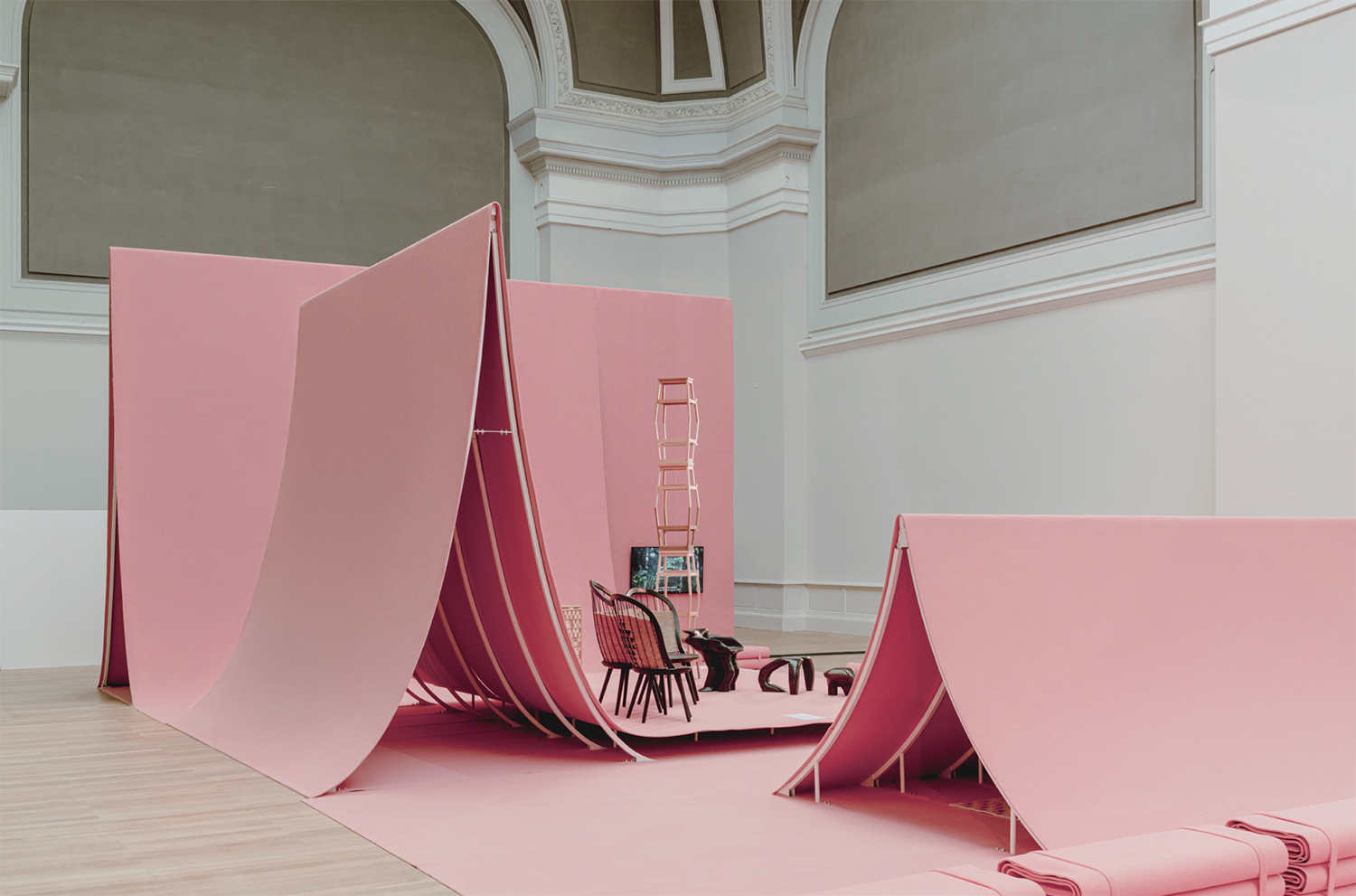
The Netherlands-based studio Studio Ossidiana has long been committed to experimentation with materials and space, blurring the boundaries between architecture, design, and landscape architecture. They see architecture not as a ‘fixed object’, but as an entity capable of functioning autonomously through interactions with its users—both human and non-human. From 6 ‒ 15 June 2025, as part of ‘Fun Palace’, a joint programme organised by the Centre Pompidou and the Grand Palais Rmn, they filled the Grand Palais’s Salon d’Honneur with a pink fabric installation. This work evokes an imaginary palace while summoning the formative sensation of hiding under a blanket and playing as a child. SPACE listened to the story behind their vision for The Soft Palace.
Interview Alessandra Covini, Giovanni Bellotti Co-Principals, Studio Ossidiana × Kim Hyerin
Kim Hyerin (Kim): Studio Ossidiana’s work crosses architecture, design, and landscape. Your interests also extend to material research and ecological approaches. Alessandra Covini, Giovanni Bellotti (Covini, Bellotti): We work across different themes, but something that often connects our projects is a sense of action, agency, and operativity. We are interested in environments that can act and interact with their surroundings and their inhabitants, whether this involves birds, plants, children, or adults. Many of our projects try to create situations to which people feel invited, or are sometimes challenged, to become active participants. Rather than simply observing a space, visitors might become performers, gardeners, makers, inhabitants or caretakers within it. We are interested in spaces that encourage this kind of engagement, where people can shape, transform, or inhabit the environment in different ways. In this sense, our research often focuses on how architecture can enable forms of participation and coexistence, and thus define ideas of ownership and belonging. We explore how materials, landscapes, and spatial structures can support different forms of life and activity, allowing the environment to evolve through use. For us, architecture becomes less a static object and more a framework that allows actions, interactions, and transformations to happen over time. The research that we prioritise in the studio is along these lines; in our process we often begin with contextual and typological research, often associated with a material to which we have flet drawn, then we work with endless amount of diagrams to test possibilities and configurations, and from the earliest phases we work with material samples, be they a terrazzo tile, a earth wall, or a game sewn in felt.
Kim: Studio Ossidiana uses a wide range of materials, including textiles employed in this project, and also engages in material experimentation by directly fabricating elements such as tiles and artificial stones.
Covini, Bellotti: In our projects, the ideas for materiality emerge in the early stages / concepts. Our interest in experimenting with different materials comes from a curiosity about how matter is transformed into materials and then into space. We look for materials that can evolve, weather, or host other forms of life. Through these experiments, materials become not just structural components but active participants in shaping environments and narratives. We are interested in materials that emerge through labour, and in turn how work becomes authorship, and, eventually, a form of ownership. For example, in Massi Erratici (2024), which involved the production of artificial stones from waste materials, the work developed across different moments: from collecting stones from a landfill, to breaking them down, grinding them, arranging them into abstract compositions, and then covering and later polishing them. What emerged was a process across different authors.
Kim: The Soft Palace (2025) is an installation presented in the Salon d’Honneur of the Grand Palais as part of ‘Fun Palace’ (2025), jointly organised by the Centre Pompidou and GrandPalais Rmn during the period leading up to the Centre Pompidou’s closure for renovation. How precisely would you describe the project?
Covini, Bellotti: The project in connected to Cedric Price’s project from the 1960s, a proposal for a flexible cultural infrastructure dedicated to participation and collective learning. The curatorial team, together with philosopher Emanuele Coccia, focused on the theme of the assembly, interpreting in ways capable of moving beyond political or institutional forms of gathering and exploring how people come together not only to deliberate or produce but also to share experiences of pleasure. We felt very lucky to have as a brief a text written by Emanuele Coccia, which emphasised that community emerges that being together can bring happiness and fulfillment, but it can also produce conformity, oppression, conformism. So the project was a challenge to think how, in the words of Emanuele, ‘enjoying the company of others requires specific architectural forms and sensory experiences.’
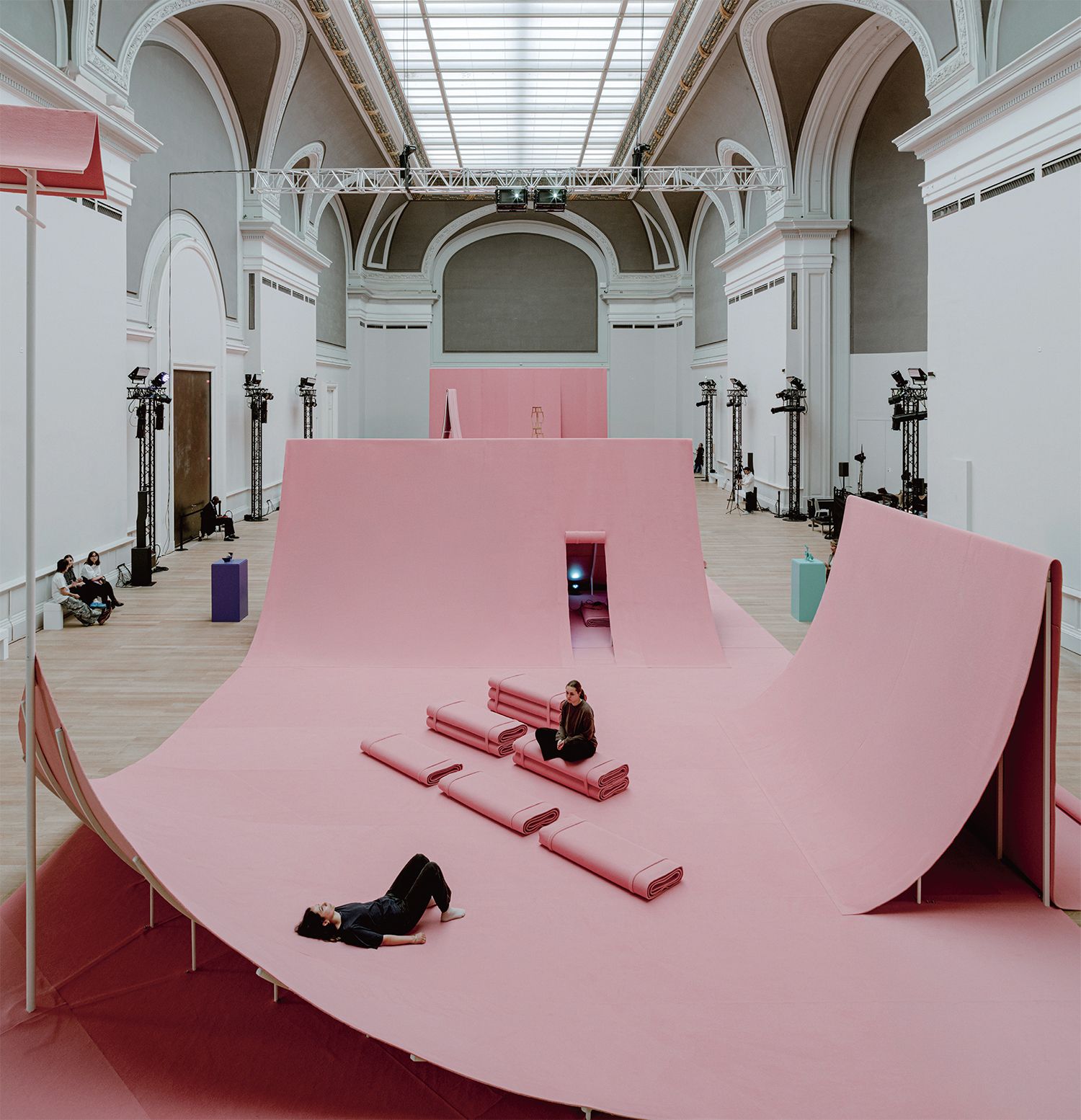
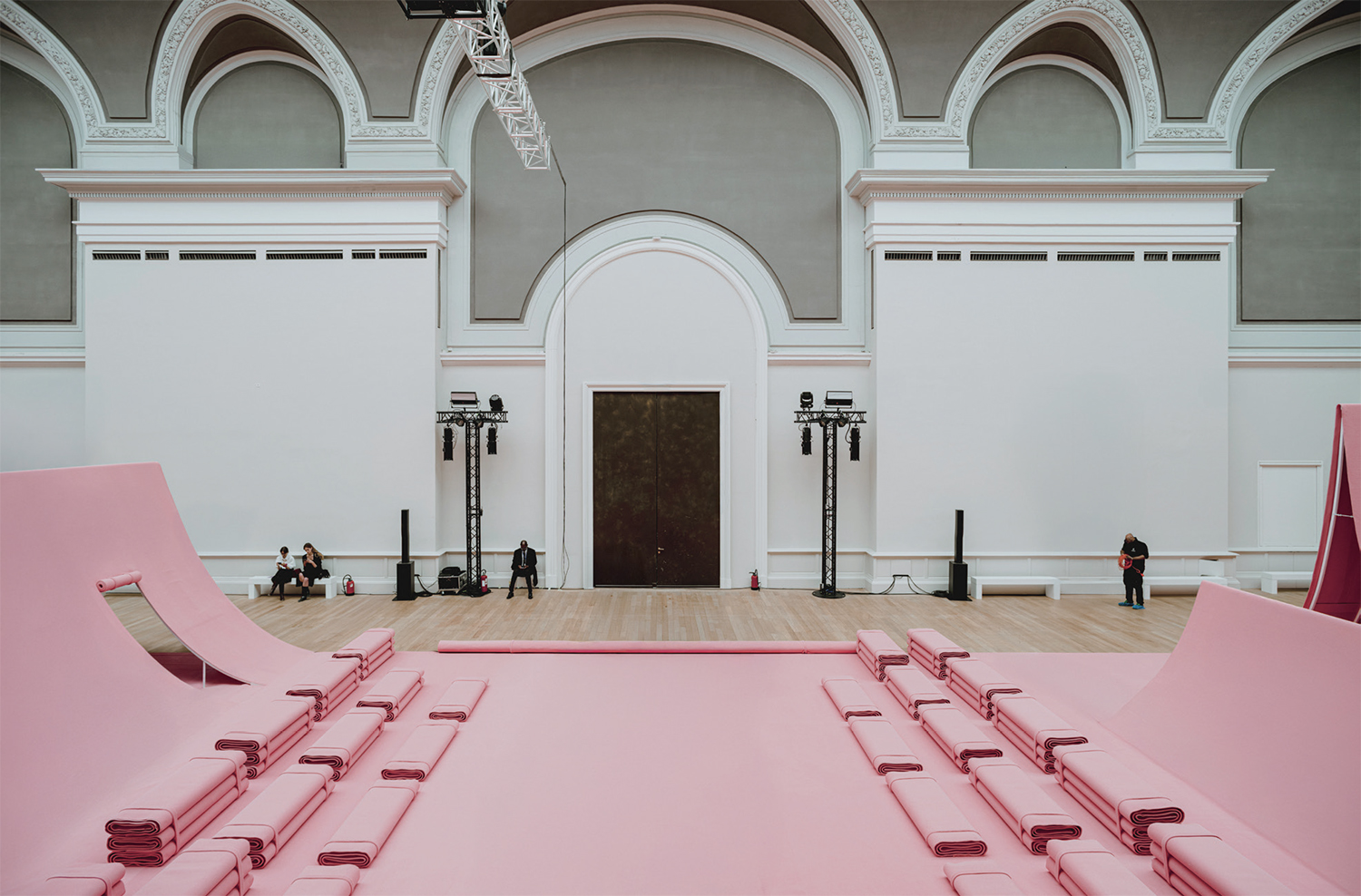
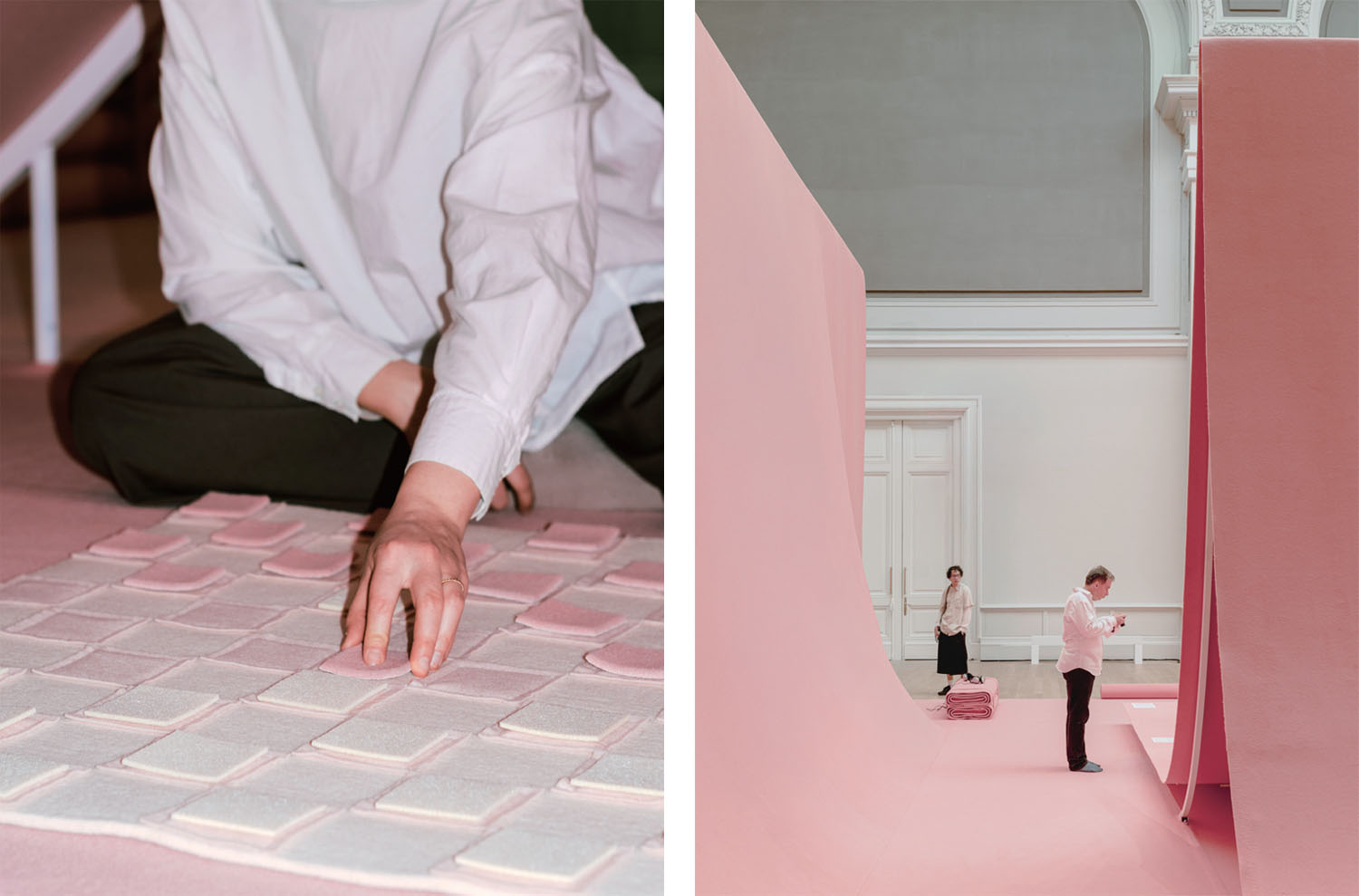
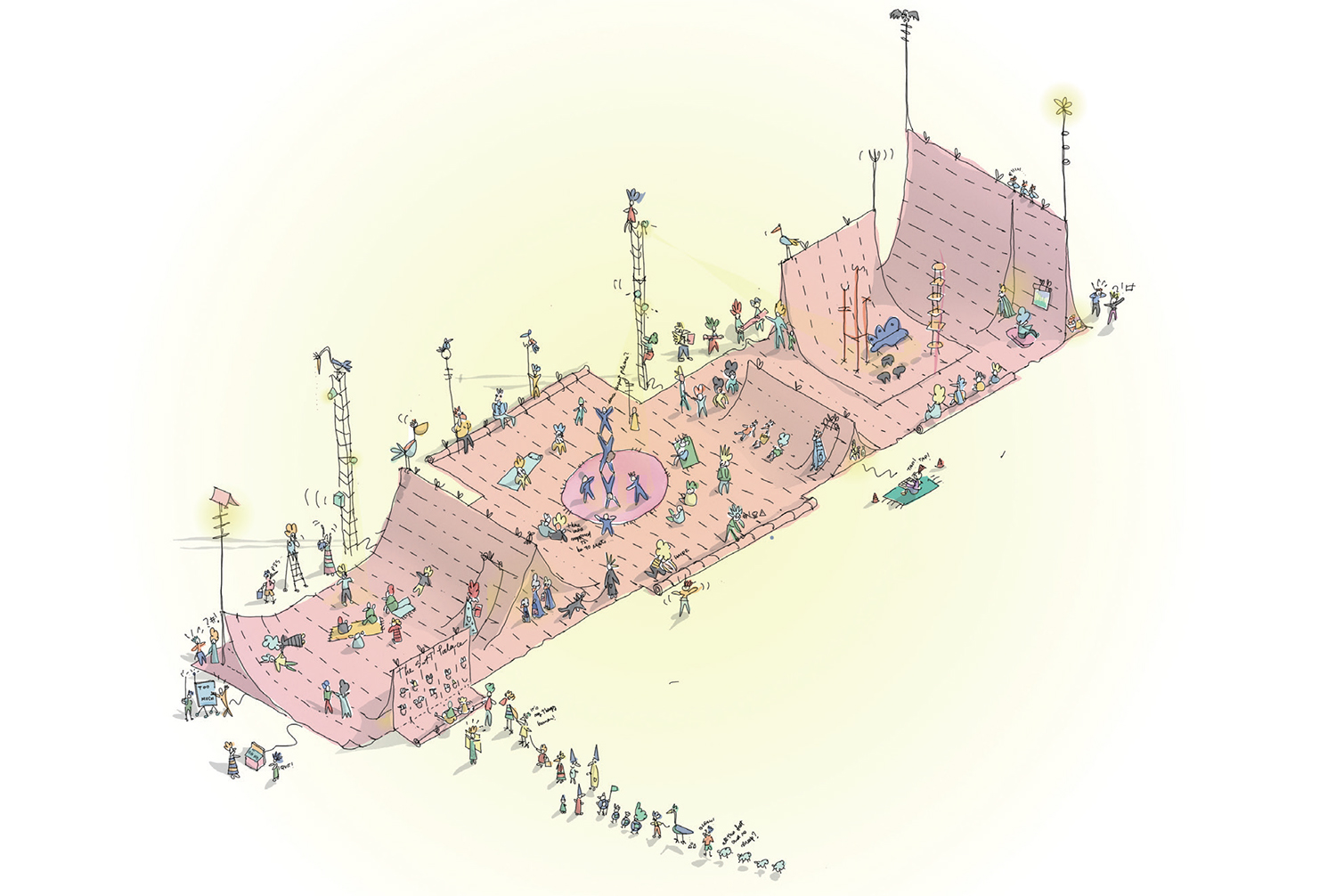
Kim: I’m curious how Studio Ossidiana managed to develop this concept while incorporating such a request. Covini, Bellotti: The Salon d’Honneur is a large, intimidating space, a room of around 1,600m². When we began studying it, we realised that one of its monumental doors, opening onto the grand staircase, was almost as big as the footprint of our studio. It took several design iterations and many conversations with the curatorial team to match the expectations and evolving programme requirements with a concept strong enough to hold the scale of the room. We started by looking at historical images of the Grand Palais, as well as photographs from the recent renovations. The freshly painted walls of the Salon d’Honneur were once covered with changing textiles and tapestries, while looking at the renovation images we were struck by the simplicity of construction fabrics hanging from the large steel vaults of the palace. The specific circumstances of the Centre Pompidou, as it was about to leave its address for a long renovation, became part of the conditions: somewhere between the memory of the draping textiles of the Salon d’Honneur, and the nomadic condition the Pompidou was about to enter, the idea of the soft palace took shape. Within its monumental spaces, we imagined introducing a world of softness. We looked to carpets, tents, and textile architectures, thinking of spaces such as Lina Loos’s bedroom by Adolf Loos, or Karl Friedrich Schinkel’s textile room in Charlottenhof Palace. We designed The Soft Palace as a vast textile surface, a carpet folded and rolled onto itself to become a gigantic garment, of which every crease and fold could be explored, and every pocket inhabited. Our intention was to create a landscape where different groups could find their place, to perform, hide, play, or gather, where assemblies could happen both formally and informally, and where you might listen to a lecture or a performance while sitting quietly inside your tent. The felt floor suggested entering the space without shoes, as in a home or a mosque, projecting visitors in a dimension of intimacy and belonging, but also into something ‘sacred’, a place separate from the world, with its own rules, or where new rules were to be discovered and invented.
SeedBed(2023)
Kim: Is it possible to transform and move space?
Covini, Bellotti: We are fond of Nicholson’s theory of loose parts, which describes how open-ended, movable materials – ‘loose parts’ – stimulate creativity, invention, and discovery far more than fixed, static environments. Latour similarly states that ‘the problem with buildings is that they look desperately static’, suggesting that architecture should be understood more like Étienne-Jules Marey’s photographic gun—a succession of freeze-frames capturing the flight of a gull. He adds that ‘we too need an artificial device in order to transform the static view of a building into one among many successive freeze-frames’, capable of documenting the continuous flow that a building always makes manifest. Architecture, in this sense, is never fixed, but constantly in motion. These ideas are present in many of our discussions and sometimes take form in projects that evolve through use, weathering, or interaction with visitors. At the same time, this desire for movement and transformation often clashes with strict regulations, especially in museum contexts, where moving elements can be considered risky. The Soft Palace, developed over the course of a year, certainly moved and evolved through different concepts and iterations. We even have a section in our studio dedicated to the felt models produced at different scales. In the final installation, we were able to introduce moments of movement, for instance, in the central stage, where rolls of felt could unfold, extending the space and allowing different performances to take place. We also designed furniture made of felt rolls – single, double, or triple modules – with varying weights, which visitors could move, carry into the tents, or use as pillows. These ‘loose objects’ became also very attractive to children, who used them to build forts, textile castles, and slides—spending hours hiding, jumping, and building with rolls. This was the spirit of Soft Palace that we most enjoyed: a continuous process of building and unbuilding, where visitors could create their own spaces to inhabit or perform.
Kim: What properties did you consider when selecting this material?
Covini, Bellotti: Finding the right material that could meet fire regulations across different countries and institutions was definitely a challenge. What ultimately made everyone agree was a fire-retardant felt that complied with the strict safety requirements of the Grand Palais. Beyond safety considerations, we were looking for a material capable of supporting multiple spatial roles. The felt needed to be durable enough to withstand walking, sitting, and lying on it for several days, while also remaining flexible enough to fold and form volumetric structures. For smaller-scale elements, such as the chess pieces and backgammon carpets, we used coloured wool felt from our workshop, which was patiently sewed together by our team’s interior architect Anna Halek—the last details were actually made during the five-hour drive from Rotterdam to Paris, just before the opening.
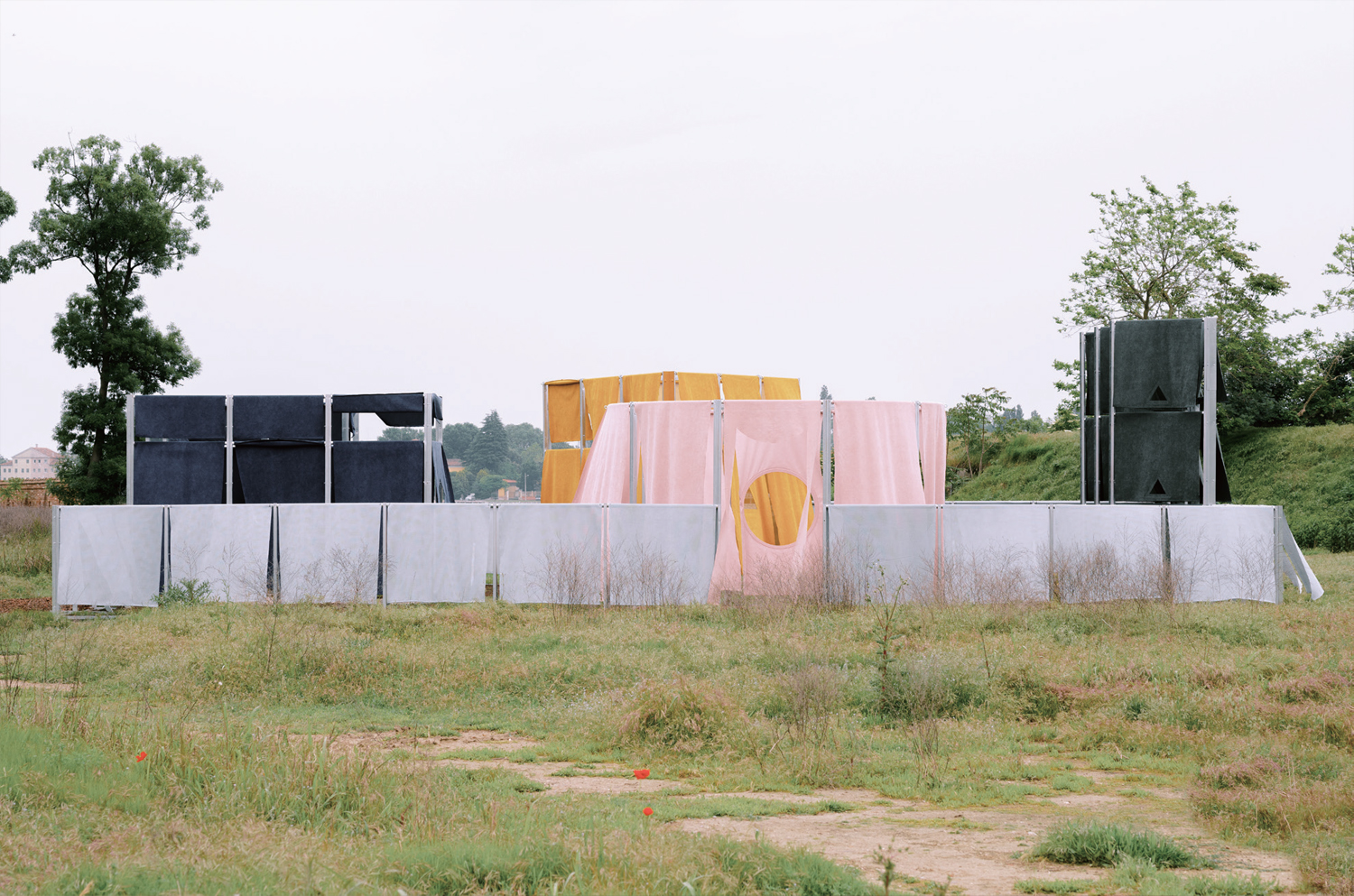
SeedBed
Kim: The Soft Palace doesn’t simply invite visitors to view its installations and walk along its intended route; rather, it makes people experience the fabric. How did people react?
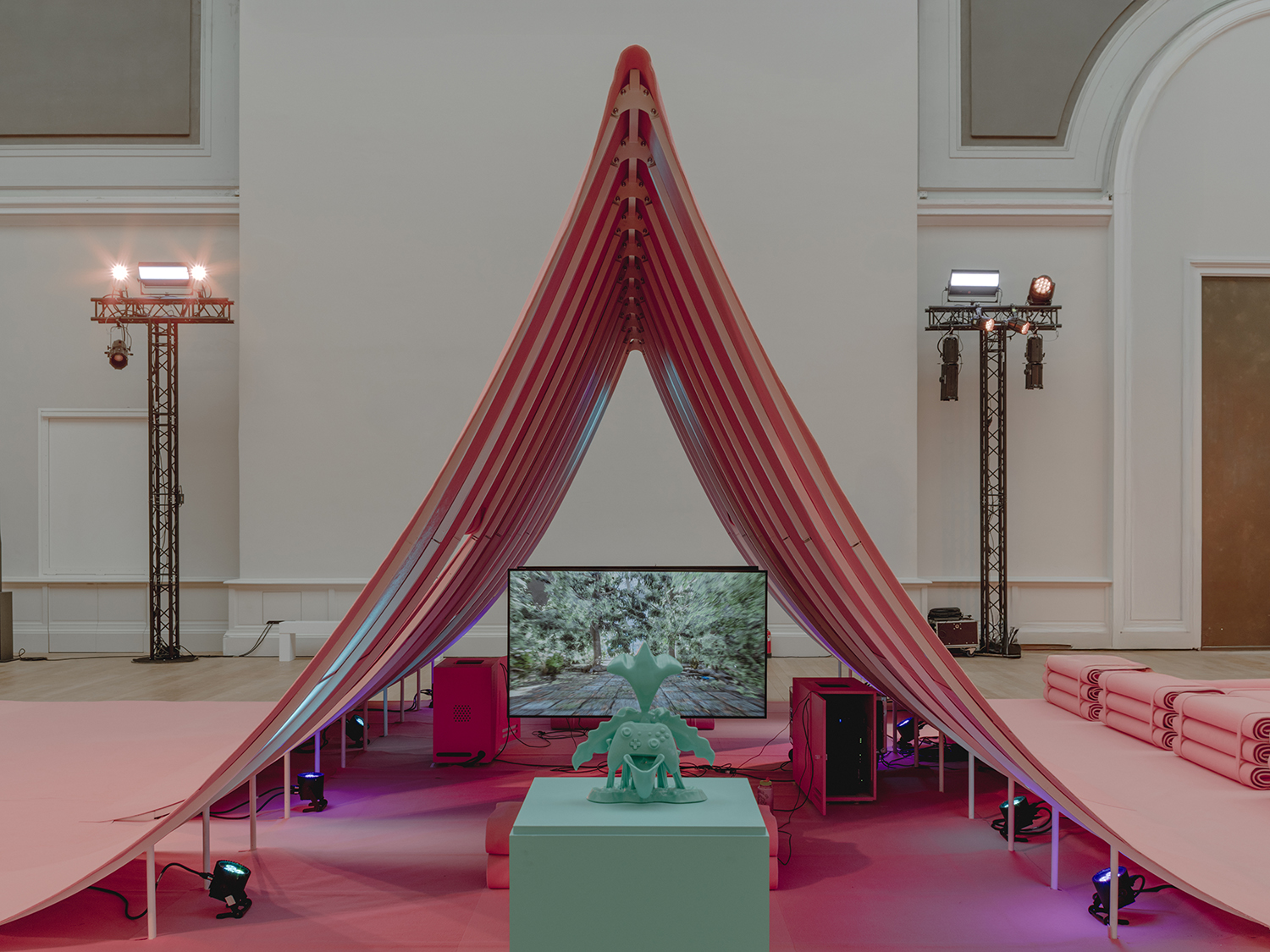
Covini, Bellotti: As architects, we design with affordances and the possibilities of actions that could take place in our projects in mind, but reality, and our visitors, always surprise us. We loved seeing rows of Parisian shoes neatly lined up along the edge of the carpet, or how spaces we thought might be too small to use became intimate refuges for children playing, couples sitting together, or mothers breastfeeding. The larger areas hosted talks, singing and dance performances, and discussions. It was liberating to see the space come alive, children playing hide-and-seek between the tents during conversations between Emanuele Coccia and the guests, while the multi-species video game was simultaneously played in Alice’s tents.
Kim: You have been exploring the creation of diverse spatial experiments through textiles as primary material.
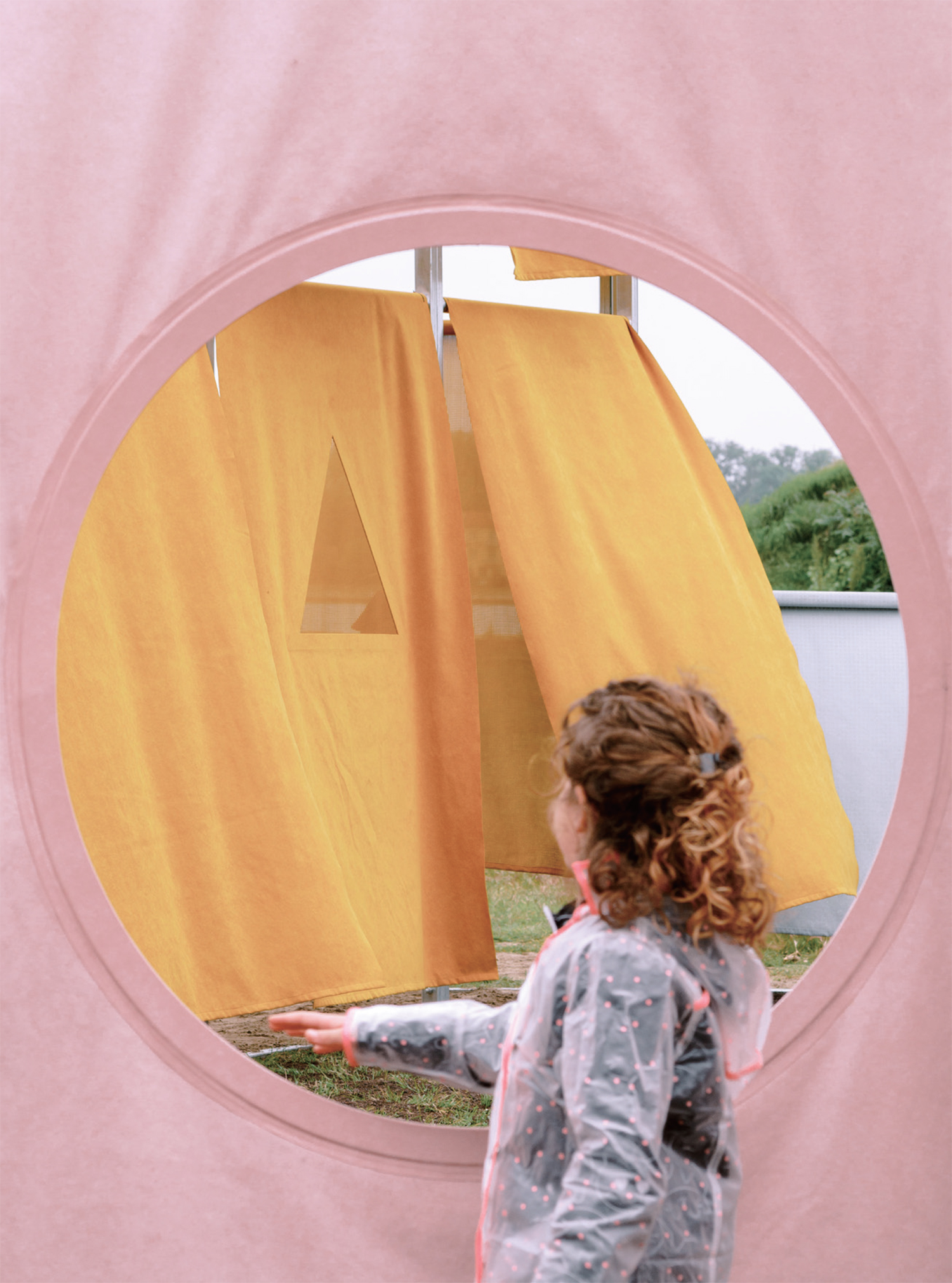
Covini, Bellotti: This also connects to the previous question about materials. As a framework for thinking, we often return to Gottfried Semper’s theories of textiles as the origin of architecture, and how textile motifs later ‘petrified’ into more durable materials such as stone. Our first research project explored this idea through the petrification of carpets into architectural elements, treating concrete or terrazzo almost like a carpet, giving these hard materials softness, texture, and colour. From the beginning of our practice, we have also been drawn to textiles themselves as spatial devices, and over time they have become increasingly present in our work. In SeedBed (2023), for instance, textiles define a precinct that, from afar, appears almost like a moving encampment, almost as if it were walking on its own, animated by the wind. In more recent projects, the relationship between architecture, textile, and dress has become more tangible. The Soft Palace can be read almost as a large-scale dress, where people inhabit its pockets, while in our recent project in Oslo (Soft Village, 2026), textiles function simultaneously as canopies, tents, carpets, and blankets, and can be carried and worn as gigantic scarves or capes. Looking ahead, we are interested in transforming these textile cities, palaces, or villages into actual workshops, spaces equipped with sewing and punching machines, scissors, and loose materials. Environments where textiles can be cut, assembled, and transformed into rolls, pillows, blankets, or garments; where floors are covered with colourful leftovers; and where these fragments can be reworked into larger compositions, game pieces, or everyday objects such as hats or slippers, places which can build and rebuild themselves from within, where there is no end to the project, but a continuous doing and undoing, a never ending spatial and material dialogue between people and space.
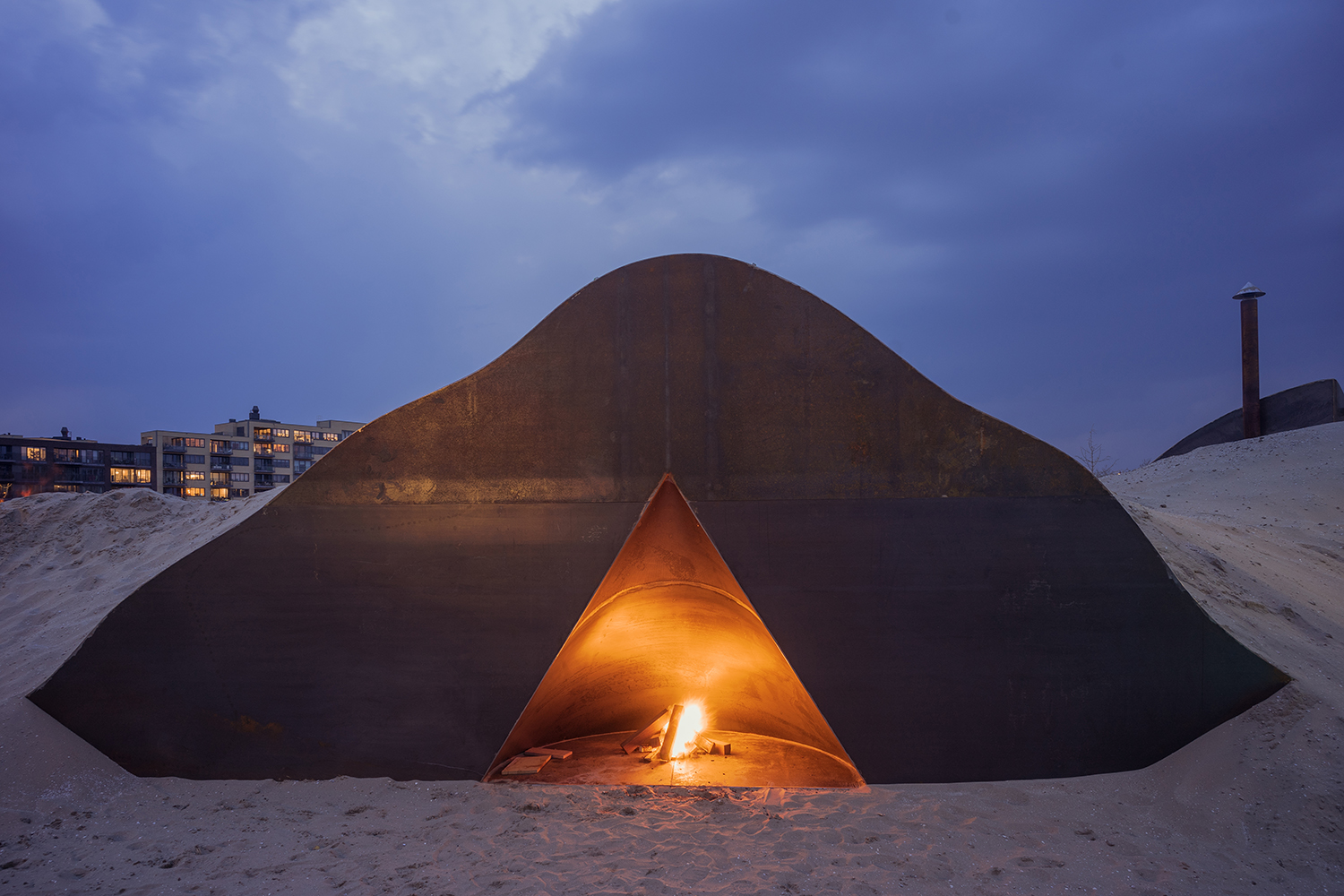
The Fire Dunes (2019)
Kim: While this work in terms of form actively communicates with the outside world, ironically it also evokes the image of a shelter. I received a similar impression from your previous work, The Fire Dunes (2019).
Covini, Bellotti: Although we had not explicitly connected Soft Palace with The Fire Dunes, the two projects indeed share similar intentions. Both had the idea of a shelter in mind, specifically the idea of a bivacco, the mountain cabins which populate the Italian Alps. These are shelters which are always open, where hikers and mountaineers can freely enter, sleep for a night or weather a storm, where one can find a blanket and some food, maybe a pair of dry socks, and leave something behind for the next visitor, a gift to someone they may never know. In The Fire Dunes, we created a landscape of sand with niches where visitors could gather, cook, and light fires, bring and leave food and wood. The project offered a communal environment structured around elemental experiences: warmth, food, and conversation. Soft Palace similarly creates a landscape meant to be inhabited. The folded carpets form small shelters reminiscent of tents or improvised hiding places. Both projects are landscapes where a single material dominates, and both allow for different registers of experience as one enters. In The Fire Dunes, feet sink into the sand while climbing the dunes; in The Soft Palace, visitors remove their shoes to walk on a soft surface.
Kim: What happened to the carpets after being used in The Soft Palace?
Covini, Bellotti: From the beginning, we considered possible reuse scenarios. The supporting structures and many portions of the felt were designed so that they could be dismantled and reused in other contexts, and they are currently stored in Italy. We hope the Centre Pompidou will find ways to bring the soft palace in other places. Temporary architecture inevitably raises questions about storage, maintenance, budgets, and the role of institutions and designers in supporting the afterlife of a project beyond its exhibition period. At the same time, temporary projects offer a unique opportunity to test more radical ideas and new typologies, things that would be difficult to realise as permanent works within conventional constraints. In this sense, projects like The Soft Palace, The Fire Dunes, or Earth Sea Pavilion (2024) would be challenging to propose as permanent commissions. However, once they are built and experienced, once they exist and are tested in temporary conditions, they can also open up the possibility for similar ideas to be developed more easily in future, in more permanent contexts.
You can see more information on the SPACE No. April (2026).
Alessandra Covini
Alessandra Covini, architect, Co-Founder of Studio Ossidiana, studied in Milan and Lisbon and received her Master’s degree in Architecture at the University of Technology in Delft (TU Delft). Alessandra is the winner of the Prix de Rome Architecture 2018, the oldest and most prestigious award for architects under the age of 35 in the Netherlands. Alessandra has taught and lectured at TU Delft, Rotterdam Academie van Bouwkunst, Piet Zwart Institute, KABK Den Haag, Rietveld Academy.
Giovanni Bellotti
Giovanni Bellotti, architect, Co-Founder of Studio Ossidiana, studied in Venice and Delft, and received his Master’s degree in Architecture from Università Iuav di Venezia (IT), and a Postgraduate Degree from MIT (US) in Architecture and Urbanism. Giovanni is a Fulbright fellow and Miguel Vinciguerra award recipient. He worked as a researcher for TU Delft’s The Why Factory and MIT’s Center for Advanced Urbanism. Giovanni teaches at Rotterdam’s Piet Zwart Institute and lectures regularly in the Netherlands and abroad.