
SPACE June 2026 (No. 703)
Interview Jung Woongsik Principal, On architects x Kim Jeoungeun Editor-in-Chief, SPACE, Park Jiyoun Editor, SPACE
Formative Environments and Interests
SPACE: You were born in Ulsan, completed your education and professional training there, and eventually established your own practice. Seoul offers a far richer infrastructure in terms of jobs and cultural opportunities, so, after finishing your studies, was the decision to remain in Ulsan a conscious one on your part, or did it happen more naturally through circumstance?
Jung Woongsik (Jung): It was closer to a conscious choice. I understood that it would have been easier to train within Seoul’s well-established infrastructure and then start an office there, but I kept wondering whether there might be another path. While traveling through Europe, I became curious why, unlike in our society, the architectural infrastructure of other countries was sustained in diverse ways across different regions. Later, I watched students from regional areas work at well-known offices in Seoul before returning to their hometowns to open their own practices, yet many seemed unable to fully develop their own architectural identity. I do not think this was a matter of ability. Rather, they were confronting practical realities in regional cities – different from those in Seoul – that made it difficult to pursue the architecture they truly wanted to make. I began to think there might be some difference between Seoul and the regions that we had not yet recognised, and I wanted to experience and confirm that difference for myself.
SPACE: You grew up in an environment familiar to this one, with nature and hanok characterising your childhood. How does that background connect to your architecture today?
Jung: To be honest, in the past I did not consciously try to find or examine any direct relationship between nature, the hanok, and my work. However, because many people saw me practicing architecture without an obvious stylistic or theoretical background, they often asked about my childhood or architects I admired – things that might form the foundation of my architecture – and in doing so, they began drawing connections for me.
Fundamentally, I think all people are drawn to nature. In my childhood, nature seems to have given me a sense of imaginative freedom. Spending time looking at clouds and imagining different forms in them, or observing the patterns of tree bark, helped shape my own way of interpreting sites and perceiving objects when it came to design. I have also always had an affection for old things, and I think I was instinctively drawn to the hanok because of that sensibility. I have many memories of spending time on the daecheong and toenmaru of my maternal grandparents’ house, and looking back now, I think my preference for layered spaces where interior and exterior overlap was unconsciously imprinted in me from that time onward.
SPACE: To continue discussing the idea of ‘layers’ and nature, the layers used to mediate the relationship between nature and space seem to operate mainly within the interior. Yet on the exterior, the attitude towards nature appears to be rather different. HORIGUL (2025) and DDeun GoG (2026) are respectively inspired by a cave and a canyon, while NONSPACE (2021, covered in SPACE No. 661) draws from the ordering system of existing rice paddies. Here, nature is metaphorically expressed through exterior form, and the architecture stands out rather than dissolving into the natural terrain.
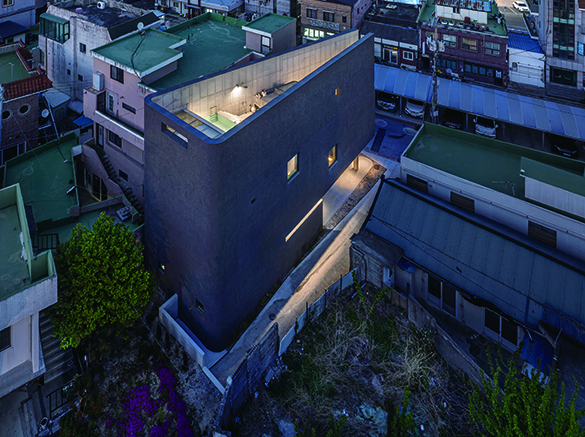
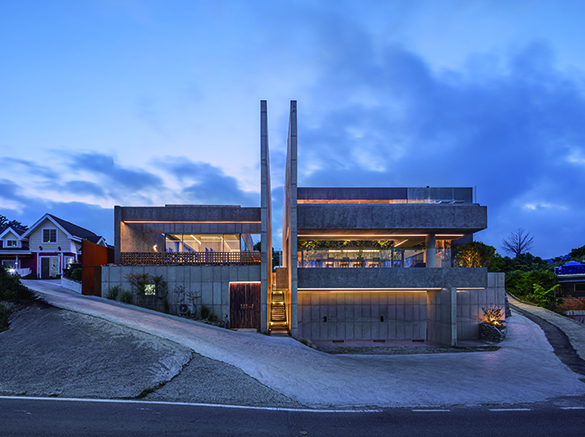
Jung: Many people misunderstand this point, but form itself is not my primary concern. I have never once begun a project by thinking first about form. What appears as form is simply the result of organising architectural relationships and spaces. The cave, canyon, and rice paddy that inspired these works were all translated from the ecological systems inherent to those entities into architectural systems viewed from a human perspective. I saw the cave as a primitive, dark, amorphous space in which light connects every world. I understood the canyon as something that protects the movement of ships from natural disasters while enabling efficient passage. I thought of the rice paddy as an efficient system with infinite extensibility: a space for cultivating rice, a gridded field structured by the relationships of embankments, and a horizontal and vertical order through which rice cultivation is organised. These perspectives become major architectural themes within the project, where they encounter the site’s environmental conditions and organise the programmatic spaces. Meanwhile, the nature operating within the interior is intentionally mediated and controlled; nature itself functions as a metaphorical source of inspiration for architecture.
SPACE: It is interesting that during your school years you were drawn to architects with such different characteristics as Louis Kahn and Frank Gehry.
Jung: What I admire is the way they integrate the essential elements of architecture – space, structure, and light – into a unified whole. Kahn organises these within a formal order, while Gehry organises them within an informal order. Kahn approaches architecture through the idea of the ‘room’, whereas Gehry approaches it through ‘fragments’, but in both cases they dismantle individual spaces, reinterpret them, and rearrange them. This is the kind of architectural approach I am drawn to, and it continues to influence me today.
Clients and Construction
SPACE: You are currently taking on a wide range of roles yourself—planning, branding, furniture design, construction, and landscape. This seems closely connected to the industrial conditions of Ulsan.
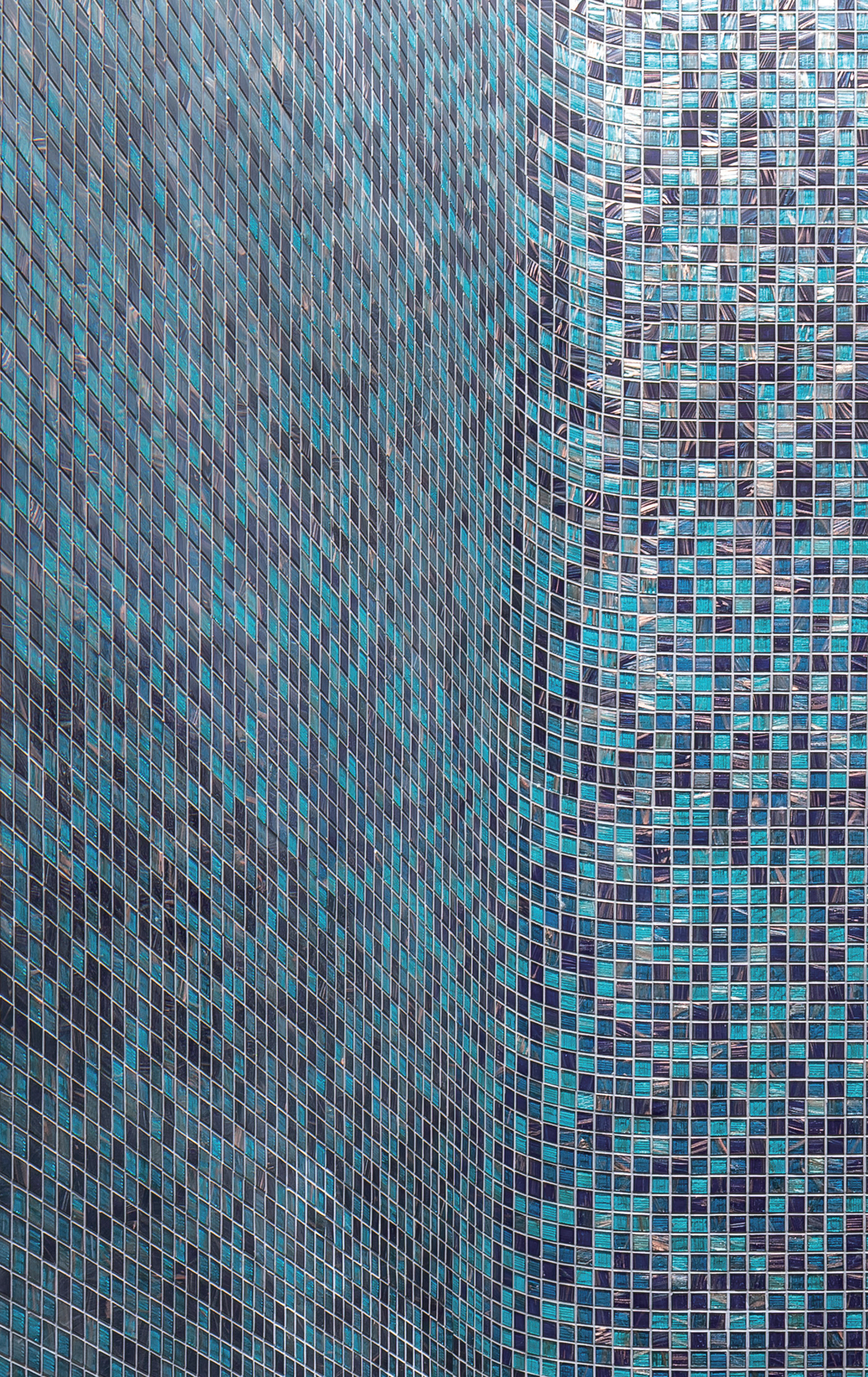
Jung: In most cases, clients simply do not have the budget to bring in a full range of specialists. But, as an architect, I could not just leave those issues unresolved. So with each project, I ended up solving the problems myself. I found myself naming the commercial spaces, creating branding stories, designing furniture, and even planting vegetation. As the scope of my involvement expanded and I began working on stay and café projects, I started asking myself how a commercial space made by an architect could differ from one made by a planner or an interior designer. I think that difference becomes possible when architecture is able to encompass planning as well. For example, HORIGUL carries the meaning of a ‘slender (horihori) cave’. That meaning becomes the form of the space itself, while also functioning as a branding narrative and even as the logo.
SPACE: In the case of DDeun GoG, you even analysed the operational and profitability aspects and proposed two guest rooms instead of three. It was interesting to see you considering operational strategy alongside the architectural project. At the same time, you handle inexpensive materials in completely different ways. I think one of your distinguishing characteristics is the way you exercise creativity to balance economy and architectural quality—lowering both material costs and construction complexity while still managing to achieve a high level of architectural completion.
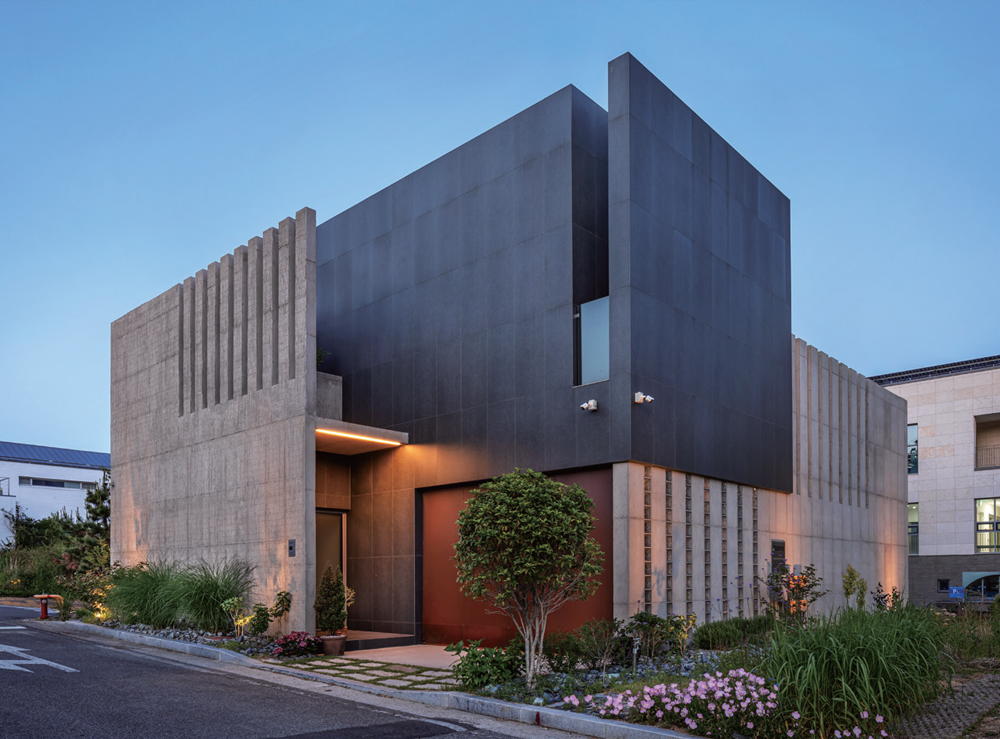
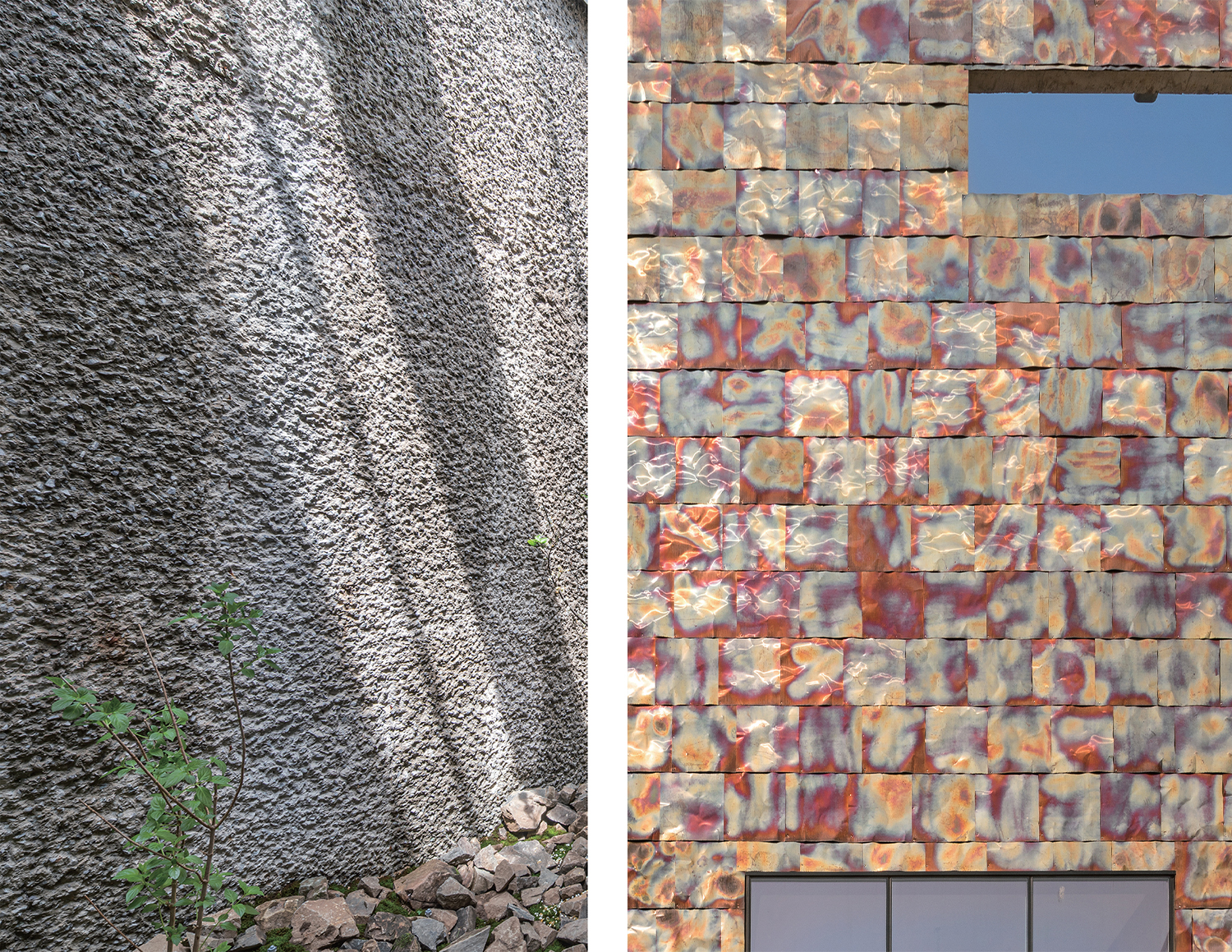
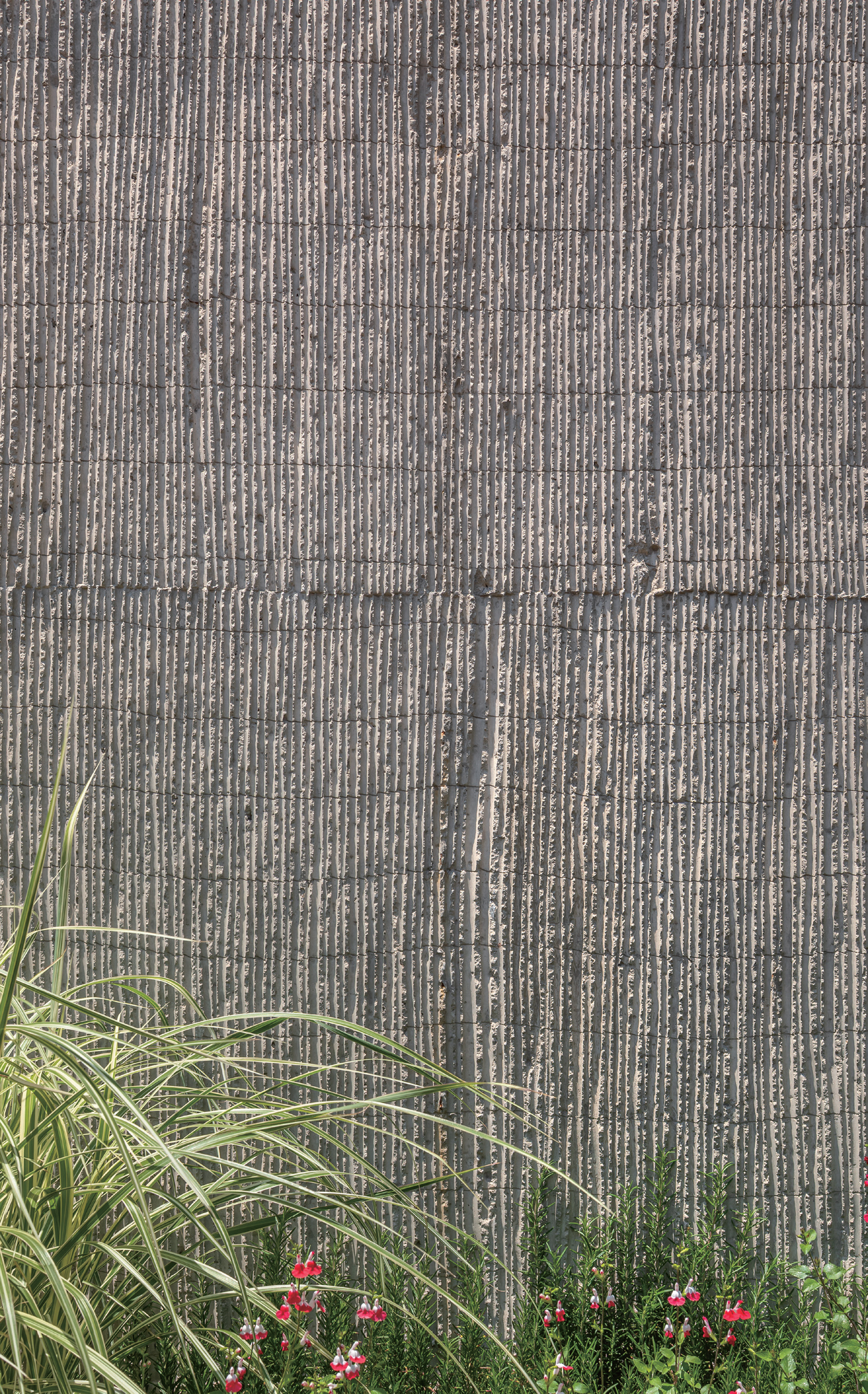
Jung: The ones I wanted to use were often too expensive to be realistically feasible. In the case of HORIGUL, I used a sticky, coarse-grained product similar to stucco because I wanted to exploit the material’s characteristics to produce a rough, tactile quality. So I put on cotton work gloves and repeatedly worked the surface by hand until I achieved the texture I wanted. For Closed House, Open House (2019, covered in SPACE No. 623), I wanted to recreate an exposed aggregate finish – one of the façade finishing methods that was popular in Korea during the 1980s – but in regional areas there were almost no craftsmen left who could execute it. Bringing workers down from the Seoul City area would have raised construction costs to an excessive degree. So I experimented on site with horticultural gravel, developing a method that even day labourers could execute. In HORIGUL, I wanted to create a darker tone in addition to this finishing method, so I mixed sumi ink into the material. However, during the mixing process, the ink alone did not produce the tone I wanted, so I combined black pigment with the ink, soaked it into a sponge, and repeatedly applied it by hand until I achieved the desired density of colour. In the case of DDeun GoG, I wanted to reinterpret a water-blasted exposed aggregate finish differently from the conventional method. Looking over many recent projects, the finish seems aimed at producing a uniform surface, whereas I prefer something rougher and more tactile. I kept asking myself how the surface could become rougher and deeper, so I adjusted the water pressure and chipped the surface not once but two or three times so that the gravel would emerge through the skin of the wall. At one point during construction, complaints about noise prevented us from continuing the water-blasted chipping on part of the wall, but that unexpectedly became an opportunity. I thought it might be possible to create a texture that reacted to light in a different way. If chipping responds to light through shadows carved into the concrete surface, then perhaps attaching something onto the surface could create a wall that reacts through relief instead. Looking for a method that was inexpensive and simple to execute, I eventually began throwing small gravel directly onto the wall by hand.
SPACE: In a way, improving the quality of construction is also connected to refining the degree of completion of details, yet your work seems to pursue architectural completion more through the power of space than through detail itself.
Jung: My architecture does not really rely on details, and I try not to employ overly elaborate details. The main reason is cost. If materials require laser cutting or bending, there are no factories in regional areas that can handle that work, so the costs rise. This is probably why details designed by architects in Seoul are often difficult to realise in regional areas. In my case, I was never really trained in detailing, so it is also something unfamiliar to me, and I try to design in ways that local workers can actually build. That may be why I am more interested in tectonic methods, reversals between architectural programmes, or the rearrangement of spaces. Construction quality is not determined only by details either. For example, it is also important whether people understand why a structural frame was designed according to certain dimensions.
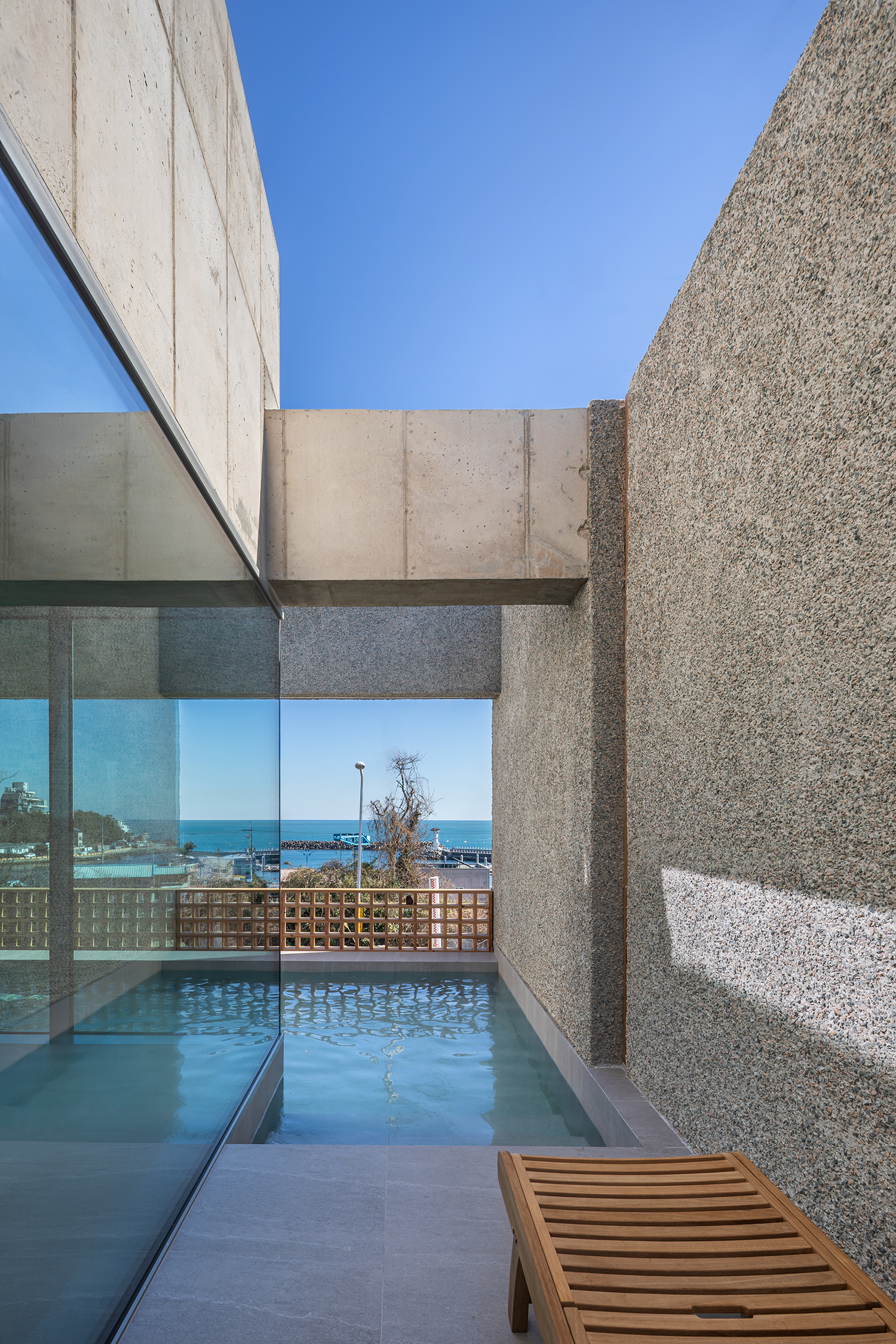 DDeun GoG (2026)
The Term Regional Architect
SPACE: If ‘regionality’ appears at the level of architectural aesthetics, then rather than pursuing regional architecture it is more pertinent to describe you as a ‘regional architect’, working on the industrial foundations of a region. At the same time, there is some hesitation in defining you simply as a regional architect. While such a label can easily attract attention and public support through differentiation, it can also encourage people to interpret your work only through the lens of the region. There is also the fact that discussions about regional architects are often led by people who are not themselves regional architects. In this sense, how do you feel about being framed as a regional architect?Jung: I honestly do not know what the term really means, because I have never consciously worked while thinking of myself as a regional architect. But since I have so often been introduced only in that way, I now feel that perhaps it is time to be framed differently as well.
SPACE: When you submitted your projects, I noticed that they included stay projects, a typology that was once very common but seems to be appearing less frequently now. It made me wonder whether this type of architecture is still viable in regional areas. In that sense, do you also prefer not to have your work interpreted too closely in relation to the industrial environment of the region?
Jung: Above all, I want the work itself to be evaluated on its own terms. In my case, I rarely have opportunities to hear opinions from people within the architectural field, so I carefully gather my projects together and submit them to media outlets such as SPACE, and that is often the one moment when I receive criticism. I need architectural feedback in order to continue thinking about how to approach my next projects.
SPACE: For the final question, I would like to ask about the advantages of practicing architecture based in Ulsan.
Jung: I think architecture is difficult for all architects, not only regional ones. But if I were to speak about an advantage, it would be that I can approach architecture almost like a blank sheet of paper. I was never trained in the theories that architecture must follow, the systems that must be solved, or particular attitudes of approach. Because of that, I think I have been able to try things out in Ulsan according to my own thoughts and concerns. Since I work in Ulsan, even drawing a single line can hold the possibility of becoming something new.