
SPACE May 2026 (No. 702)
Muke Samcheong-dong [2026, Architect – AGIT STUDIO (Seo Jamin, Huh Guenil), Construction – J Construction (Site Manager, Lee Sedon)]
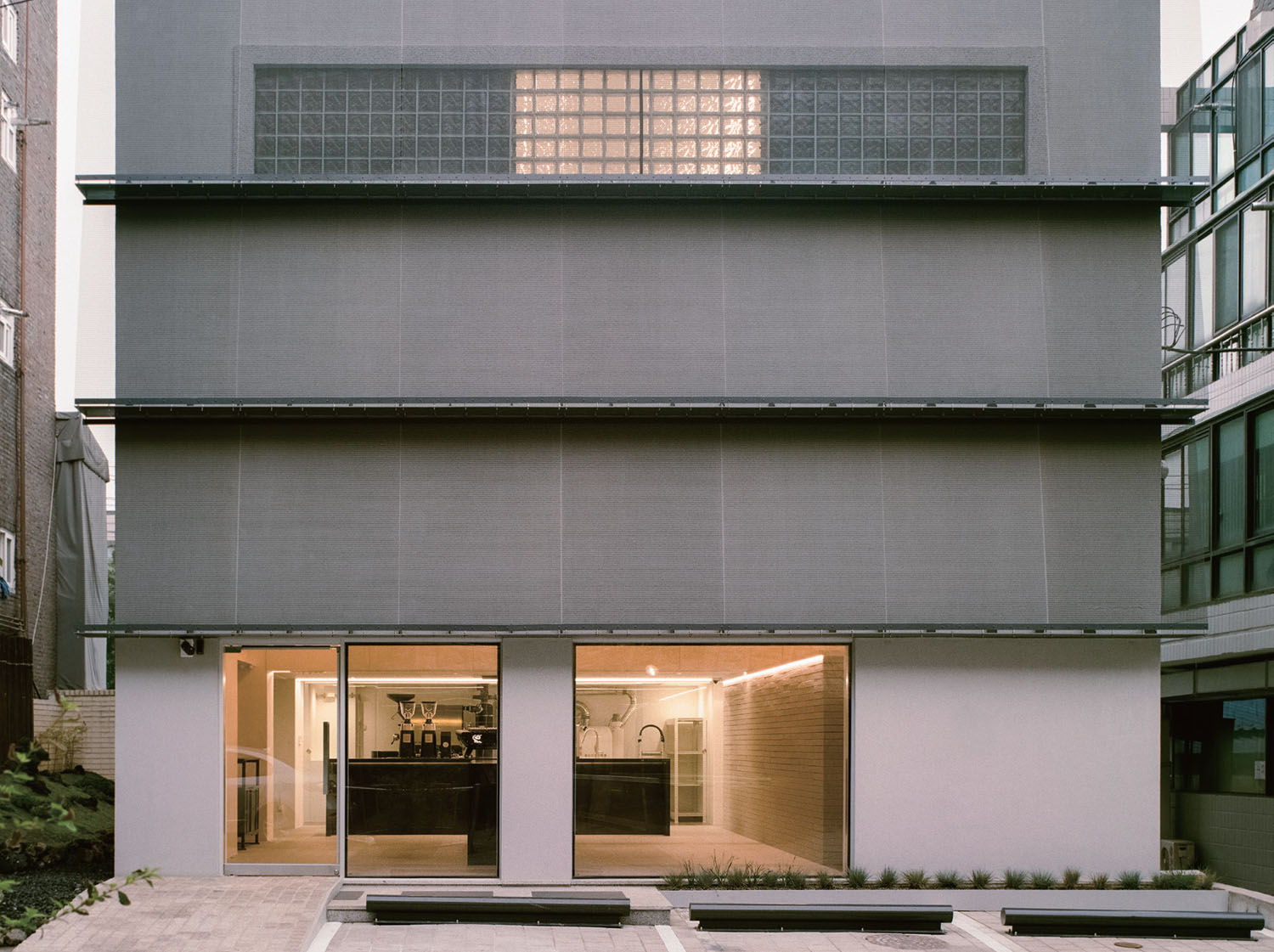
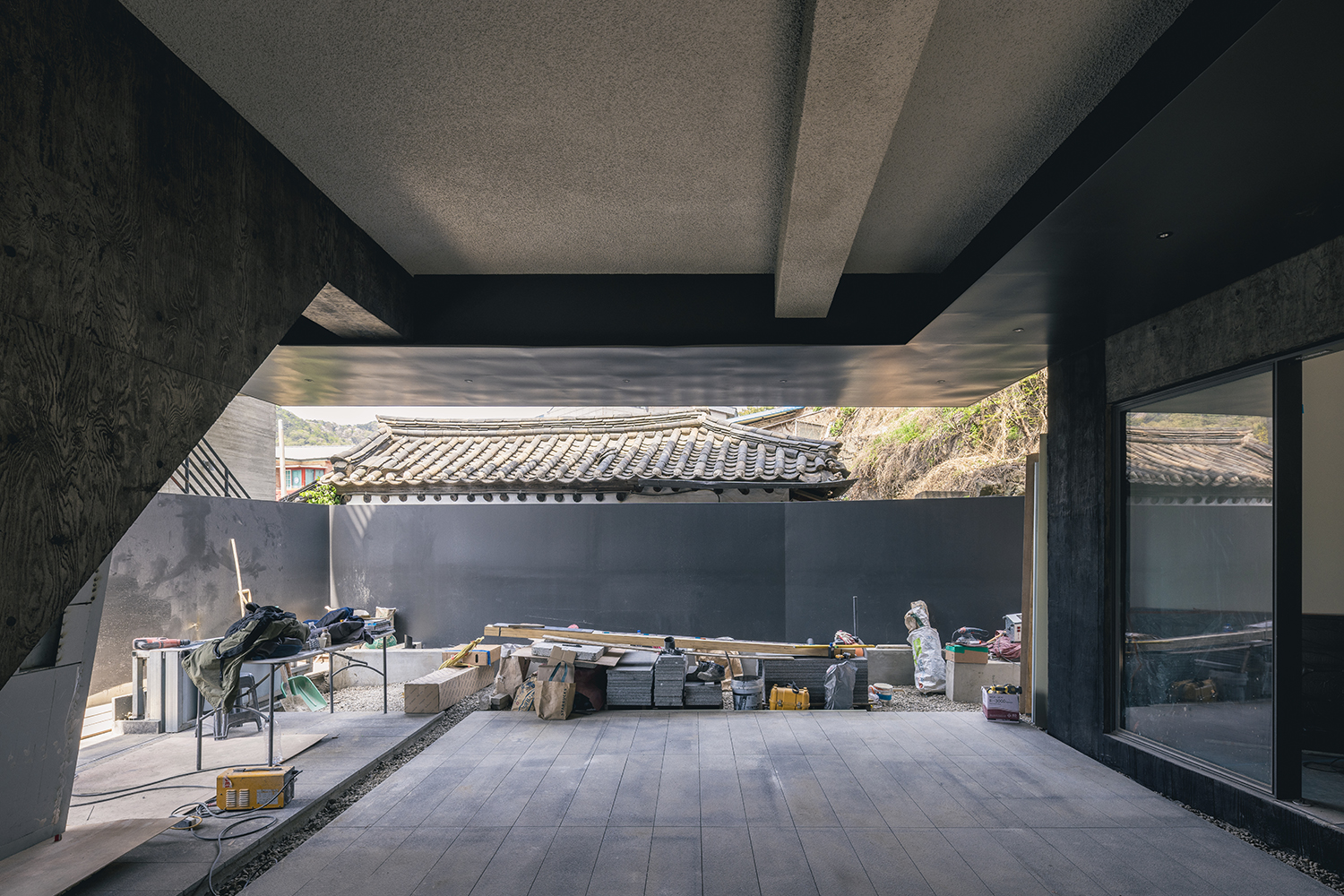
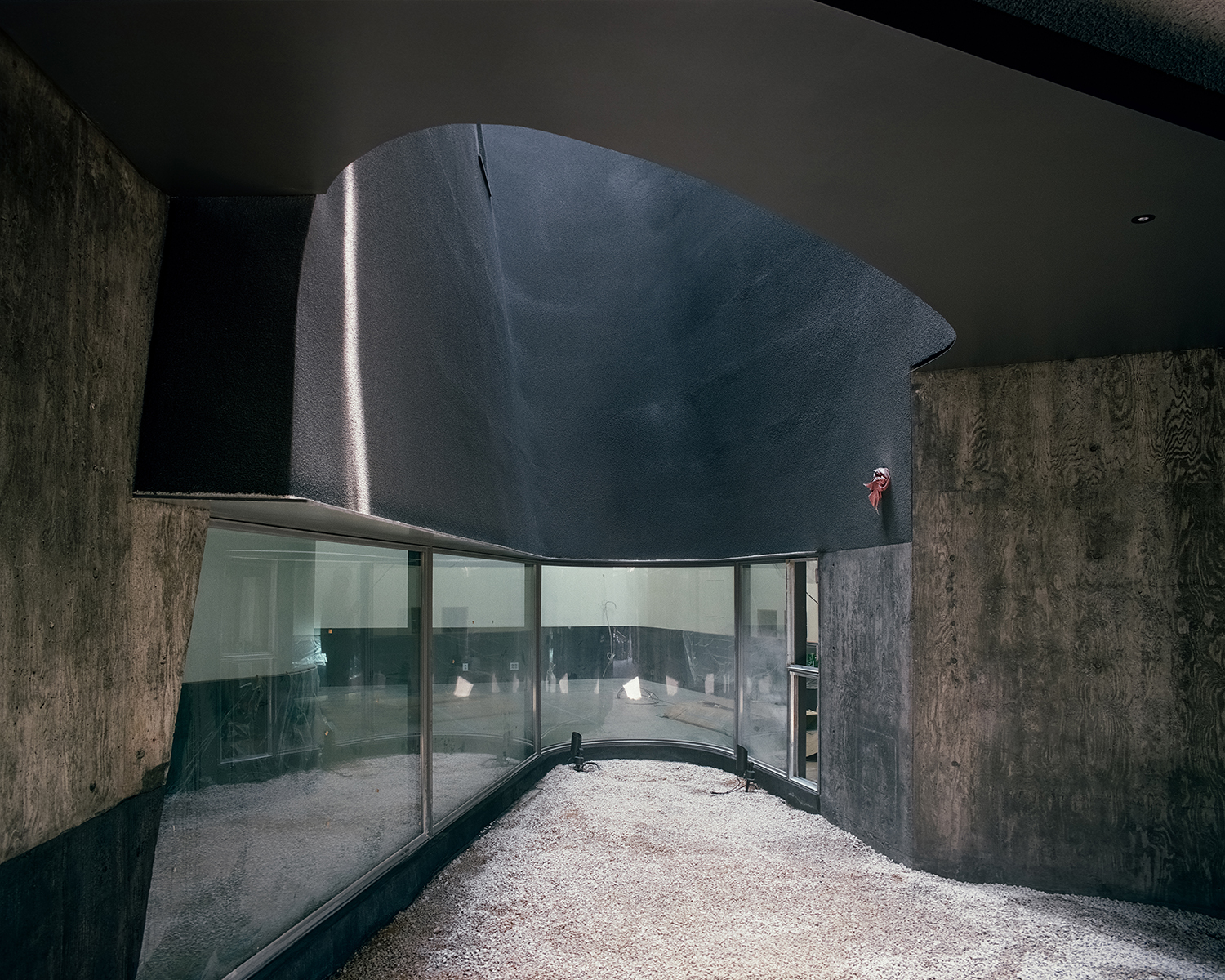
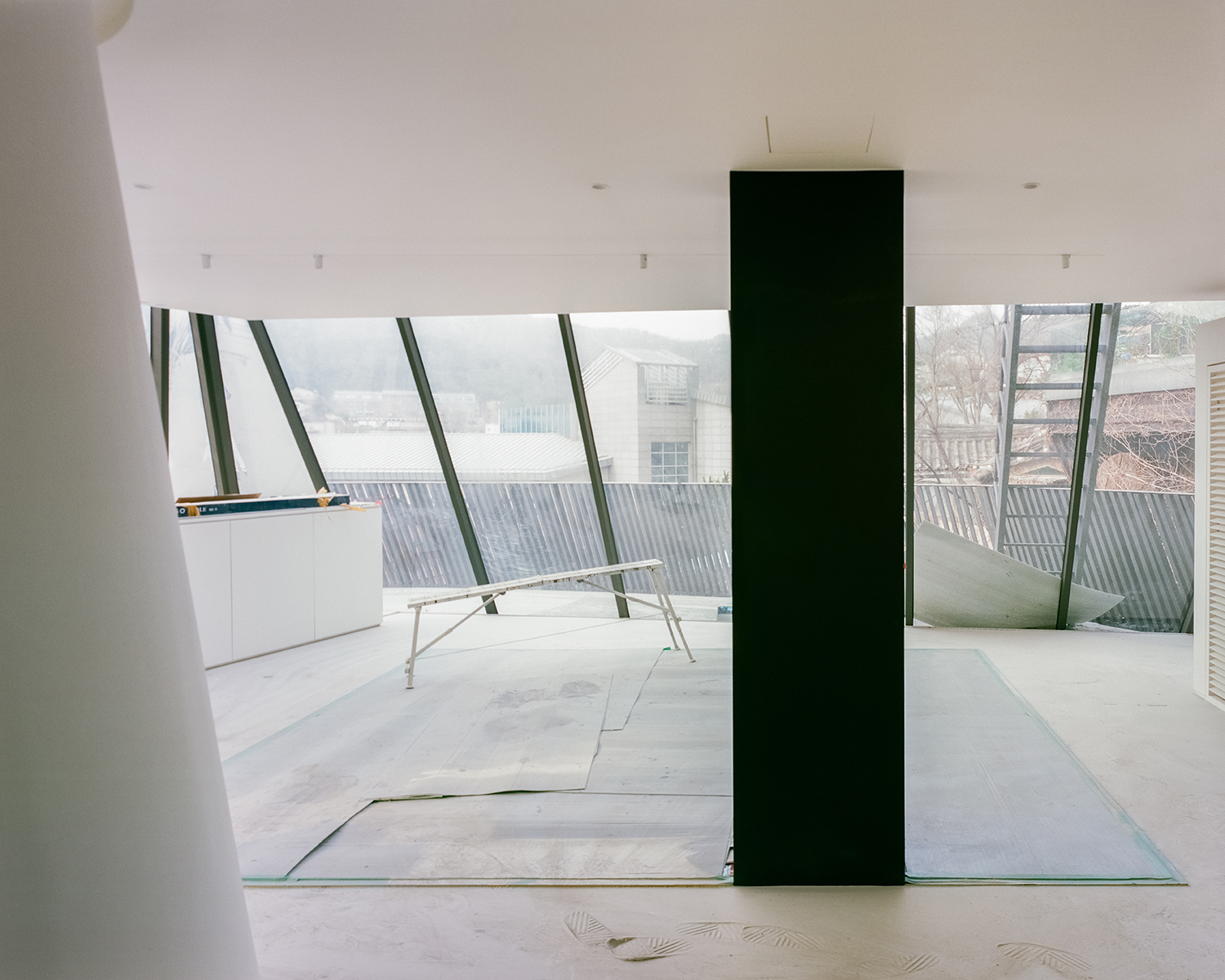
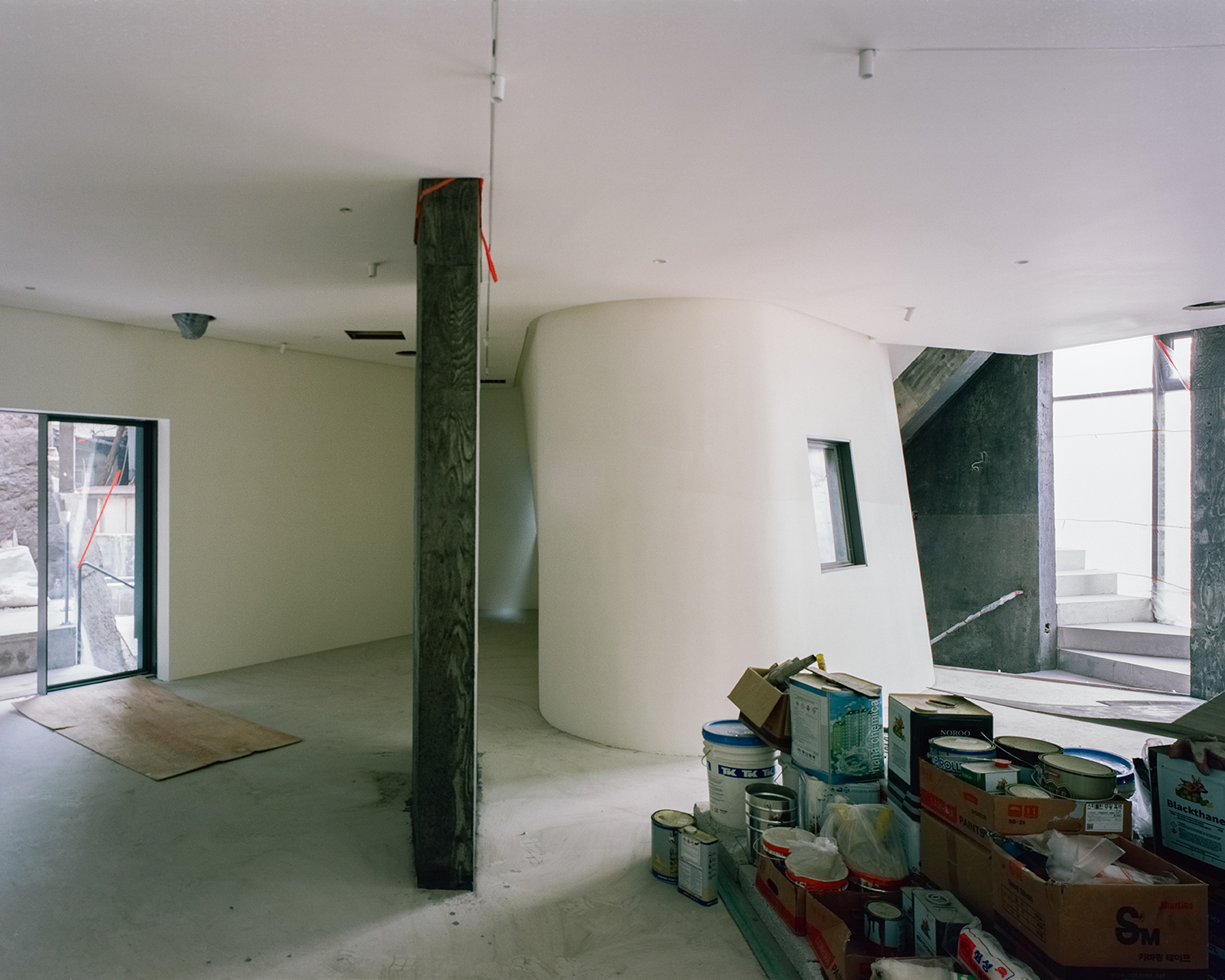
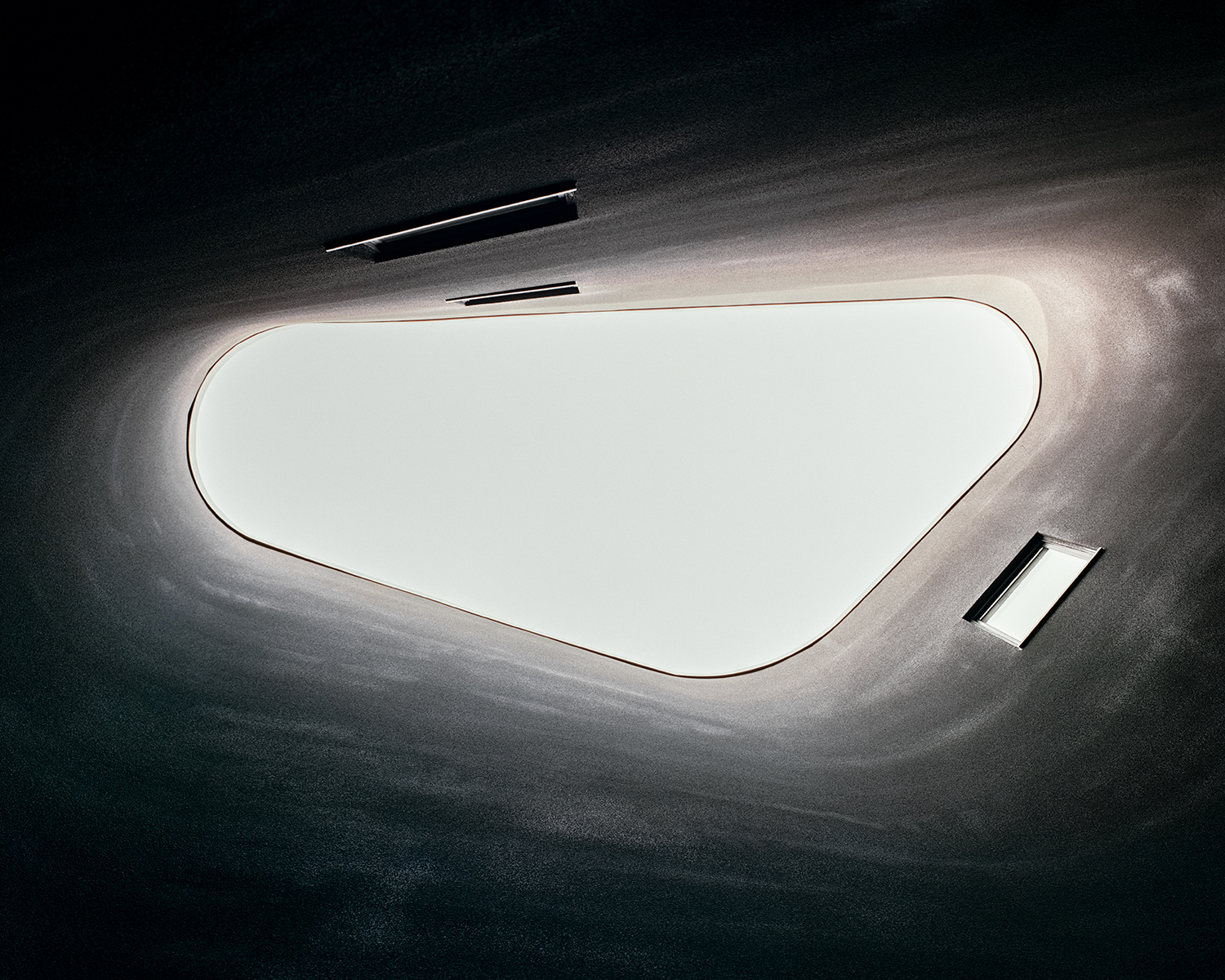
Architect Kim Heon’s Vortex was converted into a private roastery café, antique gallery, and seminar space. Having passed through several owners, the Vortex had accumulated layers of additions that made its original character difficult to read. AGIT STUDIO took the restoration of the building’s essential nature ‒ through extensive demolition ‒ as its starting point. To bring a new order to a non-orthogonal building without a clear reference point, square granite was laid on the floor and a canopy that mirrors it was added above. The sweeping walls and a ten-metre-high void are preserved as they were, becoming the protagonists of the space.
Muke Samcheong-dong
Kim: Revisiting the work of a senior architect is a highly specific situation. In Muke Samcheong-dong, what informed the decision to ‘begin by actively removing’ elements from a building that still carried the intentions of another architect? After all, the additions themselves must have responded to needs at the time.Huh: Muke Samcheong-dong was indeed a somewhat exceptional case compared to our previous renovation projects. The Vortex by Kim Heon was not a typical residential building but rather closer in nature to a pavilion. We understood it as a building capable of functioning as an anchor, drawing people in, almost like an art gallery. Architecturally, we believed that in order to generate that sense of attraction, it was crucial to preserve the original form as much as possible. Therefore, everything except the original form was boldly removed, and we approached the project by revealing the structure itself.
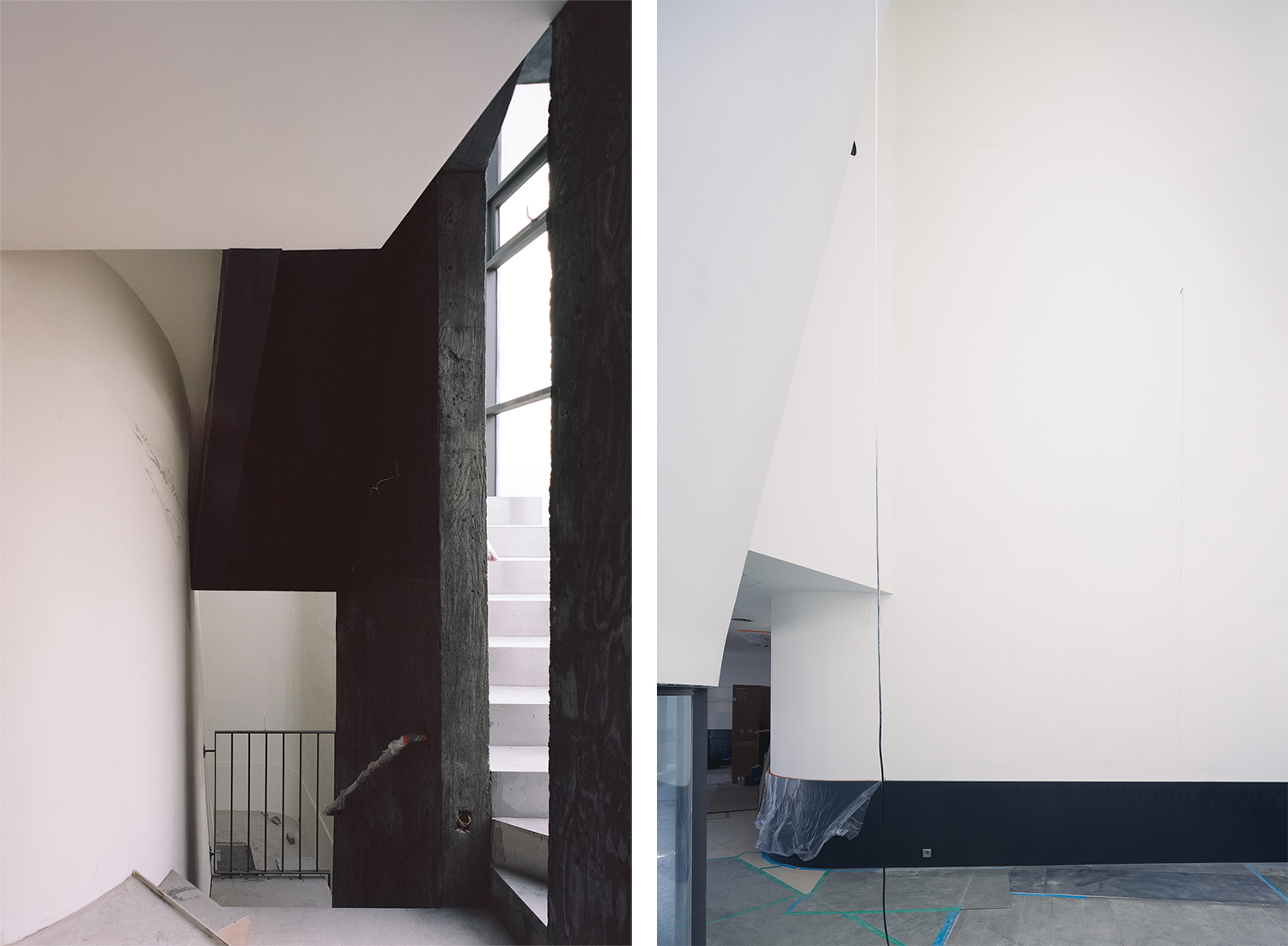
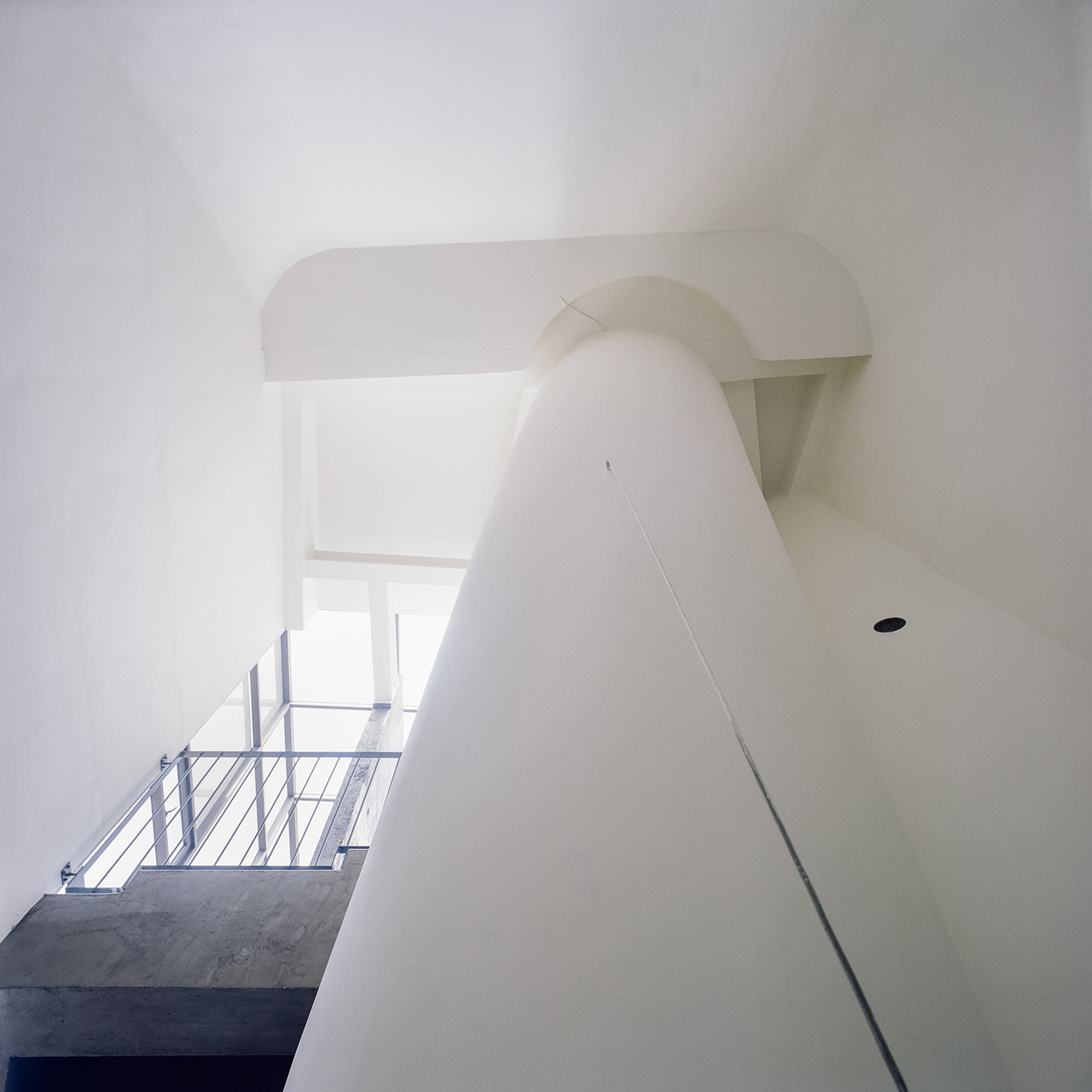
Seo: When we first encountered the Vortex, it had passed through multiple owners, accumulating various additions for convenience—external spaces had been enclosed, and it had become difficult to read the building’s original form. It was as if all its breathing openings had been blocked. To return it to its original, open, and somewhat uncomfortable state we carried out extensive demolition. I considered that to be the starting point.In this project, it is also necessary to discuss the programme. Muke is a roastery well known among those familiar with coffee. The client also collects antiques from various periods, and operates a gallery, Eastloupe, in which to exhibit them. Through the process, including Muke Deungchon-dong, we came to think that these objects could become the protagonists of the building. In that sense, the architectural qualities of this building could instead align well with the programme. Now that the construction is nearing completion, Muke Samcheong-dong can be understood as a process of establishing focal points to reveal a condition without an inherent reference point. The courtyard of the Vortex, which had been fully enclosed as an interior space, was reopened, and the surrounding conditions and levels ‒ once complex ‒ were reorganised so that its character could be clearly expressed. A square granite floor was introduced, along with a large canopy above that appears as its projection. It is a process of redefining the building. The canopy over the entrance courtyard also functions to organise unresolved lines ‒ such as the louver cladding, insulation, and waterproofing layers at the lower part of the mass ‒ while establishing a stance towards the hanok opposite and serving as a reference point that frames the surrounding view. As the project developed, although we initially considered the section to be critical, the building gradually revealed itself to be one in which the plan was more significant. The swirling walls not only define the courtyard but also form a 10-metre-high void within the interior. The square floors we introduced are set apart from the existing walls, allowing the space between them to be perceived.
Muke Samcheong-dong(2026)
Kim: There seems to be an interesting reversal between the generation of architects that emerged in Korea in the 1990s and the new generation after 2015. Typically, the established generation is more classical and the younger generation more experimental, but in Korea, the late-1990s generation was rather experimental, while the post-2015 generation demonstrates tectonic restraint and a strong interest in materiality. Do you agree with this observation? Where does AGIT STUDIO position itself within this landscape?
Huh: In Korea, there must have been many pioneers who recognised the gap between what was not possible here and what was being realised abroad, and they likely returned to Korea with relatively limited experience. In a context where simply practicing what they had seen abroad was already sufficiently challenging, their work was undoubtedly meaningful. However, we are now operating in a situation where such acts are no longer considered challenging, and we are seeking a different kind of challenge. If the previous generation studied extensively and wrote about making a sword before finally forging one, perhaps our generation is endlessly forging swords first, and then writing about how to make them. As each of us continues to hammer away at our own swords in different ways, I believe the architecture of contemporary Korea will begin to take shape.
Muke Samcheong-dong(2026)
Material Sensibility
Kim: In your recent projects, granite and concrete appear repeatedly as primary materials. In particular, in Muke Deungchon-dong, you used granite ‒ typically employed as an exterior finish in Korea ‒ as an interior material, including flooring, to establish a spatial frame.Huh: Due to Korea’s geological conditions, granite is abundant, accessible, and economical. Even with the same material, a wide range of textures and colours can be achieved through different surface treatments. A water-polished finish produces a darker tone, while a honed finish creates a more neutral texture. A flamed finish roughens the surface while intensifying the colour, and a bush-hammered finish reveals yet another material expression through its bright and coarse character.
Seo: Whenever possible, we use materials that are readily available and inexpensive in Korea. Also, looking at AGIT STUDIO’s work, we try not to use too many different types of materials. We prefer the strength, spatial aura, and tectonics that emerge from processing a single material in different ways, or from repetition and deliberate cutting of the same material. In Muke Deungchon-dong, the floor was finished with granite cut to intended dimensions, and furniture was arranged according to that grid. In Project YP (2023), a single brick was used in full, half, and one-third units. We also tend not to use tiles, because we place great importance on the thickness inherent to a material.
Kim: In Switzerland, even a single wooden handrail seems to be designed with a form that corresponds to its thickness. In contrast, in Berlin, rather than prioritising the intrinsic nature of materials, there appears to be a tendency to consider multiple factors—such as hardness, colour, and the form produced in relation to other materials. There also seemed to be a freer use of veneer, as if to say, ‘If not in the city, where else would it be used?’ (laugh) It is interesting that AGIT STUDIO also works with an awareness of the inherent thickness or weight of materials. This does not seem like something that would simply result from spending a year in Switzerland.
Seo: The sensitivity to thickness may be a personal inclination, but, speaking tentatively, I think it may also be a sensibility that originally existed in Korea.
Muke Samcheong-dong(2026)
Kim: That would be true if we extended the spatiotemporal scope of Korea on the peninsula back 600 years. However, the Korea I experienced ‒ especially from my late teens to mid-twenties ‒ was a world of film. A society where everything could be achieved with surfaces lacking thickness. Even today, pedestrian paths are sometimes not constructed with paving blocks but simply marked by painting lines on asphalt. I was initially very critical of such methods, but after seeing people recognise and use these painted areas as walkways, I changed my perspective. It may not be a perfect solution, but I came to see it as an effort to find solutions within constraints of time and resources, and I came to accept this aspect of Korean society. In this context, AGIT STUDIO’s approach appears even more distinct.
Huh: A granite slab measuring 300 × 300mm with a thickness of 30mm weighs around 7 ‒ 8km. We typically use sizes such as 300 × 900mm or 200 × 1400mm, which are even heavier. It is a weight that requires two people working together with effort. The cost changes significantly depending on whether a person can lift it or not, but within that limit, we deliberately invest additional labour to create a sense of weight.
Seo: It could be said that we pursue a kind of beauty and rough sensibility produced through effort and fabrication, rather than through expensive or exceptional materials. My travels in South America ‒ regions less influenced by modernist sensibilities ‒ were also motivated by a desire to observe how such sensibilities are translated into architecture.
Kim: Granite and concrete seem to retain traces of time well. Using materials that retain traces of time—is that a deliberate choice?
Seo: That is an accurate observation. We always consider the element of time. The (semi-)permanent nature of architecture as a medium is fascinating. In an era where all media forms are becoming shorter, faster, and more oriented toward immediate stimulation, architecture ‒ which must be physically visited to be experienced ‒ may be at a disadvantage. However, as an architect, I find that to be its most important and compelling aspect. Because of this permanence of architecture, we choose materials that remain good over time and that can age well. The fact that materials come to embody time over time is truly remarkable. In an early project, Dunamjae (2015), a house in Gimhae, the budget was extremely limited, but we wanted to construct the boundary wall as a gabion wall, so we broke stones from nearby hills or from the construction site and filled them into wire mesh. After several years, the originally gray wall had transformed into a reddish stone wall due to the iron content.
Muke Samcheong-dong(2026)
Working with Time
Kim: This recent renovation project is also interesting, but among AGIT STUDIO’s renovation works, my favourite is the Concrete Library. While I appreciate its formal qualities, what impressed me most was how the old and new structures meet to create a building that embodies ‘layers of 30 years of time’. In Muke Deungchon-dong as well, the boundary between time was made visible by distinguishing new interventions from existing finishes. For AGIT STUDIO, is renovation ultimately about working with time?Seo: I truly believe it is about working with time. When standing on a demanding site, we realise that we are directly handling 10, 20, or 30 years of accumulated time with our own hands. Not only renovation, but architecture itself is an act of working with time.
Huh: In new construction, we usually begin with site analysis. In renovation, however, the existing building is both the primary concept and the primary tool. To evoke a sense of time in renovation means not erasing the existing building—it means preserving the central concept. If the existing building is erased, the project simply becomes a renovation carried out because new construction was not possible. Therefore, interpreting time is essential and indispensable in renovation.
Muke Samcheong-dong(2026)
Kim: Will renovation continue to be a focus for AGIT STUDIO? Having reviewed six projects, how do you now think about engaging with buildings from previous eras?
Huh: I believe renovation and new construction require different approaches. Unlike new construction, renovation carries a sense of duty or calling for those trained in architecture. Despite its difficulties, the reason we undertake such work is that if architects do not interpret how to adapt and reuse old buildings, the discussion will eventually be reduced to legal conditions, and these buildings will ultimately become objects to be demolished. Recently, there seems to be a certain direction emerging in renovation, but given the sheer number of buildings requiring renovation, I think it is necessary to expand the discourse. Personally, I hope that buildings from previous eras are not treated merely as objects of playful interpretation. At the same time, diverse approaches and individual answers are necessary to address the wide range of renovation cases. I place emphasis on the process. A process that can be applied minimally when the budget is small, and more extensively when the budget is larger, is needed.
Seo: Renovation is challenging, and each time we undertake it, I think, ‘I will never do this again.’ Yet when we actually engage in such work, we find ourselves exerting immense energy. The present we inhabit exists upon the foundation of past time, and as architects, we cannot avoid questioning what and why we must act in the present. Renovation becomes a profound form of learning, allowing us to directly experience the society of past eras. When excavating the ground, instead of proper foundations, we sometimes encounter piles of debris. There are cases where the building register indicates masonry construction yet the structure is actually concrete, or where decorative elements are thicker and stronger than the structure itself. While such facts can be understood through records, physically engaging with historic buildings means that we confront a cross-section of that era.
Muke Samcheong-dong(2026)