
SPACE January 2026 (No. 698)
I AM AN ARCHITECT
‘I am an Architect’ was planned to meet young architects who seek their own architecture in a variety of materials and methods. What do they like, explore, and worry about? And how are architects in various regions expanding their own worlds in different ways? SPACE is going to discover individual characteristics of them rather than group them into a single category.
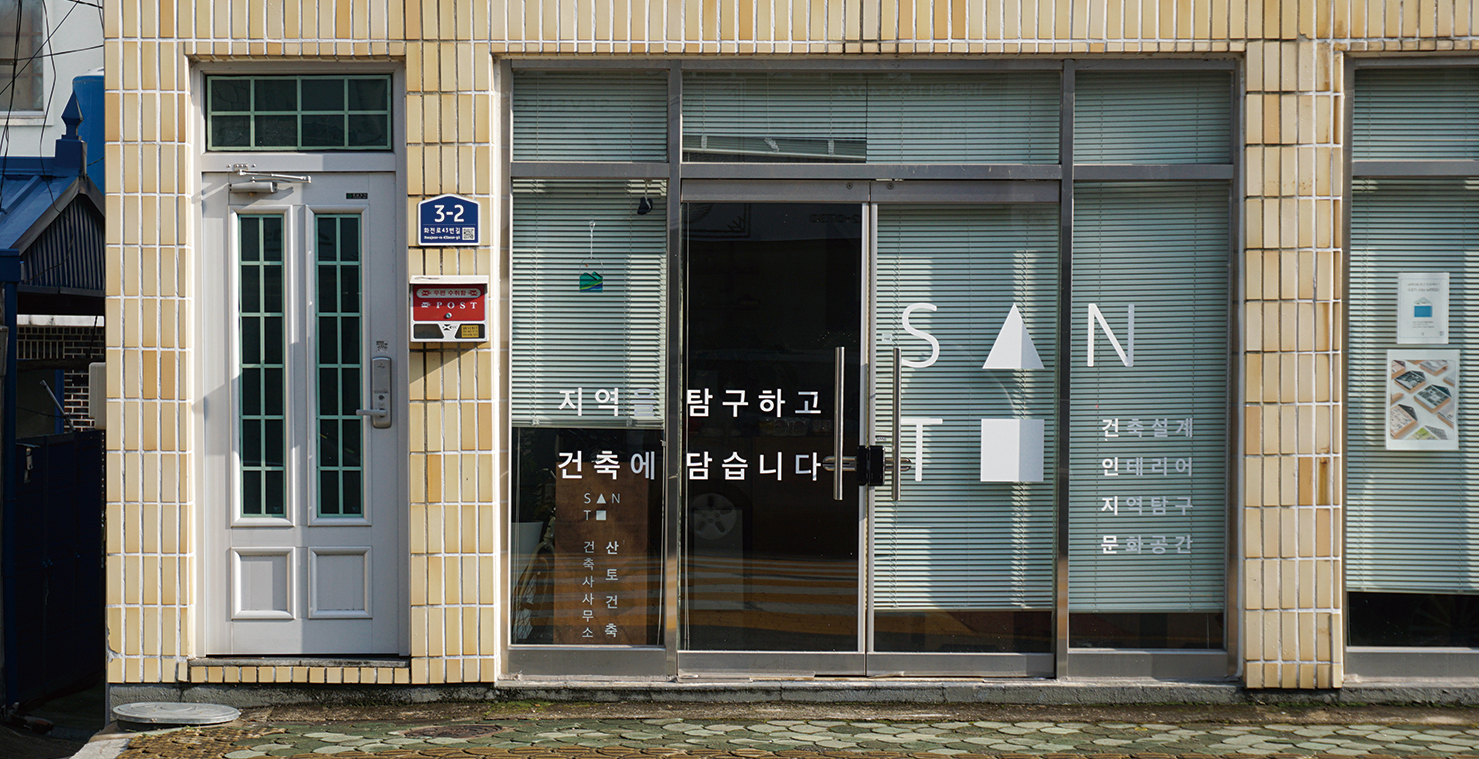
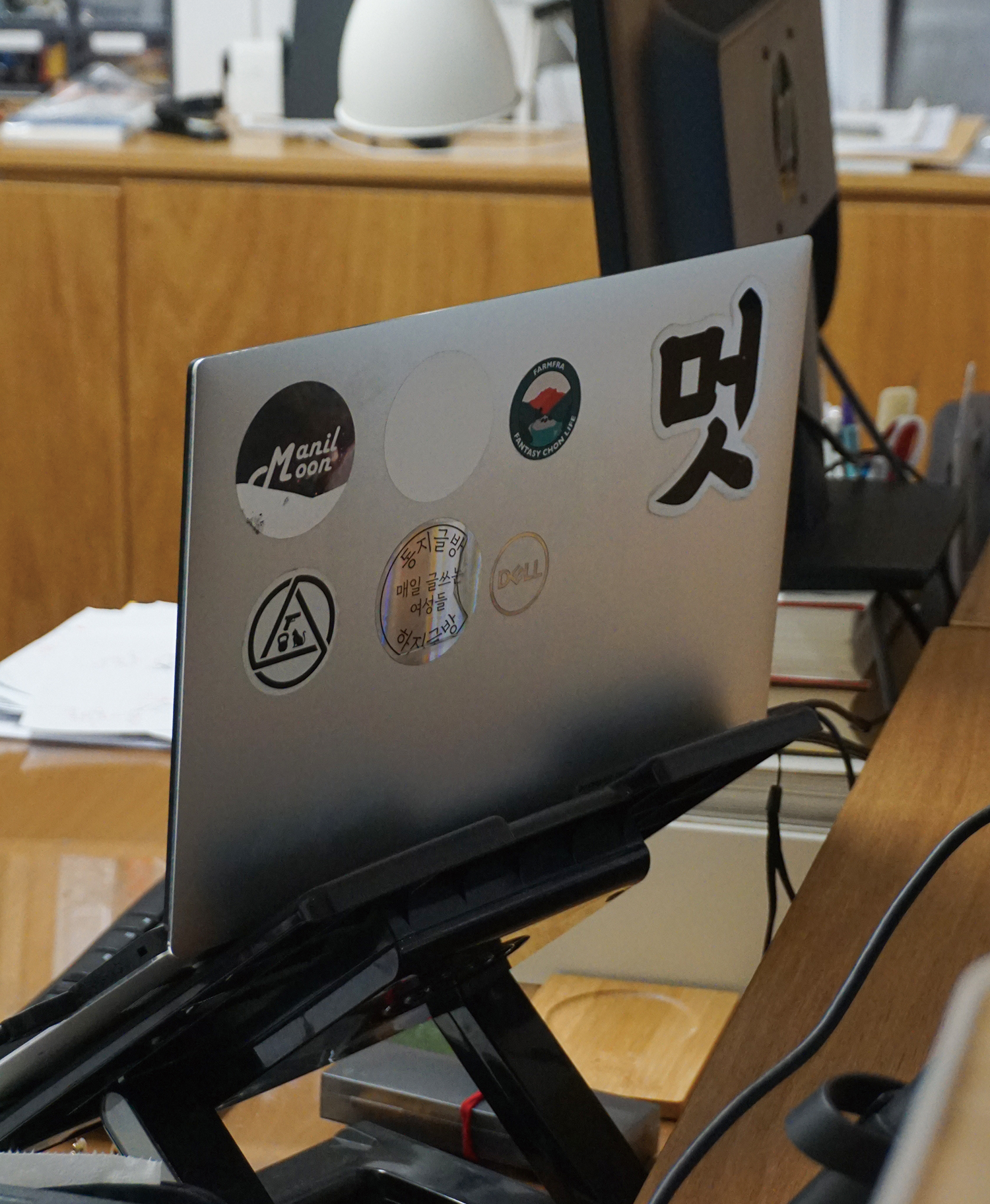
Office of Santo Architects
interview Moon Joowon Principal, Santo Architects × Kim Hyerin
Santo Architects: Like a Native Wildflowers of the Region
Kim Hyerin (Kim): How did you come up with the name Santo Architects?
Moon Joowon (Moon): I wanted a name with two syllables, containing a plosive consonant, and one that would be easy to pronounce in English. After thinking about it for a year, I realised I also wanted a name that would reflect my desire to create architecture grounded in locality. That’s why I chose santo (産土), meaning ‘the land one is born from’. Later I realised it could also be read as santo (山土), meaning ‘mountain and soil’.
Kim: Was there a particular reason you wanted to pursue architecture rooted in locality?
Moon: In my first firm, I worked mostly on designing single-family houses throughout various regions. Traveling to different places, I realised one day that even though I was standing in the middle of a city, I couldn’t tell which city I was in. It is evident that the lifestyles of people differ according to their surroundings—yet architecture everywhere looked the same to me. That made me ask, why? I think that’s when I began to imagine creating buildings that were truly suited to their regions—buildings like native wildflowers that grow by absorbing nutrients from the specific soil in which they stand.
Kim: You established Santo Architects in 2024. Why did you choose to open your office in Namhae, a place where you had no prior connections?
Moon: I planned to open my office outside of Seoul from the start. At the time, I was teaching a design studio at Kangwon National University, so Samcheok, Gangwon-do was a potential candidate. I also considered Daejeon, where my aunt resides and which is also geographically central. And after hearing from a friend’s mother (who is well-known in Gunsan) that the city needed more young architects, Gunsan also became a possible location. However, I ended up choosing Namhae because I wrote my master’s thesis on relational populations and returning youth in rural areas, and that connection naturally led me here. I may not have family ties in Namhae, but I have research ties. (laugh)
Kim: Why did you choose a thesis topic related specifically to Namhae?
Moon: In Namhae, there is a group called Farmfra that builds mobile homes called ‘Cobugi’ to address the housing issues faced by young farmers. Seoul National University’s Graduate School of Environmental Studies brings together students from diverse backgrounds, so professors often guide students towards thesis topics that connect with their future career path. My professor felt that Farmfra’s work had potential architectural relevance for me. He suggested that I conduct a study based on relational population or interviews, and recommended I visit Namhae since there were people actually building this architecture there. I’m the type who immediately follows advice without resistance, so, naturally, I ended up in Namhae! (laugh)
During my research, I met many local business owners. Several told me they needed a young architect with whom to collaborate. The local architects here tend to be older, and people felt there was a lag in the pursuit of contemporary trends. Since tourism is the main industry in Namhae, I knew there would be considerable private-sector demand. Tourism relies heavily on spaces that express local identity, which would also align well with my architectural interests.
Kim: What were the defining characteristics of Namhae that you noticed during this period of research?
Moon: First of all, its topography is unique. There are many islands and the coastline is very winding. The sea is calm and peaceful, lending it a charm, but, amidst all of that, there are also many rocky mountains. And while the locals are communal, they do not exclude others. Namhae people often describe themselves as stubborn and insular, but that wasn’t the case for me. I found everyone to be friendly, caring, and attentive.
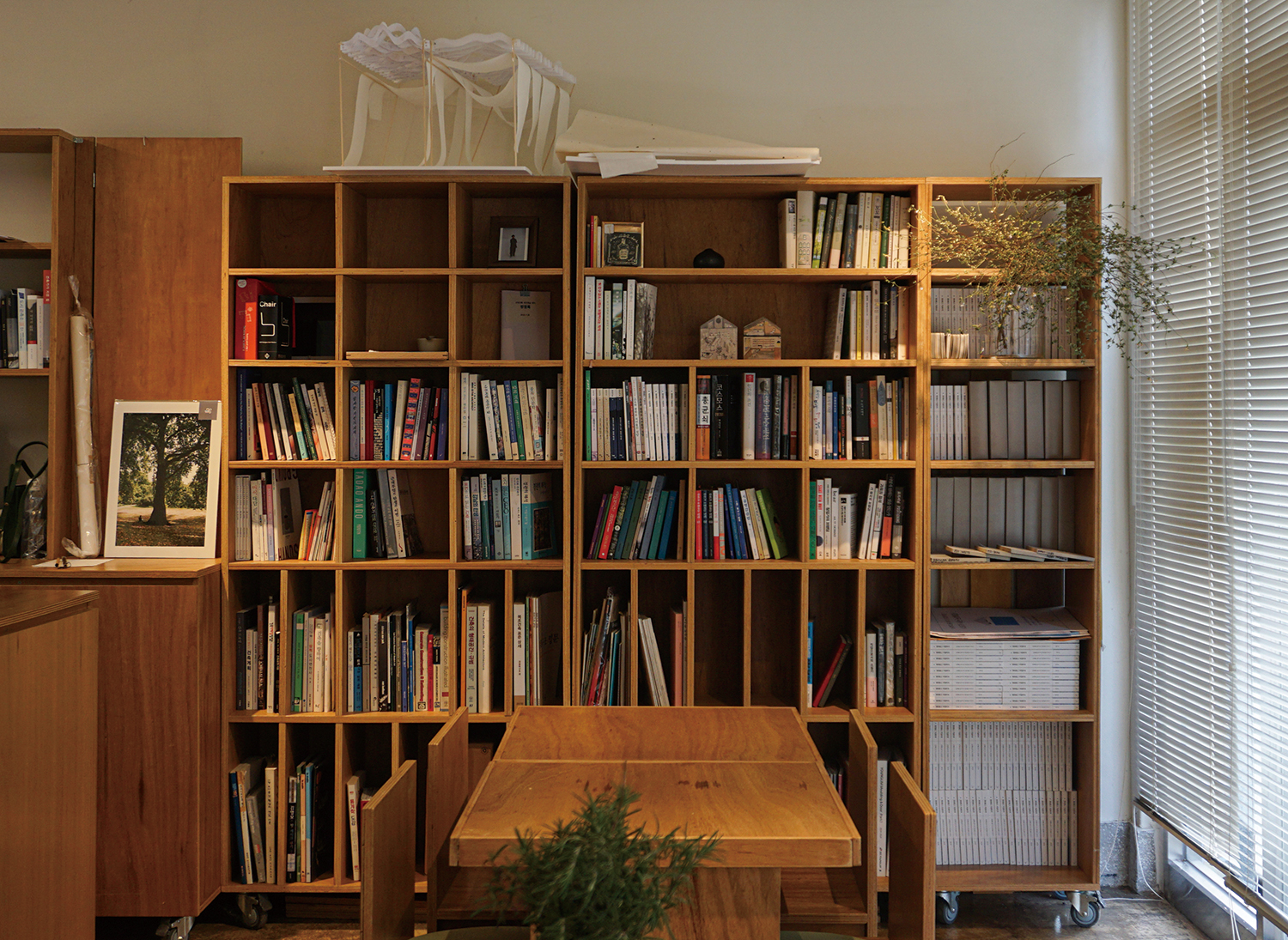
Office of Santo Architects
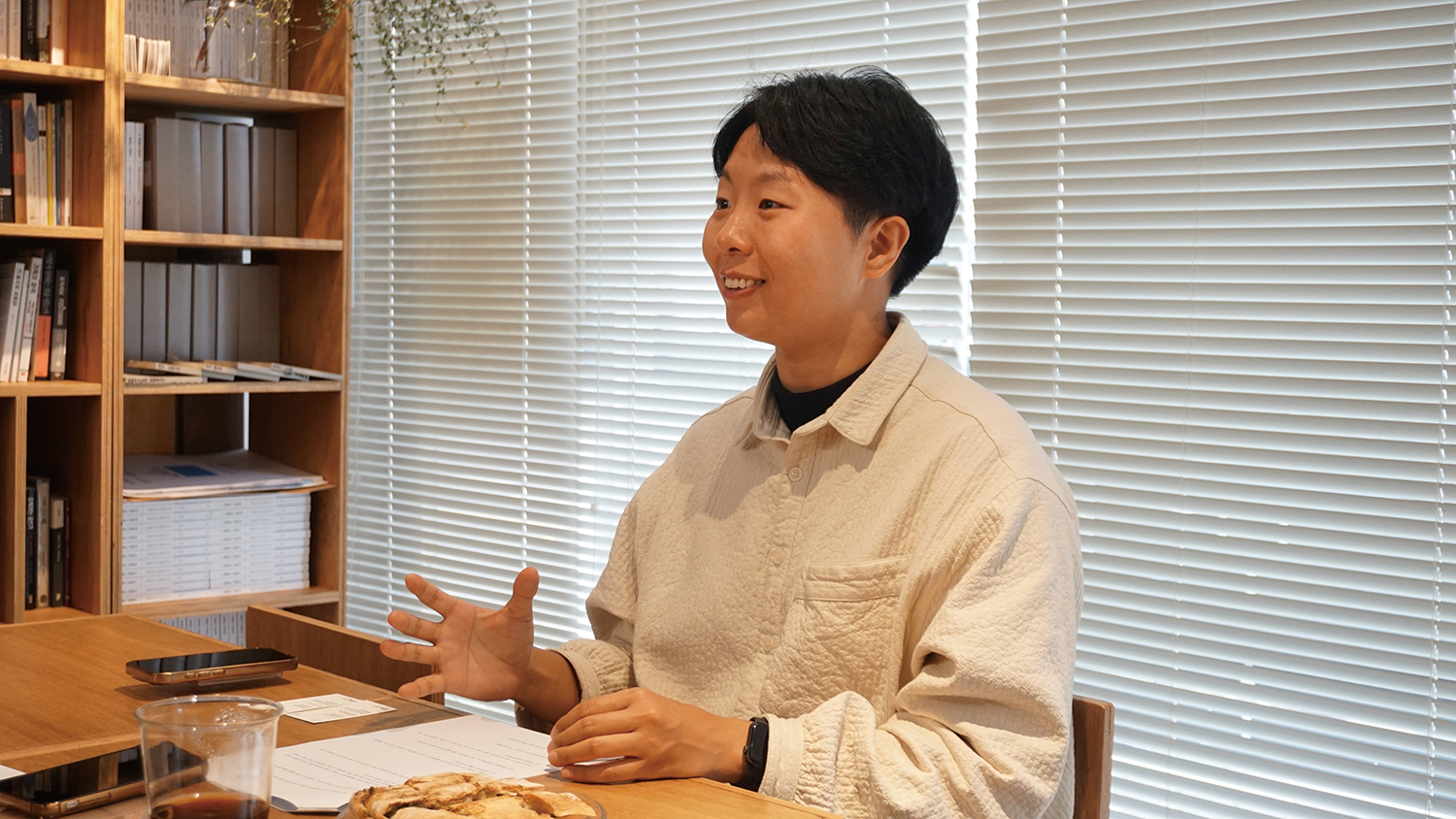
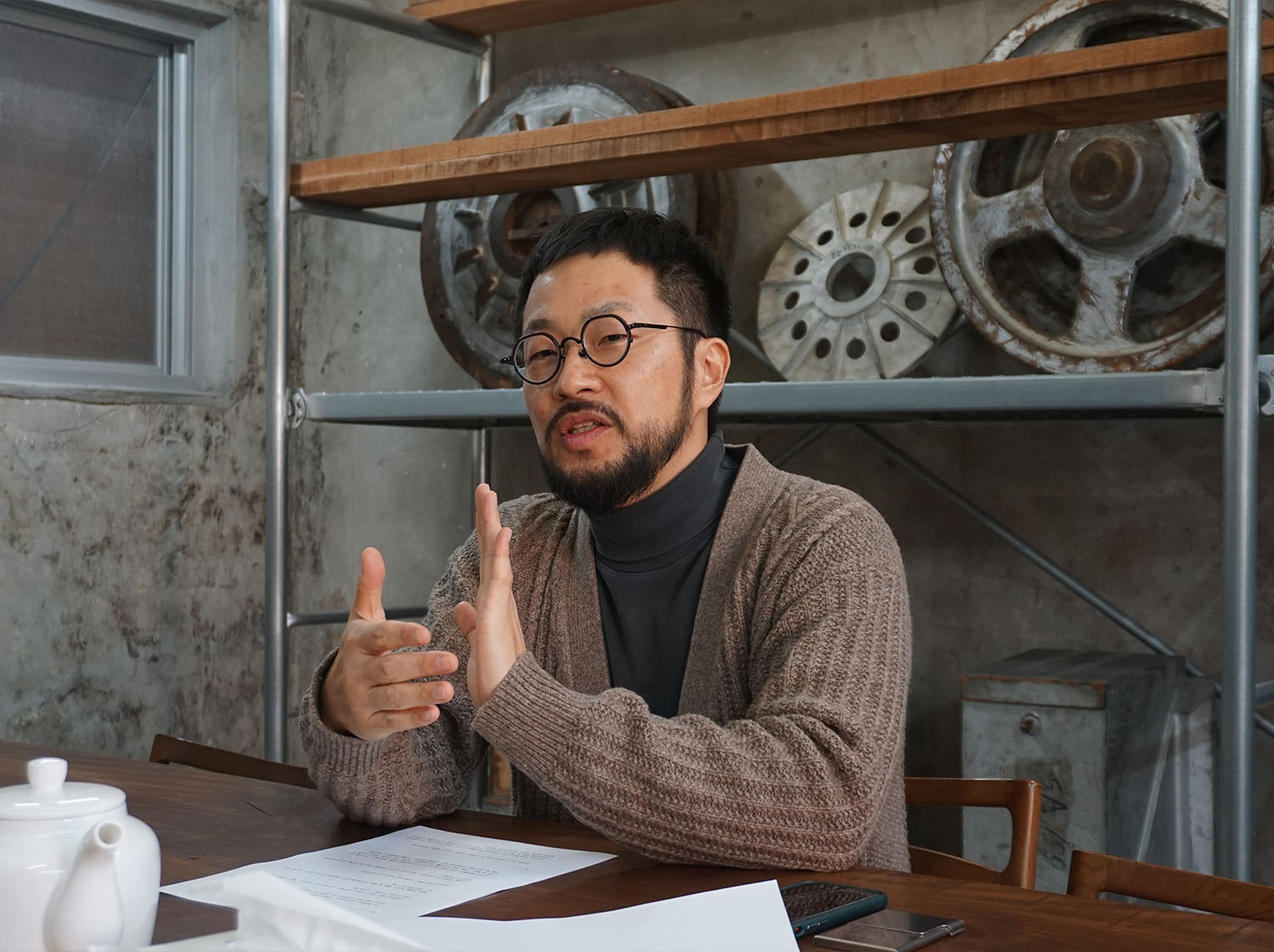
Moon Joowon
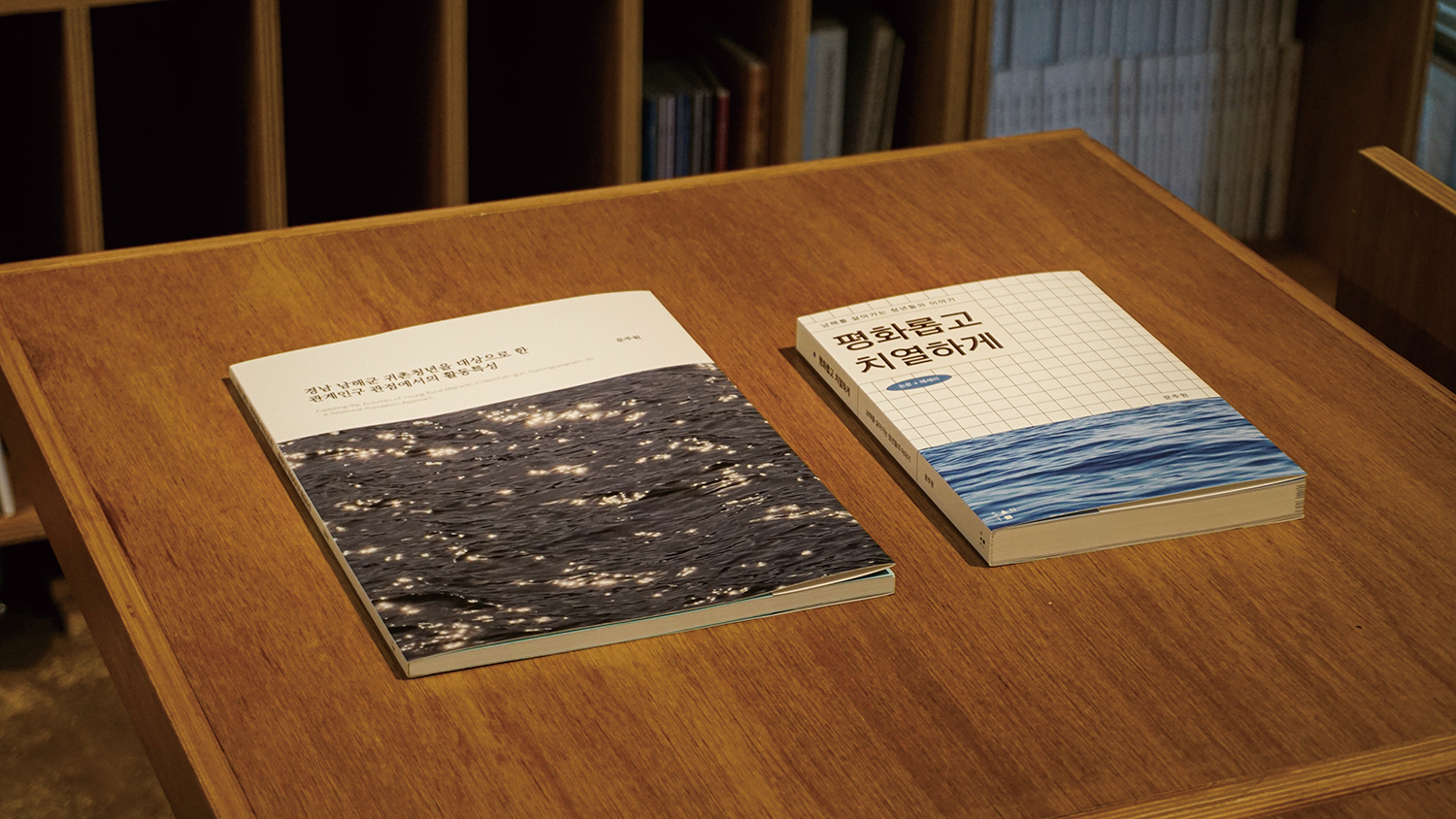
From left, Moon Joowon’s thesis Exploring the Activities of Young Rural Migrants in Namhae-gun, Gyeongsangnam-do: A Relational Population Approach (2025), Moon’s book Peacefully and Fiercely (2025).
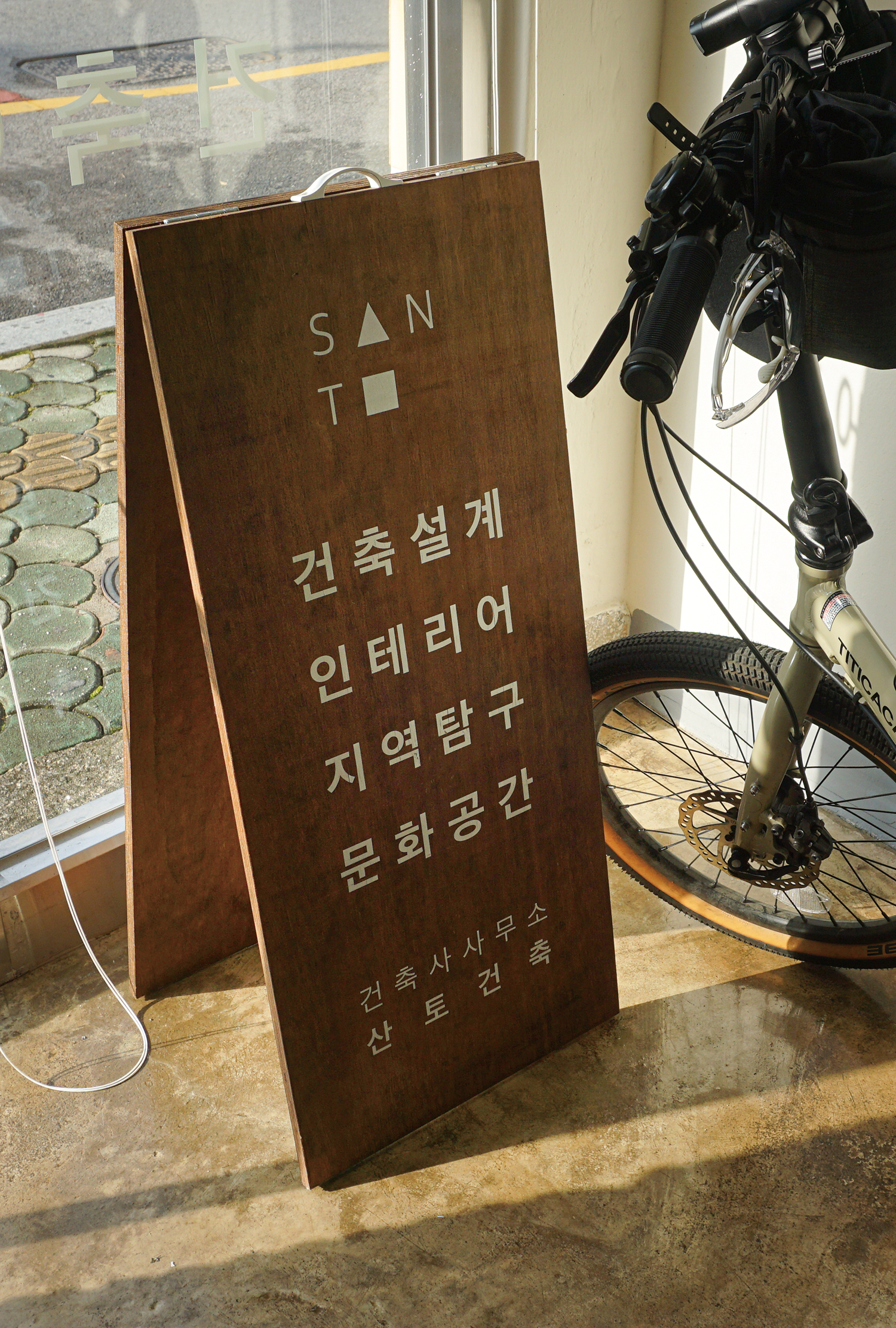
Office of Santo Architects
Characteristic of Namhae-ness
Kim: Your office is so charming and beautiful.
Moon: I heard this place used to be a window-frame shop. After that, it became a makgeolli bar. Then a young team working with interiors and design moved in—they hand-built the bookshelves, cabinets, and the bar that are still in the office. Later, a friend of mine ran a café here and built the tables and chairs himself. When I took over, I only brought in new desk. In a way, inheriting what’s already here, and not discarding things carelessly or replacing them with new ones—that too feels characteristic of Namhae.
Kim: Are there any people or books that have influenced your work?
Moon: When I first came to Namhae and was living in Dumo Village, I read Riken Yamamoto’s Theory of Housing. I felt that the archetype of ‘architecture for restoring community’, which Yamamoto talks about, already exists naturally in Namhae’s villages. This led me to thinking that I should design buildings that preserve this original quality.
Kim: What architectural characteristics do the old houses of Namhae retain?
Moon: Since there’s a lot of stone, you see many stone walls and stone storage houses. There are many well-preserved homes from 70 to 80 years ago that retain the characteristics of southern Korean houses. Because of the heat, they’re usually three-bay single-depth layouts with a central hall. Roof tiles were often replaced with slate, but the houses still have a furnace stove, and kitchens without gas—bu-ttumak style cooking. People commonly remodel these houses for modern living – installing boilers and updating finishes – yet the original form remains quite intact. As this is an island, bringing in workers is expensive, so residents often DIY repairs themselves. Many people do their own carpentry too. When I first arrived, I even wondered whether there would be any design role left for me.
Kim: Santo Architects studies the locality and expresses it through architecture. How do you explore the region, specifically?
Moon: First of all, I live here. I try to meet as many local residents as possible. A region is shaped by its urban form, architecture, landscape, and nature—but ultimately, it’s people who create those things. In Seoul, it’s easy to stay within a circle of people similar to yourself; here, you must engage with people of all kinds. You can’t avoid them because this is a small community. Living among various people teaches you how to blend into the local rhythm—that in itself is a part of Namhae’s essence. In doing so, I also observe how locals renovate and inhabit old houses. Next year, I am thinking of archiving these old houses. I’m currently part of the ‘Namhae Locality Discovery Project’. Together with artist Jeon Jihong, who works with traditional Korean painting, we planned a programme called ‘Namhae House Where I Live’. It’s a project where we discuss what ‘Namhae-ness’ means and translate that experience into paintings. Starting with this, I want to continue inviting people who can share and explore the essence of Namhae.
Kim: Is there a project where you feel Namhae’s identity is strongly expressed?
Moon: As part of one of Namhae’s biggest festivals, the Hwaseong Culture Festival, I collaborated with students from University of Gyengnam Namhae Dept. of Horticulture & Landscape Architecture to create an installation called ‘The Terraced Sea Garden’ (2025).When discussing Namhae-ness, students often mentioned natural elements such as waves or terraced rice paddies. We designed the installation to resemble terraced paddies, where the wave pattern rises gradually—low in front and higher towards the back. The wave forms were created with wood treated with oil, and the pillars were made of metal. The wooden wave elements were slotted onto the metal rods. Since the installation was intended to be relocated later to the university campus, we considered mobility and placed plant pots between the wave elements to evoke the image of flowers and grasses growing between the terraces. In the end, I felt the work leaned too heavily on natural forms, which left me slightly unsatisfied. But the process – making it together with the community, reinterpreting its meaning, and repurposing the structure – felt much closer to what Namhae truly is.
Kim: Tell me about the ongoing project, Vacant Home Renovation for Returning Fishers.
Moon: The head of the fishing village council in Munhang Village directly contacted the Ministry of Oceans and Fisheries to secure a remodeling project for people who want to return to fishing but have nowhere to live. If a house remains empty, it deteriorates quickly. So the idea of the project is that if someone can use an abandoned house for free, they renovate the building, and by living in it, they sustain it. After several years, the house is returned to its original owner. I worked on remodeling two old houses—one was a Western-style house built during the Saemaul Movement, and the other was an old traditional southern-style hanok. Personally, I was more attached to the hanok. The homeowner’s father had built it himself, with exposed rafters, yellow clay, and straw in the ceiling. There were stone-stacked walls and a barn. The highlight was an adorable numaru (raised floor veranda), and the wall connected to it had a round opening, with handcrafted patterns scattered throughout the house.The owner wanted to tear down this wall, but I convinced him to preserve its character. Due to the limited budget of the project, we were only able to improve insulation, replace some finishes, and build a new bathroom and kitchen. However, it was my wish to preserve the original spirit of the architecture as much as possible and make the house truly livable.
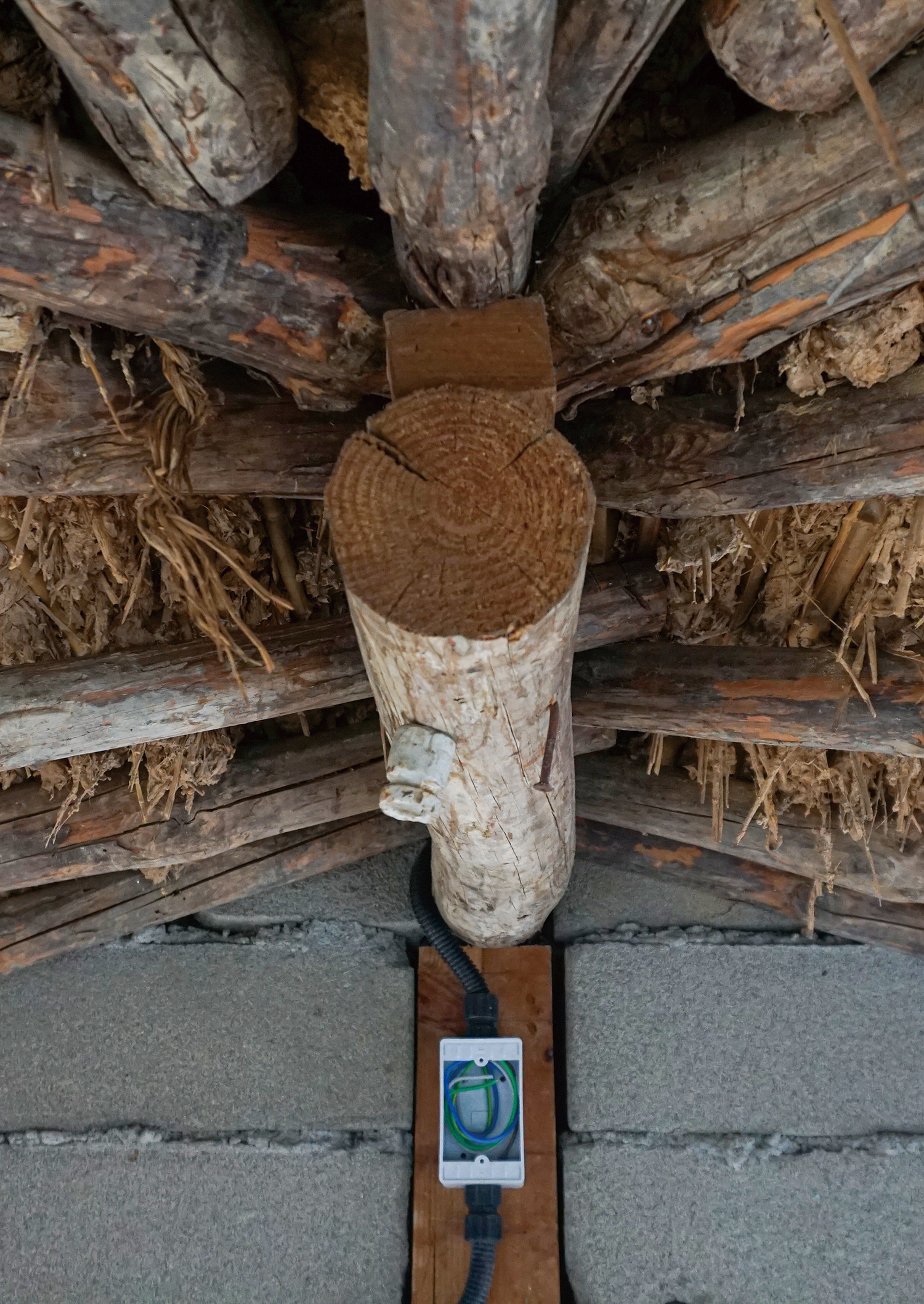
Interior of a hanok from Vacant Home Renovation for Returning Fishers
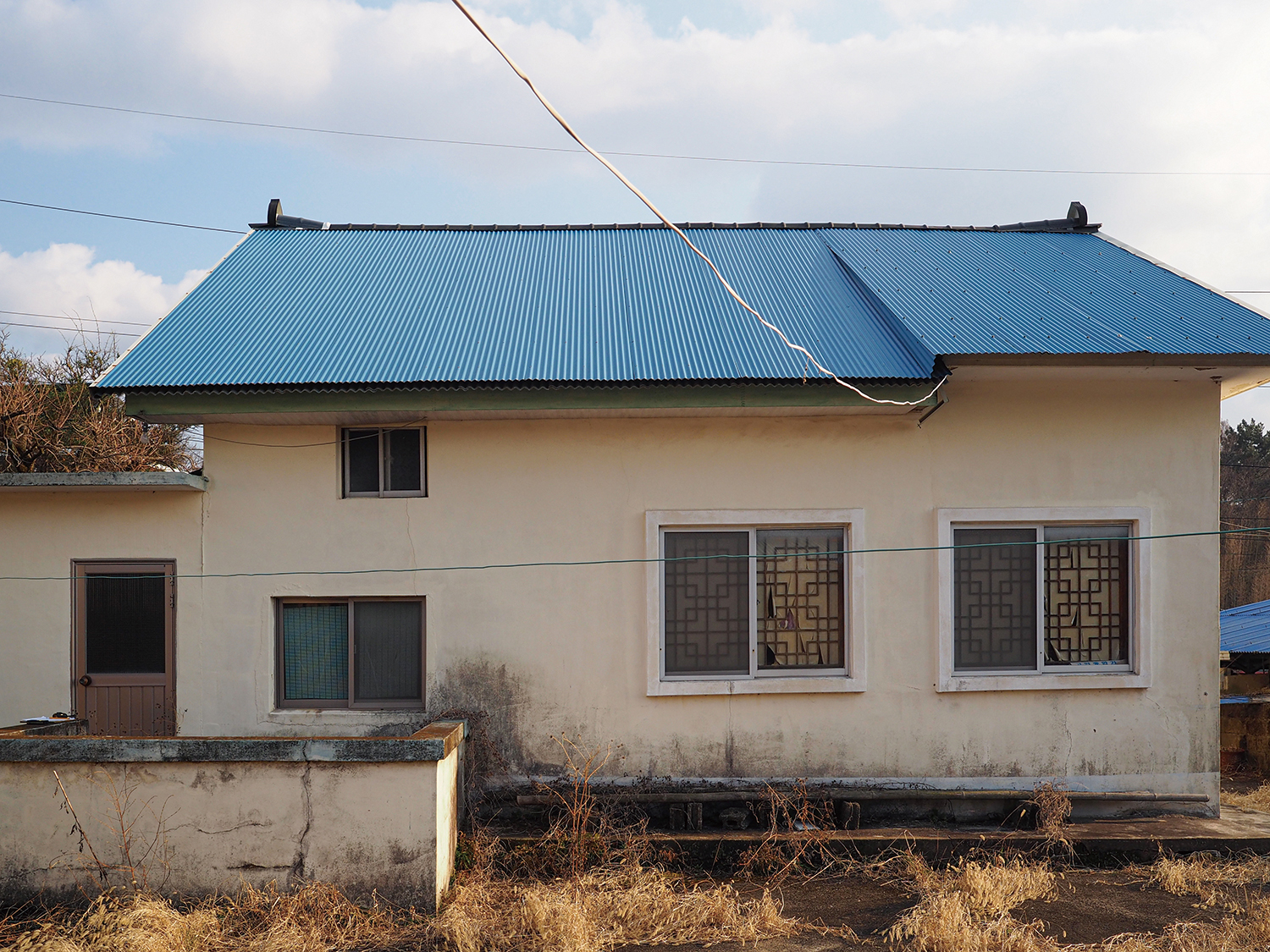
Overall view of Western-style house from Vacant Home Renovation for Returning Fishers ©Santo Architects
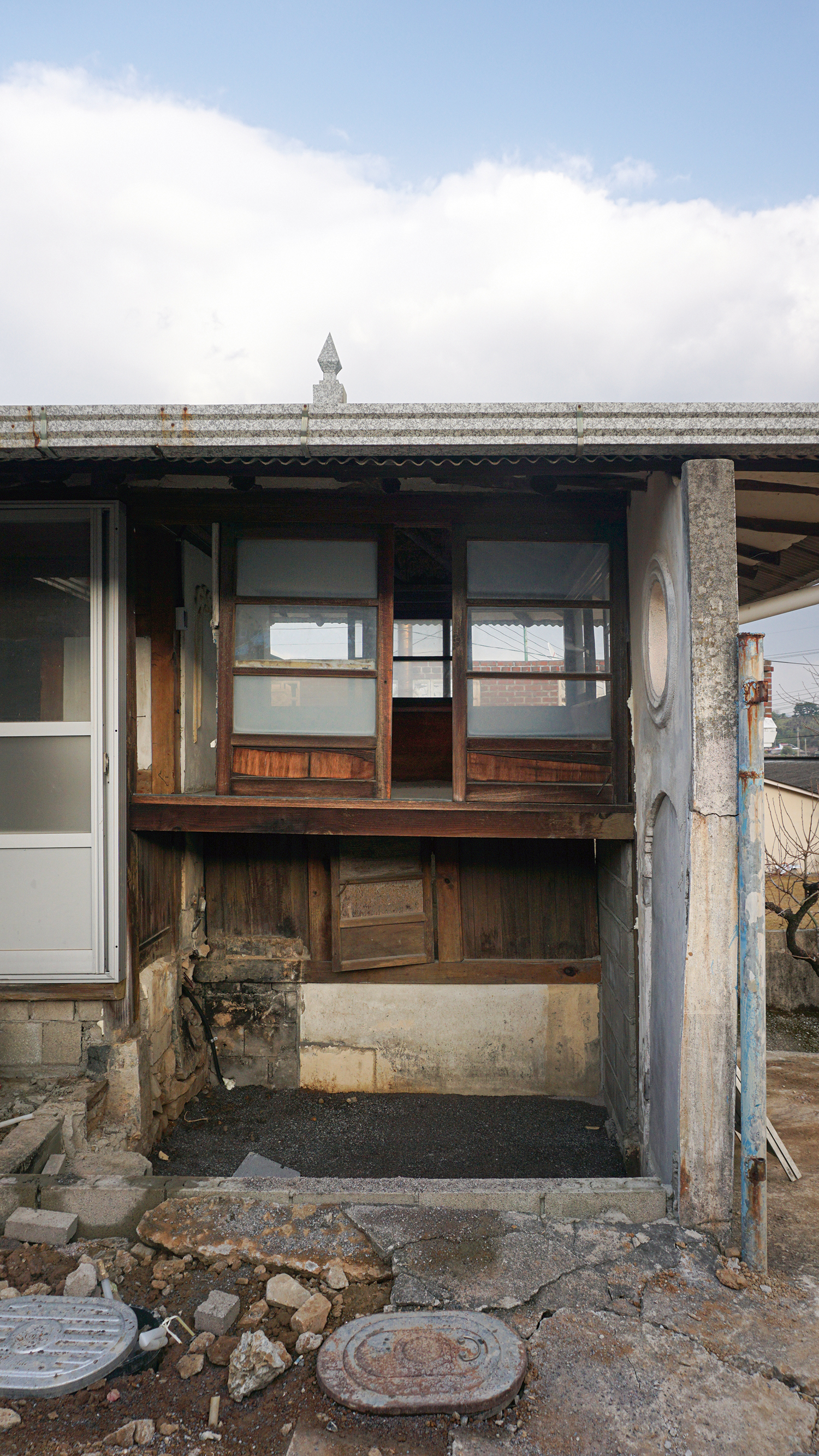
Numaru (raised floor veranda) of a hanok from Vacant Home Renovation for Returning Fishers
Peacefully and Fiercely
Kim: You recently published a book titled Peacefully and Fiercely (2025).
Moon: Yes. In the spring of 2025, I bound my master’s thesis and felt that I wanted to refine the content and publish it as a book. I interwove essays written during my first year residing in Namhae, based on my firsthand experiences—with the more analytical portions of my thesis. I wanted to show how the things I once observed as an outsider felt entirely different when I experienced them myself. Working with limited time and resources, my thesis focused on how key youth-return groups contribute to regional revitalisation. However, once I actually lived in Namhae I realised there were many other young people actively contributing to the community. In addition, I sensed a growing interest in rural life—people around me often asked about it. Instead of explaining everything on a case by case basis, I thought it would be better to make it into a book. (laugh)
Kim: Are you considering expanding your practice?
Moon: Right now, I’m the principal, the staff, and the office cook all at once, but I would like to grow the practice so I can take on a wider variety of work. However, I’m not sure whether to hire another architect. Here in Namhae, there’s growing demand for design work, so I think a designer might be helpful.But most architects in Namhae work alone, so I wonder whether my practice could realistically grow to a size where I can employ staff. The others are mostly men in their 40s and older, and even if they have ‘employees’, it’s usually their spouse helping out. I’m the 11th licensed architect in Namhae and the only one who is a woman in her 30s.
Kim: What kind of architecture, or architect, would you like to be associated with or remembered as?
Moon: Namhae is a place where buildings from 100 years ago still stand, and where they can be repurposed over time. I design with the thought that my buildings may be one of those buildings. It’s a heavy responsibility. So when I design, I focus not only on appearance but on building structures and using materials that are easy to maintain and won’t cause issues like leaks from the beginning. I’d love for people to say, ‘Santo Architects is the one that expresses Namhae most authentically.’ Not only Namhae—I’d like to be an architect who represents the identity of each region well.
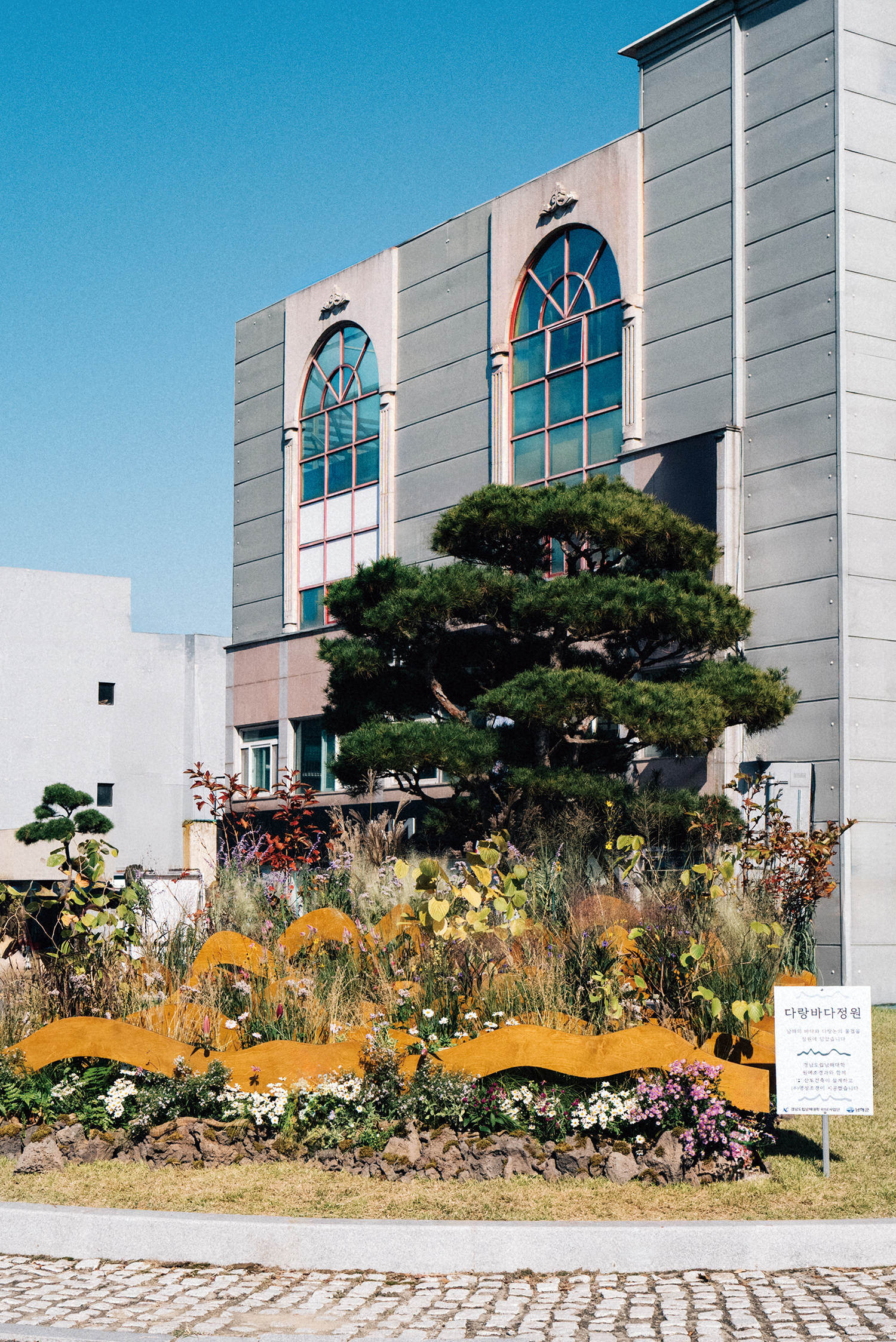
The Terraced Sea Garden ©Yang Huisoo
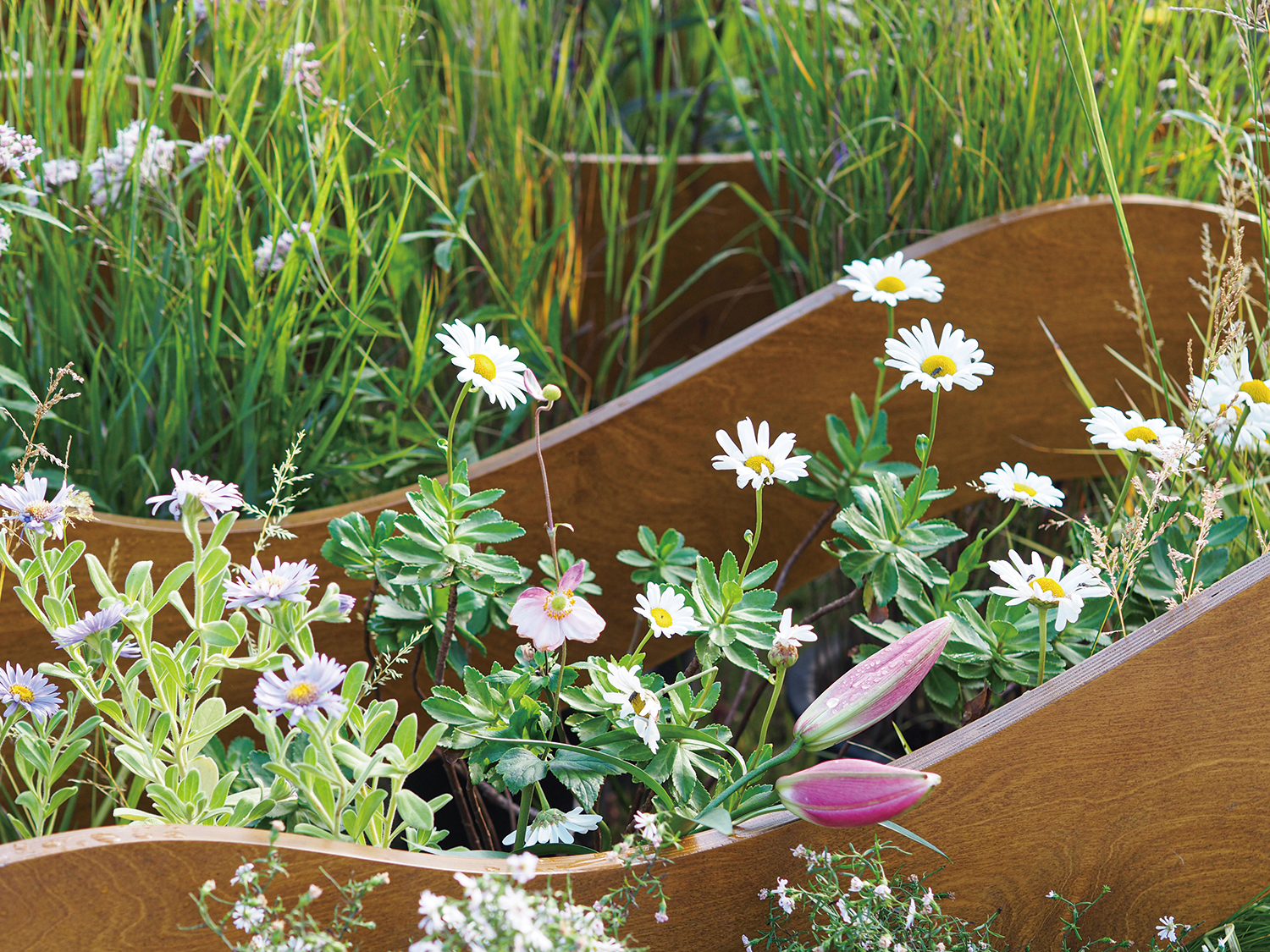
The Terraced Sea Garden ©Snato Architects
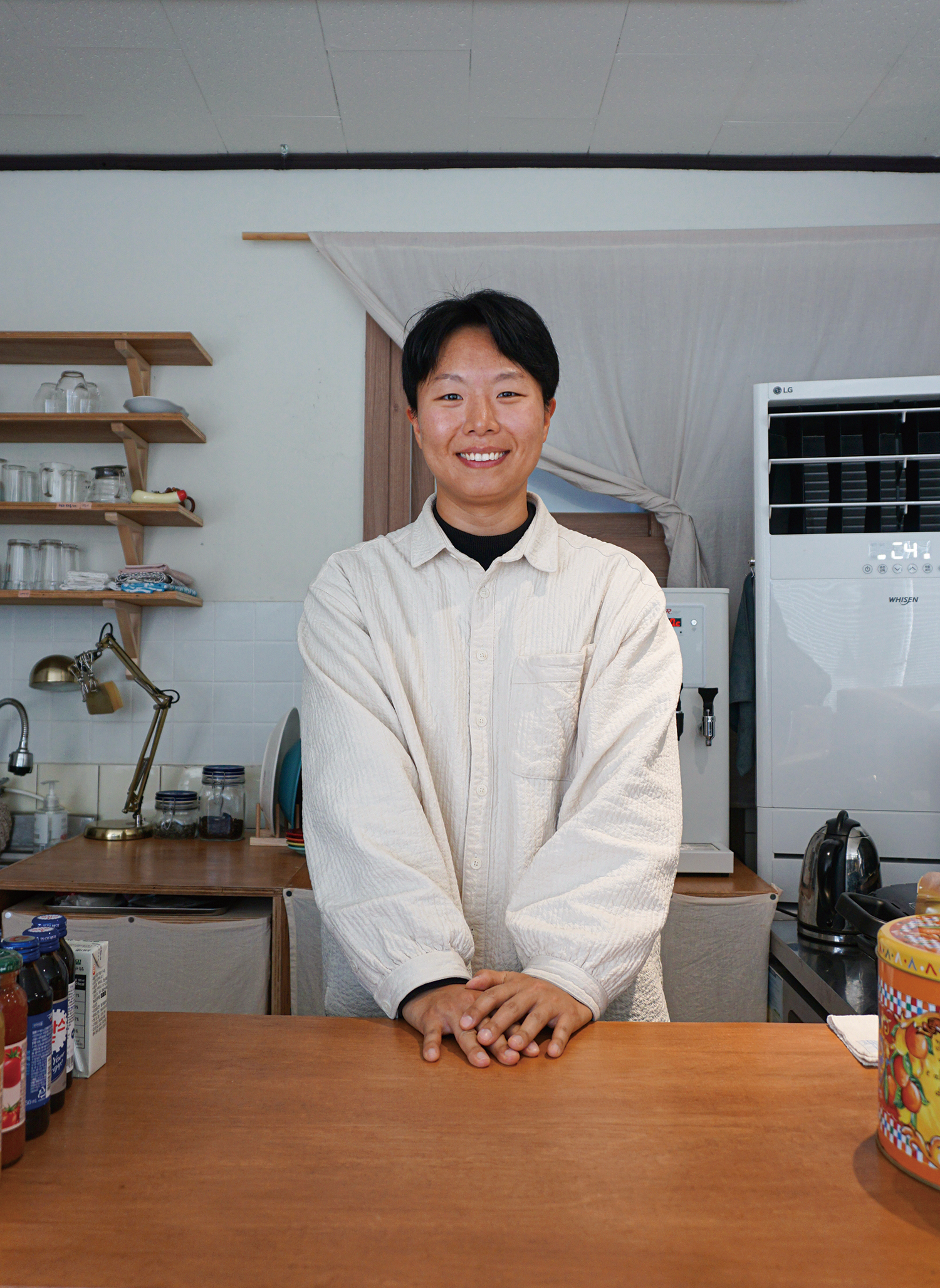
Moon Joowon