
SPACE January 2026 (No. 698)
144 (house of three structures)
DIALOGUE Filipe Magalhães, Ana Luisa Soares, Ahmed Belkhodja, Lera Samovich fala Co-Principals × Suh Jaewon Principal, aoa architects
A ‘Difficult Whole’
Suh Jaewon (Suh): In 2023, I wrote an essay for the a+u fala feature, titled ‘Art of Love’, and in it I mentioned the difficulties you faced practicing as young architects in Portugal. You opened your office in 2013, Filipe Magalhães and Ana Luisa Soares at the age of 25. Ahmed Belkhodja and Lera Samovich joined the practice right after. As a young atelier, I think you went through a very hard time pursuing your practice because of the aftermath of the Eurozone crisis. During that period, I remember several of your projects; most of them were small housing projects. In that article, I wanted to point out a certain sadness in the national circumstances and situation of your practice. Many architects see fala as very playful, colourful, joyful, with a kind of naive attitude, but I also see during those early years a sense of frustration in your attitude.
fala: Before the economic crisis, schools taught us that we were going to design museums, public buildings, and large-scale works of architecture. After graduation, however, Europe moved in the opposite direction. Most companies were reducing staff and construction was slowing down. We were frustrated, because we were young and had been led to believe that we were going to change the world. However, in reality, we were working on very small and nearly irrelevant projects. Since the establishment of the atelier, over a decade ago, we have designed mostly small projects. Some architects design beautiful masterpieces related to museums, schools, and so on, but most do not have a chance to design what has ‘traditionally been regarded as truly relevant’—what is considered ‘real’ architecture. So, some architects design very beautiful small projects, and that’s what we attempt to do.
Three years ago, we won three public housing competitions in Portugal, all of them completely out of scale to our previous projects. Each of them alone is bigger than everything we had ever done, multiplied by ten. They are really at the scale of the city. And what we learned is that everything we had done before – those small renovations and transformations – informed the way we designed these public housing projects. An those, in parallel, taught us a lot about how to return to the ‘normal’ projects. So, it’s like an ecosystem: one type of project informs the other. They are very, very different due to their scale, the construction techniques, and many other aspects. But we would argue that, in the end, they will be as important as every other project. What time has taught us is that as we move forward, as we progress and do more work, the distance between all the projects becomes smaller. Whether a project is very big or very small, they all start to align around a common centre. And this centre is what is really important to us: the cohesive whole – the ‘difficult whole’ – is more important than the individual pieces by themselves.
Suh: So, after winning the competitions, your practice is now in a better financial situation than before? (laugh)
fala: No doubt.
144 (house of three structures)
Photography, Fiction, and Building as a 1:1 Scale Model
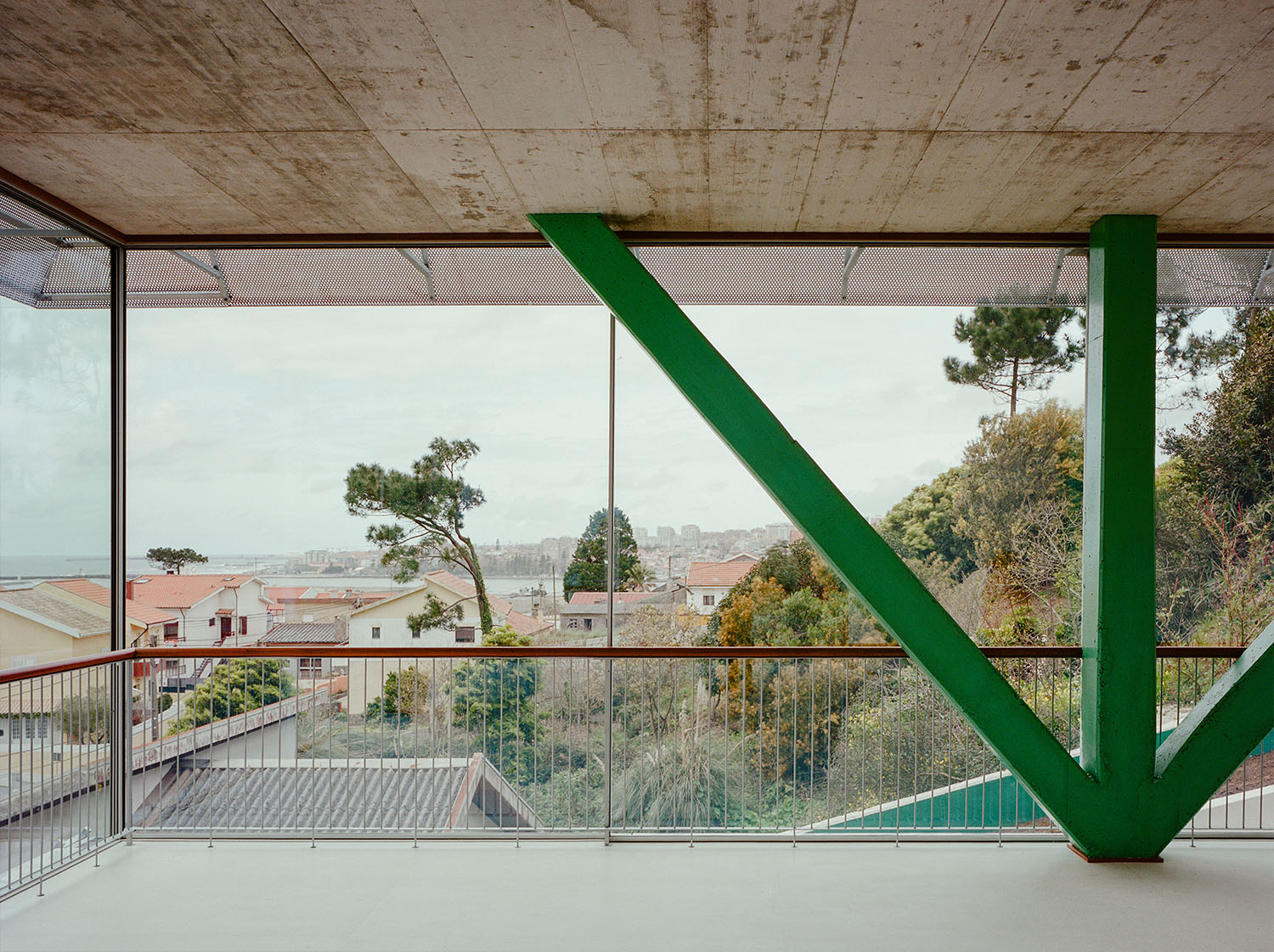
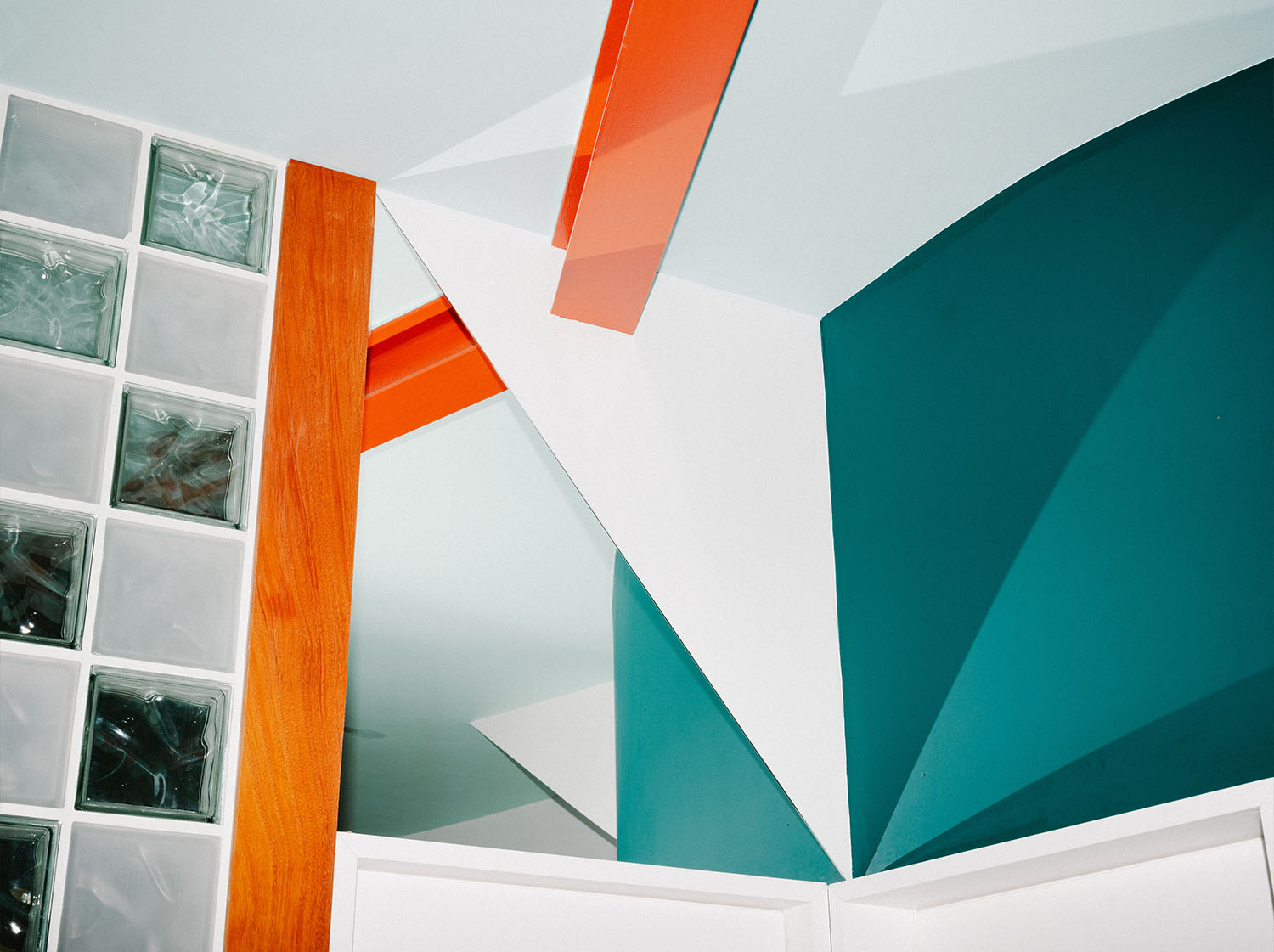
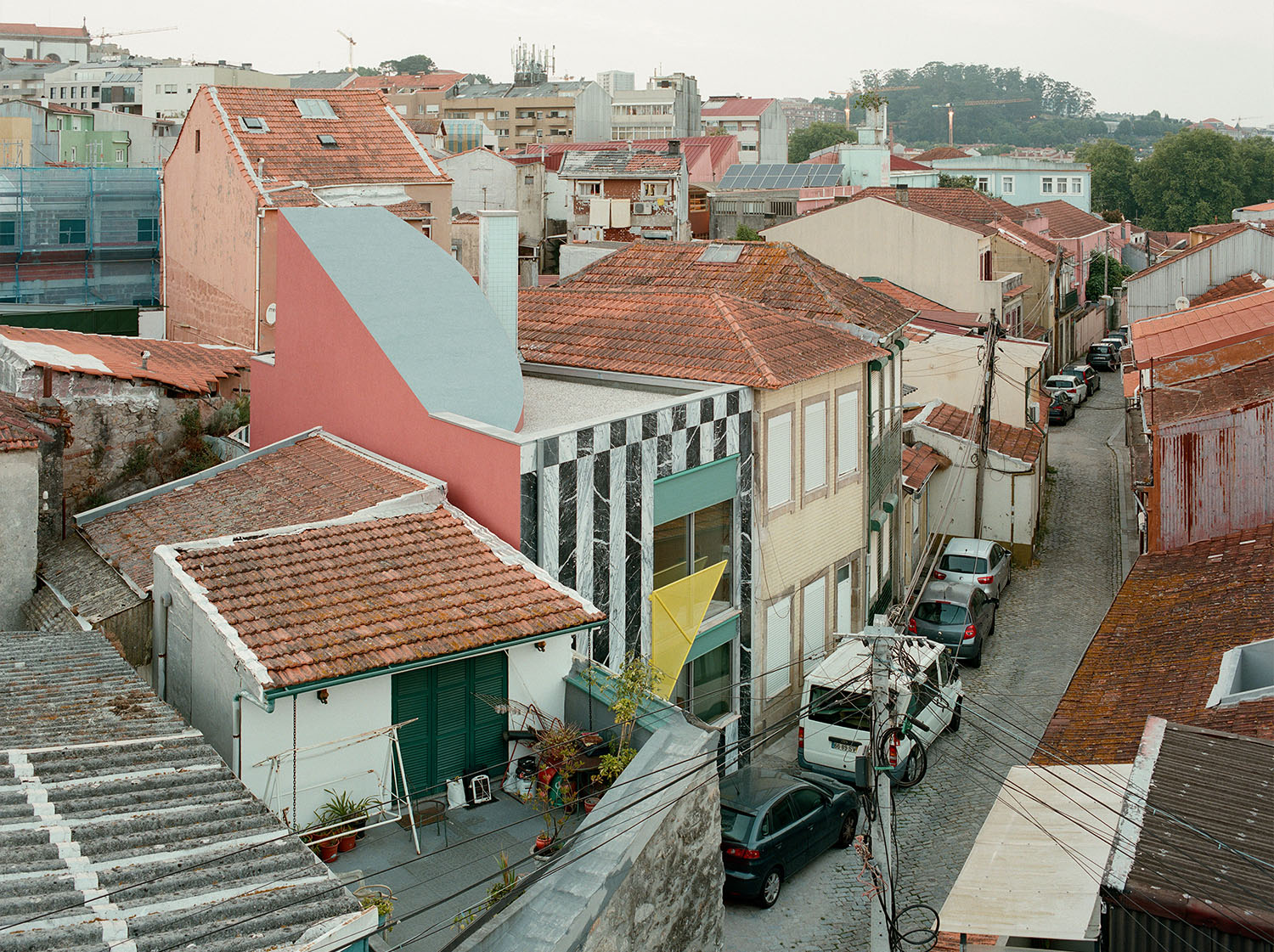
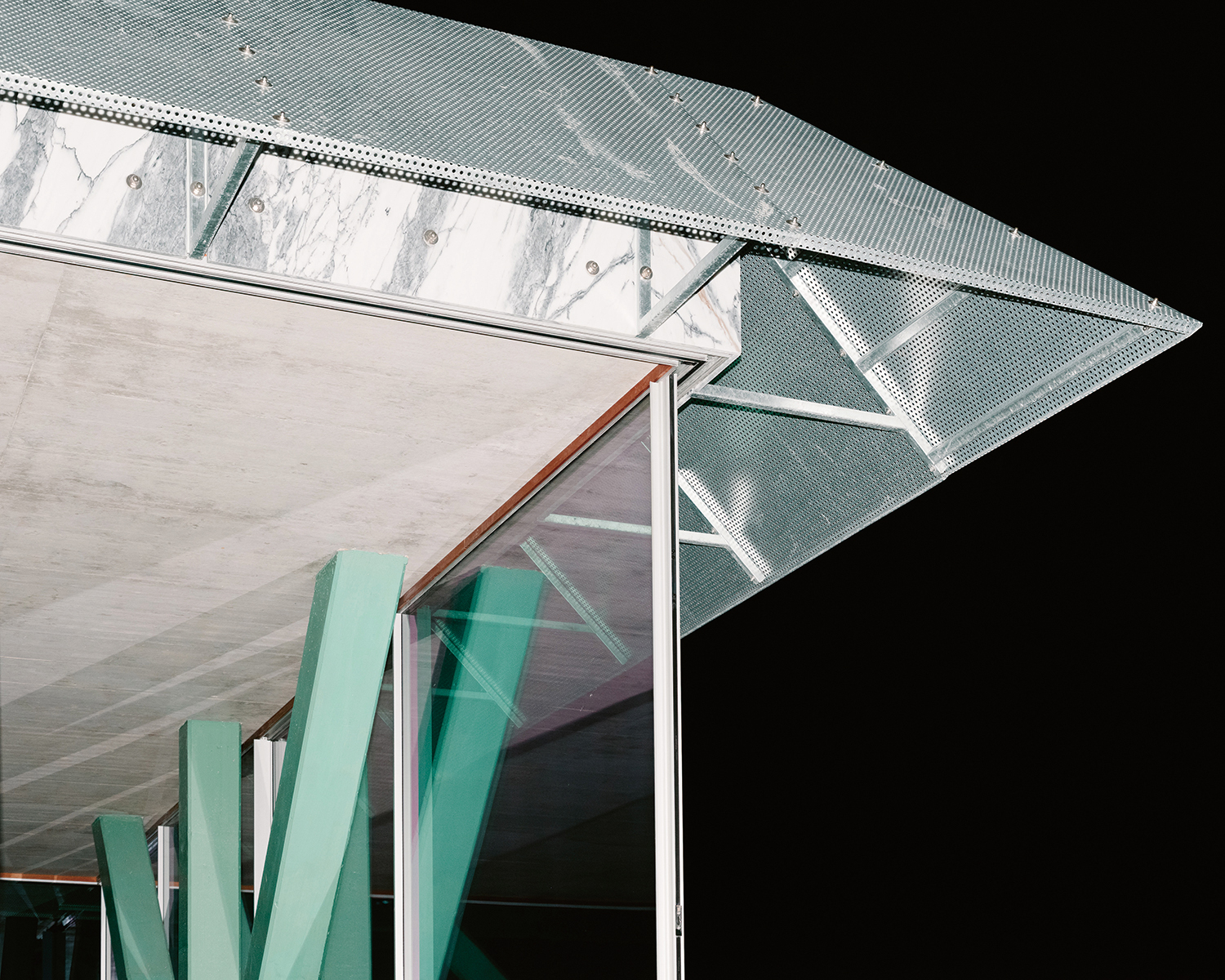
Suh: In this dialogue, I would like to focus on specific projects. I just reviewed the four projects you sent me, and I found some interesting points. One is the style of photography. In general, many architects take pictures with a corrected lens and no flash, but fala’s photographs often show no lens correction and use of flash. This is not a common attitude in the history of architectural photography. I feel that you are not trying to let people ‘experience’ the space indirectly. Instead, you deliberately ‘point out’ the architectural elements.
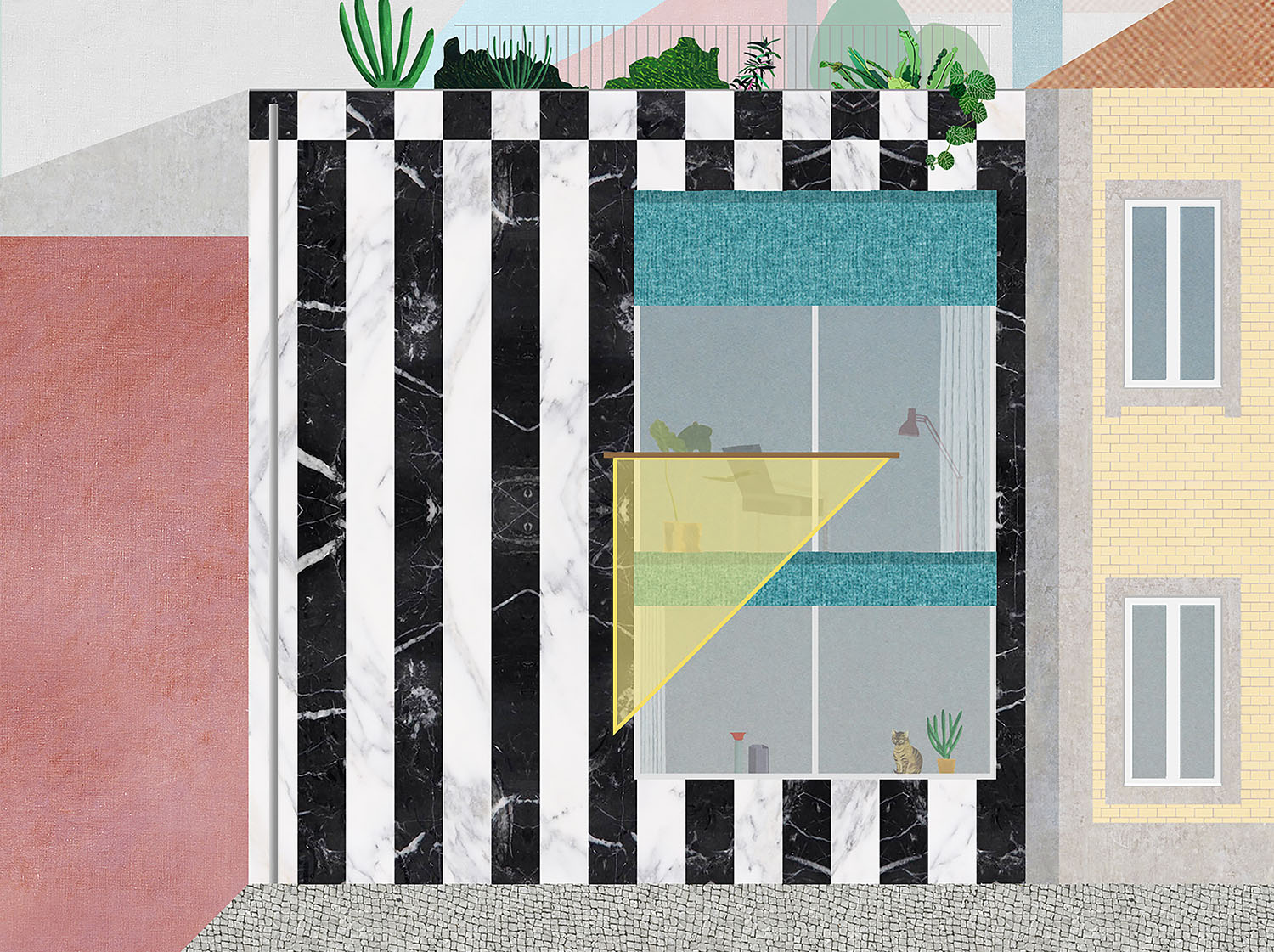
fala: Photography has become an increasingly central concern for us. For a long time, we have been researching and writing about a certain Japanese generation of architects, from roughly 1965 to 1985, such as Shinohara Kazuo, Hasegawa Itsuko and Ito Toyo, among others. These are authors who, in the last 20 years, have not really been celebrated and a some of their buildings disappeared in the meanwhile. All the information that feeds this fascination of ours comes through the fictions – photos, drawings, texts and publications – that these architects left behind. We are truly fascinated by the capacity of the theory that they developed – the way the fiction of the work, the choreographed fiction of the work, prevails over the built work itself. We are very inspired by this logic—not because of its distance in time or generation, but because we genuinely believe that the fictional work we produce (through images, drawings, narratives) is more important than the physical work we produce as buildings. Of course, this does not mean we are against the client or that the client does not get a house. Quite the opposite. It simply means that the client gets what they asked us for: a house, we like to think. And from that good house, we extract a series of possible fictions, choreographies, rhetorical manoeuvres, narratives.
We frequently collaborate with photographers such as Francisco Ascensão and Giulietta Margot. They are very different people—both work in analogue, but one is more careful and thoughtful, the other more impressionistic and aggressive toward photography. Samovich, Rory Gardiner, Maxime Delvaux, and Ivo Tavares, also photograph sometimes. These ‘actors’ critique through their photography. They can reveal what we see in photography. When these distinct perspectives come together, one achieves a more complete understanding of the project as a ‘difficult whole’.
This is crucial because most people who cannot visit our projects understand them only through images, drawings, and texts—that is, through their fictions. It is also very important because it is the most direct way for us to communicate. You are in Korea, we are in Portugal. Everything we know about your work, we know through images, drawings, and texts that you have sent into the world. We believe we know your buildings—we have looked at them so many times that we feel we know them, even though we have never been there.
They also pose questions about what actually constitutes reality—whether what exists is the photograph and the narrative, or the building itself. We believe that the building is a model, at 1:1 scale for someone to inhabit, but that we can then photograph and, in theory, discard.
Suh: I’ve noticed the influence of Japanese postmodern architects on your work, especially Shinohara and Sakamoto Kazunari. About three years ago, I read the book Kazunari Sakamoto: Lecture (2015), and I found the photographs recalled snapshots. Your photographic style also feels very snapshot-like.
These days, many young practices and architects prefer photographs in the line of Swiss or German-language photographers, like that of Thomas Demand or Thomas Struth. They want their architecture to look like a religious space even when it isn’t one. Peter Zumthor or Adam Caruso want their architecture to adopt that same serenity and calm. However, your photographs feel very popular, almost kitschy, very colourful.
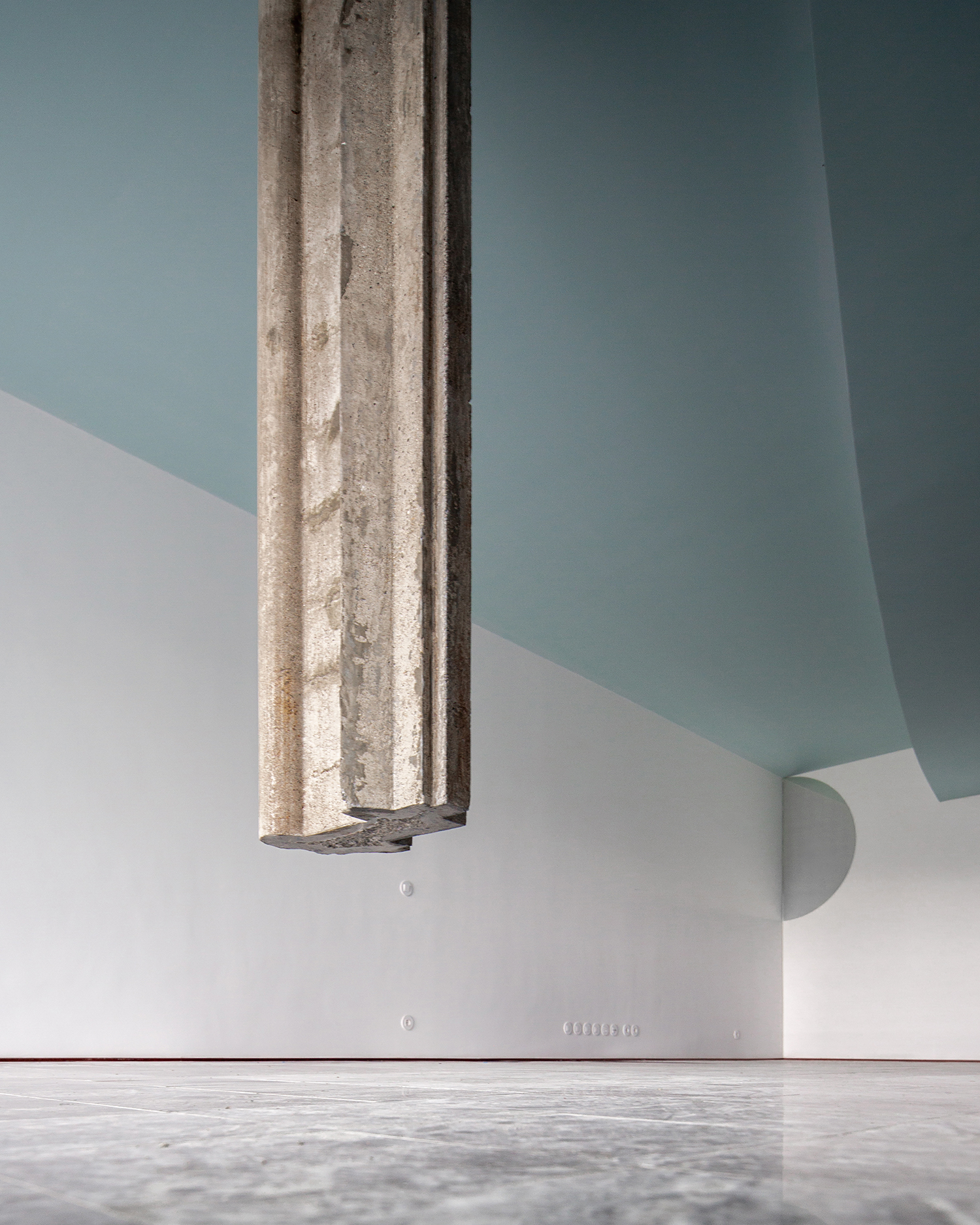
079 (suspended house) ©Filipe Magalhães
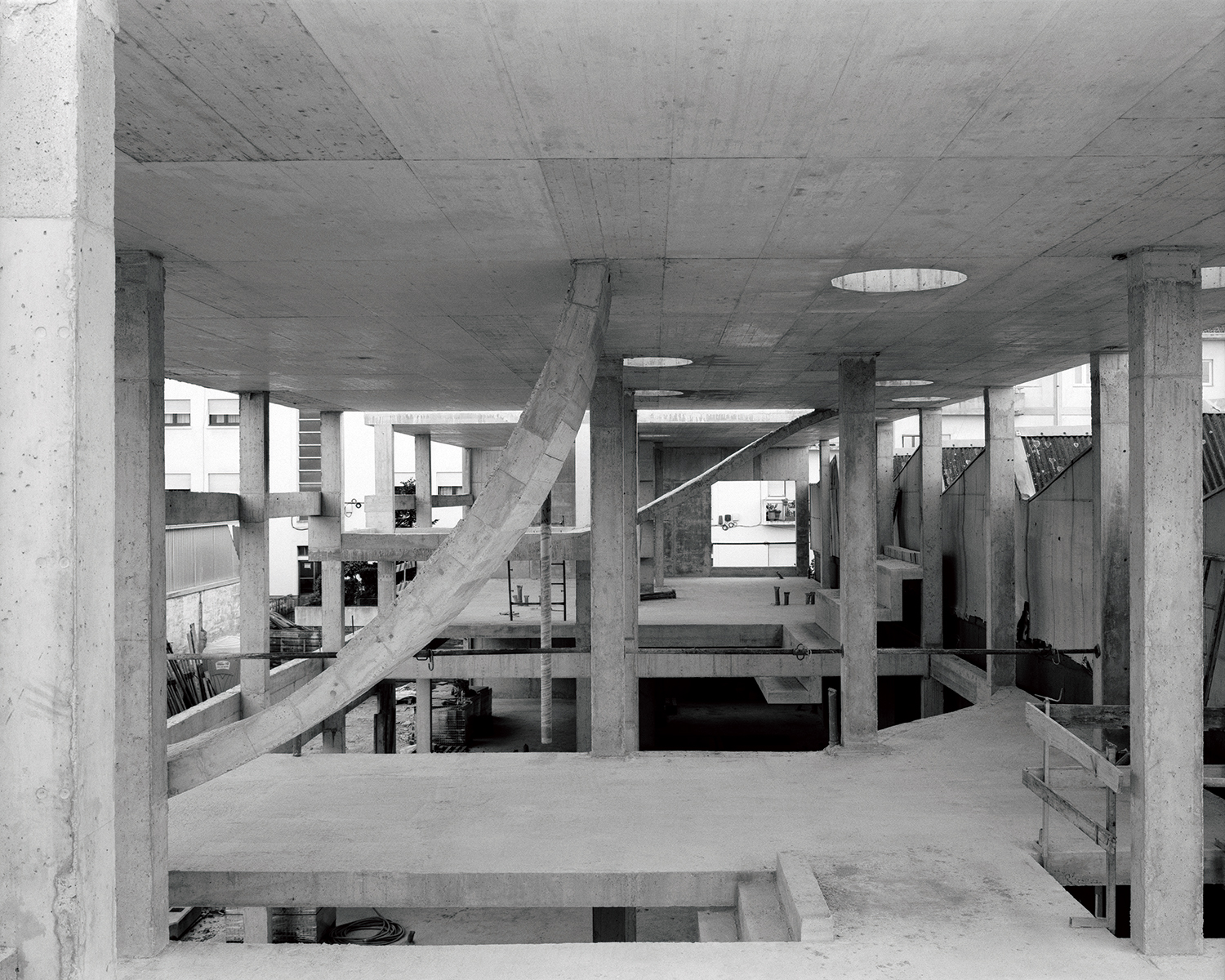
085 (variations in a box)
Mirror, Surface, and the Surreal
Suh: As an extension of this topic, I want to ask about your use of mirrors. fala uses many materials – small tiles, marble, paint, and others – but mirrors seem especially recurrent. For example, in 143 (house around a column) and 171 (house of remarks), you place a half-moon shape or a perfect circle mirror. Additionally, mirrors at the bottom of a window extend the space infinitely. This immediately evokes Sigmund Freud, who always kept a mirror on his desk. What role does the mirror play in your architectural practice?
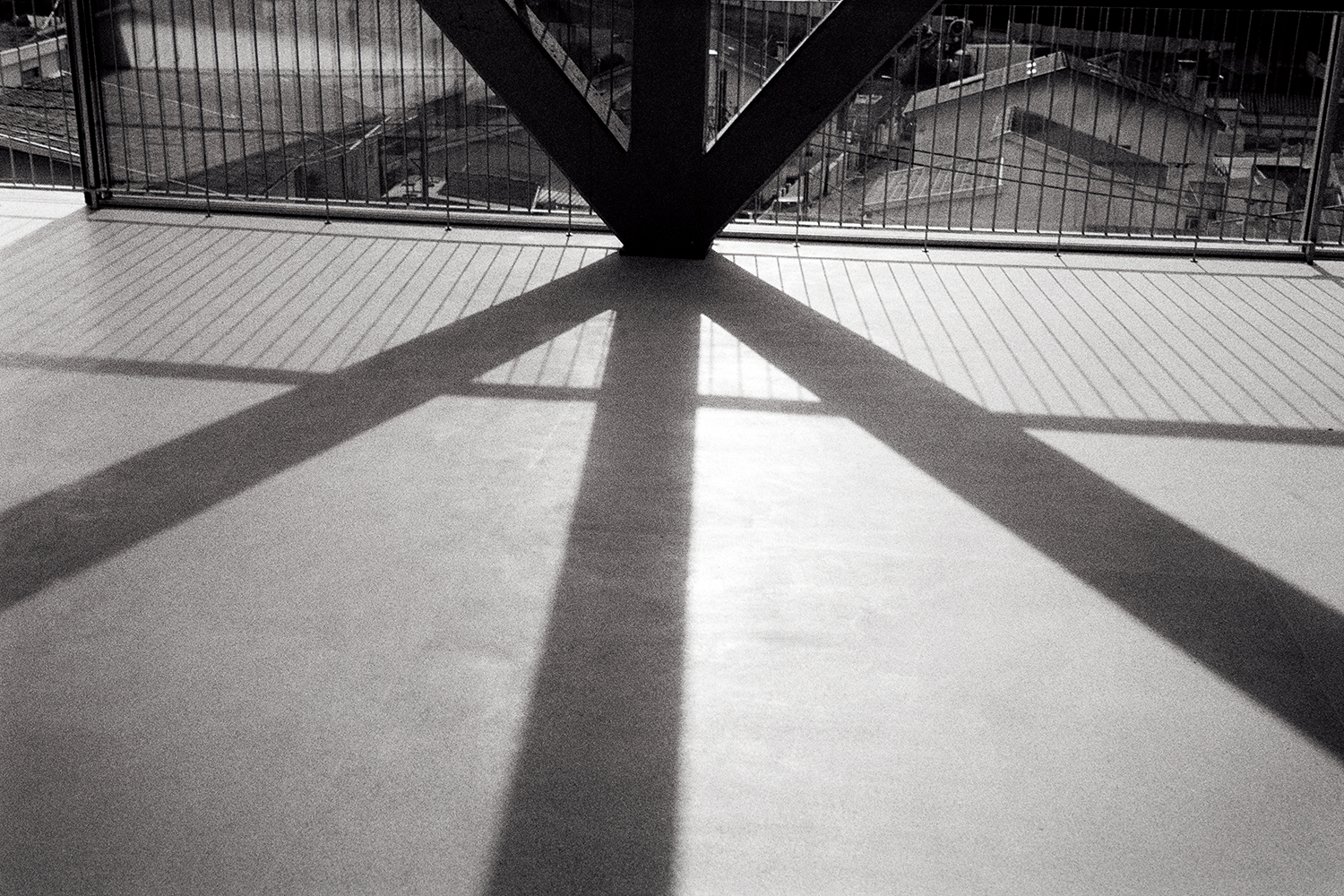
fala: We do not ‘celebrate’ construction drawings. Our drawings are usually just single thin lines which talk more about spatial organisation than about construction or tectonics. When we celebrate a column, more often than not that column is not due to its structural qualities; it plays an architectural role in the narrative. This is because we do not have a passion for construction, or maybe because the conditions, the budgets set their own limitations.
We like to celebrate in our projects the surfaces of things. In the very tiny projects, we are sometimes given a box that is already fixed, and we can only intervene on the surfaces. The project then becomes an operation on the qualities of such surfaces. In that sense, a mirror becomes a valid and valuable element. A mirror is like paint: thin, cheap, and easy to apply. It also duplicates the subject and offers far more, architecturally as well as spatially. The mirror also allows you to hide the wall—for example, when you have a wall with many layers of construction, placing a mirror on the end of such wall, it can make the construction precision unnecessary. So, the constructive celebration you might find in a Souto de Moura projects does not take place in ours.
The mirror also has form. It allows us to punctuate and ‘sign’ as a chip trick or cheap trick. The half-moon or the circle mirror points to certain elements, positions. We think mirrors operate in our projects in the same way as non-structural columns: they organise and distribute the space, and they generate possibilities.
Suh: Interesting. In Korea, we have a similar situation where construction quality is not guaranteed, so I also try to shift the emphasis away from construction itself. I often deliberately exaggerate elements such as cladding or doorknobs. Maybe your intention in using mirrors is similar: to acknowledge what the construction can realistically offer, and yet to advance the conceptual ambition through other means. In addition, the mirrors create an uncanny feeling by distorting direction and a point of view. So, to me, your mirrors evoke a surrealist painting.
fala: In terms of 171—there is a lot of that surreal quality to it. There is a bathroom with a full mirror wall that makes the staircase appear as two staircases. We did this partly to create a psychological, surrealist effect, but also because the client specifically requested a bathroom in the center of the main lobby, and this way we are relieving the sense of confinement in that central space.
Meanwhile, the ground-floor photograph of 171 reveals the colour palette. The underside of the staircase is bright, while its sides are dark. You have the very strong colours of the structural columns—blue and red. And then you have the mirror, and everything mixes together. The result is an atmosphere that oscillates between the deconstructivist and the surreal.
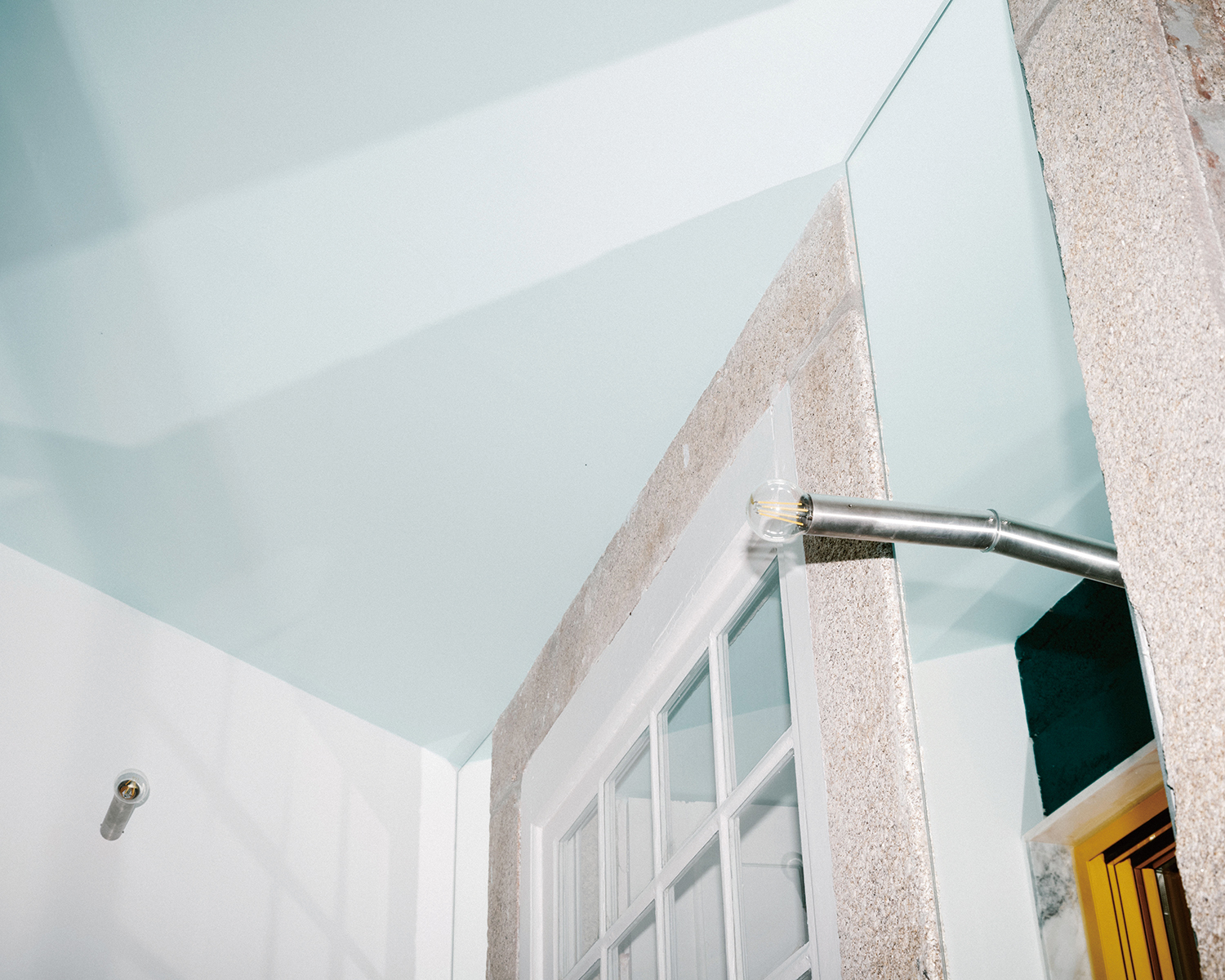
171 (house of remarks)
Flatness
Suh: At some point it looks like a Russian Constructivist drawing: very flat. For me, ‘flat’ recalls medieval drawings from the 15th and 16th centuries, especially religious paintings. They have no vanishing point or perspective, just a juxtaposition of objects, so there is no depth in the drawing. In your photos and spaces, I notice something similar.
If I push this thought further, in modern architecture, many architects concentrate on how to create a sense of ‘volume’; you focus on the composition of colour, elements, and certain architectural features. I feel that you are restoring the importance of repressed architectural elements: columns, railings, flooring, and other small elements that are usually neglected. In this respect, fala’s flatness appears critically charged.
fala: In the first five years of our office, we were making many collages and drawings that were flat by nature, but we don’t think we were consciously thinking about ‘flat architecture’ or ‘flat representation’. In the second half of our practice, things changed—mainly because we started photographing with more people and diversifying the discussion about photography, but also because we diversified the types of drawings we make. As a result, we radicalised the two types of representation; one is photography without any shadow, another is without any noticeable light.
This has to do, we think, with two realities. First, every representation of our work that you see today is flat. Everything is ultimately reduced to pixels, colours, lines, and objects. Second, it has to do with the separation between types of representation. When we draw a single-line plan, a single-line section, or even a wireframe, our concern is in the realm of space: organisation, the relationship between plan and section, volume, the form of the negative space. This has been a recurring theme in our work from day one. There is a certain Japanese spatial sense – coming from projects like Shinohara’s Uncompleted House (1970), or Ito’s White U House (1976) and Kamiwada House (1976) – that has become completely normal for us. In every project, we feel the need to make the same kind of axonometric drawings Shinohara did, to think with and use the same words that Hasegawa used. That Japanese-ness has been present from the start: the idea of form and volume. Because of that, as a natural consequence, what was already flat becomes even flatter, and what was already about volume becomes even more about volume. So, our production is now more polarised.
But at the end of the day, this has to do with the way how we created a kind of cinematographic photographic perspective on our work – how, at a certain moment, we are able to abandon the drawings once construction is finished and the building is there, and everything that matters is how the senses are going to absorb the volume. 085 (variations in a box), which we are finishing in Portugal now: it has 15 units. All of them have roughly the same 2 × 3 proportion and each one has long walls that are perfectly white and short walls that are nearly black. What happens is that you lose the perception of the cube and instead perceive only the walls. Suddenly, it’s no longer solely about form, it’s about the relationship of surfaces that touch and define corners. We are very interested in this. It’s a fascinating moment for us, because we are able to deconstruct what we always took for granted – space, form, negative space, the ‘meaning space’ that Shinohara theorized – and transform it into a ‘meaning surface’, or the deconstructed surface of each of these forms. Four projects featured in this FRAME, all share the fact that the surface of the floor and ceiling is not the same as the walls. At the beginning of our practice, it was not like that: the floor was one element, and the walls and ceiling were treated as one continuous thing, suggesting unity. Today, it’s very important to us that the vertical elements are detached from the horizontal elements, that the doors are different from the walls, that the frames are different from the doors. It has become very clear to us that the work is a continuous series of deconstructions. But when we document the projects photographically, we draw all those deconstructed elements back together onto a single flat plane.
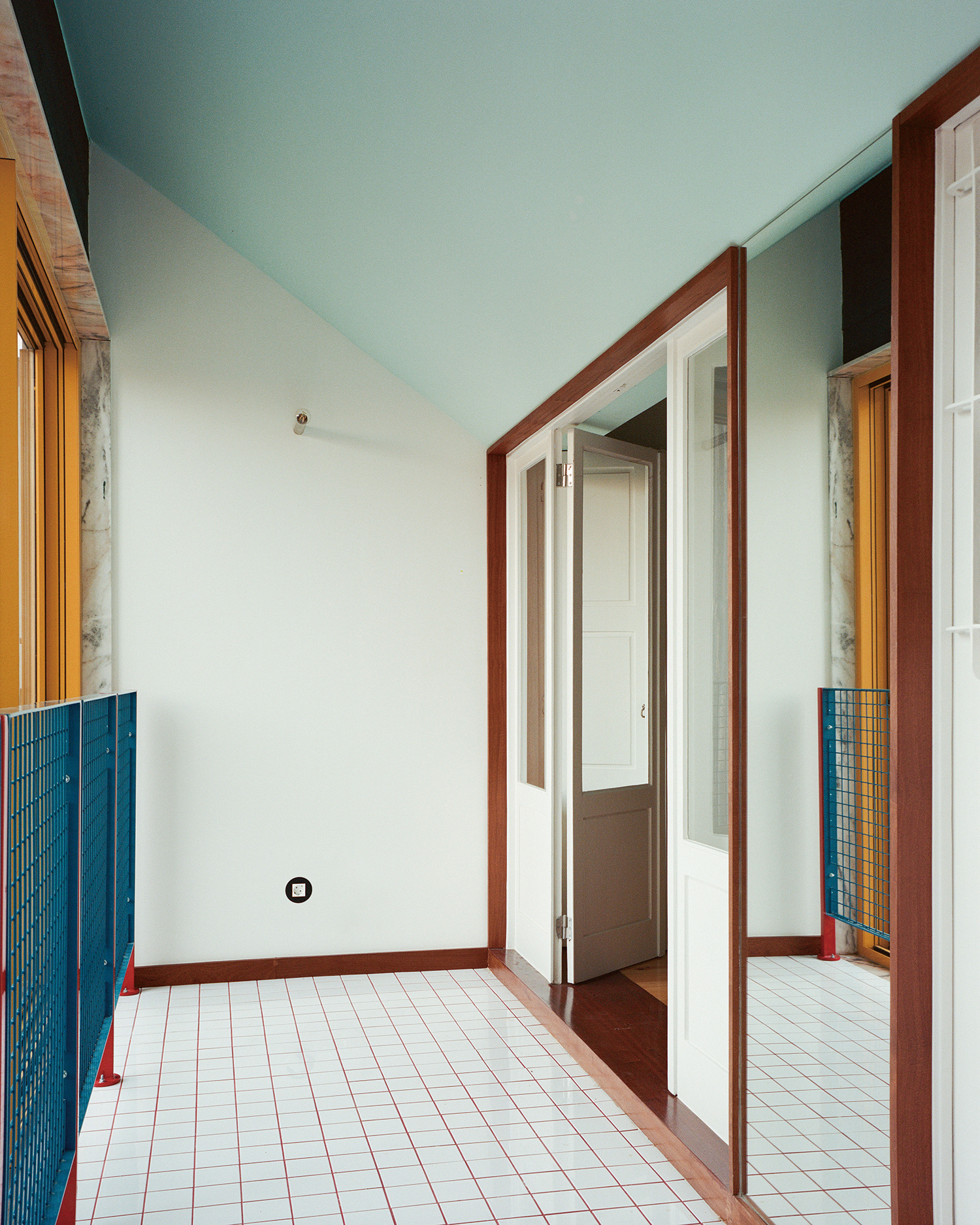
171 (house of remarks)
Rigorous Form and the Baroque
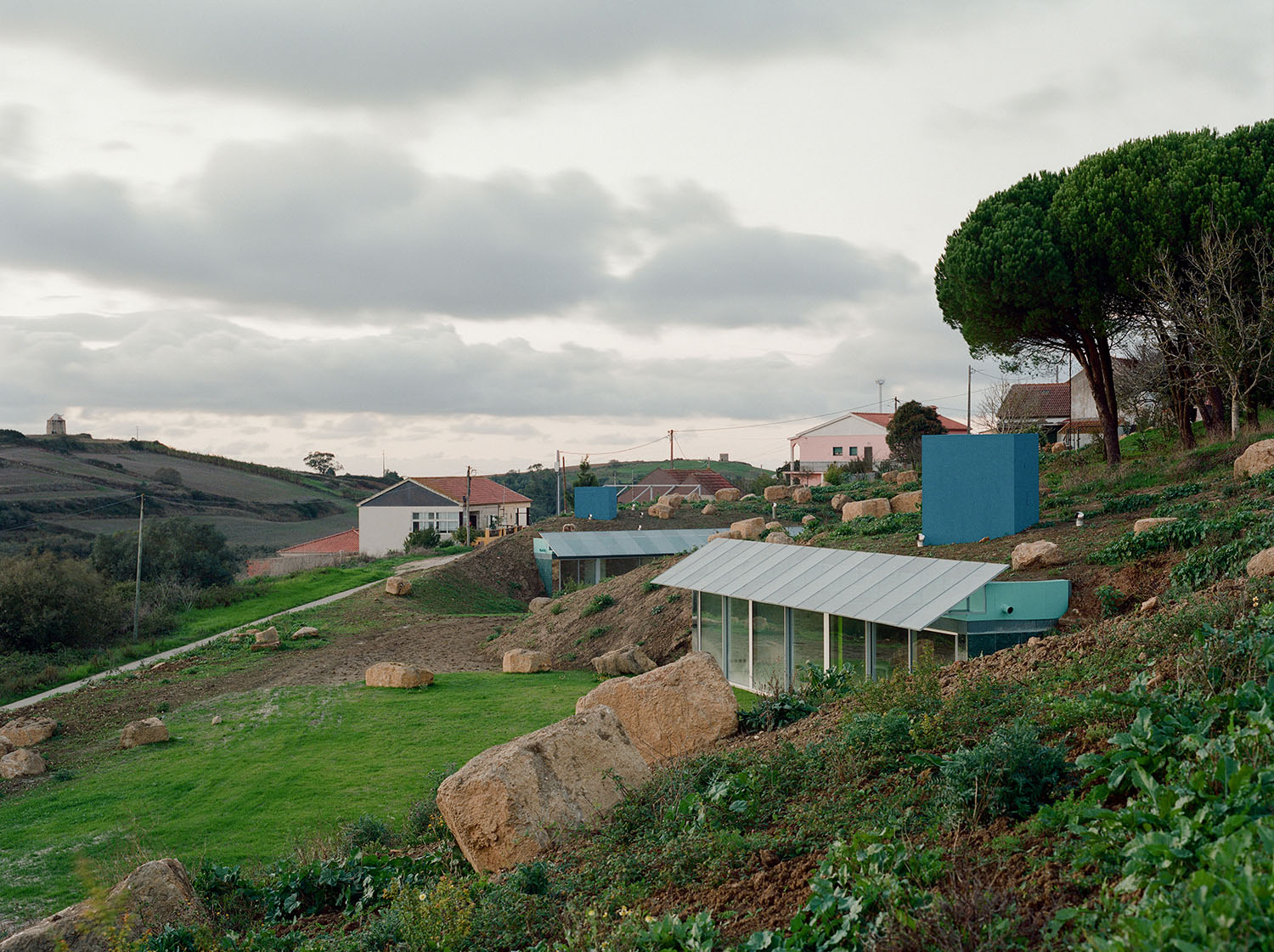
Suh: We can see in your presentation that the four projects appear almost like one big collage—very flat. I would like to talk about 156 (cookie cutter retreat). I am very interested in it; I really love this project. Basically, I think the situation, the construction, and the final plan configuration are all very good. At some point I even felt it was similar to my own project, HOJI (2022, covered in SPACE No. 661) What impresses me is the conflict in this scheme: between the plan configuration and the built reality. There are many layers in it. In making the plan, you intentionally collage plans from ‘master architects’—Álvaro Siza, Ito, Frank Gehry. Their plans are literally cut and pasted into your project plan, which is very interesting to me. So, I kept asking myself: How do you decide which part of each plan fits into this project? Which fragment becomes ‘small’, ‘medium’, and ‘large’?
I also always find your toilet layouts very interesting, in every project. Sometimes there is a squeezed rectangle with a shower booth, sometimes you add a urinal, a toilet, a washbasin—each part is very fragmented, separate elements combined together. At the same time, I noticed that the half-circle shapes are related to each other through a kind of geometric mathematics. So, I was thinking: if we give this dialogue a title, I would call it ‘The Mathematics of the Birthday Villa’. You once mentioned ‘birthday’ as meaning an exaggerated gesture of expression while you refer to Paris Hilton. But beneath that, I feel you adhered to a very strict principle when making the plan configuration for this project. At first glance, your projects look like colourful, fragmented compositions. But when I look beneath their visual expression, I can read a very strict logic in the plan and in the geometry. What is very interesting to me is that, at the same time, you keep a very playful attitude – like casually cutting and pasting other architects’ plans – while holding on to a very stubborn and rigorous underlying principle. These two attitudes coexist in the work.
fala: For us, the plan is the most important drawing in any project. The way we draw a plan – both in terms of spatial organisation and in the fact that we draw it with a single thin line – matters, because it informs the entire project. It’s not just a drawing style; it’s a way of thinking. In this project, we tested many ideas, because the program was broad and the client was remarkably open-minded.
The programme and the space were divided into three blocks, each with very precise amount of common and private areas. When we combined that idea with the decision to sink the buildings – so that each building would have just one façade – it led us to this semicircular shape, with three sizes: S, M, and L. Up to that point, everything was mathematical, operational, very scientific.
But giving form to that private, nearly baroque side of the plan was difficult. The question became: Do we make a very abstract pattern; Do we try to invent our own composition? It was endless. So we came up with the cookie cutter strategy and must have tried with maybe 50 different type of buildings. We rotated them in different ways. Then came the conceptual discussion: could we not adjust the sizes of the original plans to match our programme? Because what we were copying was not the spaces themselves, but the articulation of lines or extrusion of those spaces into these houses. We were simply finding a logic for form. We tried many options, and then we noticed that most of the houses we were looking at were more or less from the same period. We then decided on a stricter criterion: the houses had to be from the same year; originate from the different continents; and be designed by architects we genuinely appreciated. We created a set of rules, a nonlinear equation of sorts. Little by little, we reduced the number of examples until we arrived at the final form.
What is important is that these buildings result from a mathematical operation: three blocks with three programmes. There are three types: no column, one column, two columns. If there were a fourth, it would have three columns. All the diagonals also divide the space in different angle. They all have different sizes, but they are all built with exactly the same constructive section: the same window, the same shading, the same door, the same everything. So three spaces are very similar in principle while very different in scale. There is a contrast between the ‘full’ side and the ‘empty’ side, between the social side and the non-social side—what Hasegawa calls the ‘main spaces’ and the ‘secondary spaces’. It’s a very defined tension, and the wall that cuts through it is painted black, clearly stating: this is something else.
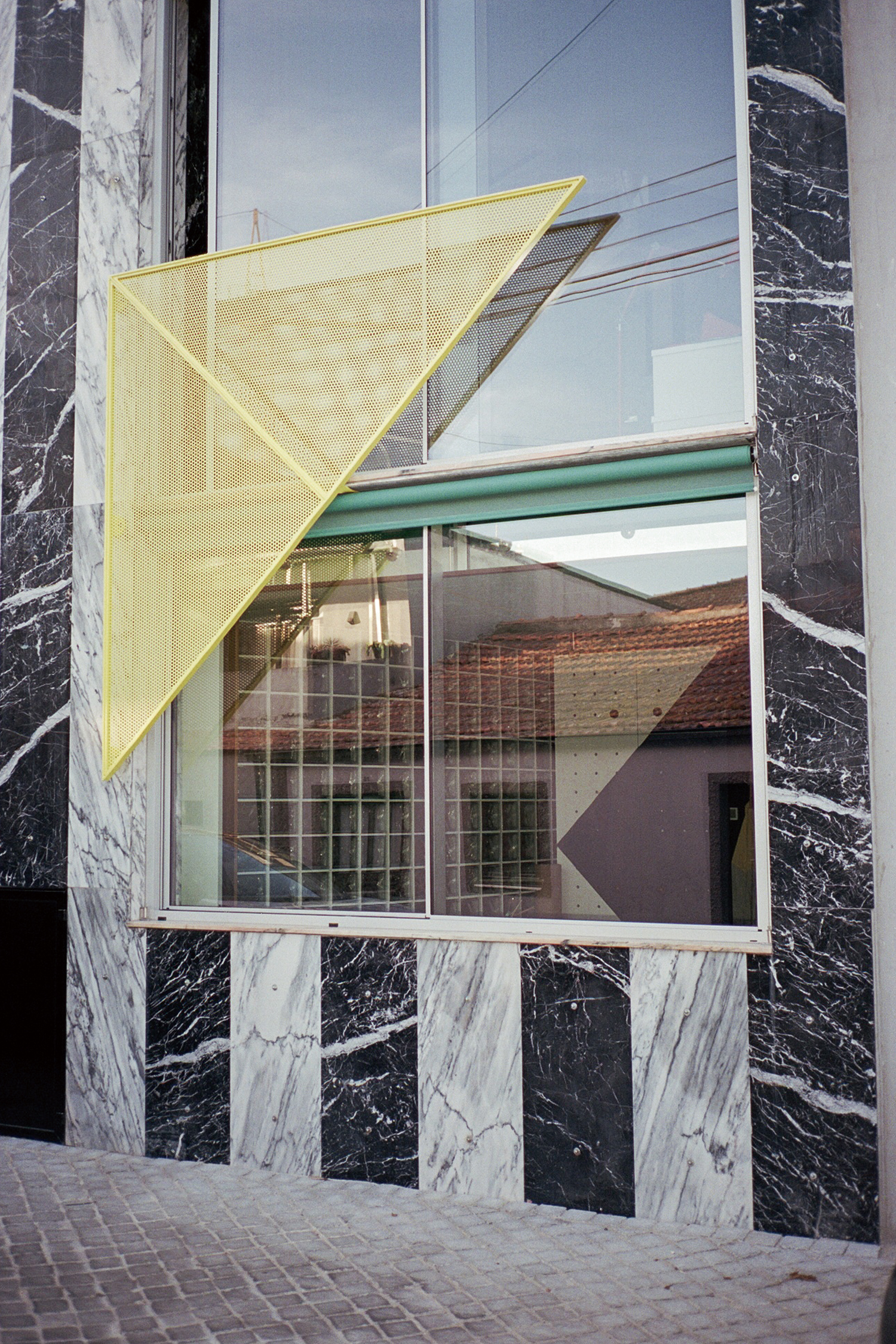
143 (house around a column) ©Giulietta Margot
Referential Curation
Suh: I found the ladder detail drawing—it’s very similar to Shinohara’s Tanikawa House (1972), it has the same element, so I thought that was quite funny. Maybe this is a boring question, but what is the meaning of the reference to fala? You refer to not only to Shinohara, but also to architects such as Robert Venturi, Mies van der Rohe, and contemporary practices like ADVVT, as well as to artists like Marcel Duchamp.
fala: We think every piece of our architecture emerges from precedent. We believe that architecture is still made through drawing – plans, sections, elevations, collages, wireframes – and these are all made out of architectural elements: columns, doors, windows, roofs, wood, stone, and so on. Because of that, we could say that almost everything has already been invented, and what we do is curate our projects. This is something we do in the project itself: bringing precedents from different places and making them coexist in a meaningful, collective way in one project.
What happens through this is that our field of interest becomes very wide. We look at many things, and we put them all on the same level. There are ‘monster’ projects – gigantic, unquestionable figures. But, at the same time, they are not more important than a banal building on the other side of the street here in Porto. We also have a deep admiration for the generation that preceded us. These are people we admire, so we make the most honest kind of compliment: we copy, we refer, we adjust, we try to understand. Sometimes we think we understand, but we don’t fully grasp what is happening – there is just a perception, an interest – and that intrigues us the most. The fact is, there is almost no architectural criticism anymore. It is very difficult to find. What is happening today – this conversation – is an exception to the rule. Everything is very defined already, very subtle, very normative. We don’t have what that Japanese generation had: criticism, sharing, dialogues between peers. So, we have to simulate conversations with friends, with other architects, with distant architectures. We might be discussing one of your projects, mixing it with a student’s project, then a chapel, then a building on the other side of the street, and then ‘copycatting’ one of our own projects from a few years ago. Building and photographing a replica of that specific appropriation of the Cezanne ladder refers to all of that.
Suh: All right. Is this way of thinking about referencing shared by your generation in Portugal, or is it your unique philosophy?
fala: It’s not unique at all. When we came back to Portugal, we returned with renewed energy and new ideas about what could be done differently. We would say that yes, we are young, but within this younger generation we are already among the oldest—the first wave of people who are trying to do things in their own way, to find their own way of thinking and their own way of making architecture. Porto architecture for the last 50 years has been about endless continuum, supported by Siza. That made sense for a while, but today it is not the answer to the moment we are living in.
We made a book in 2024, together with Atelier Local and Francisco Ascensão, about the nouvelle vague. We noticed emerging architects in Portugal share something in common: we are developing techniques to create meaning within a context marked by poor budgets, bad clients, low construction quality, and an economy of intellectual scarcity. And we want to believe that in five or ten years, when we look back at this moment, it will be very clear that this shift is happening—not only in Portugal, but across Europe. We hope that in 10 years’ time, this collective energy will become even more evident.
English editing assistance Kim Yujung

143 (house around a column) ©Giulietta Margot
_
1 This title borrowed from Colin Rowe’s The Mathematics of the Ideal Villa and Other Essays (1976).
2 In Complexity and Contradiction in Architecture (1966), Robert Venturi referred to the ‘relationship of inconsistency within the whole’ as ‘a manifestation of “the difficult whole” ’.