
SPACE March 2026 (No. 700)
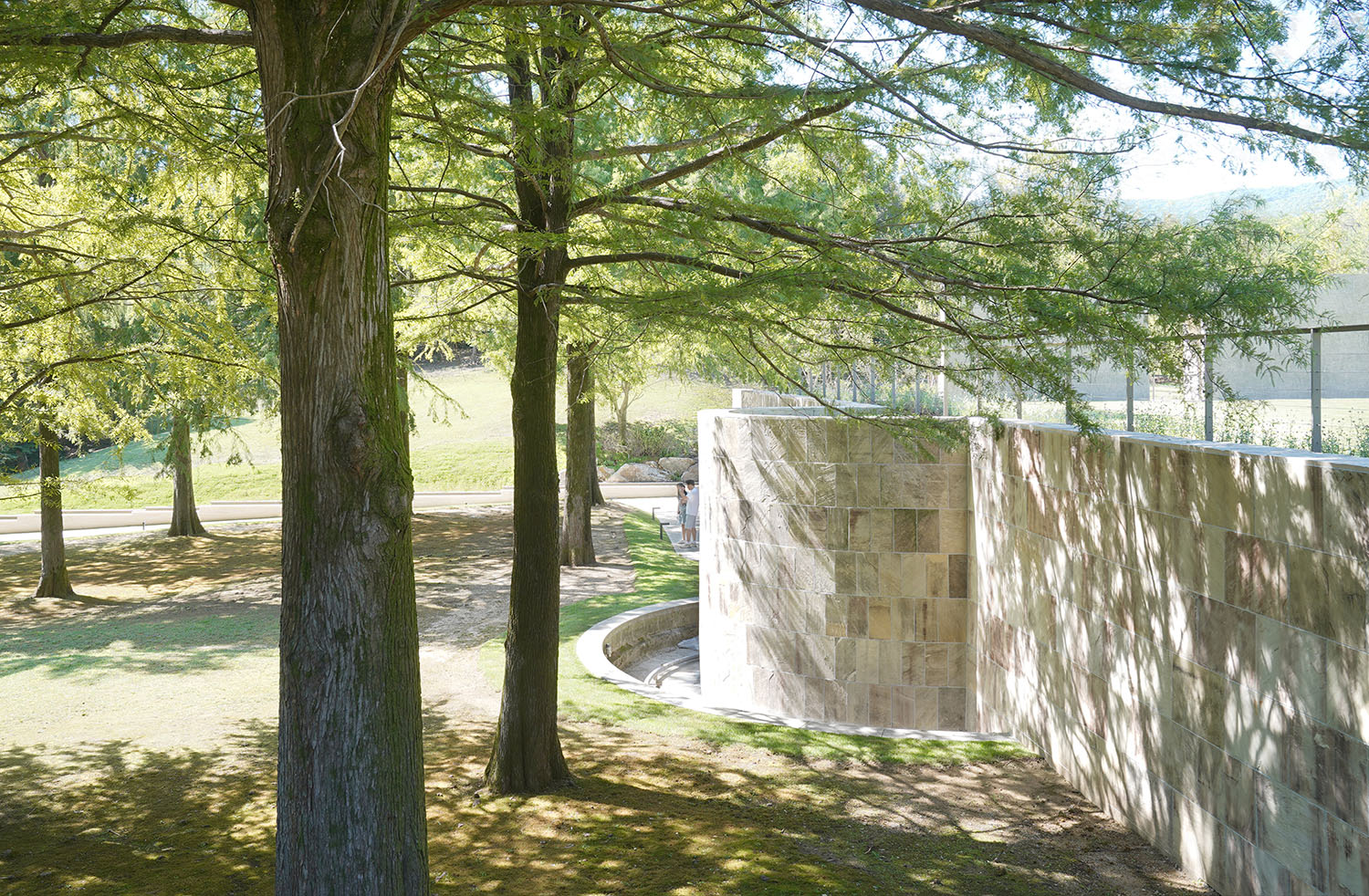
Front elevation of Hoam Cafe (2025), preserving the retaining wall of the old Bourdelle Garden
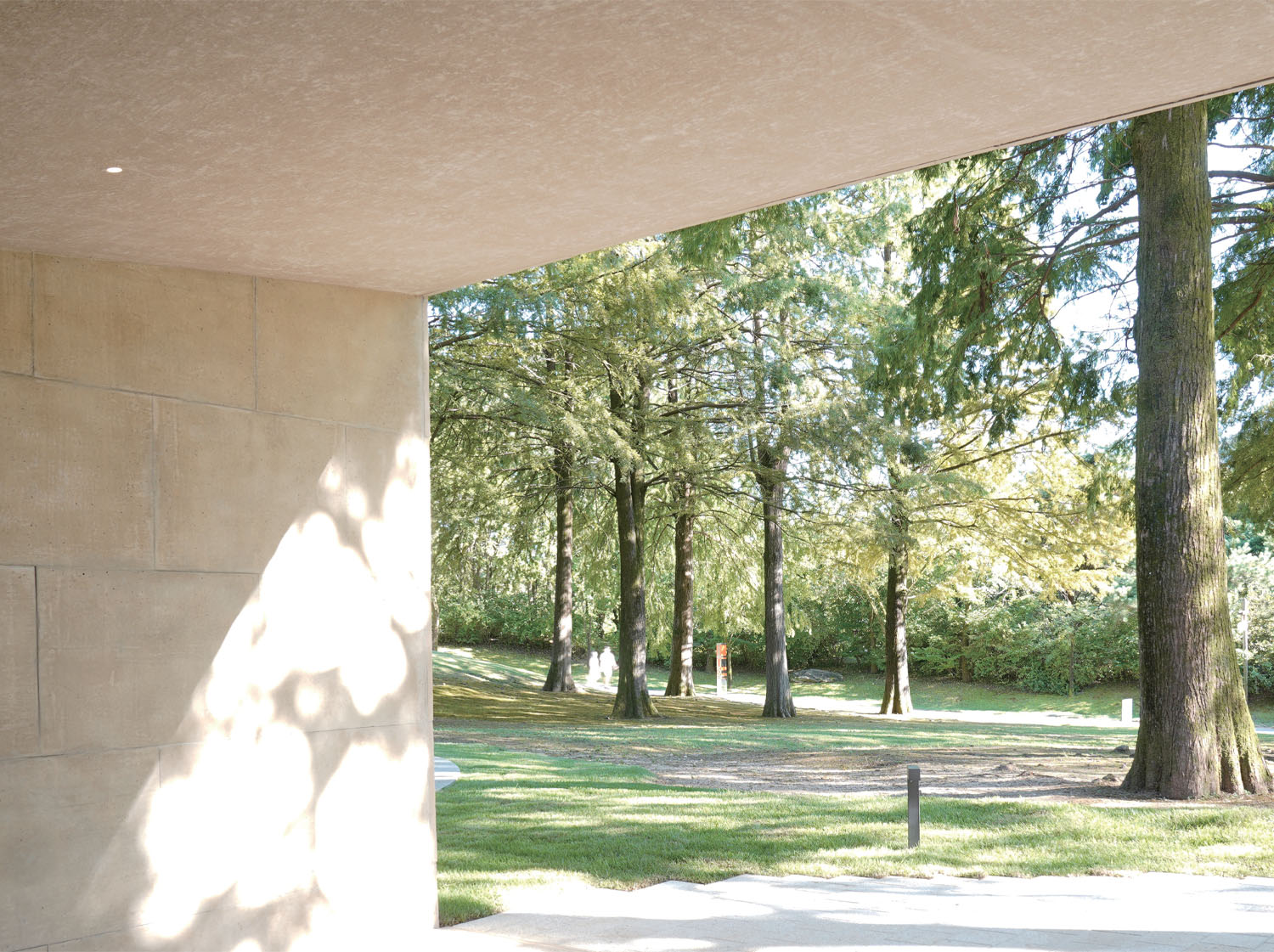
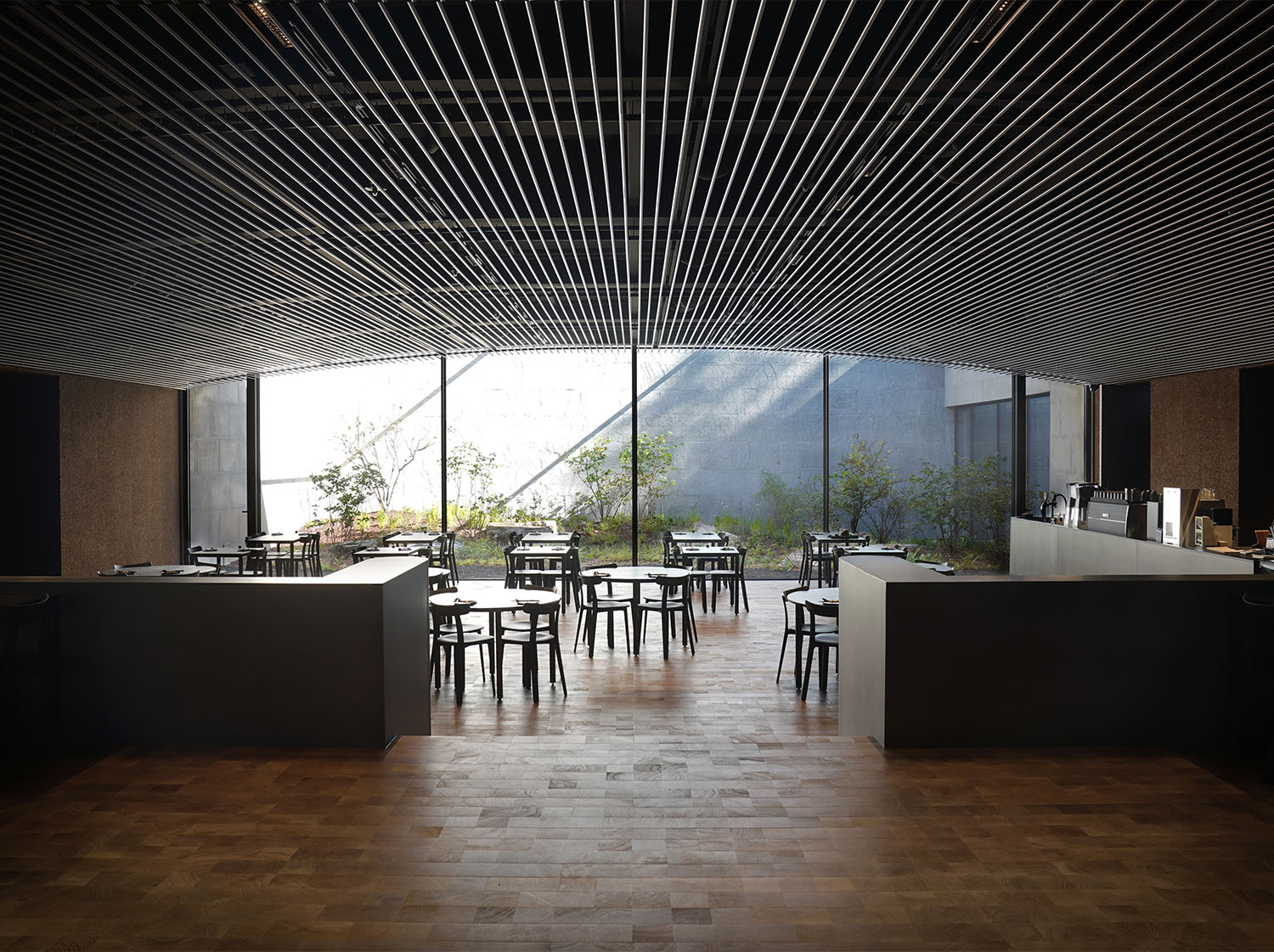
Without prior information, the destination would not have been easy to find. Beyond the neatly aligned bald cypress grove, trees standing upright like spears against the sky on a gently sloping lawn, lay a low, reclining retaining wall. Upon discovering a small rectangular opening carved into the weathered surface of the wall and stepping towards it as if one were to pass into a new realm, I was welcomed by a perfectly concealed, cave-like space.
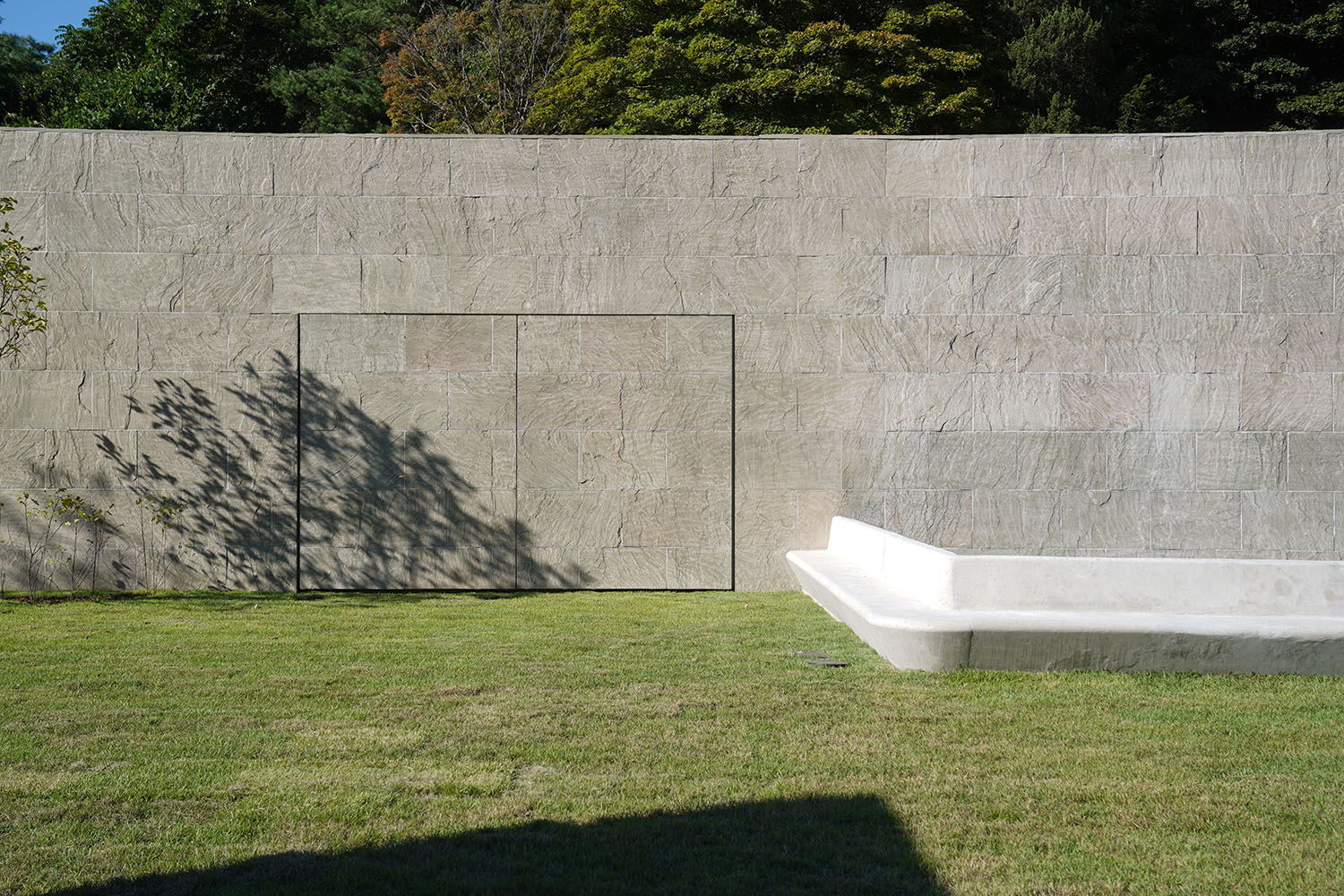
The wall structure of the upper garden (site of the old Bourdelle Garden). A sunken garden is located below, between the wall structure and the concrete bench.
Strong Landscape
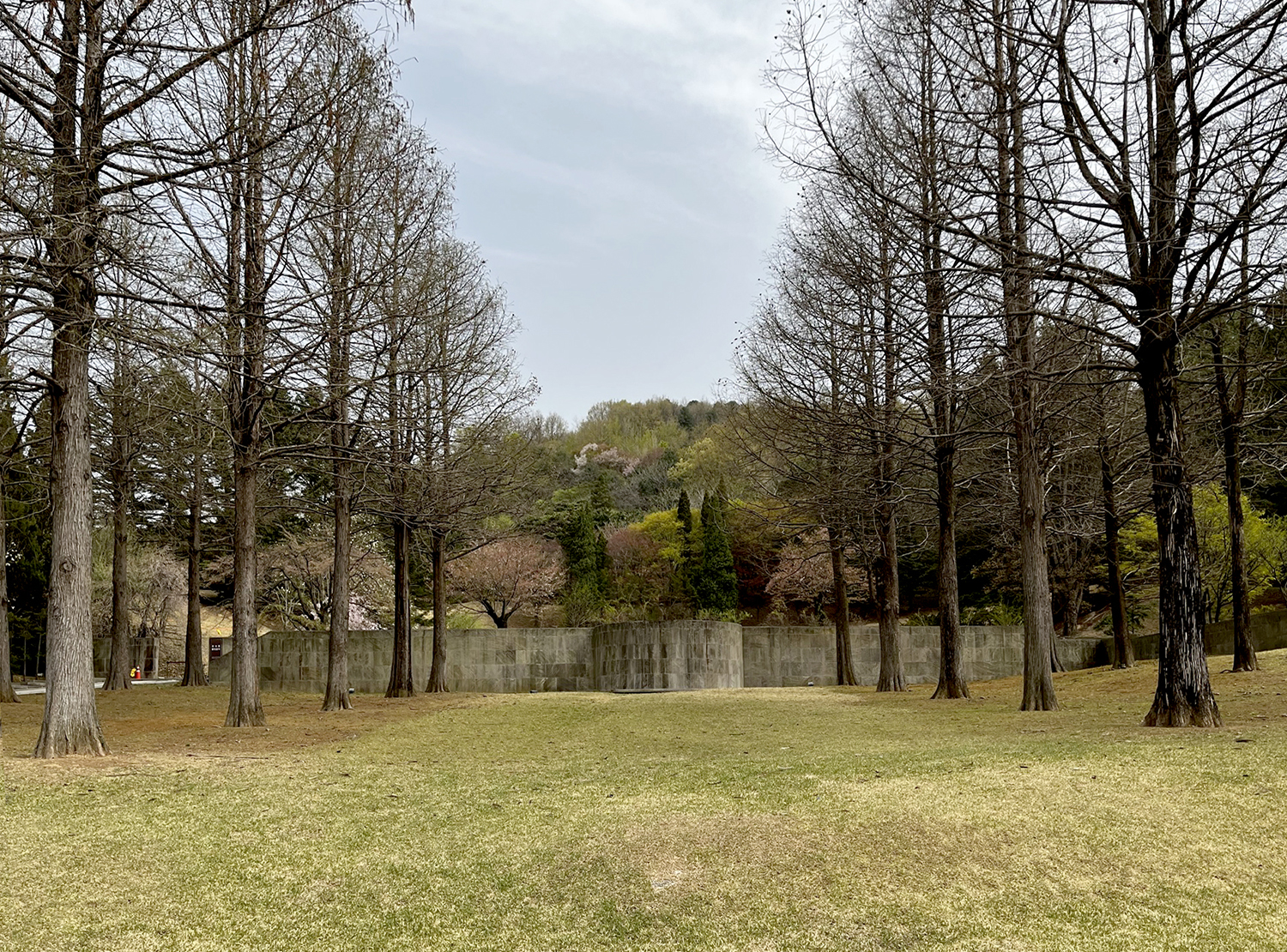
Site landscape immediately prior to the Hoam Cafe construction (2024)
The landscape of Heewon, created in 1997 around the Hoam Museum of Art, is also strong. Heewon is often regarded as a representative example of the attempts made to reinterpret the aesthetics of traditional Korean gardens. The concept most frequently cited to support this assessment is chagyeong, which means borrowed scenery. Jung Youngsun (Principal, Seo-Ahn Total Landscape Design & Consulting Group), the landscape architect who led the design of Heewon, herself recalled: ‘In order to bring the [surrounding] landscape into the garden as much as possible, I adjusted the height of the wall, platform, and stand so that it could be viewed from different perspectives.’ However, her design intention was not limited to a passive mode of experience that merely borrows scenery visible from specific viewpoints. Let us attend to Jung’s explanation: ‘[…] along the lakeshore, I made a circular path among the cherry blossom trees, and piled up a stand at the water’s edge that could be used to build a few stone bases in the distant future. In order to make the path loop around several times from the west to the museum’s front yard, the destination, and all the way to the mountain outside the rear garden wall, I repeatedly wove in doors, stairs, walls, stands, steps, and so on. In other words, even though the space between the lake, the mountain, and the art museum is only a short distance, it was designed with landforms to create deep folds in the terrain, allowing the landscape to unfold gradually step by step, and by doing so, after a fluid spatial experience. […] one was subtly made to lose their bearings, unable to easily pinpoint their exact whereabouts.’ ▼1 In this context, Lim Hansol interprets Heewon as a place where the crossing of boundaries between nature, architecture, and garden is realised through the establishment of relationships with viewing targets and the gradual unfolding of vision.▼2 (...)
_
1 Jung Youngsun, ‘Heewon’, Landscape Architecture Korea 201 (Jan. 2005), p. 134.
2 Lim Hansol, ‘Living Past, Reviving Tradition’, in Fifteen Ways of Reading Fifty Years of Korean Landscape Architecture, ed. Editorial Board of the Fifty Years of Korean Landscape Architecture, Hansup, 2022, pp. 77 – 78.