
A Point of Departure for the Architectural Imagination
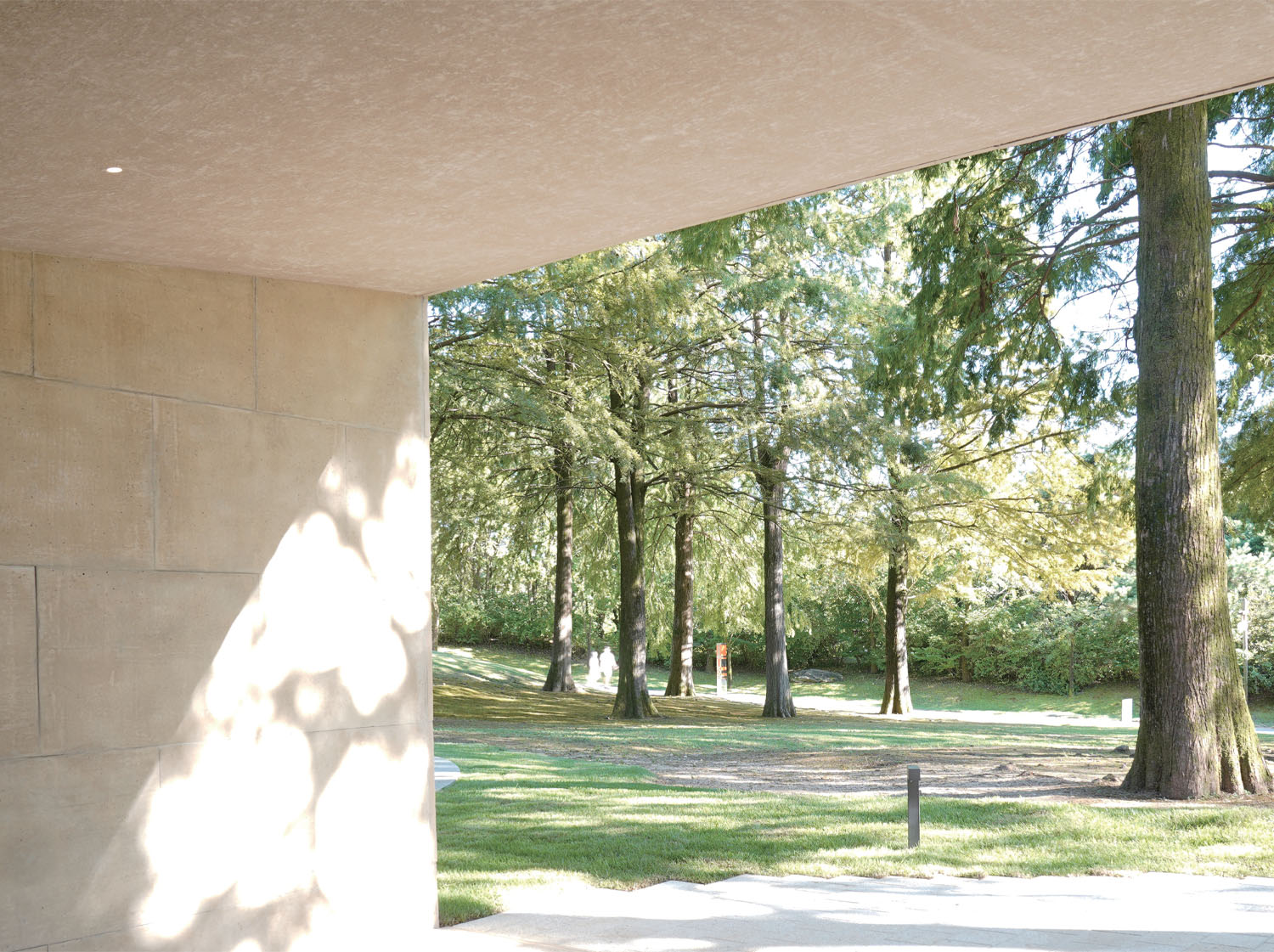
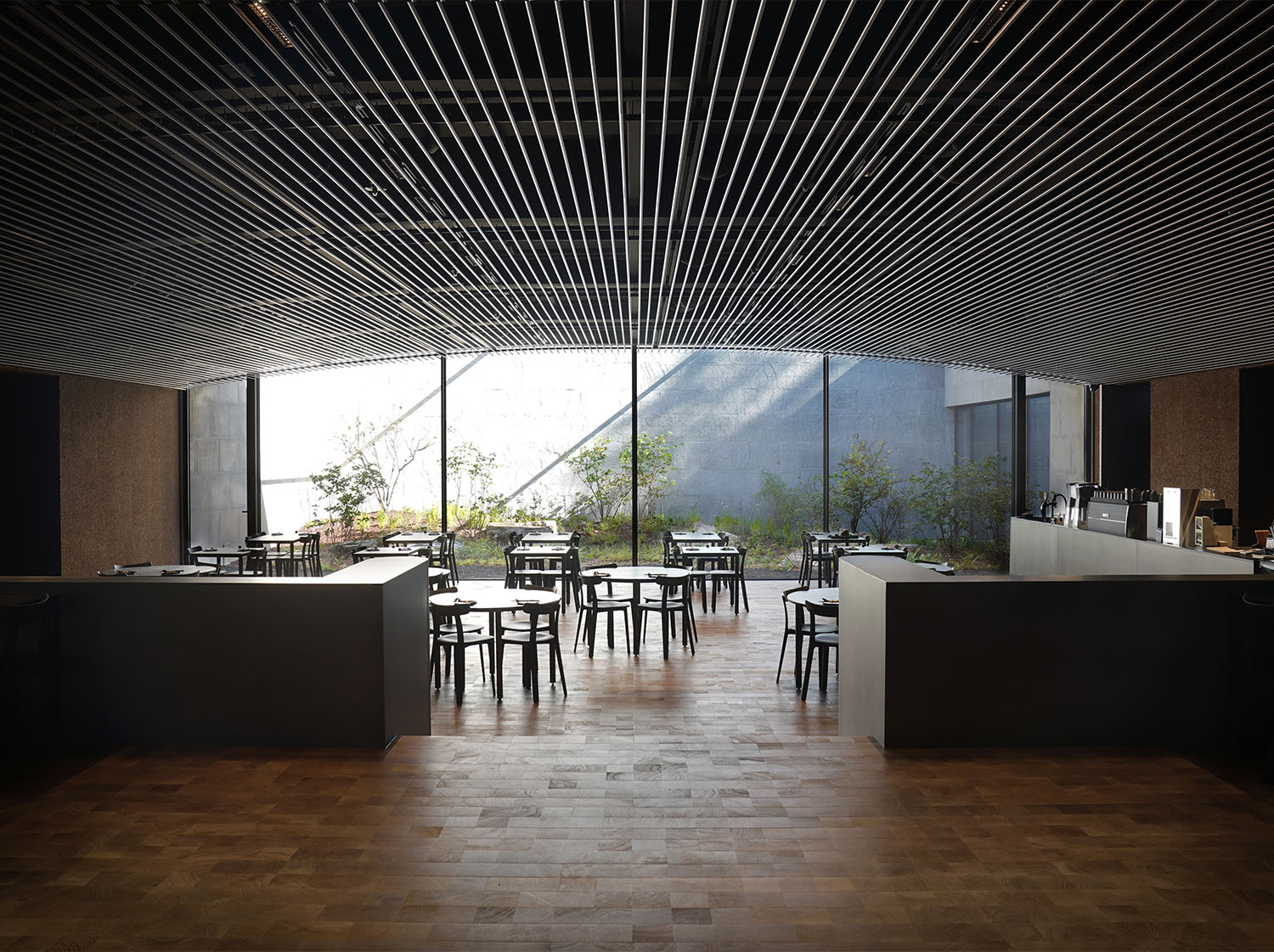
A few years ago, while serving on a jury evaluating the work of young architects, I had the opportunity to encounter several projects of KimNam Architects (hereinafter KimNam) including their early works. Along with the three works presented as part of this FRAME, their projects have consistently appeared fresh and refined. At the same time, they broach the fundamental questions of architecture. References to other works or indications of influence by particular figures are rarely discernible. Furthermore, a tendency to repeat their own design language is equally difficult to find.
If consistency served as a key criterion for evaluating architects of earlier generations who worked primarily by hand, an obsession with a fixed vocabulary for future generations – armed with numerous new design media – may instead reveal the limits of imagination. KimNam’s work rejects such fixed vocabularies, and in the process of seeking solutions that correspond precisely to the questions demanded by each project, it acquires its architectural force.
In their own words, design is described as the act of faithfully considering even the most minor demands of building users and carrying them through to completion. While these demands may appear trivial or small at first glance, they constitute a methodology capable of expanding into large-scale architectural thinking. Architectural outcomes take concrete form at the point where users’ needs and architects’ reflections resonate. Rather than ‘copying and pasting’ previous achievements in response to the requirements of a new project, KimNam always begin again from the point of departure.
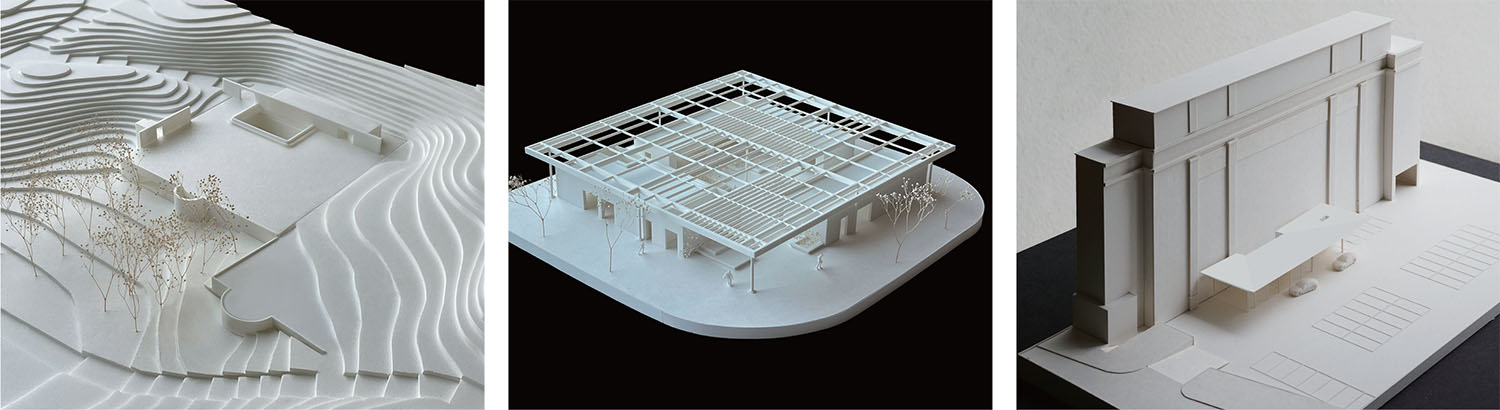
The models of Hoam Cafe (left), Incheon International Airport Cargo Lounge (middle), and Hyundai Department Store Valet Lounge (right)
It is precisely this non-repetitive experimental attitude that causes their architecture to be perceived anew each time. In general practice, minor user requirements tend to be resolved through interior design solutions, but in KimNam’s work they are often translated into fundamental architectural or structural questions, becoming the point of departure for transformations that extend all the way to the finishes. If the process of architectural production is divided into ‘erecting’ and ‘enclosing’, KimNam expands seemingly minor issues of enclosure into central issues of erection, thereby reconstructing architectural form itself.
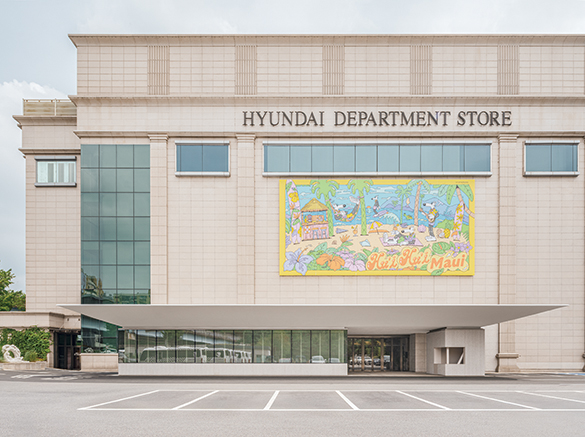
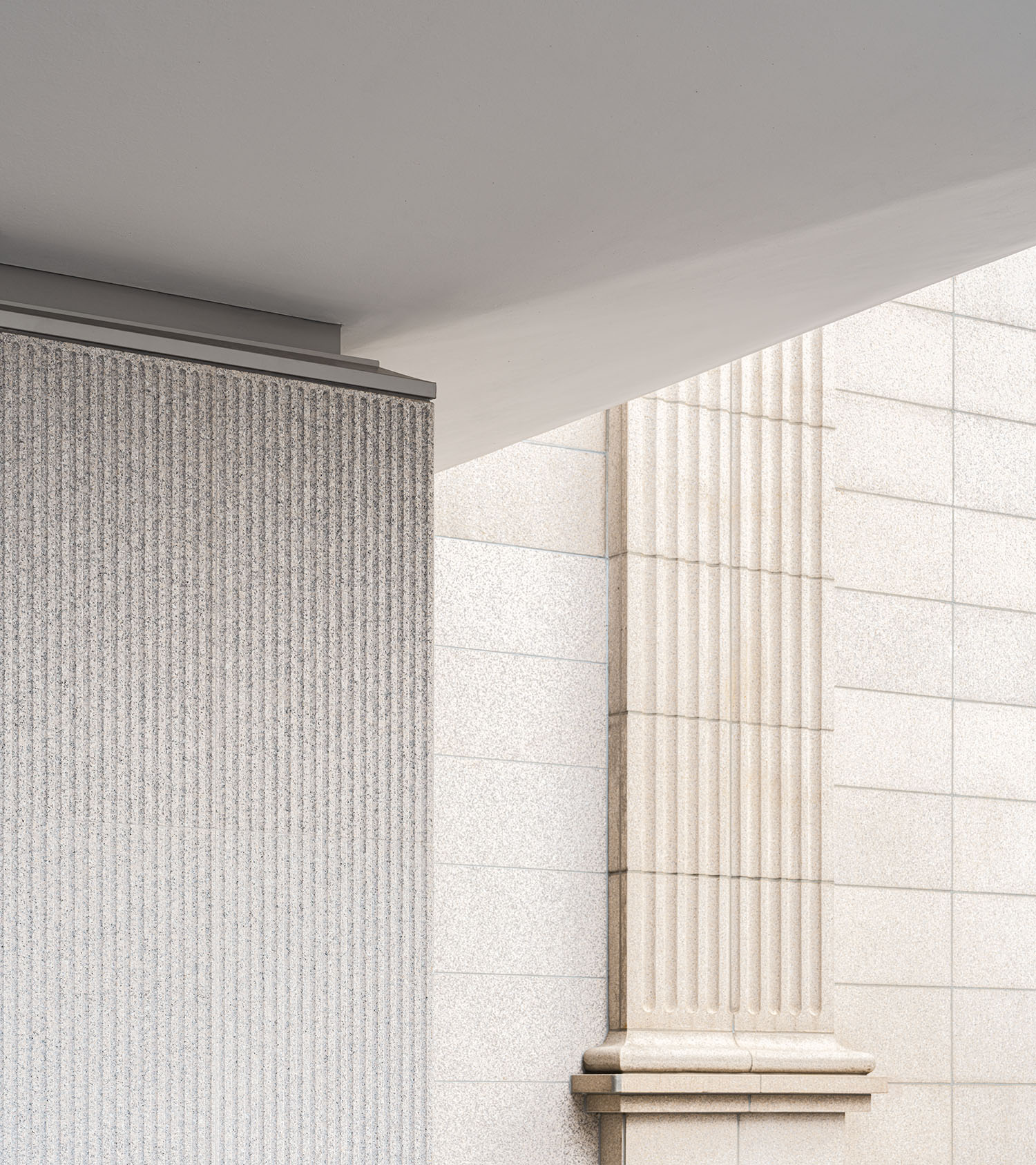
The core of the Hyundai Department Store Valet Lounge (2025) lies in the realisation of a sleek canopy structure. This was KimNam’s interpretation of the client’s demand for a safe valet parking environment. Faithful to a structural logic and free of any added ornamentation, the canopy extends into the interior waiting space. The lightweight canopy and minimalist waiting space read as slight in contrast to the neoclassical façade, where structural force is rendered through relief. In fact, the exterior of department stores has historically evolved in response to commercial objectives. The original aluminum composite panel façade was remodeled into the current stone-clad exterior. Newly built department stores today increasingly reflect more trendy approaches by globally renowned architects. This façade, too, may change in the future, but KimNam’s intervention will retain its essential quality regardless of such transformations.
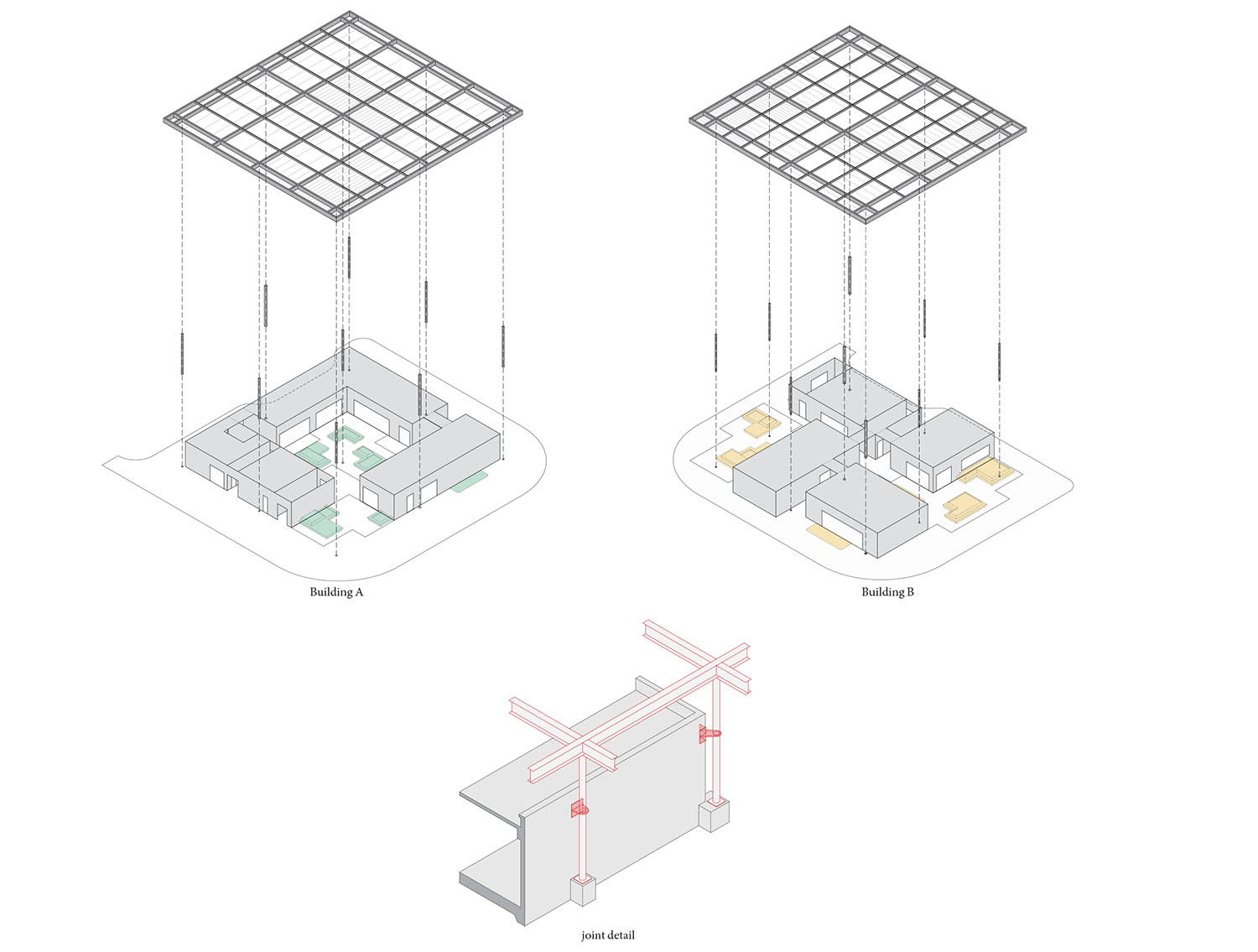
Diagrams of Incheon International Airport Cargo Lounge
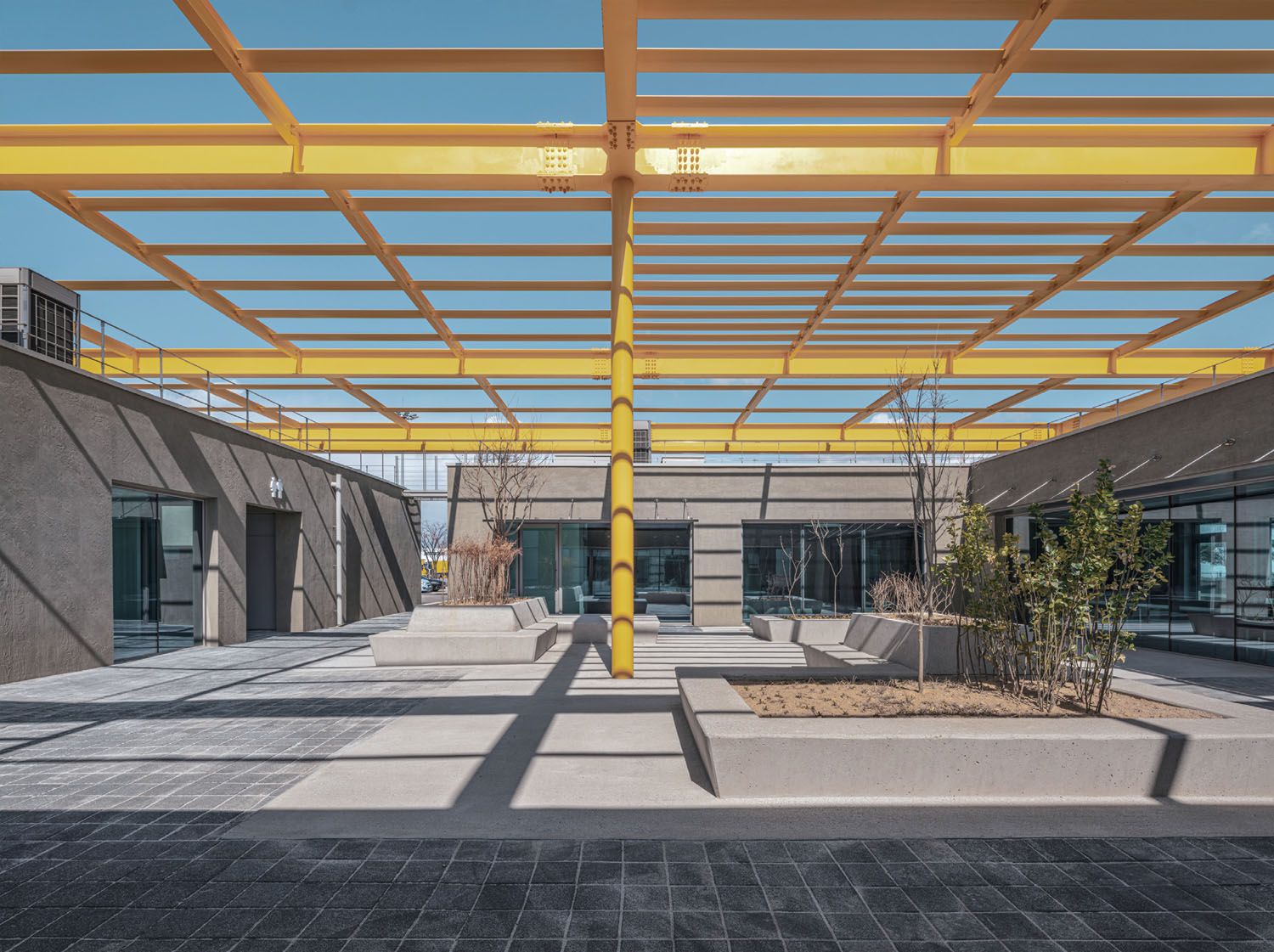
The Incheon International Airport Cargo Lounge (2025) is characterised by a steel roof structure painted in bold primary yellow and green-distinct from and unintegrated with the architectural enclosure. This coloration leaves an immediately fresh impression. The lounge is a thoroughly realist space where airport workers eat cup noodles or packed lunches and lie down briefly to rest. In a place where every element – from window placement to finish selection – is determined by economic judgment rather than aesthetic gesture, the vividly coloured steel structure is a kind of luxury.
In their competition proposal, KimNam defined the airport as a form of ‘urban planning’ that prioritises efficiency and function, and proposed their lounge to be a microcosm of the airport itself. The intensely coloured steel structure is not merely an element for this single lounge, but a condensed expression of an attitude toward the vast mechanical environment of the airport. Although the project is extremely small in relation to the scale of the airport, the oversized structure should be understood not as a stand-alone object but as part of a larger whole. From the perspective of the workers, the lounge is part of the workplace, and the steel structure was proposed as a means of asserting their presence within the expansive parking apron. While large projects are often treated as assemblages of small components, KimNam’s work operates in reverse. They position small projects within a comprehensive framework that encompasses the character and logic of the airport as a massive system. (...)
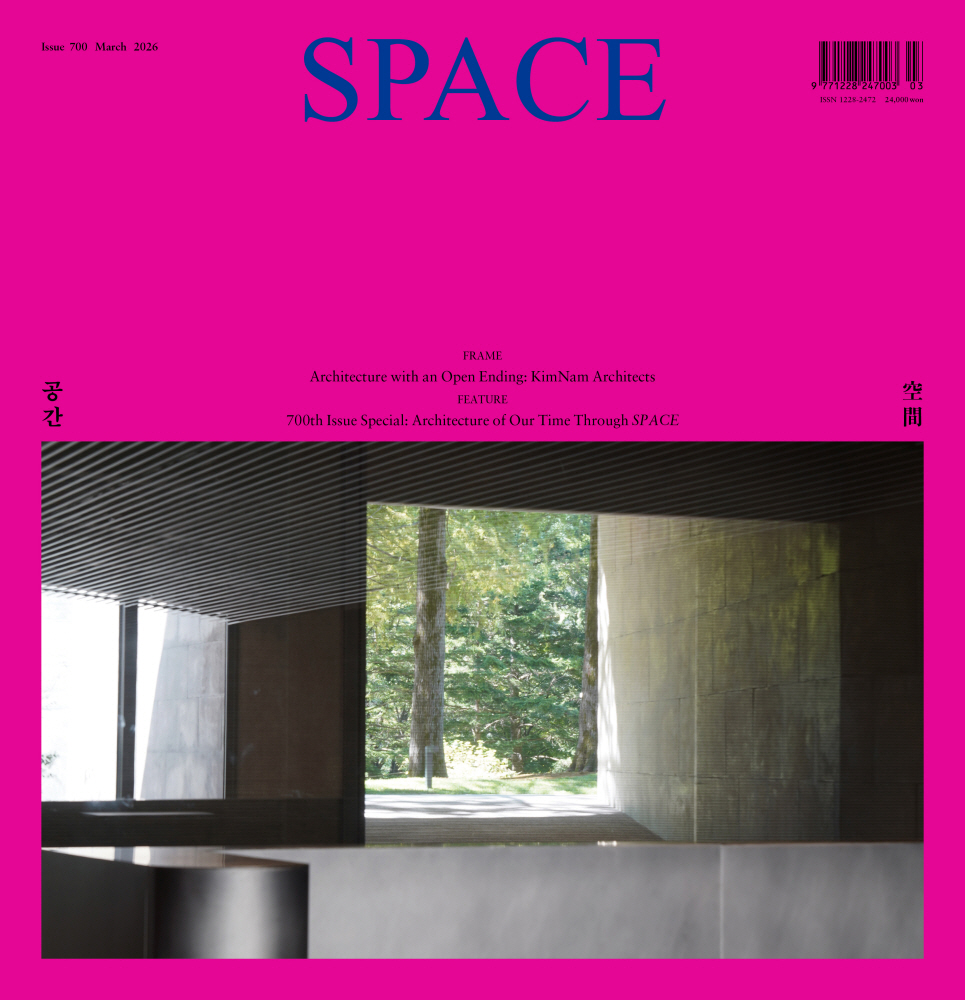
You can see more information on the SPACE No. March (2026).
Mihn Hyunjun
Mihn Hyunjun is currently the Principal of MPART Architects, and Professor at Department of Architecture, Hongik University. He graduated from the Department of Architecture and Architectural Engineering, Seoul National University and University of California, Berkeley College of Environmental Design. He previously worked at SOM, San Francisco. His major works include the National Museum of Modern and Contemporary Art, Seoul, Herald Square, Concino Concrete, and DMZ Uni Maru Museum.
9