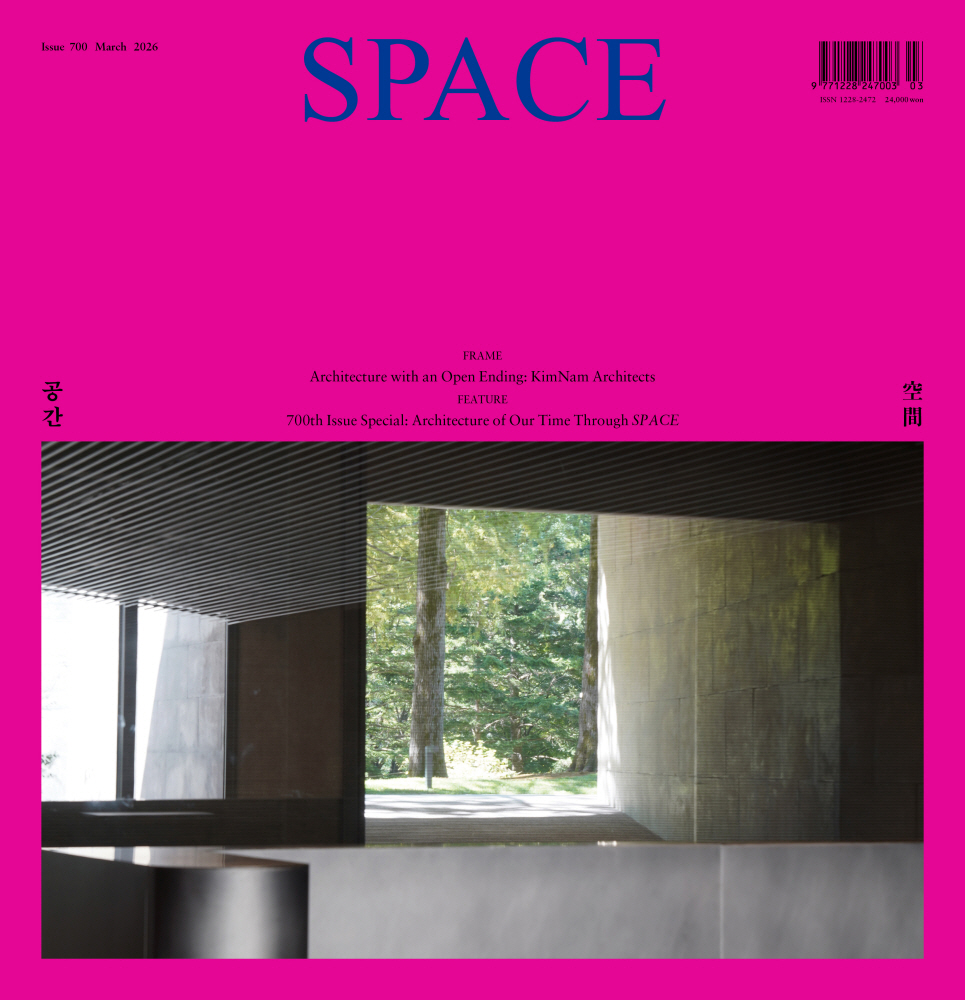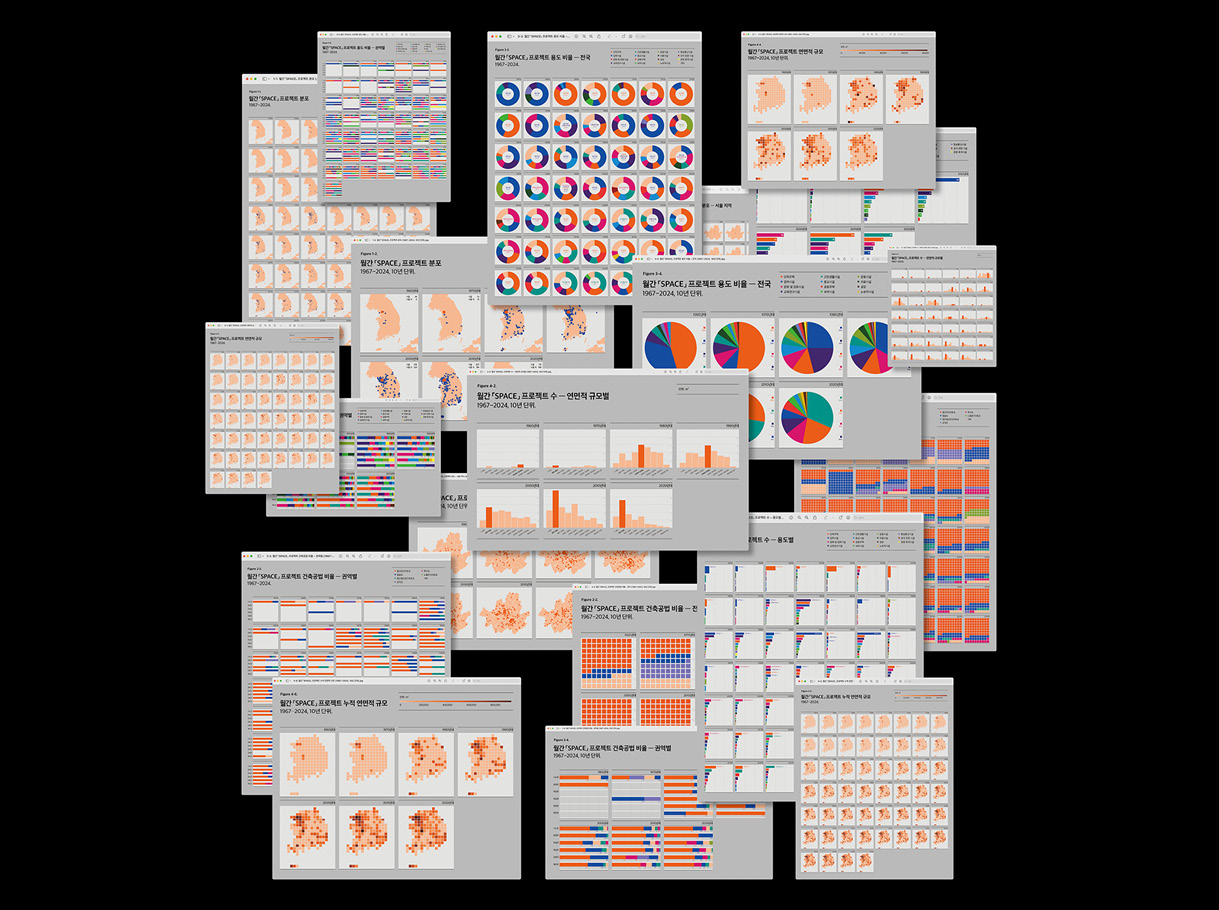

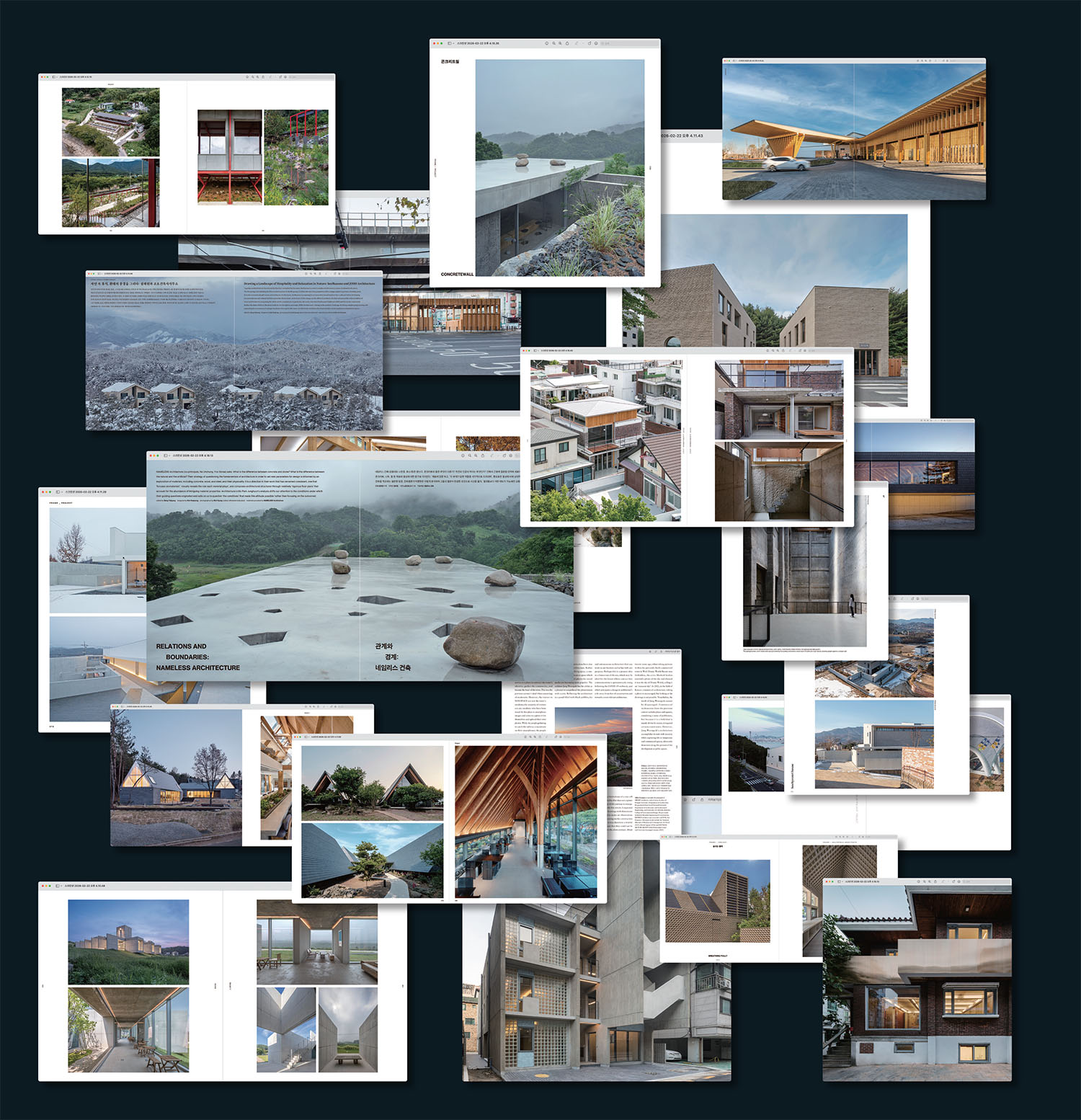
In recent years, I have often been asked whether SPACE has adopted an editorial focus trained on primarily covering small-scale buildings. However, the scope of a building is not a criterion in our selection of works. Recalling that the projects published in the past 700 volumes of SPACE have always engaged in dialogue with the architectural community of their time, the aforementioned stance is well founded. This article traces and examines the content that has been identified and discussed in SPACE over the past 7 to 8 years. It recounts the narratives and questions that remain relevant today.
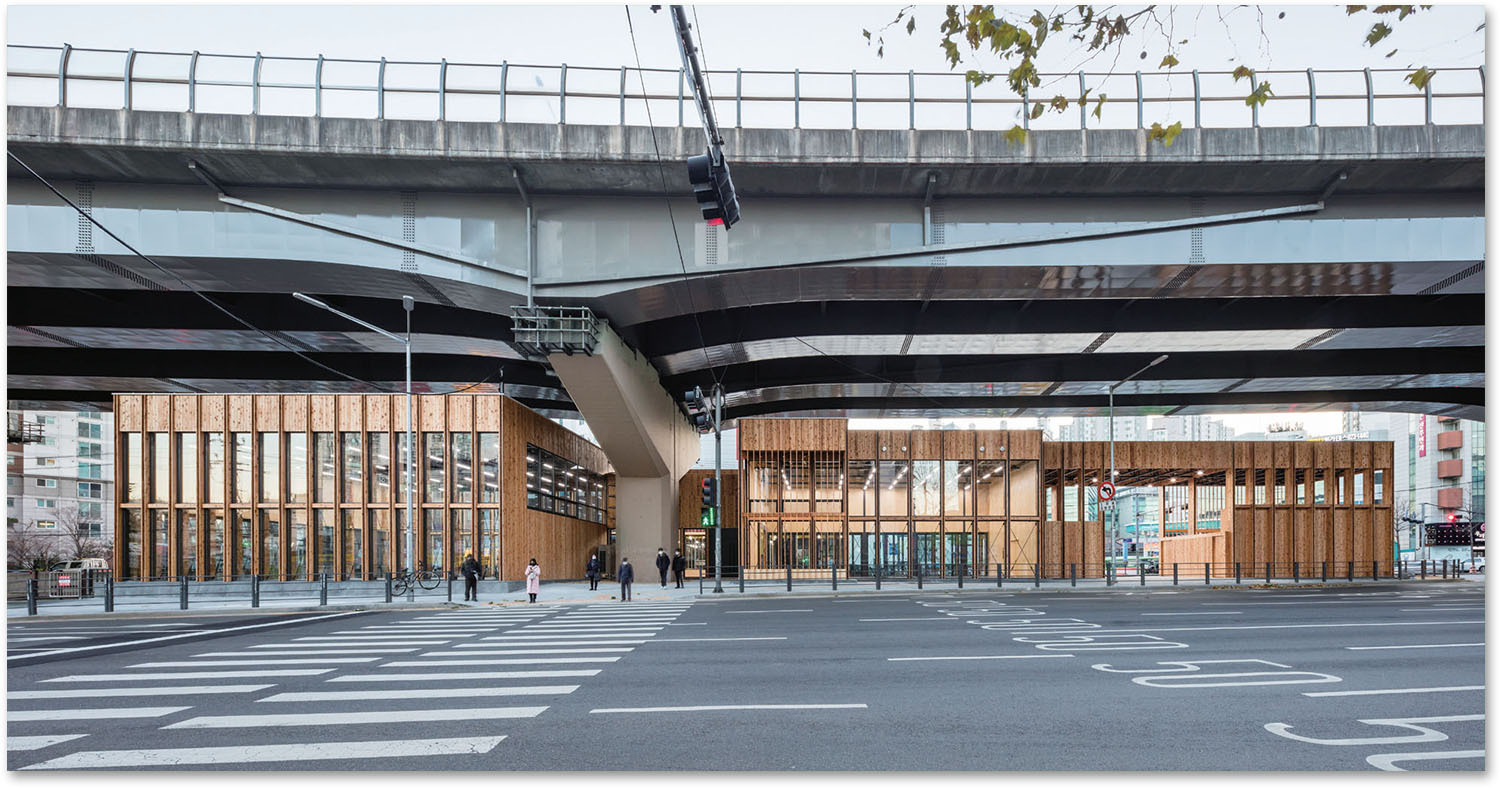
●1 PROJECT ‘Jong-Am Square – Simplex Architecture’, SPACE 644 (July 2021), pp. 46 – 55.
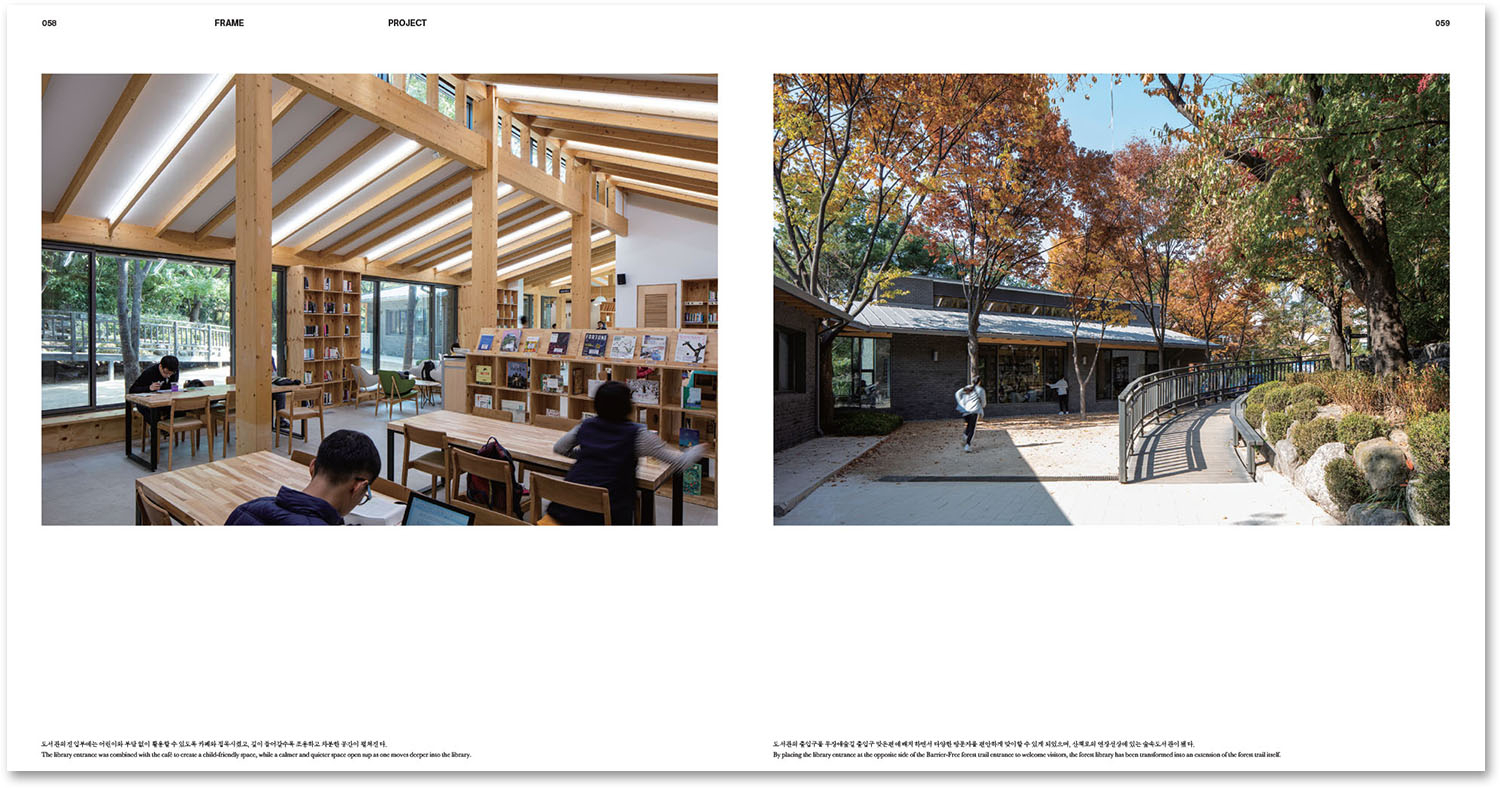
●2 FRAME ‘Architecture as a Background of Daily Life: Leeon Architects’, SPACE 628 (Mar. 2020), pp. 36 – 71.
The Increase in Ordinary Public Architecture
A significant number of the small-scale public buildings published in SPACE appeared alongside a series of changes prompted by the enactment of the Building Service Industry Promotion Act in 2013. Forms and spaces that departed from more conventional approaches appeared in ordinary public facilities, such as residents’ autonomous centres, facilities for the elderly and children, and safety centres. Furthermore, combinations of sites and programmes that were previously considered to be unusual or extraordinary, such as creating public spaces beneath elevated structures●1 or building small libraries within parks●2, have become examples that enhance the dignity of urban spaces while attending closely to the lived experience of citizens.
During monthly peer review sessions in SPACE, where architects and critics examine submitted projects, it is often remarked upon that the level of completion of the submissions is exceptionally high within the conditions of public architecture▼1. This demonstrates the extreme difficulty of upholding a commitment to the core concepts proposed at the competition stage through to the final details of finish. Examples of public architecture that have received attention to date, regardless of building scope, tend to be the result of collaborative planning between the public and private sectors, as well as the exceptional efforts of multiple agents.●3 Despite scrupulous consideration of public architecture at every stage over the past decade, from planning to operation, and a shift in awareness regarding everyday environments, it remains questionable whether a reality in which a high level of completion that can only be secured through exceptional conditions and sacrificial efforts is healthy. Simultaneously, from a design point of view, it is hard not to notice that the forms and elements of successful examples are increasingly being repeated over time. Perhaps we have now reached a point where new criteria are needed to better observe how publicness and public relations function.
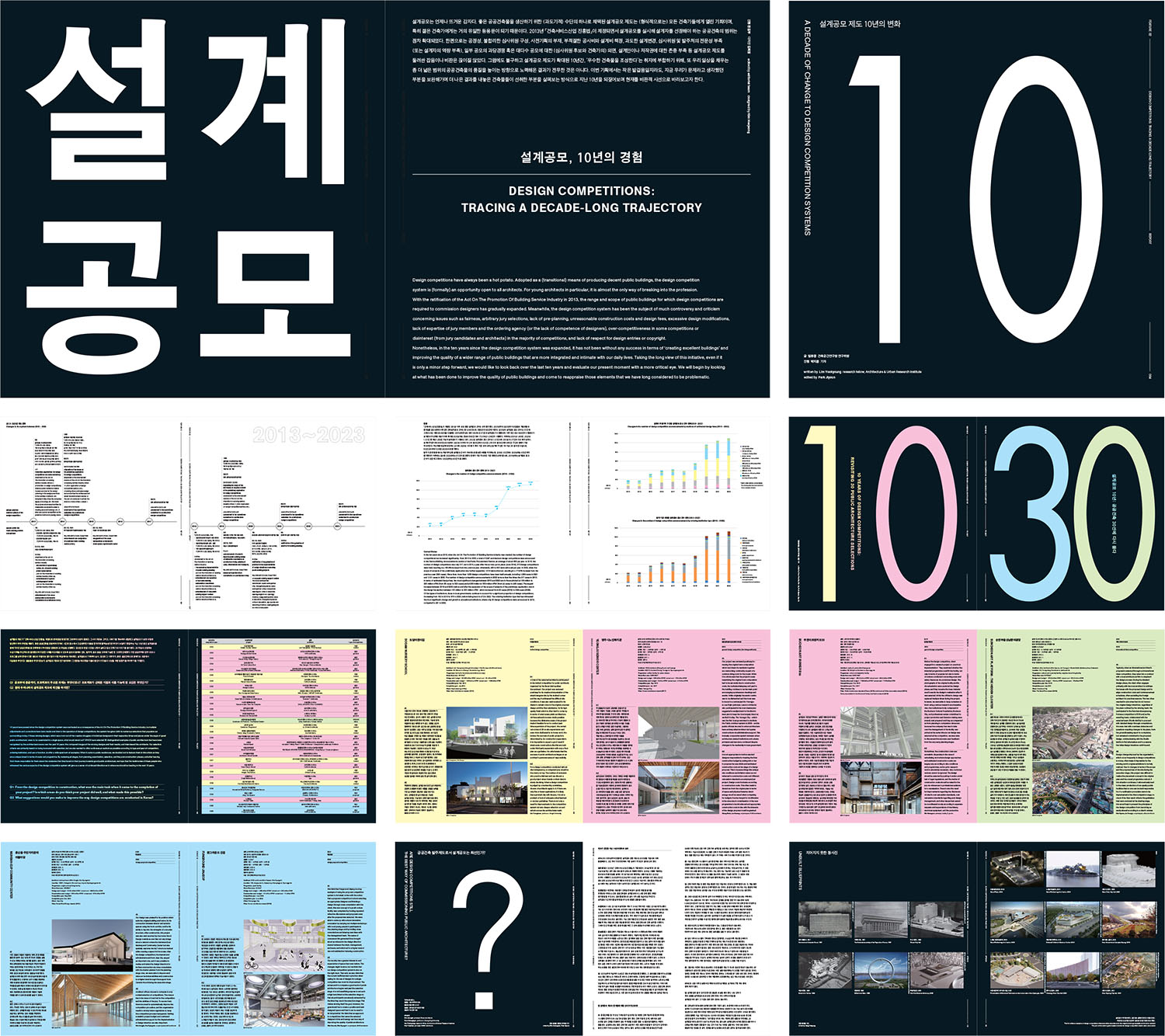
●3 FEATURE ‘Design Competitions: Tracing a Decade-long Trajectory’, SPACE 672 (Nov. 2023), pp. 28 – 135.
Opening Up a Mass Market for Architecture
Prolonged warfare, unstable domestic and international political and economic conditions, as well as other factors, have, in recent years, driven construction costs ever higher, resulting in frequent reports of many private projects being delayed or halted. As recently as 2 or 3 years ago, numerous café and stay projects were submitted to SPACE. At the height of that phenomenon, a FEATURE titled ‘The Café Phenomenon’●4 explored the increasingly diverse forms of café architecture emerging in Korea, ranging from a growing number of large-scale suburban cafés to urban cafés that serve as venues for experiences. From the perspective of clients, they represented a form of real estate investment, while for architects, café architecture emerged as an opportunity, offering higher construction costs and greater autonomy in architectural design compared to other programmes. Architects boldly experimented with form, structure, and materials in an attempt to create new spatial experiences. Large-scale cafés and stays spread nationwide, located not only in scenic areas, but more and more along expressways or in fields and paddies― becoming destinations in their own right for their architecture alone, even without special attractions. Regarding this phenomenon, Chun Euiyoung (Professor, Kyonggi University) made the following observation: ‘This has the potential to create a new K-architecture phenomenon that will revitalise declining neighbourhoods and give birth to a mass market of Korean architecture that is different from the luxury architecture market, which is aimed at chaebol (large and powerful groups of companies in Korea) and high-ranking government officials who have already experienced the Pritzker Prize winners’ countless buildings around the world.’▼2
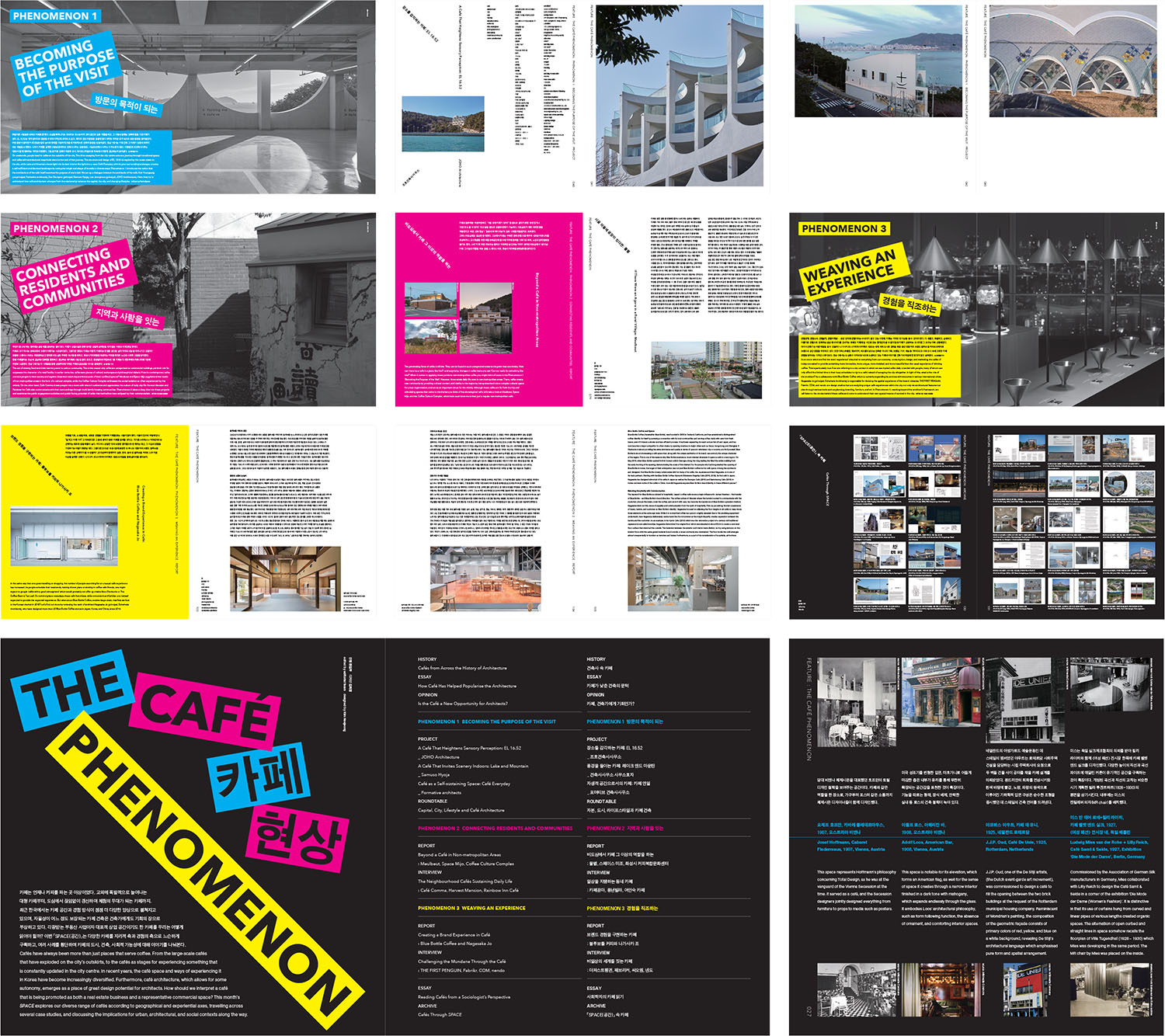
●4 FEATURE ‘The Café Phenomenon’, SPACE 666 (May 2023), pp. 24 – 131.
While cafés and stays granted architects considerable autonomy to pursue unconventional spatial experiences, neighbourhood living facilities in cities, which are also common profit-oriented real estate, present challenging spaces for architectural intervention when legal constraints and maximum returns are applied. Nevertheless, neighbourhood living facilities continue to occupy a significant portion of architects’ projects. When working on these neighbourhood living facilities, which are small-scale urban architecture, architects grapple with how the facilities will physically relate to the city and respond to contextual details such as street or plot forms.●5 We feel fatigued seeing similar solutions for neighbourhood living facilities, but, as we move beyond the era of large corporations, emerging companies specialising in small niche fields are moving away from occupying a single floor of large buildings and seeking out smaller buildings with cultural potential. As Lee Sungyong (Principal, SYL Architects) has remarked, having observed a recent trend among the young with their diverse cultures gradually transforming streetscapes, neighbourhood living facilities are indeed the primary type capable of reshaping the urban fabric and landscape of our cities.▼3
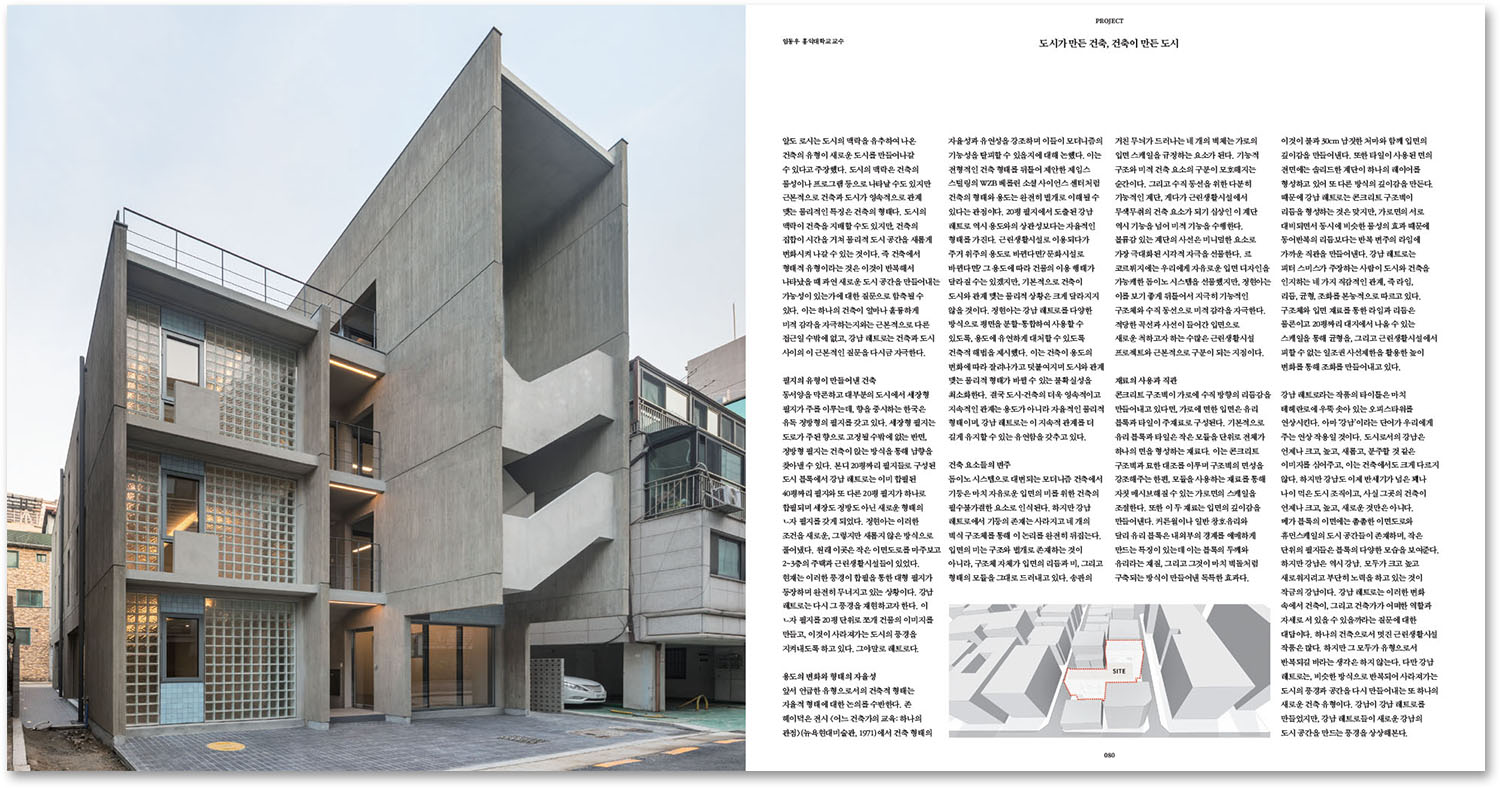
●5 PROJECT ‘Gangnam RETRO – DIA Architecture’, SPACE 647 (Oct. 2021), pp. 76 – 83.
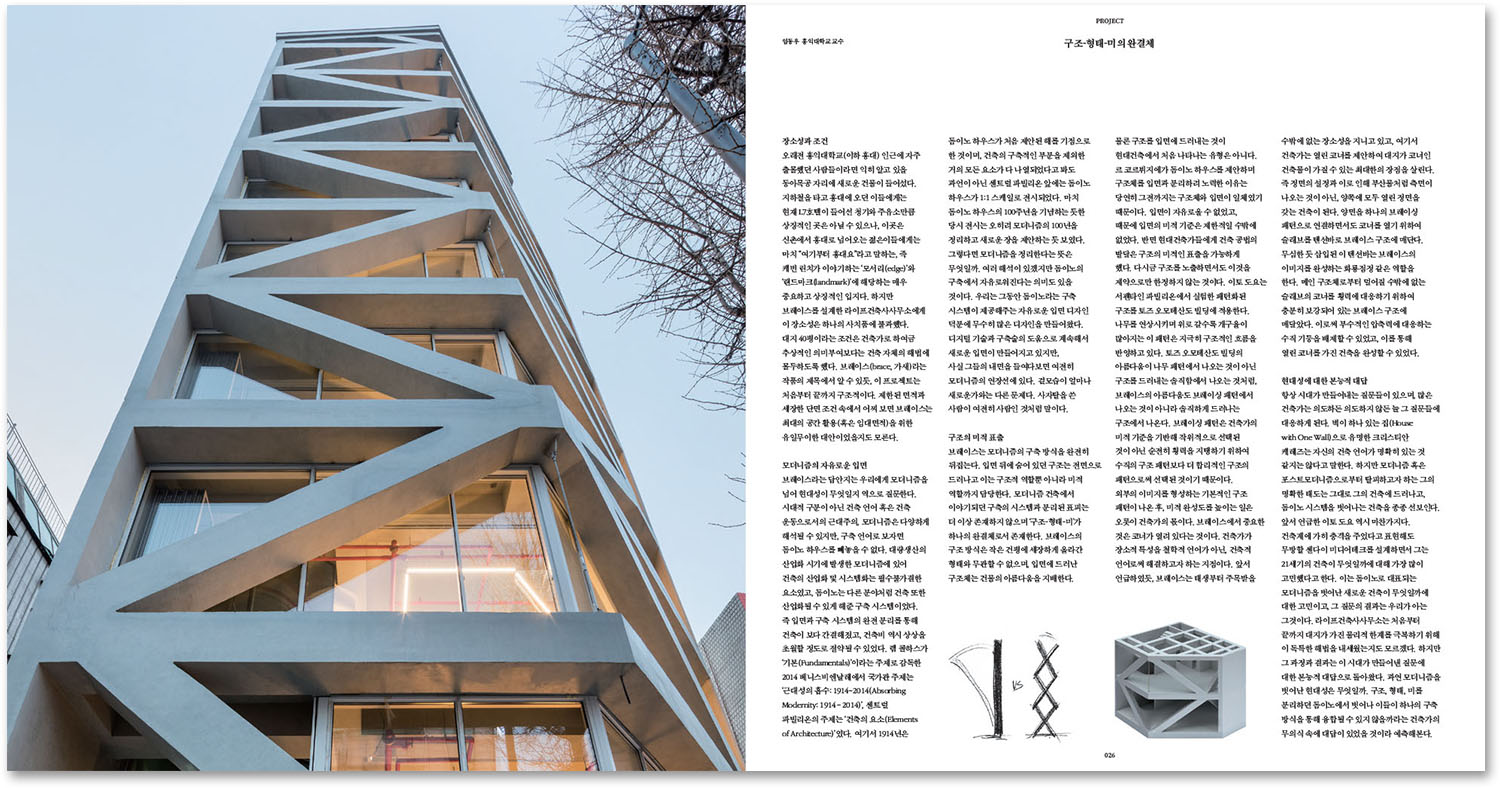
●5 PROJECT ‘BRACE – LIFE architects’, SPACE 651 (Feb. 2022), pp. 22 – 29.
The Rise of Timber Structures
Since the 2010s, with the aim of reducing the burden on theenvironment, the global trend of using timber for medium-to-large-scale architecture has spread worldwide through international cooperation,▼4 whereas a somewhat different pattern can be observed domestically. In Korea, where the industrial base for timber as a structural material is weak, large-scale timber structures have only been partially feasible in private, high-end buildings, such as resorts●6, where they have been used to create symbolic scenes through dynamic forms and to express a warm and welcoming sentiment.
A small but persistent group of architects experimenting with timber structures can be divided into several categories based on their approach. Some, like Cho Junggoo (Principal, guga urban architecture), attempt to design hybrid structures based on the urban hanok. Kim Jaekyung (Professor, Hanyang University) is a rare example of an architect who reinterprets traditional timber structures using engineered timber and digital fabrication. Another trend is the increasing number of examples of young architects combining heavy or lightweight timber structures in small-scale architecture such as public buildings, cafés, stays, and houses.●7 It is true that small-scale timber structures lack mature design and construction techniques within our architectural field. However, timber’s relative accessibility compared to other materials enables many young architects to engage with it physically on site, thereby creating diversity within our predominantly reinforced concrete architectural field. Meanwhile, Cho Namho (Principal, Soltozibin Architects), who has been researching construction methods for timber structures and their universalisation since the late 1990s, emphasises that, ‘[r]ather than relegating climate issues to instrumental methods such as reducing our energy or carbon emissions’, efforts are needed to restructure the production methods of architecture and make them possible to ‘be tooled towards elevating their importance to the centre of architectural discourse’.▼5●8 In November 2021, while the pandemic was still at its height, SPACE published a special feature entitled ‘Questions for Architecture in a Time of Climate Crisis’, which introduced urgent points of consideration drawn from architecture’s entire life cycle, from planning to demolition, alongside significant overseas initiatives.▼6 This question remains pertinent and now awaits meaningful domestic initiatives.
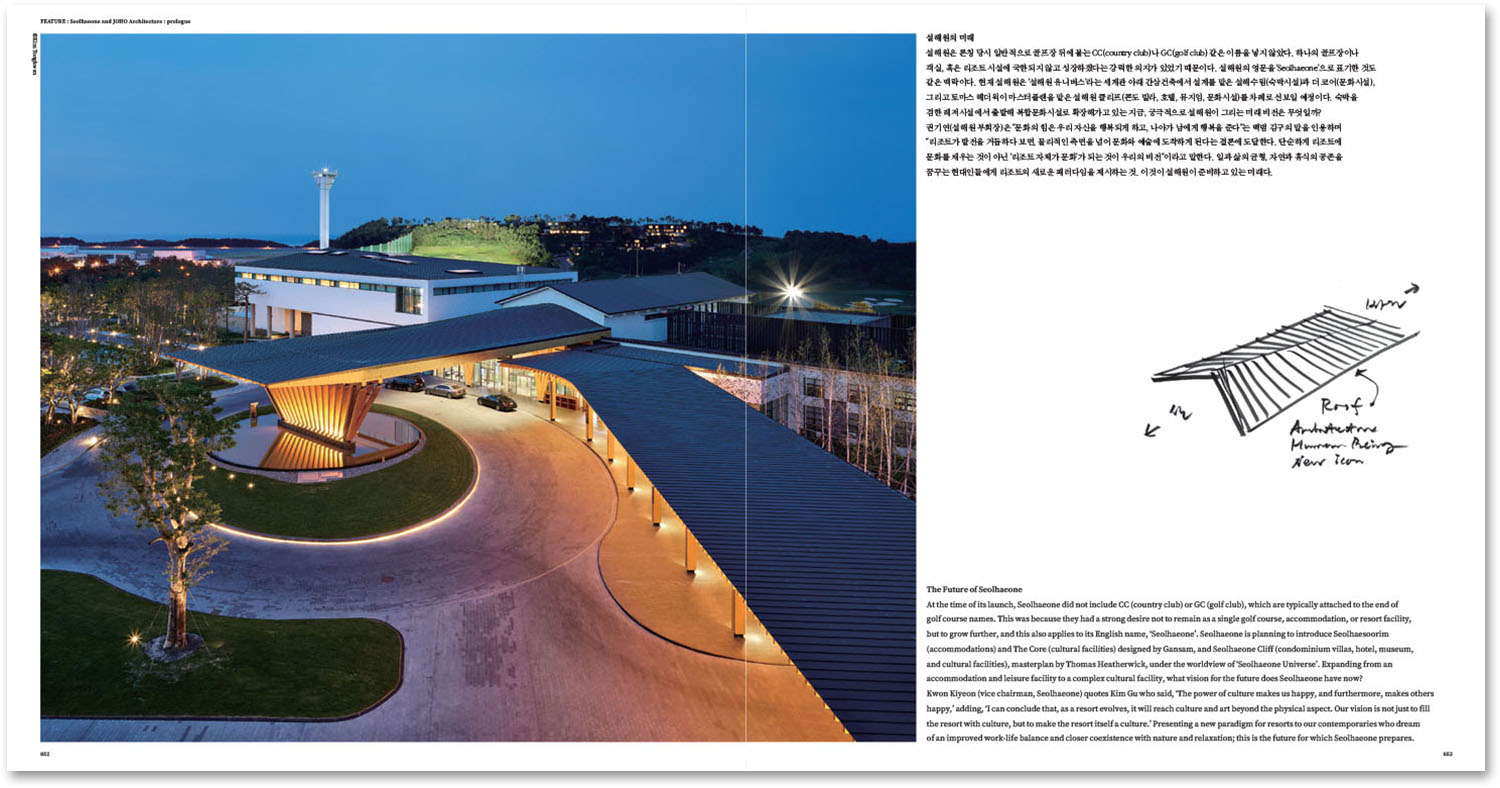
●6 FEATURE ‘Drawing a Landscape of Hospitality and Relaxation in Nature: Seolhaeone and JOHO Architecture’, SPACE 681 (Aug. 2024), pp. 46 – 93.
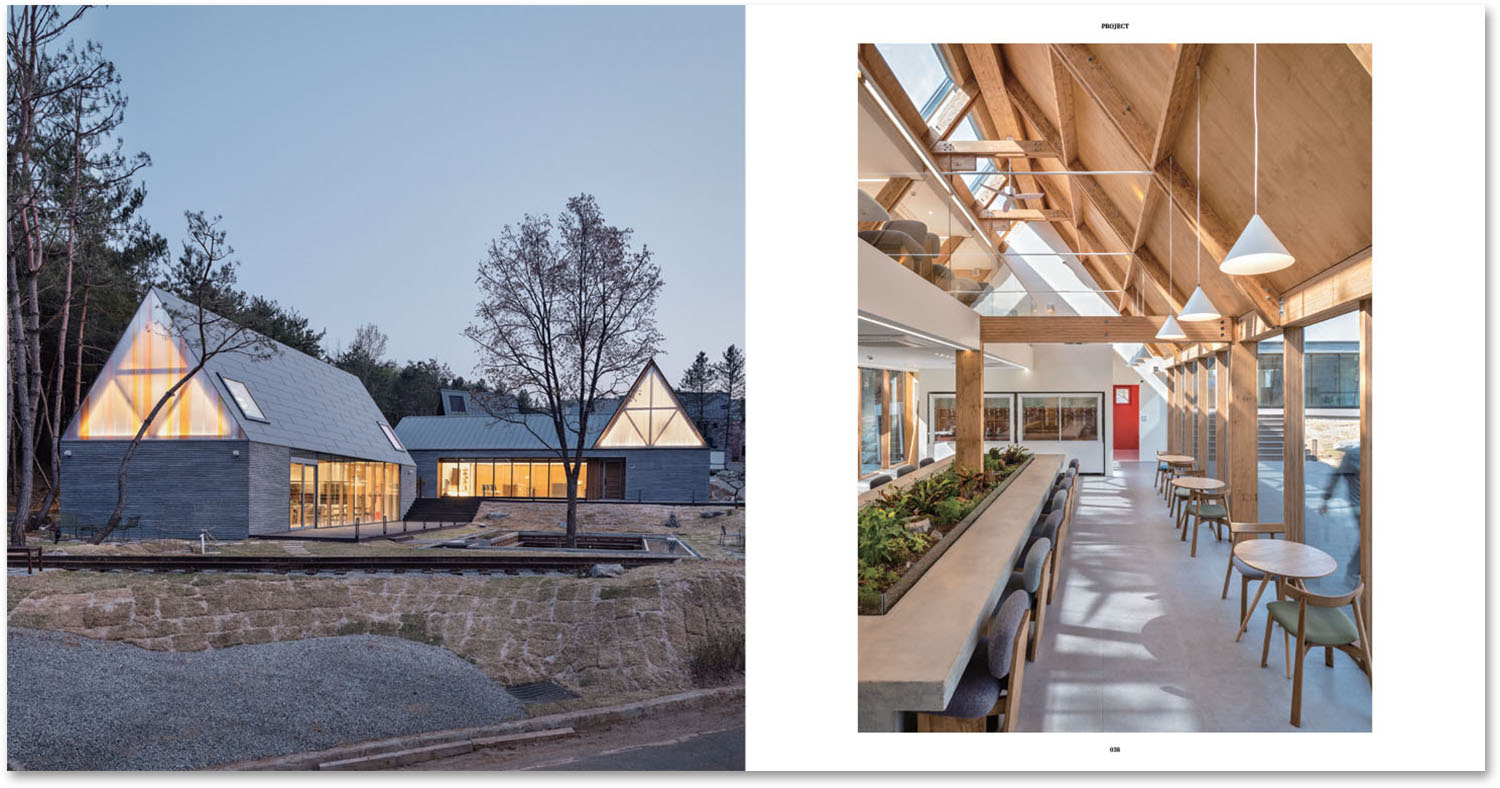
●7 PROJECT ‘Forest Edge – Joongwon Architects’, SPACE 660 (Nov. 2022), pp. 36 – 45.
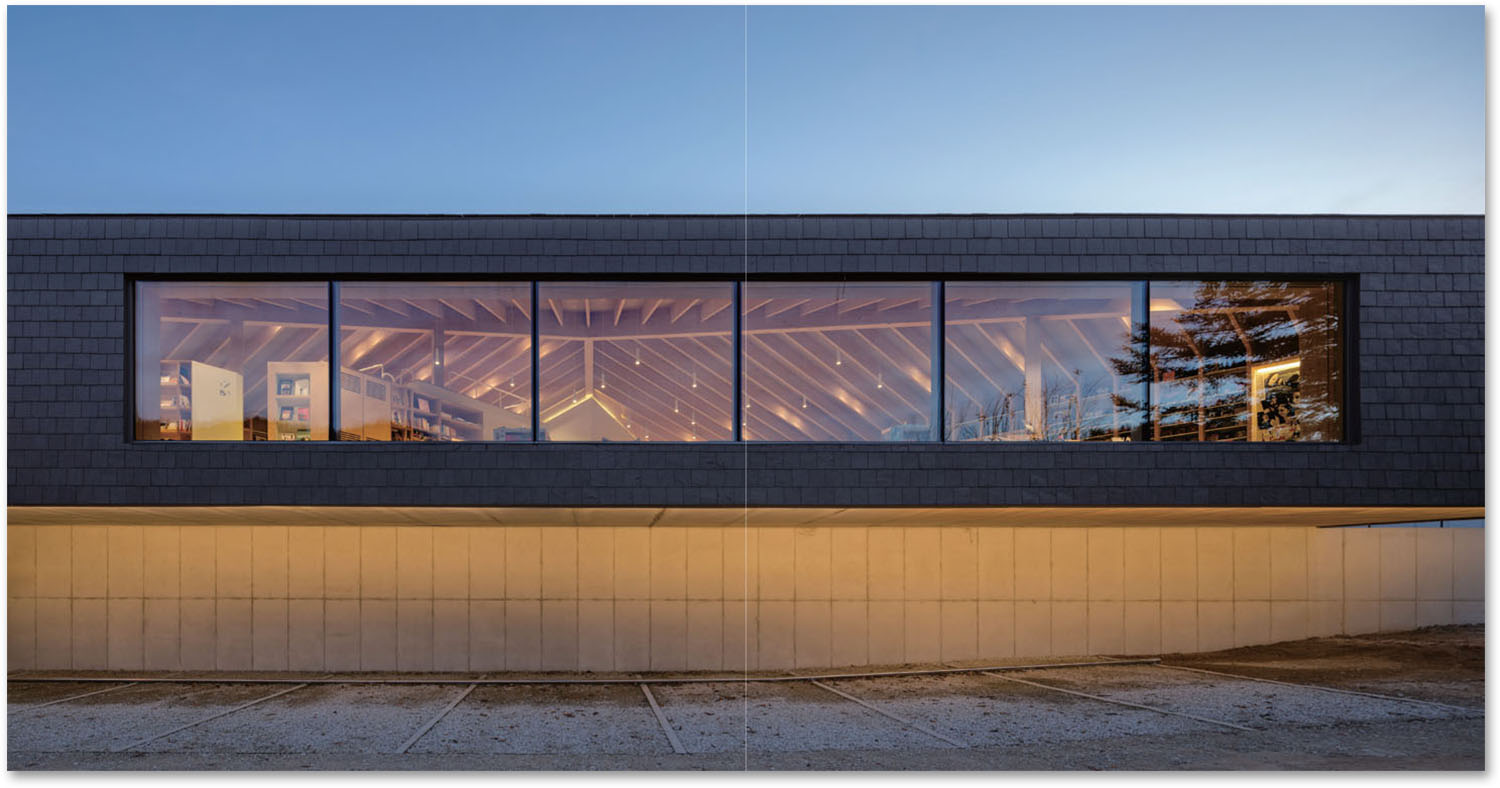
●7 PROJECT ‘Second Chance Library – ODDs&ENDs architects’, SPACE 677 (Apr. 2024), pp. 22 – 31.
Emphasis on Materials, Physical Properties, and Details
A notable trend in recent Korean architecture is the emphasis placed on physical properties and attention to detail. While delving into what can be made from concrete, a material that has been considered synonymous with modern architecture since the 20th century, brick has made a comeback after waning in popularity in the 1990s.▼7 Restrained concrete boxes are designed through ‘rough improvisation’ akin to ‘maksabal’,▼8 and the role of each member of the framework is visually revealed, prompting the question of what distinguishes concrete from stone.●9 Not only that, but juxtaposing the physical properties of different types of concrete within a single building is a realistic strategy available to architects within constrained budgets.▼9
Furthermore, bricks, as a modularised building material, are used as a means to create variation in building elevation and increased light through diverse laying techniques. Bricks that differ in proportion, size, colour, and texture are sometimes combined, and construction methods that differ from the traditional wet-laying technique using mortar also explore new material possibilities, while also imparting a handcrafted character.▼10 Commonly used as a universal finishing material, bricks are also often chosen to embody the community’s memory within the detailed context of the locality in which the building is situated.
Architectural Critic Park Junghyun interprets this ‘shift towards materials and matter’ as a response to recent humanistic discourse focusing on scope and matter itself, as well as the climate crisis.▼11 Within the trend of pursuing minimalist architecture, which focuses on the physical properties of materials, the influence of architectural education at ETH Zurich in Switzerland – where architecture is revealed through structures and matter themselves – can also be detected.▼12 This trend can be interpreted as a process of achieving greater completeness within Korea’s reality, where knowledge and technical systems concerning materials, structures, and construction have not yet been sufficiently accumulated. Simultaneously and conversely, it can also be interpreted as a sign of limitation, prompting a re-examination of how far its potential can be permitted.
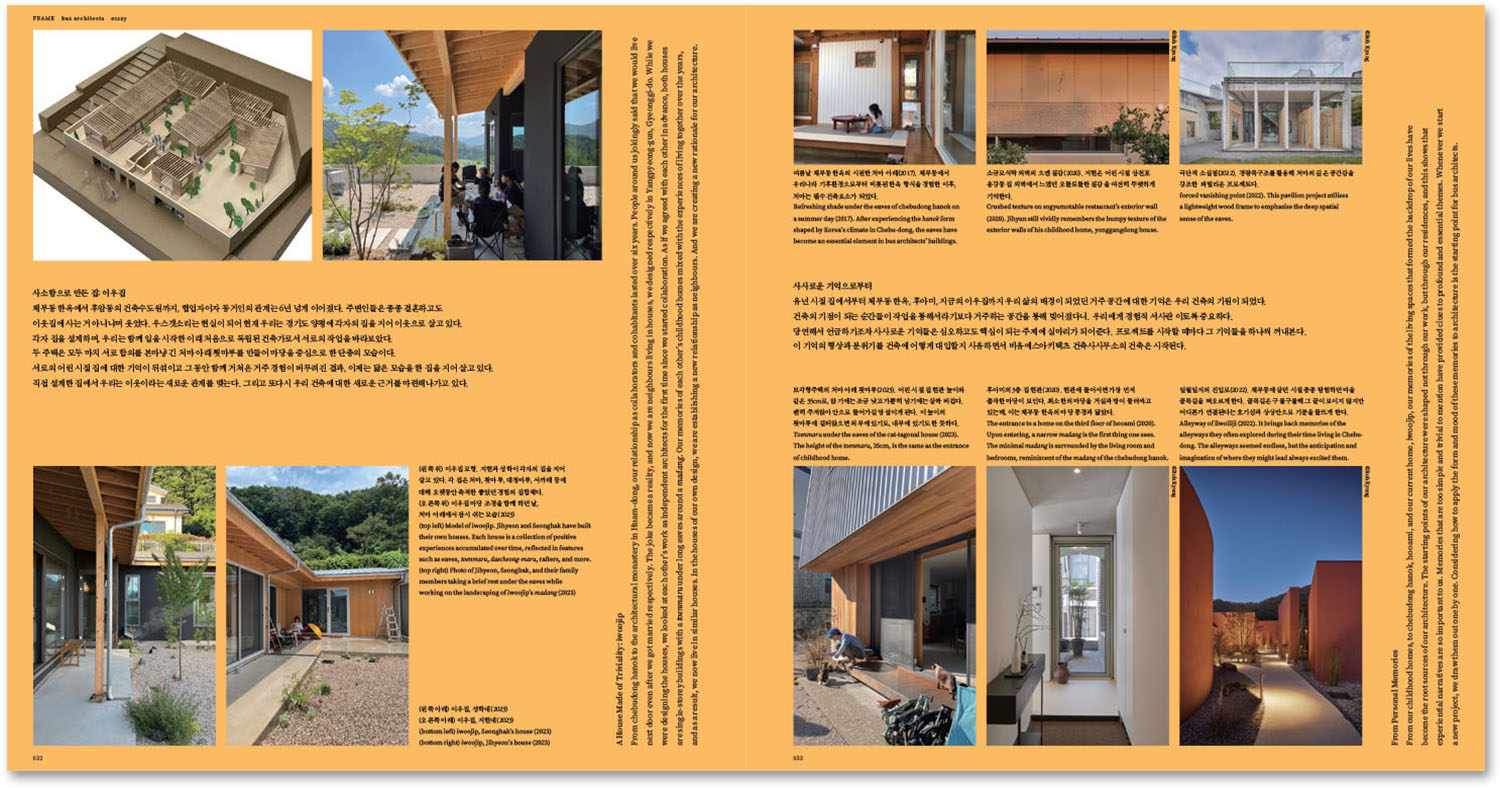
●7 FRAME ‘Everyday Triviality: bus architects’, SPACE 682 (Sep. 2024), pp. 24 – 67.
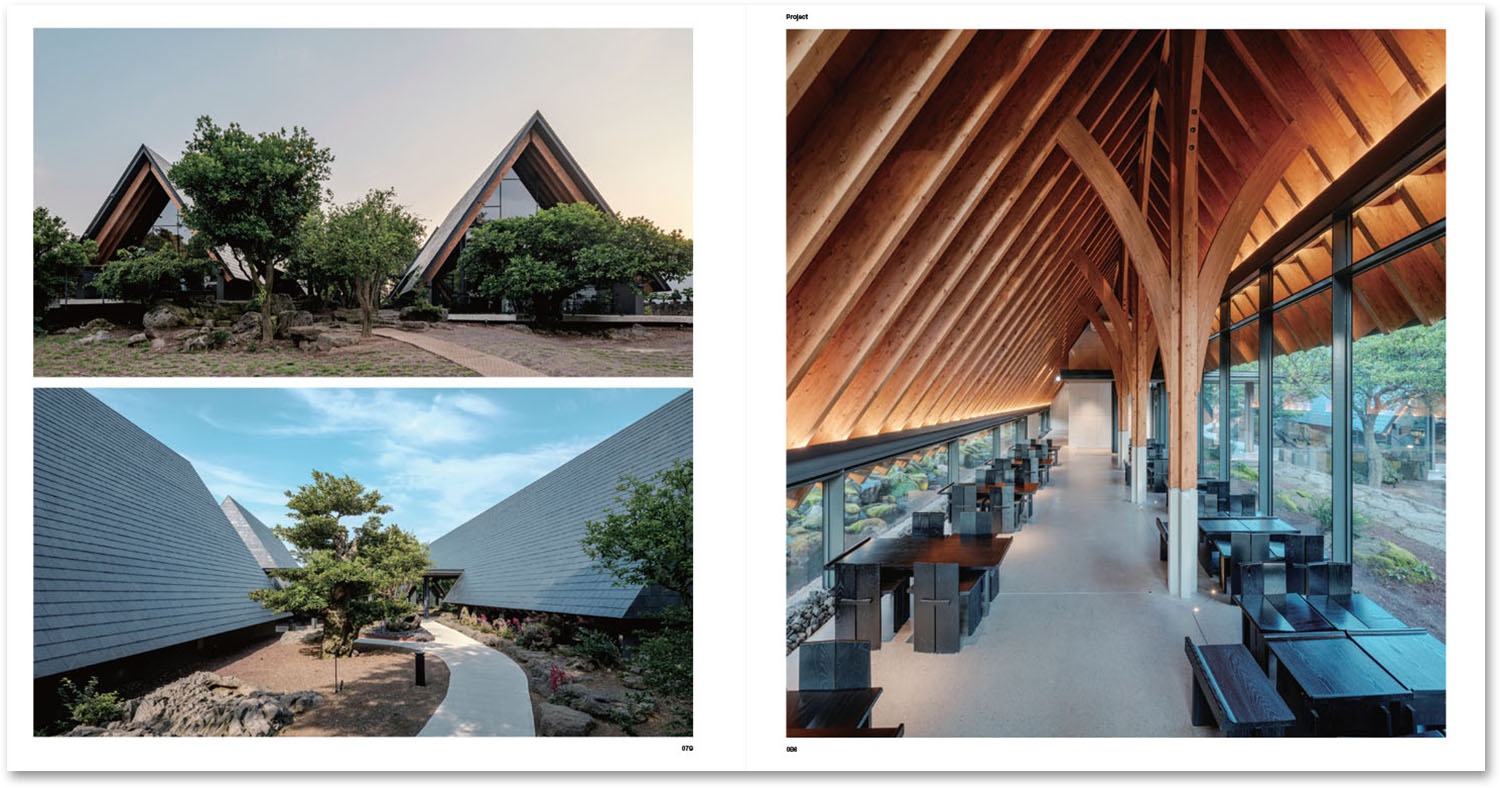
●7 PROJECT ‘YUJI Coffee Works – LSBA’, SPACE 696 (Nov. 2025), pp. 76 – 87.
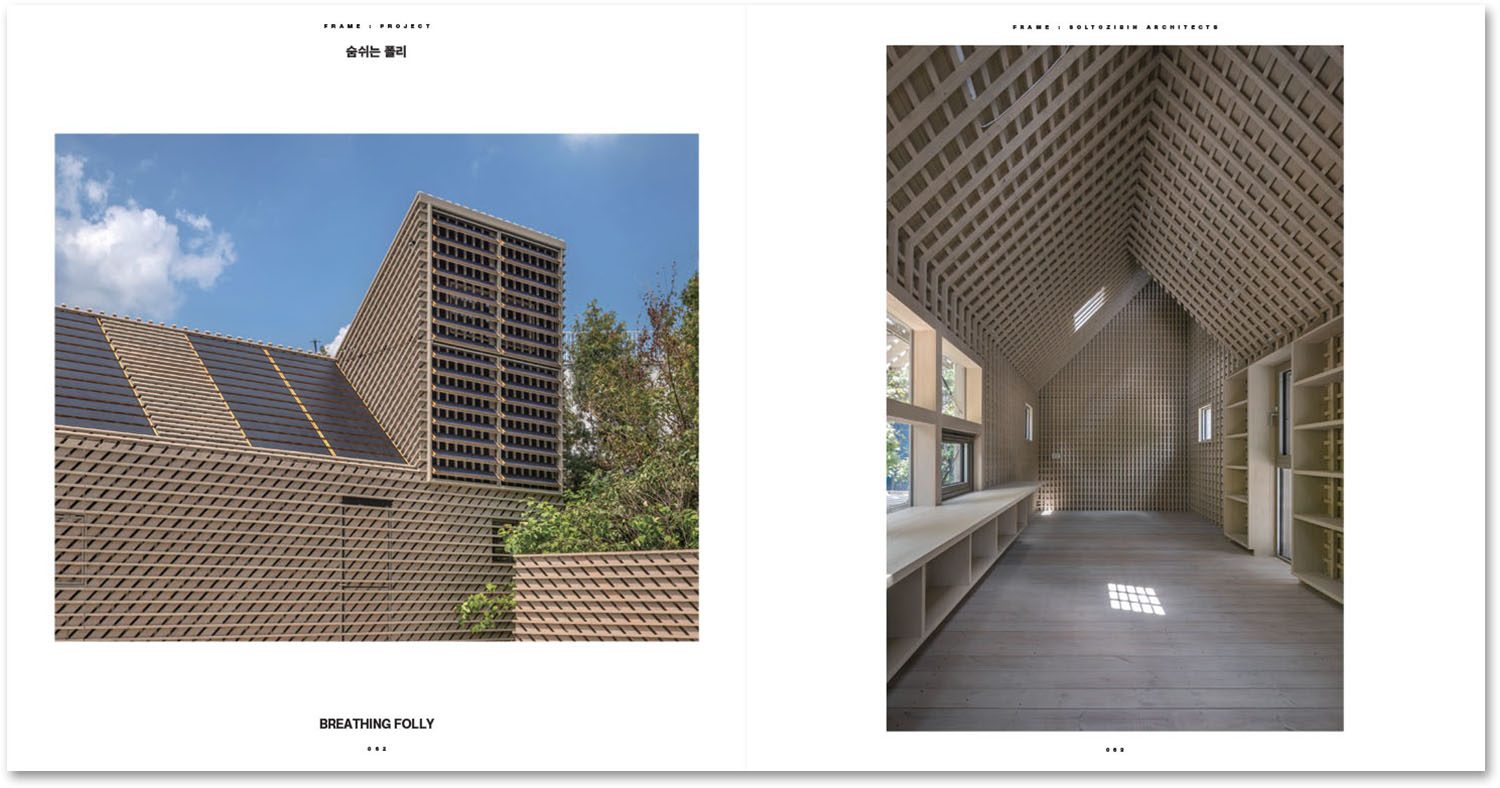
●8 FRAME ‘The Healthy Coexistence of Architecture and Our Planet: Soltozibin Architects’, SPACE 671 (Oct. 2023), pp. 48 – 79.
The Rise of Renovation Projects
One increasingly evident change, both domestically and internationally, is the growing number of projects involving the restoration or repair of old buildings for reuse with new programmes, as opposed to demolition. Within the domestic architectural field, terms such as restoration, preservation, repair, alteration, regeneration, revitalisation, remodelling, renovation, and, often, adaptive reuse – a concept generalised in the West – are frequently used interchangeably. It is difficult to say whether they are employed with strict conceptual distinctions.
In the West, the concept of adaptive reuse emerged in the 1970s, which refers to the approach of continuously using existing buildings by converting their functions. During the 1980s, cases proliferated in the U.S. where factories or warehouses were adaptively reused as lofts or galleries. By the 1990s, numerous large-scale renovations of industrial heritage sites were carried out by architects. Since the early 2000s, the scope of discussion and practice has broadened significantly, and, as a result, the concept of reuse is now being highlighted not only for various forms of idle buildings, but also as a strategy to address many issues facing contemporary society, including the climate crisis.▼13
A similar trend has emerged in the domestic sector. The scope of reuse has expanded beyond monumental or academic buildings to encompass architecture of everyday and urban significance. The opening of Seonyudo Park in 2002, a regeneration project involving a water purification plant, significantly shifted social perceptions of industrial heritage sites.▼14 Subsequently, the Bucheon Art Bunker B39●10, a former waste incinerator, gained attention when it was given a new programme and a new significance as a cultural space. More recently, renovations that respect the value of architectural heritage have been undertaken for real estate reasons, as with the Samil Building,▼15 while others, such as the Millennium Hilton Seoul, have resulted in demolition.▼16
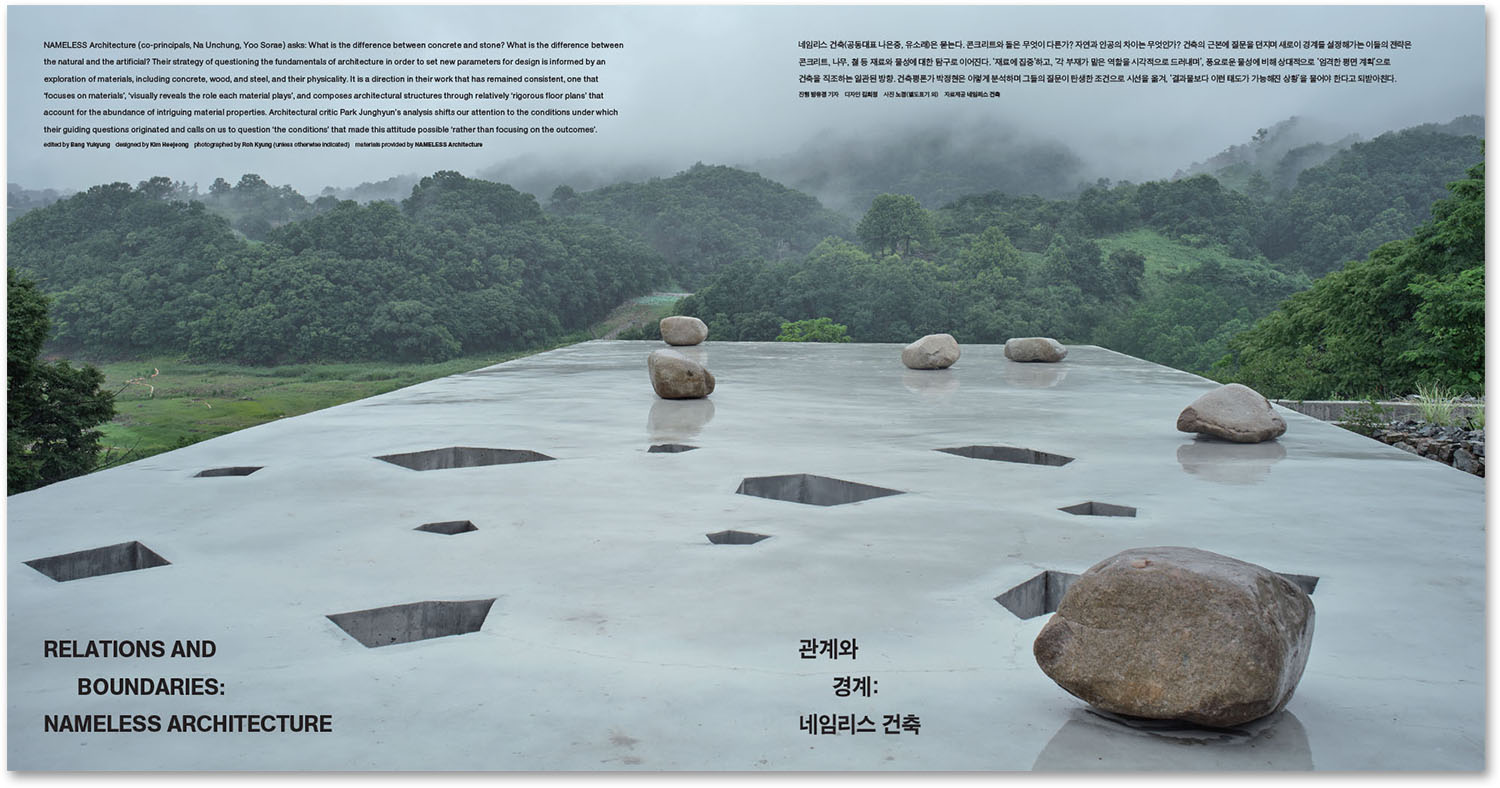
●9 FRAME ‘Relations and Boundaries: NAMELESS Architecture’, SPACE 670 (Sep. 2023), pp. 60 – 93.
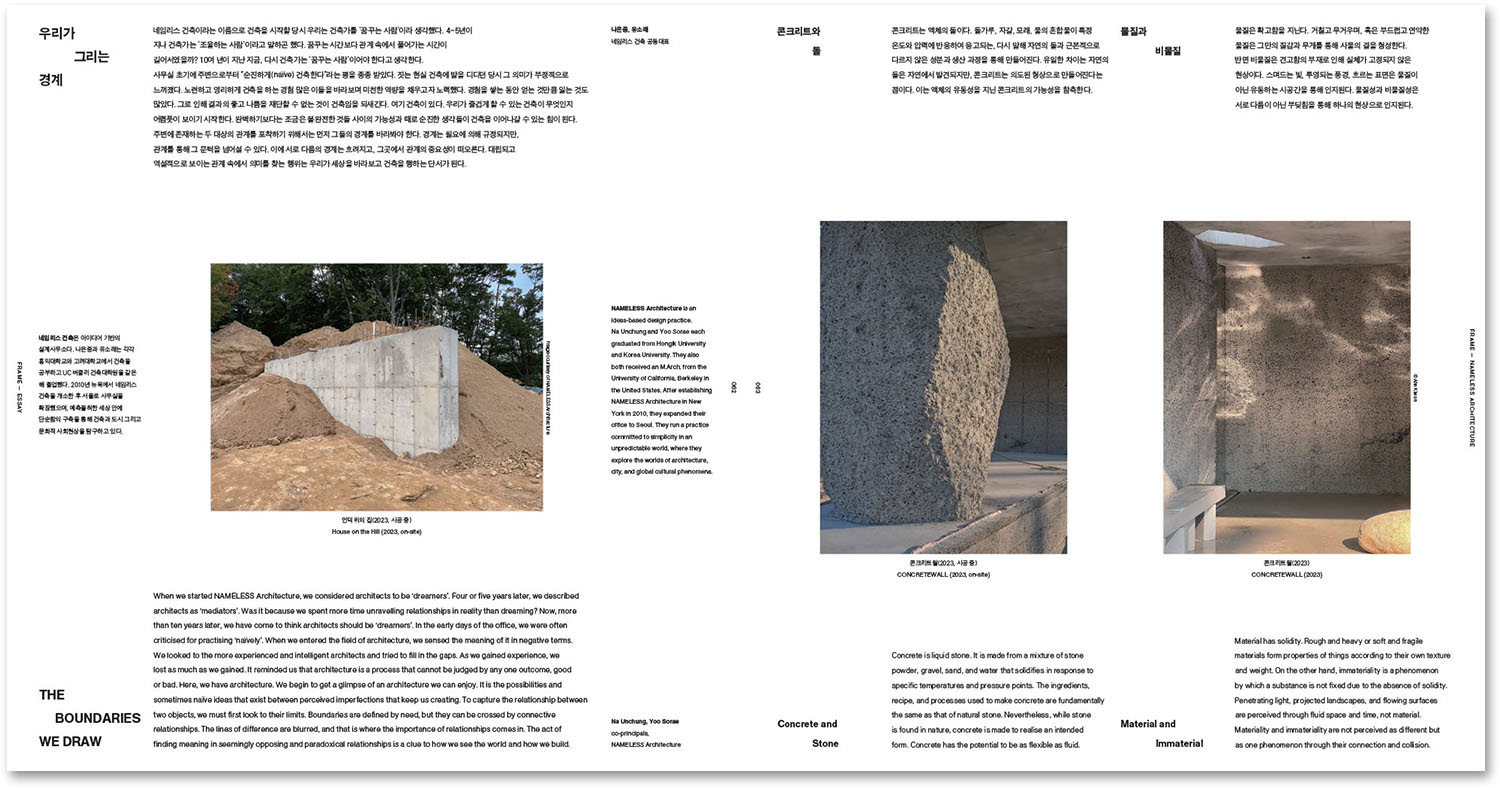
●9 FRAME ‘Relations and Boundaries: NAMELESS Architecture’, SPACE 670 (Sep. 2023), pp. 60 – 93.
Meanwhile, a movement is gradually gaining momentum to re-evaluate the universal and more affordable architecture of our society, such as single houses, multi-unit houses and multi-household houses, and small-scale neighbourhood living facilities built in the 1970s and 1980s.●11 They are seen to possess value that represents an era’s atmosphere or collective memory: ‘Unlike the older generation of architects and artists who were deeply critical of Korea’s urban context, the younger generations have eagerly embraced the local surroundings as a source of their identity, and as the basis of their social and political critique. They have eagerly promoted ordinary and raw interiors as ideal venues for the nascent experimental, highly political art scene.’▼17 A pivotal issue that architects face as part of this process is how to establish the relationship between preservation and new interventions. This involves more than just transforming a building’s internal functions or solving issues of structure, materials, and spatial composition, but also involves considering how to intervene in an urban environment that has changed since the building was originally built. Moreover, renovations often proceed through repeated, minor on-site interventions and modifications depending on circumstances, and this naturally aligns with the recent trend in Korean architecture that focuses on materials, physical properties, and details. Furthermore, the underlying topic of ‘memory of community’ in renovation prompts an exploration of new possibilities for the concepts of publicness and community, as it provides places and images that people can share.
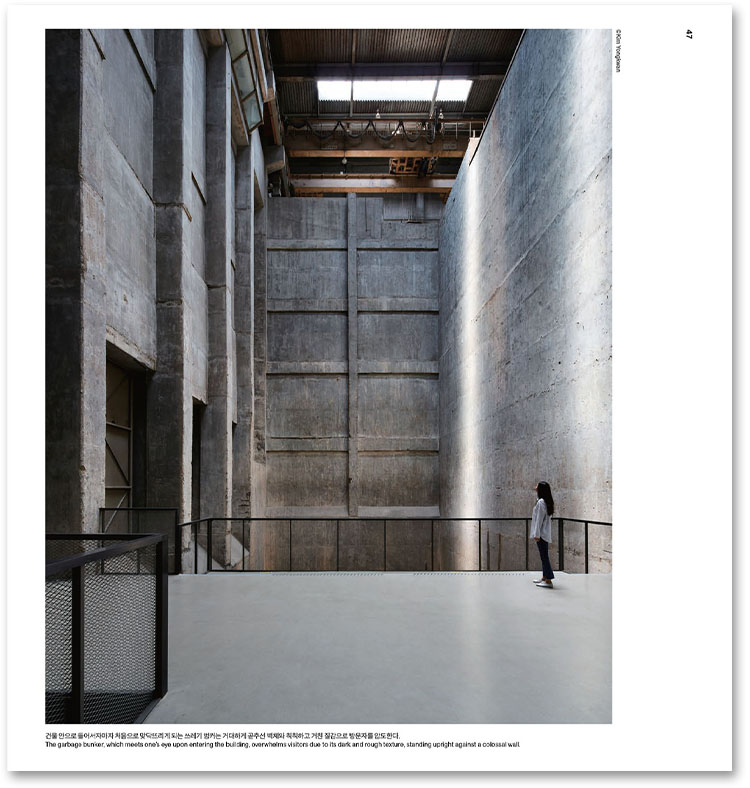
●10 FRAME ‘Resuscitation in Architecture: studio_K_works’, SPACE 610 (Sep. 2018), pp. 36 – 73.
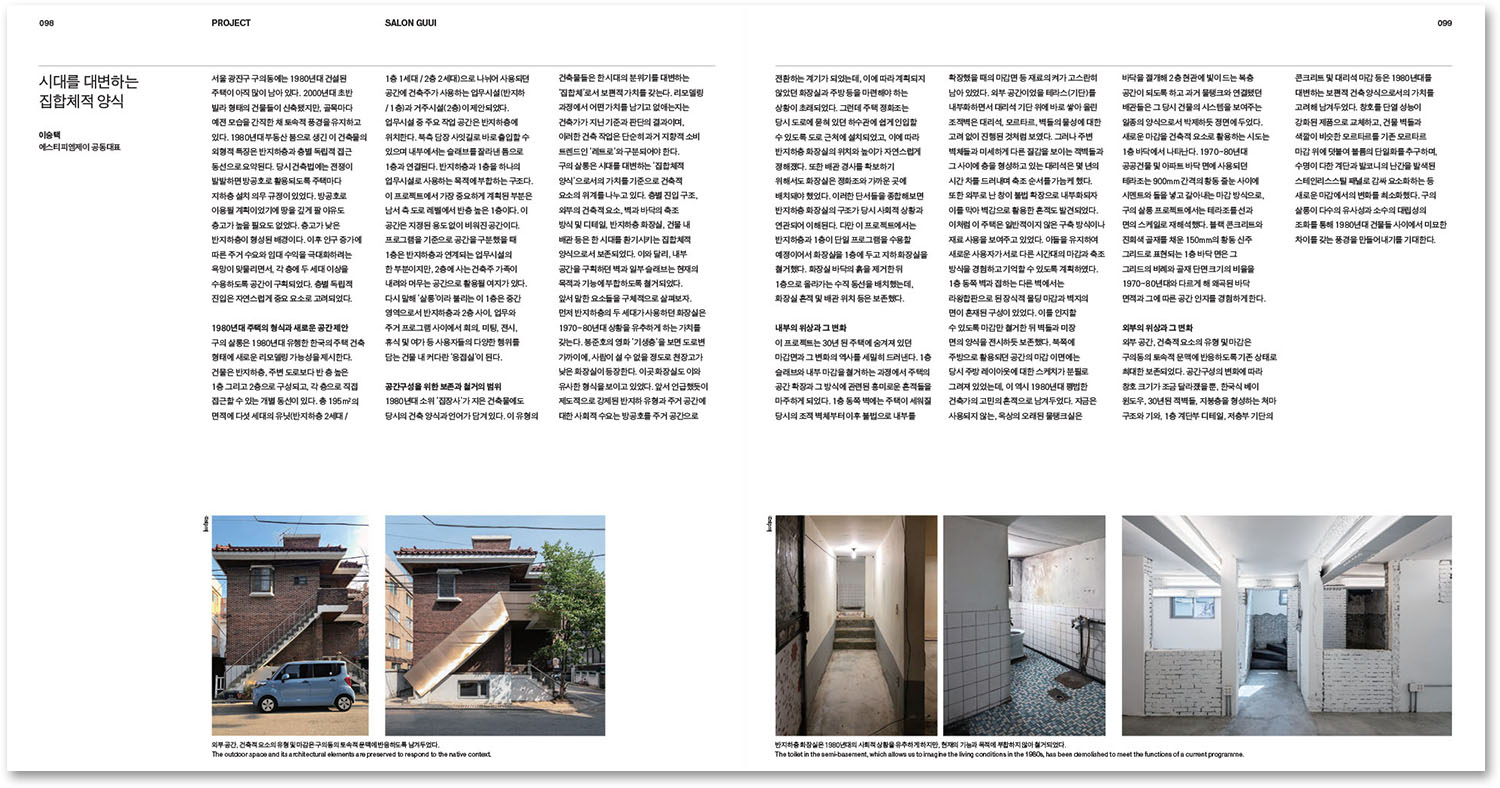
●11 PROJECT ‘Salon Guui – stpmj’, SPACE 621 (Aug. 2019), pp. 94 – 103.
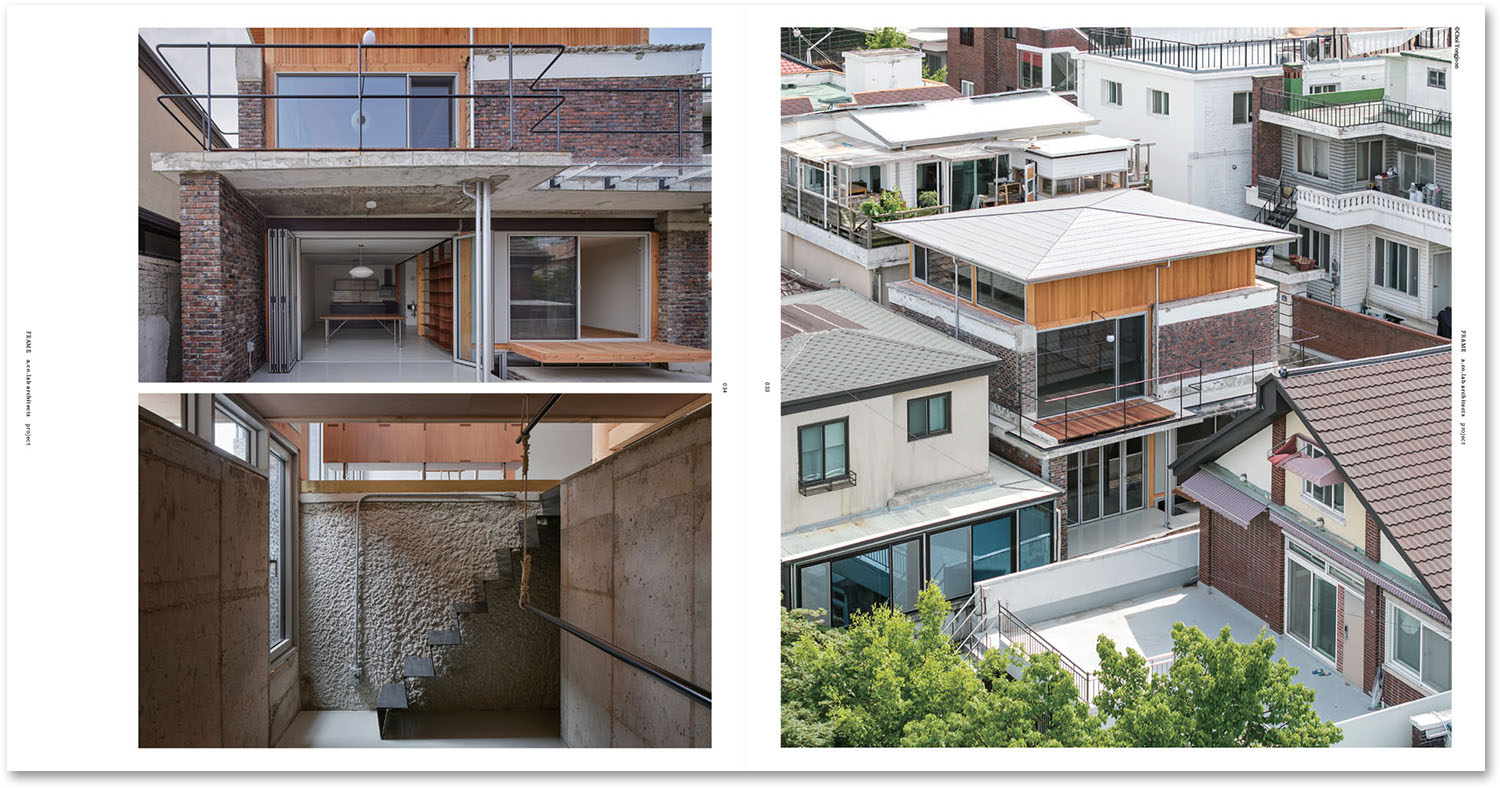
●11 FRAME ‘Between Destiny and Skepticism: Chung Isak + a.co.lab architects’, SPACE 683 (Oct. 2024), pp. 24 – 65.
_
1 The production of public buildings is subject to perennial criticism due to issues such as short project durations, frequent design changes caused by inadequate preliminary planning or political circumstances, low budgets, limited materials registered and distributed through the Public Procurement Service, contractors being selected based on the lowest-bid tendering, and difficulties in design supervision.
2 Chun Euiyoung, ‘An Architecture Named ‘Formative Desire’ (Architecture that Thinks through Form: FORMATIVE ARCHITECTS)’, SPACE 675 (Feb. 2024), pp. 80 – 85.
3 Kim Dongjin, Lee Sungyong, and Zo Hangman, ‘Presence : Absence, Region : Accessibility, Side Roads : Openings and Closings, Scale : Materials, Flexibility : Precision, Neighbourhood Living Facility : Architecture (The Methods Behind Neighbourhood Living Facilities: Kim Dongjin + L’EAU design)’, SPACE 688 (Mar. 2025), pp. 36 – 63.
4 Yosuke Komiyama, ‘medium-to-large-scale timber’, SHINKENCHIKU (Sep. 2025), p. 116.
5 Cho Namho, ‘An Ecological Matrix: Breathing Architecture (Coexistence of Architecture and our Planet: Soltozibin Architects)’, SPACE 671 (Oct. 2023), pp. 50 – 51.
6 FEATURE ‘Questions for Architecture in a Time of Climate Crisis’, SPACE 648 (Nov. 2021), pp. 36 – 127.
7 Chang Yongsoon, ‘The Phenomenology of the Brick, The Topology of the Stair (Piling Up the Order: Luyoun Architects)’, SPACE 643 (June 2021), pp. 80 – 85.
8 Pai Hyungmin, ‘Still Things: The Architecture of Cho Byoungsoo’, BCHO PARTNERS – Cho Byoungsoo, SPACE BOOKS, 2024, pp. 283 – 303.
9 Jung Woongsik, ‘Architecture That Becomes a Background: Namsan-dong Community Facility – Pildong2ga Architects’, SPACE 659 (Oct. 2022), pp. 36 – 37.
10 Kang Yerin and Lee Chihoon, ‘The Modular Game: Fa-brick – Kang Yerin + SoA’, SPACE 677 (Apr. 2024), pp. 32 – 41.
11 Park Junghyun, ‘Concrete Is Concrete (Relations and Boundaries: NAMELESS Architecture)’, SPACE 670 (Sep. 2023), pp. 86 – 93.
12 Okamura Osamu, ‘Nake Architecture: A Return to the ‘Authenticity’ of Materials in Contemporary Practice’, SHINKENCHIKU (Sep. 2025), p. 107.
13 Kato Koichi, ‘From Preservation to Change’, SHINKENCHIKU (Sep. 2025), p. 128; Francesca Lanz and John Pendlebury, ‘Adaptive reuse: a critical review’, The Journal of Architecture 27.2 – 3 (2022), pp. 441 – 462.
14 Joh Sungyong and Chung Youngsun, ‘Seonyudo Park Regeneration Project’, SPACE 408 (Nov. 2001), pp. 152 – 158; Joh Sungyong, ‘Space in Time Kkummaru and Seonyudo Park’, SPACE 526 (Sep. 2011), pp. 74 – 81.
15 Hyon-Sob Kim, ‘Samilro Building in ‘Kim Chung-up Architecture Exhibition’, SPACE 642 (May 2021), pp. 122 – 131.
16 FEATURE ‘When Heritage Architecture Faces Demolition’, SPACE 652 (Mar. 2022), pp. 52 – 111; Kim Jeoungeun, ‘Weighing Up the Future of the Hilton Hotel’, SPACE 654 (May 2022), pp. 106 – 113.
17 Choon Choi, ‘The Beauty of Reality (Resuscitation in Architecture: studio_K_works)’, SPACE 610 (Sep. 2018), pp. 38 – 40.