Korean Architecture That Has Become Smaller, More Dispersed, and More Diversified over the Past 700 Months
written by
Yim Dongwoo
edited by
Park Jiyoun
Data collection
Yoon Seokjae, Mo Younghyun
Data visualisation
Baek Danha
SPACE March 2026 (No. 700)
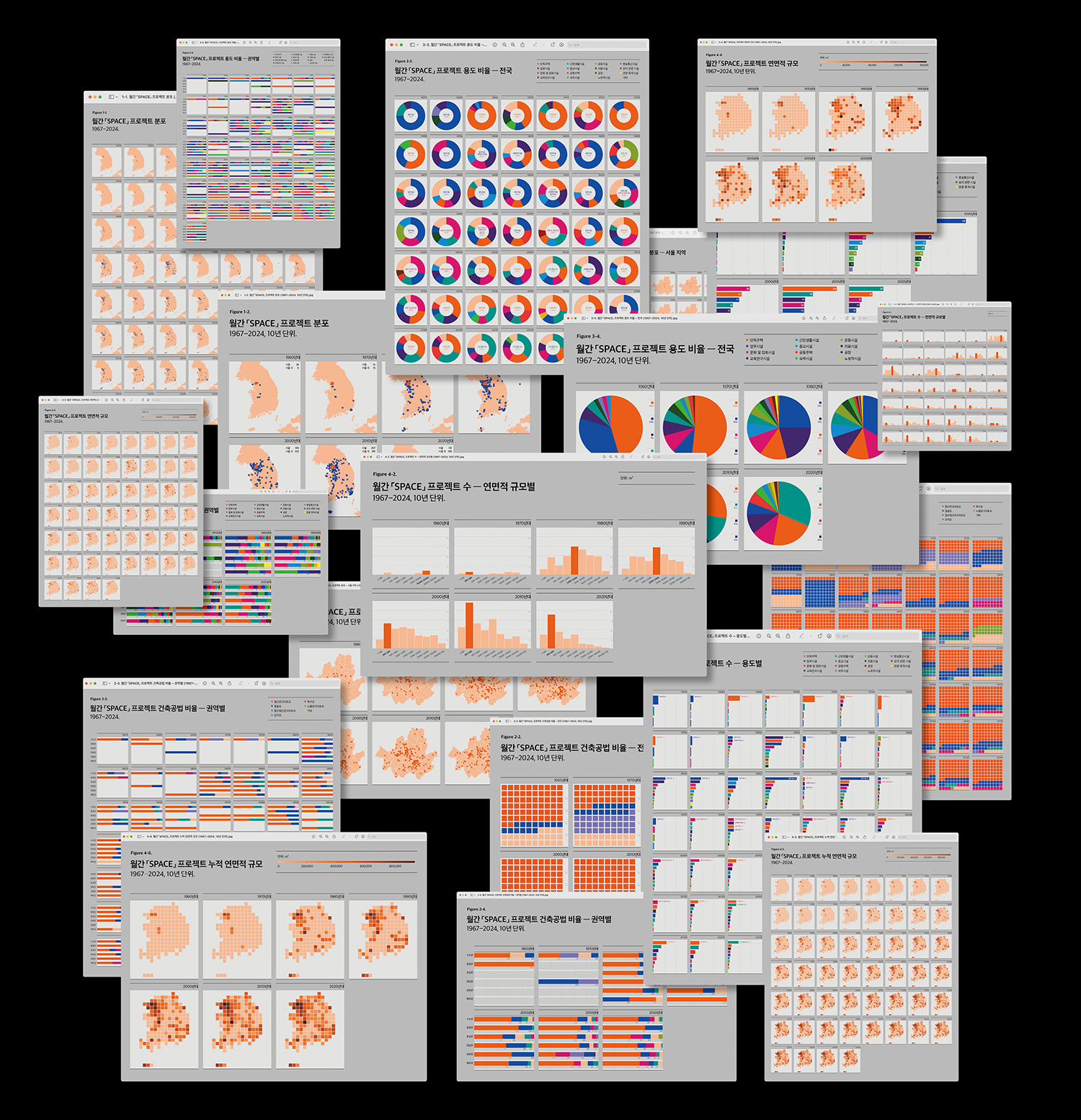
SPACE has now reached its 700th issue. It must have experienced many vicissitudes, but the fact that an architecture magazine that is published every month – not every year, nor quarter – has reached its 700th issue is a deeply meaningful ‘event’ in terms of Korean architectural culture. Twenty years ago, precisely, when I went to study in the U.S., I remember seeing a new issue of SPACE in the periodicals section of the library every month.
At that time, it was the only Korean architecture magazine, and my foreign friends gained an understanding of Korean architecture (which occupied a quite different position to that of today) through SPACE. Marking its 700th issue, we now seek to understand the trends, phenomena, and changes in our own architecture through SPACE, in reverse. Assuming that SPACE represents authorial architecture in Korea, I aim to look at – albeit broadly – the trends that have shaped Korean architecture over the past 60 years or so by structuring an analytical framework from a macro perspective.
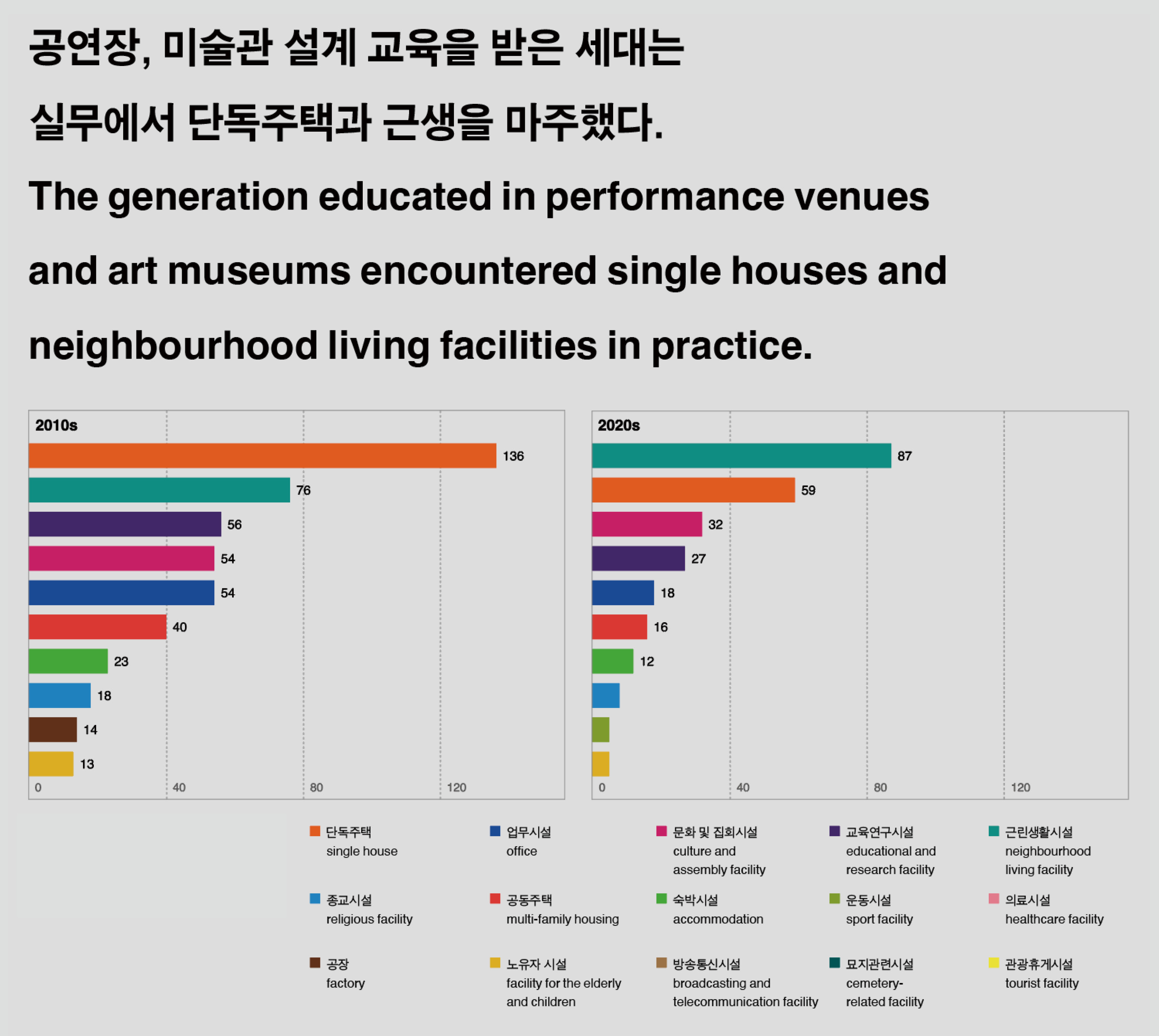
●1 Number of projects by programme
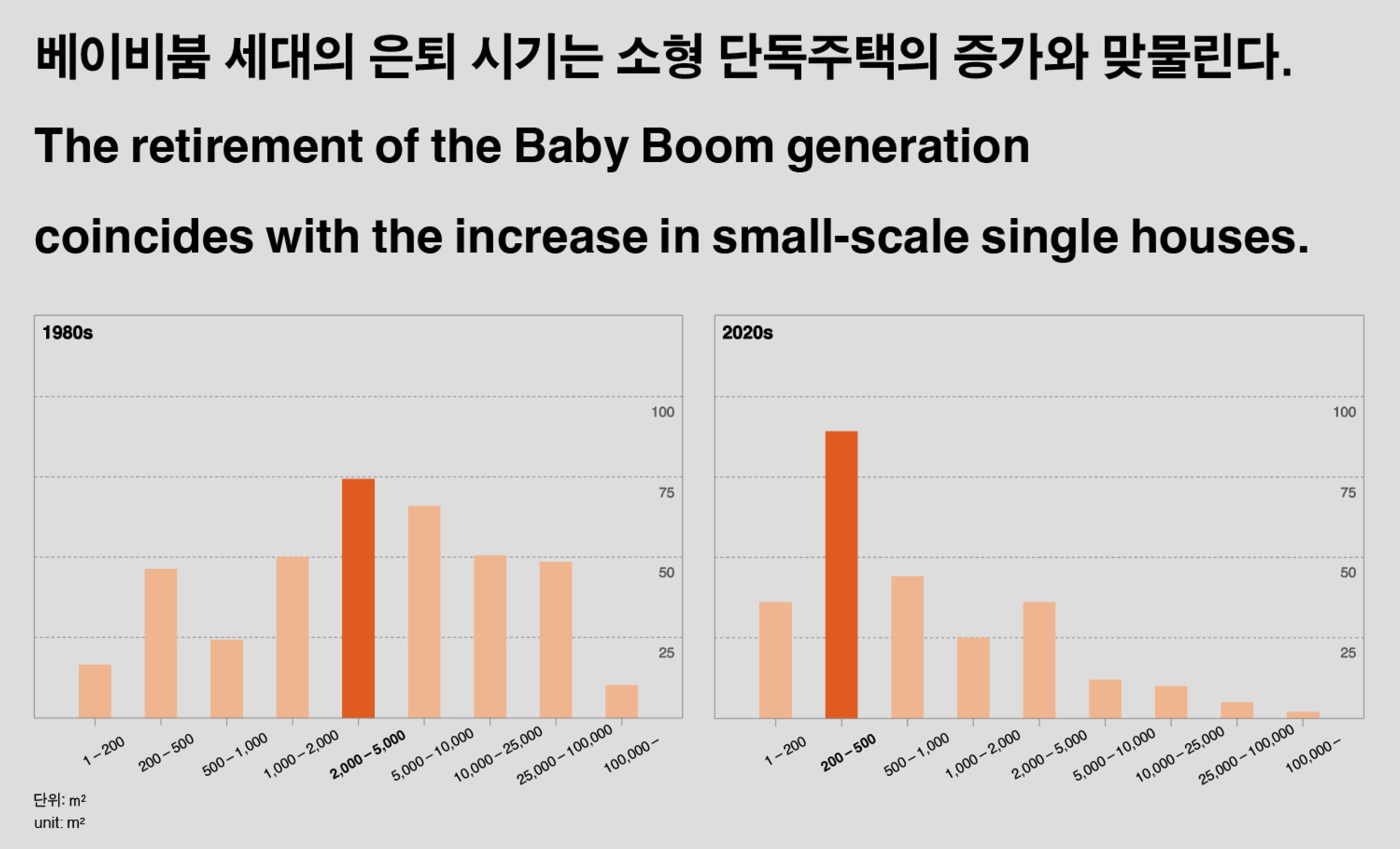
●2 Number of projects by gross floor area
Smaller, and Even Smaller
Architects in their forties who are currently actively practising – that is, those affiliated with the first cohort to complete the five-year architectural education programme – are likely to have experienced design studio courses in which they designed buildings for programmes such as single houses, multi-family housing, schools, performance venues, art museums, and office buildings. Looking at the outline of works featured in SPACE that are representative of Korean architecture makes it easy to understand why the curriculum was structured in this manner during the 1990s and early 2000s. Excluding single houses, which have been a consistent feature of SPACE since its first issue, the primary programmes of works featured in SPACE during the 1980s and 1990s were, in general, mostly office buildings, schools, and cultural and assembly facilities. Given that Korean education runs alongside SPACE in terms of authorialism, it is unsurprising that programmes predominantly featured in SPACE serve as subjects for design studio assignments.
Then, consider the architects who designed programmes such as performance venues and office buildings in their design studios during their undergraduate years. What projects might they be working on now? If we look at the period following the 2010s, which is the time they would have begun practising in earnest, it is already evident from a phenomenalised perspective. Even judging by the list of works featured in SPACE, it is clear that neighbourhood living facilities and single houses form the majority of the projects.●1 Among them, single houses accounted for the highest number of features in the 2010s, while neighbourhood living facilities have done so since the 2020s. In terms of building scope, works with gross floor areas of 2,000 to 5,000m2 predominated in the 1980s and 1990s. However, since 2010, works with gross floor areas of just 200 to 500m2 – a mere tenth of that building scope – have been featured far more.●2 The fact that works under 500m2 which featured in SPACE over the last 15 years outnumber those of the same building scope featured in the magazine’s entire 45-year history, since its foundation, suggests how much smaller and more numerous the building scope of architecture deemed worthy of being called a ‘work’ has become since the 2000s. This makes it possible to predict how much smaller and more numerous it will become in the future.
While it is true that single houses are the most consistently favoured programme of works in SPACE, in terms of building scope, single houses built from the 1970s and 1980s differ significantly from those built in the years since the 2010s. While large-scale residences exceeding 200m2 within the city were mainly introduced in the 1970s and 1980s, the 2010s saw the emergence of small-scale single houses under 200m2. This coincided with the retirement period of Korea’s Baby Boom generation. The Baby Boom generation in Korea typically refers to individuals born between 1955 and 1963, a period during which 7.1 million babies were born. Indeed, this equates to roughly 1 in 7 Koreans today. Given that the average retirement age in Korea is around 55, most of them retired between 2010 and 2018, and the emergence of small-scale single houses and neighbourhood living facilities appears to be linked to this retirement period. In 2010, when the five-day working week was firmly established and the Baby Boom generation began to retire, there was a boom in second houses. Until then, single houses and neighbourhood living facilities built in the suburbs under the name ‘pension’ were far from authorial architecture and thus must have not been a primary subject of interest for SPACE either. However, from the 2010s onwards, new capital and culture flowed into this sector, resulting in their gradual appearance in SPACE.
Furthermore, real estate policies that have become increasingly stringent over time – such as strengthened taxation on owners of at least two houses and robust lending regulations – represented a social shift that prompted the Baby Boom generation to seek out neighbourhood living facilities as new investment opportunities. It is recognised that the Baby Boom generation, both in Korea and abroad, has accumulated more assets than other generations, and, in response to this, since the 2020s, neighbourhood living facilities have been featured more frequently in SPACE than single houses have.
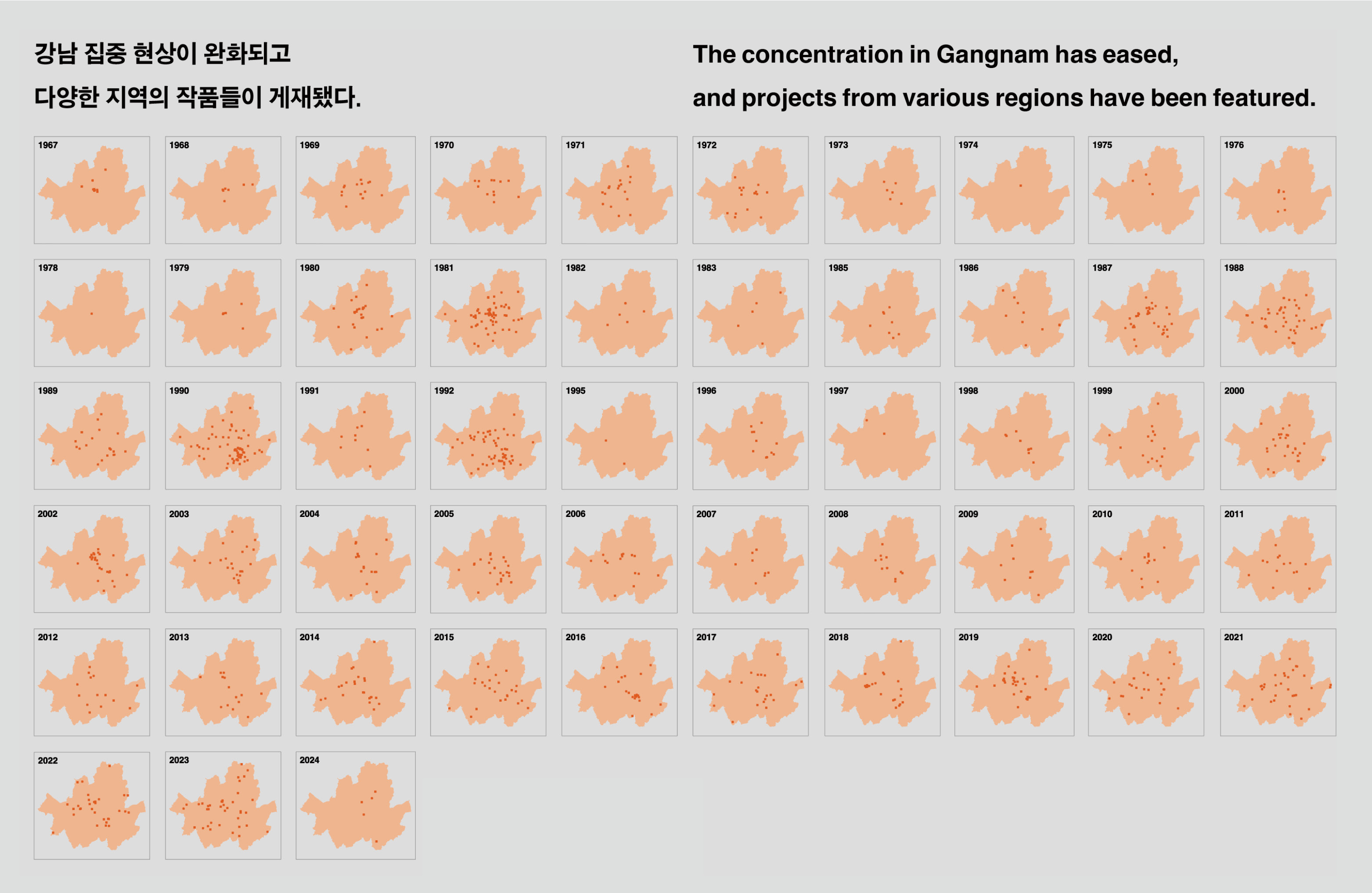
●3 Distribution of projects in the Seoul area
All over the Country
The projects featured in SPACE appear to represent the history of Korea’s land development over the past 60 years. Even considering Seoul alone, the works featured in SPACE during the 1960s and 1970s were primarily located north of the Hangang River, rather than south of it. However, during the 1980s and 1990s, the focus shifted to north of river, particularly to Gangnam-gu. SPACE’s high number of features on Gangnam during its intensive development period provides evidence that Gangnam achieved not simply qualitative growth but also qualitative advancement. This trend continued into the 2000s, yet the phenomenon centred on Gangnam only eased in the 2020s, with works from more diverse areas of Seoul beginning to be featured.●3
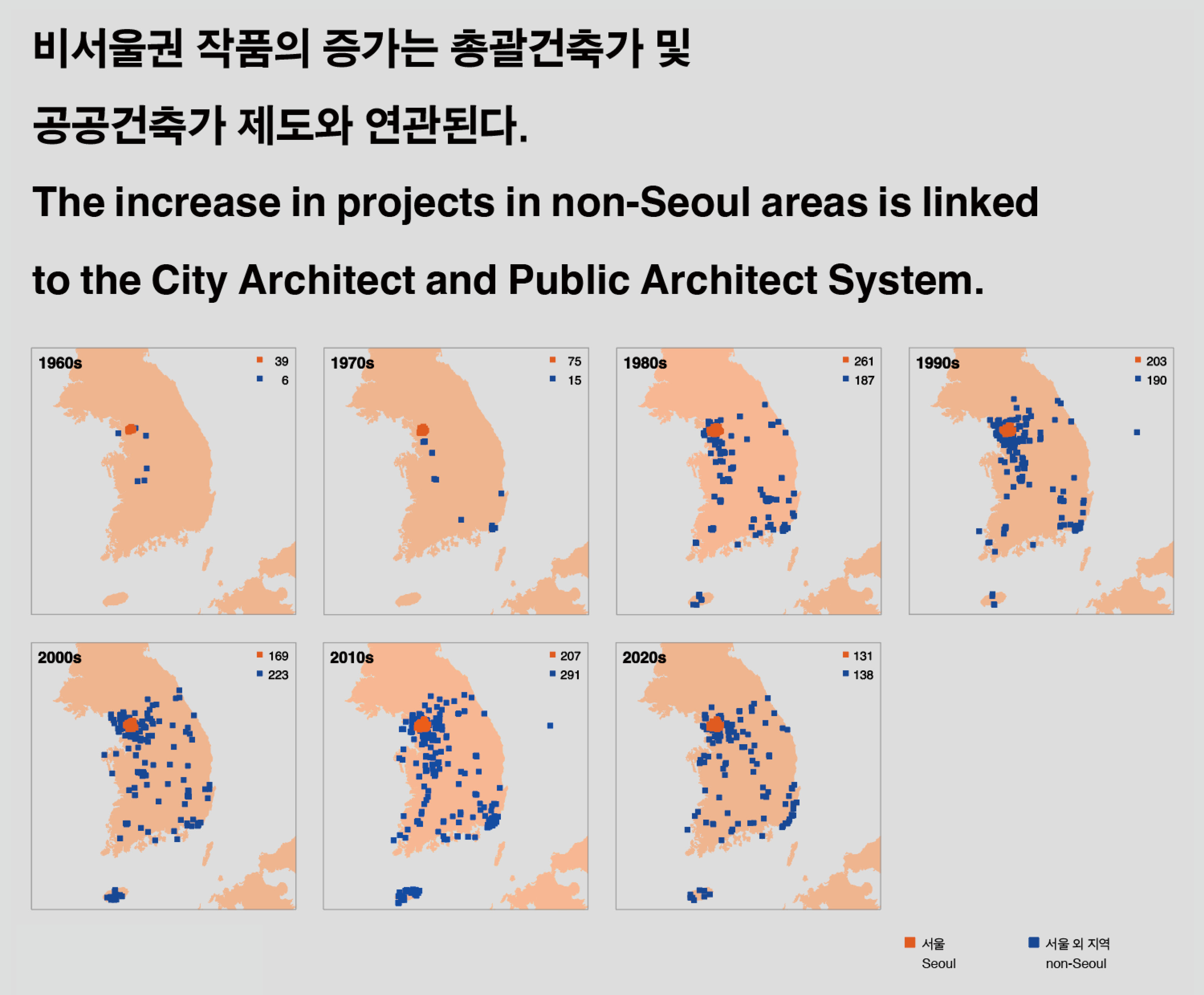
Such a phenomenon, whereby works featured in SPACE primarily located in certain areas before spreading to other areas, did not only take place in Seoul. It occurred in a similar way across the country as well. Even up until the 1990s, a significant proportion of projects were still located in Seoul compared to non-Seoul areas. However, this trend began to reverse in the 2000s. From the 2000s onwards, projects from non-Seoul areas have been featured significantly more frequently, and this is not a passing trend, but one that has persisted to the present day.●4 This phenomenon must have likely influenced by the Local Autonomy System, which was initiated in the late 1990s and, on a macro perspective, the opening of the KTX in the mid-2000s, which enabled travel across the entire country within a day. Nevertheless, SPACE’s high number of features on projects in non-Seoul areas does not indicate an overall increase in the number of projects – including both public and private – in non-Seoul areas. Rather, it suggests that authored works, or works considered important enough to be covered in SPACE, have become much more prevalent in non-Seoul areas since the 2000s. Considering this, perhaps such a phenomenon is more closely linked to the City Architect and Public Architect System.
Since the Seoul Metropolitan Government (SMG) first implemented the City Architect System in 2008, the number of City Architects and Planners (including local governments) has grown to over 60 nationwide. Meanwhile, under the Public Architect System, which began with the role of Special Landscape Designer before transitioning to and establishing the role of Public Architect, there are currently over 1,400 Public Architects practising across the country. In terms of Seoul’s national proportion, City Architects account for approximately one-tenth of the total, while Public Architects account for approximately one-sixth. Even when the metropolitan area ratio is considered, combining Gyeonggi-do and Incheon, they account for one-third and one-quarter respectively. Given that a quarter of the total population lives in Seoul and half in the metropolitan area, it can be seen that non-Seoul or non-metropolitan areas are making extensive use of the City Architect and Public Architect System, as it is directly reflected in the number of SPACE features.
While one might debate whether the chicken (the nationwide spreading of architectural production conditions) or the egg (the City Architect and Public Architect System) came first, inferring from the phenomenon suggests that the need for the City Architect and Public Architect System may have arisen as public architecture of various building scopes and private capital were already spreading nationwide. This is because the aforementioned enabling of travel across the entire country within a day has indeed compressed Korea spatially. However, one thing that is certain is that, from the perspective of SPACE, a platform that supports the featuring of authorial architecture, the establishment of the City Architect and Public Architect System may have served as a medium to enable works from far more diverse regions to be introduced. In addition, it can also be argued that SPACE is consciously paying significant attention to architecture in non-Seoul areas. This has provided numerous young architects practising in diverse non-Seoul areas with an opportunity to grow.
●4 National distribution of projects
Diverse Construction Methods and Programmes
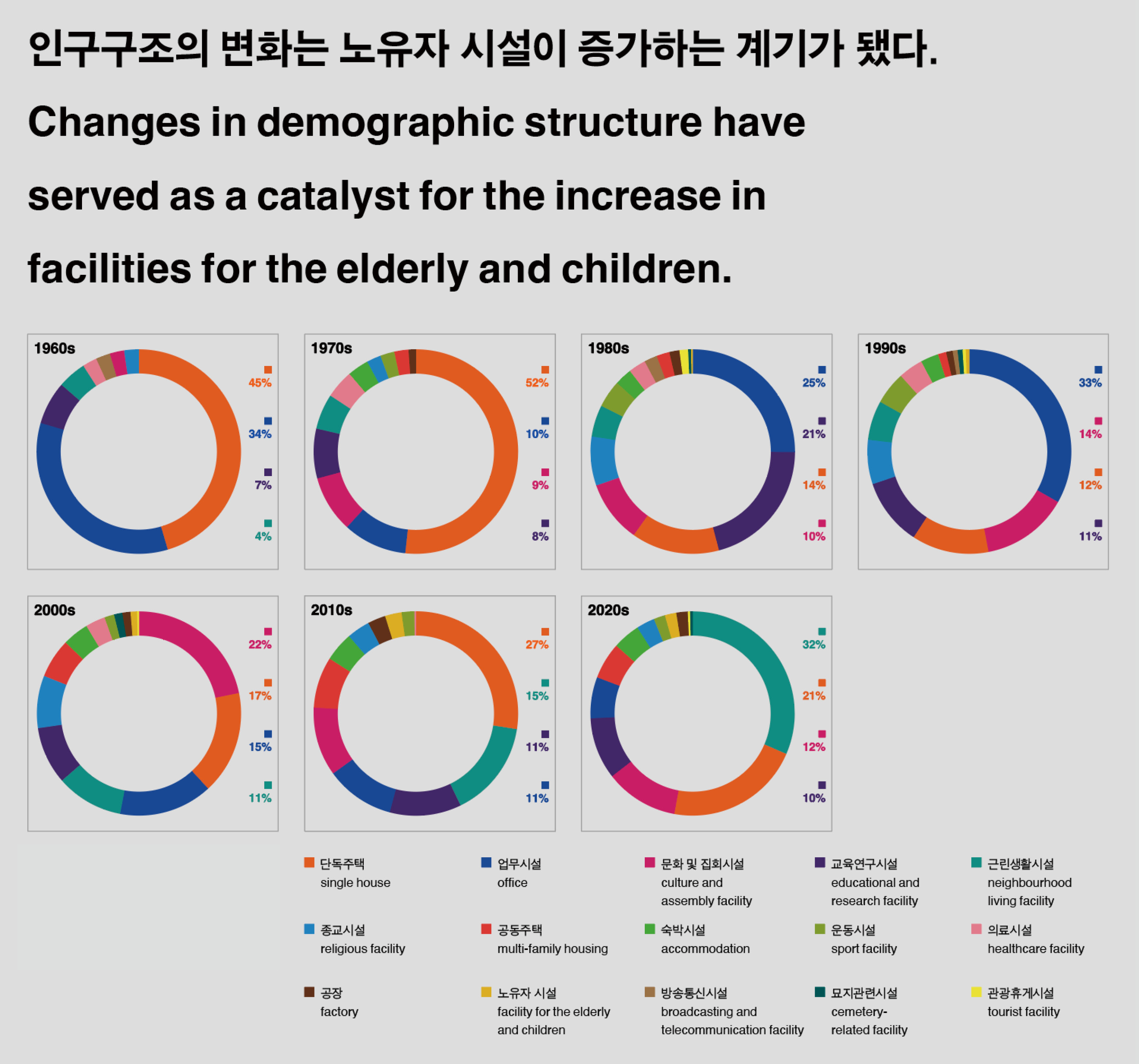
From the 2000s onwards, the buildings introduced in SPACE became more diversified in terms of not only location, but also construction methods and programmes. Around 2010, facilities for the elderly and children began to emerge, which coincided with the period when Korea’s ageing index (population aged 65 + per 100 population aged 0 – 14) began to exceed 60 and the number of births fell below 500,000―less than half the level seen in the 1970s. Prior to 2000, when the ageing index was below 30, there was a lack of significant investment in facilities for senior citizens. However, as the ageing population grew, investment increased substantially in terms of both quantity and quality. Moreover, in the early 2000s, the number of births plummeted rapidly and the number of childcare centres and kindergartens decreased. This prompted various government policies, one of which concerned the expansion of public and private childcare centres. Alongside these demographic shifts, the Building Service Industry Promotion Act was enacted in 2013, mandating the prioritisation of design competitions in public building projects, and this provided an opportunity for small-scale facilities for the elderly and children, which had previously been overlooked by authorial architecture, to occupy a corner of SPACE.●5 The current ageing index stands at 200 and is projected to rise to 500 by 2050. As the government aims to increase the public childcare utilisation rate for infants and young children from the current 40% to 50%, facilities for the elderly and children are likely to be found more frequently in SPACE going forward.
Another intriguing fact is the rise of multi-family housing since the 2000s. As we all know, Korea is often dubbed the ‘apartment republic’. Yet, in contrast, multi-family housing was absent from SPACE, which attests to SPACE’s long-standing authorialist tendencies. However, since the 2000s, multi-family housing has steadily occupied a corner of SPACE. Entering the 2000s, a complex interplay of factors – including increased demand for new, alternative housing and communal living, and an increase in single-person households – led to numerous solitary multi-family housing projects entering the real estate market. While these projects are, in other words, legally defined as multi-family housing, they are not typically classified as apartments. Among these projects, those that explore new forms of communal and household living in a meaningful way, in terms of architecture, were introduced in SPACE.
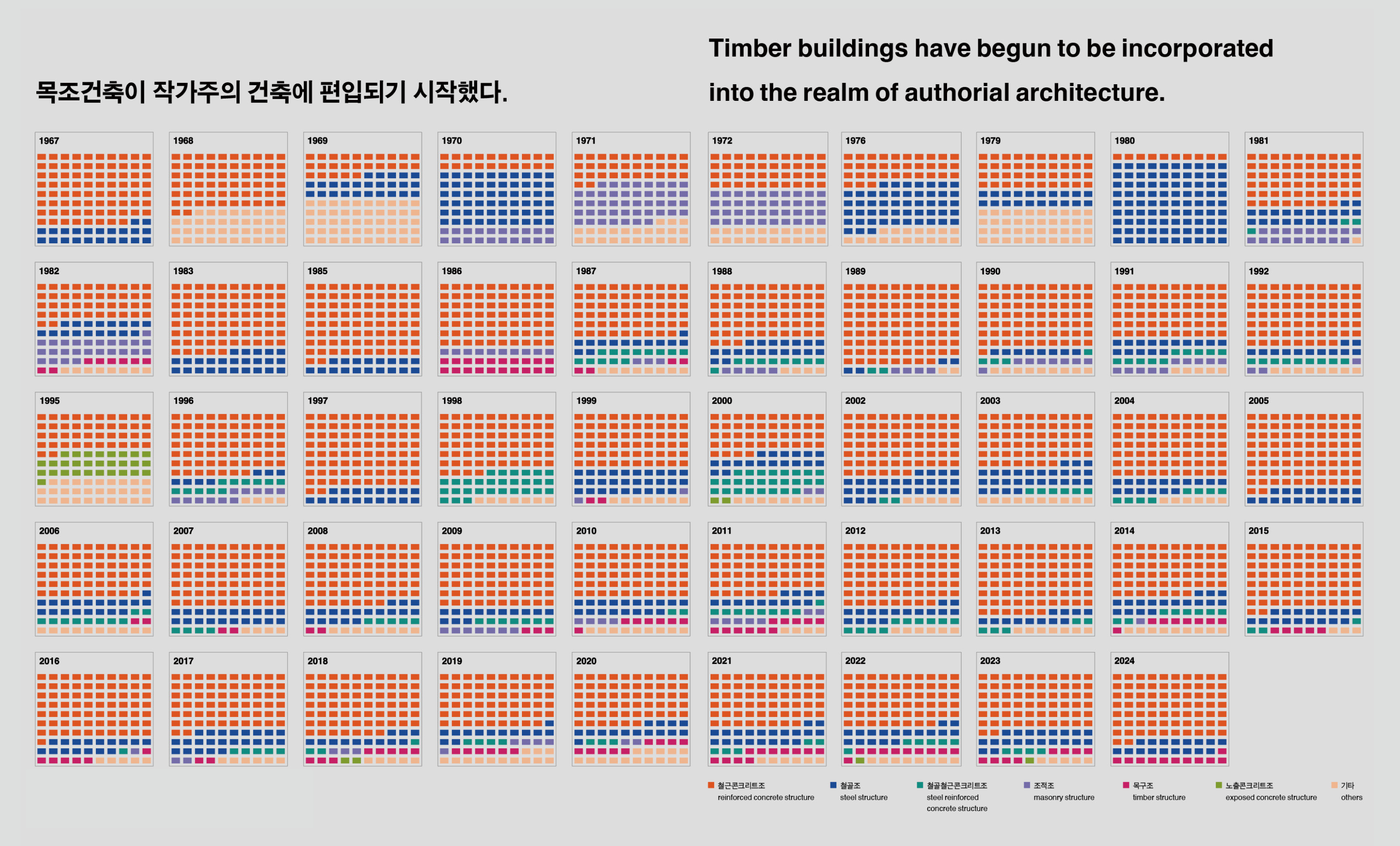
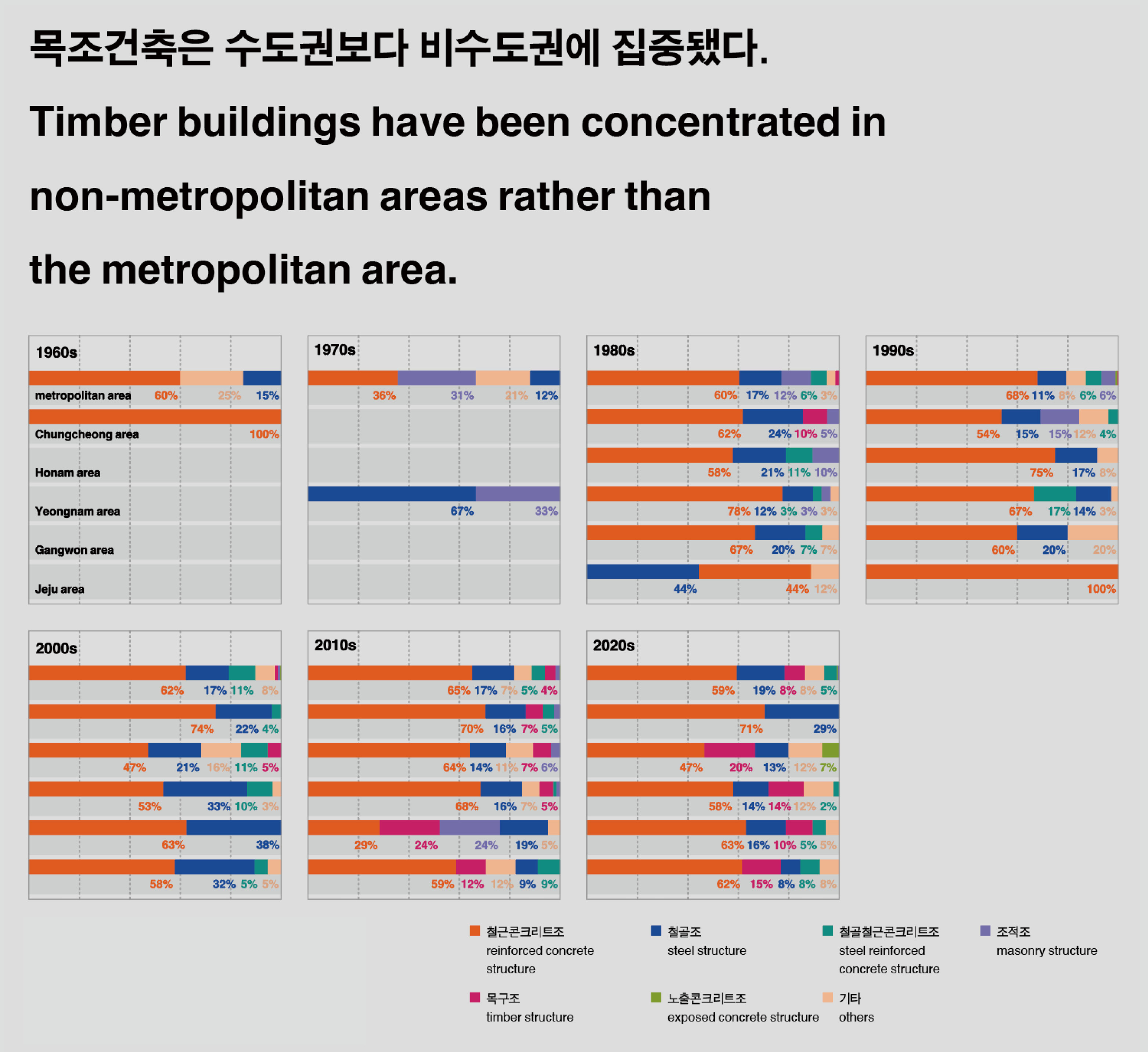
Construction methods also diversified significantly in the 2000s. While the proportion of steel-framed structures remained relatively stable, construction methods such as brickwork became increasingly rare except during specific periods such as the 1970s. It is worth noting that the number of timber buildings surged dramatically in the 2010s.●6 This likely reflects the phenomenon of timber buildings becoming integrated within authorial architecture, which places significant emphasis on eco-friendliness and carbon footprint issues. This shift must have likely begun when the 2005 Structural Design Standards for Buildings newly established criteria for timber-framed structures, requiring structural calculations even for small-scale timber buildings (light- and heavy-timber-framed structures of two storeys or less with a gross floor area under 500m2). Furthermore, another singularity was that the timber buildings featured in SPACE were far more prevalent in non-metropolitan areas than in the metropolitan areas.●7 However, when considering the overall construction market, timber buildings still do not hold a significant share. Nevertheless, the fact that they have been consistently covered at a high rate since the 2010s suggests that SPACE’s future-oriented values regarding carbon neutrality were likely reflected to some extent in its selection of featured works.
●5Percentage of projects by programme
●6 National percentage of construction methods
So, What Kind of Architecture Should One Design to Be Published in SPACE?
While going through and putting together almost 700 volumes of SPACE, a film suddenly crossed my mind: David Fincher’s The Curious Case of Benjamin Button (2008). The film depicts a child born in his eighties, who gradually regains his youth as he ages, ultimately dying as a newborn infant. Somehow, this mirrors the look of Korean architecture over the past 700 months. Though born with an impressive physique and splendid attire, as time passed and adulthood arrived, the physique became diminutive and the clothing shabby. Architecture students, who once nurtured their dreams of becoming starchitects – the popular figures at the time – by designing impressive cultural facilities, have now grown up to become independent architects. However, they now find themselves building structures on a building scope for a programme that they neither experienced nor imagined during their studies.
However, if you think about it the other way around, this signifies that architecture has become more accessible and universal, embracing a greater sense of publicness. Buildings are now being designed for regions with programmes and scopes that previous generations never paid attention to, resulting in the creation of so-called ‘works’. This does not mean that the standard of work featured in SPACE has declined, but rather, it has diversified. If architecture that embodies the society and philosophy, culture and technology, as well as phenomena and future of its time is called a ‘work’, then the emergence of diverse works – in diverse regions, with diverse programmes and building scopes – seems a positive shift.
Then, going forward, what kind of architecture should one design to maximise the likelihood of being featured in SPACE? When I occasionally participate in SPACE’s peer reviews, I can’t help but feel that, although all projects are carefully planned, there is a sense of repetition, expansion, and reproduction of similar ideas. It is true that, compared to its predecessor, architecture since the 2000s has become smaller, more dispersed, and more diversified. However, looking back from SPACE’s 800th or 900th issue in the future, it may perhaps be possible to have a different interpretation. For instance, one might argue that, despite becoming smaller, it may still only cover structures that insist on methods of construction that could be called ‘buildings’; despite becoming more dispersed, it may still be confined to regions where private and public capital congregate; and despite becoming more diversified, it may still only cover architecture that takes place within the prescribed programmes and construction methods permitted by the regulations in place at that time. Just as there was a gap between the education that currently practising architects received and the actual programmes, building scopes, locations, and construction methods of the projects that they work on, today’s students will likely experience a similar disconnect when they become practising architects. In the end, to bridge this disconnect, we must analyse trends across the past 700 volumes of SPACE and predict, from our own perspective, what kind of architecture (including things that may not currently be considered architecture) will shape the future built environment. Looking back at the past, identifying the trends that shaped that time, and looking ahead to the future, is the starting point for a progressive architectural discourse. Discussions about the future are not solely the concern of professors in the field of education, but a matter for all the numerous architects teaching in design studios to ponder. As these discussions expand, constructive architectural discourse will also flourish in our country. As we celebrate the publication of the 700th issue of SPACE, I look forward to seeing this discourse emerge.
●7 Percentage of construction methods by region
You can see more information on the SPACE No. March (2026).
Yim Dongwoo
Yim Dongwoo is the Co-Principal of PRAUD and Professor in the Graduate School of Architecture and Urban Design at Hongik University. He was awarded the Architectural League Prize 2013, was the Director of ‘Pyongyang Exhibition-Pyongyang Sallim’ in 2017, was the Curator of the Cities Exhibition in the Seoul Biennale of Architecture and Urbanism in 2019, and was the Director of Daegu Global Studio 2023. His works include the Suncheon New City Hall and the Leaning House among others, and he has published numerous writings including ‘Production Urbanism’ in AD, and A Language of Contemporary Architecture: An Index of Topology and Typology.