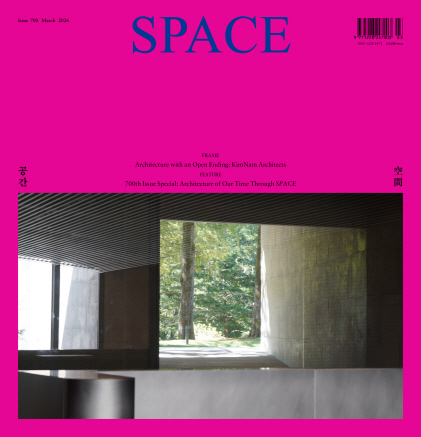

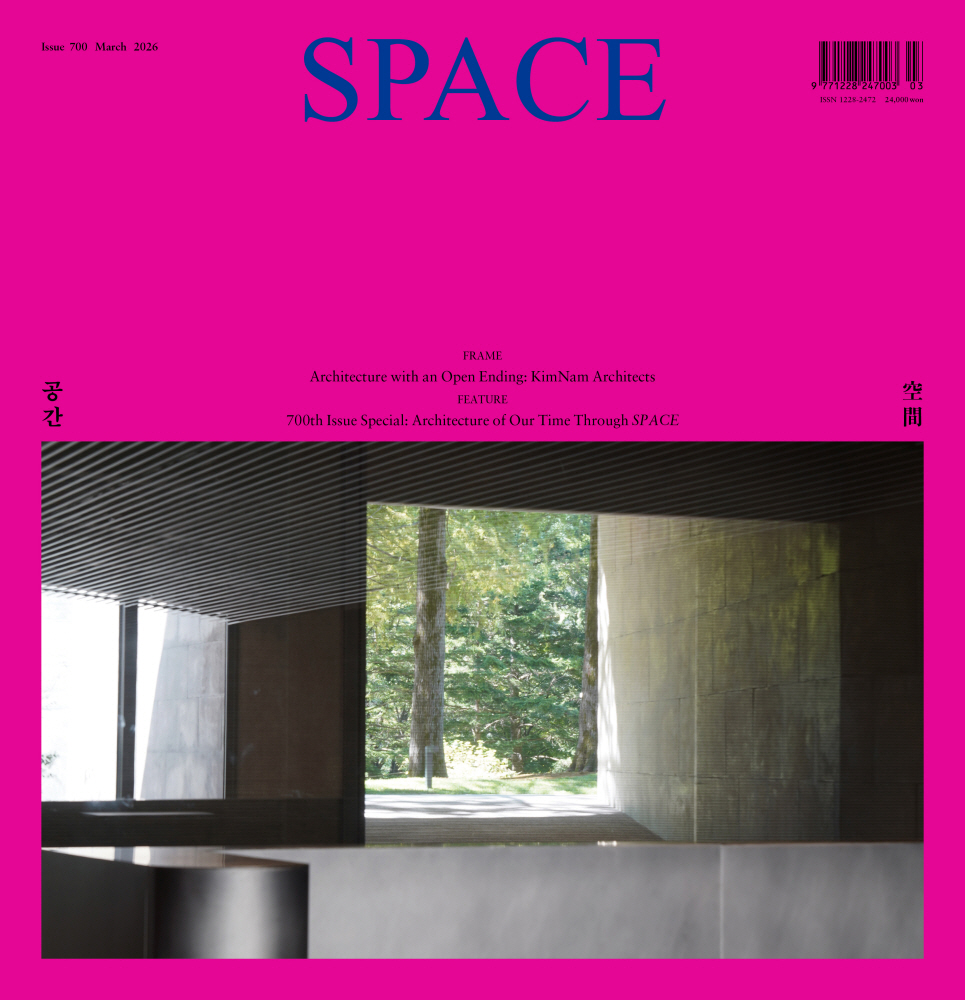
SPACE March 2026 (No. 700)
The Weight of Record: Tracing 700 Footprints Leading Back to 1966
Something occurred on the Korean architectural scene in November 1966: the monthly magazine SPACE took its first steps, volunteering to serve as a bridge connecting architecture and art within Korea’s barren cultural landscape. Over half a century has passed since then, and SPACE now publishes its 700th issue. These 700 issues are not mere stacks of paper; they form a vast archive of the most vivid historical record, documenting how cities in Korea have transformed over time and impacted Korean lives from the very beginning of modern Korean architecture to its current mature state. SPACE has always been a close observer of change and growth in Korean architecture. During the turbulent era of government-led reconstruction, when Korean architecture was facing a profound identity crisis between Western styles and local traditions, SPACE took centre stage to pose the crucial question: ‘What should Korean architecture be?’ Going beyond its role as an architecture magazine, SPACE sought to create a platform on which to discuss philosophy and art and to open channels of communication with its readers.
The Power of Criticism: Architectural Ecosystem Shaped by Reflection
Throughout its 700-issue journey, SPACE has offered architects both warm encouragement and sharp criticism. While introducing the works of master architects, both as representative of their era and as inquiries into an architectural philosophy, SPACE also strived to inform the public that architecture is not just real estate or engineering but the ‘quintessence of culture’. The critical reflections that constituted those efforts became the nourishment that galvanised Korean architecture. SPACE’s approach to contemplate architectural works from multiple angles and to never shy away from debate instituted the critical perspective that enabled Korean architecture to take its place on the global stage. This towering stack of 700 magazines thus stands as a monument that commemorates both the glories and the scars of Korea’s architectural journey.
The Meaning of 700: Perfection and the Unfinished ‘00’
In Western culture, number ‘7’ is commonly associated with luck and perfection. However, one must beware the paradox behind the ‘perfect 7’; perfection can be likened to that of a closed loop, referring to a state of completion that is closed off to its inside and outside. If we were to only celebrate SPACE’s 700th issue as its ‘first-ever, highest, and perfect’ achievement, it can become a ‘closed door’ that discourages us from stepping forward into the future. Instead of highlighting the perfect ‘7’ within the number 700, I would like to focus instead on the two ‘0’s that follow. Zero signifies both nothingness and infinity, representing an empty space capable of containing anything. Thus, the ‘00’ in 700 represents ‘open possibility’—a new start built upon the past. I believe it symbolises the courage required to step forward into as yet-unwritten chapters rather than basking in past glories.
New Agenda: Technological Advancement and the Emergence of Social Architecture
As we look beyond SPACE’s 700th issue, new and unfamiliar problems await us. The first problem concerns our coexistence with technology. In an era in which artificial intelligence (AI) is being incorporated into design and the concept of physical space is crossing into virtuality, what kind of discourse should an architecture magazine embrace? SPACE aims to be the forerunner that redefines our architectural values in this age of digital transformation. The second problem concerns climate crisis and sustainability. Carbon neutrality and eco-friendly design is no longer a matter of choice but of survival. Contemplating how building architecture impacts earth and promoting discourses on regenerative architecture and eco-friendly materials are also the social responsibilities of an architecture magazine that is celebrating its 700th issue. The third problem concerns locality and the globalisation of Korean architecture. While the world is raving about Korean culture, we must question ourselves candidly why is ‘Korean architecture’ not receiving the same level of attention. To this end, SPACE will serve to inform the world how ‘Koreanness’ can be translated into the universal language of contemporary architecture by acting as a platform for emerging architects and their experiments.
Companion for the Future: Towards an Unobstructed Imagination
SPACE must evolve from the role of a magazine that merely ‘shows’ architecture into a platform that ‘enables experience’. Having reached its 700th issue, a major milestone, our gaze should not fix on past achievements but attend to the far beyond. Moreover, this act of looking forward to an ‘unobstructed future’, as implied by ‘00’, is not an editor’s sole responsibility but should be a wide-ranging collaborative experiment attempted by both architects and readers of this magazine, those who design buildings and live within those spaces. Moving forward, SPACE will continue to explore architecture’s ‘publicness’ and stimulate new imaginative possibilities just as it has done over the past 700 issues. Looking on the other side of its 700th issue to its 1000th issue, and beyond, SPACE’s journey will continue to contribute to the enrichment of Korean architectural culture. SPACE will remain by your side as your most steadfast companion and rigorous critic. May this achievement of 700 issues act as a powerful impetus to embark on the new chapter of tomorrow.
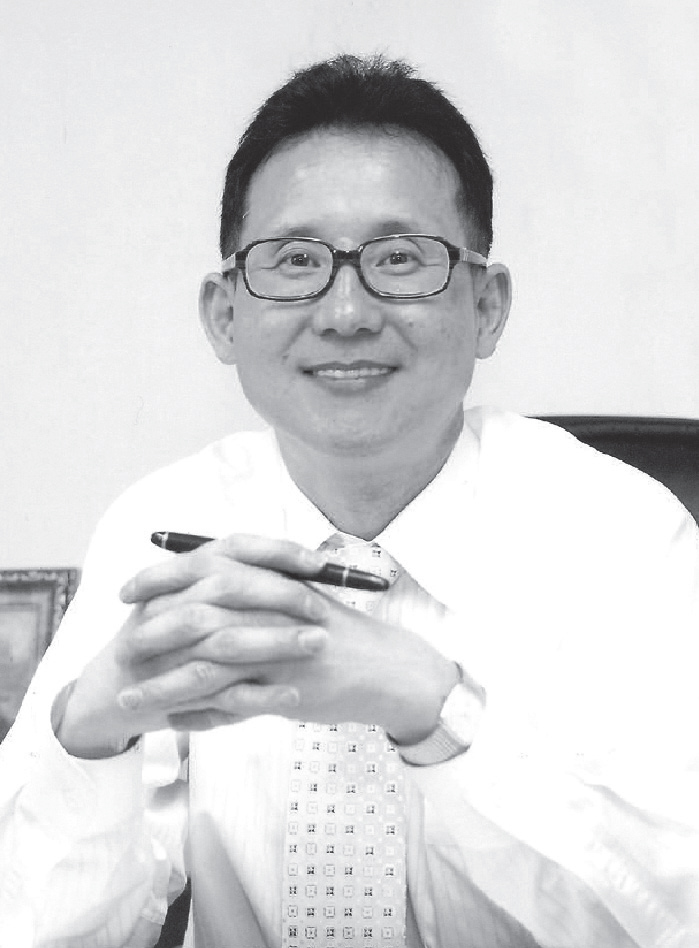
Publisher & Editor Hwang Yongcheol
You can see more information on the SPACE No. March (2026).
3