[DIALOGUE] Experimenting with the Deconstruction and Reassembly of Housing | Unsangdong Architects
photographed by
Namgoong Sun (unless otherwise indicated)
materials provided by
Unsangdong Architects
edited by
Kim Bokyoung
SPACE February 2026 (No. 699)
DIALOGUE Jang Yoongyoo, Shin Changhoon Co-Principals, Unsangdong Architects × Lee Eunkyung Principal, EMA Architects & Associates, Yi Jaeone Principal, Urban Architecture Station Architects
Why Housing?
Lee Eunkyung (Lee): When thinking of the work of Unsangdong Architects (hereinafter Unsangdong), what tends to come to mind are public projects that boldly reinterpret the ways in which ‘publicness’ operates. I am curious, in this context, why this month’s FRAME chose to collate and discuss Unsangdong’s recent housing projects. Is housing an experiment peripheral to Unsangdong’s body of work, or another line of inquiry that runs in tandem with its public architecture?
Jang Yoongyoo (Jang): Because many of Unsangdong’s well-known projects are not housing projects, it may seem that way. However, all architecture – even commercial architecture – possesses a degree of publicness. Moreover, it is impossible to discuss society, the city, or publicness without discussing housing, which is both the starting point of architecture and the most fundamental unit of society and the city. For this reason, we do not separate public architecture from housing architecture. We have a series of projects called ‘House 10’. It is an experiment aimed at reconsidering publicness and modes of sharing within housing, and at reexamining the components of residential architecture. In this process, we take two opposing attitudes. One is an attitude of questioning and exploring the most fundamental aspects of housing; the other is an attitude of seeking alternative forms that resist conventional residential architecture. In a sense, we are attempting to produce John Hejduk’s notion of the ‘uncanny’ within housing.
Shin Changhoon (Shin): At Unsangdong, we do not design residential architecture and public architecture in fundamentally different ways. What we try to do, rather, is to actively experiment with those points where new possibilities remain, while maintaining the essential nature of housing. For this reason, when selecting projects, we also tend not to take on generic residential commissions.
Yi Jaeone (Yi): The intention to produce work of an ‘uncanny’ nature seems consistent with Unsangdong’s other projects as well. That said, when the two attitudes you mention are drawn into conflict, what criteria do you use to decide which direction to pursue?
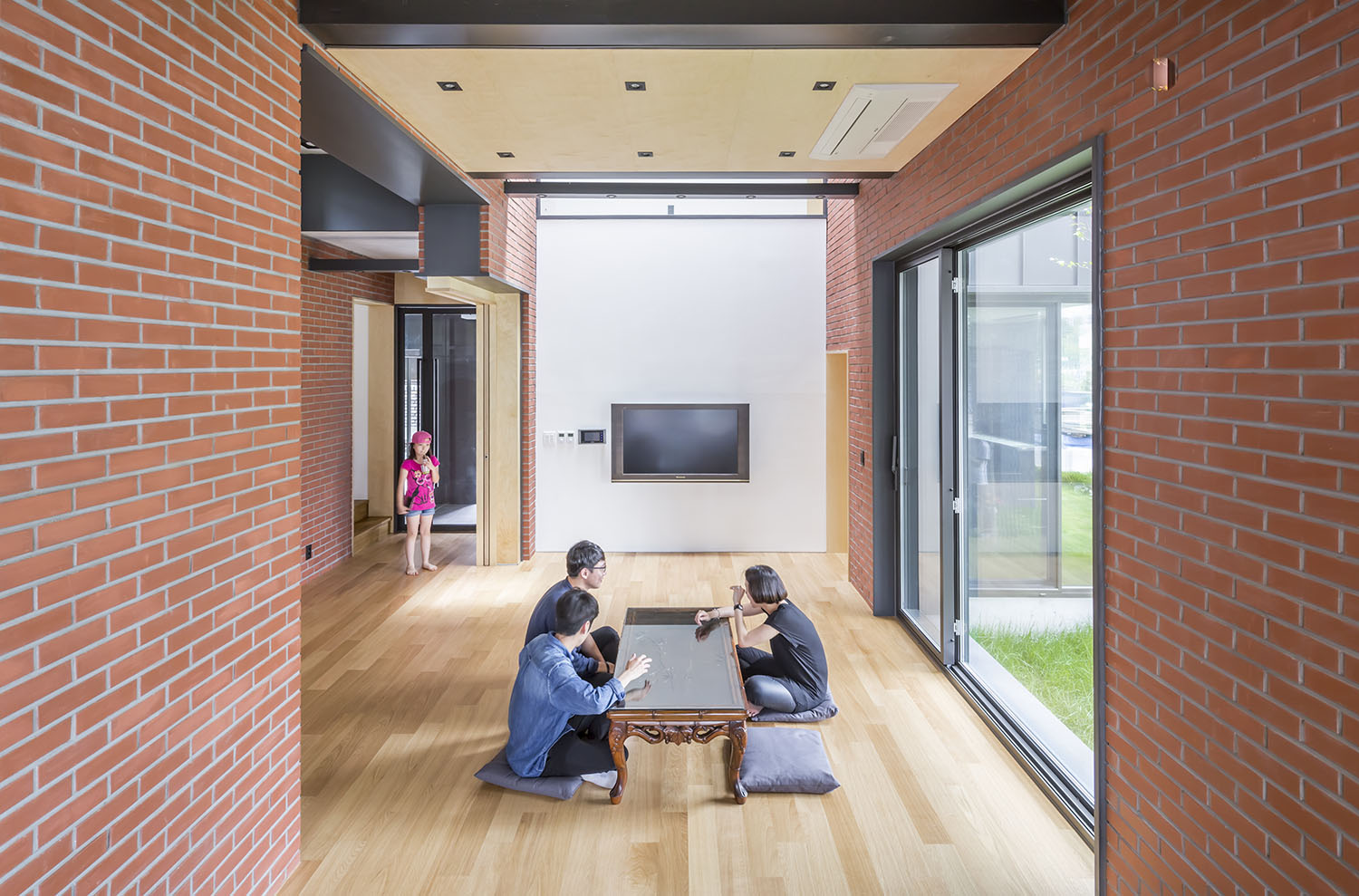
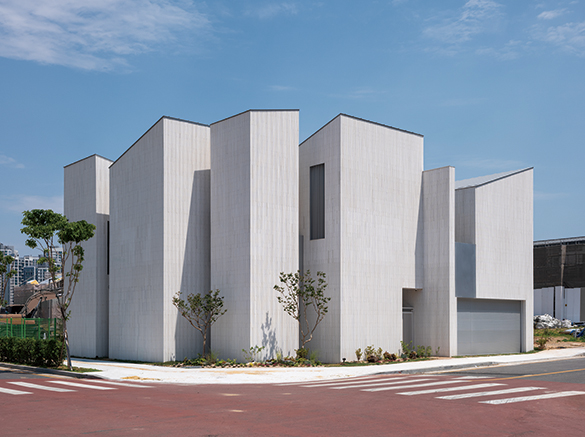
Jang: Because this is not my own house, I cannot pursue the uncanny to an extreme degree. What is required instead is to determine how to appropriately reconcile and balance two opposing attitudes. Differences in specific directions, I think, ultimately stem from differing attitudes toward the resident’s life. In the Chronotope Wall House (2016, hereinafter Wall House), we were able to experiment more assertively with the uncanny. The client, having lived only in apartments, found it difficult to imagine life in a detached house, which allowed us to propose a more progressive direction. In the Cube House (2023), we focused more deeply on the essence of a dwelling. The client of the Cube House had a very clear sense of the kind of life they wanted to lead.
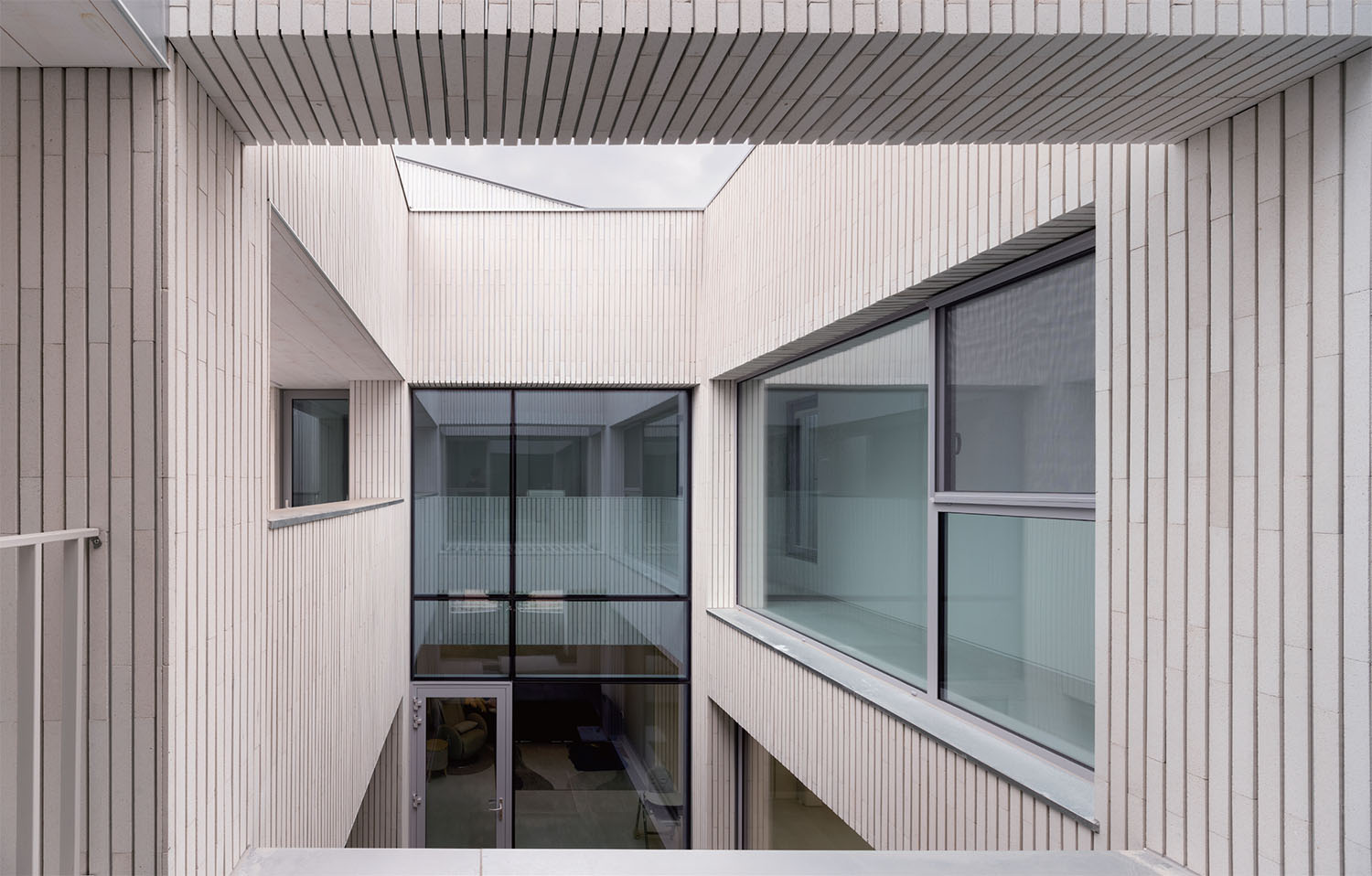
Lee: In fact, I found the spaces of the Cube House to be even more ‘uncanny’, particularly in their attitude towards the public. The universal typology of housing found in new towns such as Pangyo – essentially fortress-like houses that turn their backs on their neighbours – comes across as significantly uncomfortable from a third-party perspective. Rather than merely replicating the client’s desires, Cube House maintains a closed form while preserving a connection to the exterior through a vertical incision, thereby demonstrating an attitude towards the public that differs from conventional insularity.
Jang: We could have designed it to be a perfectly isolated fortress, but instead we created gaps—points of contact with the outside. This was also true of Wall House. In every case, we try to maintain some form of connection to the outside.
Yi: Of course, in the Wall House you may have had greater freedom in design as the architect. But the uncanny aspect that actually restructures our understanding of what constitutes everyday life is more evident in Cube House. Because the project was already small in scale, some rooms were smaller than 3 × 3m. Yet the courtyard allows views to pass in multiple directions, making the space feel larger than it actually is.
Jang: You probably feel that way because you haven’t actually visited the Wall House.(laugh)
Yi: That may be true. In any case, of the four projects, Cube House seems to be the one where the original intentions were most effectively realised. It made me think that different approaches are required depending on whether or not we are working closely with the people who will actually live there.
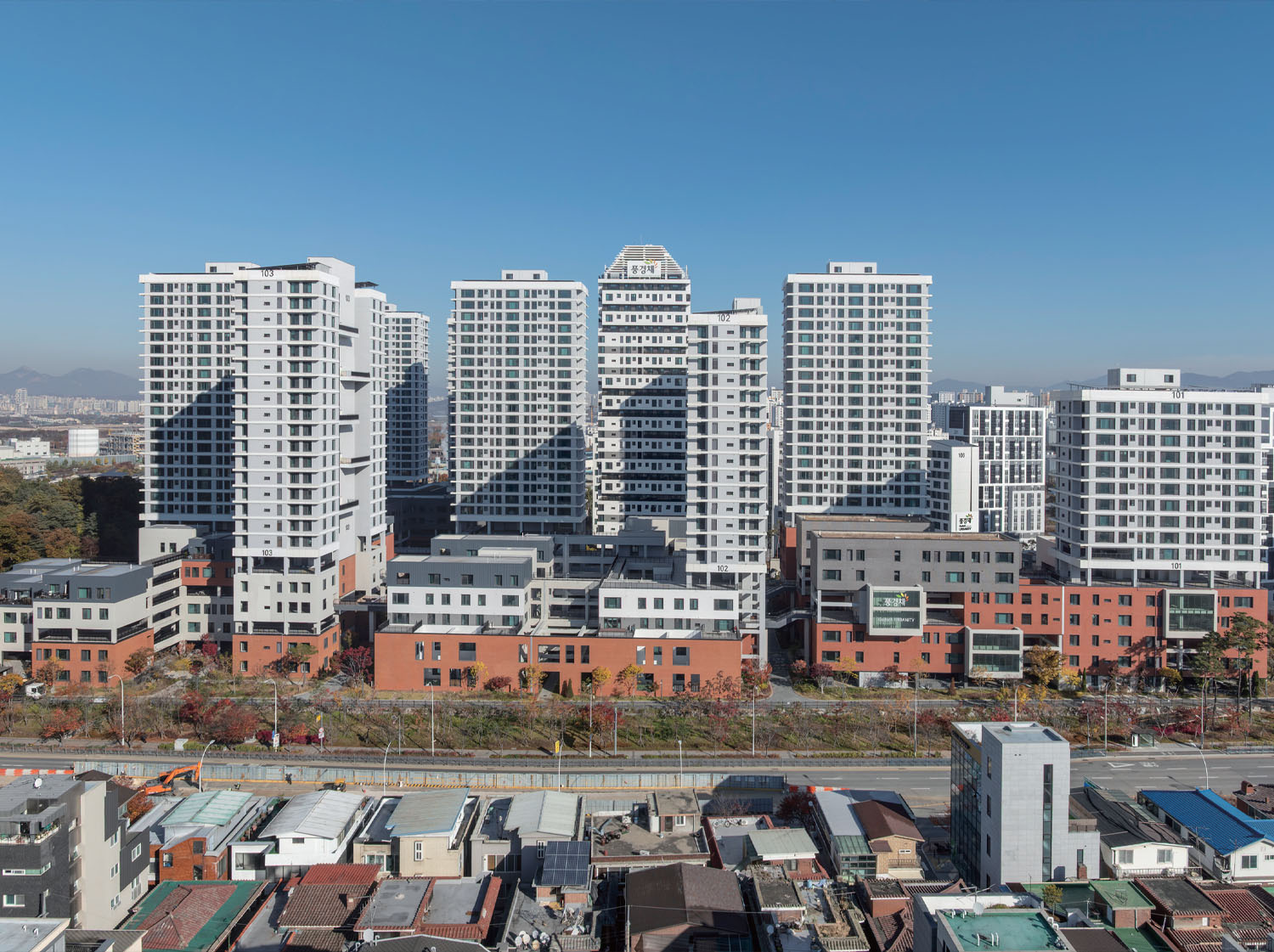
Shin: That’s right. In projects such as Cube House or Wall House, where we are able to work in close dialogue with the residents, we can anticipate their lived experience in much finer detail, which allows the architectural design to become far more rigorously and coherently developed. The design intentions also find smoother expression. In larger collective housing projects such as Godeok Pungkyeongchae Urbanity (2024, hereinafter Pungkyeongchae Urbanity) or Busan EDC Smart Village (2021, hereinafter Smart Village), there were points where our intentions did not fully operate as expected.
Jang: Personally, I do not like the word ‘scale’. It reflects an attitude of reading architecture quantitatively rather than qualitatively. Regardless of whether a project is large or small, it is more important to identify qualitative aspects. Independent of scale, we try to find the potential of each project – whether experimental, uncanny, or public – and to realise it in some way. Our work cannot be discussed solely in terms of size.
Cube House(2023)
Experiments with Combining Elements
Lee: Elements such as courtyards, yards, bridges, and corridors repeatedly appear from detached houses to collective housing. Are these elements conscious devices used to activate space, or strategies that inevitably emerge when working with housing?
Jang: We begin design not with physical elements, but with concepts.
Shin: We first establish a concept and then pursue a design in which that concept can be intuitively understood through architecture. We also often experiment by reintroducing elements tested in previous projects in different ways in later ones.
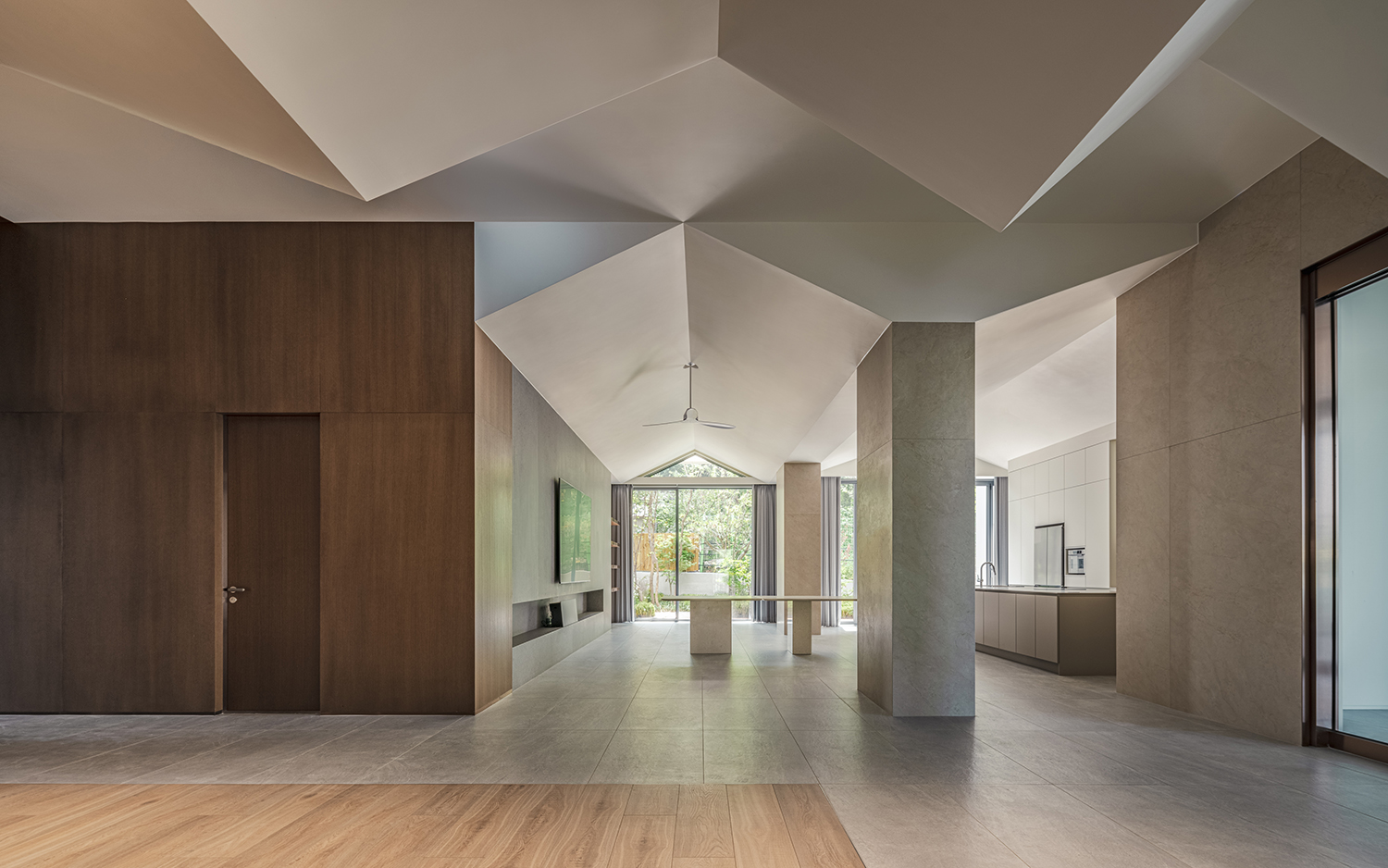
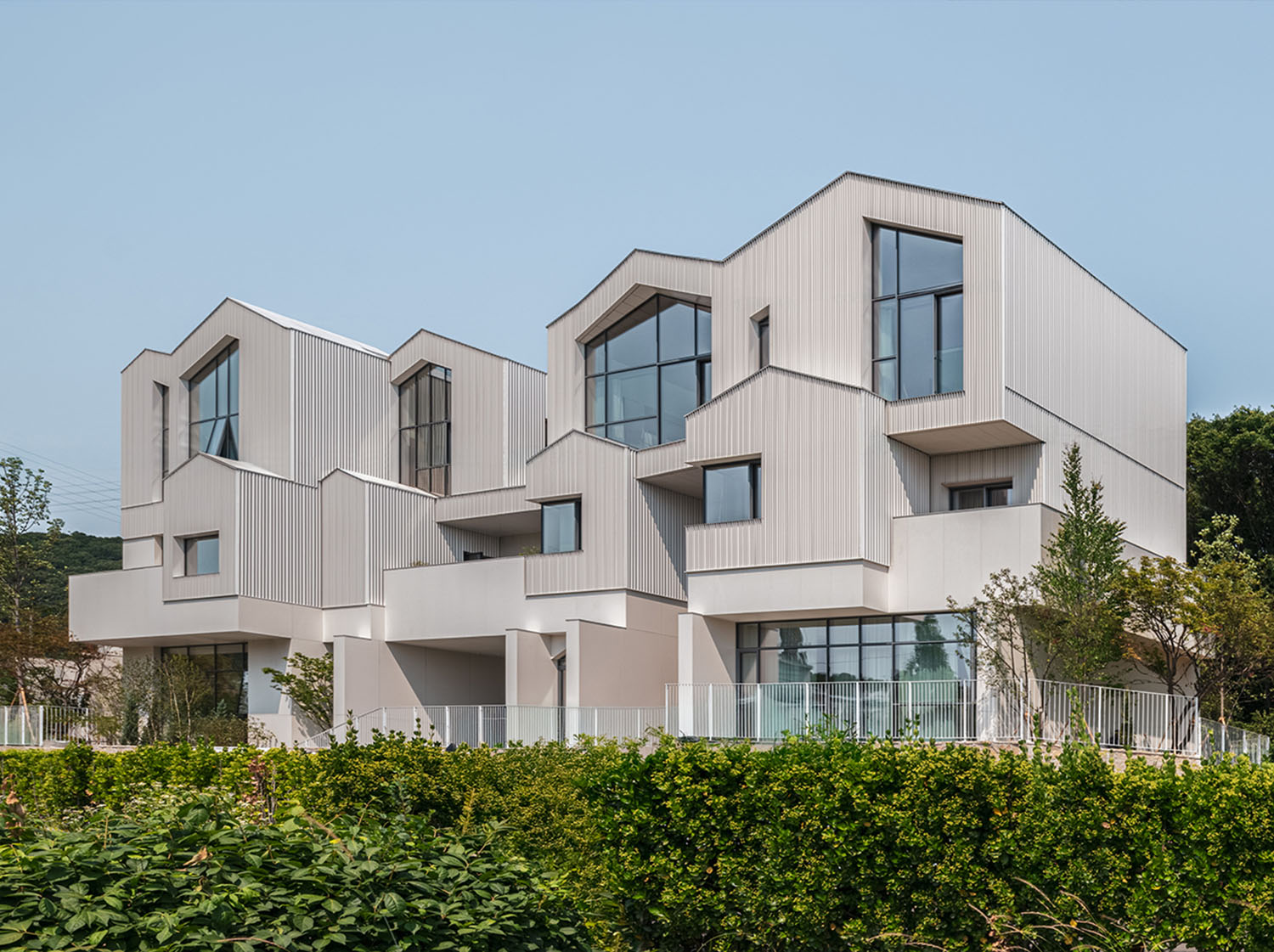
Jang: We have a desire to redefine con-ventional typologies—not only housing, but also commercial and office buildings. In doing so, we often focus on a single architectural element. Just as we experimented with the wall in Wall House, we aim for a design approach close to a prototype. As a result, similar physical elements tend to recur. The interlocking gabled volumes in Buamdong House (2014), for instance, reappear in Quarter House (2025), and the experimentation with walls in Wall House later informed the use of partition walls in Pungkyeongchae Urbanity.
Lee: Beyond the interrogation of spatial elements, Unsangdong’s work also features distinctive formal characteristics. Masses or blocks are divided into very small units or assembled from small components. This approach appears not only in the four housing projects but across other works as well.
Jang: This reflects our position that a city formed by finely divided blocks and buildings is more desirable than one composed of massive blocks or large-scale structures.
Yi: I think this tendency arises because Unsangdong conducts ‘experiments’ centred on elements. There are many ways to experiment: generating typological variations, studying archetypes and collaging them, or constructing small structural components. Unsangdong’s experiments seem to focus on elements and parts. In some projects you experiment with corridors, in others with walls. The process of developing prototypes (parts) over successive projects and assembling them into a whole is compelling. I believe it would be even more meaningful if there were a detailed explanation and systematic organisation of which specific elements and parts are being tested and through what methods. I also found it interesting that during a site visit you mentioned that ‘Unsangdong has abandoned detail.’
Jang: That is correct. Unsangdong has no detail––we abandoned detail. Especially in public architecture, it is difficult to control detail. In that case, we decided to leave only the concept and to let go of detail.
Lee: In a Korean architectural culture that places great importance on detail and materiality, that decision is quite distinctive. It almost feels like a final answer to the question, ‘What can Korean architects actually do?’ It is also evidence of how narrowly the professional scope of architects has been reduced. At the same time, Unsangdong’s attitude of abandoning detail feels like a declaration: ‘Is that all we can do?’
Yi: The key lies in an attitude that accepts reality as a given condition and continues to pursue conceptual experimentation within those constraints. I would expect that the experimental stance of Unsangdong could serve as a foundation for expanding the scope of architectural practice, or the diversity of the architectural field in Korea. At the same time, it also seems that, in practical terms, asking an office of Unsangdong’s scale to sustain continuous experimentation may be an excessive demand, particularly given the necessity of continuously allocating budget to R&D.
Lee: Unsangdong’s office size of around fifty people seems close to the maximum scale for an ‘architects’ office. The size of the office may well be related to Unsangdong’s way of working.
Jang: That is another quantitative way of talking. (laugh) In fact, I think we could work much the same way with twelve people rather than fifty. The reason our office has grown somewhat larger is that we allocate personnel specifically for research. Those research roles are assigned on a rotating basis. This is intended to ensure that ideals and reality are not treated as separate domains, allowing the spirit of experimentation to be fully embedded in everyday practice.
Shin: Currently, Unsangdong has six principals, each with different strengths––housing, competitions, experimentation, or practice. While each principal does not only do what they are best at, this structure does seem to generate synergy.
Jang: At the same time, the teams under each principal rotate. You cannot do only one thing. Working on housing and then suddenly doing a gallery project is what creates synergy.
Lee: That may be the key difference between an architect-led practice and a large corporate firm.
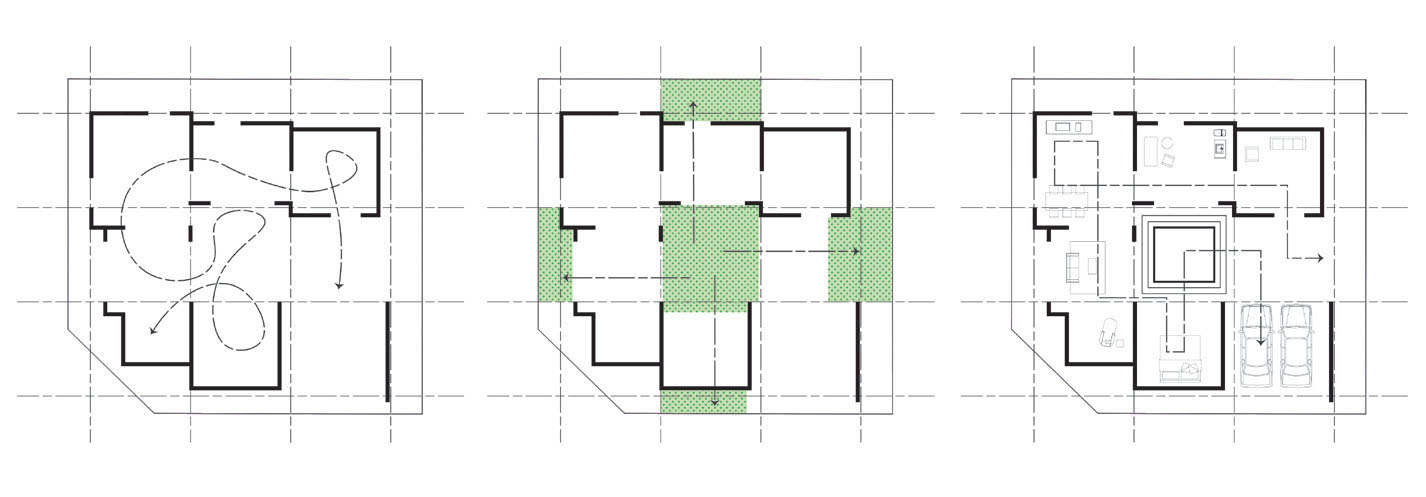
Cube House diagram
New Modes of Sharing and Publicness
Lee: Earlier, you mentioned that qualitative aspects are more important, and in housing, those qualitative aspects lie in the people who live there. There is also a question of scale—that is, tendencies that emerge depending on size. The number of residents and the nature of their relationships fundamentally alter how space is interpreted. From that perspective, I am curious how Unsangdong interprets publicness and sharing in housing across different scales and translates them into spatial form. In explaining row houses, you emphasised sharing, whereas in today’s discussion, publicness has been referenced more broadly.
Jang: In the design process, we do not strictly distinguish between the concepts of sharing and publicness. What interests us is moving beyond convention to discover new forms of relationships.
Shin: Quarter House, in particular, was an exceptional case. It is rare these days for five families to live together.
Jang: It runs completely counter to contemporary society. In a society where everyone is dispersing, the eldest son gathered the family together. Did all members truly want that? (laugh) Though it may sound like a joke, it led us to question whether architects might be imposing the value of sharing, and whether simply gathering people together can truly create a community. That is why we proposed a model of selective sharing. Living together as a family does not mean being together at all times or sharing every meal.
Lee: Selective sharing is generally a concept used when designing shared spaces for an unspecified public. Applying it to Quarter House, a residence for people who know each other intimately, is quite unusual. Moreover, looking at the design of the house today, it is difficult to describe it as selective sharing, since residents must pass through the communal lounge to reach their individual homes.
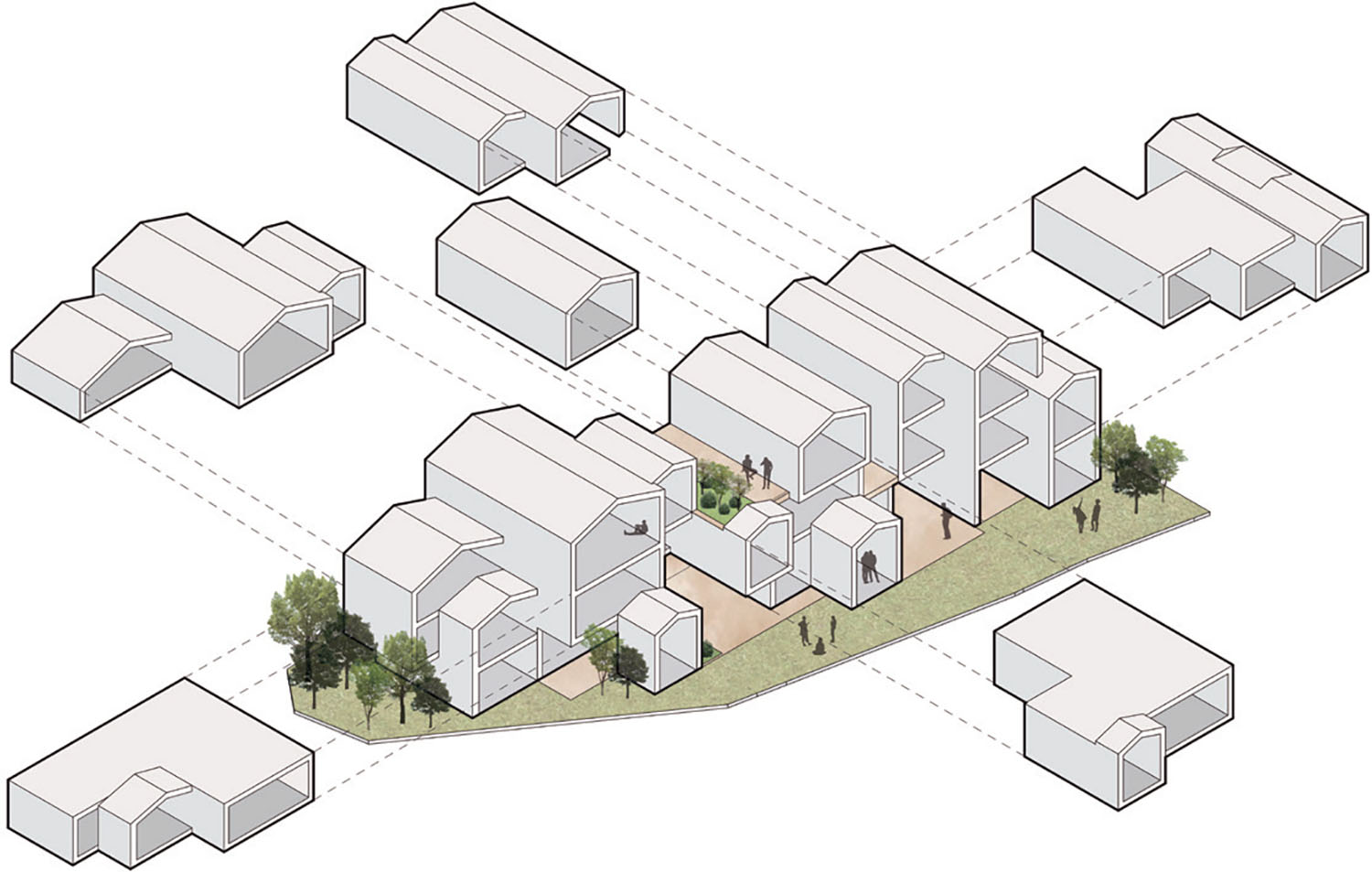
Quarter House diagram
Shin: In the initial proposal, there were multiple staircases connecting the courtyard to the upper floors. This was intended to provide both circulations dedicated to individual dwellings and one that was shared. However, the clients wanted to have only a single point of entry in order to maintain complete control over the security system. Early on, we also proposed a scheme that brought together several detached house––like units, each reflecting a different character, but it proved difficult to persuade the clients with this proposal. The four brothers in their fifties and sixties, who formed the core of the five-family household, were all deeply accustomed to apartment living. As a result, we had little choice but to propose modified individual units derived from apartment plans, fully separated from one another and from the community facilities below.
Lee: When designing collective housing, most people are only interested in their own homes. Almost no one talks about shared spaces. That is why architects must subtly negotiate and persuade in order to design meaningful shared areas. In Quarter House, it seems that the low-rise lounge and community facilities were arranged precisely to create opportunities for residents to encounter one another.
Shin: A similar reason allowed us to designate part of the first floor entirely as a shared space. In reality, only the eldest son – the client – was particularly invested. Otherwise, that area might simply have become another individual unit rather than a community facility.
Lee: I also found it interesting that you initially approached the project as detached houses. Although legally a row house, the conceptual intention to design it as detached house seems to have carried through to the present.
Jang: The very idea of a house shared by five families runs counter to contemporary social trends. That is why I anticipated that, over time, family members would gradually move out, and that in ten years the house might eventually function differently.
Yi: Did you already anticipate that during the design phase?
Lee: In that case, it becomes easier to understand why the individual units were designed to be so independent.
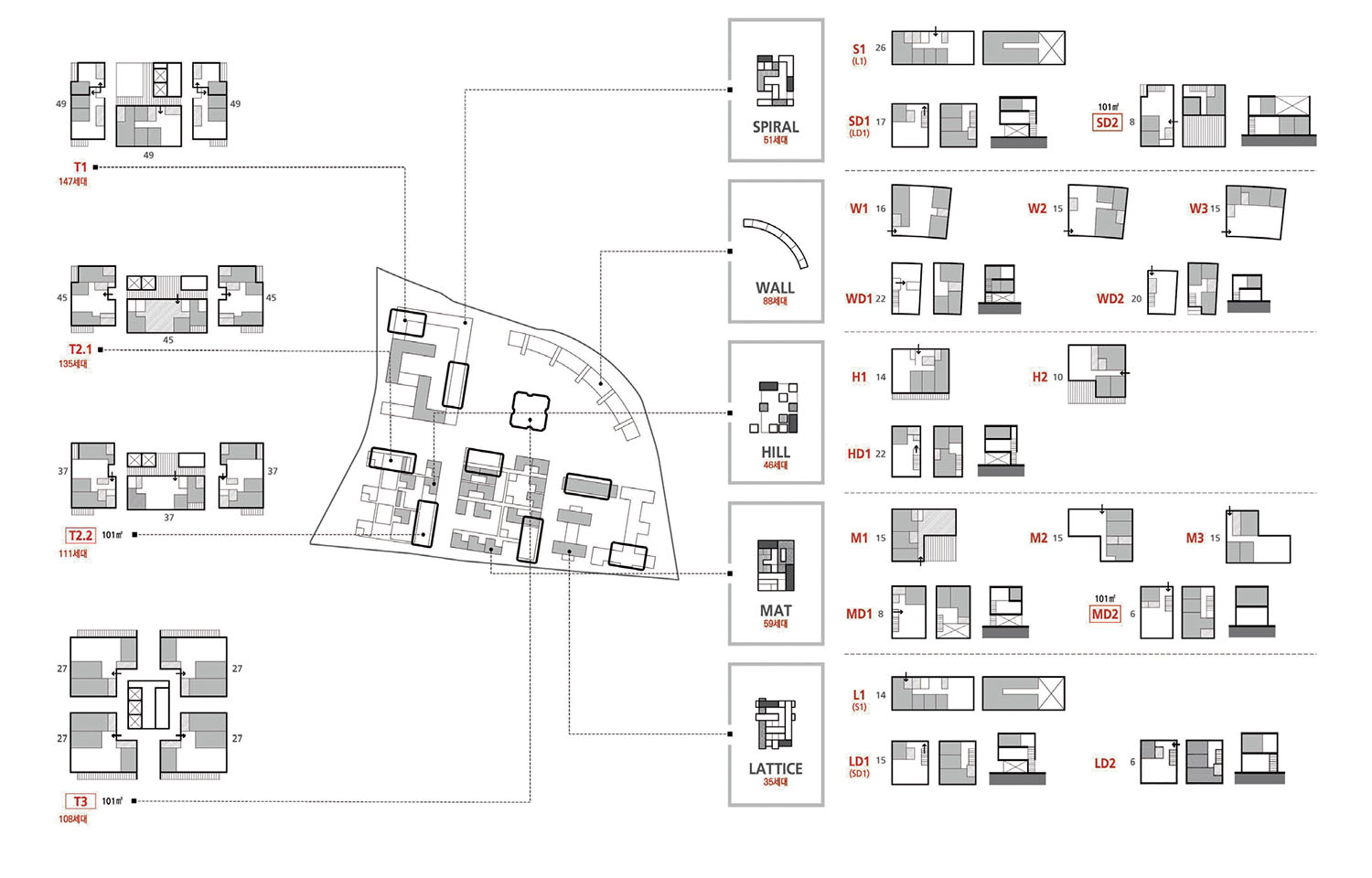
Godeok Pungkyeongchae Urbanity unit diagram by village type
To What Extent Should Architects Anticipate the Future of Housing in Their Design?
Yi: It is interesting that you anticipated the kind of houses that might eventually become a different kind of home. This raises a question I often grapple with myself: to what extent should architects design within what can be anticipated, and how much should be intentionally left open for future change rather than fully determined in advance? I once designed an anchor facility, completed the project with a fully developed operational plan, and even held a series of meetings with local residents. Yet a year later, the operating system had to be rebuilt, and the participants kept changing. No matter how carefully one anticipates and designs, buildings and their actual use often diverge. This is especially true for large-scale collective housing, where prediction is far more difficult than in detached houses. When Unsangdong designs housing, how far do you try to anticipate the future, and how much potential for change do you consciously allow for?
Jang: Predicting the future of housing is certainly not easy. That is precisely why I believe it is important to provide an open framework––one that can accommodate multiple possible futures over time.
Shin: In the case of Pungkyeongchae Urbanity, prediction was genuinely difficult.
Jang: When designing apartments, should the architect’s role really end with the completion of the physical building, or can architects also intervene at the level of programming? In European social housing, for example, there are architects who coordinate the life of an entire neighbourhood. Wouldn’t such figures represent the true public architect? What is needed is an institutional framework that allows architects to engage not only in the design of public architecture, but also in its operation––as agents who intervene in its software. We have reached a stage where architecture must go beyond design alone and continuously sustain the realisation of community.
Lee: In the case of Pungkyeongchae Urbanity, however, applying such an approach is extremely ambiguous. Once residents purchase and move into a for-sale apartment, ownership is immediately transferred. The real challenge lies in whether programmes can be coordinated and operated within that framework.
Godeok Pungkyeongchae Urbanity’s five village types diagram
A New Possibility: Open For-Sale Apartments
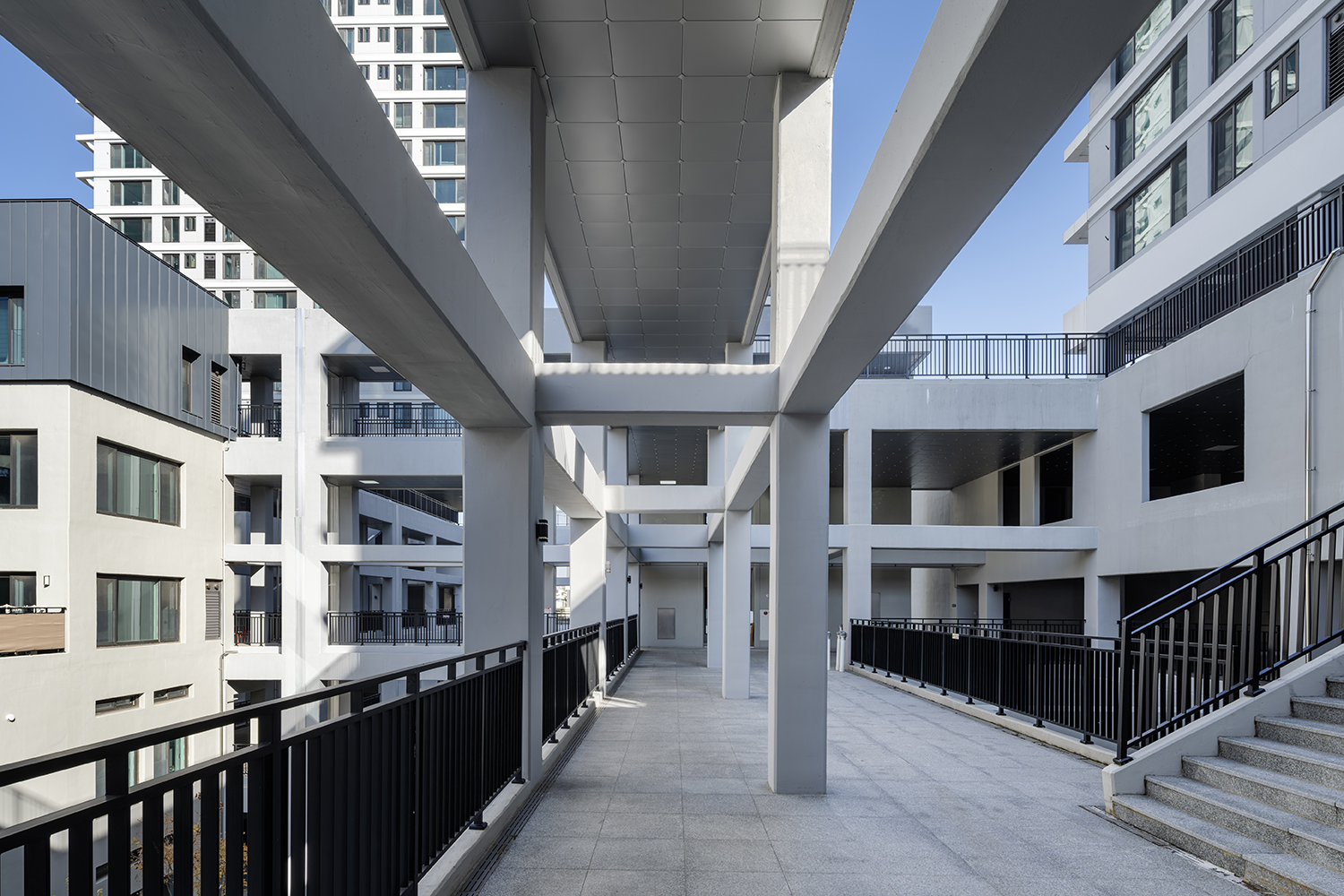
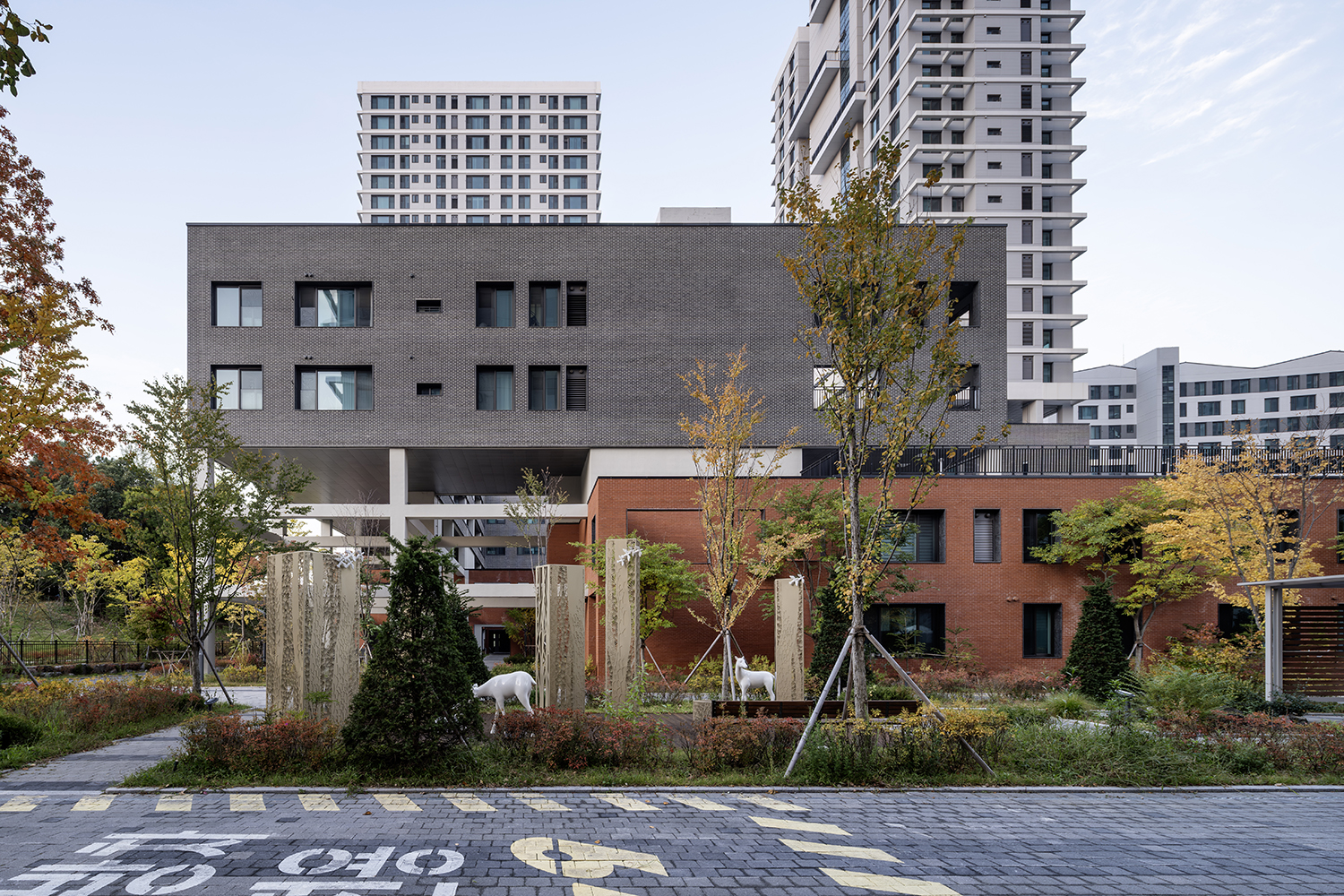
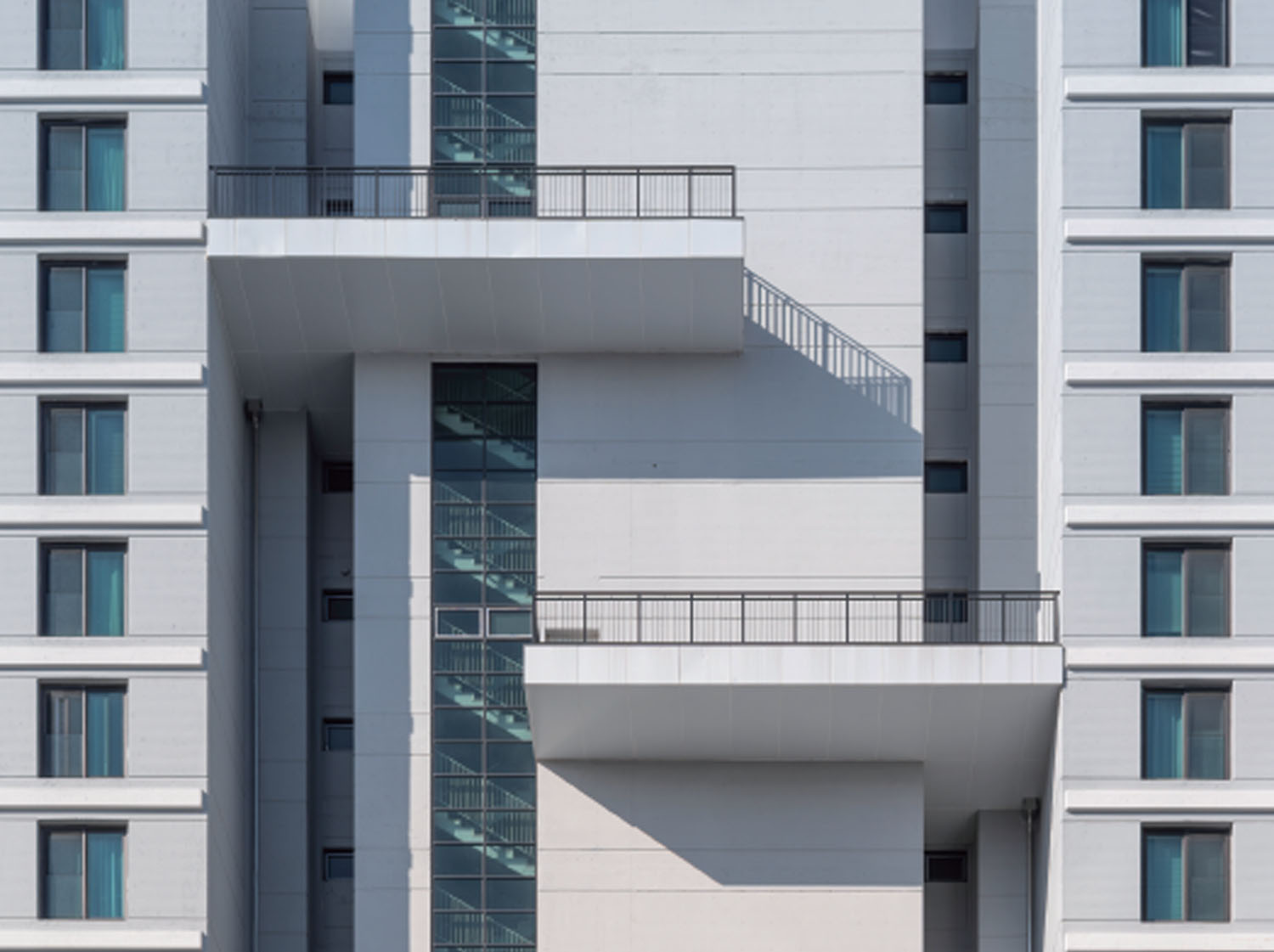
Lee: Pungkyeongchae Urbanity demonstrates that even for-sale apartments can adopt an open format. In the private sector, far stronger market pressures than those affecting Korea Land & Housing Corporation (LH) or Seoul Housing & Urban Development Corporation (SH) make it much harder to move beyond predetermined frameworks. Despite construction challenges, the project realised several key ideas: the differentiation between low-rise and high-rise zones, bridges connecting the lower levels, and a fully open ground-floor street connected to the city.
Shin: The theme of the Godeok-Gangil District is ‘a community of difference and connection’, which required a public pedestrian passage within the complex. This runs directly counter to the preferences of private developers, who typically envision an inward-facing courtyard. We imagined that the third-floor bridge could function as a garden-like corridor exclusively enjoyed by residents. If it worked properly, we anticipated that community life would naturally form around the most accessible green space—the third-floor bridge. We believed that if the bridge achieved even the quality of a typical ground-level walking path in a private apartment complex, it would function successfully. Unfortunately, due to budget constraints, landscaping, equipment, and programmes were not realised. Still, within a housing typology where architects traditionally have little agency, we were able to propose an alternative attitude for private for-sale apartments. If even a few of these ideas begin to function and resonate with residents, it could lead to broader transformation.
Jang: What matters most is whether it actually works. Only then can we move to the next stage. That is why it is so disappointing that the third-floor bridge is not functioning as intended.
Lee: Rather than focusing on constructability, the operation of community facilities, or whether specific programmes function as intended, perhaps it is more important to examine what such an approach signifies today. A privately developed apartment complex without a gate may sound straightforward, but in reality it is far from easy to achieve. Brand-name developers and residents, in particular, almost invariably want a gate. Openness is generally understood as a positive value, yet openness that is imposed can instead intensify residents’ desire to close themselves off. This is why it is crucial to consider how spaces can open up naturally. What is needed is an approach that allows openness to emerge organically while still offering alternative choices. In this sense, Pungkyeongchae Urbanity could serve as a possible model when privately developed, for-sale apartment complexes are required to incorporate openness. That said, the five villages themselves might also have worked perfectly well even if they had remained completely closed.
Godeok Pungkyeongchae Urbanity(2024)
Jang: We did intend a gradation of openness. The main road is fully open, the five villages are somewhat more enclosed, and the bridges on the third level are completely closed to the general public—each condition having a different density of openness.
Lee: Community facilities were distributed throughout the third level to support the bridges. Do bridges necessarily require specific programmes in order to function? In recent apartment developments, community facilities tend to be increasingly consolidated for ease of management. I imagine you must have considered ways for the bridges to operate even without such facilities. Beyond community programmes, are there other architectural elements that enable the bridges to function?
Shin: We dispersed community facilities as anchor elements to activate the five villages, while at the same time considering ways to concentrate the five communities to generate synergy. To that end, various facilities, including a fitness centre, were gathered from ground level to the basement within the landmark tower, which was meant to play that role. However, due to budget constraints, some facilities were eliminated during construction, weakening this centripetal effect.
Yi: I am curious about the specific design considerations – such as corridor width or the separation of sightlines – used to create either a sense of enclosure or dispersion along the bridges. These are precisely the aspects through which architecture, without relying on operation, can autonomously encourage people to gather or disperse. Walking through Pungkyeongchae Urbanity, it was difficult to clearly read such intentions, but what were your original ideas at the design stage?
Jang: We wanted each village to have its own distinct character, even along the bridges. For example, one village’s bridge was designed to accommodate small community gardens, while the bridge connected to the landmark tower looped around like a track. As with many other elements, however, much of this was lost during the construction phase.
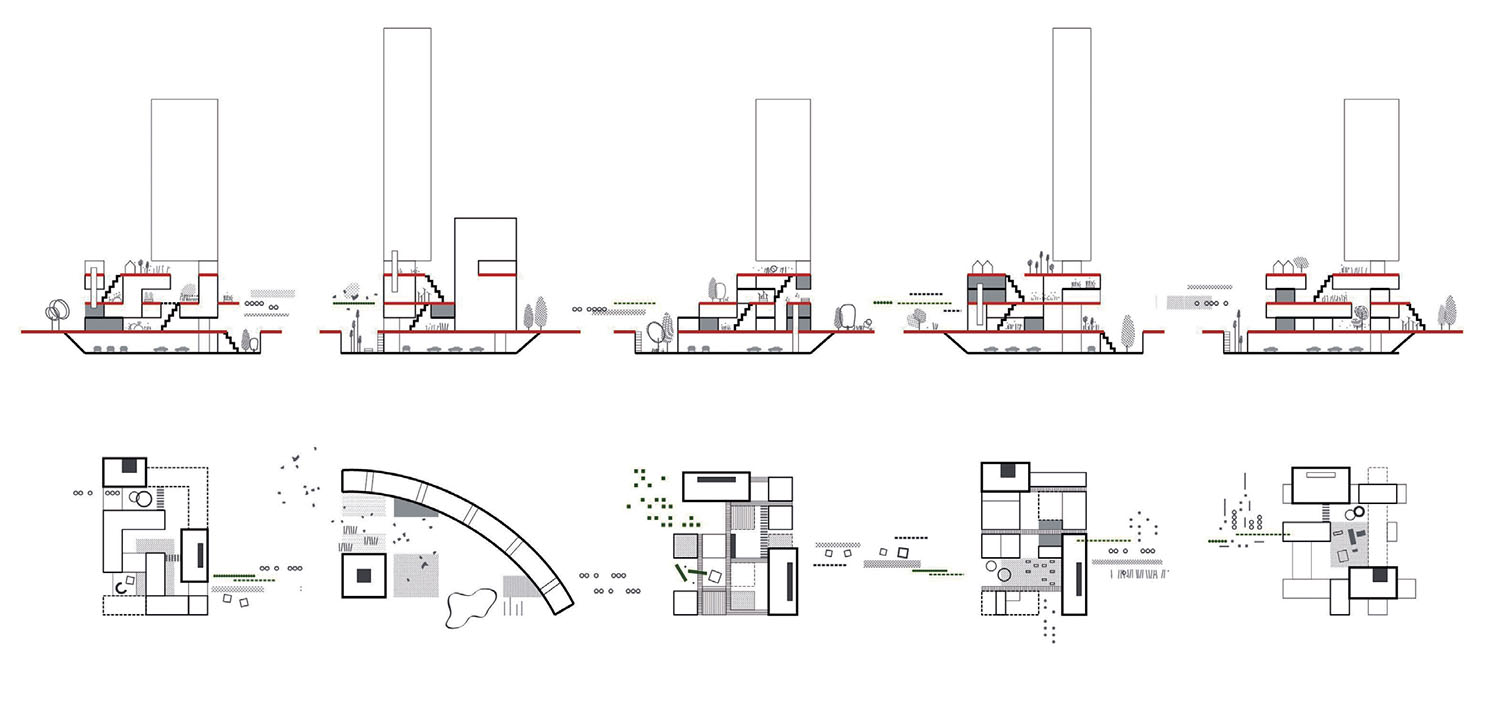
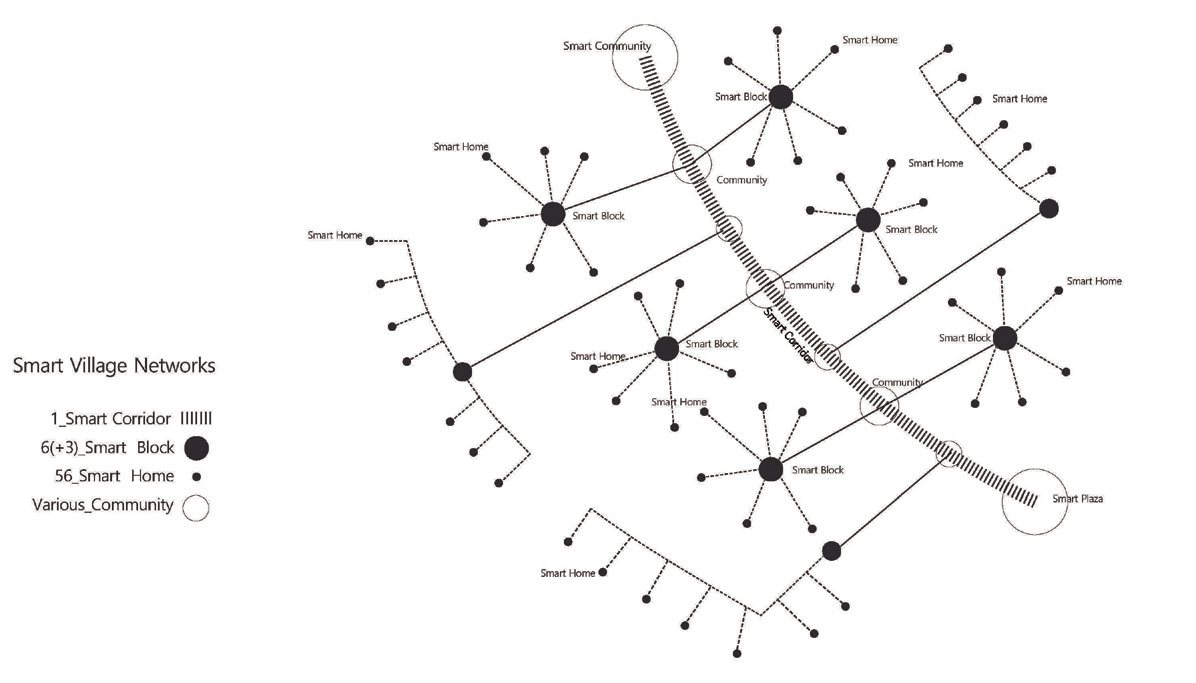
Busan EDC Smart Village’s networks diagram
Communities Shaped by Smart Technologies
Lee: The Smart Village is a five-year testbed in which a wide range of technologies – covering energy, operations, mobility, health, and everyday life – have been integrated. As technology is applied to housing on an increasingly comprehensive scale, the home becomes less an environment cared for and adjusted by residents, and more a system that operates on its own terms. In this context, did Unsangdong regard technology as a tool for managing the house, or as an assumed environmental condition in itself? And did you see the architect as a designer aligned with this transformation, or rather as another agent mediating and adjusting the different speeds of technology and the physical environment?
Jang: Technology should be part of an environment that transforms everyday life and generates social contributions. One reason for creating energy-plus houses is, of course, to meet the energy demands of individual households, but it is also about changing how energy is produced at a societal scale. If such houses became widespread, the number of power plants could potentially be reduced. In that sense, I believed that one of the architect’s key roles is to establish a framework through which technology contributes to society.
Lee: If smart technologies are taken as a given, the systems of pedestrian circulation and roads, as well as spatial layout and the organisation of community spaces, could differ significantly from those of conventional housing complexes. In this project, where did you feel technology most clearly transformed the spatial structure?
Yi: I am curious about this as well. What kinds of experiments took place on the boundary between technology and architecture?
Jang: Technology becomes community—that was the core idea. We wanted the concentration of technologies embodied in the ‘Smart Community Corridor’ to function as a community space, akin to the alleys of a village.
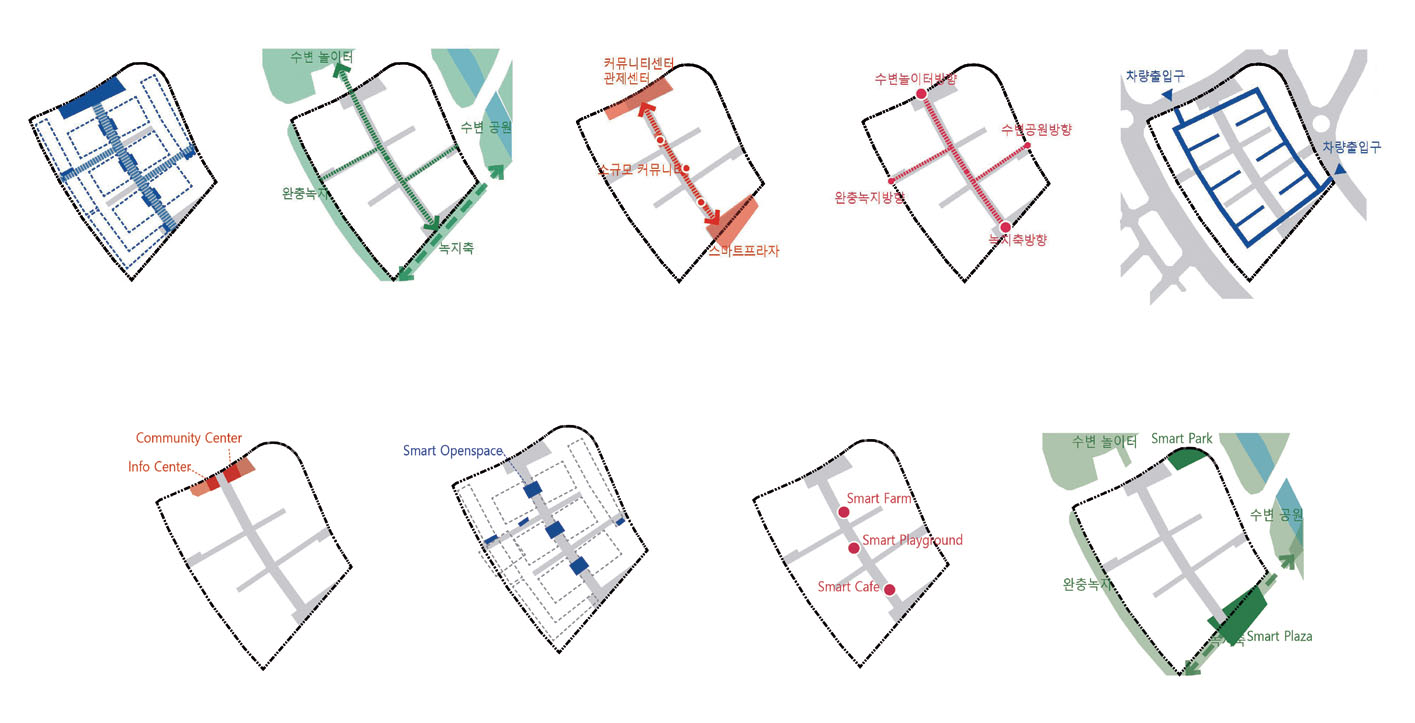
Busan EDC Smart Village’s Smart Corridor diagram (top) and Smart Community diagram (bottom)
Shin: One of Unsangdong’s key interests has been exploring how new technologies can transform residential environments. However, translating technology into spatial change is not easy. Contemporary technologies are often invisible and intangible. That is why we focused on the Smart Community Corridor and the community building. In the initial master plan, we envisioned a truly ‘smart’ village: private cars parked at the entrance of the complex, with only autonomous robots circulating inside the village. Service vehicles for deliveries would enter only up to the Smart Community Corridor, from which goods would be distributed to individual homes. Integrating multiple systems, the Smart Community Corridor was conceived as a community space grounded in spontaneous encounters. Moreover, because the Smart Village connects to a neighborhood park at the front and a youth cultural plaza at the rear, the corridor becomes the most public space in urban terms. It is a technologically intensive shared place that connects residents to one another and links the inside and outside of the complex. However, as the K-water had to consider future sales, private cars were ultimately allowed to approach individual residences, and due to budget constraints, many of the corridor’s systems were gradually eliminated.
Lee: Although the project was not fully realised, the image of a technology-based community imagined by Unsangdong seems more important. Through the Smart Community Corridor, you were likely aiming to create something different from the traditional alley. When community and technology intersect, it seems possible to envision a distributed community that is concentrated through technology. Why did you choose a centralised community model?
Jang: Originally, the Smart Community Corridor was planned as an indoor community space, like a greenhouse. In Korea, spring brings severe fine dust, summers are excessively hot, and winters are extremely cold. The idea was to provide a stable environment 365 days a year. We believed that creating a consistent, weather-independent environment is precisely the kind of technology needed to foster community. We also intended the community building to host programmes linked to bio and energy data collected from individual homes.
Yi: Was there a specific reason for organising six households into a single block?
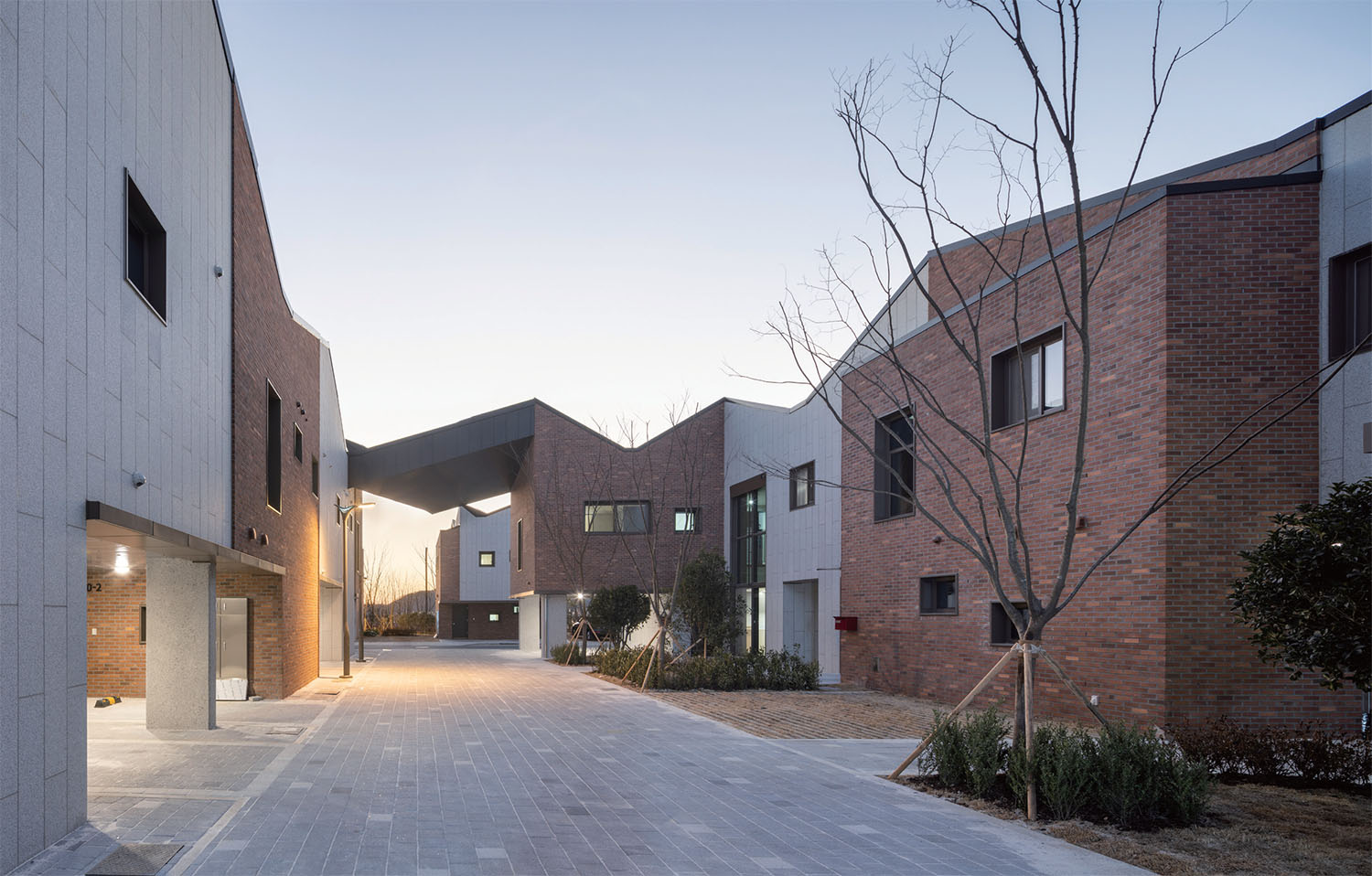
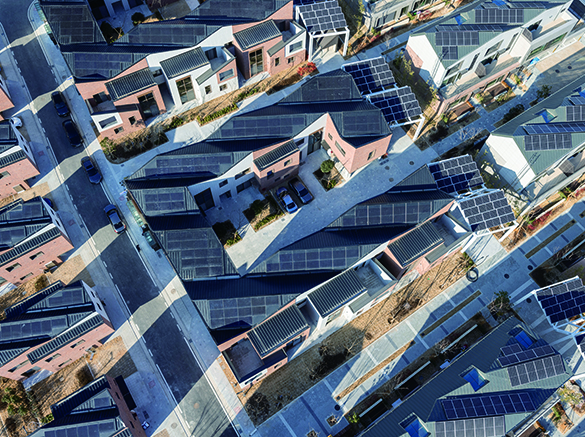
Shin: There were limits to directly connecting every individual dwelling to the Smart Community Corridor. Instead, we adopted a clustered approach, connecting groups of six households. While the corridor ties the entire village together, each cluster of six households forms its own small community. At the same time, the cluster functions effectively from a passive-technology standpoint. With the roofs of the six houses connected, we could secure a larger area for solar panels, and the interconnected second floors allowed for more efficient insulation.
Busan EDC Smart Village(2021)
A Passive House Embodying Architectural Autonomy
Yi: Many passive houses are being built today, but there seem to be few cases where architects intervene substantially in terms of form.
Shin: To ensure efficient energy use, we had to design while coordinating with mechanical and electrical engineers on issues such as window area and the size of individual units. It was certainly difficult to plan based on architectural considerations alone.
Lee: When energy efficiency and passive technologies are prioritised, architectural autonomy tends to diminish. Despite this, the Smart Village strikes me as an experiment that tests how much autonomy architects can retain in projects that require extensive technological intervention beyond architecture. The building envelope of the Smart Village housing units is remarkably thin.
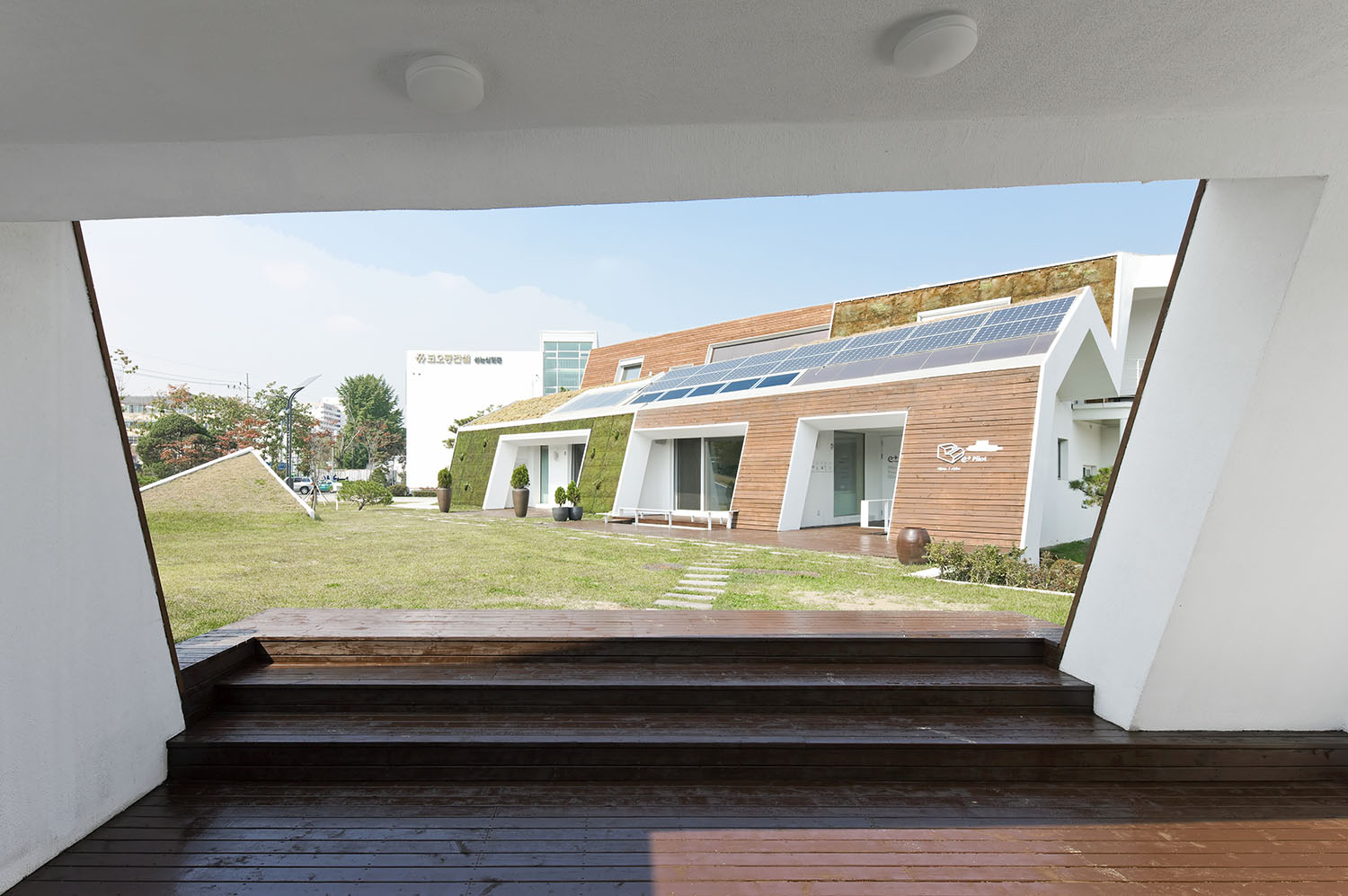
Jang: That is true. Passive houses have a clear typology: a gabled roof, thick walls, and small south-facing windows. These are houses produced purely through technology. We wanted to demonstrate that energy-plus houses – houses that generate energy – can also be created through architectural design. Architectural engagement is essential if residents’ lives are to be enriched.
Yi: In the Kolon E+ Green Home, you attempted to create a new type of passive house by designing a roof structure that connects with the site’s topography. It seems that the Smart Village did not go quite that far. In particular, the Smart Community Corridor was proposed as a conventional greenhouse structure. Other greenhouse configurations or spatial arrangements might have been possible, so I am curious why a linear, archetypal greenhouse form was ultimately selected.
Jang: Early on, we decided to propose a prototype for a street-based community and remained consistent with that direction. Within that framework, the greenhouse-type street was adopted as a design motif.
Shin: Even the concept of a greenhouse street nearly disappeared. As the project progressed, the idea of an experimental Smart Village gradually became diluted.
What Architects Can Do Within Real-World Constraints
Yi: It has been noted that Eco Delta City is a new town planning project involving residential land development by K-water at the Nakdong River estuarine bank. In terms of urban development and planning, it shares certain similarities with projects led by SH. While new ideas can be proposed, such projects face significant constraints in both time and budget. Separately from this project, is Unsangdong continuing research or development on sustainable architecture or architecture that responds to technology?
Jang: The Kolon E+ Green Home can be seen as part of that practice. I also authored a book titled Building Houses with an Ecological Imagination (2014), and have carried out self-initiated projects without specific clients, such as Lifestyle Apartment (2022). Our explorations extend beyond technology alone into multiple domains.
Yi: Busan Eco Delta City, developed by the K-water, involved building a new city on the Nakdonggang River delta – an exceptional condition – yet it was executed using the same conventional land-development methods. This is not an area where architects can easily intervene or regulate. Even so, how might architects engage with such a domain?
Shin: In reality, there was little that distinguished it from other new town developments. The site was essentially vacant land, and our scope was limited to the Smart Village block. Still, by establishing the Smart Community Corridor as a central axis and setting guidelines that allowed clusters of six households to connect, we believe we played a role in enabling these blocks to naturally coalesce into a single Smart Village.
Yi: In Korea, it is not easy for architects to intervene in the making of the city. Yet Unsangdong has undertaken several projects, such as Smart Village and Pungkyeongchae Urbanity, that are not typically open to the conventional architectural market. Have you reflected on how architectural collectives might engage with the city?
Shin: Projects like Pungkyeongchae Urbanity, Smart Village, and even Sinnae Compact City – though not included in this FRAME – may not yield immediately visible results, but they allow us to pose meaningful questions. They also demonstrate the significance of architects acting as coordinators, shaping projects with an understanding of urban context and ideal urban directions.
Jang: Personally, I try to pursue this through what I call ‘architecture as a city’. Rather than treating the city and architecture as separate entities, I aim to embed urban structures within architecture itself. For example, in the lower levels of Pungkyeongchae Urbanity, we laid out an urban structure similar to that of the existing city. In other projects, we might generate entirely different urban structures. Since establishing institutional mechanisms for architects to engage directly with cities remains a distant goal, I am instead trying to explore urban and social dimensions from a fundamentally architectural standpoint.
You can see more information on the SPACE No. February (2026).
Jang Yoongyoo
Jang Yoongyoo is a progressive architect who investigates architectural phenomena and believes that a physical reality originates from architectural concepts. After graduating from Seoul National University’s Department of Architecture and its Graduate School, he founded the Jang Yoongyoo Architectural Experiment Atelier, which later evolved into Unsangdong Architects. His practice focuses on an architecture that responds to the changing and dynamic conditions of a new era. Jang has been awarded the Korean Architecture Award, the Seoul Architecture Award, and the Korea Institute of Architects (KIA) Award, and has gained international acclaim through awards and features in prominent international media outlets. He is currently a Professor at the College of Architecture, Kookmin University.
Shin Changhoon
Shin Changhoon graduated from the Department of Architectural Engineering at Yeungnam University and the Graduate School of Architecture at the University of Seoul. He co-founded Unsangdong Architects with Jang Yoongyoo to pursue and realise experimental and conceptual architecture. He has dedicated himself to archiving and promoting Korean architecture through his leadership of platforms such as ‘Space Coordinator’ and ‘Architecture Sympathy’. Having served as a Seoul Public Architect, he currently acts as the General Architect of Suseong-gu and the Vice Chair of the Suseong International Biennale. His broader contributions to public architectural culture include his tenure as Chair of the Young Architects Committee of the KIA. He is currently an Adjunct Professor at the University of Seoul.
Lee Eunkyung
Lee Eunkyung received her B.S. and M.S. degree in Department of Architecture at Seoul National University, and gained her professional experience at Kiohun Architects & Associates. She also received a Masters in architecture and urban design from the Berlage Institute. After practicing at Xaveer De Geyter Architects and Riken Yamamoto & Field Shop, she founded EMA Architects & Associates in 2011.
Yi Jaewon
Yi Jaewon is an architect, urbanist, and educator. After graduating from the AA School, he founded Urban Architecture Station Architects with the belief that investigating the relationship between non-physical structures central to metropolitan culture and urban space can improve quality of life. He teaches and directs Yonsei Studio X and AAVS Seoul, exploring the transformation of the compressed metropolis through sociality and individual emergent spaces.