
SPACE November 2025 (No. 696)
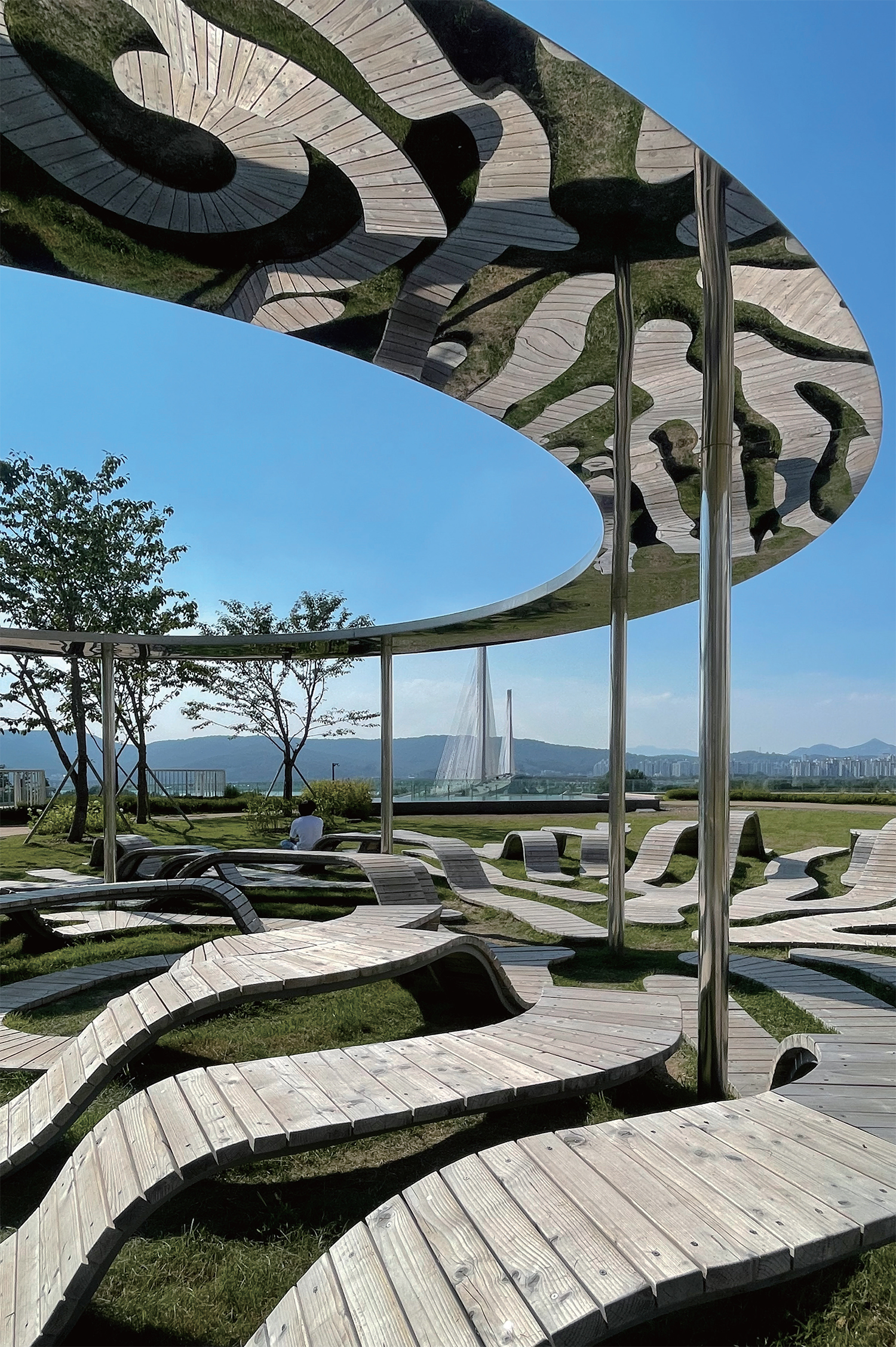
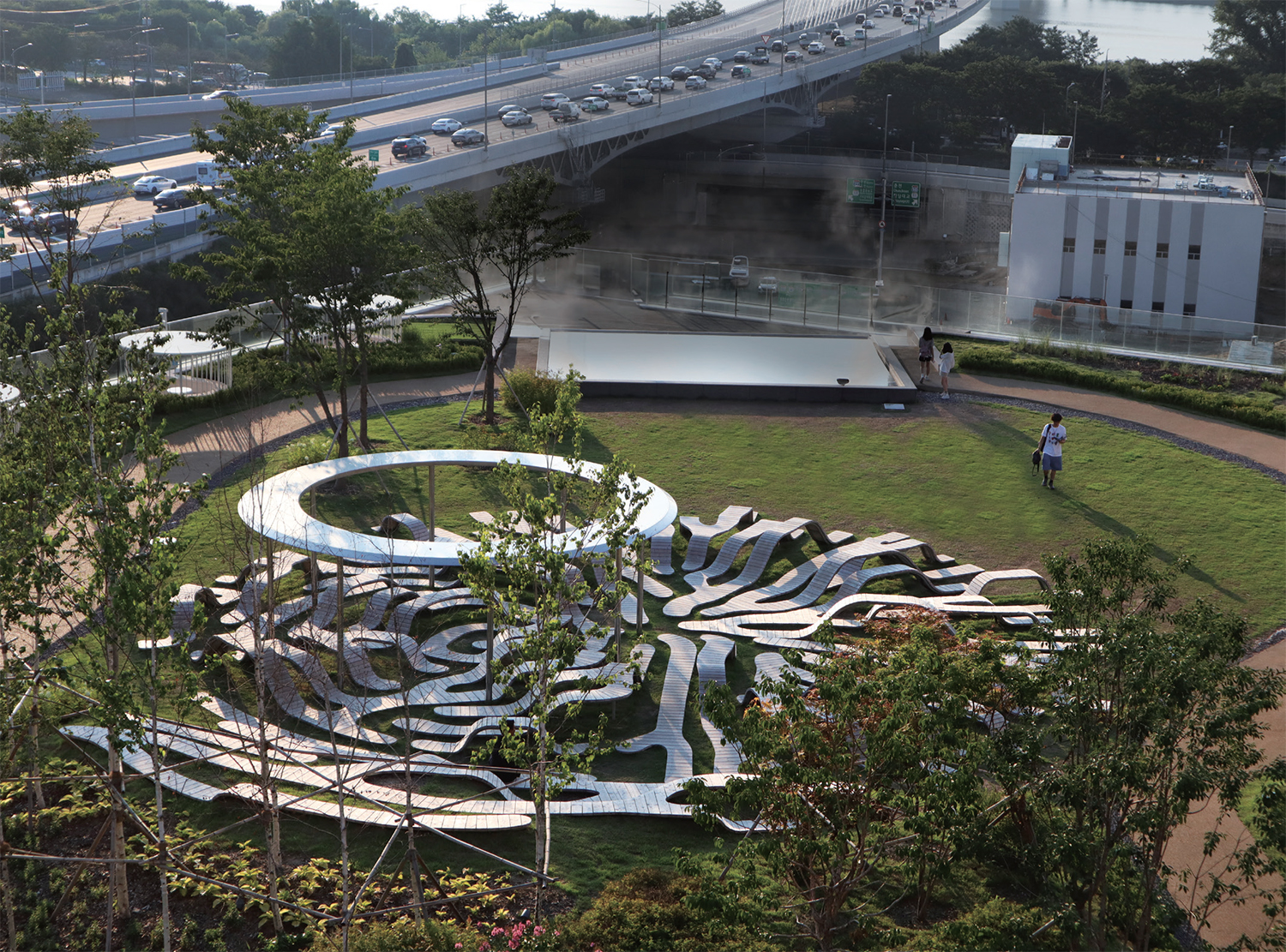
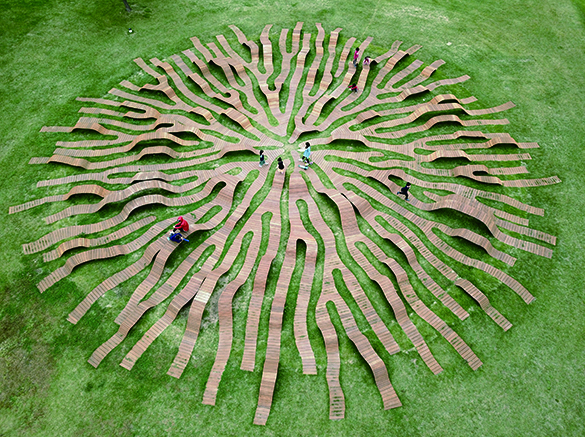
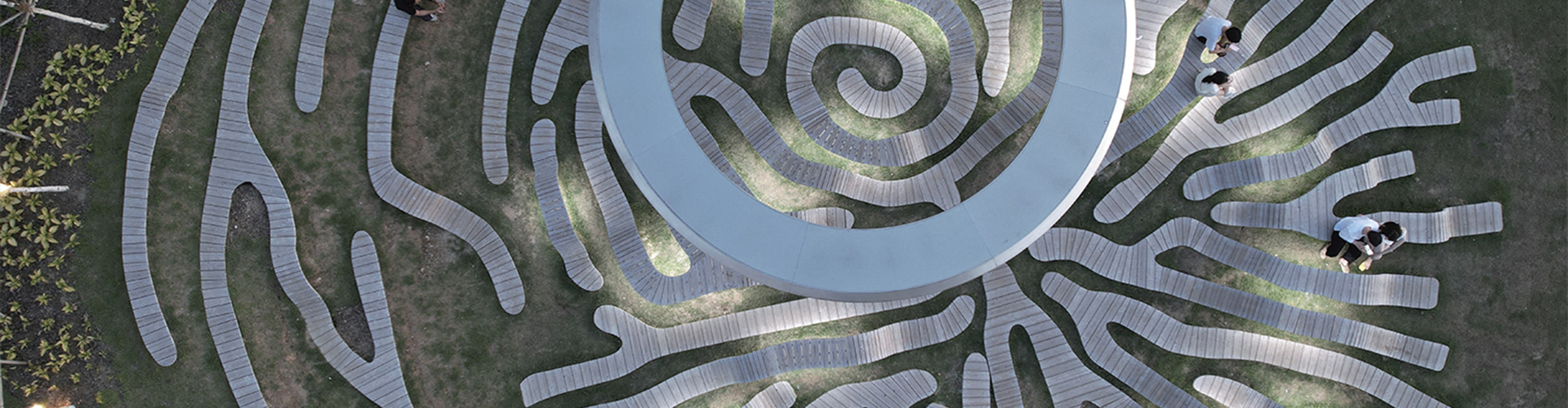
Reaction Field (2025), a large piece of public furniture installed in a rooftop garden in the city centre, is a curvilinear structure that diverges and expands from its core, offering an experimental exploration of new spatial patterns in public space. The central circular structure functions as a device that emphasises centrality, while the curves branching out from it extend and vary within a set of defined rules. This curvilinear pattern is based on the reaction–diffusion system proposed by the British mathematician Alan Turing. The theory mathematically models the combination of simple chemical reactions and diffusion processes, explaining the spontaneous formation of ordered patterns such as animal markings or plant growth forms. Reaction Field translates this principle into an algorithm, regulating the flow, intervals, and elevations of the curves to present not an arbitrary form but the outcome of self-organisation.
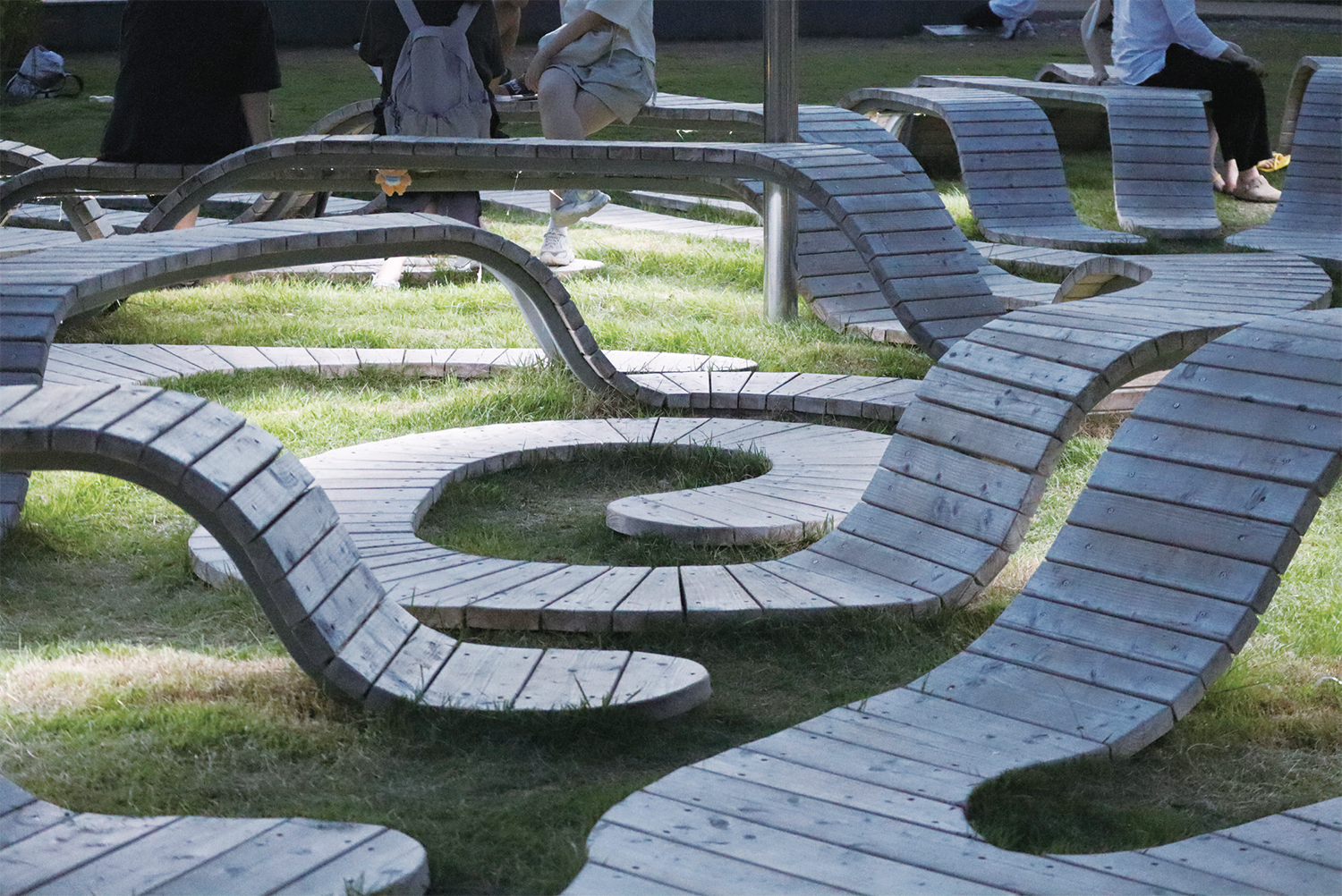
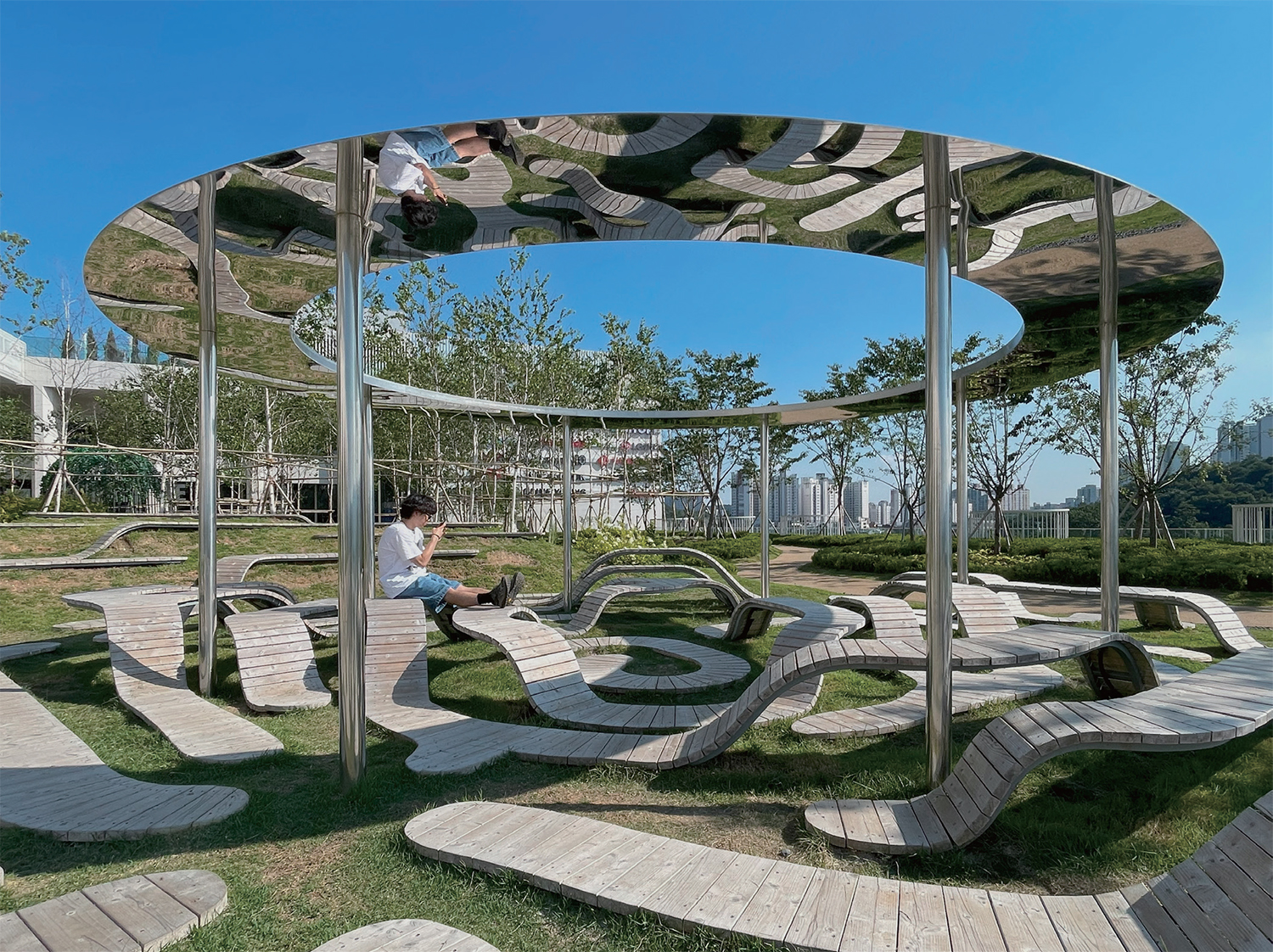
In particular, the circular canopy at the centre not only redefines the spatial character but also acts as a new variable in the diffusing pattern, creating an interplay between the two elements. The stainless-steel finished surface reflects the pattern of the ground, intertwining the upper and lower, nature and artificiality, the real and the reflected. The canopy functions as more than a simple shade; it operates as a mediator that induces spatial responses. In terms of structure, it combines a metal frame with a white siliconised-wood deck. The white finish creates a sharp contrast against the surrounding greenery and riverside scenery, accentuating the fluidity of the curves. This contrast with the ordinary lawn of the park goes beyond mere visual effect, transforming the whole park into a single, unfamiliar image of space. The curves are not mere drawings on the ground—they rise to various human-scaled heights, transforming into functional furniture such as benches, tables, and stages. Lighting is embedded beneath the curves, so that at night, light seems to flow out from within, converting the physical patterns of the day into patterns of light at night.