
SPACE January 2026 (No. 698)
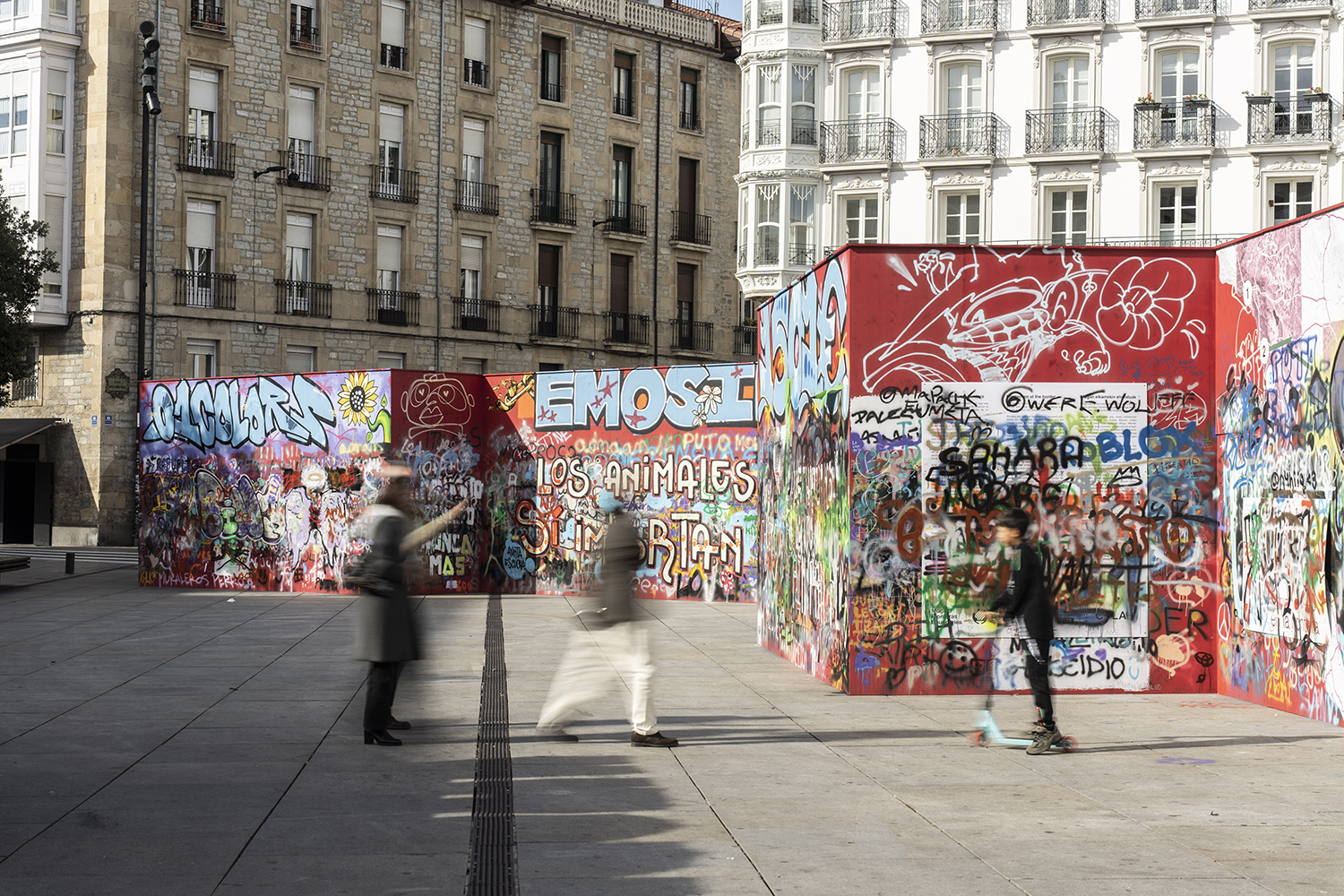
Vitoria-Gasteiz Pavilion, Utopia: No Entry (2025) by Sebastián Bayo
The 5th 2025 Mugak/ Basque Country International Architecture Biennial was held across the three cities of Bilbao, San Sebastián, and Vitoria-Gasteiz under the theme ‘Castles in the air, or, how to build a utopia today’. The main exhibition ‘Eu-topías, Ou-topías’, featuring 12 teams, and the three pavilions installed in each city, focus on questioning the nature of utopia in our time and seeking alternatives through acts of the critical imagination, rather than presenting definitive answers. Why is imagining utopia important? And what is the reason for erecting a ‘wall’ in the borderland Basque Country, like the Humanise Wall at this year’s Seoul Biennale of Architecture and Urbanism? Here, SPACE hear from María Arana Zubiate, the Curator who has led the biennial for two consecutive editions, and Sebastián Bayo, the Architect who designed the pavilion ‘Utopia: No Entry’ in Vitoria-Gasteiz.
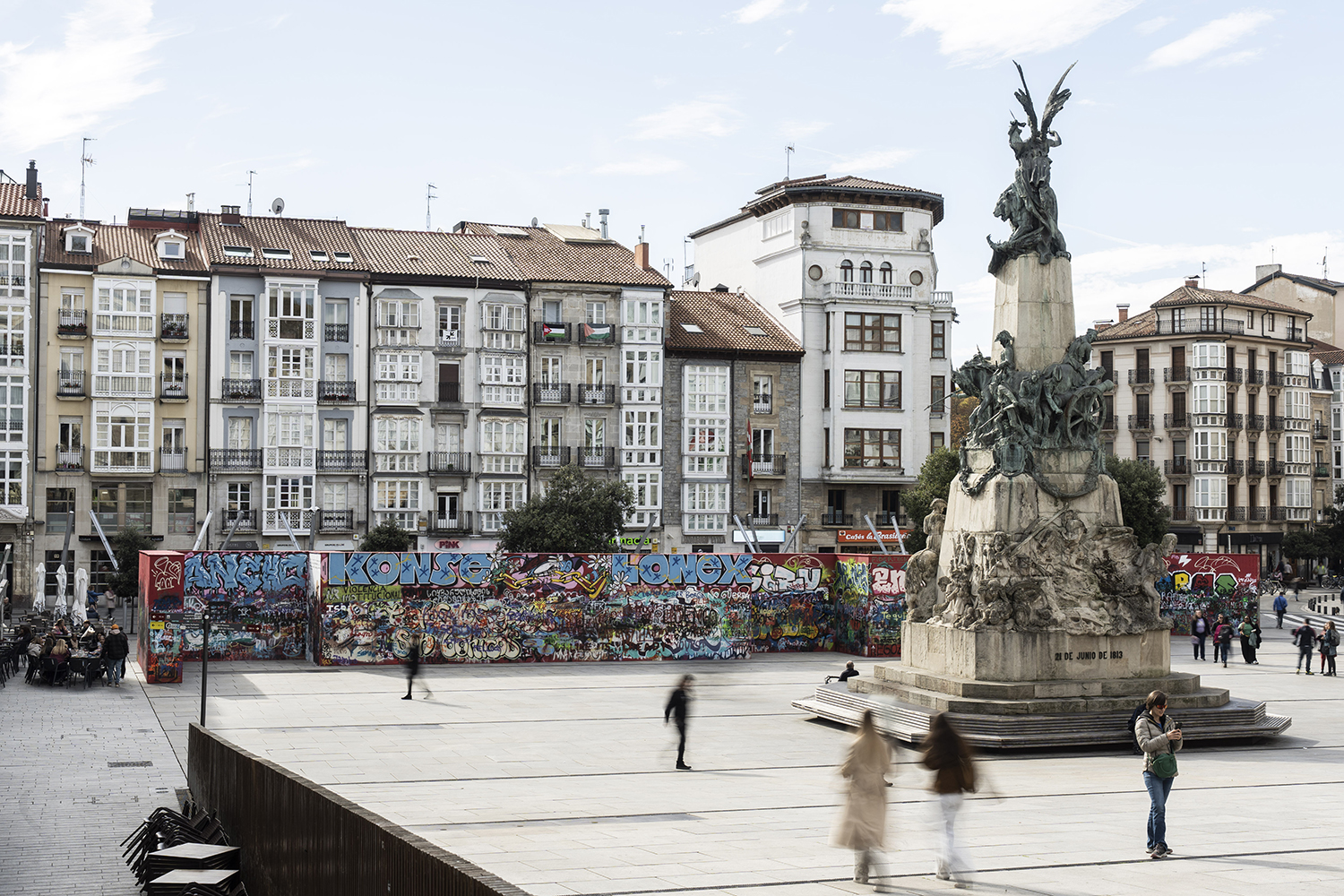
Vitoria-Gasteiz Pavilion, Utopia: No Entry (2025) by Sebastián Bayo
interview María Arana Zubiate Curator, Sebastián Bayo Architect × Kim Bokyoung
Boundary, a Territory of Encounter, not Separation
Kim: What are the unique characteristics of Mugak/, created by the distinct regional context of the Basque Country, that distinguish it from other international architecture biennials?
Arana: Unlike other biennales, Mugak/ defines itself as an open, collaborative experiment—an arena where diverse voices converge. Its ambition is to become a true meeting ground between disciplines and citizens. As a biennale that emerged from the initiative of the Basque Government’s Directorate of Housing and Architecture, it places particular importance on its efforts to become a platform for cross-border dialogue, at a territorial level. In this edition, for instance, partnerships have been consolidated with cultural programs in southwestern France to encourage mutual learning and to engage with the debates and sensibilities emerging beyond its frontiers.
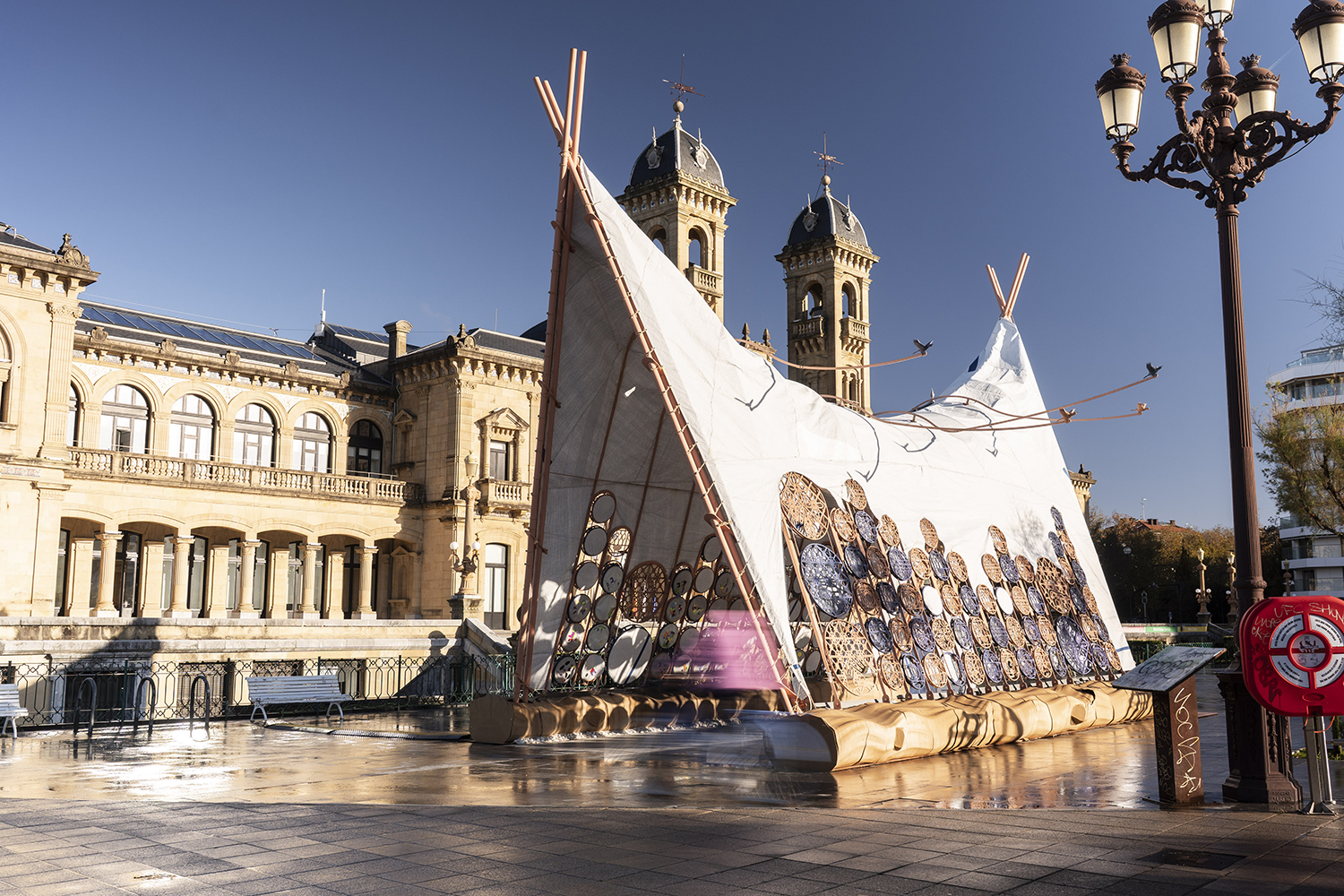
San Sebastian Pavilion, Lightness and Denunciation: stitching as a feminine utopia (2025) by Izaskun Chinchilla Architects
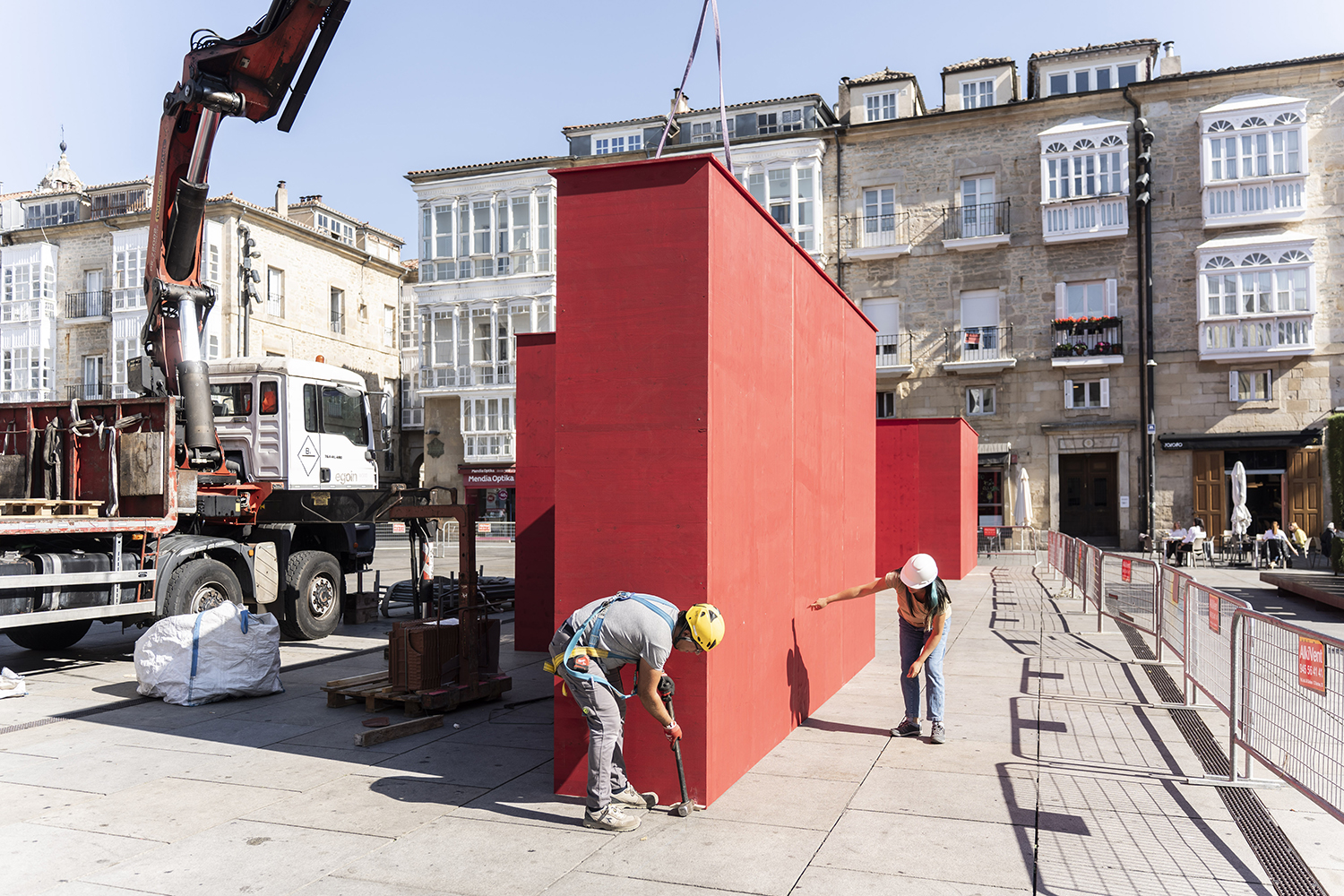
Utopia: No Entry during installation
Kim: You served as the Curator of the 4th edition and were appointed again for the 5th. What kind of critical concerns did the 4th Biennial’s theme, ‘Rebuild, Reinhabit, Rethink’, seek to raise, and how have these been extended in the 5th Biennial’s theme, ‘Castles in the air, or, how to build utopia today’?
Arana: Both editions share a concern for the hostile and destructive context in which we live and for the role architecture plays in this shifting landscape. The aim is to think of architecture as both a mirror and an agent of its time, as a practice that, beyond form, shapes social relations, influences politics and the economy, and above all has a direct impact on the environment. In the previous edition, the biennial addressed the destructive and reconstructive nature of architecture, asking which social and ethical values should guide our actions in rebuilding territories and communities that are more resilient and just. In the midst of our climate and social emergency, a bold and disruptive creativity is emerging. From this gesture emerges an expanded conception of the discipline: a polyhedral, collaborative architecture of shared responsibilities. In this fifth edition, the Biennial adopts a more optimistic outlook, a critical exercise in imagination that seeks to identify the creative drive that propels social and spatial transformation. Utopias are often dismissed as naive or unattainable. However, many of the urban and political proposals that are now taken as possible were born precisely as impossible dreams. Yet we live in a time dominated by pragmatic and functional logic, in which economic efficiency and technical sustainability seem to have displaced the capacity to speculate about desirable futures. As Paul Ricoeur warned, ‘a society without utopia is a society without purpose.’ From this conviction, the fifth edition of Mugak/ is conceived as a space for recovering confidence in architecture as a tool for thought, imagination and collective transformation.
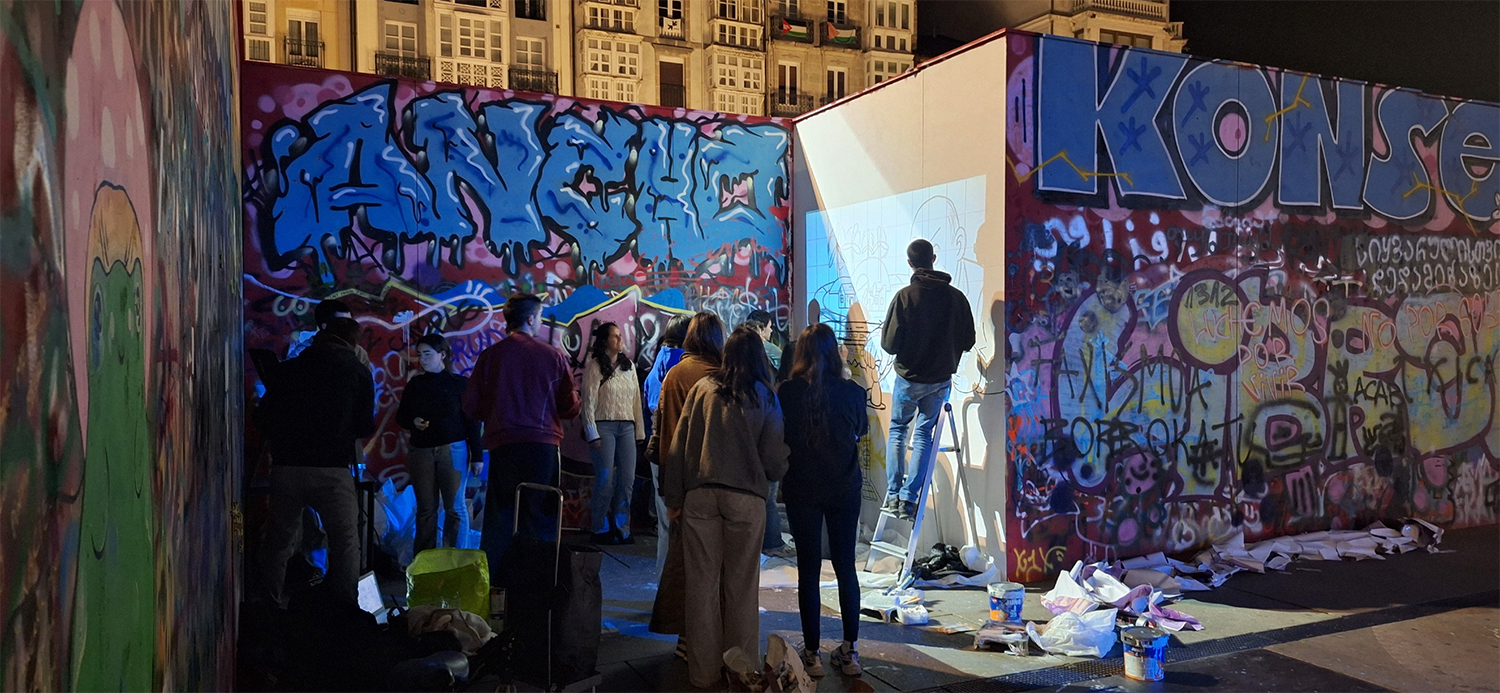
Public gathering at Utopia: No Entry ©Sebastián Bayo
A Wall Revealing Invisible Barriers, ‘Utopia: No Entry’
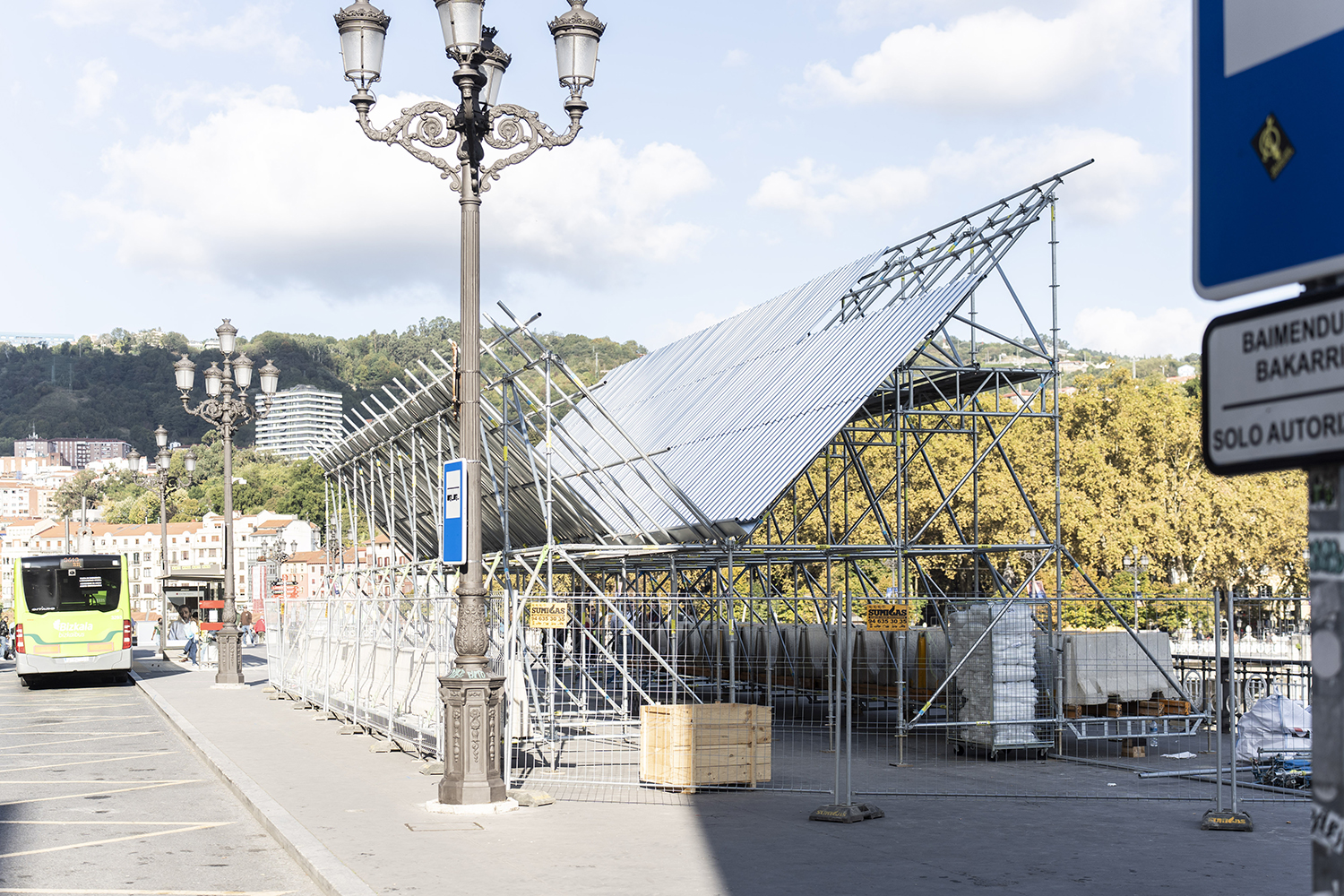
Bilbao Pavilion, Etxenoi (2025) by AMA Architectural Office ©4
Kim: What does ‘utopia’ mean to you, and how did that concept shape the starting point and design approach of this pavilion?
Bayo: In many cases, utopian projects propose how to construct new paradigms or new ‘perfect’ societies from scratch. With this proposal, I wanted to shift the focus onto our own ‘utopian’ society, and above all onto its limits, in order to question the barriers that define how we live in relation to one another. Rather than providing an answer, my aim was to put forward topics for reflection: ‘Can a utopia be exclusive?’; ‘How utopian is it to imagine a world without borders?’; ‘What is the role of architecture and architects in all this?’; ‘Is it necessary to think in terms of new utopias, or should we be paying more attention to improving the society we already inhabit?’ The zigzagging layout of the wall evokes the extension of Vitoria-Gasteiz medieval city wall. City walls, built for defensive purposes, were always limits to urban expansion, and their demolition became a symbol of social and urban progress. The intention was to invite reflection on how taking progress for granted can lead us to repeat past mistakes, and how walls can be rebuilt before we even realise it. Just as social progress is slow and hard-won, we can move backwards with extraordinary ease and speed. In my view, the only way to continue advancing as a society is by cultivating a citizenry that is educated, critical, creative, engaged in dialogue, and empathetic. Beyond the symbolism I intended to give the project, this pavilion has also been a social experiment—one that has revealed how the people of Vitoria-Gasteiz have used their freedom of expression to generate an intense debate that has extended far beyond the physical surface of the wall.
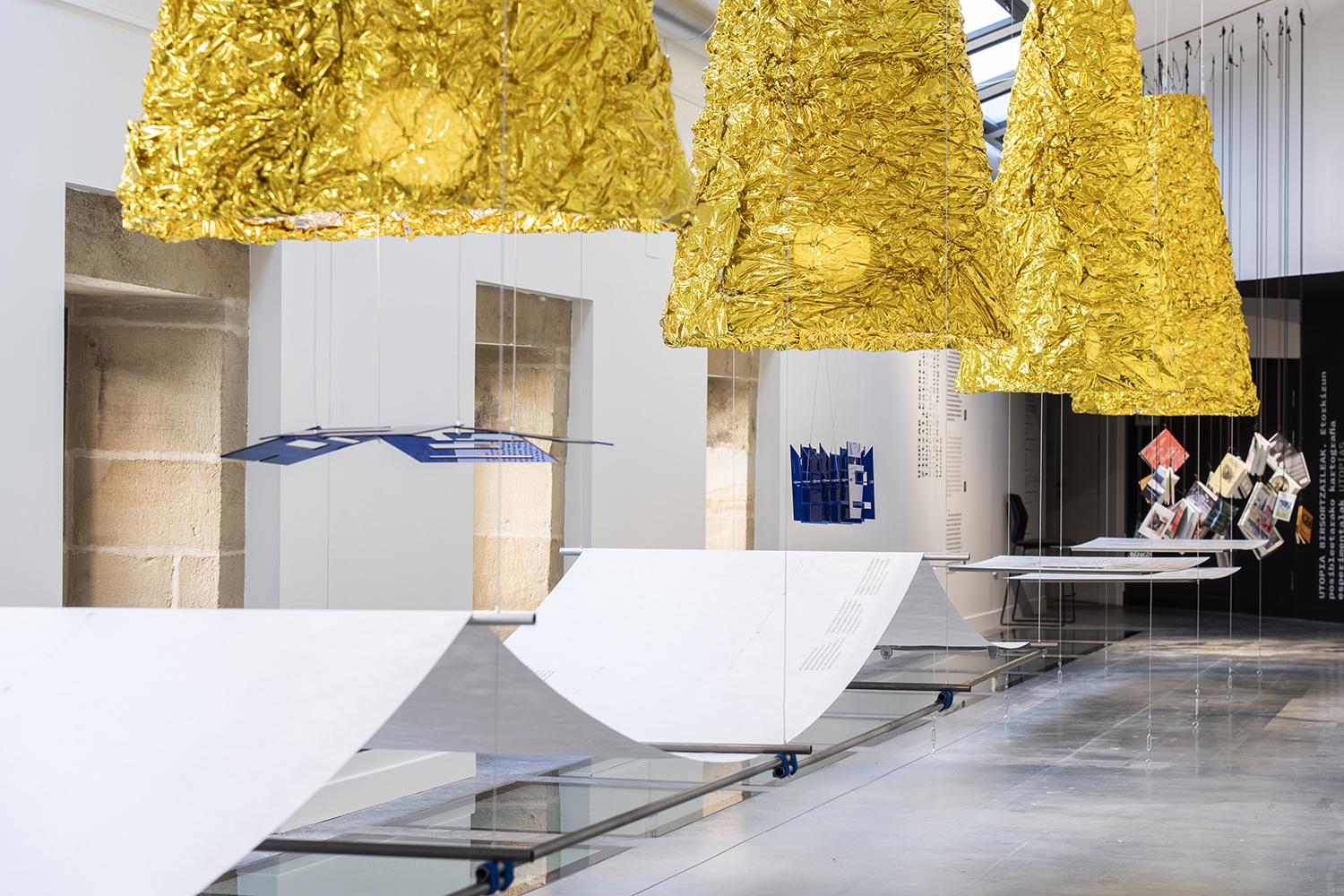
Exhibition views of ‘Eu-topías, Ou-topías’
Kim: At this year’s Seoul Biennale of Architecture and Urbanism, Thomas Heatherwick’s Humanise Wall stirred controversy for introducing a wall in Korea, a country marked by a history of division. In contrast, citizens in Vitoria-Gasteiz engaged enthusiastically with ‘Utopia: No Entry’, to the point where the wall’s original red surface was barely visible before the project officially opened. It is fascinating how the same medium – a wall – can lead to entirely different outcomes depending on the context.
Bayo: The reaction of the citizens of Vitoria-Gasteiz was certainly energetic, although not everyone was enthusiastic. It was a controversial proposal, and we expected criticism due to its radical nature, scale, and subject matter. I believe that this was, in fact, intentional in both projects: not to leave anyone indifferent, to generate controversy and debate—and I see that as a positive sign. As a designer, you can envision a participatory project, but it is difficult to predict how people will actually respond. In a way, these architectures act as mirrors for the public, and that is their beauty and interest lie: in the moment they transcend the designer’s control. In the case of the Vitoria-Gasteiz Pavilion, from afar, it appears as a chaotic sculptural piece covered in graffiti, where the largest and ‘loudest’ – and not always the most thoughtful – stand out. But it is only at close range that one can truly see the hundreds, even thousands, of small interventions of every kind and sensibility: the genuinely moving ones, the ones that spark a social conversation that goes far beyond what the physical wall itself proposes.In society in general, and perhaps in the Basque Country in particular, there are many walls. Social, ideological, and cultural barriers are scattered everywhere. Sometimes, even when they seem to have been overcome, they rise again overnight. This pavilion helped to make some of these walls visible, which is essential in order to overcome them through a critical, non-conformist civic mindset.
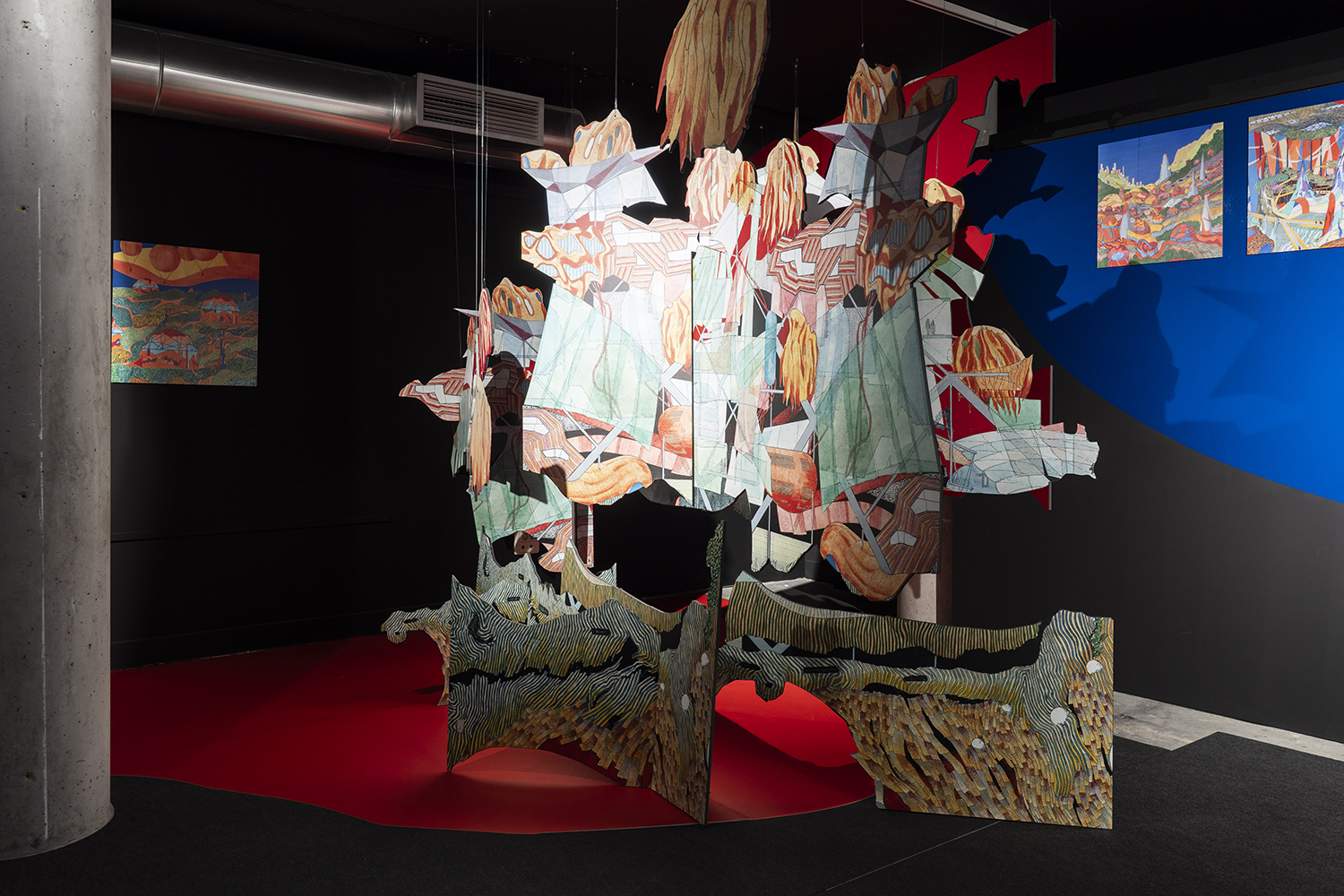
Exhibition views of ‘Eu-topías, Ou-topías’