
SPACE January 2026 (No. 698)
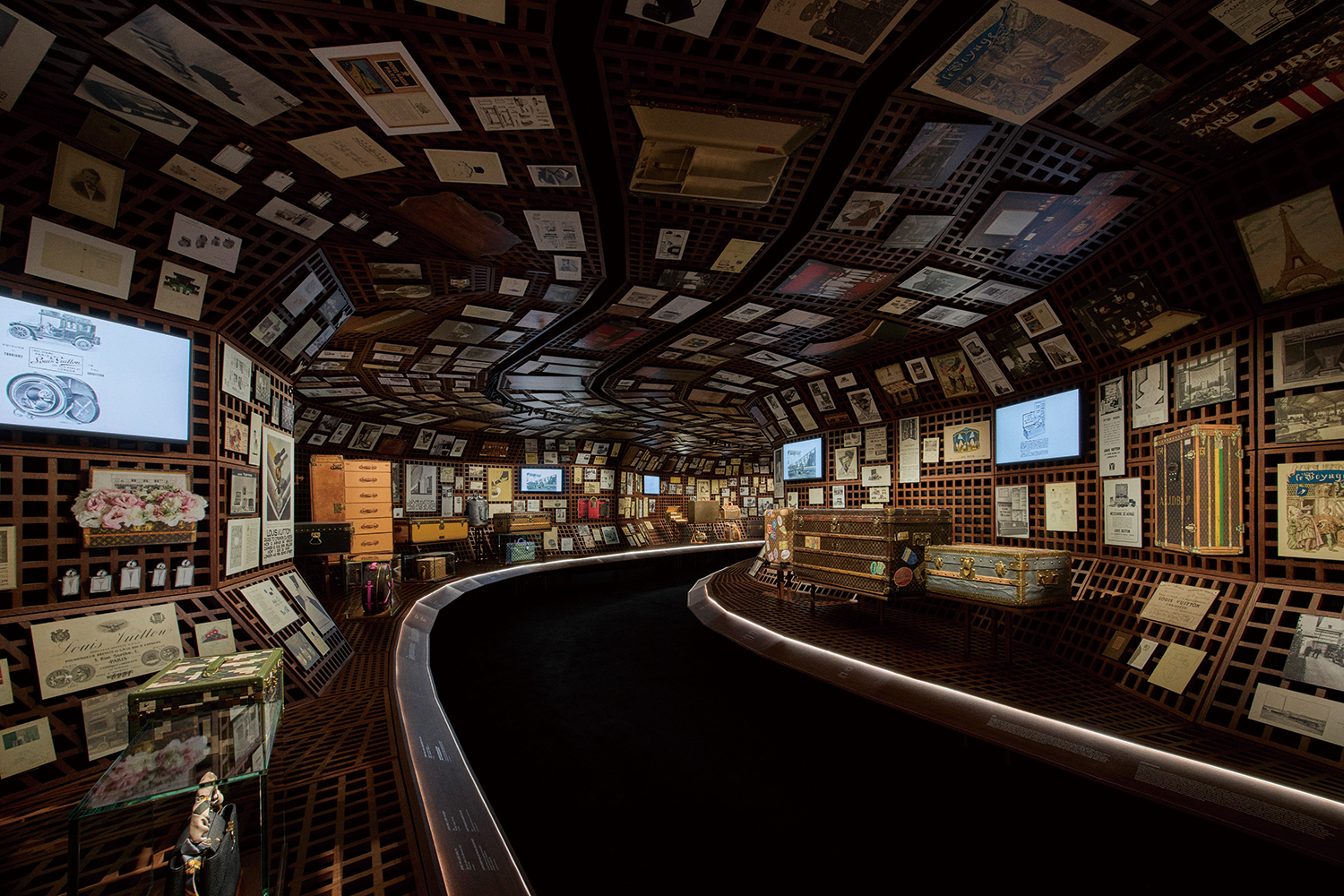
Origins Room on the fifth floor
‘Louis Vuitton Visionary Journeys’
LV the Place Seoul, Shinsegae The Reserve
permanent exhibition
A trunk is not just any travel accessory—it holds everything from clothing to picnic sets, books, musical instruments, and sometimes even a bed. Of the various forms and structures that it can take in accordance with the mode of transport, a trunk is used to store all kinds of necessities for living in unfamiliar places. One may say that a suitcase’s history reflects its owner’s lifestyle.
To mark the 130th anniversary of its monogram in 2026, Louis Vuitton, as a part of an ongoing effort to reinterpret its heritage, has unveiled ‘Louis Vuitton Visionary Journeys’ at LV the Place Seoul within Shinsegae The Reserve. Aiming to elevate shopping activity to a cultural experience, ‘Visionary Journeys’ offers a multi-layered experience that combines retail, exhibitions, entertainment, and gastronomy, and proposes a new way of experiencing the brand. With creative concepts and scenography by OMA New York, this complex exhibition space spans multiple floors within the historic building that housed Korea’s first department store in the 1930s. Covering 1,300m2, it features 11 themed rooms that traverse Louis Vuitton’s past and present.
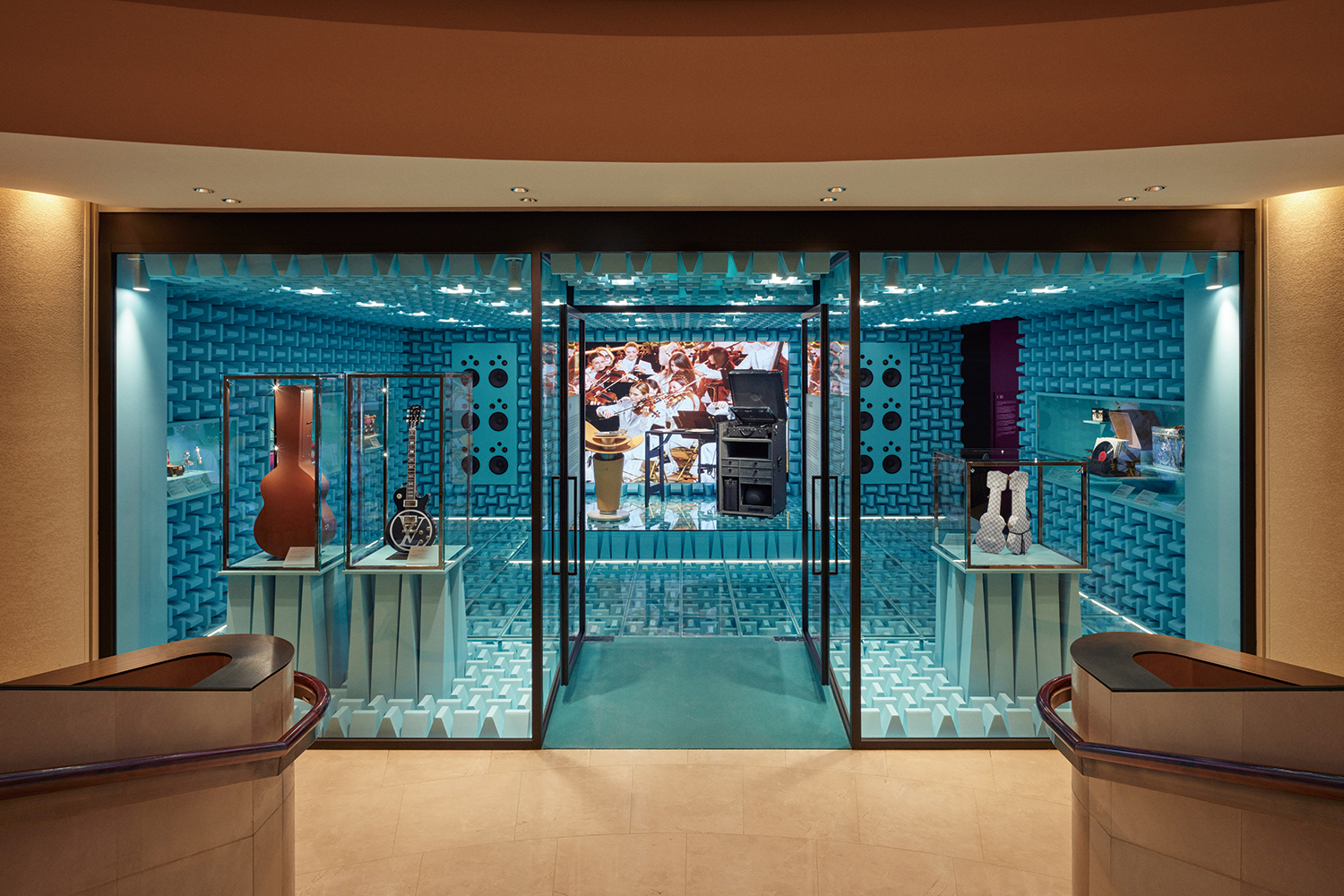
Music Room on the fourth floor
Following Gaysorn Amarin’s ‘LV The Place Bangkok’ and Shanghai HKRI Taikoo Hui’s ‘The Louis’, the third iteration of the ‘Visionary Journey’ also explores its location’s unique characteristics. Unlike previous exhibitions which were confined to limited spaces, the Seoul installation draws upon the existing department store structure to create a more open atmosphere facing the shops, cafés, and corridors, meaning that the exhibition can seamlessly blend into the building and resemble a storefront façade. Conceiving of the exhibition as a mediating platform that connects retail and public spaces, project leader Shigematsu Shohei (Partner, OMA) uses mirrors throughout to respond to the existing building’s low ceilings and expand spatial perception within each themed room.
The spatial experience of the exhibition is first introduced with the Trunkscape on the 1st floor where 270 Boîte Chapeau (hat box) forms a tunnel. The main exhibition, however, starts at the Origins Room on the fifth floor where the walls of a winding cave seem to spill outward to create a ‘façade’. This impressive archive, using a multifaceted wooden space inspired by Korean folding screens that extend to the ceiling, showcases the history of the trunk ‒ which evolved alongside travel culture ‒ through approximately 1,000 documents and over 30 artifacts. The subsequent Watches Room, Picnic Room, and Personalisation Room form a gallery that showcases the Maison’s growth journey into a lifestyle brand.
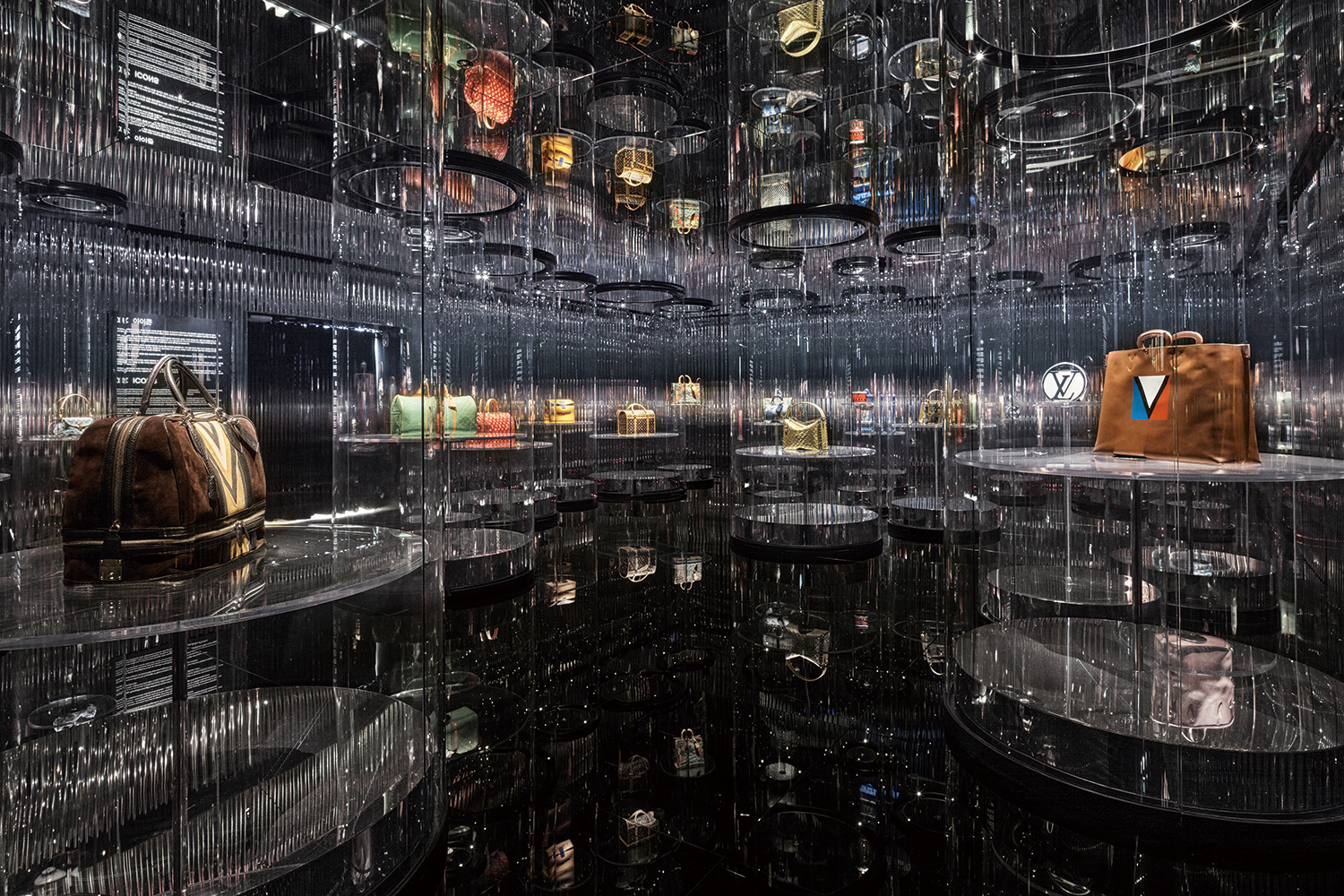
Icons Room on the fifth floor
The Workshop Room inspired by the Asnières workshops, as well as the Testing Room where a robotic arm affectionately named ‘Louise’ moves about to showcase Louis Vuitton’s skilled craftsmanship, art, and engineering of the past and present. A kaleidoscopic panorama of iconic Louis Vuitton bags within pillar-shaped transparent showcases occupies the subsequent Icons Room. Past this room, with its dreamlike atmosphere created by glass and mirrors, the exhibition concludes with the serene brown tones of the Monogram Room on the same floor where visitors can examine various deconstructed and reassembled patterns of Monogram bags.
Following the atrium staircase, with its massive trunk pillar crafted with monogrammed hanji paper that glows like a lantern, visitors are led down to the fourth floor. The Music Room, which resembles an acoustic booth with its textured surfaces, displays custom-made instrument cases, portable speakers, and DJ booths. Past this gallery, which is the most distinct of the entire exhibition, the circular Collaboration Room adjoins the winding Fashion Room. In the Collaboration Room, a split-flap display showcase presents reinterpretations of Louis Vuitton’s classic bags by contemporary artists. The showcase’s clicking flaps, 313 chrome-plated bags, LED screens displaying the work’s motifs, and a mirrored ceiling that multiplies the reflected images of bags and patterns to an infinite number, all captivate the audience’s attention.
After roaming through these circular, square, and streamlined rooms designed with contrasting materials and lighting that reflect their themes, one suddenly finds oneself standing in a brightly lit store or café. It is a moment that echoes Rem Koolhaas’s long-standing analysis of shopping as a mechanism capable of reshaping cultural space.
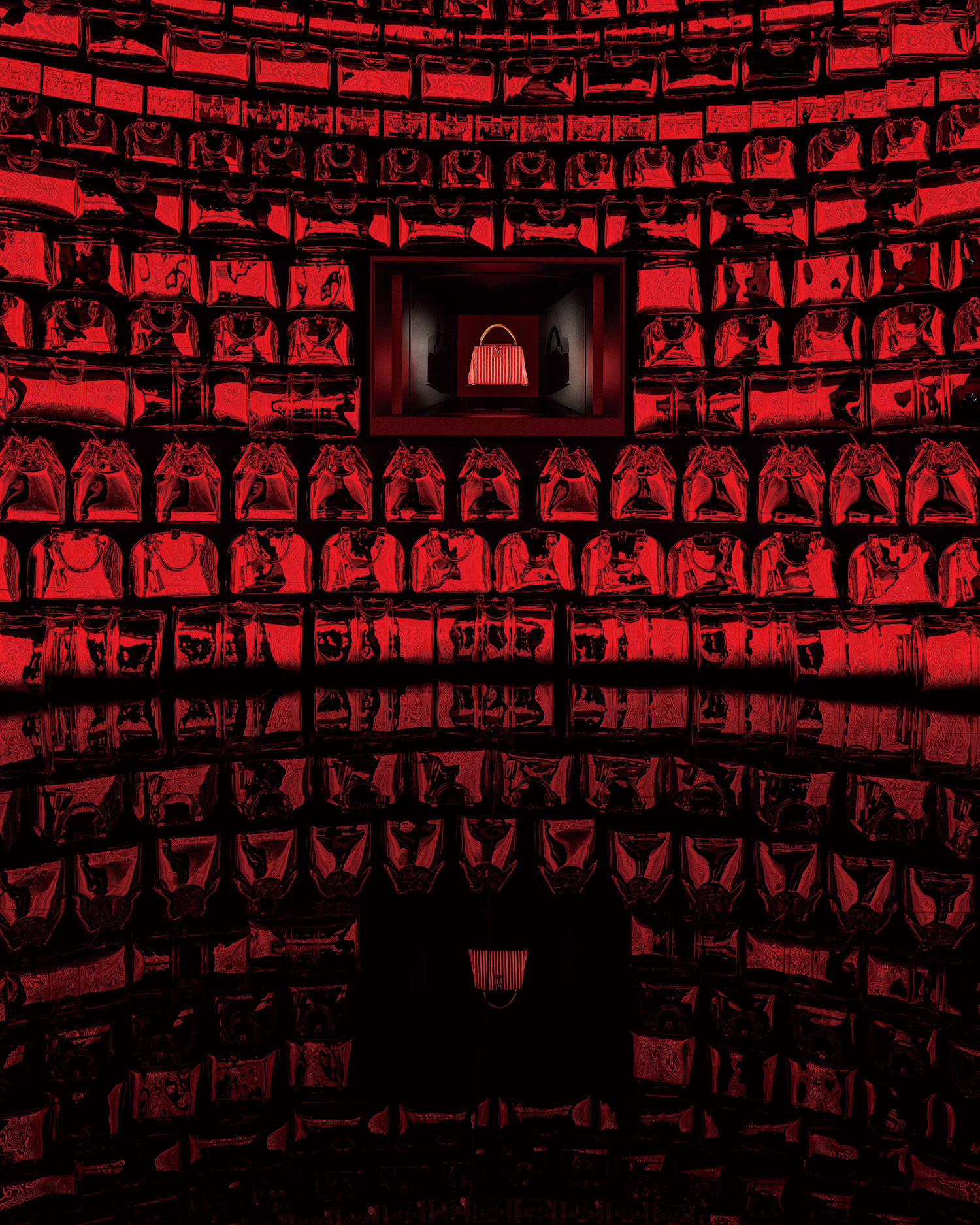
Collaboration Room on the fourth floor