SPACE August 2026 (No. 705)
A Reference Line for Perceiving Nature’s Changes
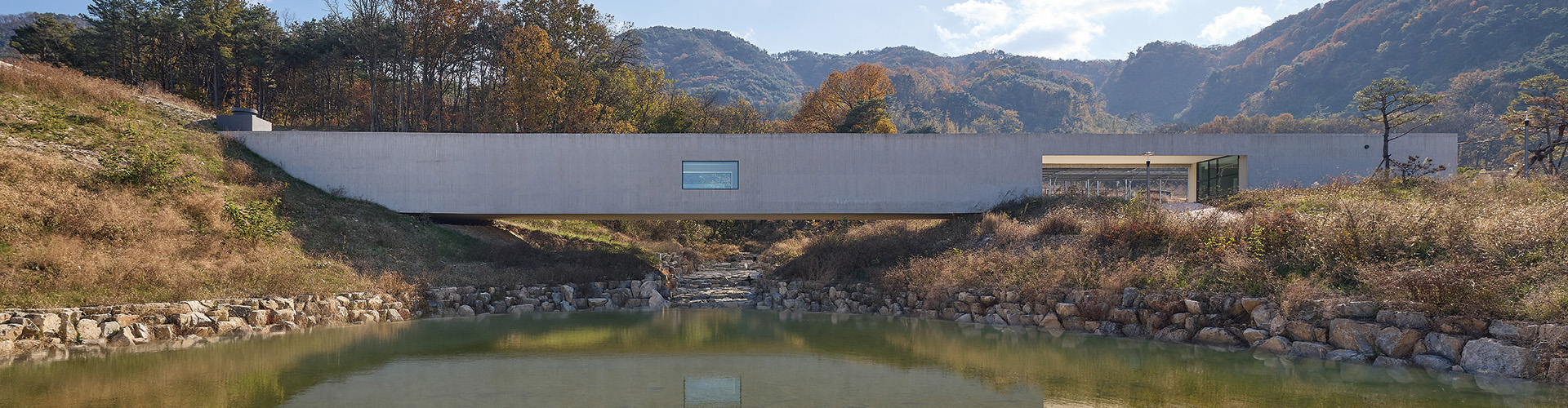
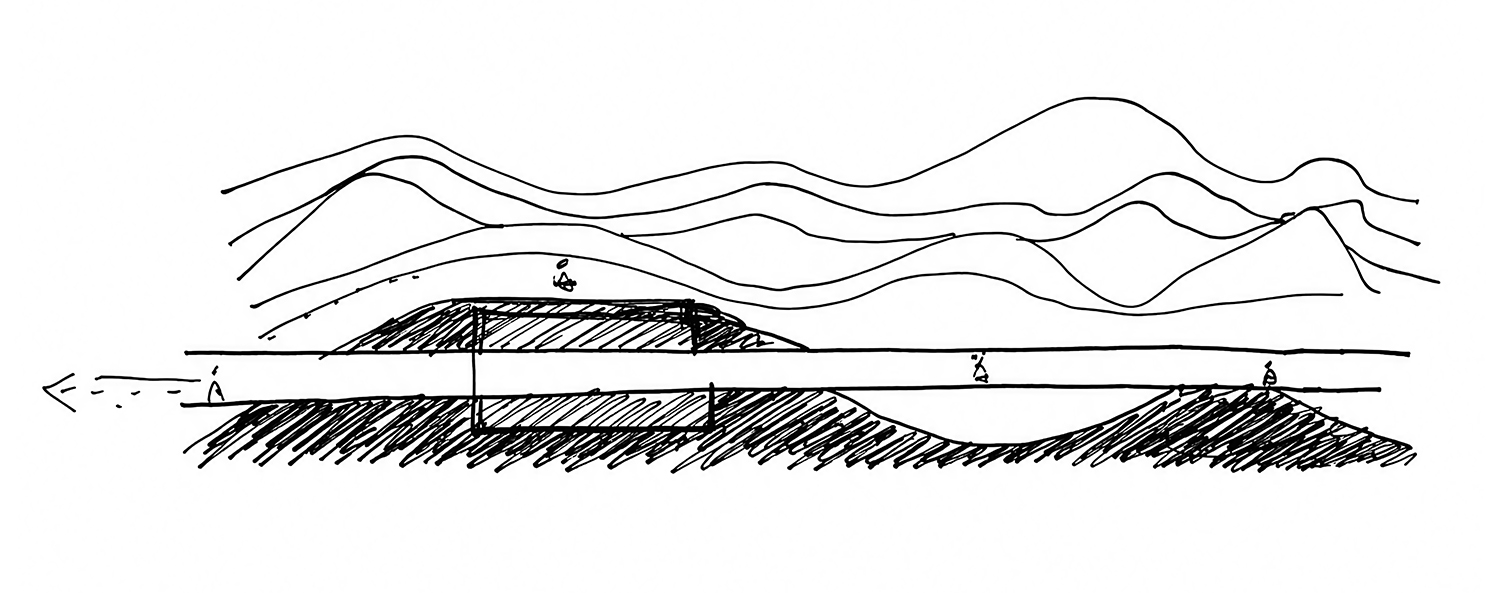
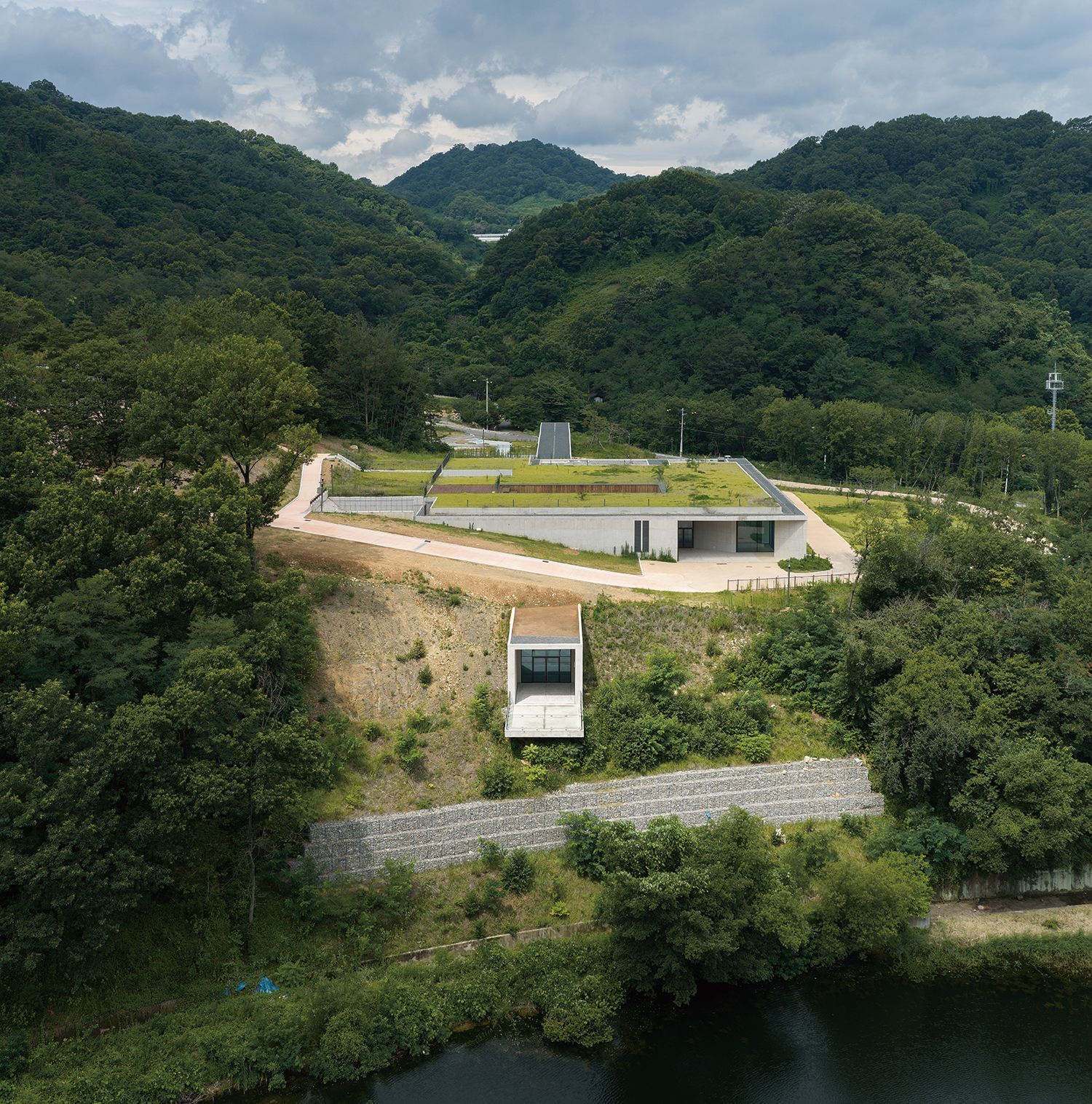
While constantly changing, the pace at which nature changes is so slow that it often goes unnoticed. This project proposes a reference line for perceiving the passage of time in nature through architecture. Just as a musical staff reveals the pitch of notes, architecture serves as a linear device for interpreting the changes in nature. We designed a long, linear mass – 15m wide and 200m long – nestled on the slope of Chilbongsan Mountain as an exhibition space comprising the welcome centre, the cultural centre, and a lake observation deck. This linearity contrasts with the organic topography, allowing visitors to become conscious of both the rhythms of nature and their own movements.

*You can see more information on the SPACE No. August (2026).
Hyunjoon Yoo is a Professor at Hongik University and registered architect in the United States (AIA, NCARB), he leads HYP Architects with Jon Jiyoung. He studied architecture at Harvard Graduate School of Design, Massachusetts Institute of Technology, and Yonsei University, and worked at Richard Meier & Partners Architects. He has won numerous awards both domestically and internationally, including the Chicago Athenaeum Architecture Awards, German Design Award, Young Architect Award, Kim Swoo Geun Architectural Prize Preview Award, and the President’s Prize for Korean Space Culture Awards. He is known as a ‘humanistic architect’ for his diverse books and broadcasts that provide insight into the world through architecture. His YouTube channel, ‘Sherlock Hyunjoon’, currently has 1.45 million subscribers.
Jon Jiyoung is a Principal at HYP Architects and a licensed architect in the Republic of Korea. She received a Master’s degree in Architectural Design from Hongik University and built her professional foundation through practice at Chang-jo Architects and the Los Angeles–based firm Morphosis. Since 2018, she has worked alongside Hyunjoon Yoo at HYP Architects. Drawing on extensive experience across a wide range of scales and programmes – from large-scale cultural and mixed-use facilities to small religious and residential projects – she is currently exploring the intersections of architecture, urbanism, landscape, and culture while further developing and expanding the practice‘s design philosophy.