
SPACE May 2026 (No. 702)
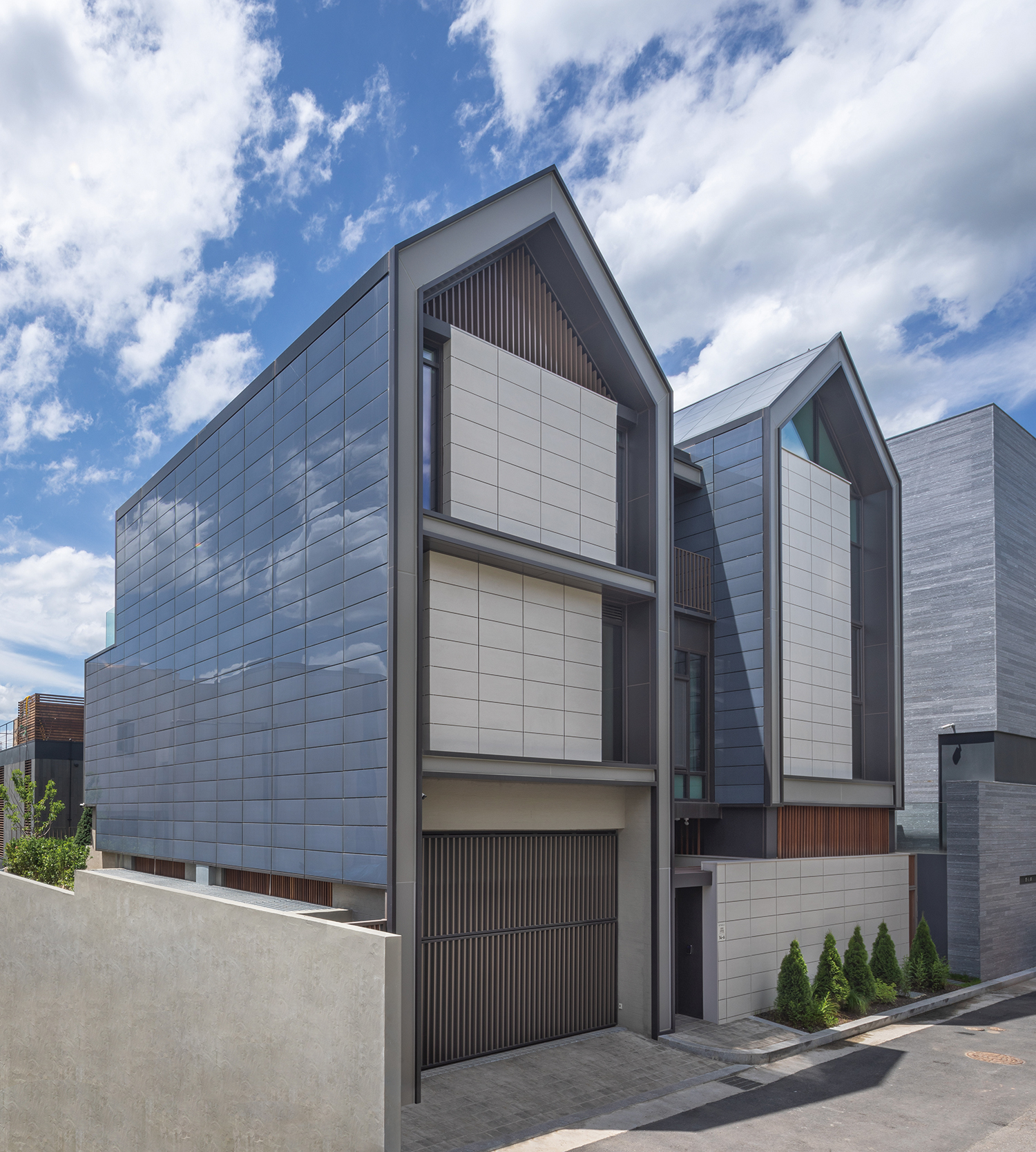
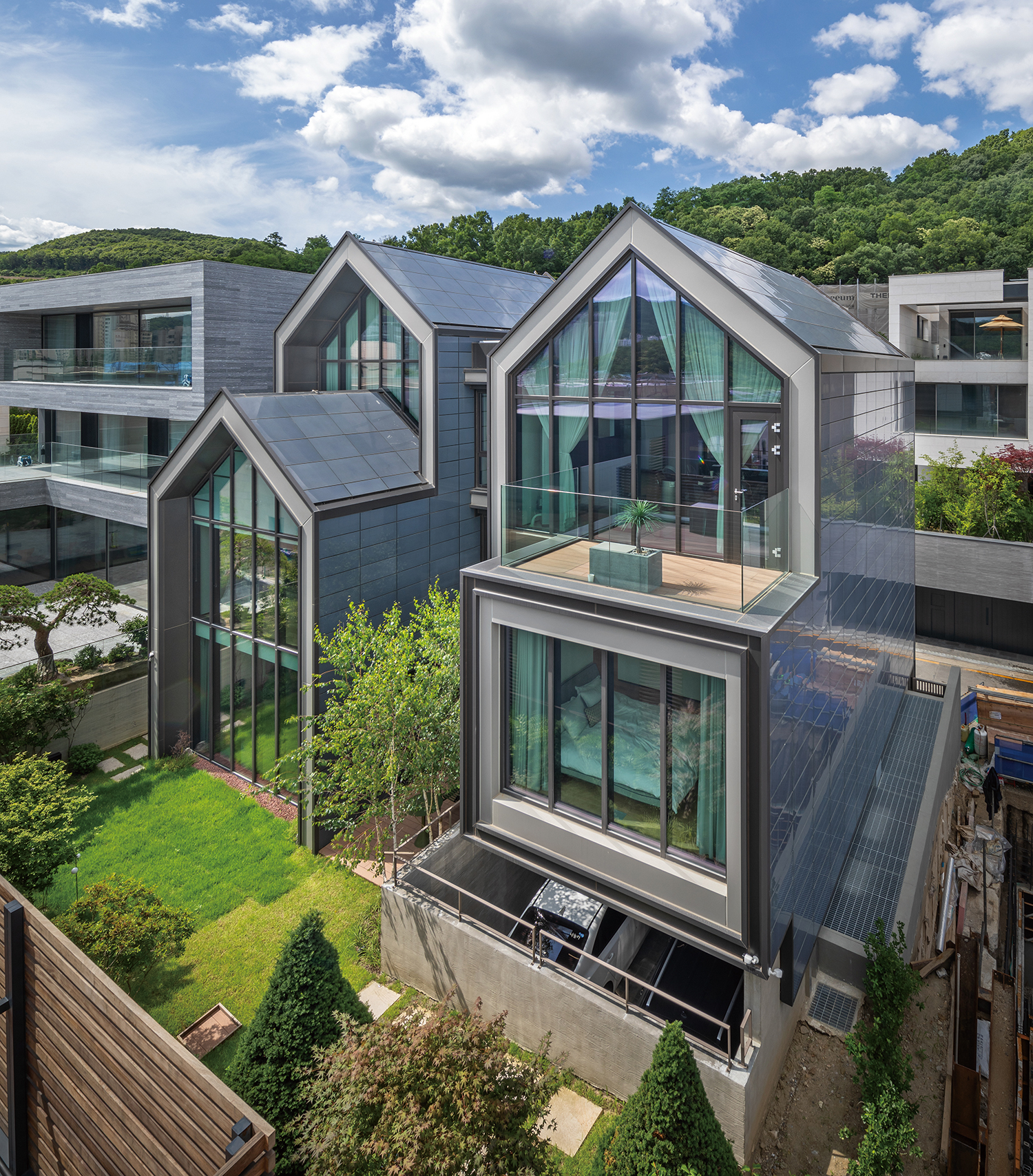
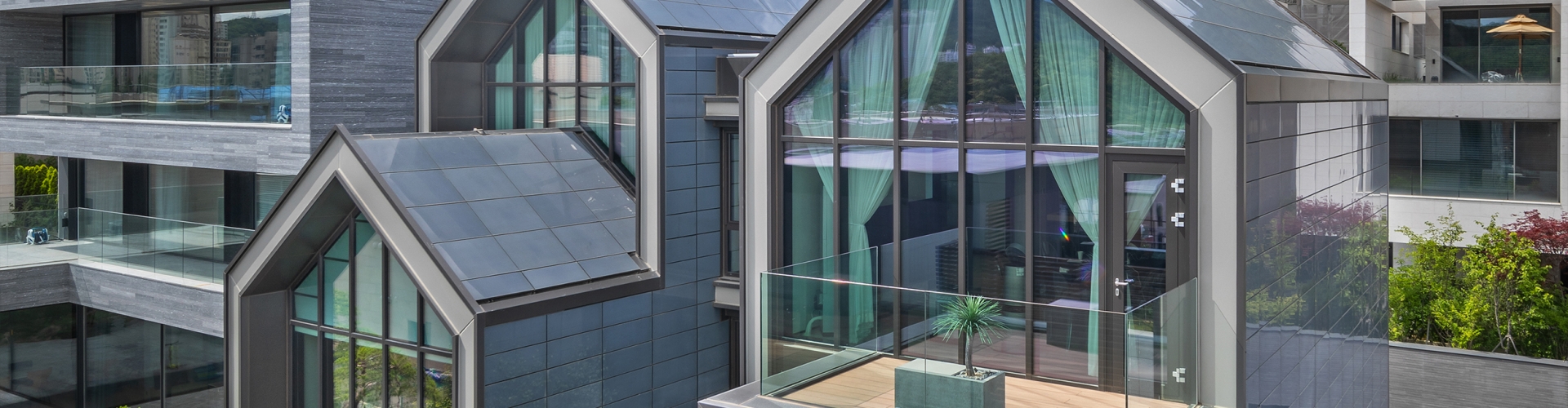
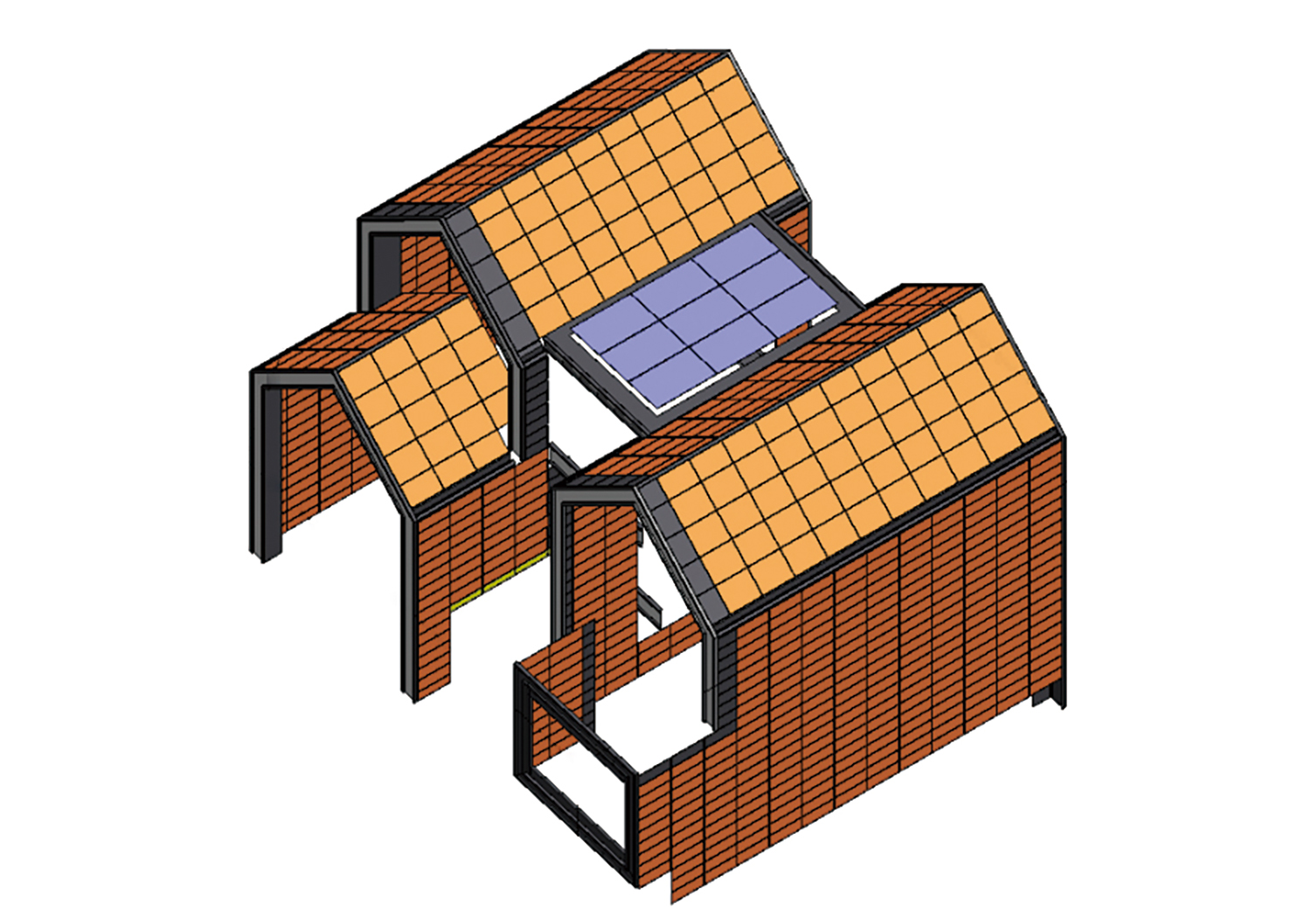
LG ThinQ Home is Korea’s first zero-energy residence, equipped with health-and-hygiene-focused appliances and AI-driven automation. The project team aimed to ‘zero out’ all building energy, extending beyond the five standard categories – heating, cooling, lighting, hot water, and ventilation – to include process energy. To achieve this, the team developed strategies to reduce energy loss through the large envelope and window areas typical of detached houses. A more passive performance was secured by shrinking northern window surfaces and spatial volume, applying thermal bridge prevention, and using triple-pane low-e windows with expansion bands. Approximately 880 Building-Integrated Photovoltaic (BIPV) panels were installed on the façade and roof. Addressing the common aesthetic and performance issues of BIPV, such as the discordant dark-blue tint, LG Electronics and the design team co-developed custom BIPV modules and open-joint installation details. Consequently, the project achieved a 121.66% energy self-sufficiency rate, earning Korea’s first Grade 1 Zero Energy Building certification. It is an architectural landmark for the ways in which architecture is in harmony with nature, combining technology and design to produce more energy than it consumes.
Junglim Architecture (Jeong Yongkyo, Lee Myungjin)
Ki Hyunchul, Kim Hyojung, Park Hanhee
14-6, Sanun-ro 185beon-gil, Bundang-gu, Seongnam-
single house
295.3m²
126.13m²
495.54m²
B1, 3F
4
11.97m
42.71%
97.77%
RC
BIPV panel, ceramic tile
gypsum board, paint
BOSUNG Engineering & Globalization Group
SUNJIN Engineering Consult Co.
HYEOBIN ELECTRICAL DESIGN CO.
Creative Design Studio
July 2019 – Jan. 2020
Dec. 2019 – Nov. 2020
LG Electronics
ARTE Landscape Design