




SPACE June 2026 (No. 703)
Interview Diogo Figueiredo Principal, REDO architects × Lee Sowoon
Lee Sowoon (Lee): This is a public project that renovates a market building that had long served as a key community facility for the neighbourhood. What prompted this renovation?
Lee: What was your first impression of the building? Which parts did you think should be preserved, and which parts needed to be changed?
Figueiredo: The first impression was that the building had been rotated 180 degrees, since most of the neighbourhood development happened on the opposite side of the original entrance, and there was no access from the main street. At the same time, we had to keep all the vendors, and we were interested in this historical overlay of transformations and memories. The first strategy was therefore to restore the market to its original 1962 configuration, maintaining the main tall halls and overall structure, which was actually quite well organised. To achieve that, we had to undo the more recent subdivisions that had fragmented the space. We also structurally reinforced all the walls for earthquake resistance, and took the opportunity to create new openings, enabling more fluid circulation and direct access from the public space.
Lee: What did the local residents and vendors who had already been using the building expect from this renovation? How were their opinions incorporated into the design process?
Figueiredo: The main premise of this project, set by the local parish council of Carnide, was to keep all the existing vendors and to create a market with the local community at its centre. Since it is a peripheral neighbourhood, many services and commercial activities are located closer to the city centre. Therefore, this market plays a key role in concentrating the basic needs of the residents and also functions as a community centre, where a wide range of people meet—from kids after school to retired residents who gather in the market. Within this context, our first task was to conduct a series of interviews to understand not only the vendors’ needs but also the relationships among different vendors. There was also an overall resistance to change and a need to sustain the existing market culture. These conversations influenced our strategy to preserve the character of the building while creating new spaces that multiply opportunities for community gathering. During the project development, we held three sessions with the local community, where we presented the concept and answered questions in a participatory process—ensuring the community was involved and had a role in the transformation.
Lee: What architectural interventions were made to reorganise the space and programme?
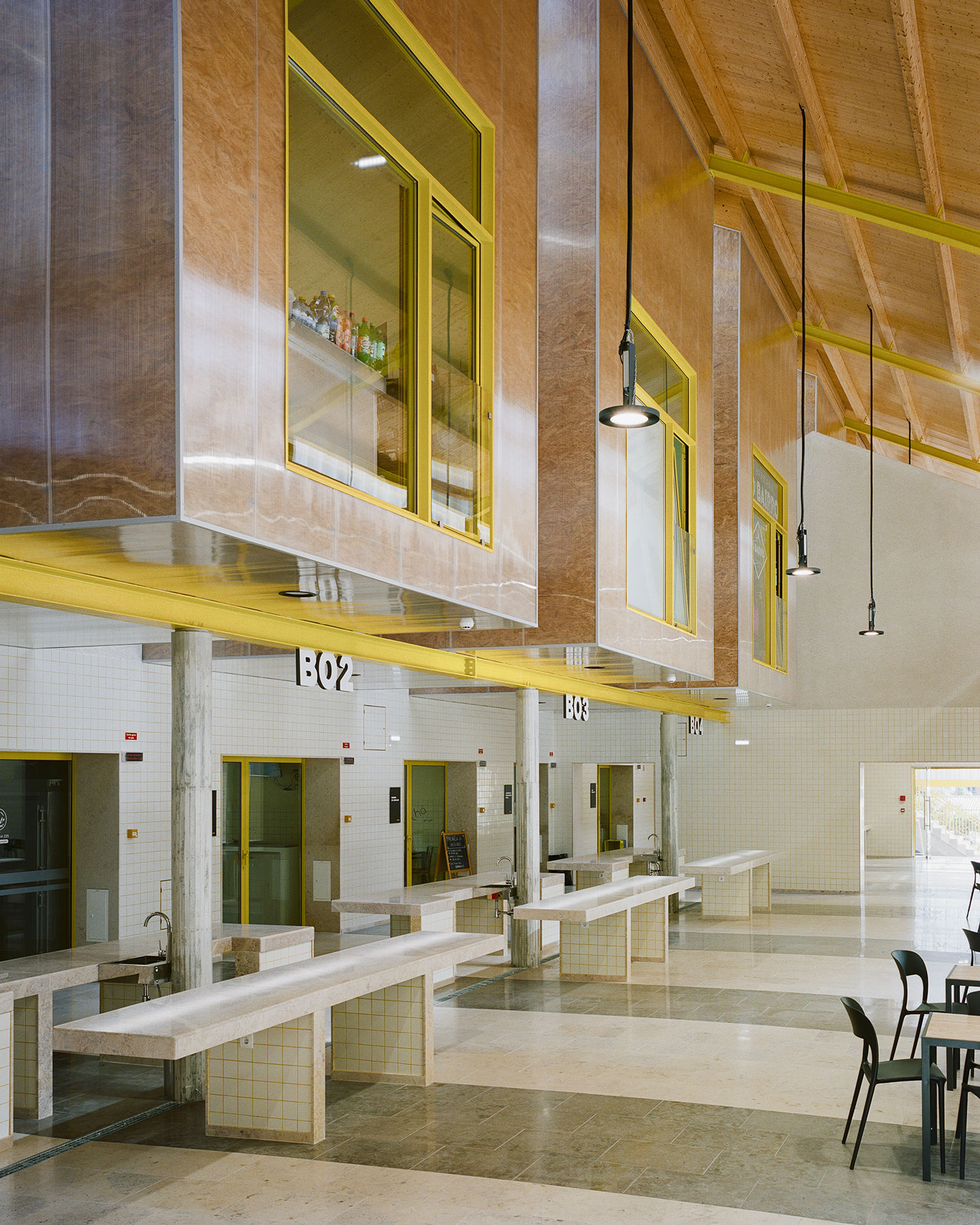
Figueiredo: The concept is composed of two key components: the existing market and the new oversized roof. The first intervention aimed to maximise the potential of the pre-existing building by redefining its main hall with a flexible programme and redistributing the existing shops across two floors. This transformation enabled an upward expansion of the programme, introducing more shops and cafés along a gallery that opens onto a terrace with generous outdoor seating areas and urban farming pods, fostering social interaction. The second part of the intervention introduces new spatial qualities and expands the market’s future use. The newly added timber roof structure enhances the spatiality of the main hall, recovering its double height, increasing daylight and natural ventilation, while keeping the space flexible and open by suspending the first-floor shops and minimising the number of pillars at ground level.
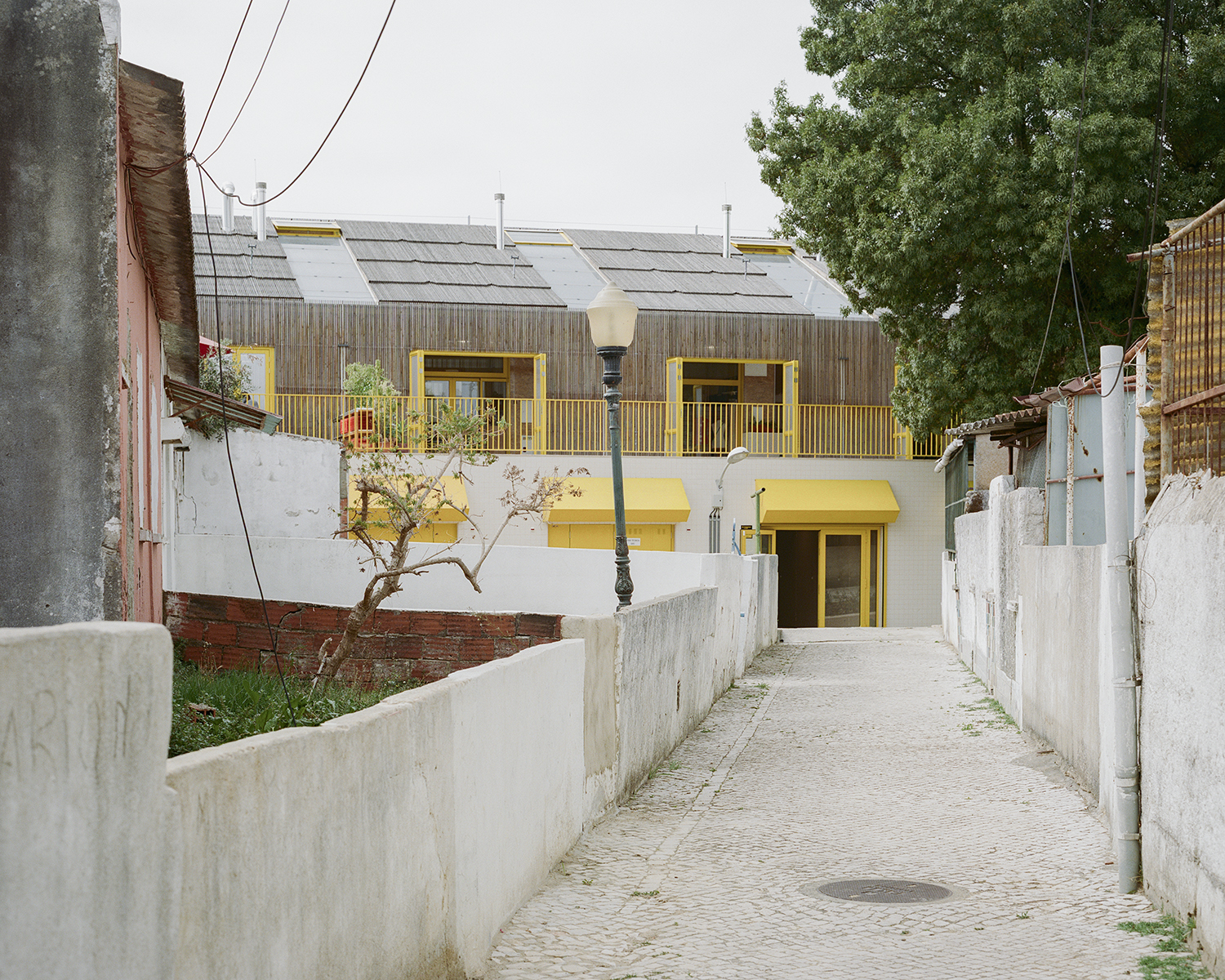
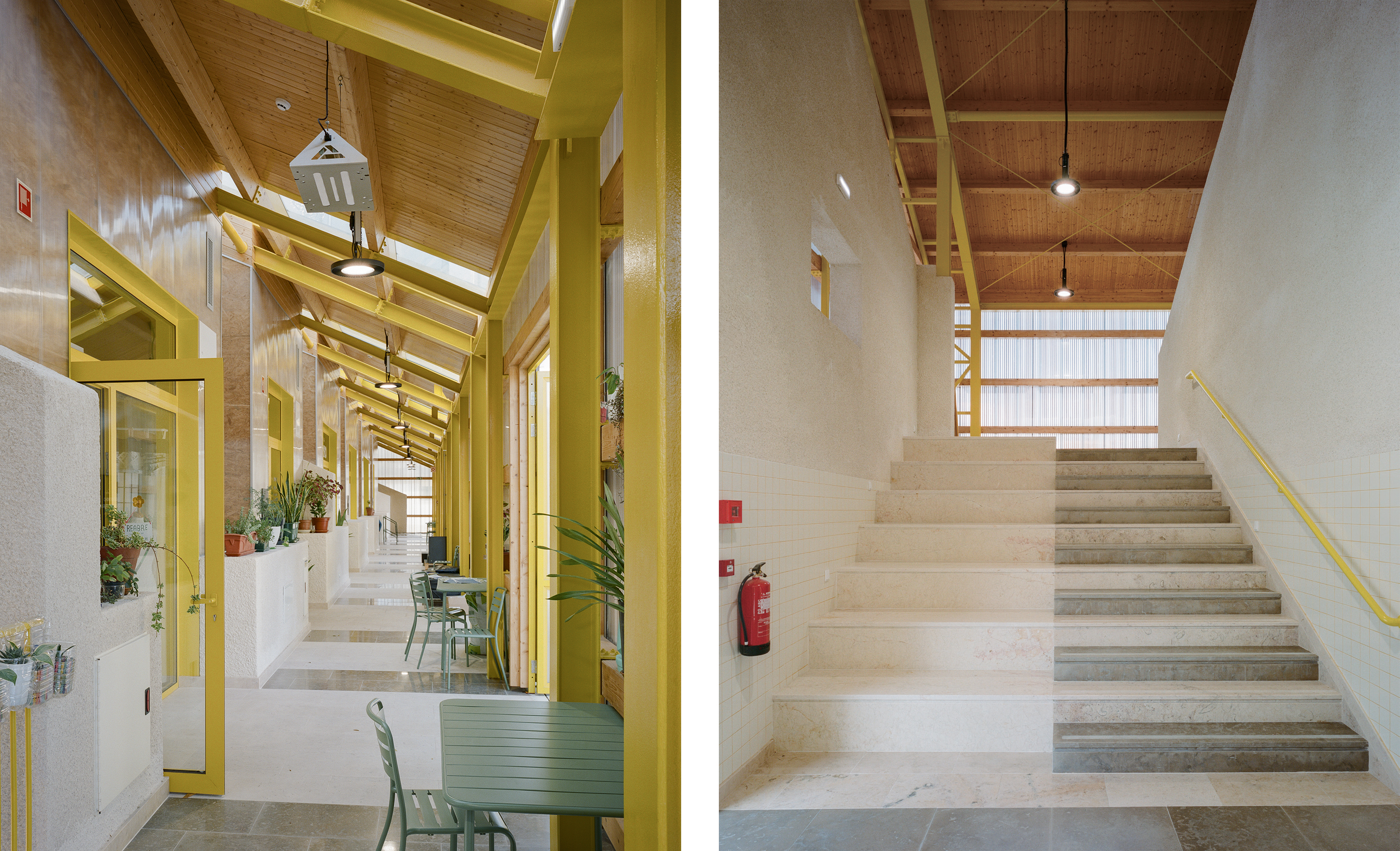
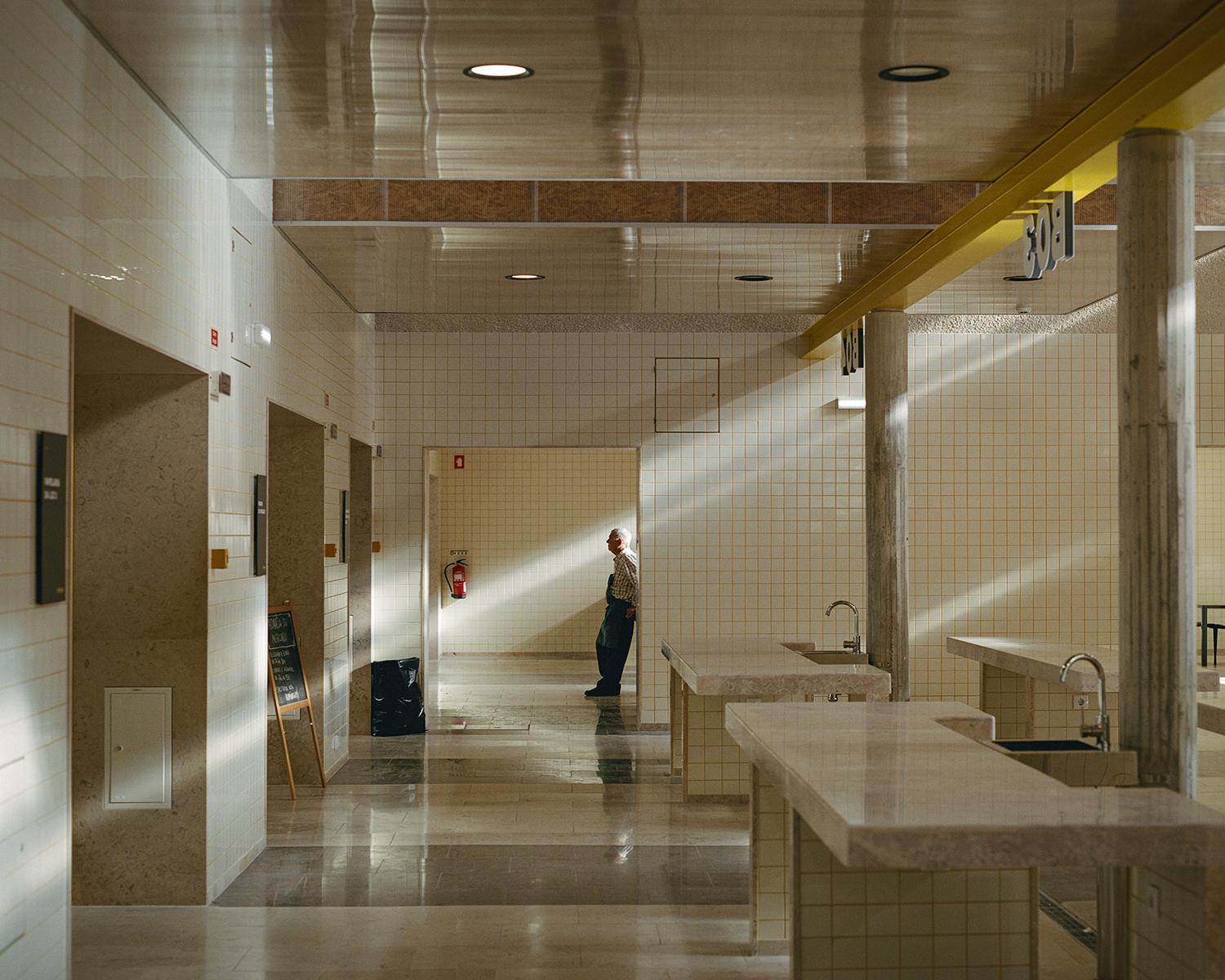
Lee: The ground floor is largely left open as a main hall, while the suspended shops on the upper floor are connected to the terrace, creating a clear distinction between the spatial conditions of the two levels. In terms of actual operation, how do the programmes of each floor differ, and how are they related to each other?
Lee: What kinds of programmes was the atrium space, created by the roof extension to the south, intended to accommodate? It could have been enclosed to add more shops, but it was left as a semi-outdoor space.
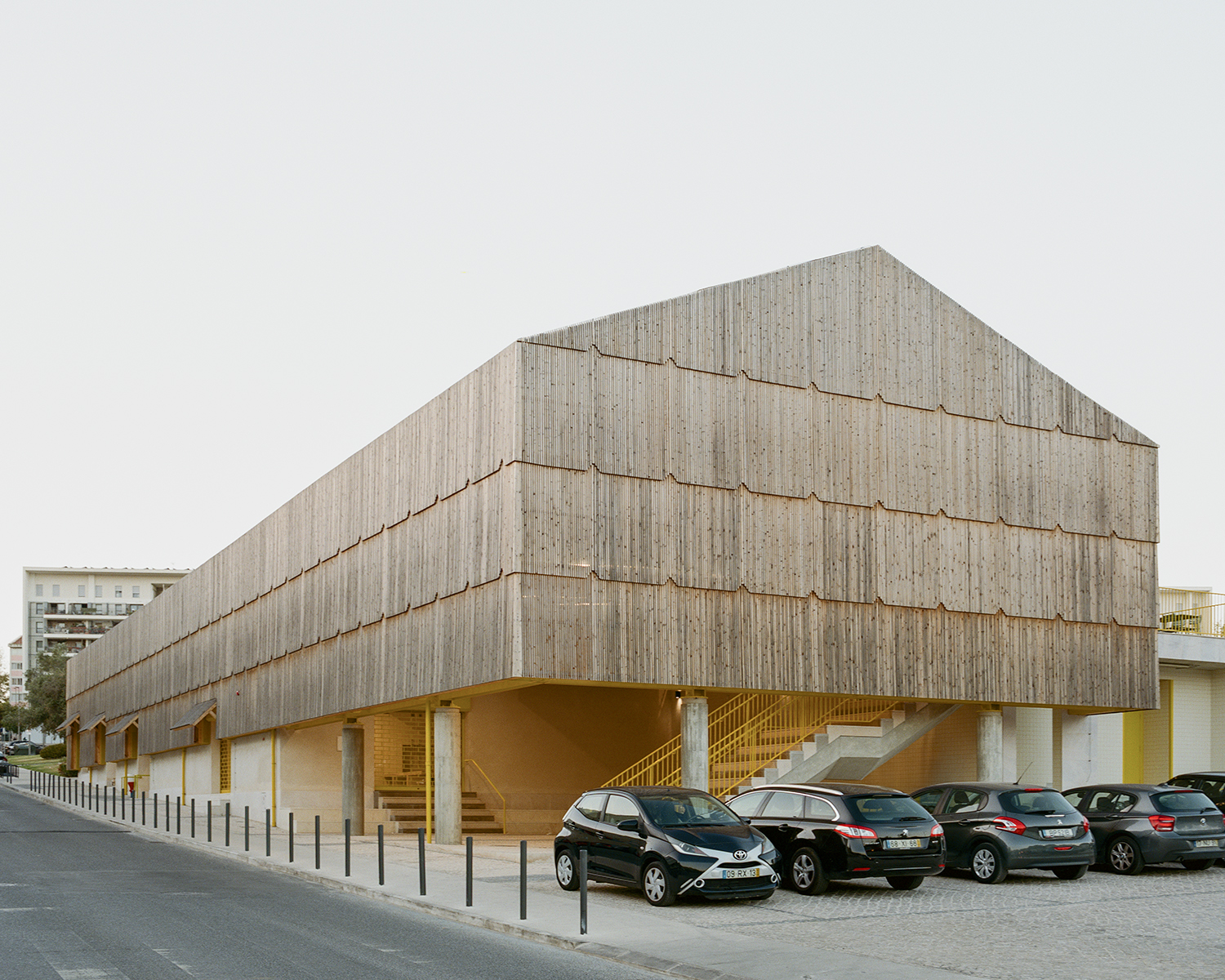
Figueiredo: The client asked for a covered outdoor space to accommodate the street market that takes place every morning and that works as an extension of the market programme. At the same time, the space needed to be polyvalent, able to host other programmes such as seasonal events, street art installations and other community activities. This space is aligned with the main hall and works as a transitional chamber between the building and the neighbourhood. It is generated by the extension of the roof towards the south and is completely free of pillars at the centre, allowing maximum flexibility of use. This space was conceived as a continuation of the public realm—a covered urban room that extends the street into the building, blurring the boundaries between interior and exterior, and enabling a more open and collective use over time.
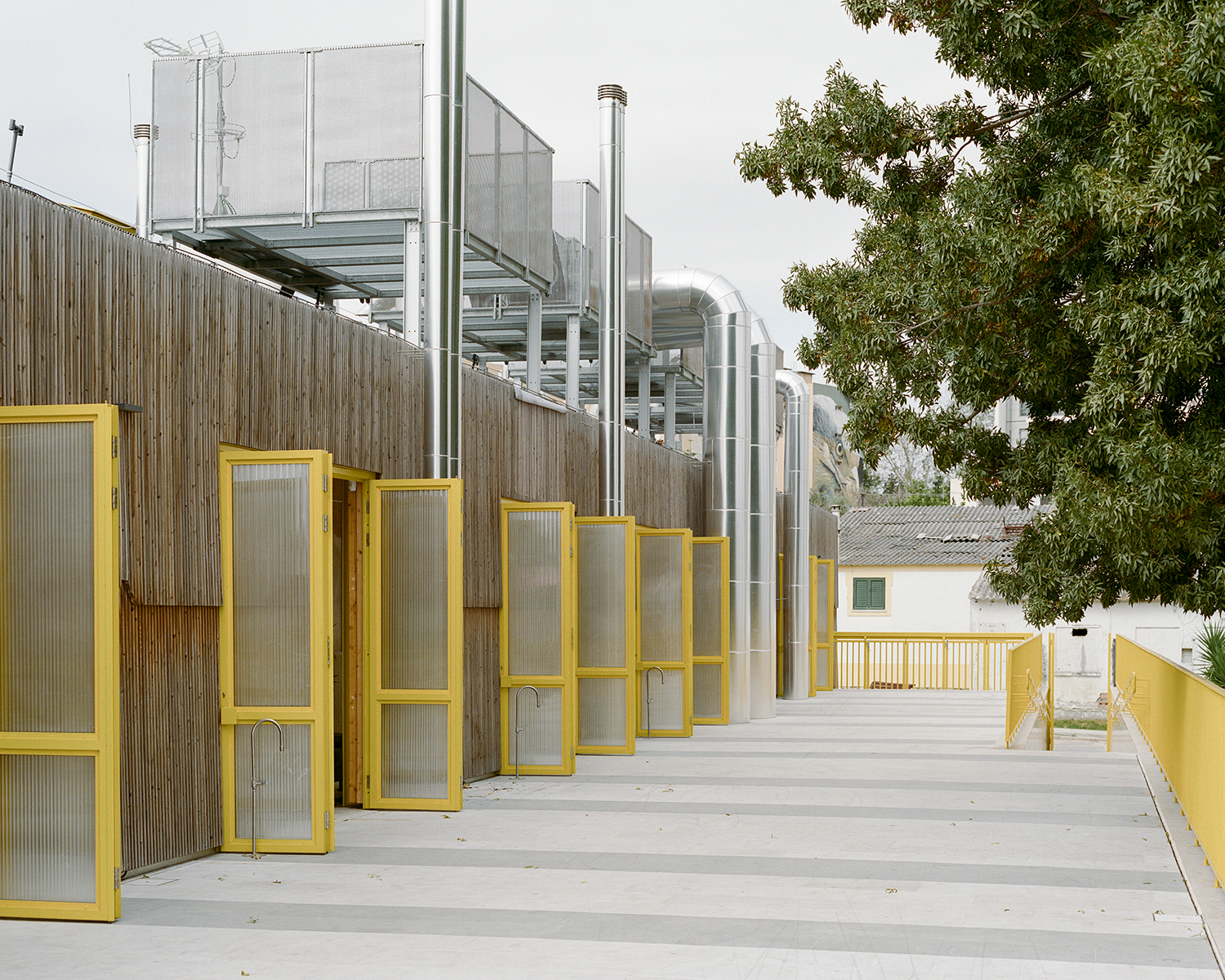
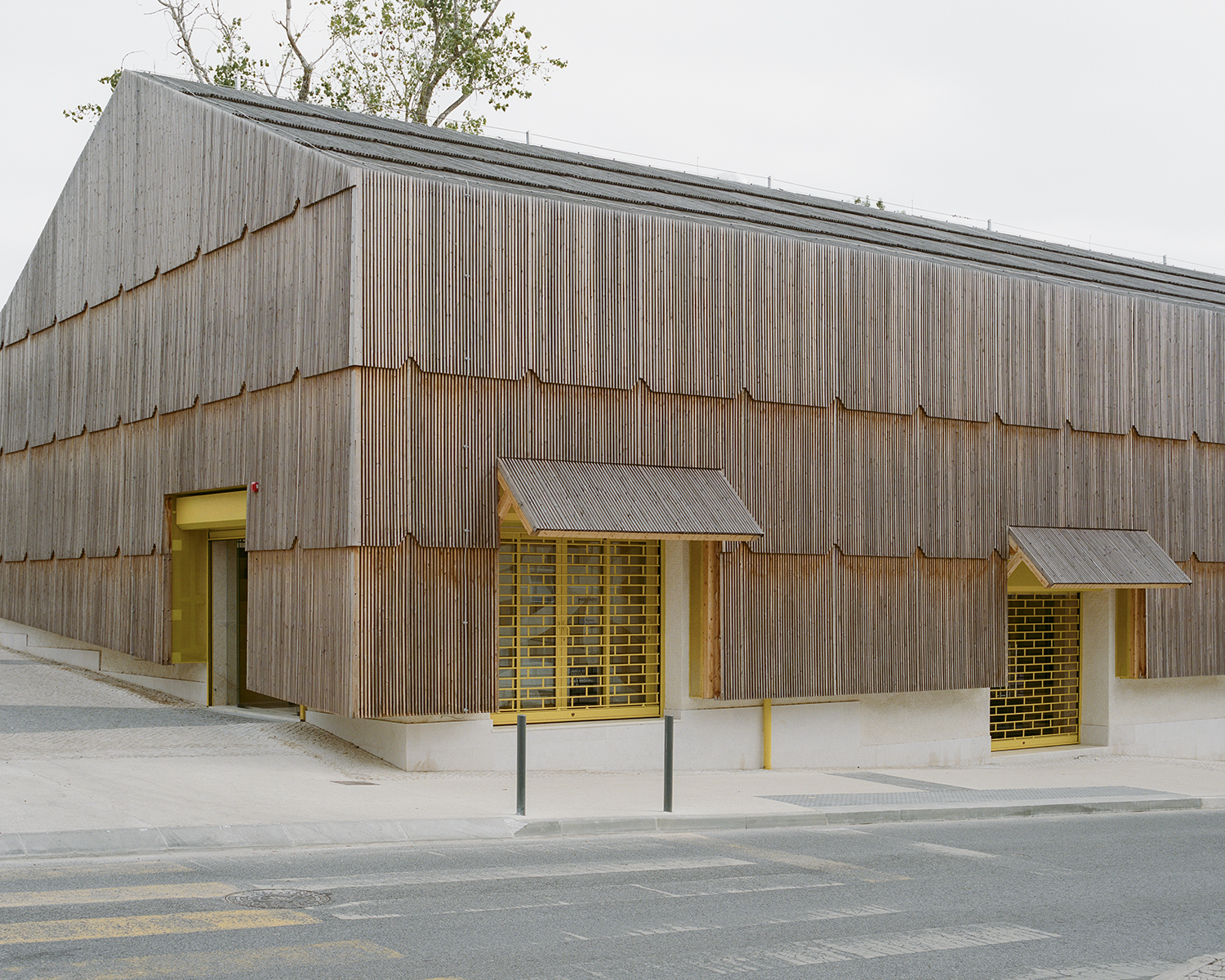
Lee: The timber louvre screen extends from the roof down to the upper floor, forming the building’s distinctive exterior. What role does this double skin play in the building?
Lee: Although the form itself is restrained, the use of various materials with different textures and colours gives the project a rich expression. How do these materials correspond to different architectural elements, and what effect did you intend through these material contrasts?
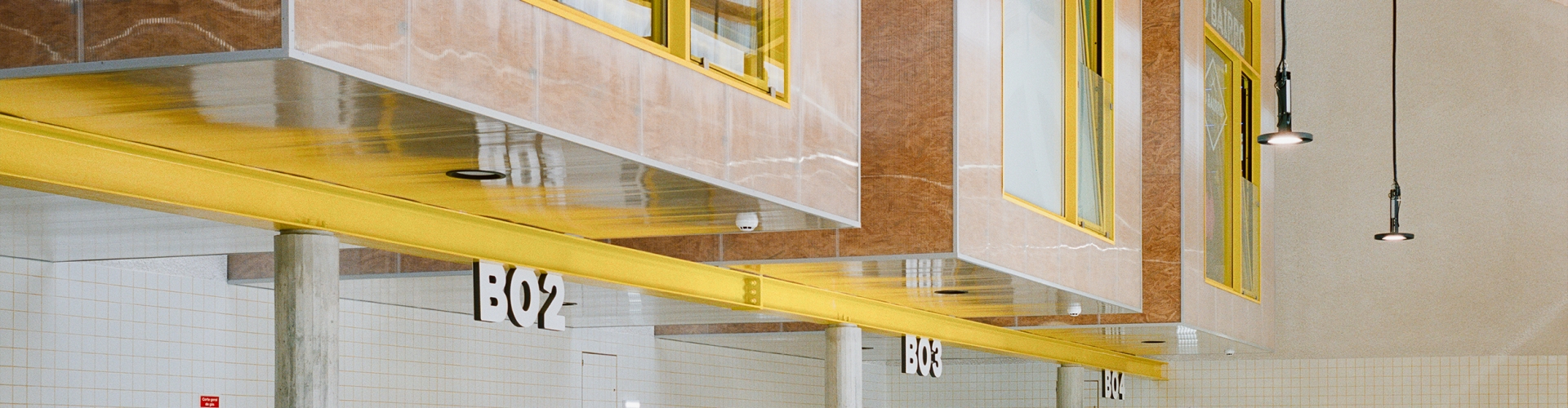
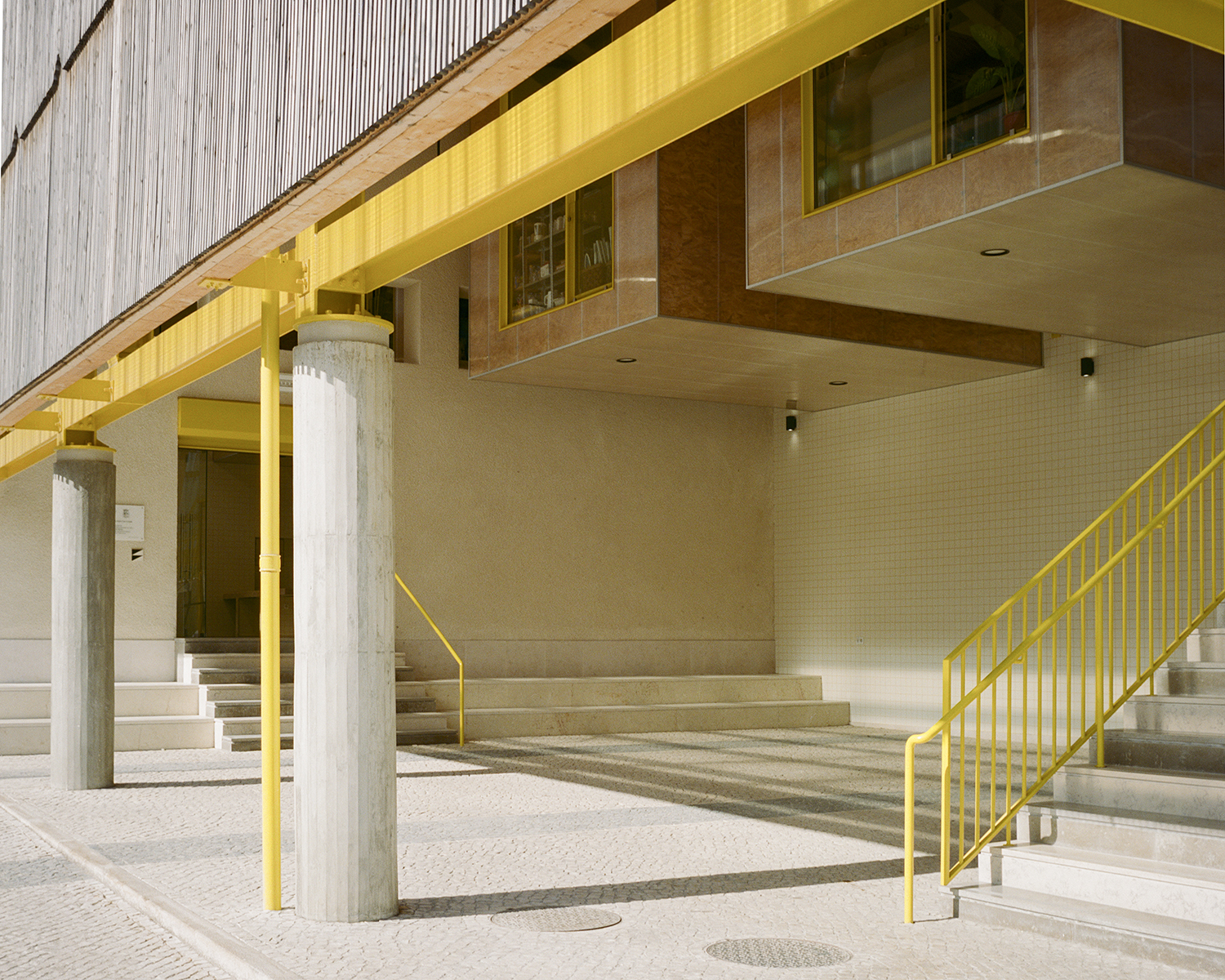
Figueiredo: We intended to create a clear distinction between what was pre-existing and what was new, bringing the past and the future together. The design explores a duality of materials by applying local mineral-based finishes to the existing building, and a hybrid timber-like structure to the new roof, which also integrates the upper shops. The original stone walls are structurally reinforced with sprayed concrete and finished with roughcast plaster and ceramic tiles. Floors and plinths are clad in regional lioz limestone, with a natural beige finish. The new roof, composed of yellow-painted steel portal frames spanning the largest distances and braced with timber purlins, carries the suspended shop volumes, freeing the ground floor for flexible market areas. On the façade, thermo-treated timber slatted screens provide solar shading, while recyclable polycarbonate panels line the inner façade, ensuring weather protection and easy maintenance. These elements create a double-façade system that allows natural ventilation and filtered daylight. This local and regenerative strategy combines structural efficiency with ecological and economic sustainability.
Lee: The construction cost is listed as 992 EUR/m2, which seems relatively modest considering the scope of the renovation. How did this budget condition influence your design decisions?
Lee: This project gives the impression of a geometrically clear intervention, applied precisely where it was needed. Including approaches to renovation projects, what attitude does the office take towards its work?
Figueiredo: Each project begins with a direct engagement with the existing context, combined with historical research to understand the architectural origins and previous transformations. This methodology establishes a clear framework to identify what should be preserved, what can be enhanced, and where intervention is necessary. With that basis, we develop our concept, which, regardless of the complexity of the site or programme, aims for a simple and precise intervention. Each design seeks to empower its inhabitants in their daily lives, while reimagining and creating future ways of living.
REDO architects (Diogo Figueiredo)
Ivo Lapa, Catarina Figueiras, Xavier Seixas, Susanne Kozlowski, Beatriz Carpinteiro, Joana Matos
Lisbon, Portugal
market hall
2,107m²
1,512㎡
2F
steel frame, timber structure
thermowood, polycarbonate
tile, stone
PPE Engenharia
OMF Engenharia
Cofral
2019 – 2020
2022 – 2025
1.5 million EUR
Junta Freguesia de Carnide