
SPACE January 2026 (No. 698)
The Toughness of a Century Etched into the House
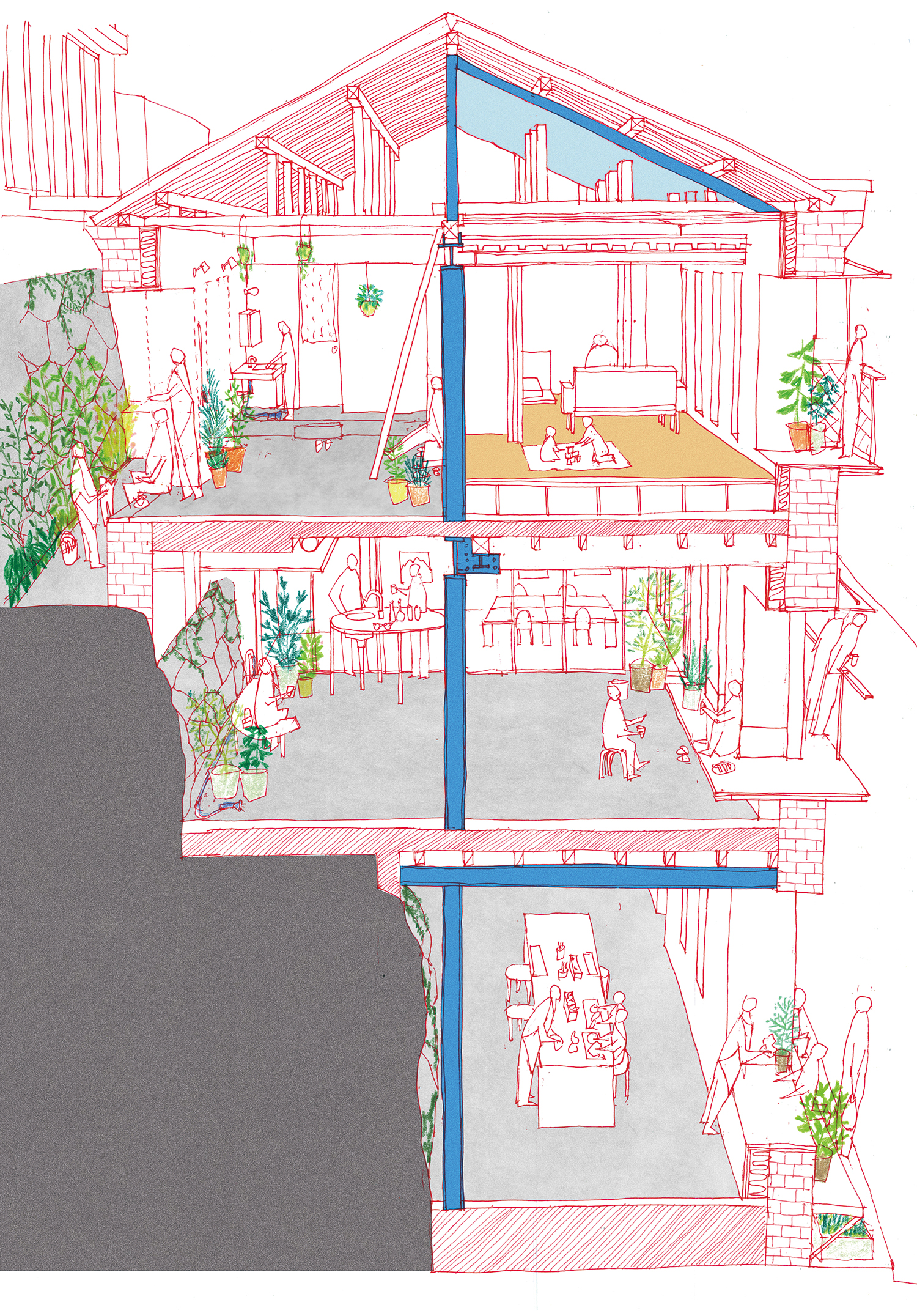
This house was built a hundred years ago. Brick walls were raised, a timber floor structure was assembled, and concrete was poured on top to form the slab; this process of stacking walls and forming floors was repeated to complete three levels, then finished with a timber roof. In this way, the house – built along with the history of Ogin-dong – emerged. Until the client couple, who operated mooyongso – a studio and whiskey bar in Seochon – discovered the building, it had changed hands many times over the past hundred years. Some cut columns and added walls; others poured additional concrete on the floor to install heating. As these tough, improvised interventions accumulated, the floors tilted, the ceilings sagged, and the roof shifted slightly. To support these now-unstable three floors, it became necessary to introduce a long cane-like structural member that would pierce through the building. On top of that, a small canopy – an umbrella-like form – was added to secure thermal performance.
Intrusions of External Sensation
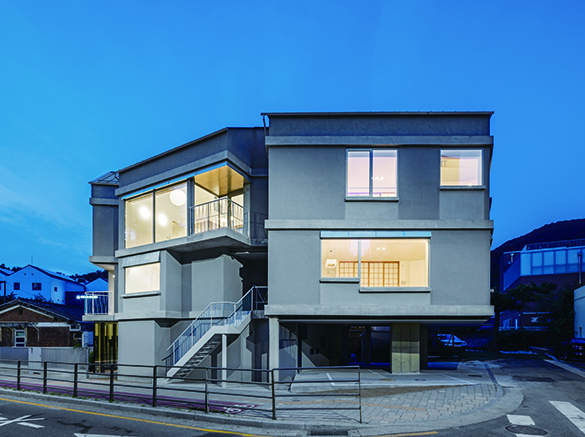
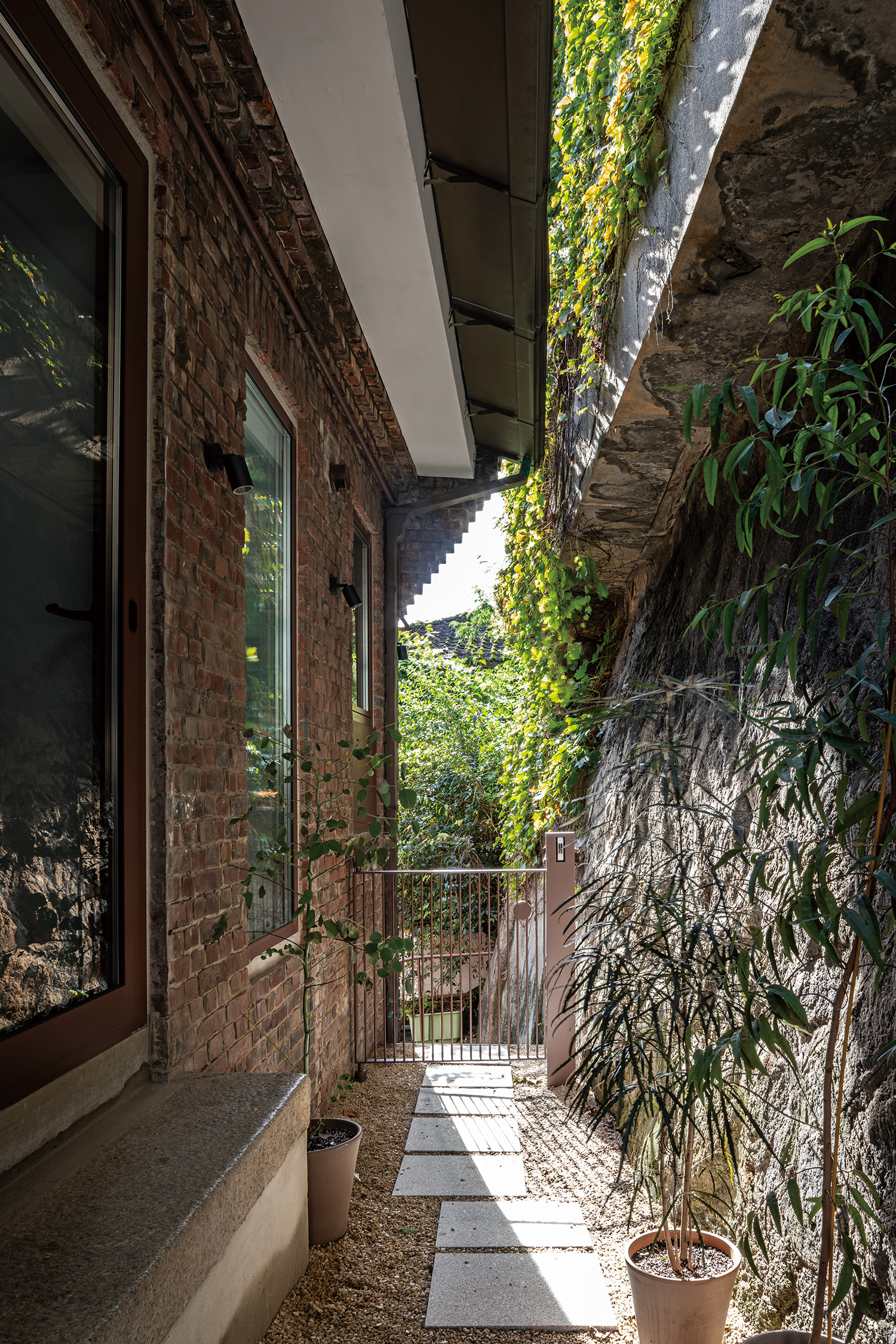
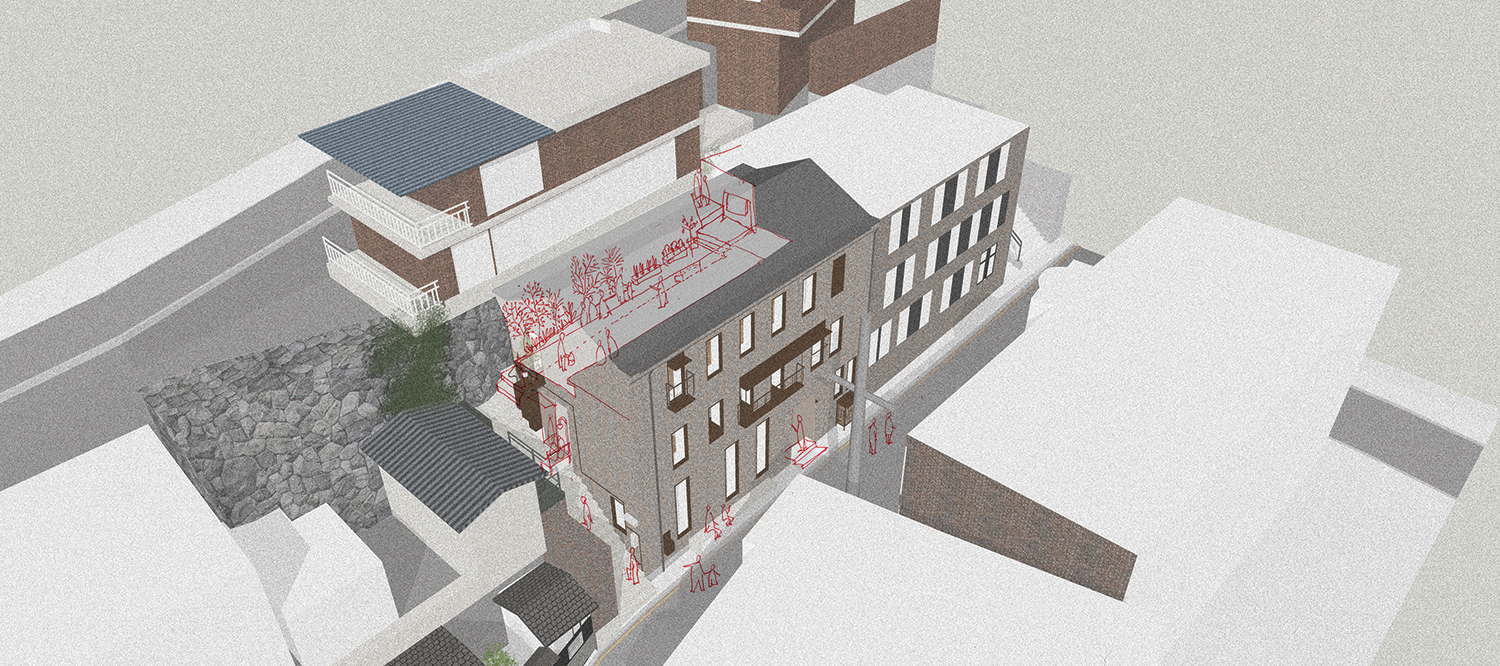
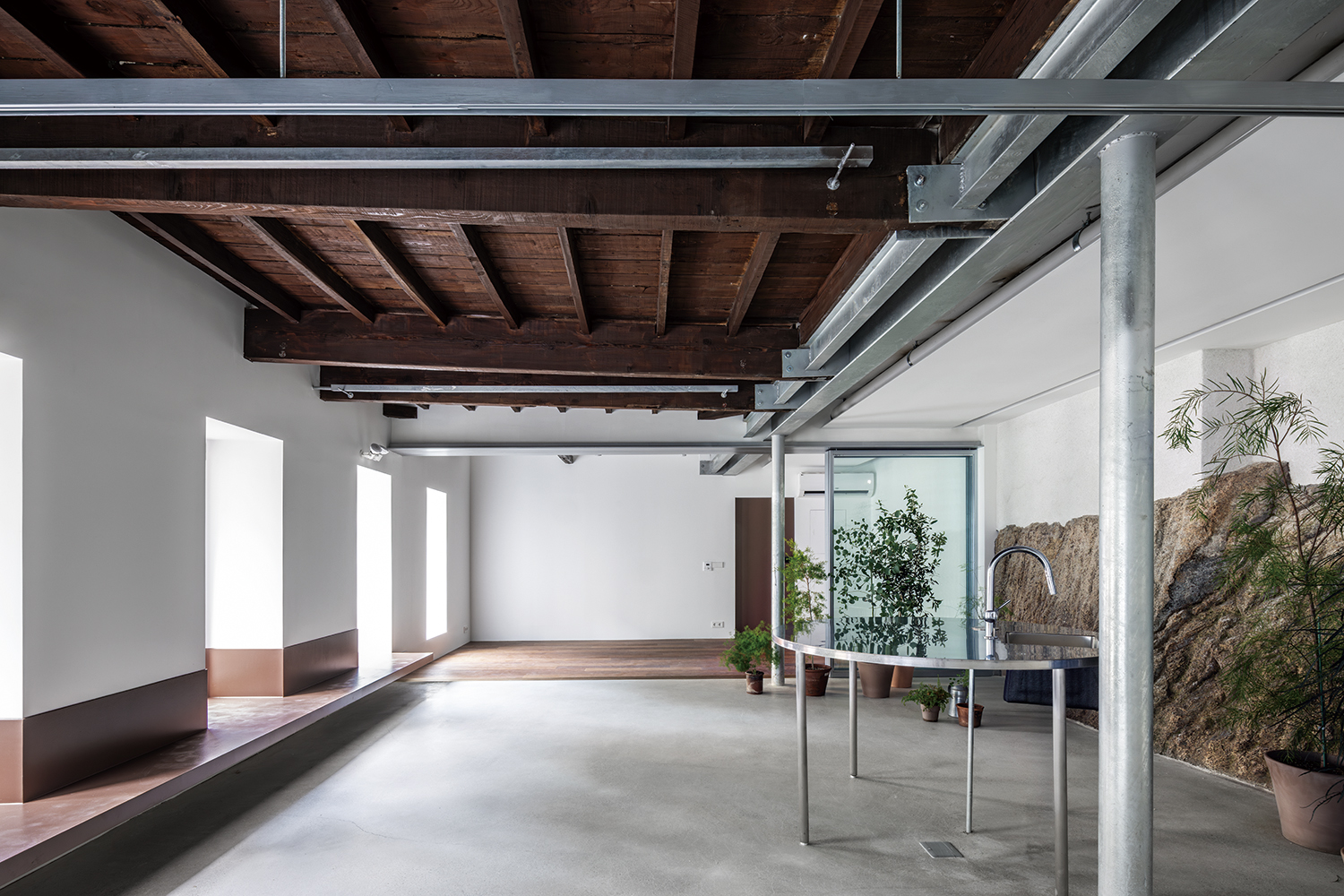
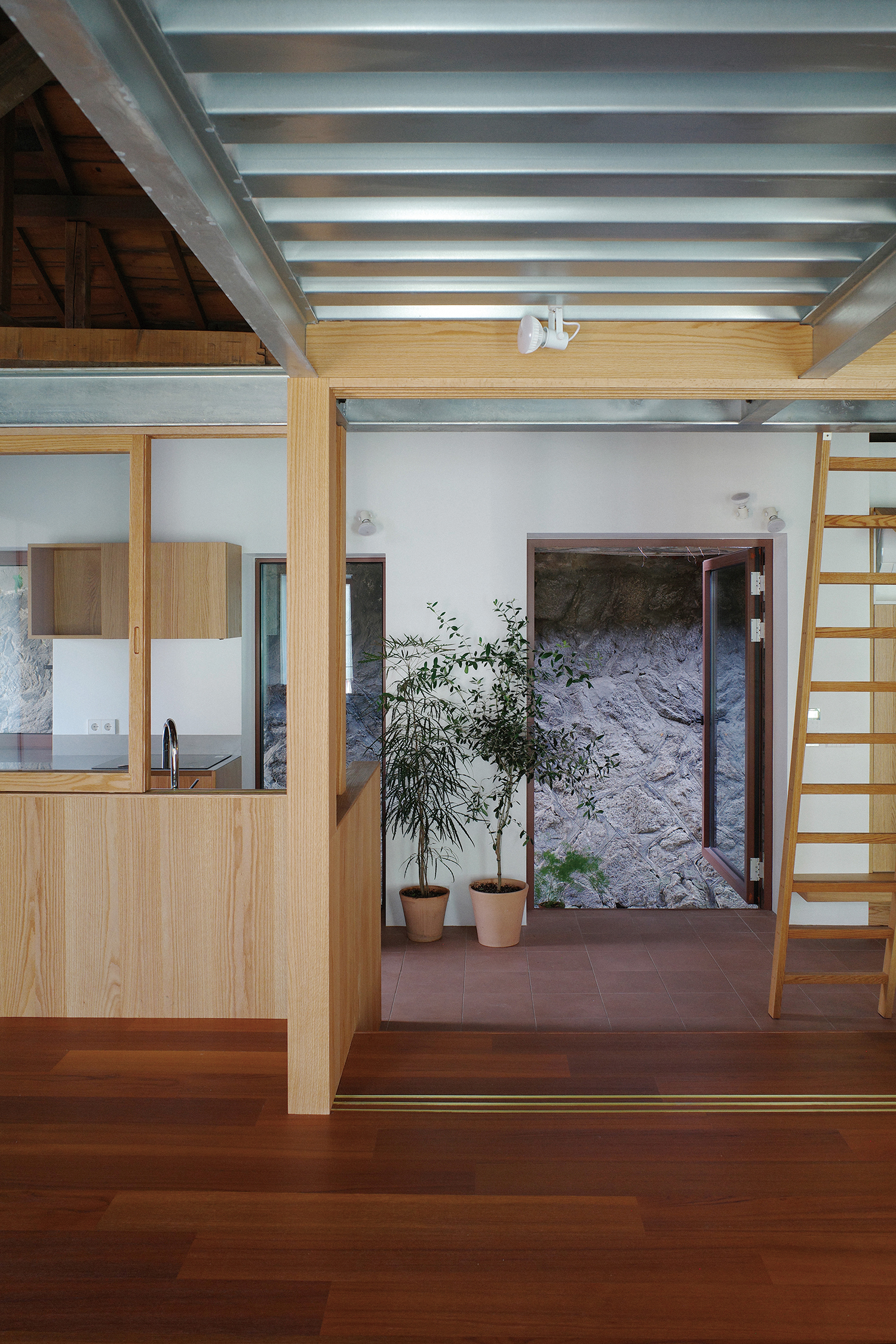
The house leans against the rocky escarpment of the city. A long, 12m-by-6m horizontal volume is wedged directly into a retaining wall. As a result, the exposed rock face enters the interiors of the first and second floors, while the third-floor courtyard is enclosed by stone walls taller than the house itself. The village alleyway reaches deep into the third floor, and the natural formation intrudes into the first and second floors. Because elements that should rightfully belong outside have penetrated the interior, the house disrupts and collapses our sensory apprehension of what typically distinguishes interior from exterior.
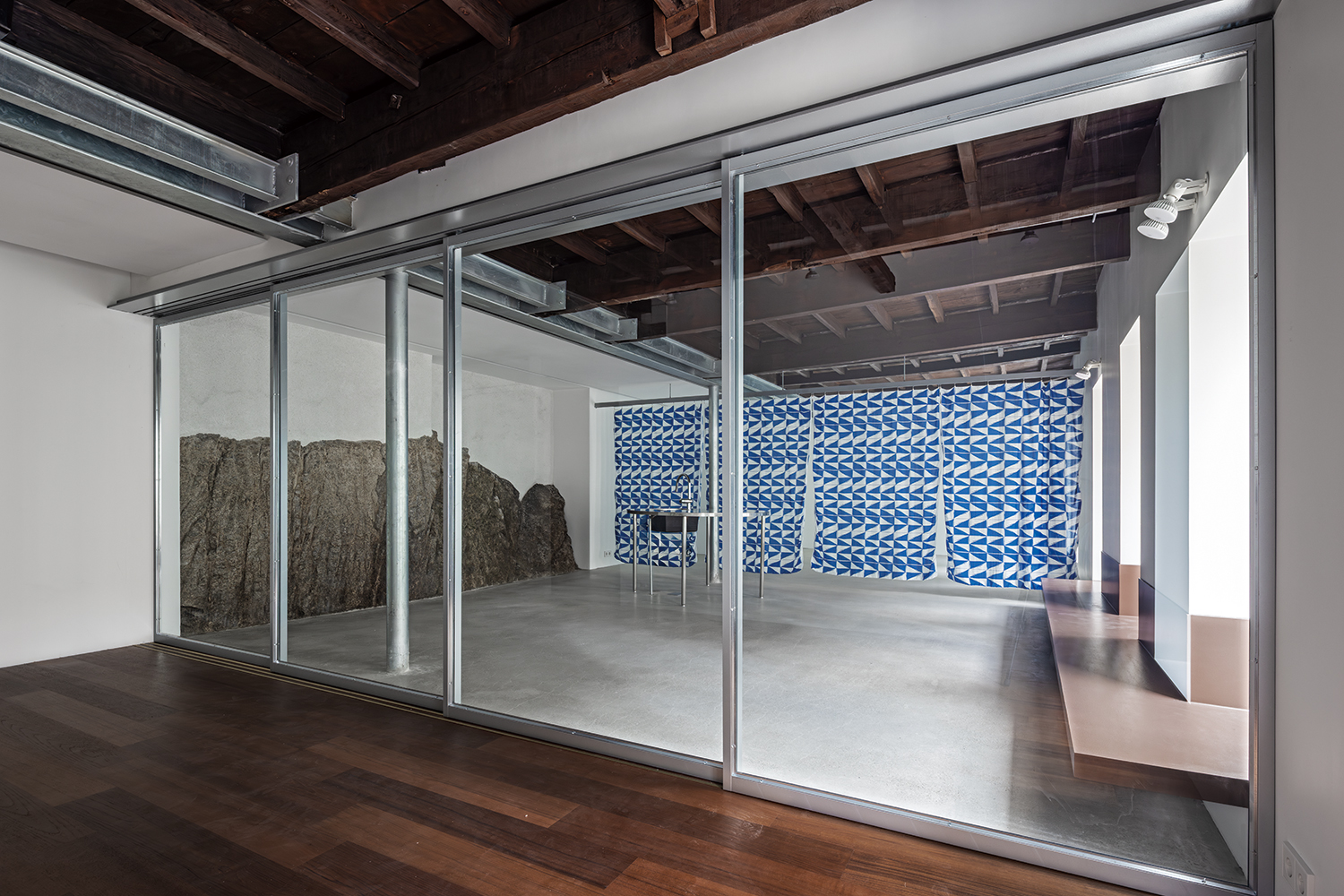
The stone path on the third floor that enters the courtyard continues from the village alleyway and extends to the inner terrace. At its end lies a kitchen’s balcony that opens towards the village. The second floor is accessed directly from the village stairs. Inside, the exposed rock face was preserved, and a series of terrace-like benches and sink-like furnishings – continuous with the exterior balcony – were installed to create a courtyard-like inner terrace. Around this, a gallery and a studio face each other, each divided by sliding glass doors and curtains. In this way, the inner terrace becomes an element that directly and indirectly connects the house to its surroundings, expanding the user’s sensory field towards the village. It becomes a house widened by the natural formation on which it parasitically rests—a ‘house that opens into the village’.
Initial sketch
Is Architecture the Making of an Interior or an Exterior?
When undertaking a renovation project, we are always concerned with how what we add overlaps with the existing environment. In contrast, architectural planning for a new construction typically begins with external conditions, namely the site, and proceeds by placing an interior produced by the building into that exterior context. Of course, the distinction between inside and outside is inherently subtle, and within its countless gradations one seeks an appropriate position. Renovation, however, begins with the conditions of the interior, and thus inevitably leads to the question of how an exterior can be created within the building itself.
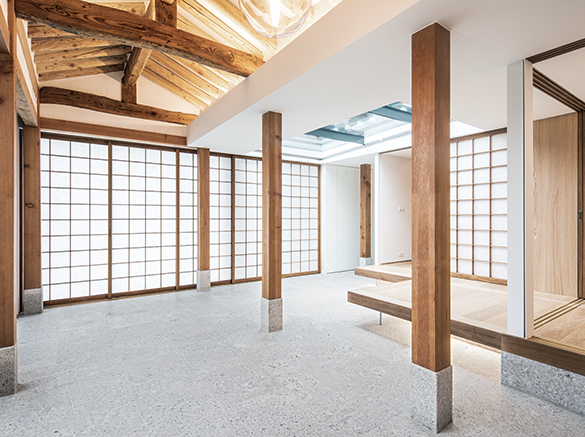
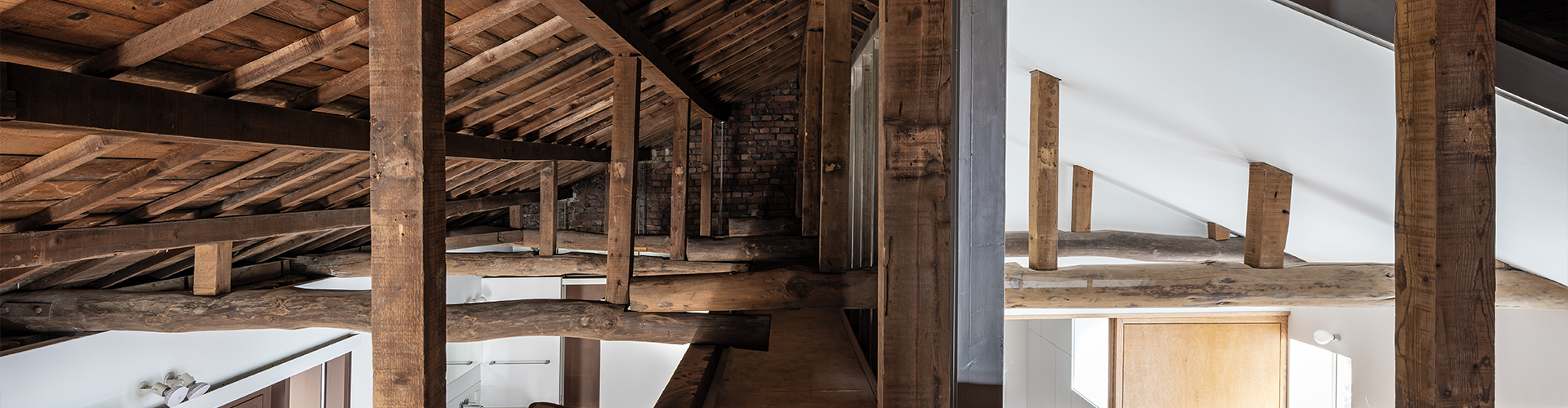
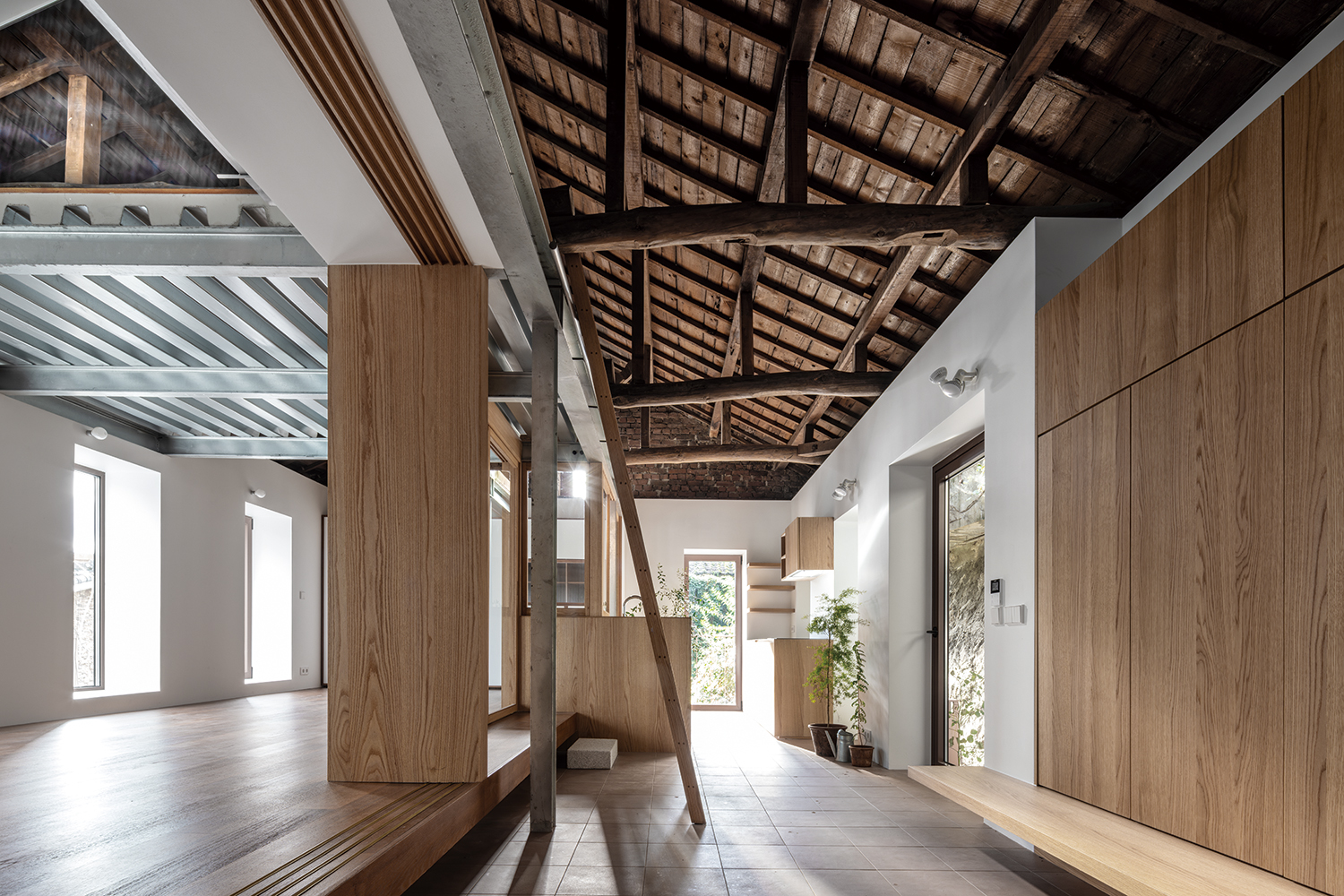
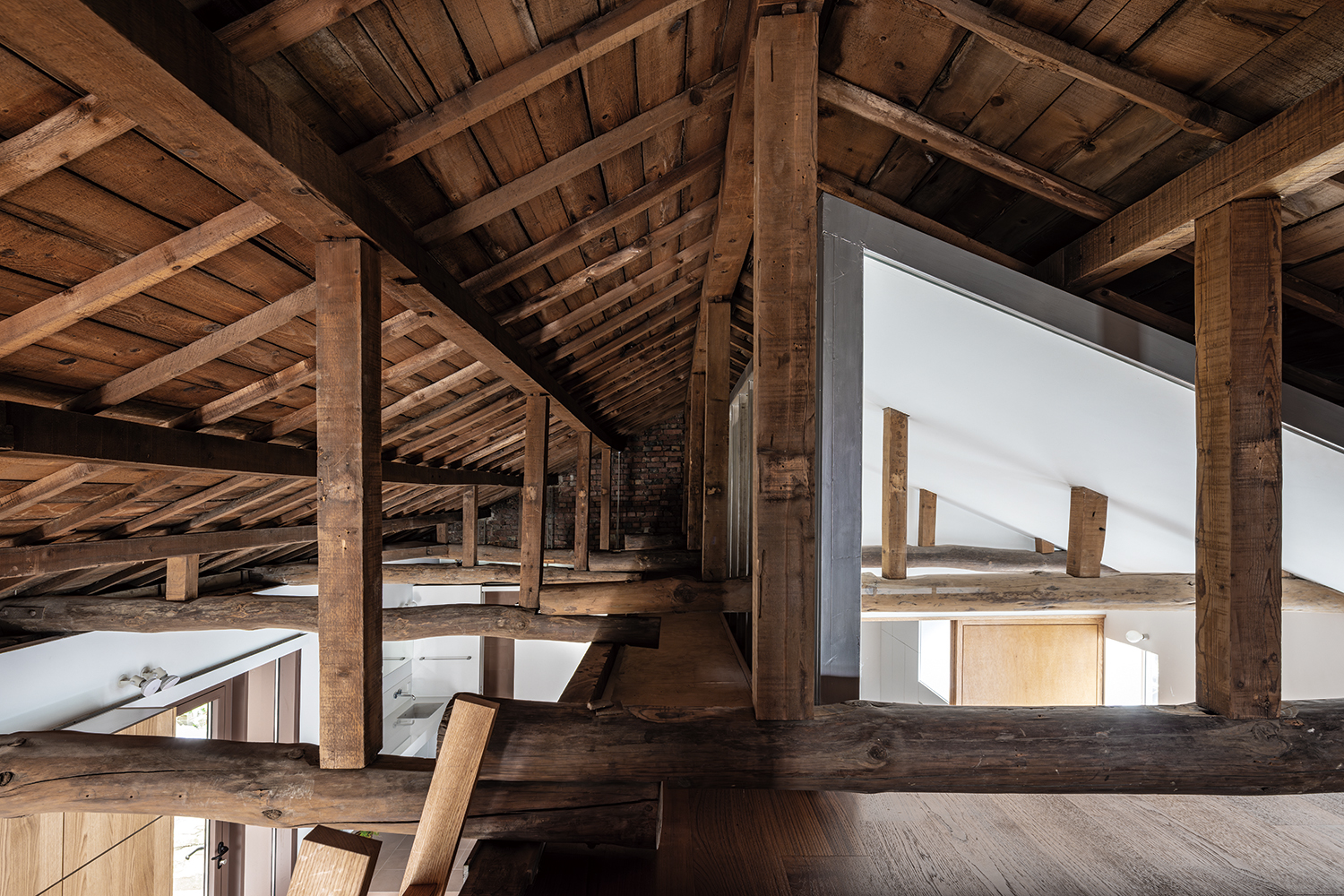
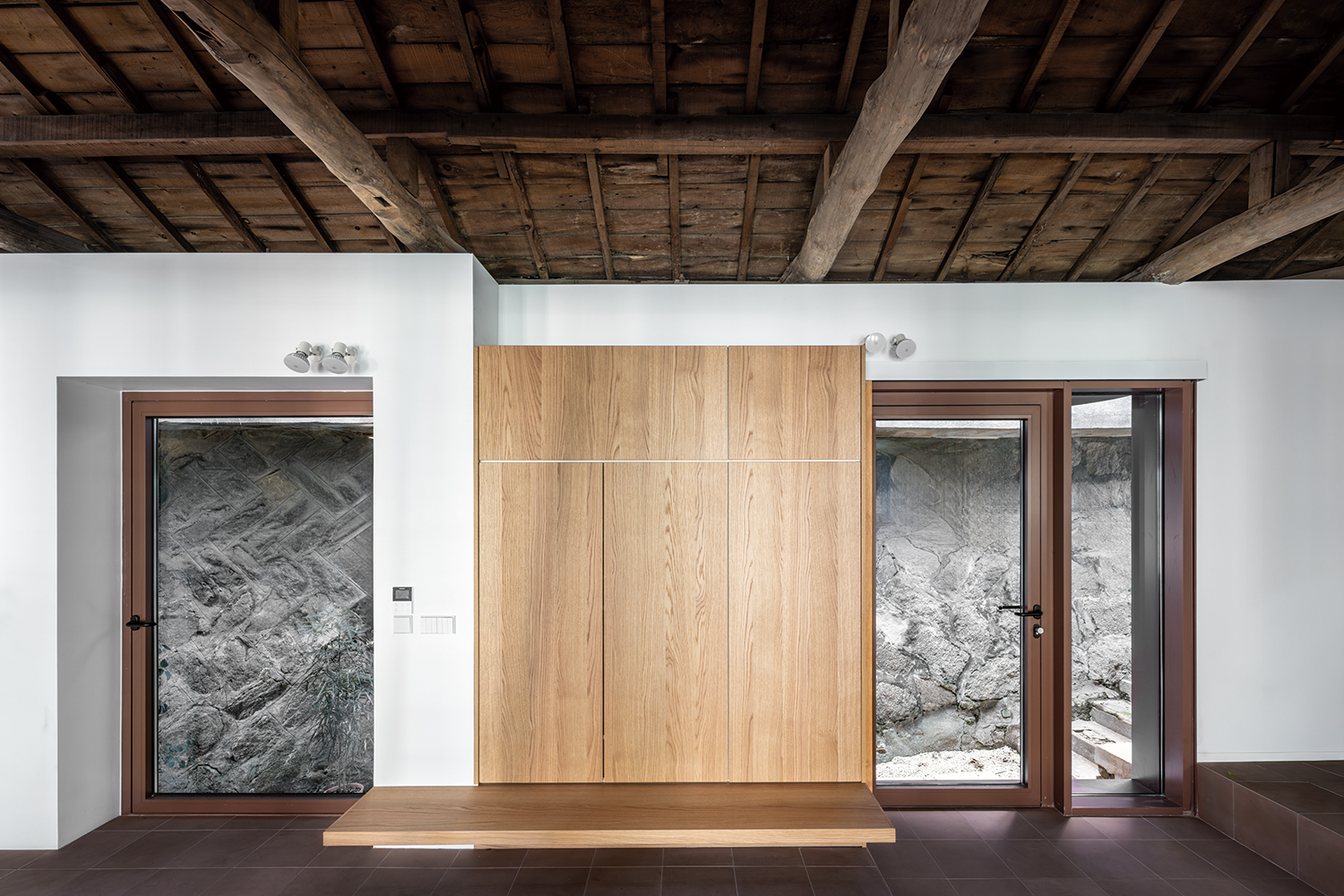
Within the century-old brick-and-timber structure, a new structure – a ‘house within a house’ – was inserted. Then, the older envelope surrounding it felt ‘external’, while the new structure felt ‘internal’. We considered how the temporal duality of ‘past and present’ could be translated into the spatial duality of ‘outside and inside’. Drawing on this sensibility, we connected the building’s temporality to the externalised feeling within the house. The unfamiliar qualities evoked by the old timber and brickwork make the third-floor inner terrace, which belongs outside the ‘house within a house’, outward-oriented. We maximised openings toward the stone-wall courtyard, extending windows down to the floor or allowing them to open widely so that the relationship between the two zones flows gently. The floor was finished with tiles matching the tone of the brick, and, by connecting water-using spaces – from the entry and kitchen to the bathroom – the area assumes a public character and reinforces its external quality. The living room, dining room, and bedrooms were raised with a step and enclosed with transparent sliding wooden doors so that, while visually continuous, a spatial transition occurs and the rooms feel relatively inward-focused. The living room and bedrooms under the umbrella-like structural canopy become even more intimate. The attic sits between interior and exterior, between past and present. By locating its ladder not in the living room but in the inner terrace, we intended a sectional entangling of inside and outside sensations. Ascending to the attic reveals a scene enveloped by the timber roof structure: the inhabitant becomes an observer, as though positioned in the space-time of a century ago. We considered the unique comfort this house generates in the process of traversing space-time and interior and exterior.
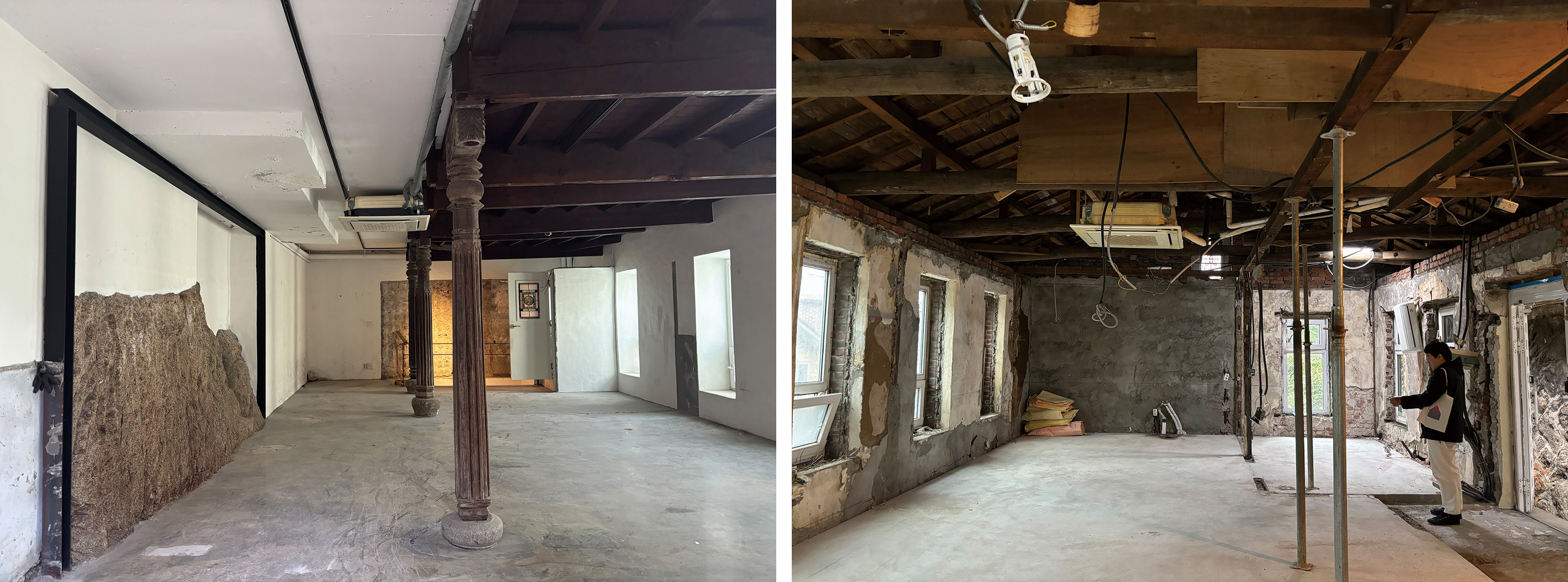
The second floor before renovation ©o.heje architecture
The third floor before renovation ©o.heje architecture
Additions: The Union of Objects and Architecture
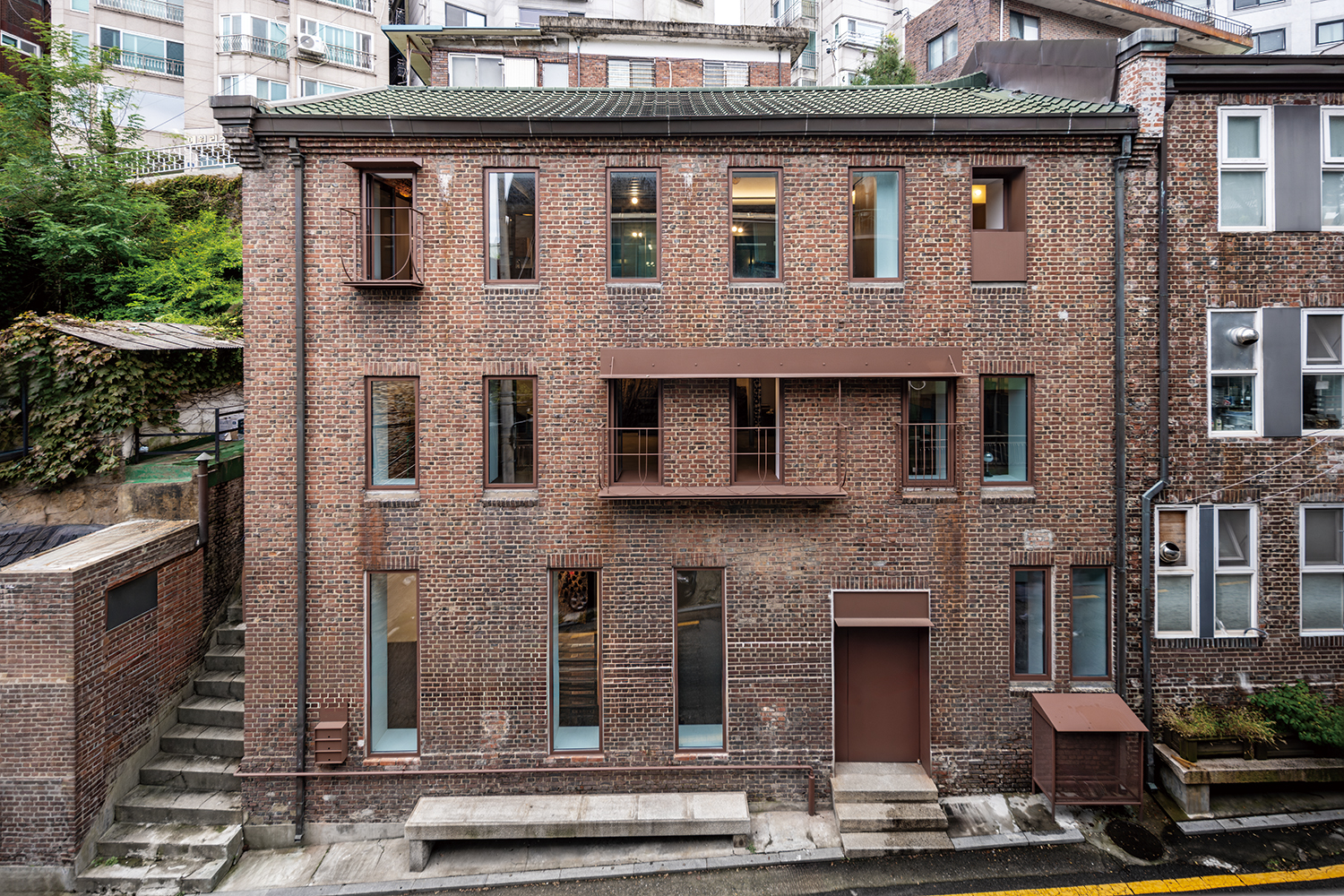
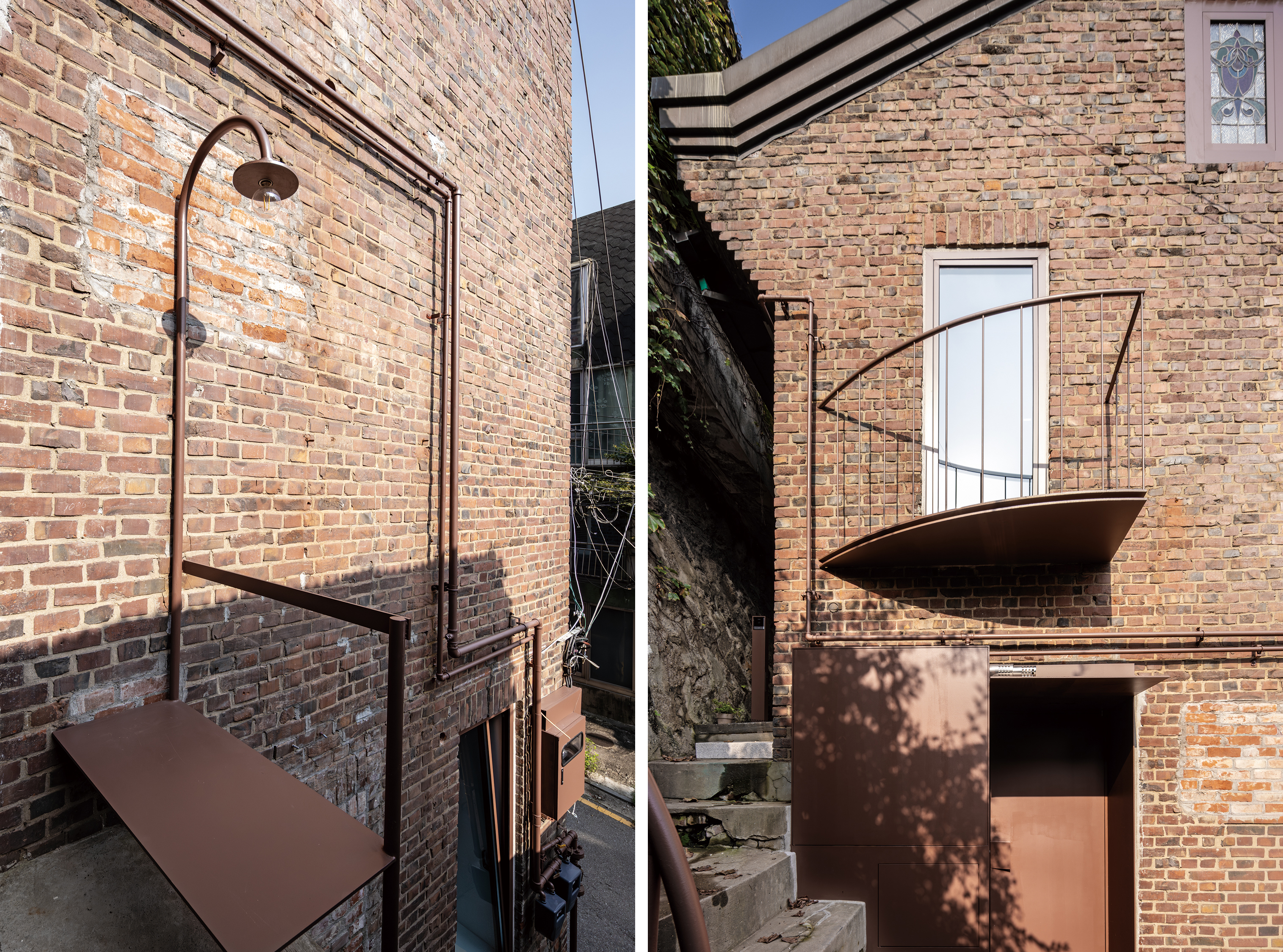
Ad hocism refers to an attitude that recombines existing elements or resources to create new solutions in response to given problems or demands. From the ad hocist perspective, we did not want the renovated elevation to become a single, uniform façade. Rather, we wanted a collective of protruding and recessing elements at the boundary where inside and outside meet. A set of apertures combining architectural elements such as canopies, railings, terraces, and internal benches; an object merging a mailbox-signboard,
bench-treetlight; an exterior wall light that replaces a former bathroom window; a boiler room paired with the main gate. As objects and architectural elements with differing functions merge, the building’s overall image is formed. We considered this not as something expressed through one language or function but as multiple narratives – situated between city and architecture – speaking through architectural language.
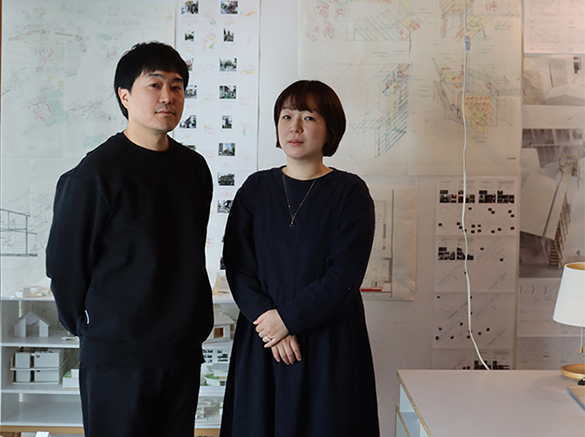
o.heje architecture (Lee Haedeun, Choi Jaepil)
Kim Donggyeong, Lee Jiyoung
Ogin-dong, Jongno-gu, Seoul, Korea
single house, neighbourhood living facility
86.3m²
80.43m²
197.97m²
3F
12m
93.1%
229.3%
masonry (brick), timber structure, steel frame
collective steel parts
water paint, wooden flooring, tile
Eun structural engineering
Yigak Construction Co., Ltd.
May 2024 – Feb. 2025
Mar. – Sep. 2025
mooyongso