




SPACE April 2026 (No. 701)
Kim Bokyoung (Kim): One of the most striking aspects of HORMA’s work is the way you organise your plans based on geometric forms. Even HORMA’s logo, composed of geometric shapes, seems to encapsulate the consistency of this formal attitude. Why do you adopt geometric figures as a primary design element in your work?
Nacho Juan, Clara Cantó, Jose Iborra (HORMA): We work with geometry because we find it to be the tool that best helps us express our thoughts through its precision, flexibility, and character. Geometric combinations establish a system of precise and concrete relations, where metric decisions become essential. These relations, in addition to being precise, form part of a flexible system, capable of being modified to adapt to the needs of each project. Thus, in each project, geometry proposes a different solution, of a different scale and function in space, always in dialogue with the pre-existing situation. We can explore many of our projects, and geometry is always there to express a way of working, from the conceptual drawing to the arrangement of the materials that build the project. It is not about geometries applied to a plan or a section, but to a global conception of three-dimensional space. This methodology based on geometry lends a unique character to spaces, relying on classical principles of architecture and mathematics. We often explain that our projects aim to inhabit geometry.
Kim: In MN House, you adopted the rhombus as a geometric element while simultaneously establishing the void as a central design strategy. How did you seek to organise form and space through the emptiness of the void and the precision of geometry?
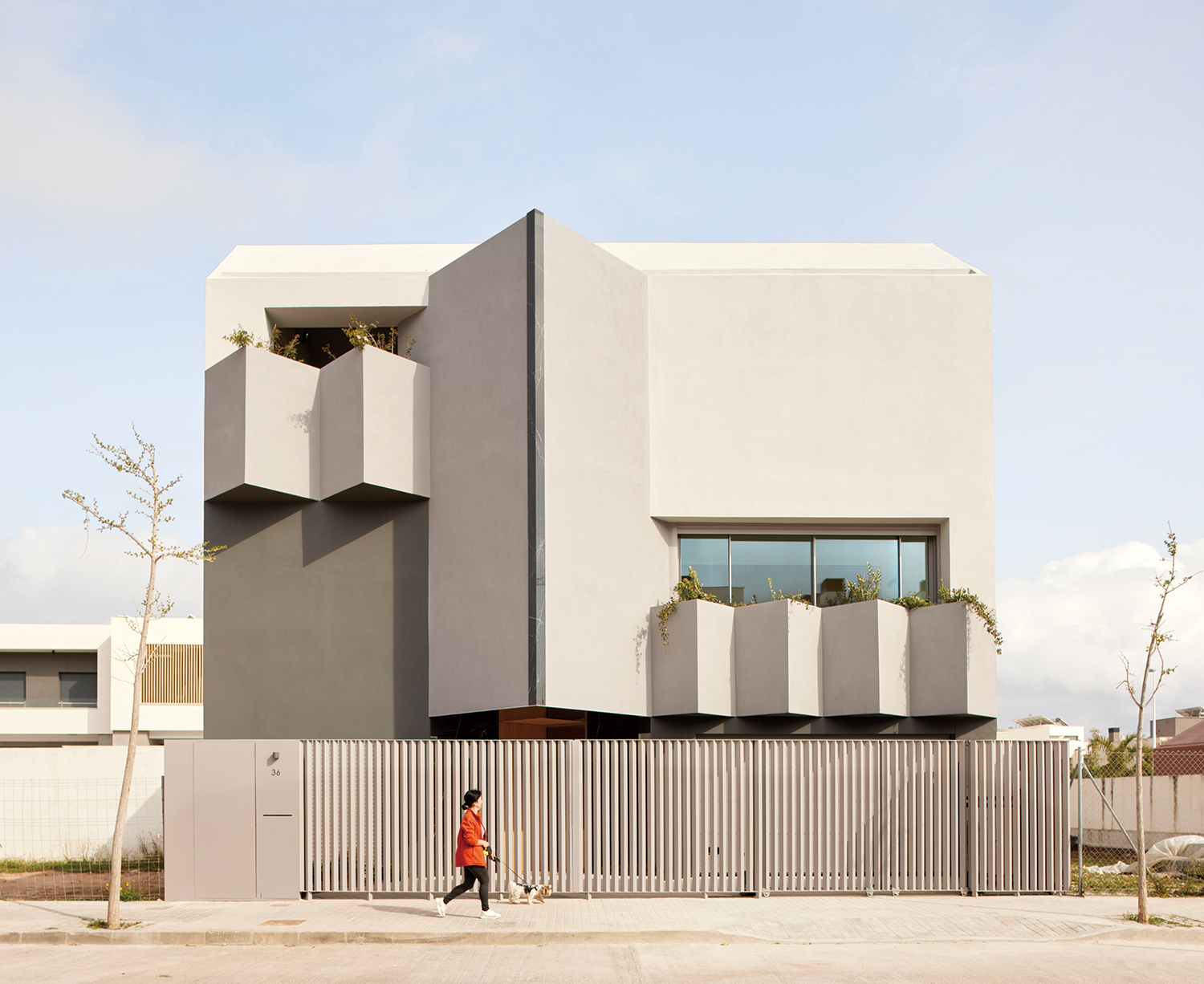
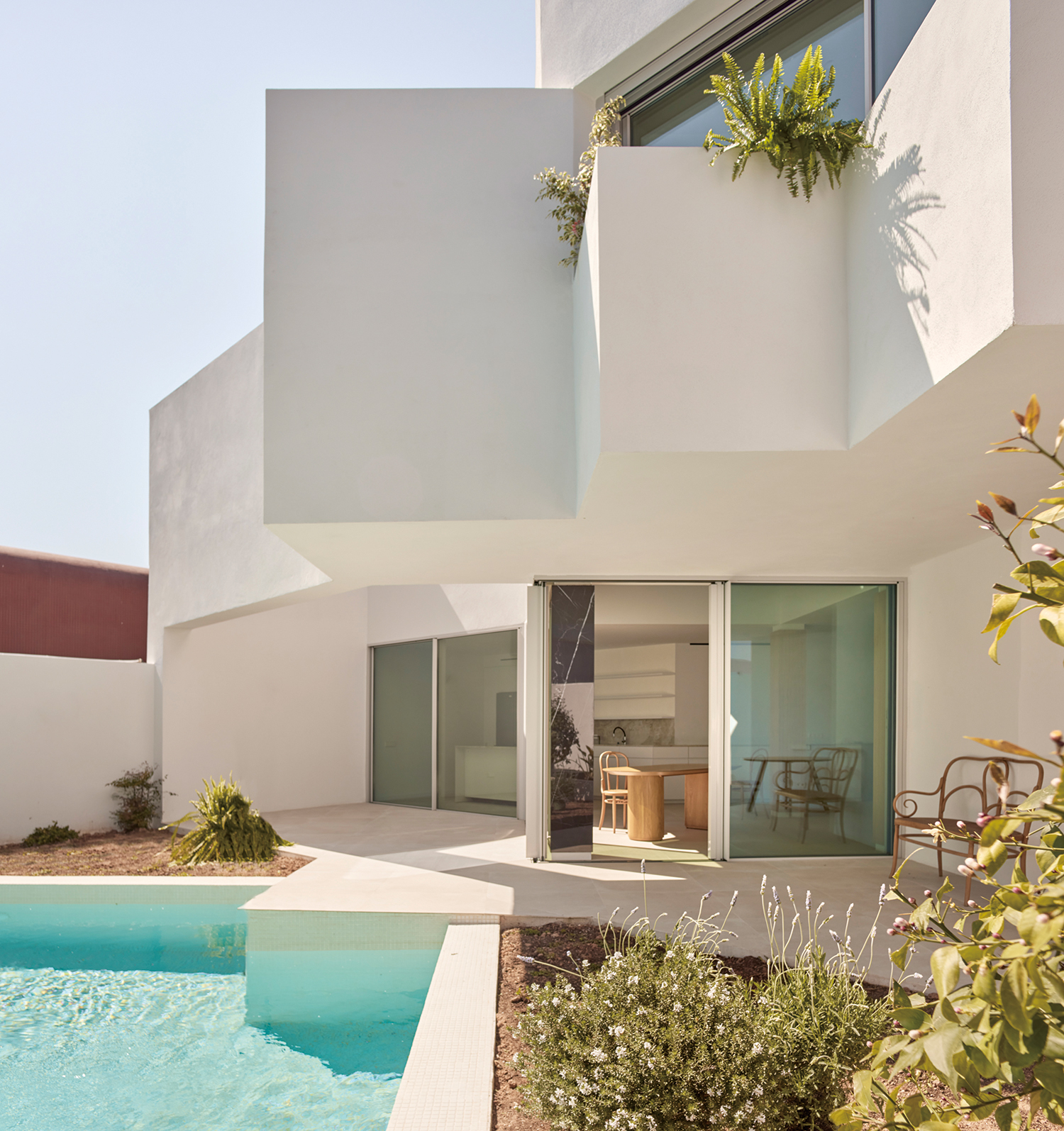
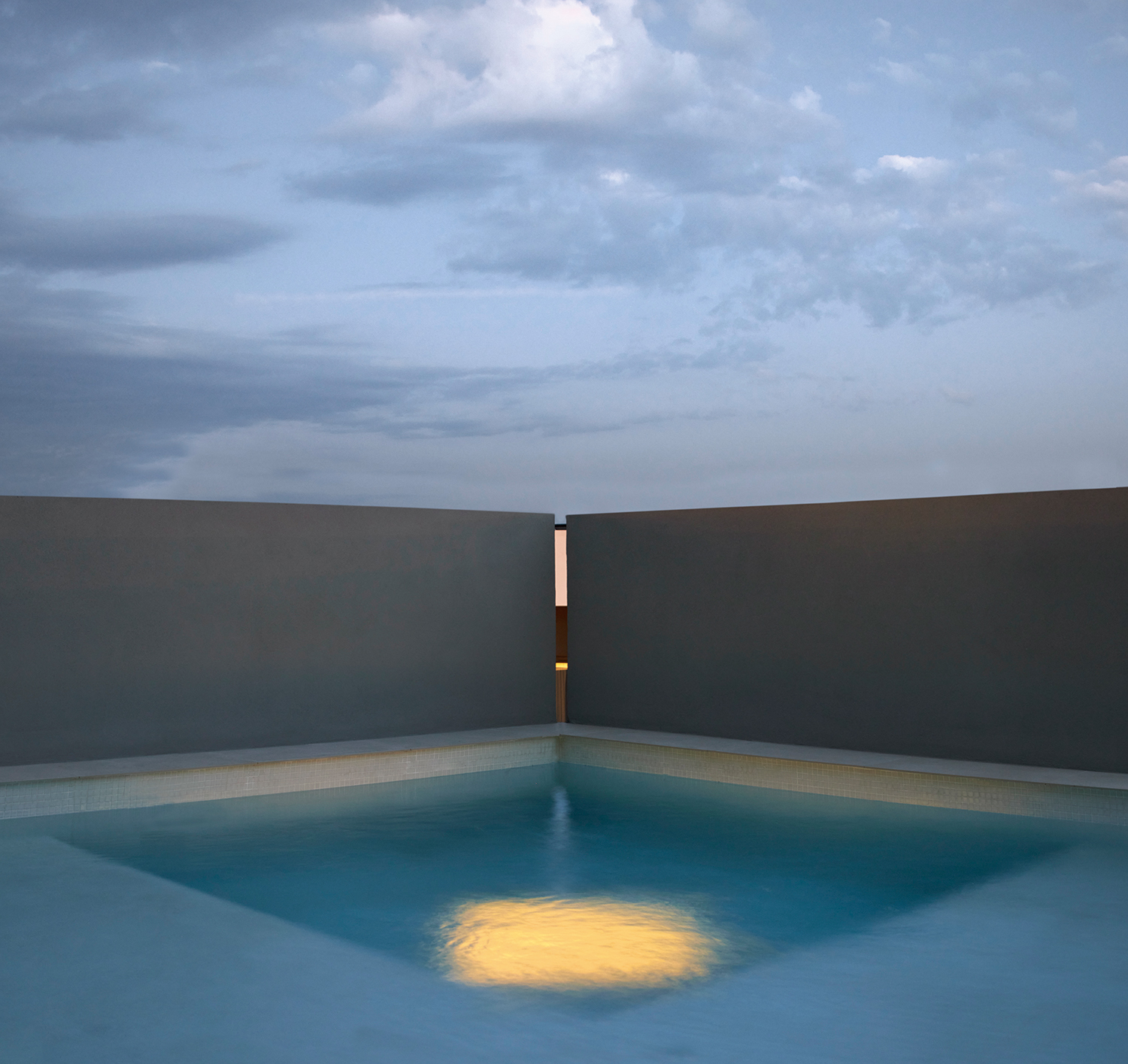
HORMA: More than a rhombus, we understand the working figure in the space to be a square rotated 45 degrees with respect to the axes of the work area. We are interested in the spatiality generated by a figure when it rotates 45 degrees around the directions of its context. If it doesn’t rotate, the spaces remain parallel and of constant dimension. When it rotates around its envelope, the relationships become unbalanced, creating spaces where it approaches its perimeter and spaces where it moves away from it. Furthermore, this rotation introduces the diagonal direction as a strategy for sliding and discovery, changing the usual rules of space. In this way, we can recognise the square as a basic, recognisable geometric form, but positioned differently; we don’t approach its sides but its edges. With one side we can stop or we can pass through it; the edge leads us to slide along its sides tangentially. The side is flatter, the edge is thinner. Its perception is more subtle, more precise, and more dynamic for the way you move in the space surrounding the form. In this project, the main square that articulates the floor plan and connects the different levels is conceived as a void. A space that is weightless, occupies no space, and consumes no resources, yet is capable of being the main protagonist of the house. On the roof, this square becomes a swimming pool, also connected to the main void through the light that filters through its water and illuminates the interior of the house. As a system, the project is not organised solely through this square and its rotation; rather, the space is defined by a sequence of squares, rotated 45 degrees and overlapping along the central axis of the house. These squares, of varying scales, resolve the access, the intermediate spaces, and also the main rooms of the house, including the two swimming pools that define the exterior spaces. On the façades, the same geometry defines the volume with a vibration that reduces the scale of the whole and creates boundaries with thickness that act as climate filters for the interior.
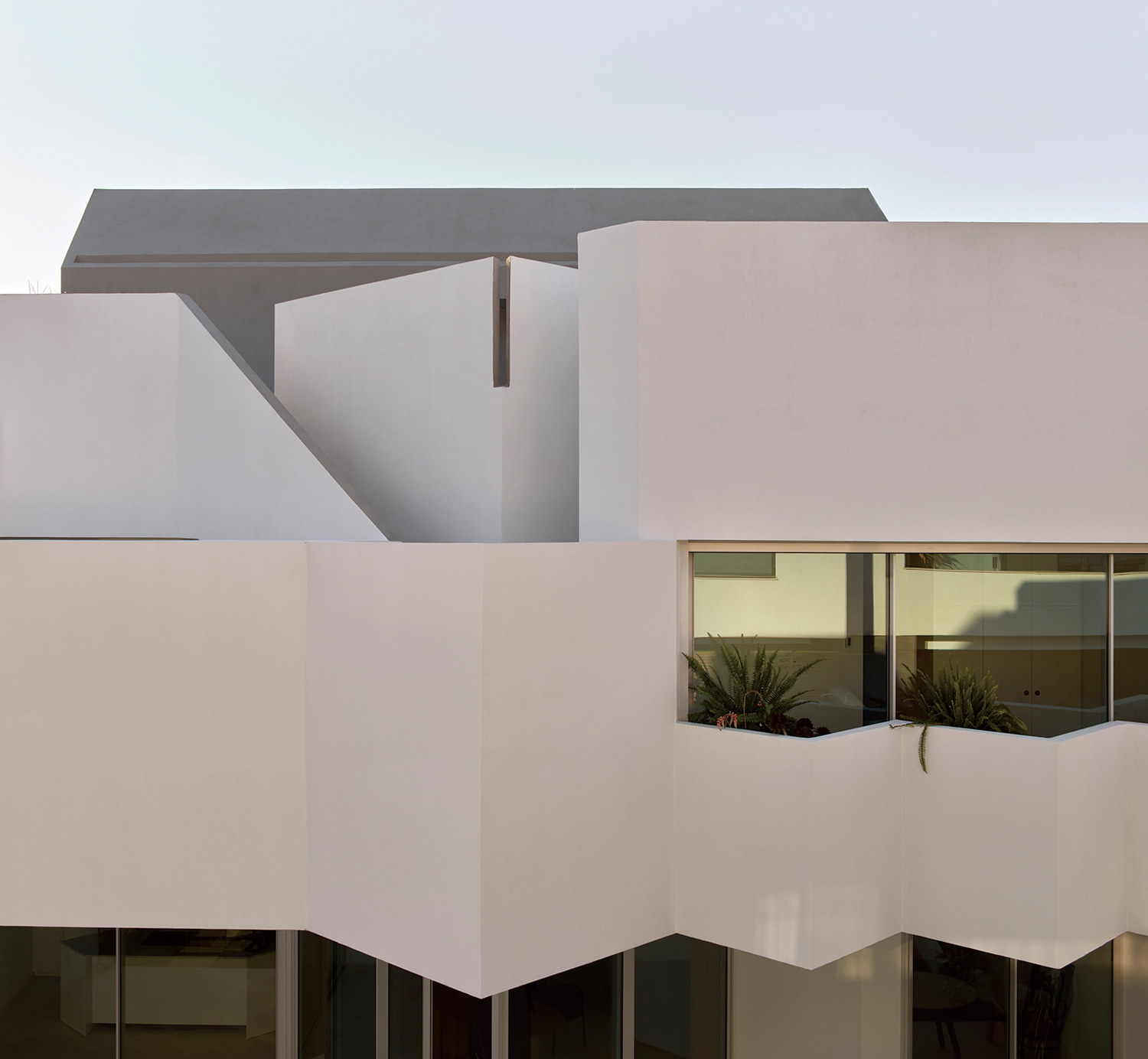
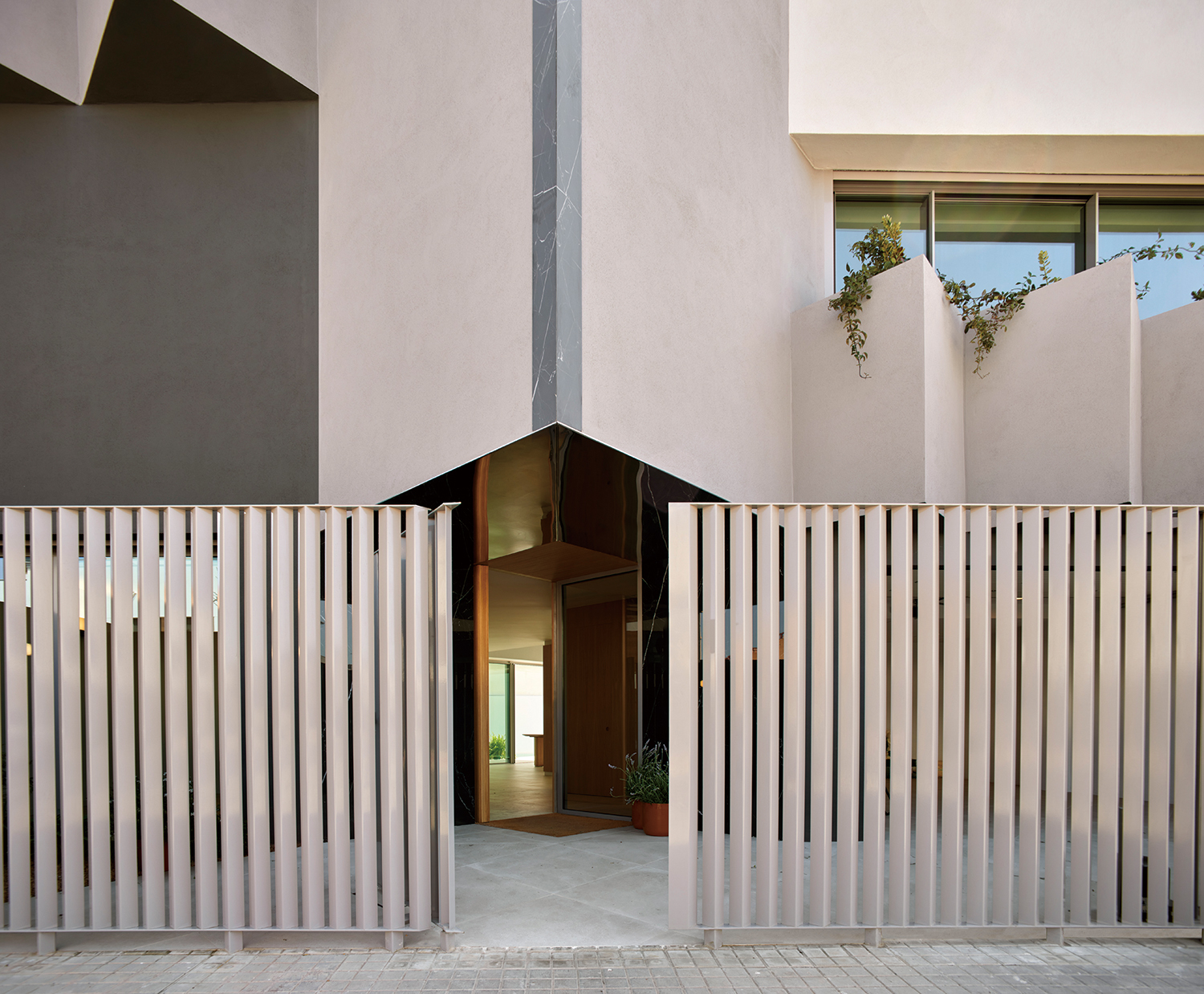
Kim: You described MN House as ‘a place that is difficult to photograph, difficult to explain, difficult to draw; a place where only experiencing it allows you to be part of it.’ Yet even through photographs and drawings, one can already sense the tension and dynamism that the diagonal introduces into the space. What kind of experience, then, were you intending to achieve beyond what can be perceived through these representations?
HORMA: We believe this is the magic of architecture: experience. We strive to ensure our projects require more than just drawings and photographs to complete the user experience, and we believe this project achieves that. It’s difficult to explain the sensation of movement, the visual relationships that exist without needing to look at a specific object. It’s a living space, where geometry establishes relationships that are easy to understand but require being there to be experienced. The drawings show the intentions, the photographs show the space, but the experience of moving through it allows you to experience the geometry and inhabit it. It’s a relationship of movement, both physical and visual, simultaneously in plan and section, which we believe can generate a new way of understanding spatial relationships through geometry.
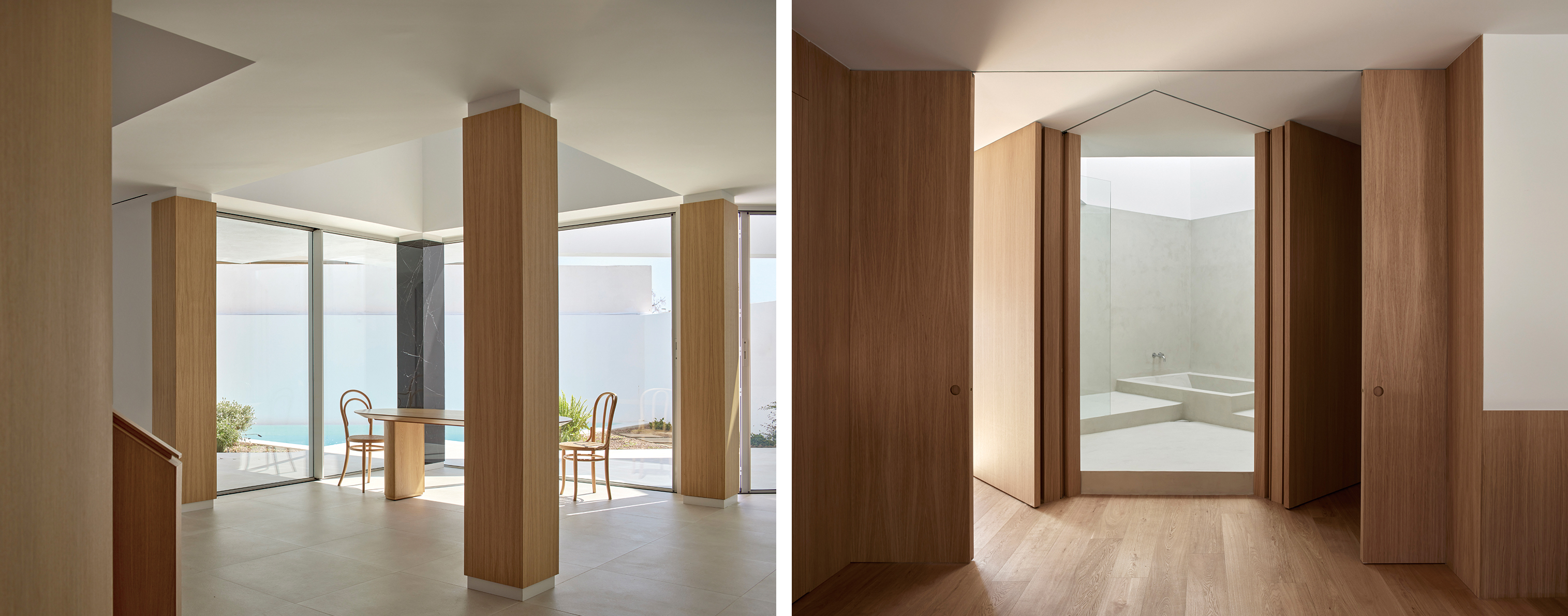
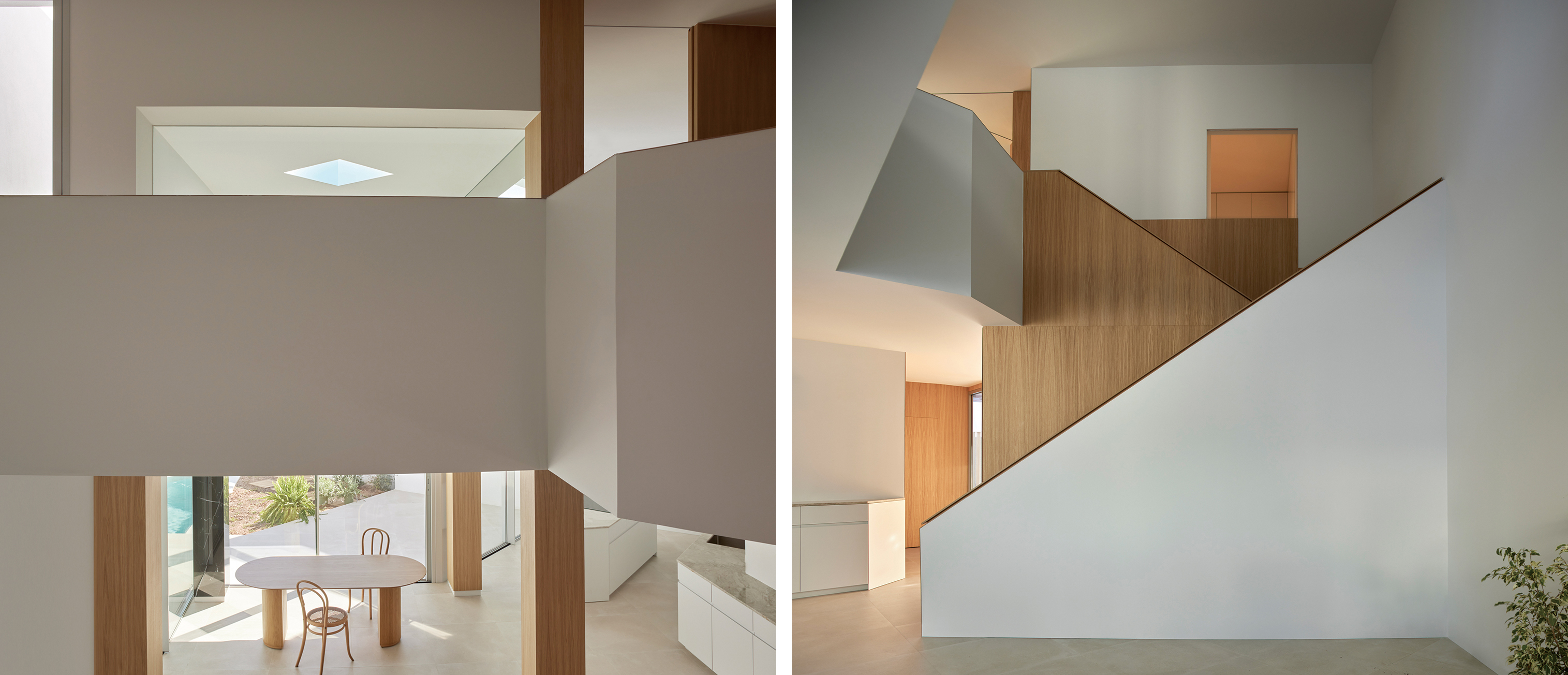
Kim: This project departs from an internal logic that uses geometry to organise the plan and determine the interior spatial experience. Even so, how do you see this house relating to the specific characteristics of the Valencian region?
HORMA: Our projects always begin with a thorough reading and understanding of the site before we start. This analysis helps us understand the context and its cultural and climatic conditions. What we aim to explain is that the project isn’t influenced by the surrounding architecture, but rather connects directly with the essence of the place. The intention isn’t a decorative and formal volume oriented towards the exterior, but a volume that is coherent with the habitability requirements of the interior space. The volume is, therefore, a direct consequence of the dialogue between the interior and exterior needs of the house, defining within its envelope a space with sufficient dimensions to create habitable transition areas.
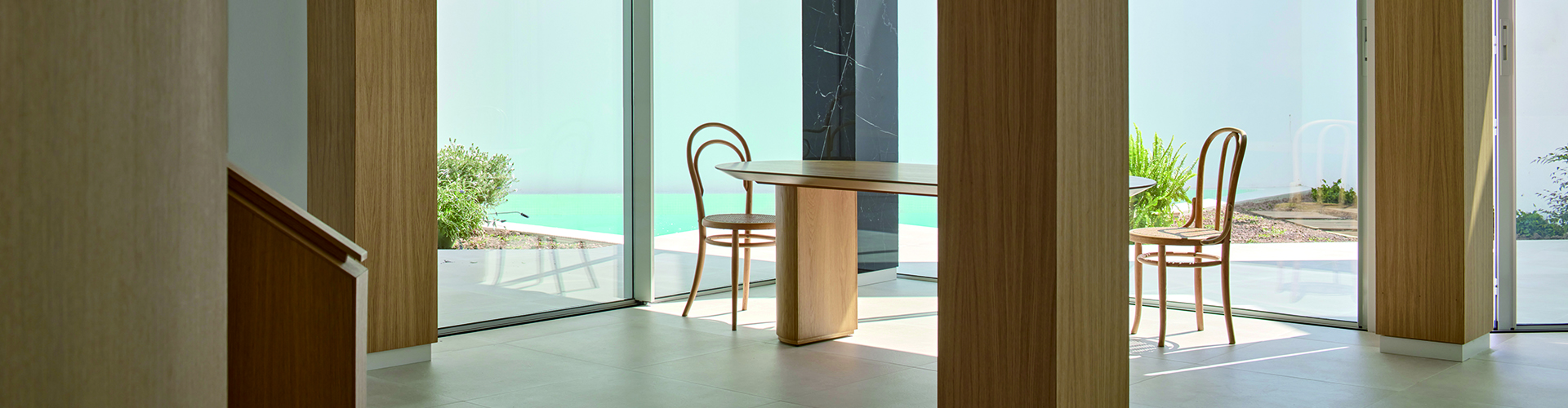
The climate of the Valencian Community allows for a blurring of the boundaries between interior and exterior, enabling the house to be understood almost as a covered outdoor space. The project seeks to protect the space from the hottest and sunniest moments, creating a welcoming interior space that is in direct contact with the exterior in its common areas and protected from it in the more private ones. This is a house rooted in the tradition of the usual use of Mediterranean space, connected with natural light, trying to maximise the exterior surfaces for public use both on the ground floor and on the roof and generating habitable transition spaces that blur the boundaries between interior and exterior spaces.
Kim: You described MN House as a contemporary and alternative approach that departs from traditional or preconceived canons. What is the ‘contemporary alternative’ that the project seeks to articulate? In addition, how do you situate this work within the evolving discourse of contemporary housing in Spain?
HORMA: With the MN House, we aim to offer a way of understanding residential architecture linked to the essence of Mediterranean tradition, rather than to the architecture currently built in the area as if it were Mediterranean. The project tries to shed traditions added over time that do not contribute value to architecture and focus on those that truly define the way we live. Thus, the MN House does not aim to create circulation paths connecting rooms, but rather habitable circulation paths or connected spaces without circulation. There is no distinction between these types of spaces because they are all habitable and all form part of the movement of the house. This is a project that is not aligned to commercial standards but strictly to architectural and spatial values. We would like this work to form part of the sincere discourse of Spanish residential architecture, where the work must be able to detach itself from current trends and focus on the experience of living. We aim to participate in a discourse towards housing where living is a unique experience, where architecture explores new paths and new challenges in response to the evolving needs of each moment.
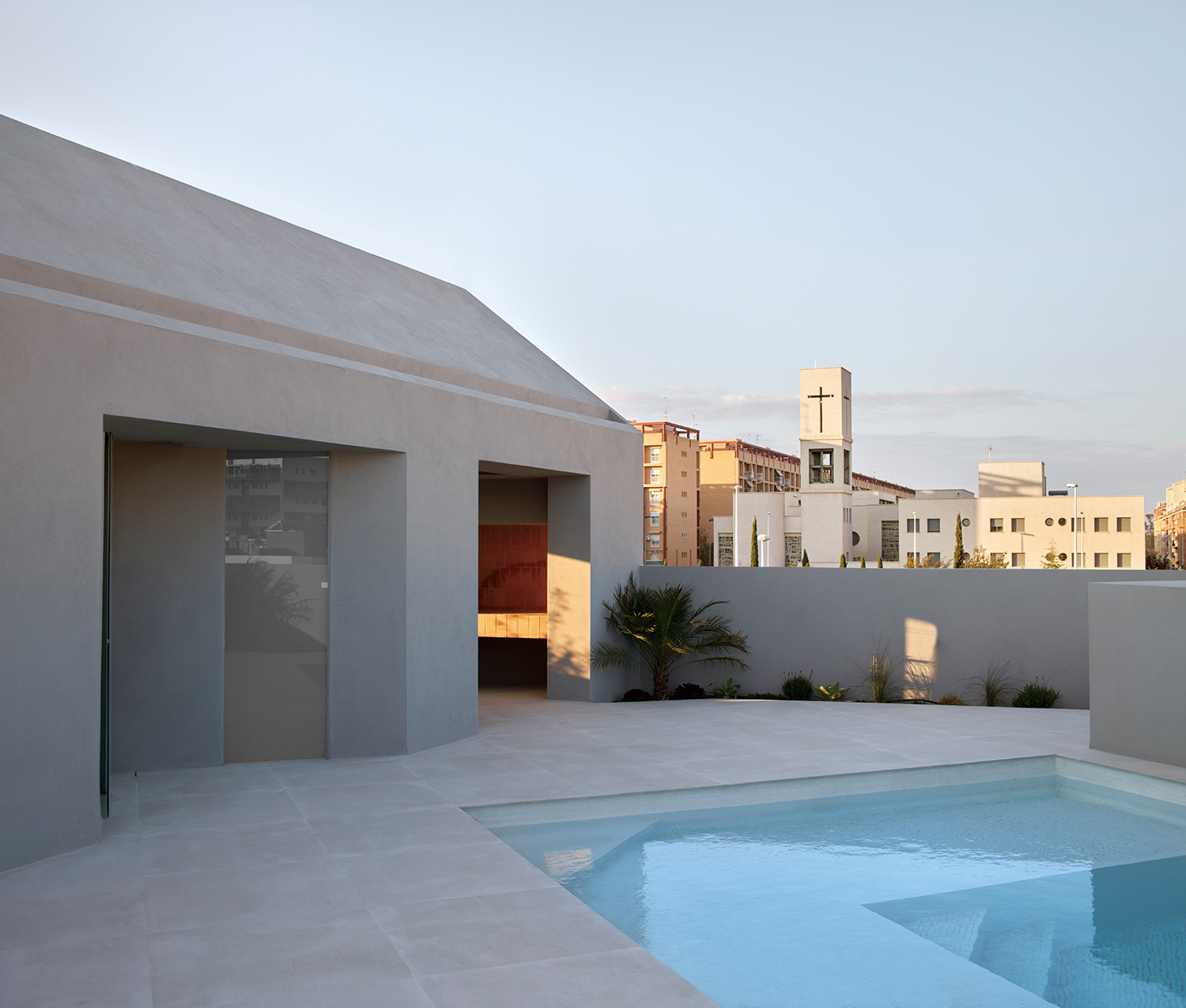
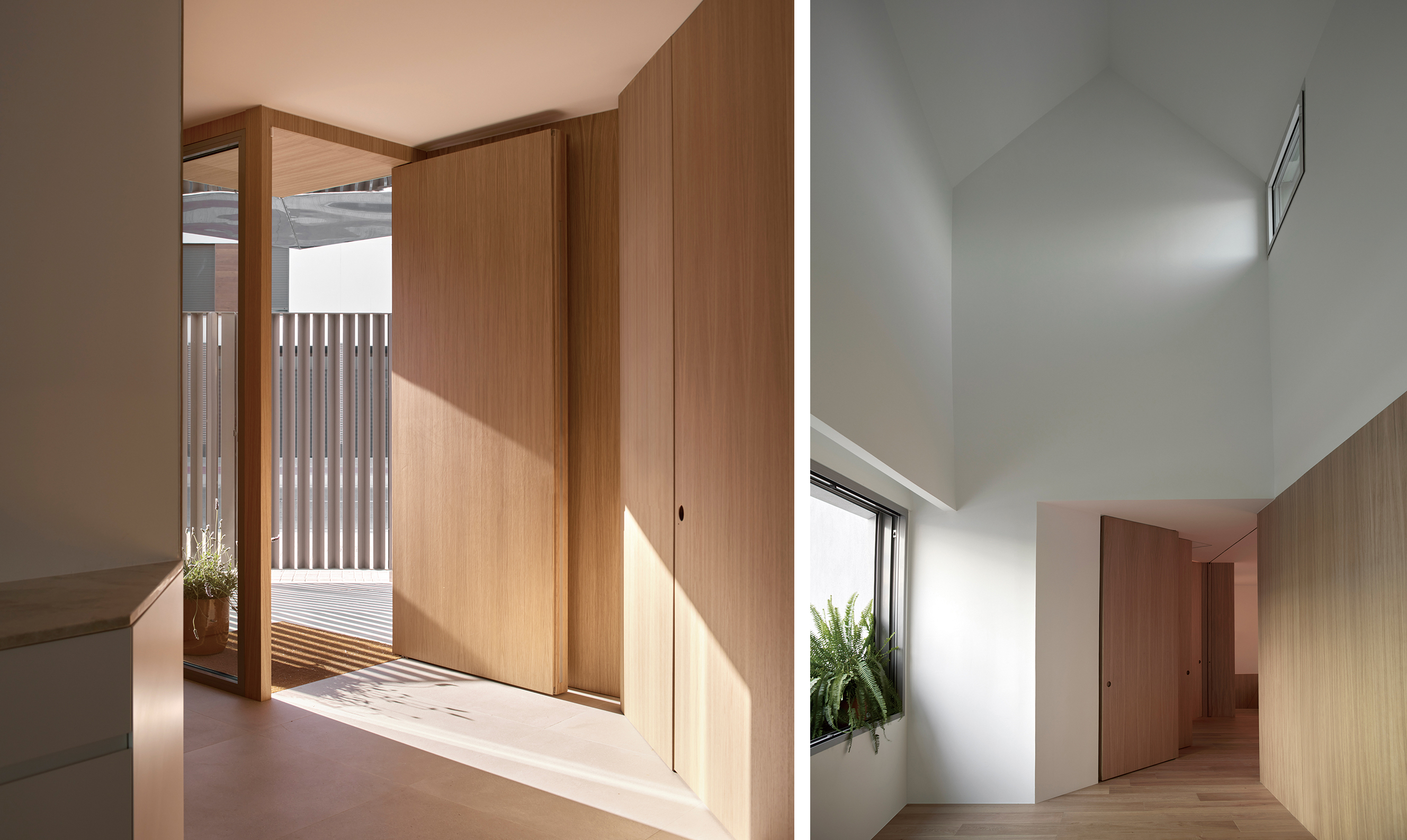
Kim: HORMA places great value on working by hand, suggesting that manual can endow the work with the virtue of the unrepeatable. What forms of craftsmanship were involved in MN House?
HORMA: We believe in the uniqueness of processes. If geometry allows us to work with an abstract and complex system with precision, our hands allow us to maintain a connection to what exists. We believe in abstract conceptual work linked to artisanal work, which brings it closer to the place and the people who build and inhabit it. In the MN House, hands have been present in every layer and phase of the project. From the initial drawings and spatial models to experience the space, to the construction decisions, hand-drawn on its walls, and the execution of the manual work on-site. We are very interested in the evolution of the project during its construction phase, when the space becomes a reality and some decisions are modified as we experience it. This is not improvisation or a lack of prior definition, but rather part of the experiential process of living with the work and engaging with it. For us, this is working with our hands, and not only our own, but also those of all the workers involved in the construction of the project, including the end user who also participates throughout the entire process. The intervention of the human factor makes the project unique, makes it real long before it is finished, and makes all participants see themselves reflected in the result obtained.
Kim: Finally, all of HORMA’s residential projects are titled with two-letter combinations. Is there a particular criterion or principle behind the way you name your projects?
HORMA: Yes, it is. We understand that we work for the people who live in our projects, and they are the ones who give the works their names. Specifically, in housing projects, the letters that name the houses are the initials of the names of the children who will live in them. This is due to two reasons. The first is that they will likely be the ones who will live in and enjoy the house the most, without being able to have a say in the design process, since they are still children. And the second, and most important for us, is that we design from and for them. They will live in it during their formative years, so the house will become their guide to learn inhabiting and will influence their development as individuals. They will live in the house with their closest loved ones and experience many of the most memorable moments of their lives there. Architecture must assume the responsibility of being part of the development of the people who live in it. That’s why they take their name; we design from and for them. We think the projects paying attention to the future evolution of the house and its adaptation to the different phases of the lives that will be developed in it.
HORMA (Nacho Juan, Clara Cantó, Jose Iborra)
Puerto de Sagunto, Valencia, Spain
single house
251m²
163m²
283m²
3F
9m
65%
65%
painting, natural oak wood
Windmill consultants
HORMA
clay
Construcciones Francés
July 2022 – Mar. 2023
Oct. 2023 – Feb. 2025
Manuel Chavarría
Creaciones verdes (Maria Pedro)