




SPACE March 2026 (No. 700)
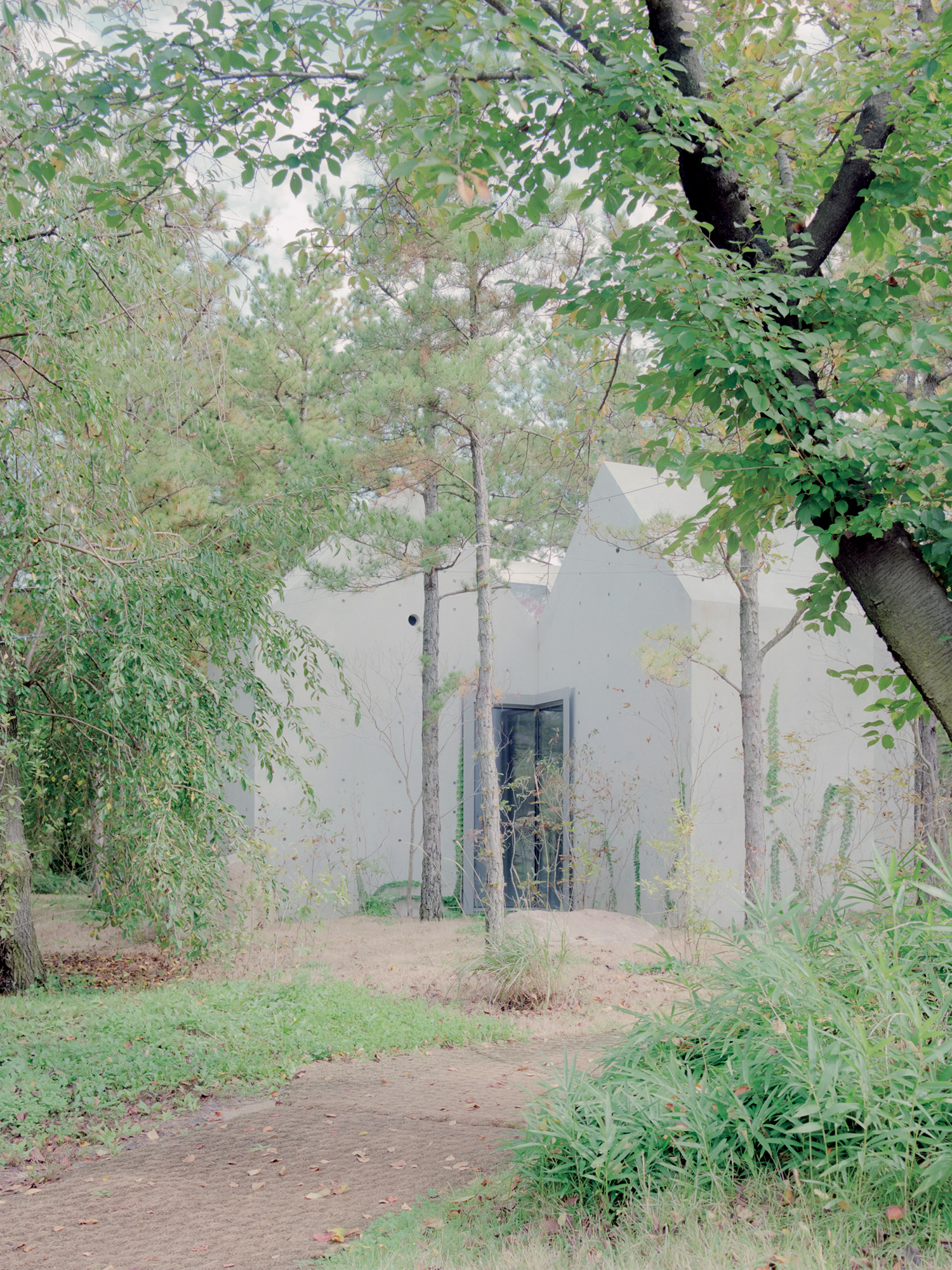
Public Toilet (Profane) (2025)
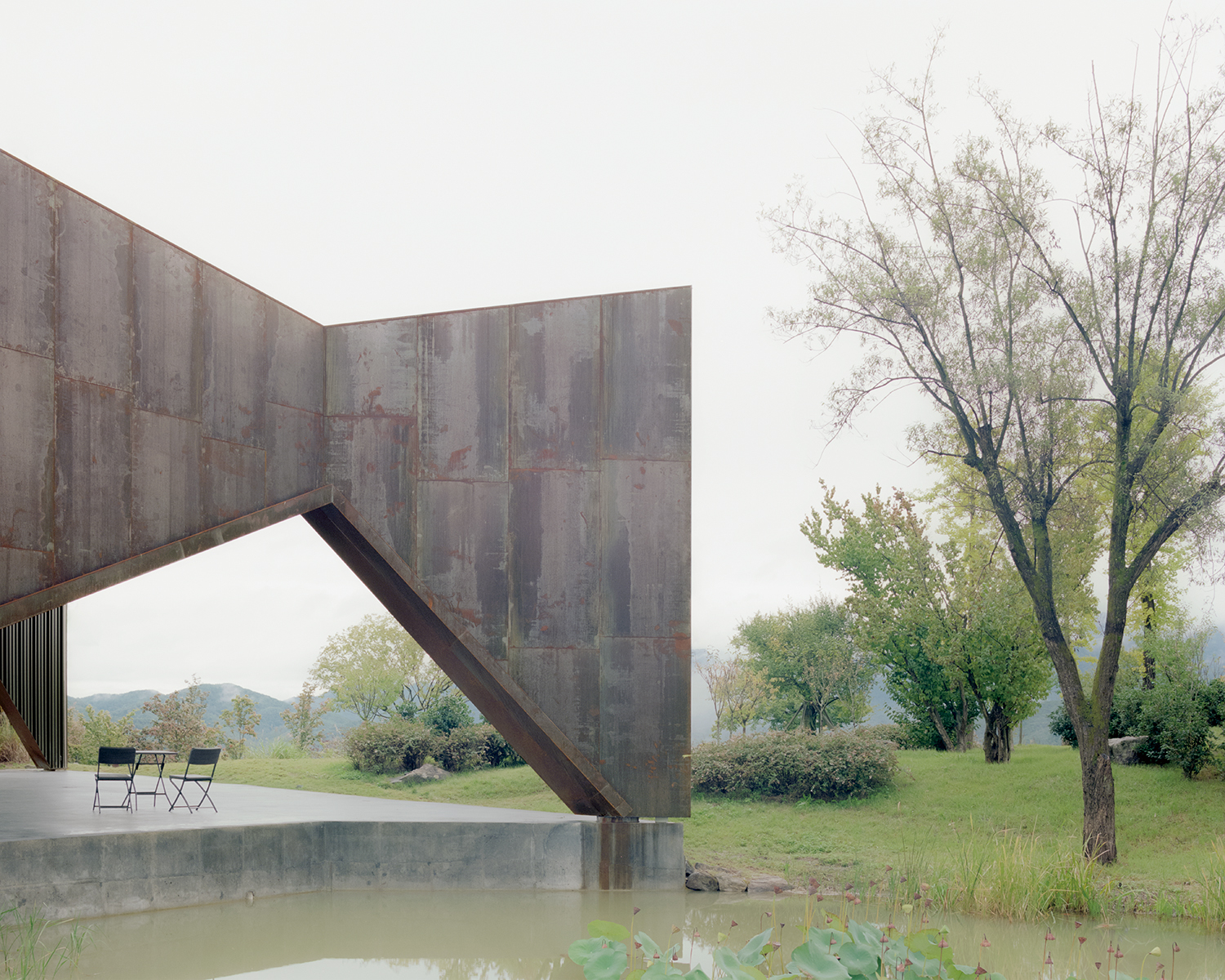
Performance Pavilion (2025)
Sayuwon Park
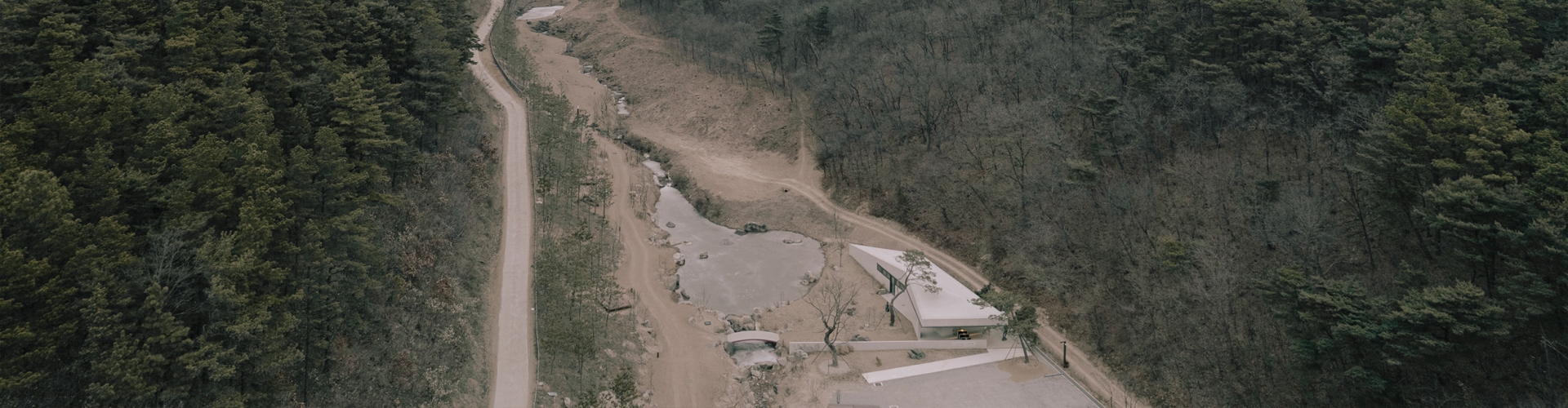
From its initial conception by Yoo Jaesung (Chairman, Taechang Steel Co., Ltd.) in 2013, Sayuwon Park was intended as a private park where selected architects, artists, and landscape designers would be invited to dialogue with the striking natural landscape. From 2020 this site has been open to the public. It covers an area totaling 330,000m2 and takes about three hours to explore and traverse in its entirety. The park features architectural installations by Alvaro Siza, Seung H-sang, Choi Wook, Kawagishi Matsunobu and Jung Youngsun.
My work on Sayuwon began in 2014, with various proposals, projects and suggestions as part of a continuous exchange of ideas. It was not until 2021 that the projects began to take shape and appear in the park. Four projects have now been installed, all as working park service buildings. Each building was conceived and constructed on a limited budget and adheres to the stated requirement to use materials already present in the park; concrete, brick, and corten steel. The general principles that unite the four projects are experimental approaches to materials, form, and construction typologies, adopted in the pursuit of a perfect form. The geometric principles underpinning the plans, the diagonal and sharp angles of the structure, the clear connection between form and material, and the asymmetries and misalignments all stem from an obsessive search for a mysterious geometric root, which can only be perceived in decontextualised abstract form.
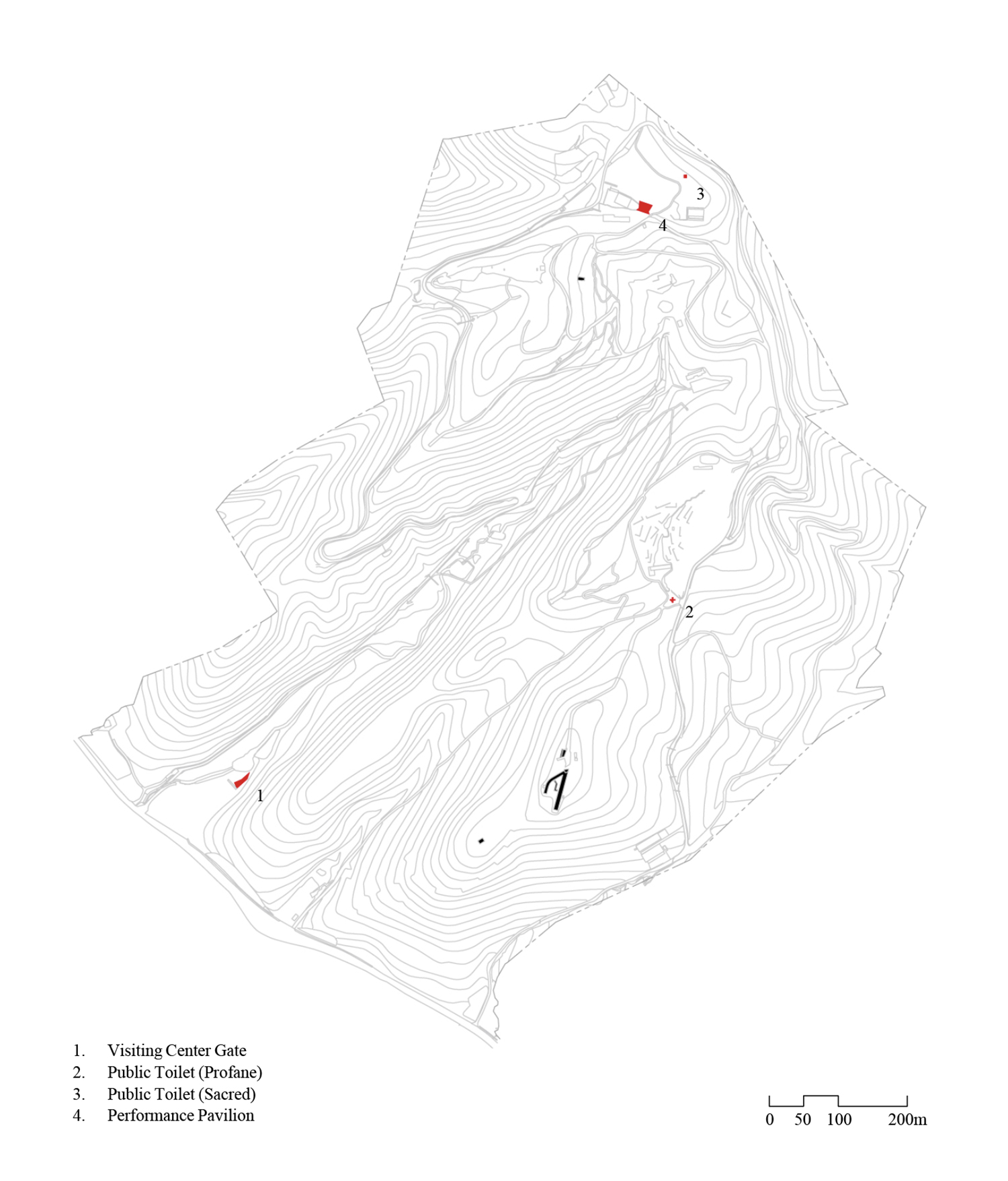
Site plan
Visiting Center Gate
The project involved the design of a new gate building as an entrance to the arboretum. The site is located in a narrow valley along the main road, and the project also included a parking area with information centre, ticket office, and toilet facilities. The aim was to integrate this gateway within the surrounding landscape, connecting the parking lot and tourist facilities to the arboretum. The building is a sculptural volume with an irregular triangular geometry, nestled into the valley to welcome visitors under a small portico and direct them towards the park. Exposed concrete is the primary material used, enabling the walls and roof to merge seamlessly into a cohesive form that resembles carved stone. Black metal elements complete the structure, directing rainwater to the ground. Over the years, moss and the surrounding pine forest will gradually cover the concrete, transforming the building into an integral part of the park, as though it were a natural rock formation.
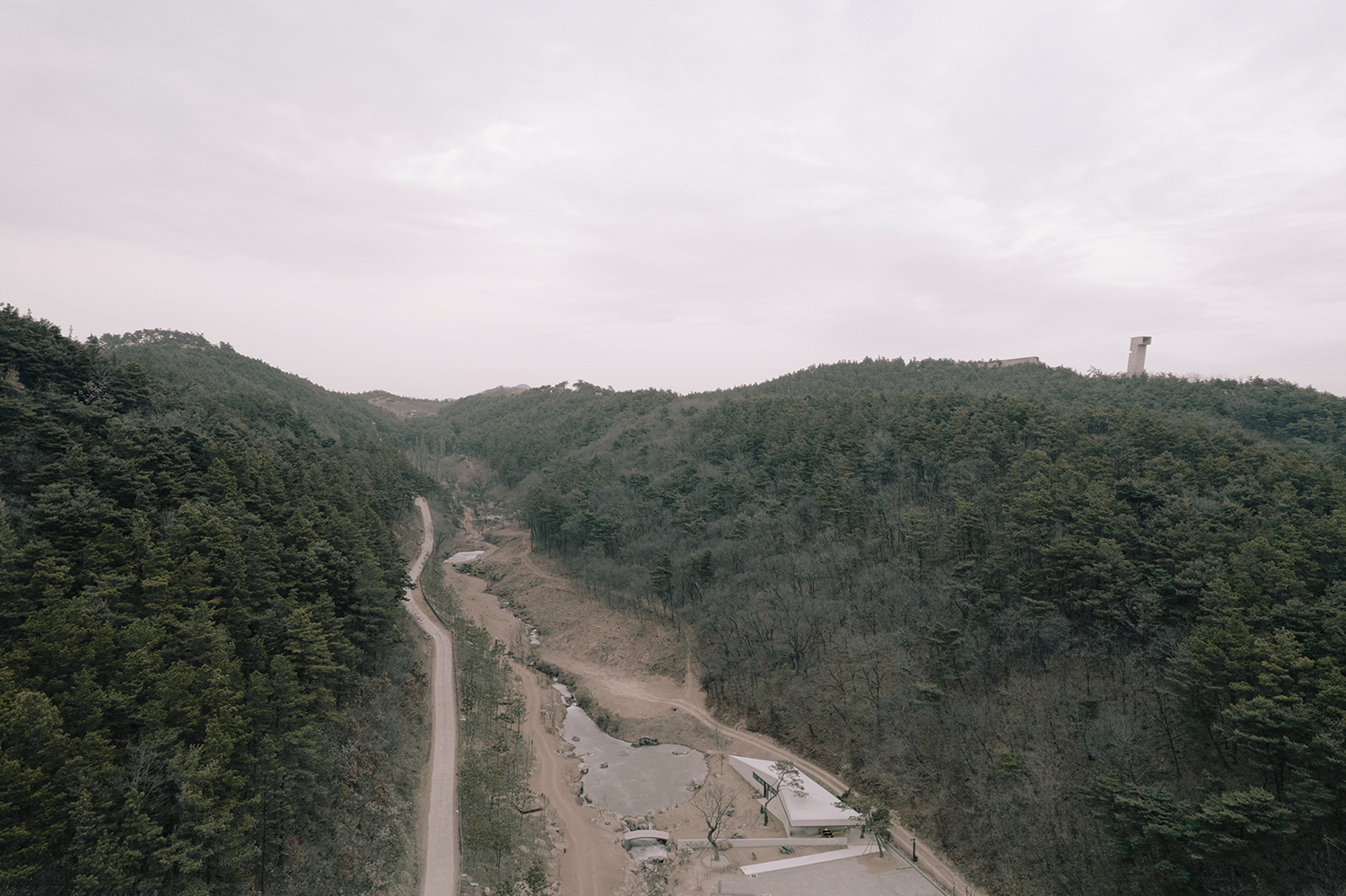
©Lee Yongbaek
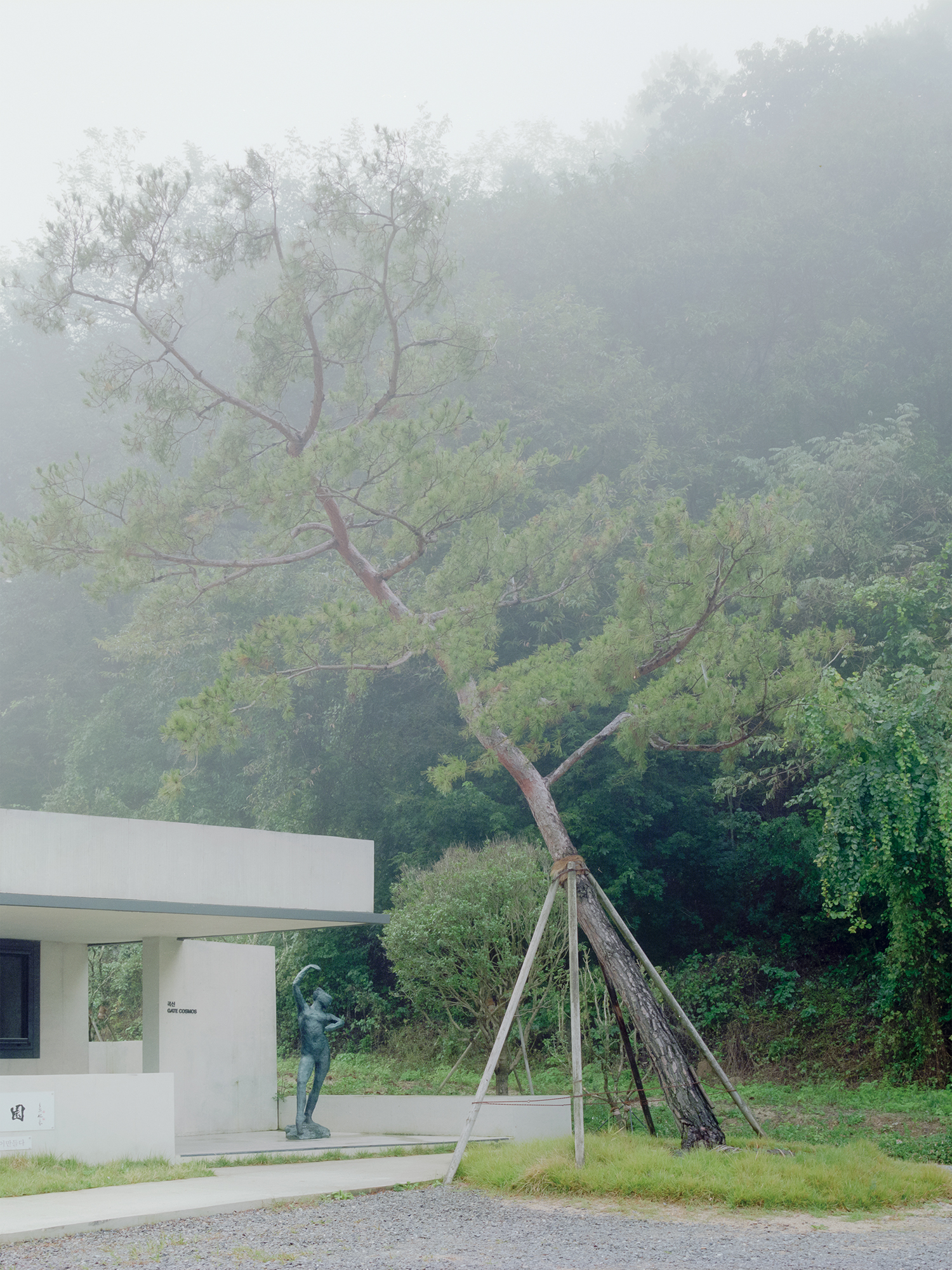
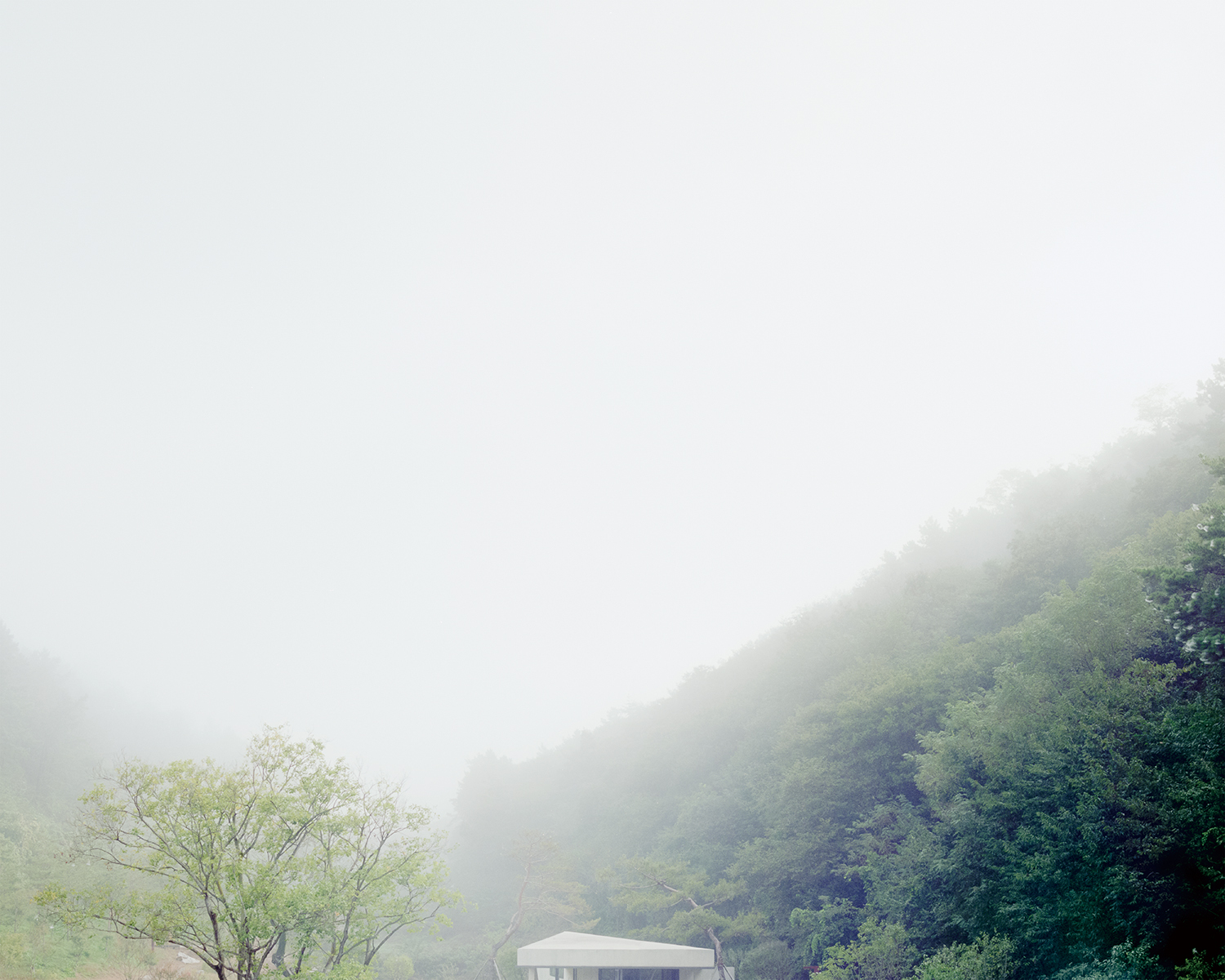
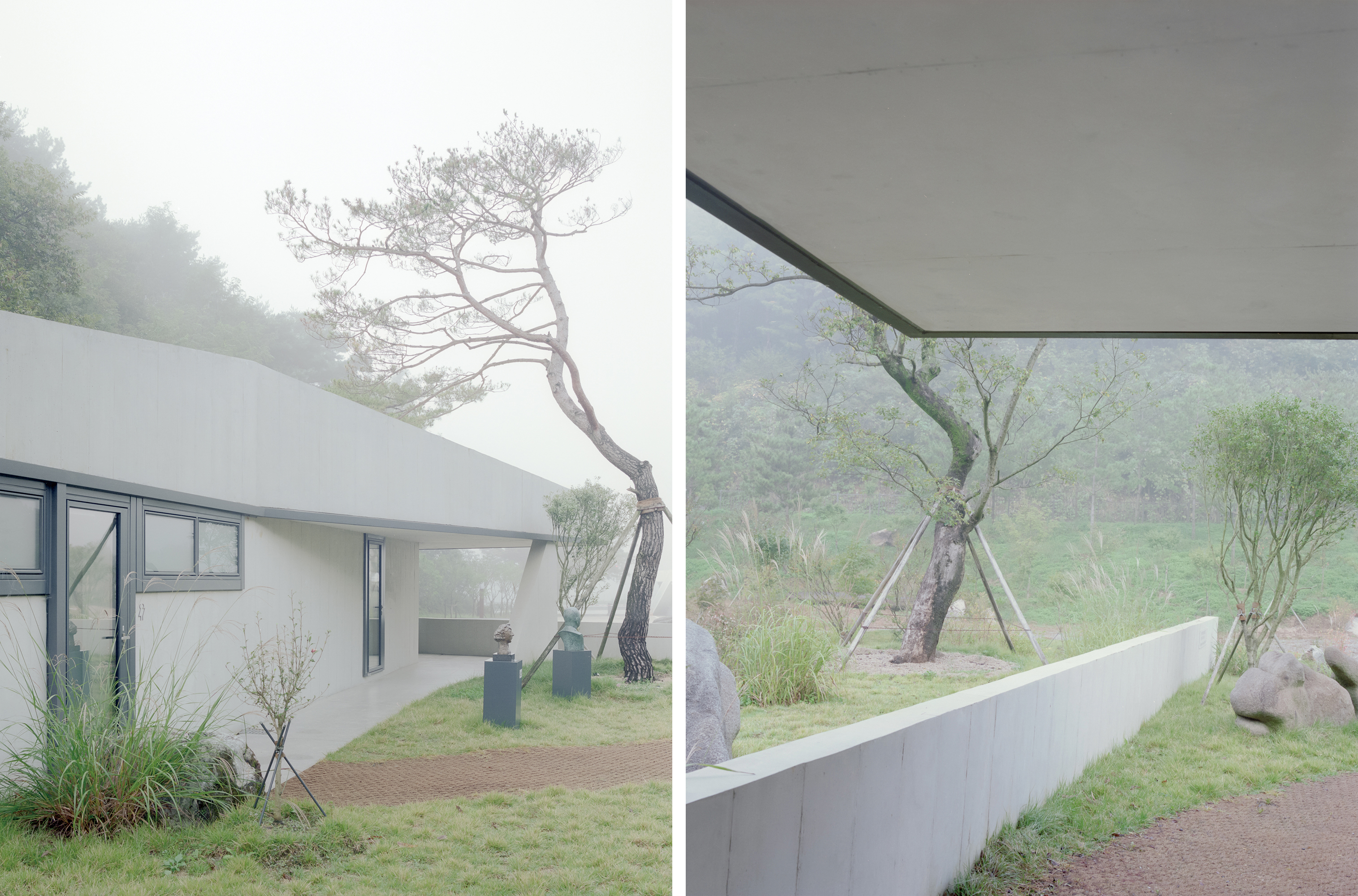
Visiting Center Gate (2025)
Public Toilets ‒ The Sacred and the Profane
The client’s request was to design two small toilet buildings for park visitors, using brick and concrete as the main materials, so that the buildings would be not only fully functional but also symbolic and evocative of the wider natural landscape. Here this was realised as a dialogue between opposites: the two small architectural structures reflect the duality of human existence—the Sacred and the Profane. Through form, materials, and light, they establish a dialogue between spirituality and everyday life, between a private relationship with the body and communion with nature.
The Sacred building is a cryptic black-brick monolith—a perfect 4.8 × 4.8m cube that radiates austerity and spirituality. Its essential geometry invites contemplation, like a modern temple in praise of the inner dimension. Inside, narrow ascetic spaces in exposed concrete play with varying heights (from 2m to 4m), generating a sensation of compression and upward thrust.
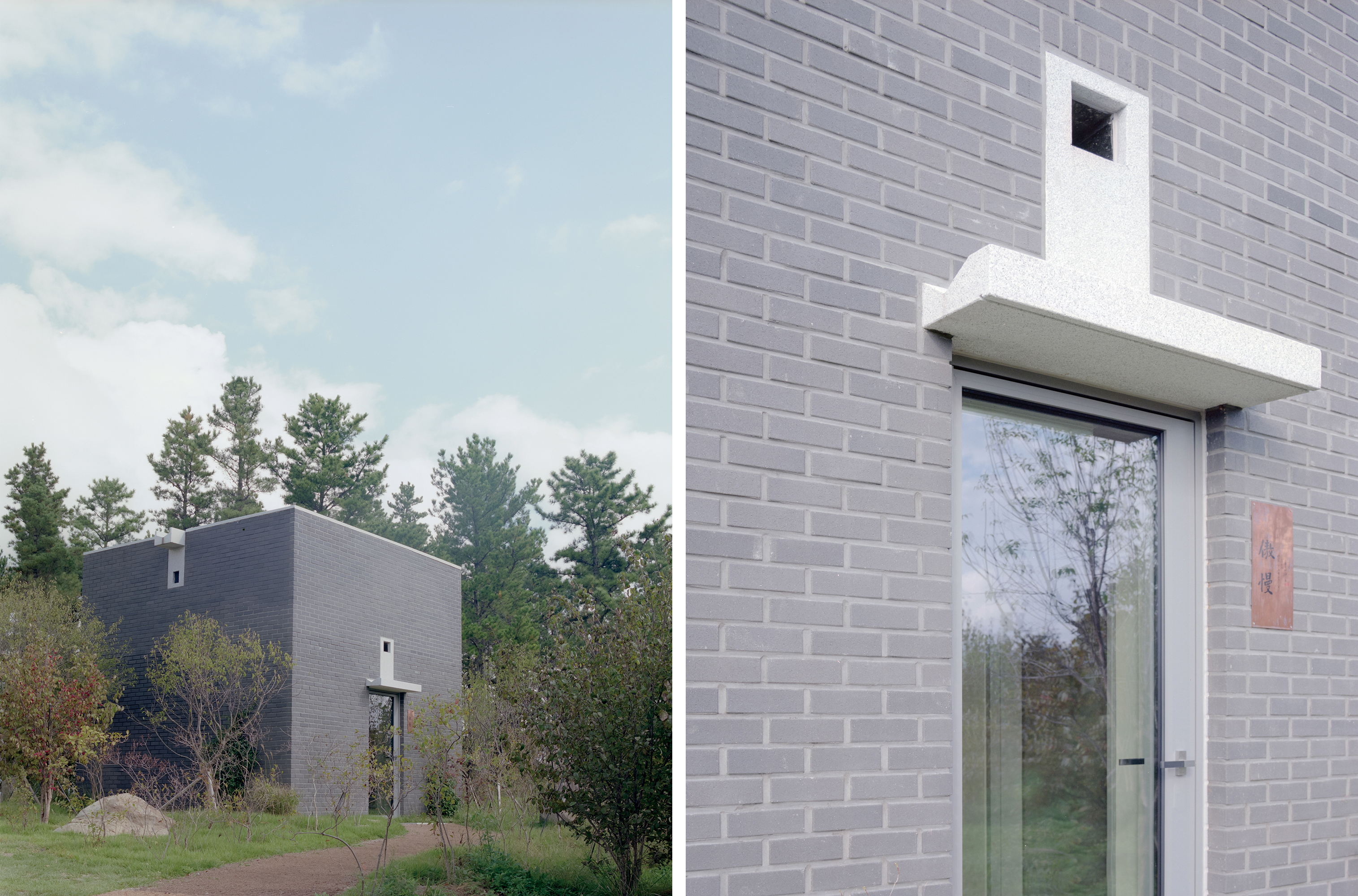
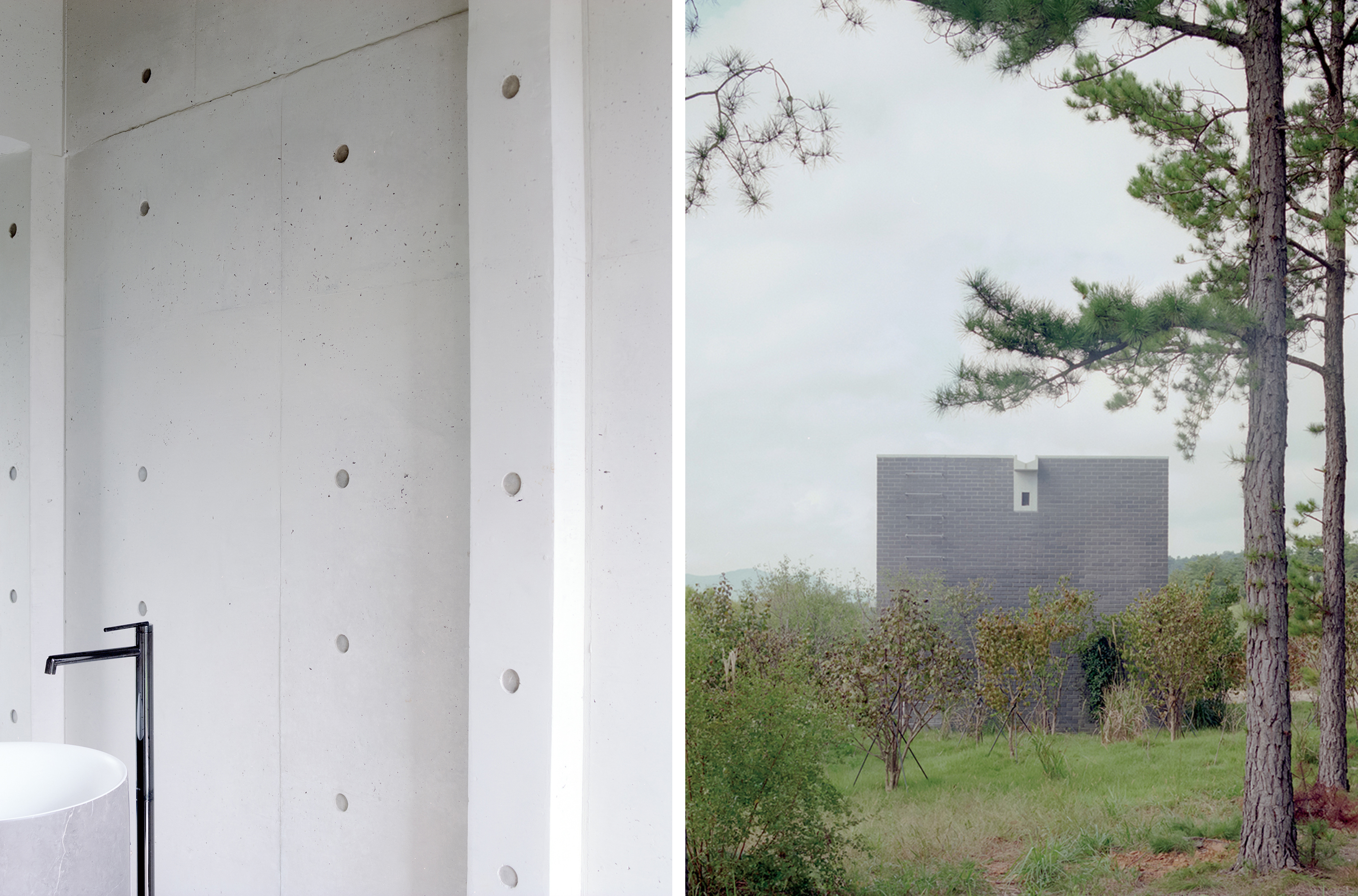
Public Toilet (Sacred)
Small square windows placed near the ceiling filter a subdued light. Two symmetrical entrances lead to a shared vestibule: an intimate 1.2 × 1.2m space with a circular washbasin at its centre. Here, a man and a woman can meet, mirroring each other. A diminutive work of architecture made to endure, it is minimal and pared down to the essentials; the only formal concessions are the functional elements of the stone drainpipes.
The Profane building celebrates the vitality of the earthly world and the human bond with nature. It is composed of four monolithic concrete volumes with pitched roofs, reminiscent of small houses. The central symmetry is interrupted by an entrance portal that leads to a central vestibule open to the landscape through four corner windows. Four identical doors provide access to four individual toilets; each characterised by bright colours and flooded with natural light through the large roof skylights. Each room is a microcosm that celebrates colour, nature, and everyday joys. The Profane is a hymn to vital simplicity, an invitation to reconnect with the environment through its beauty.
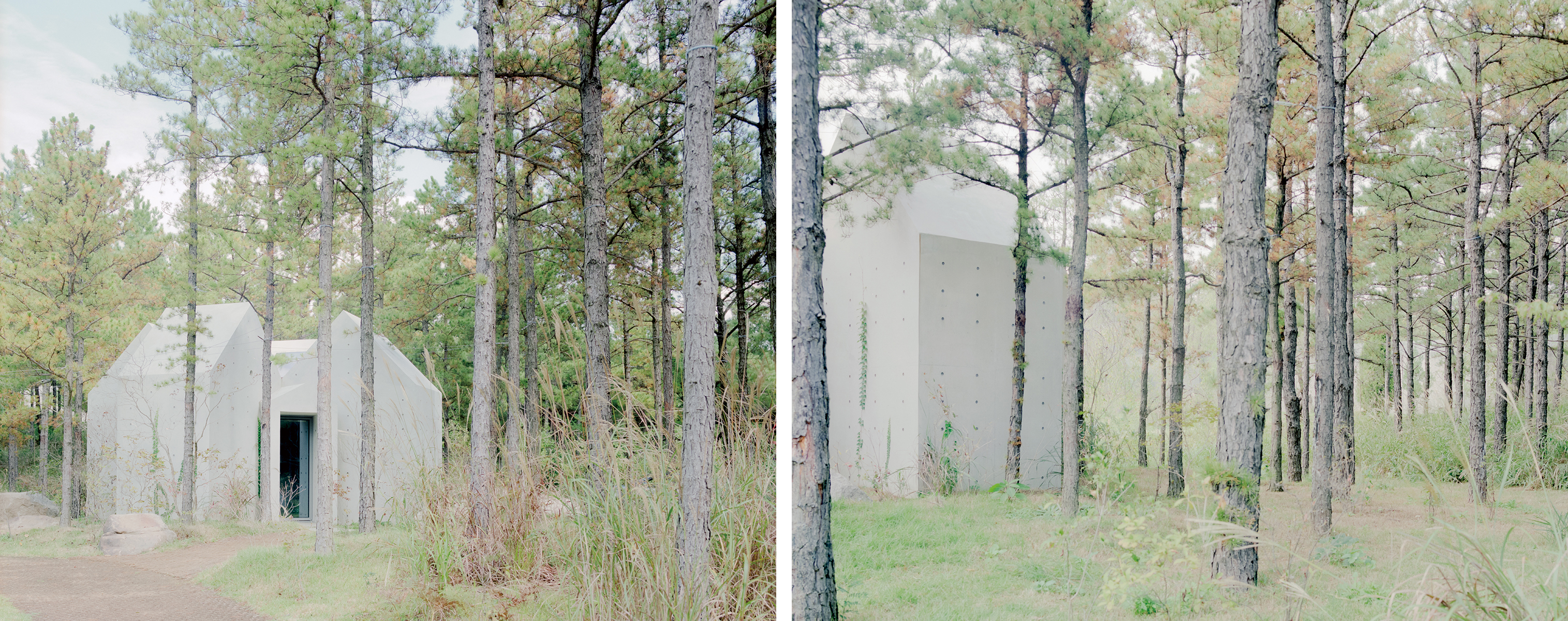
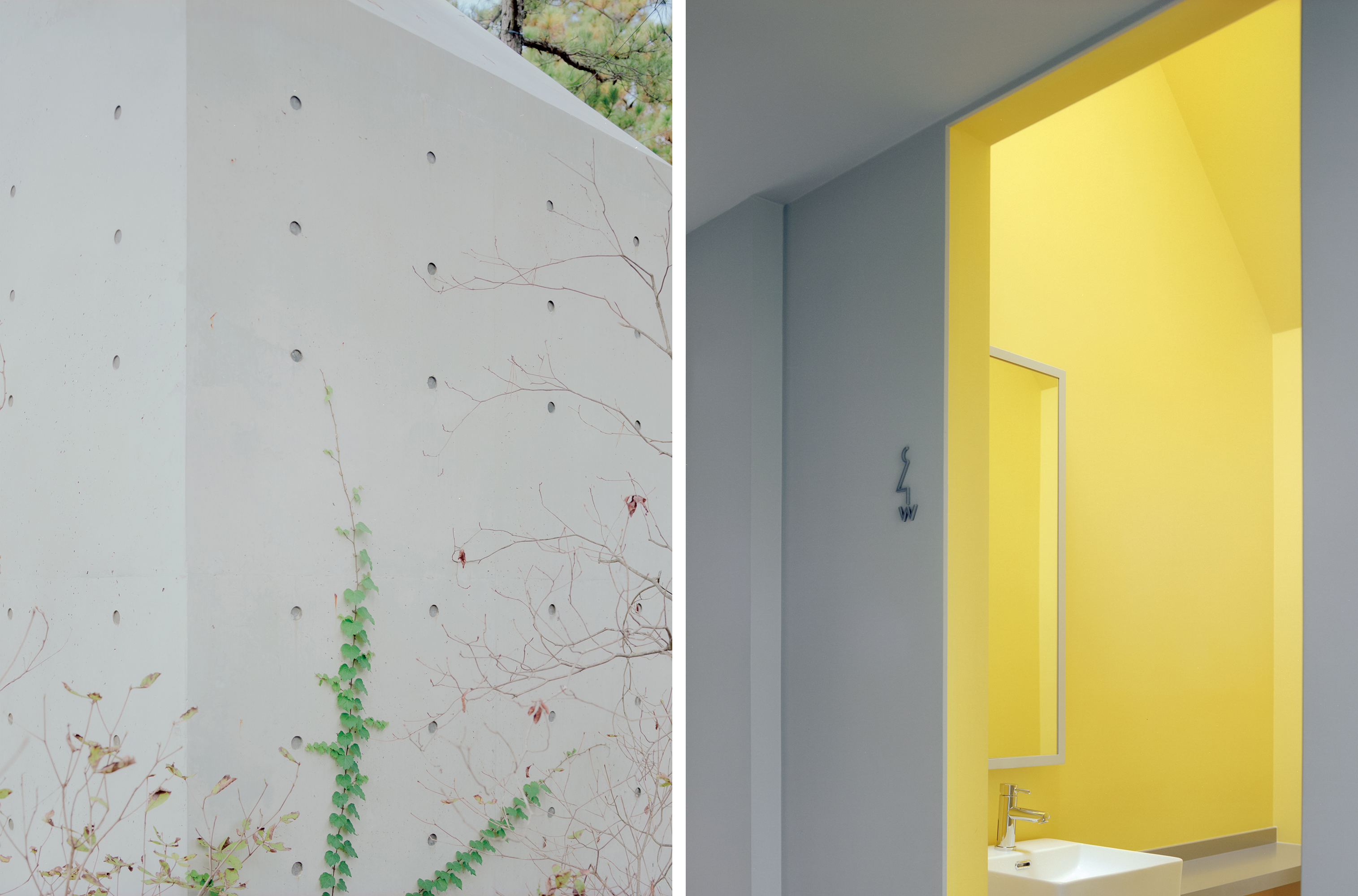
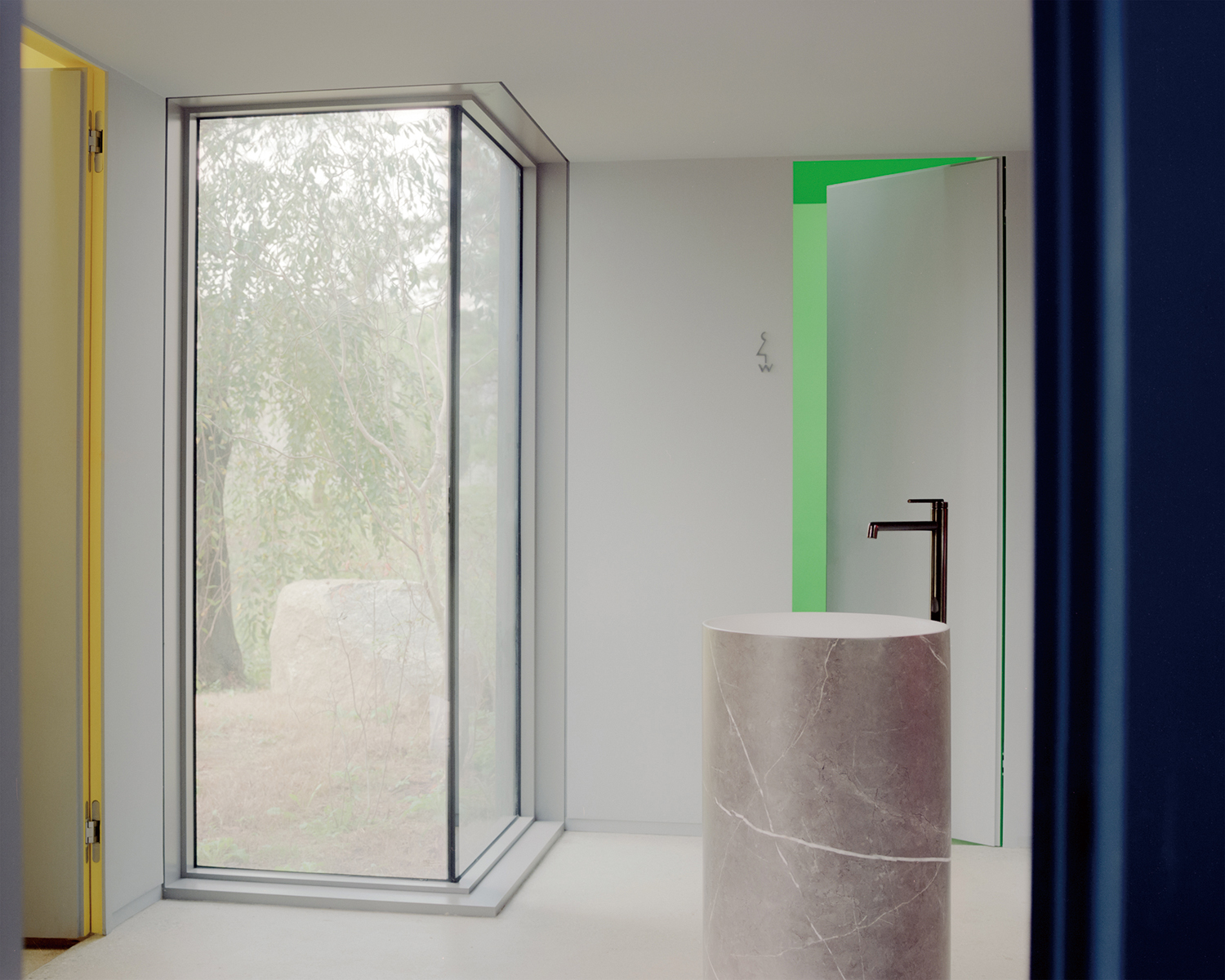
Public Toilet (Profane)
Performance Pavilion
The project involved the design and installation of a multipurpose structure that would be capable of hosting shows, concerts, and outdoor celebrations. The client request detailed the need for a 20 × 14m stage area suitable for hosting a full orchestra as well as, more simply, a resting place for visitors to shelter from the rain and protect themselves from the sun. It was to be an installation capable of combining functionality and beauty in harmony with the evocative landscape of Sayuwon Park.
Inspired by the Japanese art of origami, where precise folds transform a simple sheet of paper into figures of animals and insects, the stage is brought to life by the precise folds of a sheet of corten steel.
The result is a stable and efficient form, where considerable structural effort was exerted on eliminating unnecessary thicknesses. The tapered shape outlined in the plan and section drawing resembles the mouth of a megaphone that amplifies sound and focuses attention on the centre of the stage, arranging for the landscape to become a natural stage.
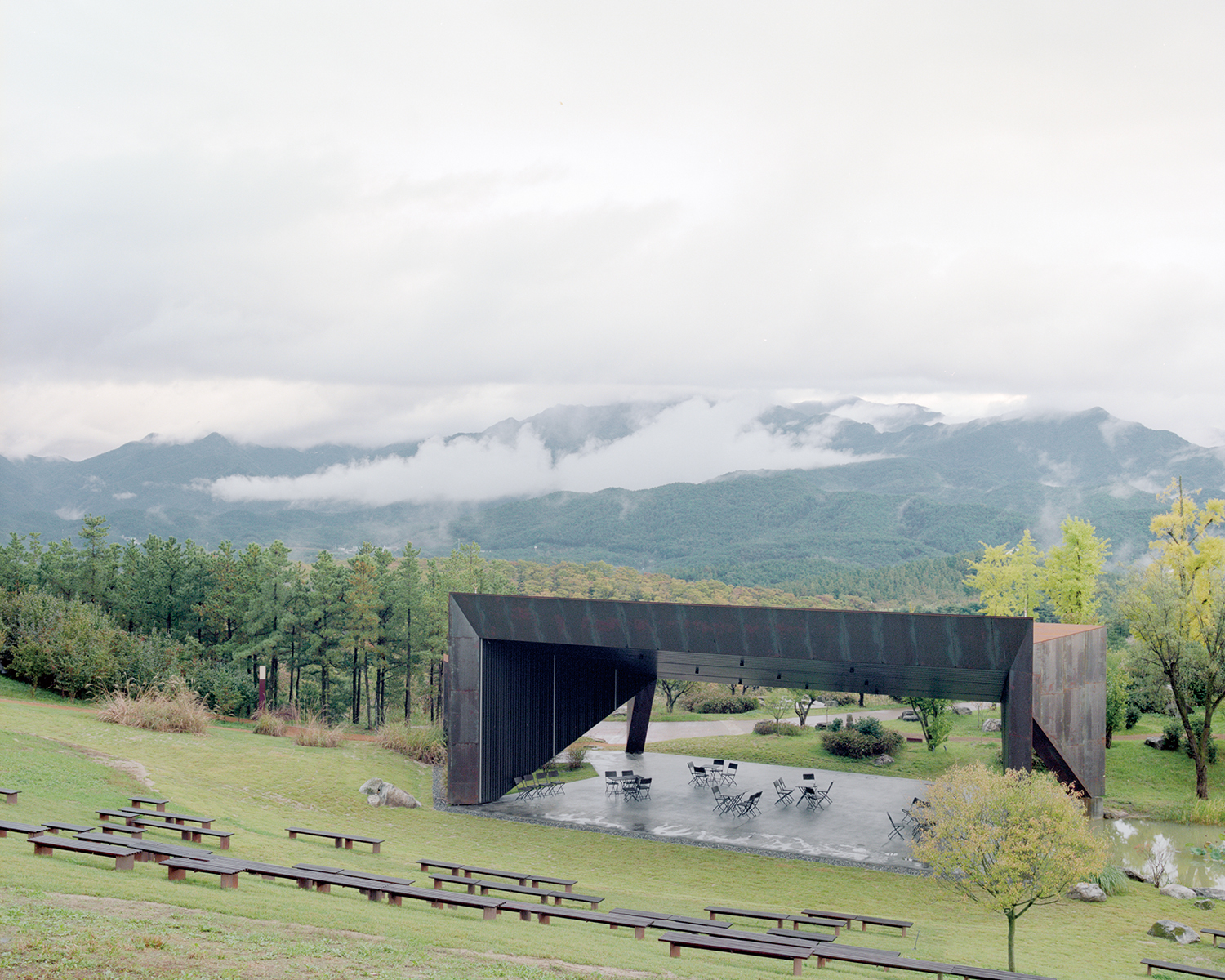
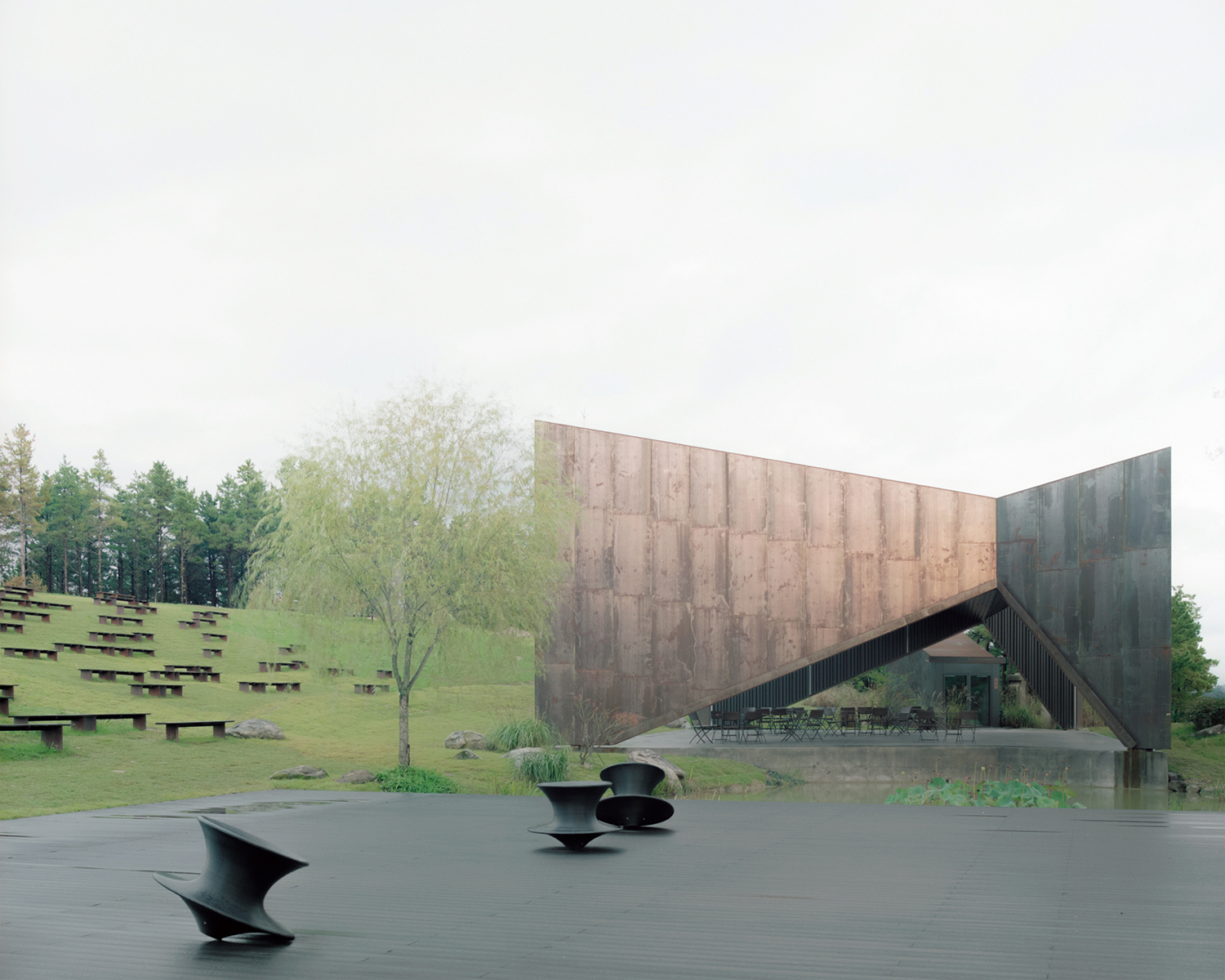
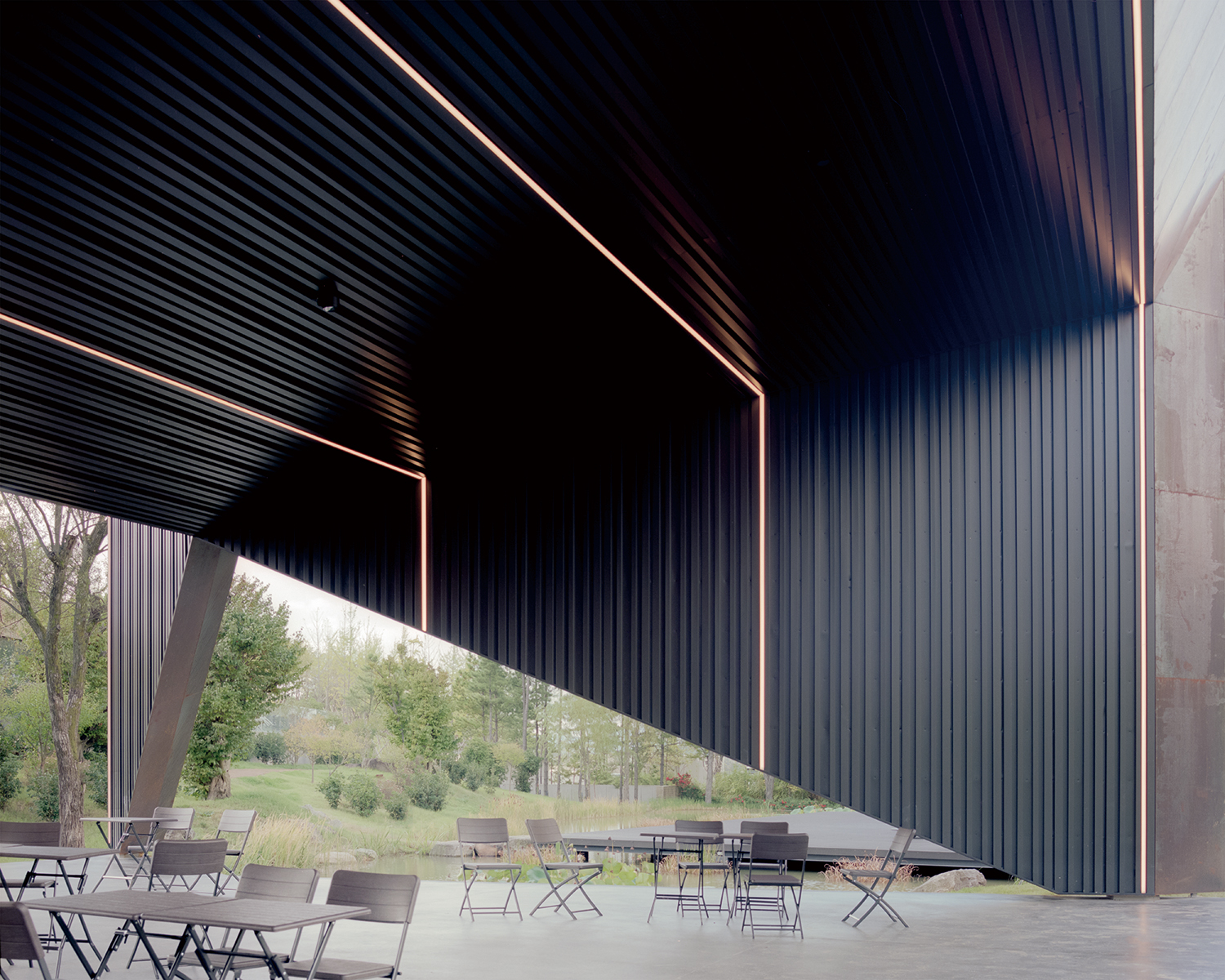
Performance Pavilion
Like a butterfly settling itself on a flower, the steel tent rests delicately on the ground at only four points, leaving the views of the landscape unobstructed.
An essential, sharp, and iconic silhouette frames the landscape, creating a dialogue between nature and architecture. The structure, made with a light system of metal beams connected to the concrete base at only four points has external cladding of 2mm thick Corten steel panels and internally of 1mm thick black painted steel paneling with a special acoustically designed profile. The project is completed with linear LED lights inserted into the false ceiling and a small storage and technical room with a sloping corten steel roof.
Strident yet ethereal, the structure is not only functional but also exists as an iconic landmark that celebrates the beauty of Sayuwon Park and welcomes visitors with an elegant and luminous bearing.
Liveraniandrea (Andrea Liverani)
Visiting Center Gate ‒ Andrea Negri / Public
1176, Chisanhyoryeong-ro, Bugye-myeon, Gunwi-gun,
Visiting Center Gate ‒ 2,750m² / Public Toil
Visiting Center Gate ‒ 123m² / Public Toilet
Visiting Center Gate ‒ 100m² / Public Toilet
1F
Visiting Center Gate ‒ 4.5m / Public Toilet
Visiting Center Gate ‒ 5.08% / Public Toilet
Visiting Center Gate ‒ 4.08% / Public Toilet
Visiting Center Gate, Public Toilets (Sacred, Prof
Visiting Center Gate, Public Toilet (Profane) R
Visiting Center Gate ‒ plaster / Public Toil
Performance Pavilion ‒ Dooru Engineering Co.
Visiting Center Gate ‒ IL WON Construction /
Visiting Center Gate, Public Toilets (Sacred, Prof
Visiting Center Gate ‒ 2024 ‒ 2025 /
Sayuwon Co., Ltd.