
SPACE December2025 (No. 697)
Slow Clay Studio(2024)
DIALOGUE Cho Yoonhee principal, GUBO Architects × Hong Jihak professor, Chungnam National University × Lee Sojin principal, Leeon Architects × Lee Joongwon professor, Sungkyunkwan University × Kim Jeoungeun × Bang Yukyung
Slow Clay Studio
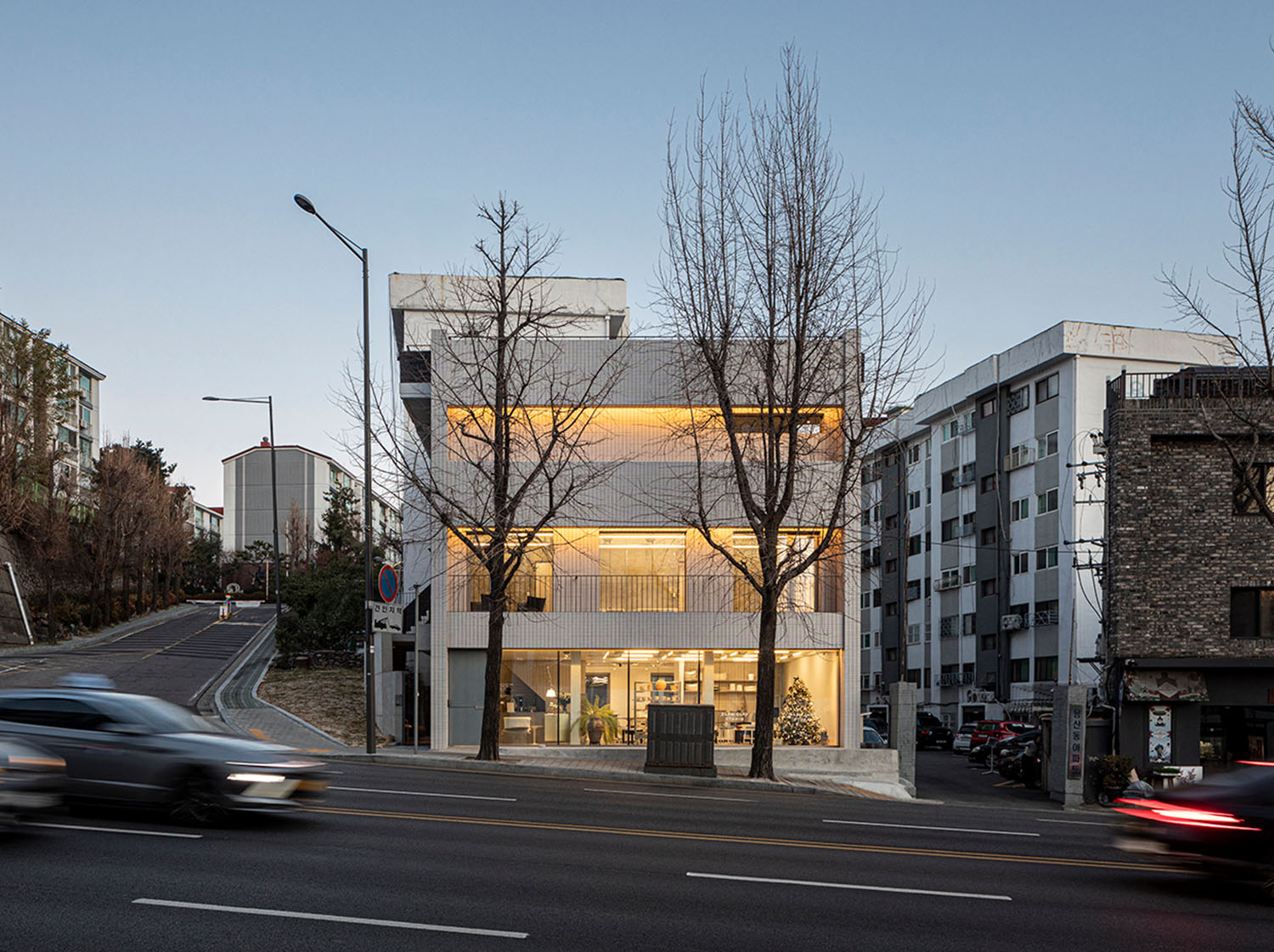
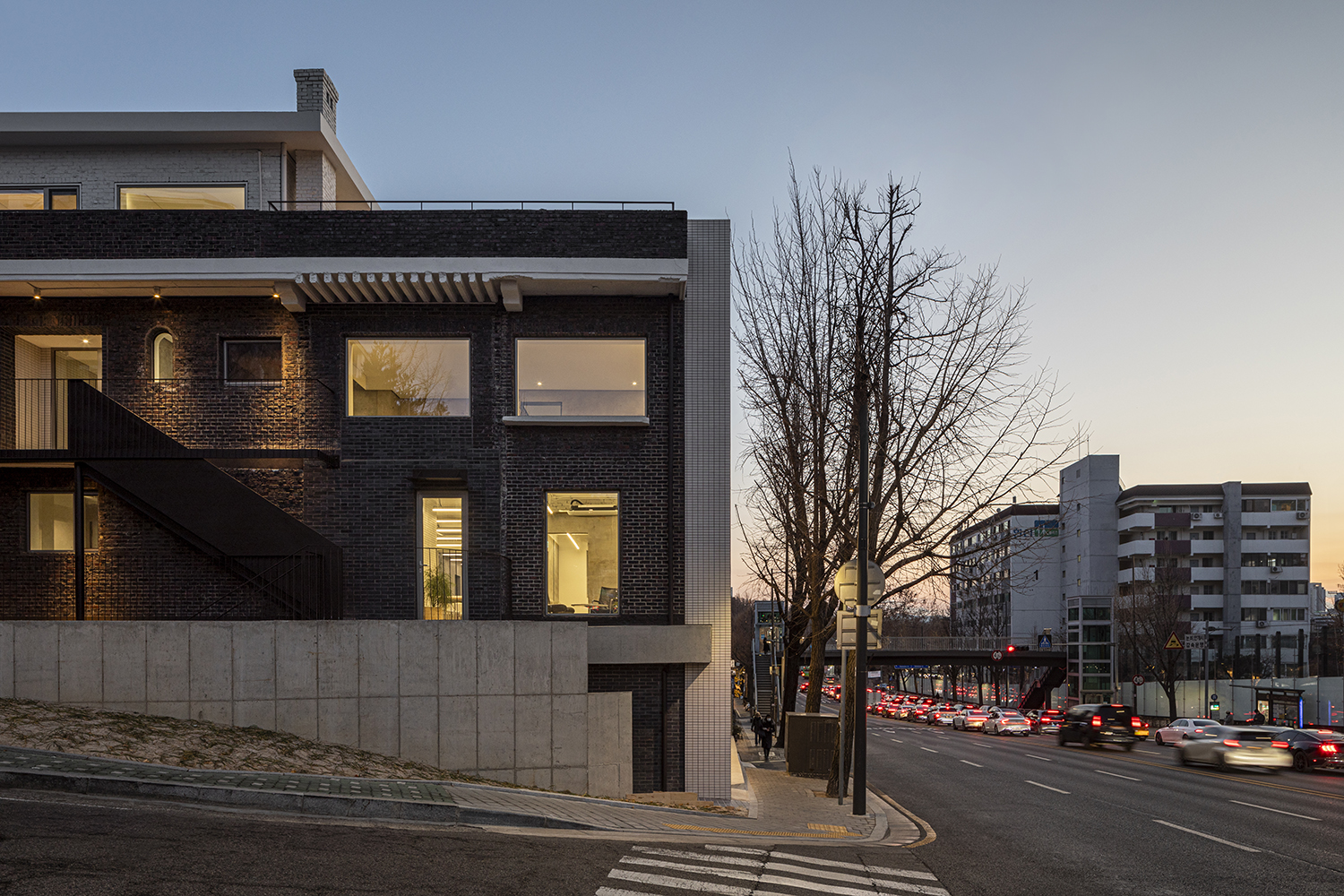
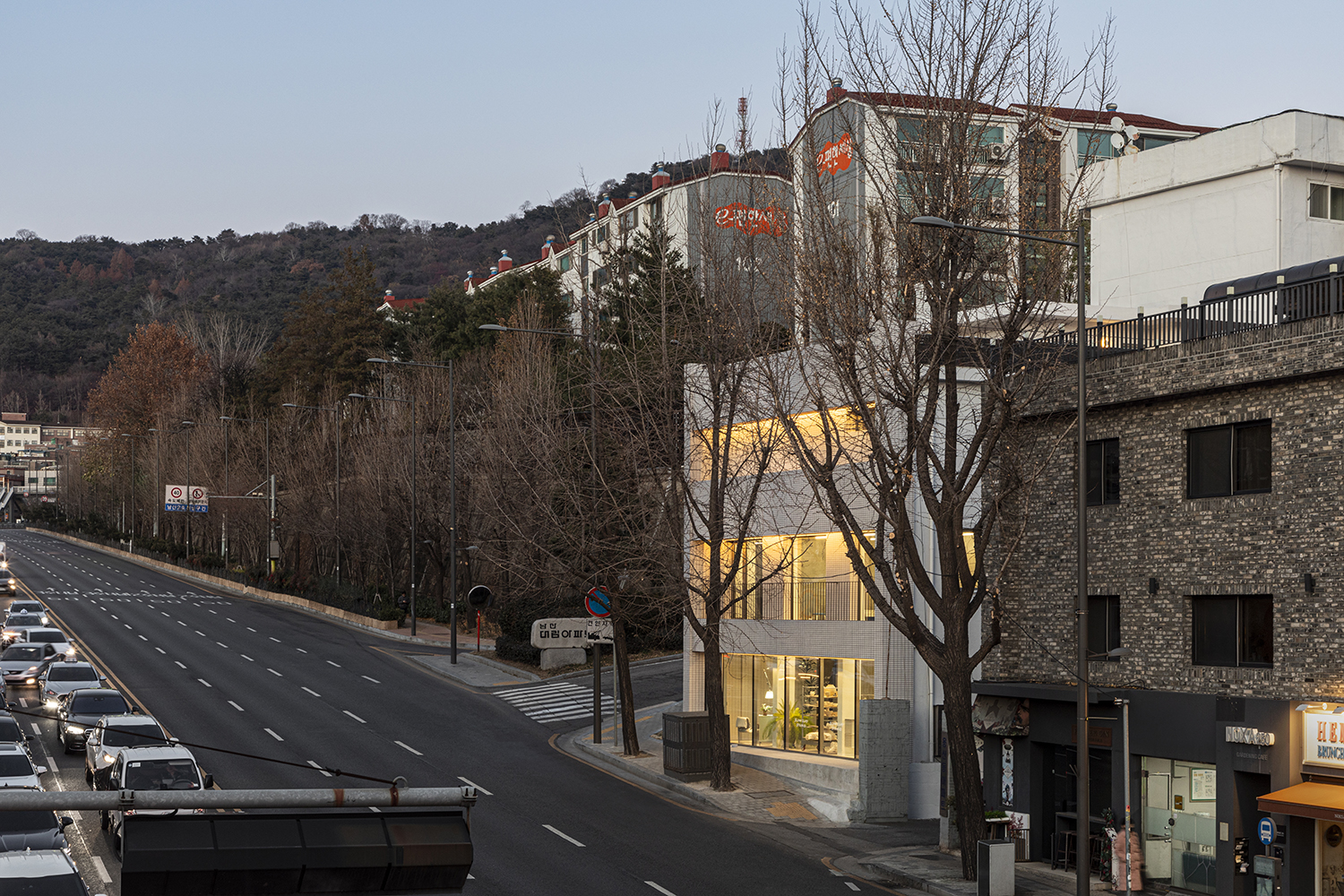
Kim Jeoungeun: Let’s look at another private project, Slow Clay Studio (2024). This project remodelled a corner commercial-residential building along the main road from Itaewon to Namsan Tunnel 3 into a shared ceramics studio. I heard the site was quite troublesome, with illegal extensions, land disputes, and surveying issues. How did you, as architects, resolve these challenges?
Cho Yoonhee: The building’s unique façade had caught our attention, and when the client approached us, it felt inevitable. Visiting the site for the first time, the depth of time impressed us strongly. The internal and external stair connections made the space playful, like an alleyway. But the conditions were challenging. The 40-year-old building had no existing drawings, and stairs and garages had been illegally extended. The stair accessing the third floor from the sidewalk relied on the adjacent apartment wall with added railings. We carefully considered how to resolve these complex conditions.
Hong Jihak: Remodelling projects often involve many on-site variables. The building listed as 157 pyeong in the architectural register measured 247 pyeong when actually surveyed, and the basement level 2 PIT space, which showed signs of having been flooded, had no waterproofing at all. Removing interior finishes revealed traces of fire and repeated patchwork. Exposed rebar required substantial structural reinforcement. Ultimately, the basement became a storage space with a kiln, the first floor and second-floor former residence were transformed into a clay studio visible from the outside, and the third floor became the client’s retreat.
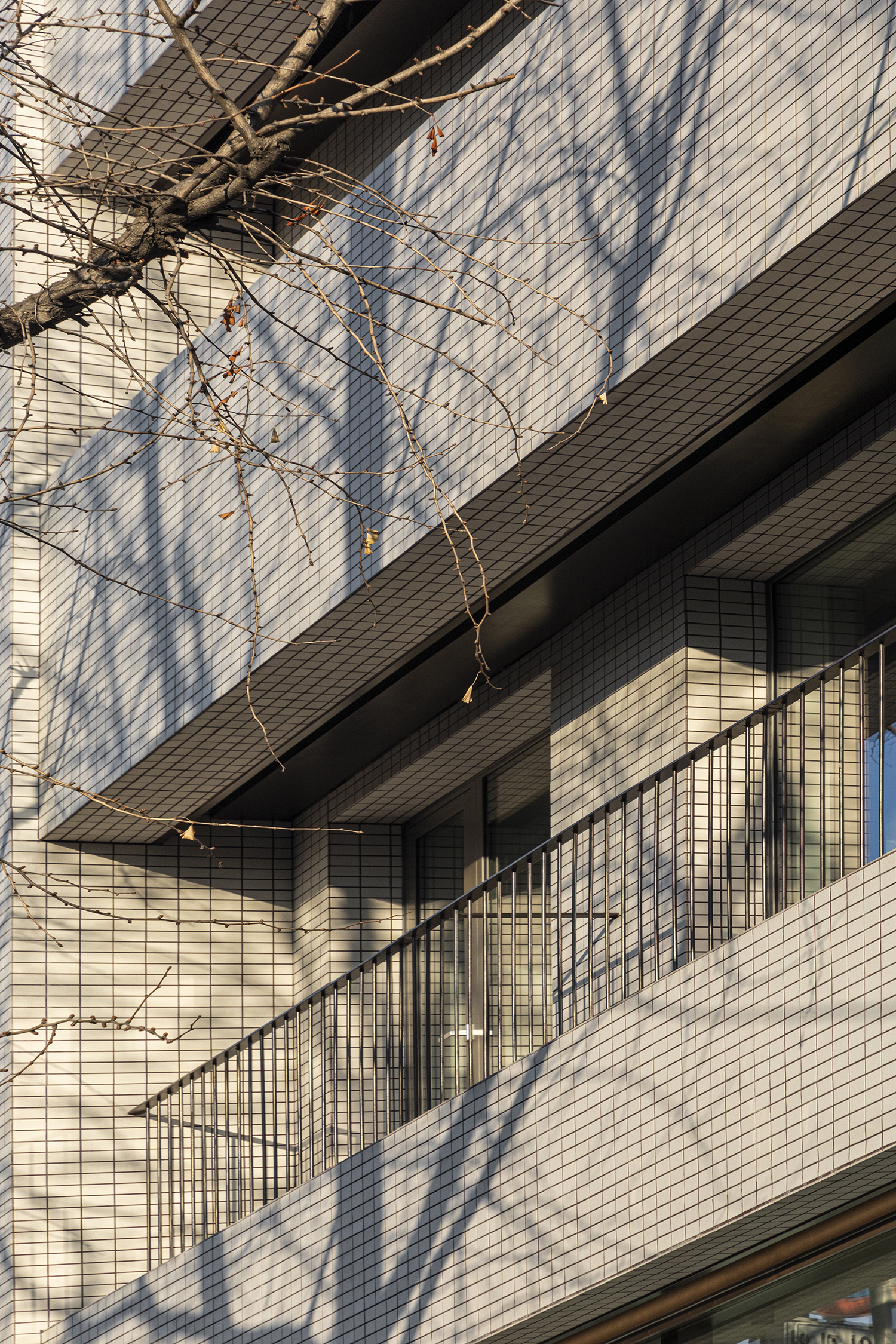
Cho Yoonhee: What stood out was that the building had completely different ‘faces’ on the front and side, but the most noticeable external change was the improvement of the façade with tiles on the front. Next, the illegally added extensions were removed to prevent future disputes, and an exposed concrete retaining wall was built to clearly define the site boundaries. In the small sunken space created by the wall, a new external staircase was added, connecting the first and second floors.
Slow Clay Studio(2024)
Lee Joongwon: What criteria guided the additions and removals during remodelling? On the west façade facing the main road, tiles were applied, while the north façade facing the sidewalk retained its original appearance. Inside, both the clean white surfaces and rough brick and concrete walls are visible together, which is interesting.
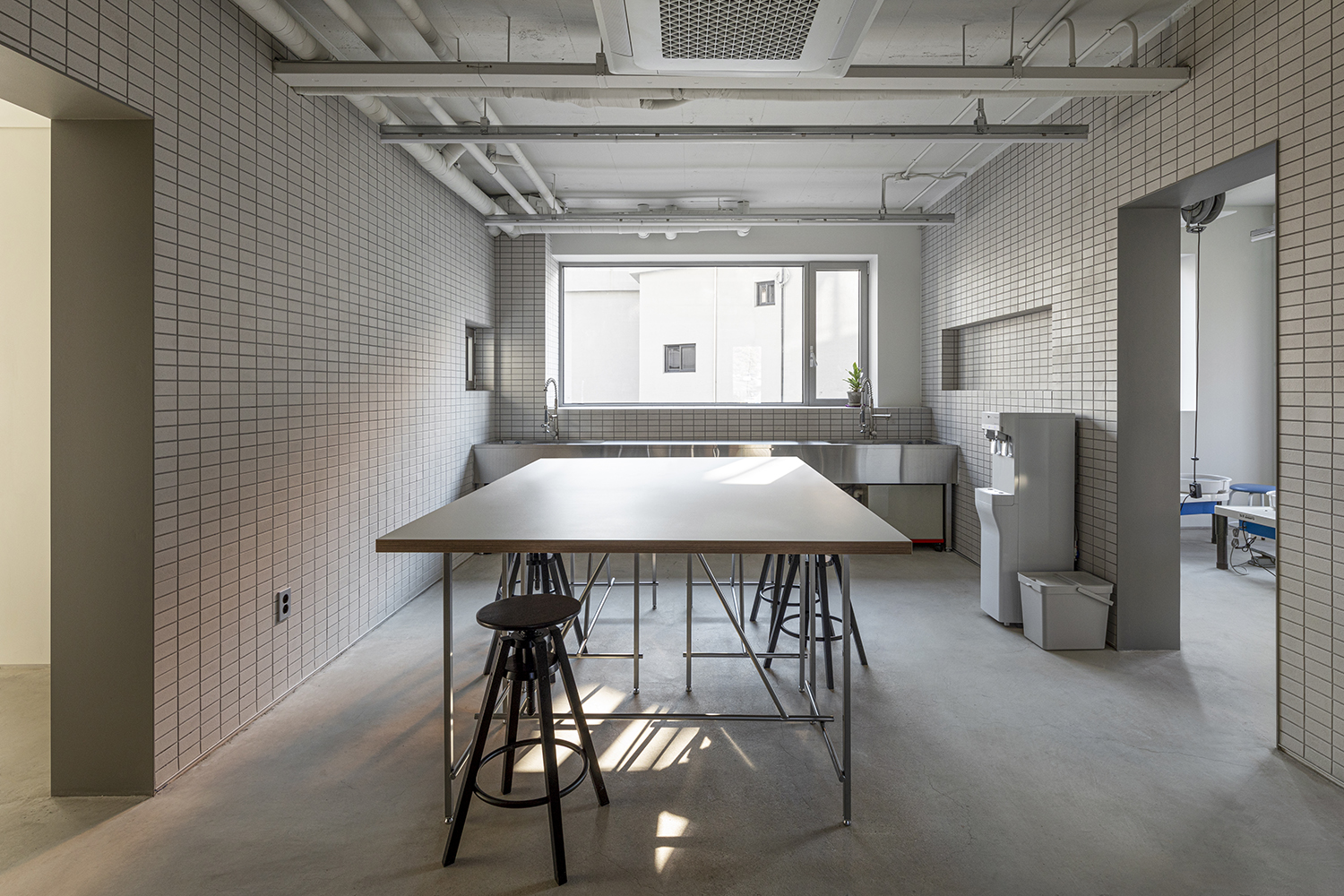
Hong Jihak: One of the most meaningful aspects of remodelling is that it allows the time embedded in the existing building to be integrated into the design. Since we focused on minimising changes to the original character, our proposal aimed to preserve the texture inherent in the original building. Still, the parts we added or approached differently resulted from the unpredictable nature of remodelling. You could say it’s like a collage created as the designer responds flexibly and inclusively. Simply put, we wanted to expose as much of the existing interior walls as possible, but where internal insulation was necessary, finishes had to be applied, leading to the current appearance. On the building’s front, new tiles were installed, while the side retained the original brick façade. The mix of rough textures left as-is and newly smoothed surfaces reflects a lesser concern for achieving perfect uniformity across the whole building. The attitude of controlling everything into a perfect formal language doesn’t suit the nature of remodelling.
Lee Sojin: This approach is challenging. Preserving existing finishes requires sensitivity to texture and material, as well as confidence. When studying in SketchUp or other 3D programmes, textures can’t be accurately predicted. How did you make decisions—purely by imagination, or entirely by instinct?
Cho Yoonhee: Until now, most of it had been imagined, but from experience, the sense of it was far better when realised in reality than on a screen. So when clients worry that the images look too plain, I confidently explain that once completed, the light will be different and it will feel much more dynamic—something that can’t fully be captured on a screen.
Slow Clay Studio(2024)
Lee Sojin: On-site decisions during remodelling also affect outcomes. How did you control that?
Cho Yoonhee: Personally, this project brought a shift in my approach to remodelling. It was the first project where I consciously experimented with where the architect should exert control and where to ease off. It also became a clear example of the message we conveyed in our previous FRAME essay, ‘Loose Precision’ (covered in SPACE No. 677).
Kim Jeoungeun: Can you give specific examples?
Cho Yoonhee: To convert the second floor, which was previously a private residence, into a workshop, the spaces needed to flow freely, but being brick construction, it was impossible to remove walls. So we simply removed the doors and left the frames exposed without adding any additional framing. Inside, we also reused the exterior tiles from the main street-facing façade as interior finishes, carefully adjusting the dimensions of walls and finishes to match the tile sizes. The idea was that when respecting the rough, existing condition, the original details were sufficient, but when introducing delicate new materials, the finishes needed to employ details that could support and complement that refinement.
Bang Yukyung: You mentioned accommodating on-site errors and surprises. I heard you used CRC boards to maintain uniformity when applying small tiles on the façade. What was your intention?
Slow Clay Studio(2024)
Aurium
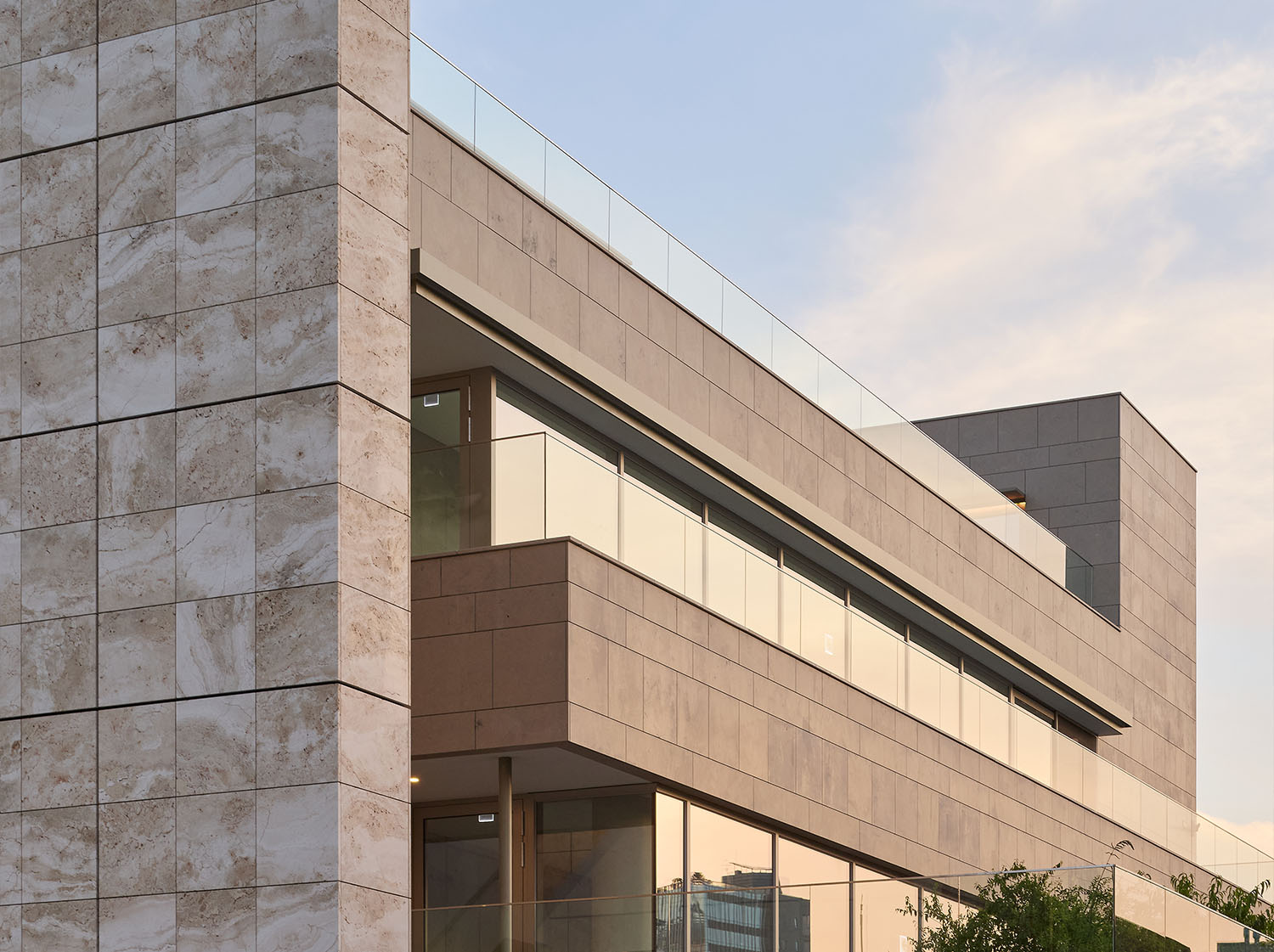
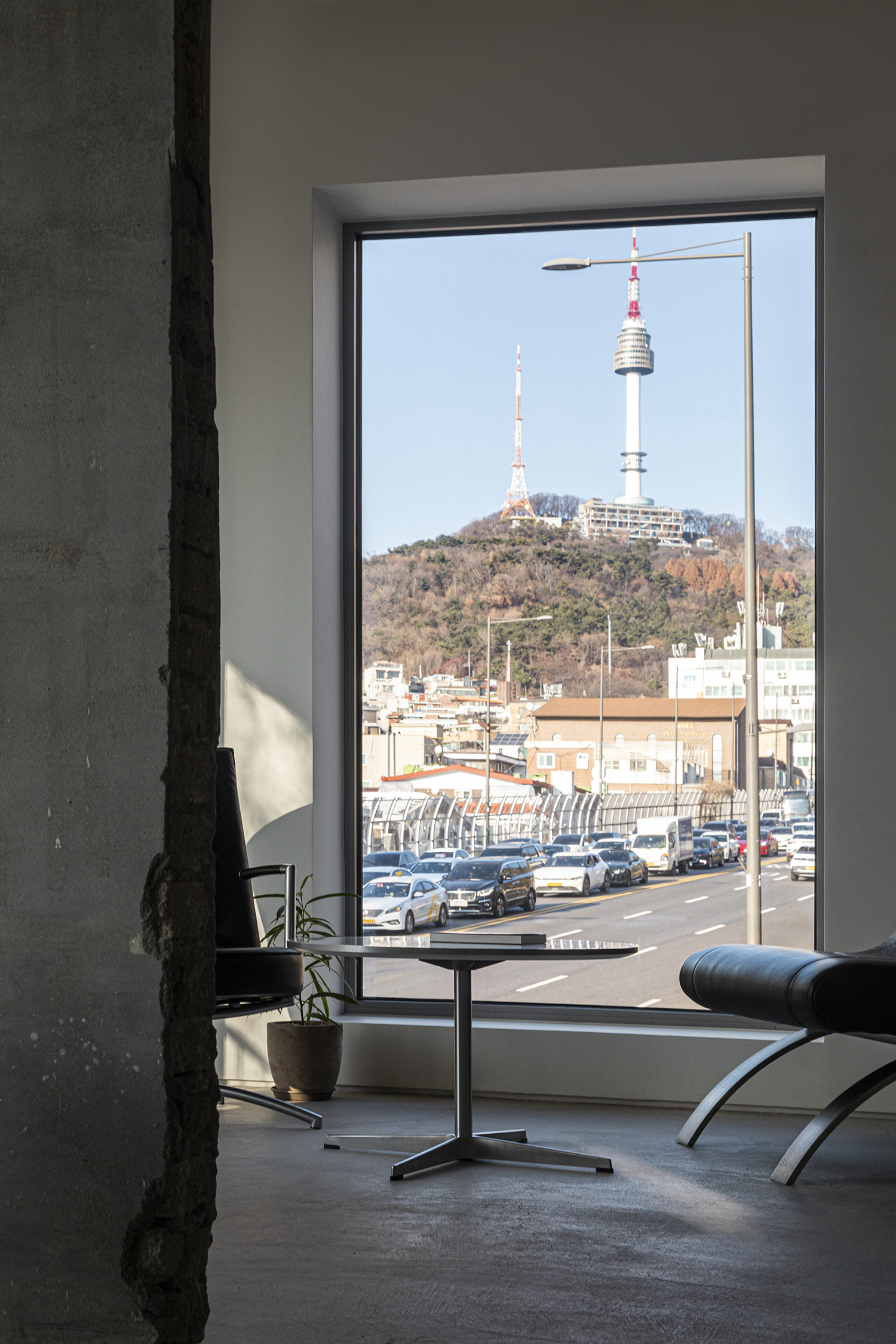
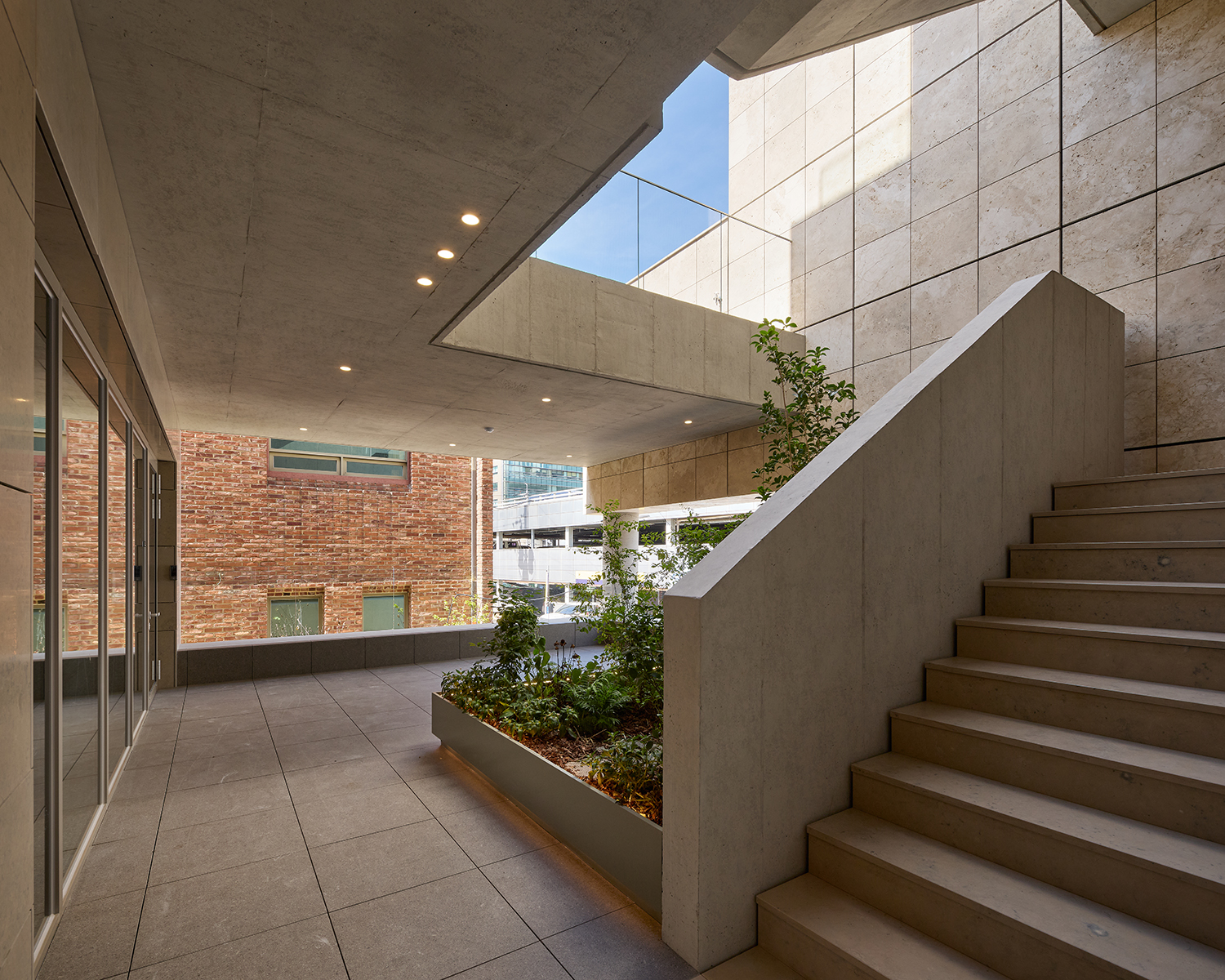
Cho Yoonhee: The travertine façade was a strategy to create a space where one could catch a breath away from the noisy street. Taking advantage of the rectangular lot, we erected a large wall to filter noise and placed the functional envelope behind it to handle daylight, ventilation, and circulation. Between the wall and the interior, we created patios and terraces with plants, proposing a new way to experience the city.
Lee Joongwon: Honestly, when I first saw the building, I was reminded of the 4.3 Group in the 1990s, who brought the continuity of side streets into buildings, creating shared spaces like stairs and terraces. Was that an influence?
Hong Jihak: We didn’t consciously think of that relationship. But having been educated in the generation of the 4.3 Group, perhaps the idea of placing external stairs and occasional courtyards had been internalised subconsciously. We may have thought that drawing paths into the building could offer a modest response to publicness.
Lee Joongwon: You placed importance on the symbolism of the travertine wall that forms a boundary with the city. You often leave a buffer space behind such walls—is there a reason you’ve adhered to this method?
Cho Yoonhee: The dual-envelope strategy was extremely important for us. Behind the travertine façade lies the building’s actual elevation. We saw the possibility of creating a new urban solution by establishing a ‘real’ façade and a ‘false’ façade – one that addresses functional requirements and one that expresses identity – and placing a buffer space in between. In our previous project, the Won Buddhism Yeoksam Temple (2022, covered in SPACE No. 677), we applied a similar approach: considering its identity as an urban temple, we installed a semi-transparent material screen on the front of the building to filter the cityscape. Behind it, a terrace was created to give a sense of spatial richness. In this way, we addressed issues that could not be resolved with a single façade using a comparable strategy.
Slow Clay Studio(2024)
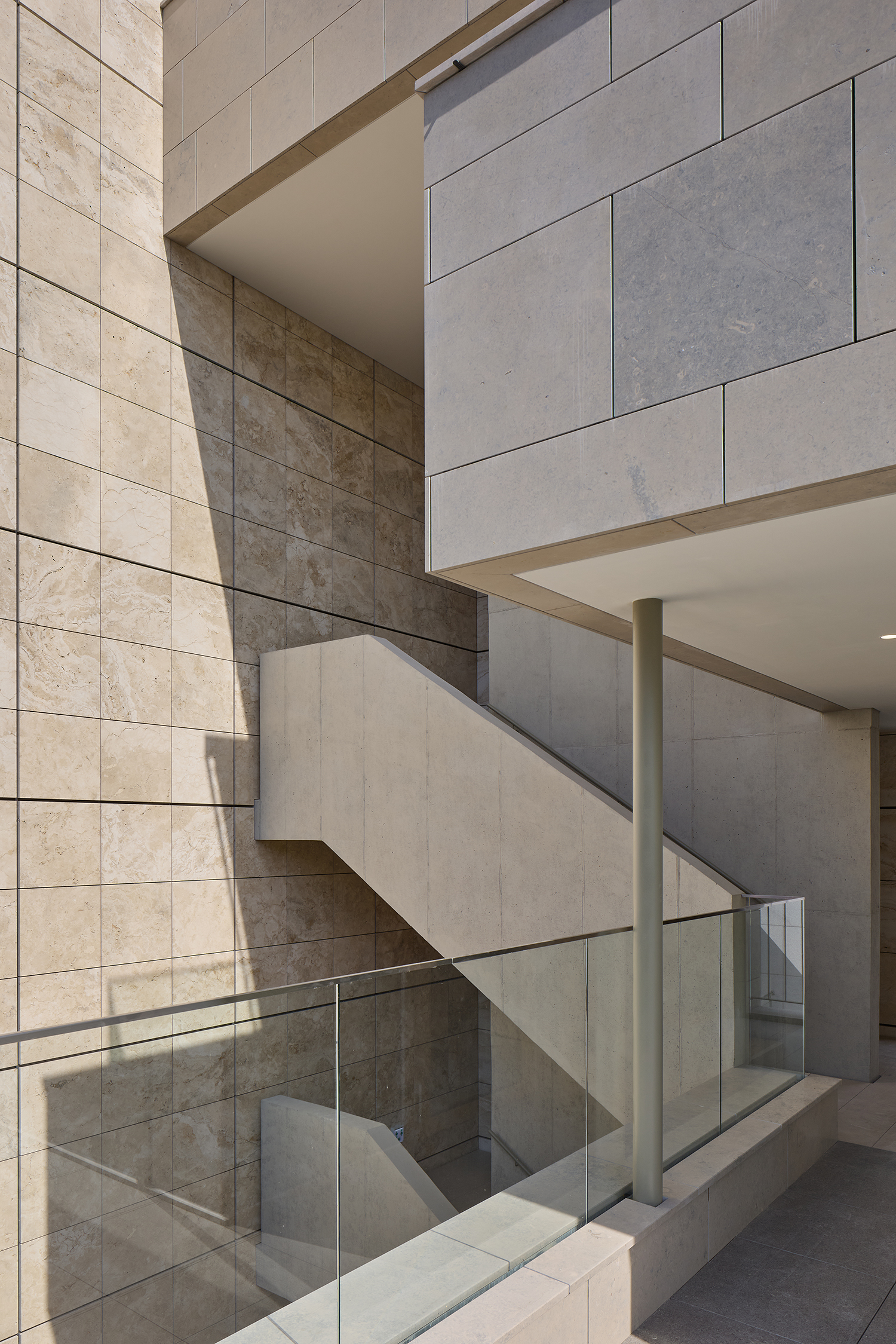
Bang Yukyung: For geometric completeness, the travertine façade was cut into 600mm squares, aligned to a 3 × 3 module, with variations in the width of the open joints. Scenes where geometric characteristics emerge appear in almost every project.
Cho Yoonhee: I noticed the same when reviewing materials—Won Buddhism Yeoksam Temple’s façade was also based on a square grid. It was surprising to see a commonality across our projects.
Lee Joongwon: Generally, clients do not prefer level changes in first-floor commercial spaces. I’m curious why you chose to do so at Aurium?
Hong Jihak: Normally, we are aligned in decision-making, but we disagreed on this level difference. I stepped back, and the design with the level change was implemented.
Cho Yoonhee: Raising the first-floor height would have triggered the height limit, preventing us from adding a fifth floor. I wanted the maximum area, so I couldn’t sacrifice the area of the fifth floor in neighbourhood living facility. Universal spaces are important, but if a tenant effectively uses the level difference, it was not a bad decision.
 Aurium(2025) ©Roh Kyung
Hong Jihak: This illustrates an important difference. While Cho focuses on maximising floor area, I tend to see creating area as a risk for an architect, since sometimes dimensions just don’t work out and can’t be resolved on site. There have been cases where the CAD showed it was possible to achieve a certain area, but it wasn’t possible in reality. This difference also shows up in design: Cho prefers floor plans that are as compact and efficiently packed as possible, whereas I like floor plans that allow for a bit of tolerance.
Lee Joongwon: That’s an interesting contrast. When we were on site, Cho mentioned that office spaces need a sense of ‘comfort’. Why do you think that? It’s quite a different interpretation from the grammar of glass curtain-wall office buildings.
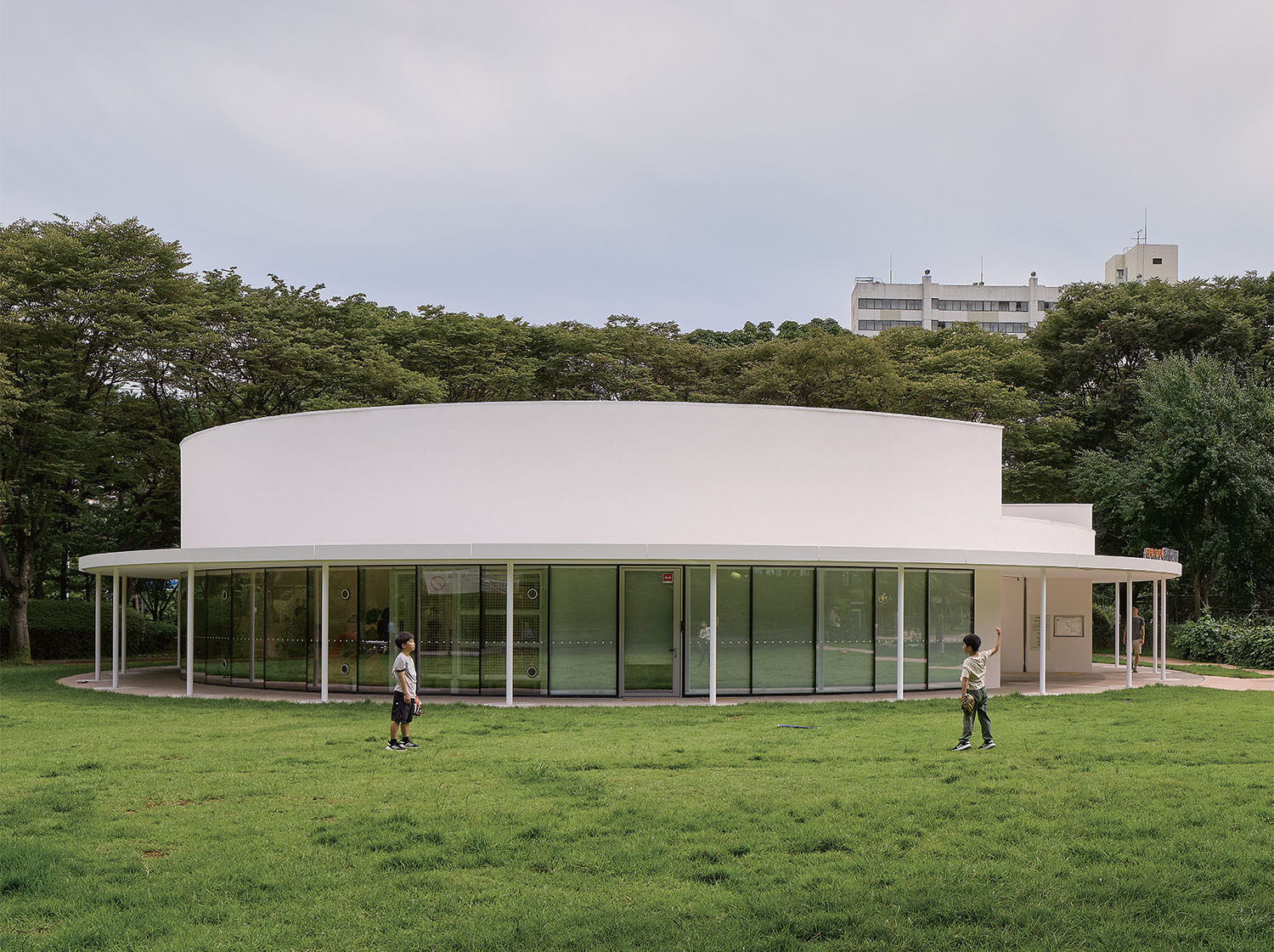
Cho Yoonhee: Maybe because I spend most of my day in the office, I see the office space as almost a semi-residential space. (laugh) For at least minimal privacy, I design the façade so that windows don’t occupy more than 50% of the wall area. Since most work involves looking at monitors, I prefer slightly dimmer lighting, and artificial lighting can be added as needed. In practice, office spaces with terraces are more comfortable than ones with lots of windows. Making human-occupied spaces excessively tall can also feel oppressive. To maintain a human scale, we limit the height of openings like doors and windows. In the Sinteuri Playground, for example, windows facing the outside were limited to a maximum height of 2.4m.
Aurium(2025) ©Roh Kyung
Geometry and Proportion
Cho Yoonhee: We place great importance on pure geometry and proportion. While we insisted on the circle for Sinteuri Playground, for Aurium we focused on maintaining square proportions. Once we establish suitable proportions, we sometimes sacrifice structure to preserve them. If geometry is disrupted, the building loses its order. Personally, maintaining the outwardly visible proportions that geometry manifests in form was my top priority. I see it as my role to ensure that the geometry established early in design is not compromised during execution or supervision.
Lee Joongwon: Aurium, built on a slender lot in central Gangnam, used a square façade, while Sinteuri Playground in the park maintained a circular plan. Do you have a criterion for selecting geometric forms?
Hong Jihak: In both projects, it was almost inevitable. Sinteuri Playground, located at the heart of the park, needed to reveal pure geometry. When renovating Won Buddhism Yeoksam Temple, we also tried to preserve square modules on the façade. Both reflect a similar approach. Perhaps a subconscious reaction to the disorganised, disorderly surrounding landscape leads to a desire for very strong geometric forms.
Cho Yoonhee: At Eco-Space Yeonui, the most important aspect was also the façade’s proportions. During design, we spent a significant amount of time coordinating horizontal proportions, like the repeated concrete panels and openings that appear as horizontal bands. Our obsession with proportion stems from the desire to avoid being a nuisance. We wanted our building not to become an eyesore. When a building is born, it should emerge not only with appropriate materials and details but also with well-ordered proportions, so it can coexist harmoniously within the city for decades. It is important to establish this basic visual stability, so it does not disrupt or jar the surroundings.
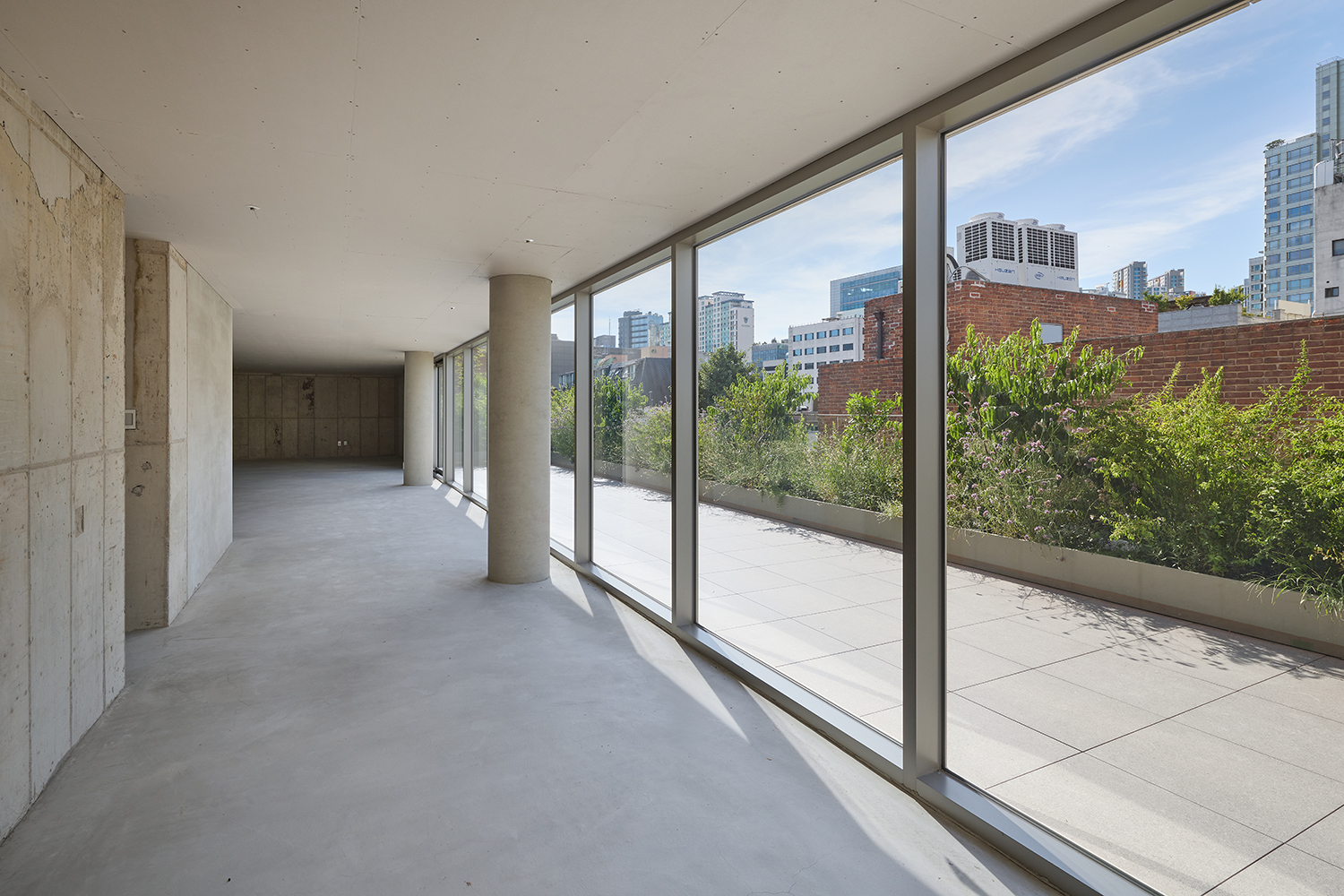
Aurium(2025) ©Roh Kyung
Lee Joongwon: By ‘proportions’, do you mean coordinating everything within numerical relationships—like grout lines, tile spacing, and the sizes of openings?
Cho Yoonhee: Not yet—we’re not trying to match everything perfectly. We’re just making an effort to take care of the most important elements.
Lee Sojin: You said proportions are numerical relationships, but to me, proportions feel more like a matter of sensibility. That’s why it’s hard to teach or explain to someone else.
Hong Jihak: I agree. It’s also the hardest part when communicating with our staff.
Lee Sojin: Sensibility is something you’re born with, so it’s hard to explain why something is good or bad. Every architect has a different sense of what ‘good proportions’ are. Still, I’m curious about where GUBO’s sense of proportion comes from.
Lee Joongwon: Perhaps it was influenced by the office where you both first gained professional experience.
Hong Jihak: When I was at SAC International, I had the valuable opportunity to work as staff on projects personally directed by Kimm Jong Soung. I still remember it clearly—during design meetings for an office building, he would adjust façade dimensions with almost millimeter-level precision. For example, changing 1,200mm to 1,230mm is only a 3cm difference, but discussions were conducted at that level. It showed he had a very firm sense of what good proportions are. That experience certainly had some influence on us.
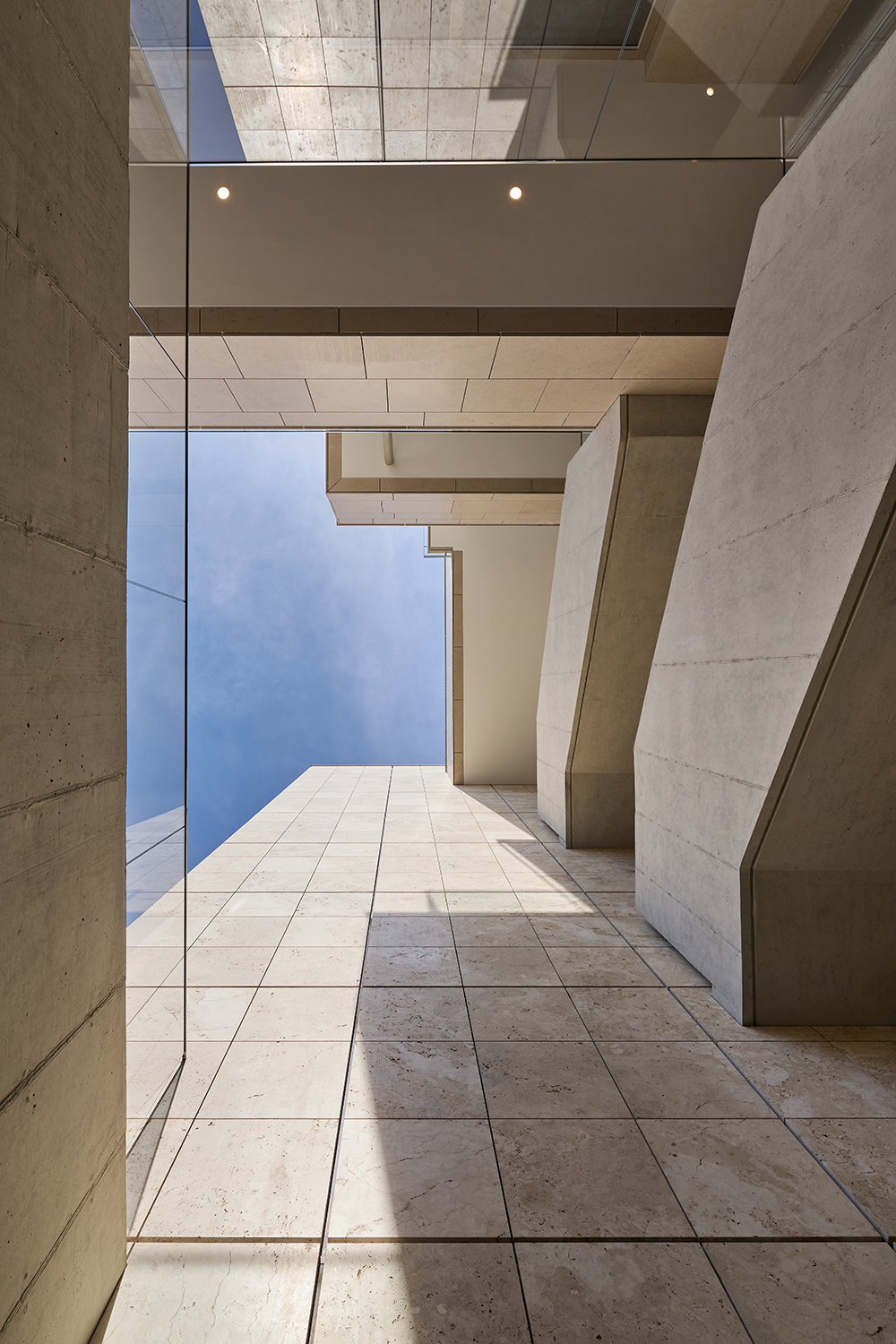
Aurium(2025) ©Roh Kyung
Kim Jeoungeun: The sense of proportion and sensibility at IROJE architects & planners (hereinafter IROJE) must be different from that of SAC International, right?
Cho Yoonhee: Seung H-Sang was exceptional more in terms of sensibility than numbers. Whenever we brought in our work, he would sketch feedback directly, showing us how to find the right proportions. Early on, I didn’t understand why he kept asking us to revise things that seemed fine, but it was actually a form of training. Every Monday meeting, we were reminded that architecture isn’t innate—anyone can do it well if trained properly. (laugh) He said it for motivation, but honestly, innate talent might matter even more.
Kim Jeoungeun: Since you mentioned IROJE and SAC International, is there any legacy – design-wise or in office management – that you inherited from those experiences?
Hong Jihak: I’ve always felt a bit of regret about that. I wish I had been able to carry the continuity from SAC International all the way to opening our own office, but going abroad broke that chain. So only recently have I come to the realisation, ‘Oh, that’s what I learned back then’, or ‘Those scenes I drew without thinking were actually very important.’ SAC International was obsessively detailed to the point of excess, and I’ve been reflecting on the meaning of that lately.
You can see more information on the SPACE No. December (2025).
Cho Yoonhee
Cho Yoonhee has been working in architectural design since she co-founded GUBO Architects in 2015. After graduating from the Department of Architecture at Seoul National University and MIT, Cho built her career at IROJE architects & planners in Korea and Höweler + Yoon Architecture in Boston, U.S. Cho’s interest lies in building urban cities from the pedestrian perspective of an average person. She has worked as a Public Architect for Seoul Metropolitan Government and won the Korean Young Architect Award organised by the Ministry of Culture, Sports and Tourism in 2021.
Hong Jihak
Hong Jihak, after periods of research and building his career at SAC International, HAEAHN Architecture, and Center for Advanced Urbanism (CAU) at Boston, co-founded GUBO Architects in 2015. Hong studied Architectural Urbanism at MIT and received his PhD on the theory of Architectural History at Seoul National University. Hong is currently working as an Associate Professor in the Department of Architecture at Chungnam National University.
Lee Sojin
Lee Sojin, architect and urban designer, graduated from the Department of Architectural Engineering at Yonsei University and continued her studies at UPA 7 (Paris, Tolbiac). Lee’s first professional experience was at the Renzo Piano Building Workshop, and she has completed a wide range of architectural and urban planning projects of various scales under the mentorship of her partner architect Yves Lion for 10 years since 1997. Lee now works as the Principal of Leeon Architects. She served as the appointed Public Architect of Seoul Metropolitan Government (2012 – 2016), and has received the Korea Young Architects Award (2012) and the Grand Prize (2014) and Excellence Prize (2022) in the Seoul Metropolitan Architecture Awards, along with numerous other public architecture awards.
Lee Joongwon
Lee Joongwon is a Professor in the Department of Architecture at Sungkyunkwan University. He serves as the President of the Korea Association of Collegiate Schools of Architecture and is a partner at iSM Architects. His major publications include What makes us Happy at the Apple Store? (2025), Story of Seattle in Seeing Architecture (2025) and he has authored six other books.
4
FRAME
Dialogue
GUBO Architects
Cho Yoonhee
Hong Jihak
Lee Sojin
Lee Joongwon
Sinteuri Park Indoor Playground
Bathhouse Iljuk
Slow Clay Studio
Aurium
public architecture
neighbourhood living facility
remodelling
precision
looseness
abstraction
concreteness
geometry
proportion
order
management
reality