
SPACE December 2025 (No. 697)
‘Now, in a dream, our mind continuously does this. We create and perceive our world simultaneously, and our mind does this so well that we don’t even know it’s happening. That allow us to get right in the middle of that process. (How?) By taking over the creating part. Now, this is where I need you: you create the world of the dream. We bring the subject into that dream and they fill it with their subconscious. (How could I ever acquire enough detail to make them think that it’s reality?) Well, dreams, they feel real while we’re in them, right? It’s only when we wake up that we realise something was actually strange. Let me ask you a question: you never really remember the beginning of the dream, do you? You always wind up right in the middle of what’s going on. (I guess, yeah.) So how did we end up here?’
— Inception (2010)
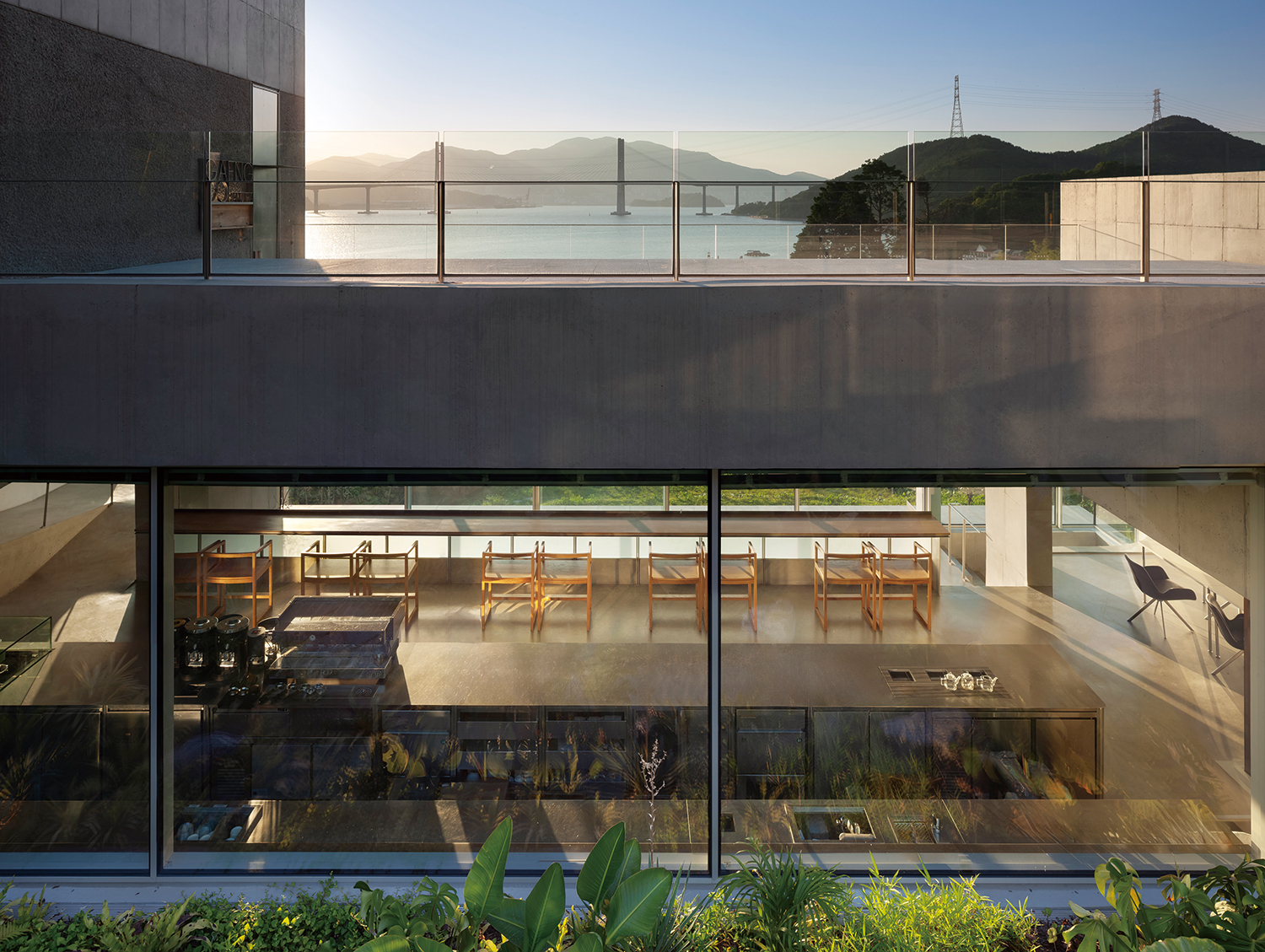
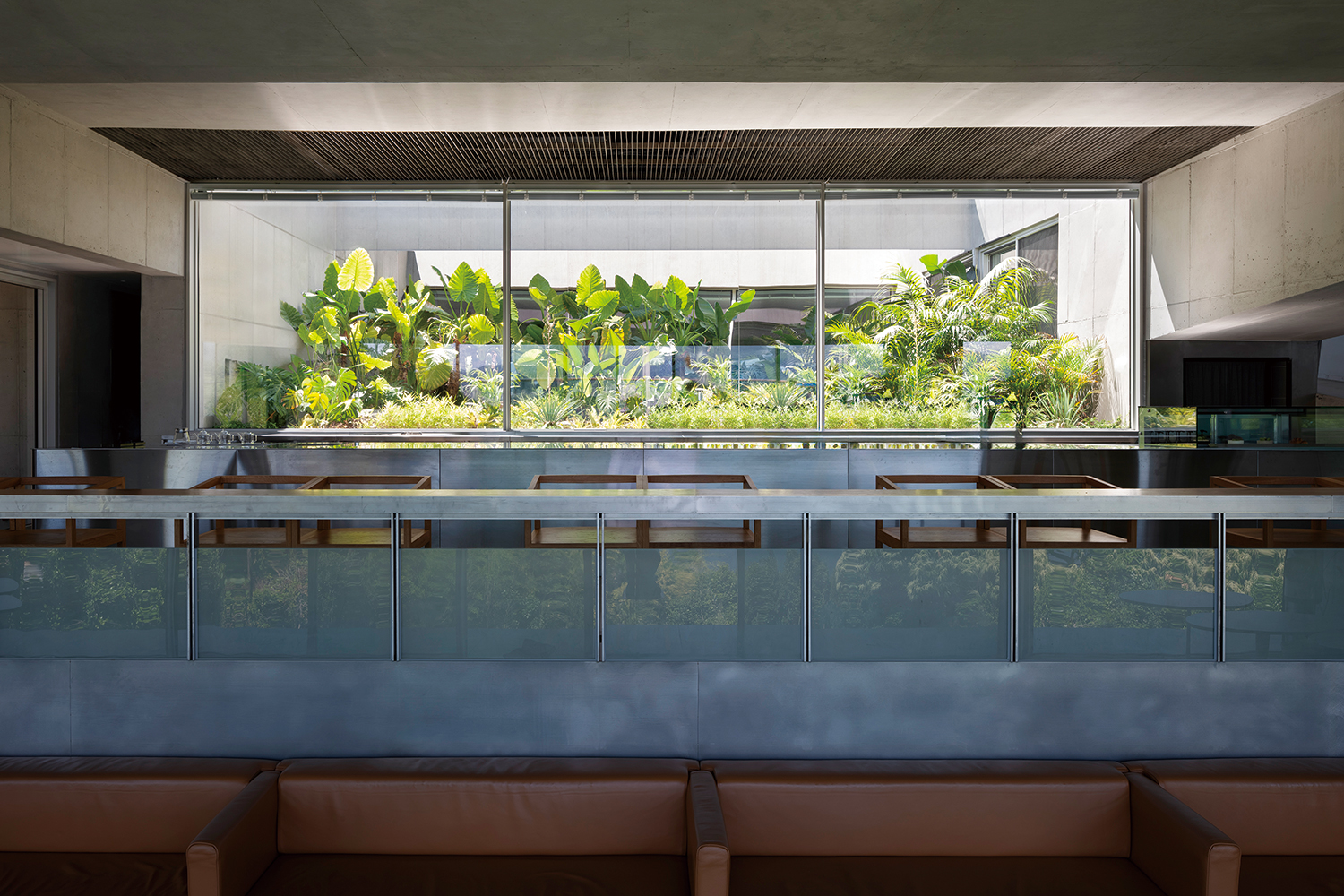
How do we come to remember a place? When one day our architecture is gone and someone visits the site, in what way will they recall that absent structure? To reach a destination, we pass through countless landscapes. Yet, as we move through them, we rarely remember each as a distinct event. We simply register them unconsciously – ‘there’s the sea, there’s the mountain, so many trees’ – and move on.
When people finally arrive at their destination, they often confront all those passing landscapes as a single, composite frame in their memory. In contrast, those who experience GAENGGO BANJIHA arrive not at the conclusion of a sequence of landscapes, but at the extension of the unconscious journey that led them there. In other words, this space is not remembered as one complete and sequential exterior landscape, but as an unconsciously perceived part among many.
An unconscious sensation that precedes human awareness, thoughts on how a place will be remembered through these sensations: this is where our designs begin.
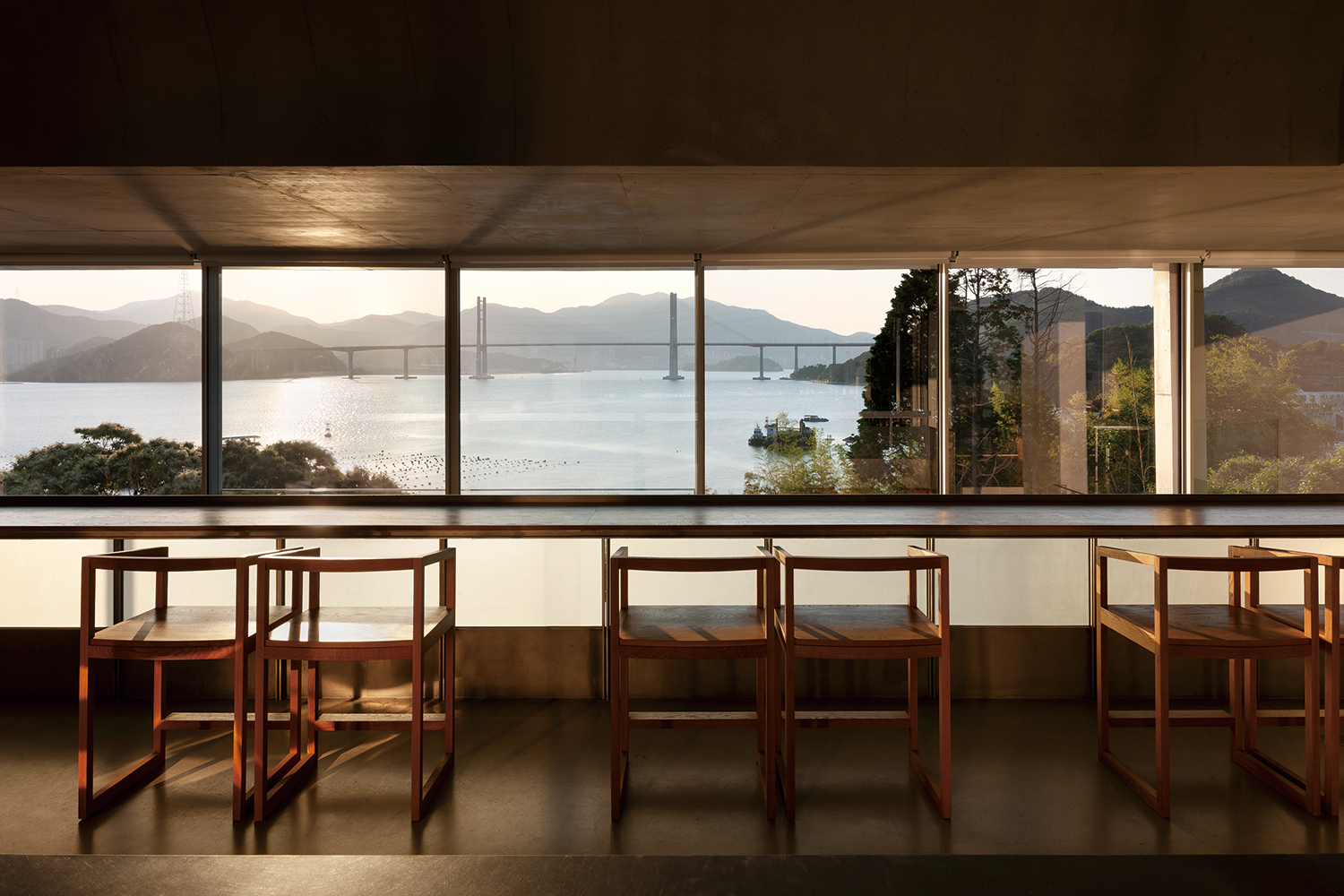
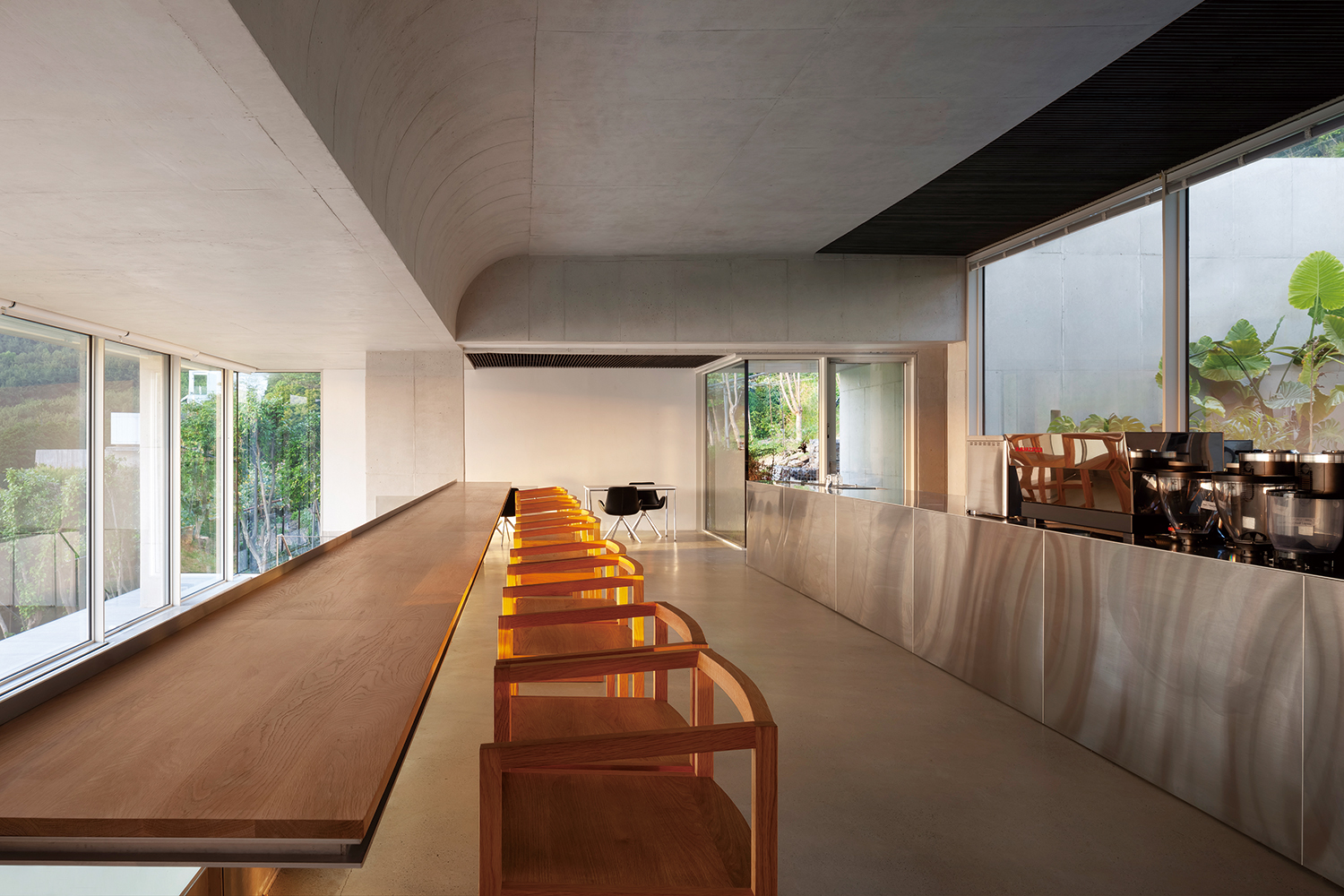
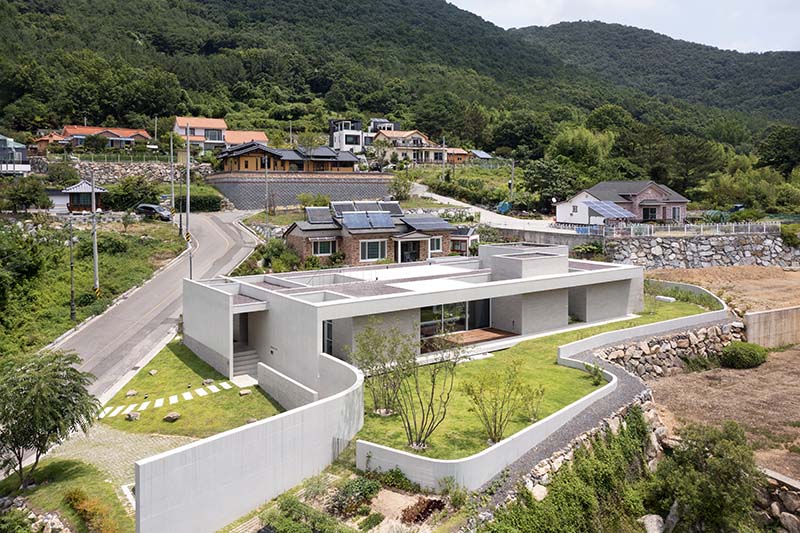
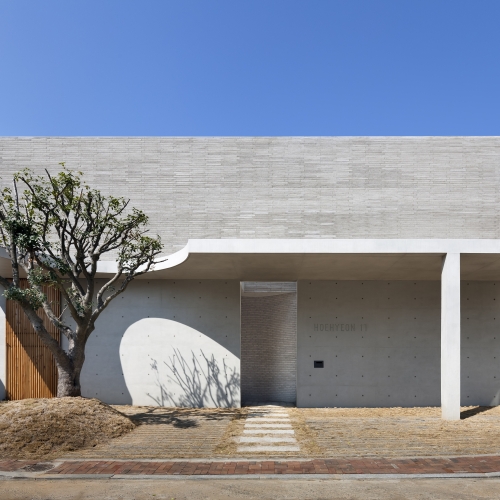
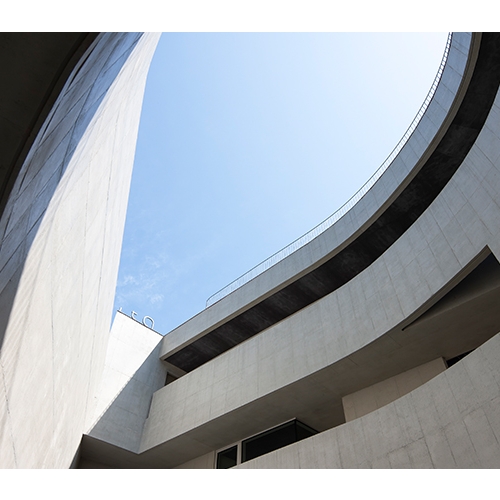
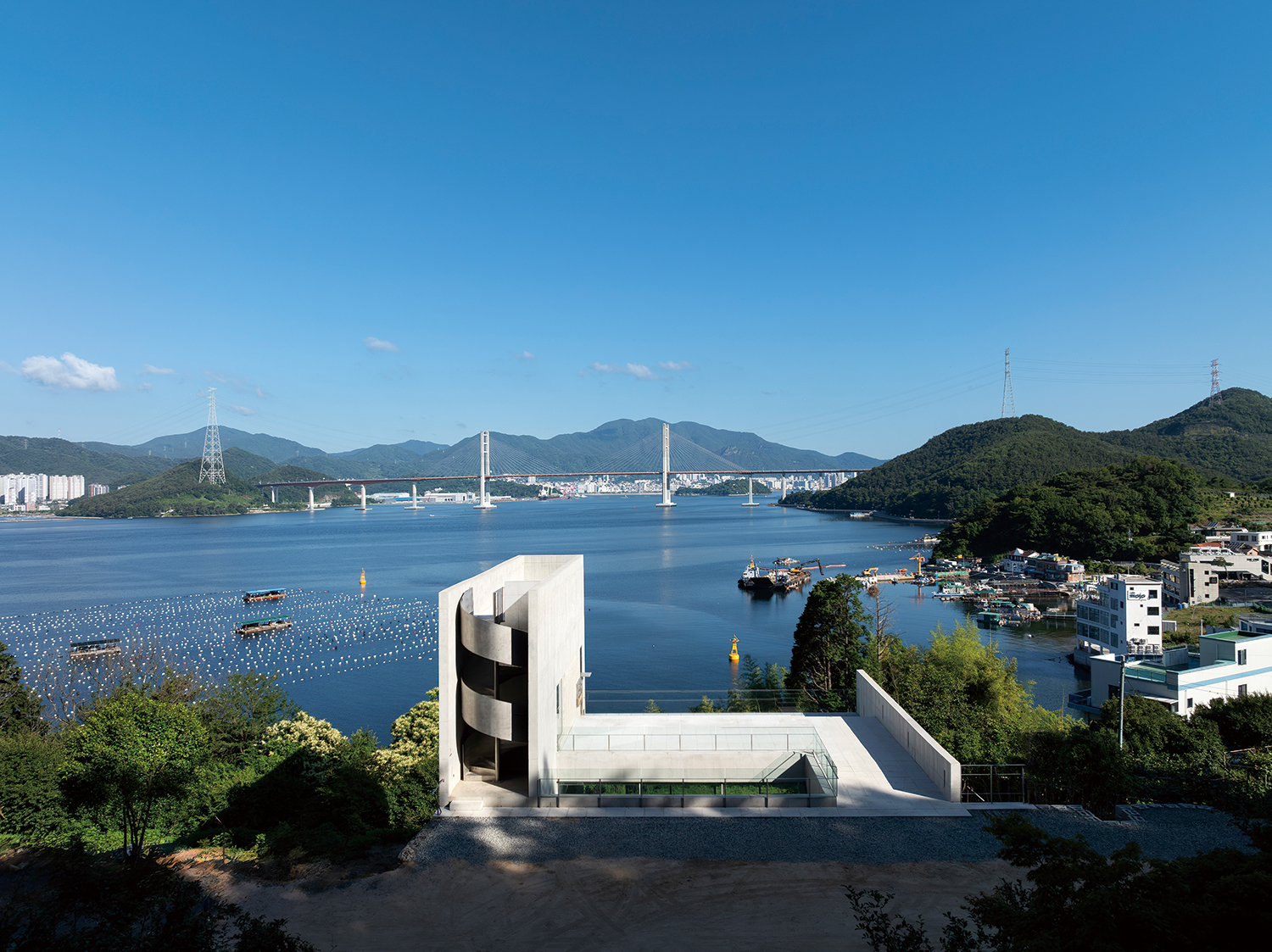
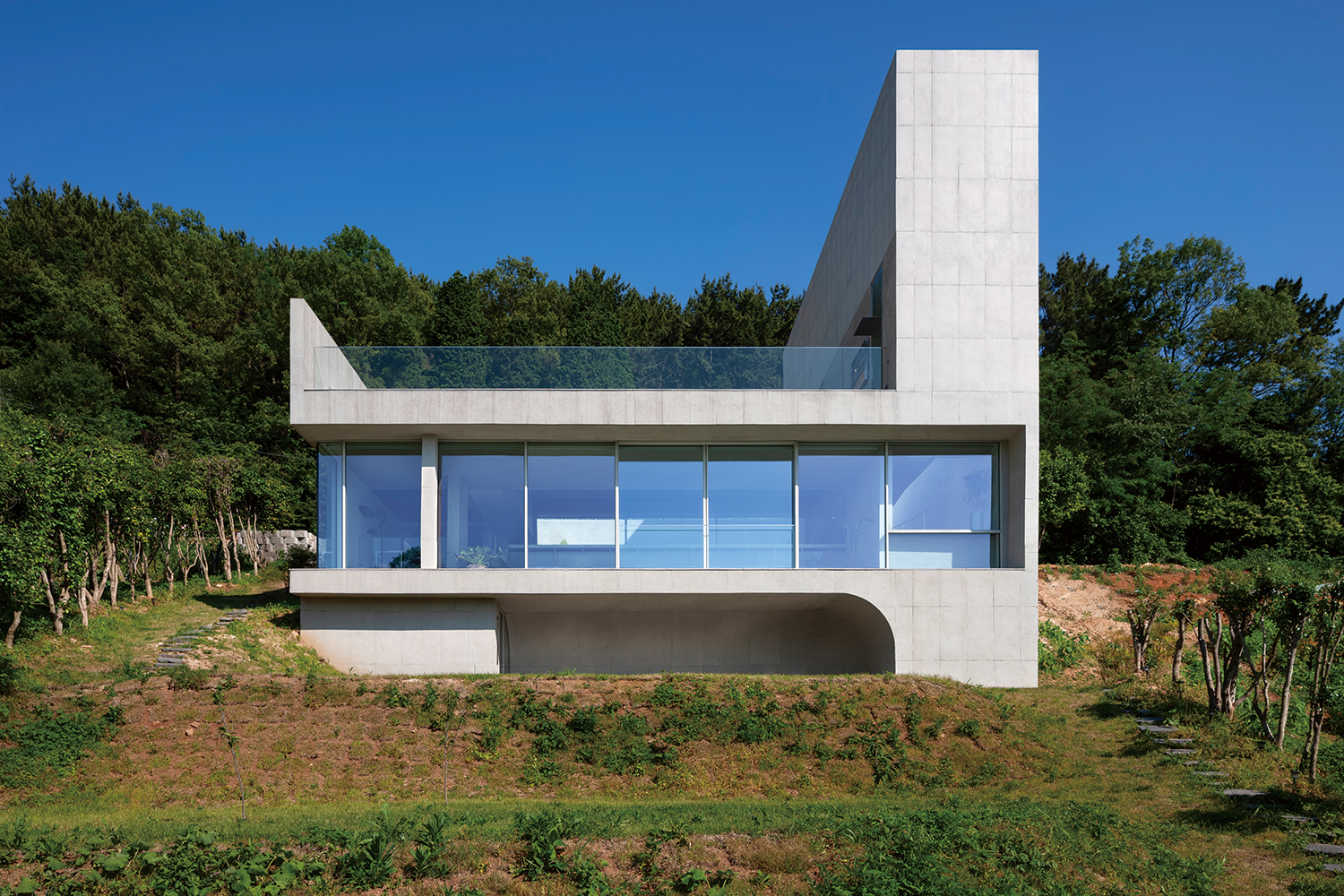
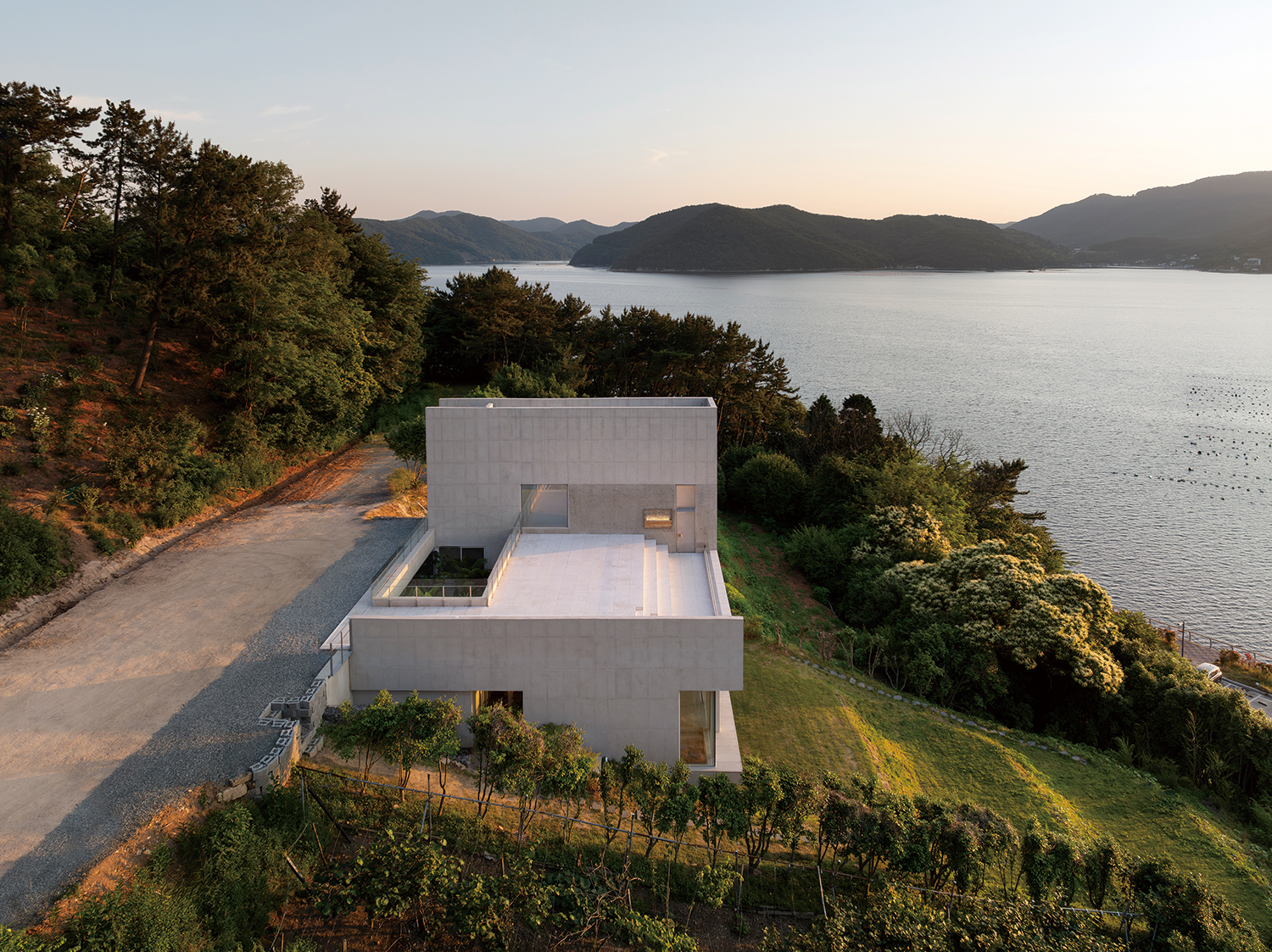
GAENGGO BANJIHA stands at the end of a road that runs along the coast, far from the neighbouring urban context. Without fully revealing its form, the building announces its presence through an imposing wall and an unfamiliar circular staircase that intercept the visitor’s sea-bound gaze and brings them to a halt. This non-ordinary, unexpected encounter heightens the senses before entering the spaces, creating a moment of transition—a fleeting crossing of a boundary from one space into another.
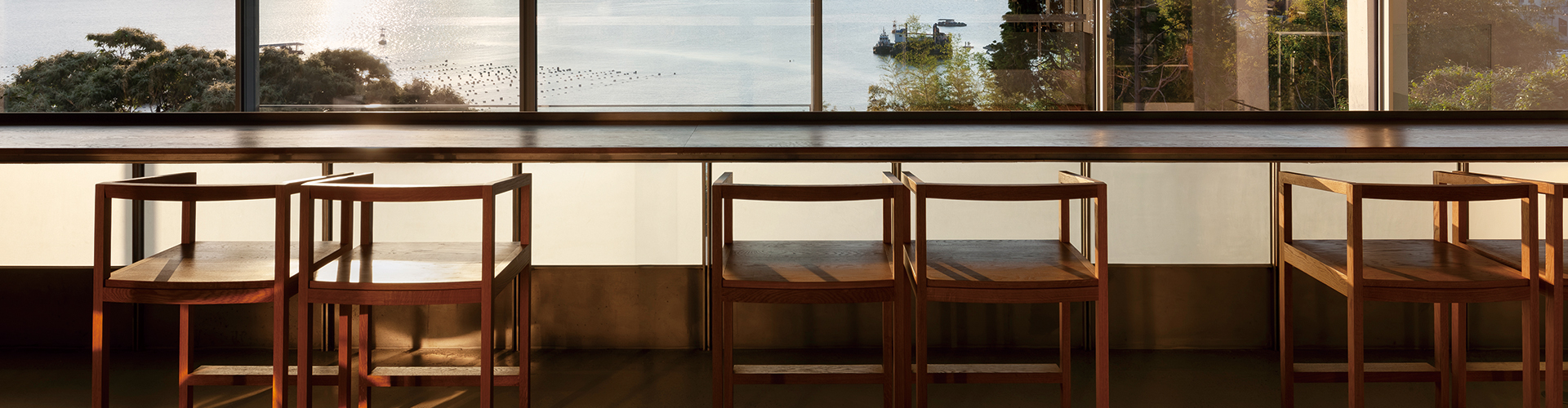
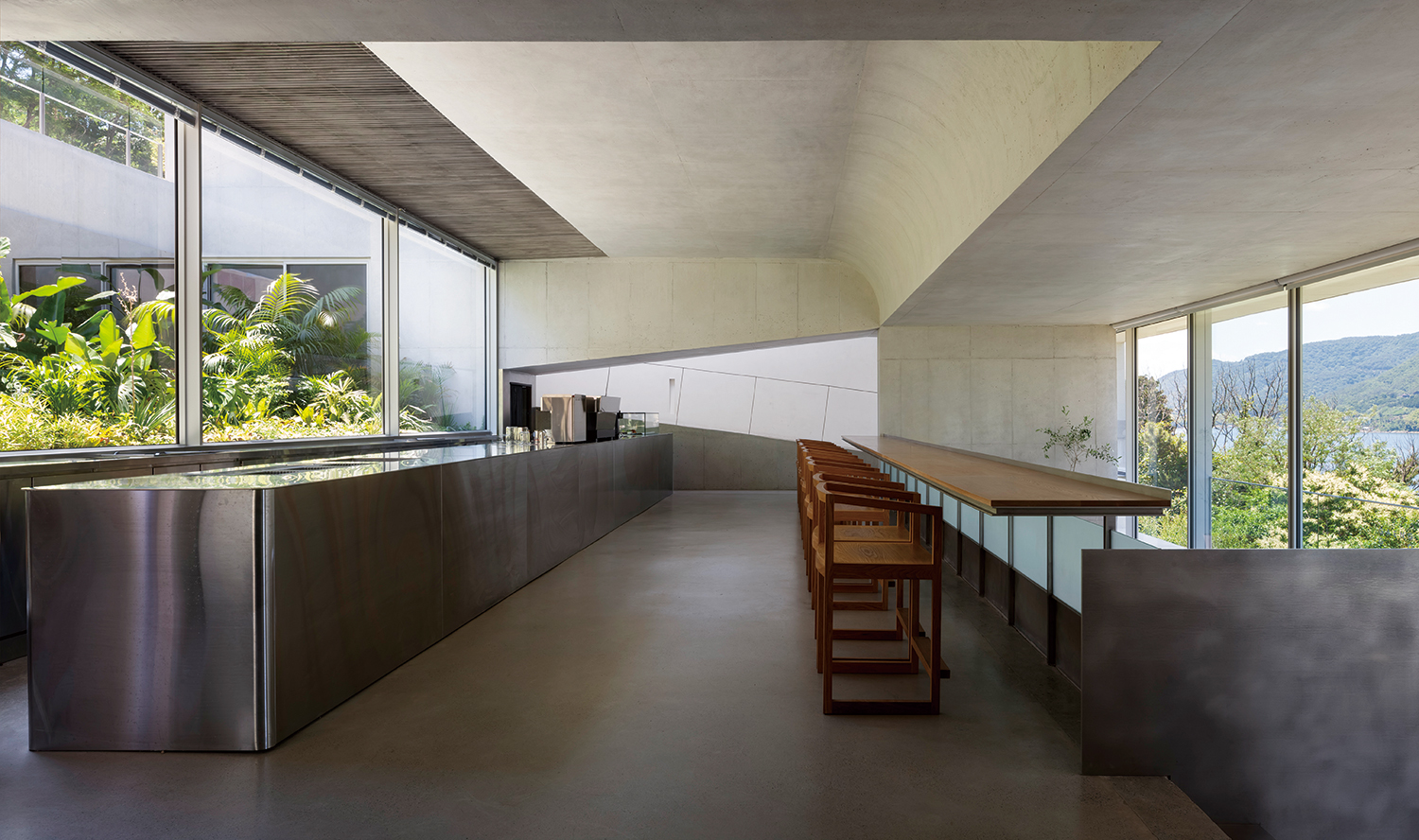
When the visitor turns their eyes from the familiar panorama of the sea to look downward, they see below the sunken garden the café’s open bar and the people wandering within. Beyond this, a sloped hill merges seamlessly with the sea. Unlike conventional buildings, this descent toward the ground creates a strange, immersive sensation, allowing one to fully inhabit the unfamiliarity of the place. The experience of the space begins before one even steps inside.
Visitors who come for commercial purposes often find themselves forgetting everything else, absorbed in the surrounding landscape. For most, this fleeting experience becomes the single framed memory of a momentary scene. However, we did not want the experience of GAENGGO BANJIHA to remain as one static image. Therefore, we designed the space to provoke continuous movement of the gaze—back and forth between interior and exterior. To stimulate curiosity and motion, the architecture deliberately orchestrates the act of crossing spaces itself as the essence of the experience.
From the moment visitors enter GAENGGO BANJIHA, they encounter an unexpected threshold space and move through a succession of spaces, immersed in a richly sensory experience. Here, the landscape is perceived at an entirely different level.
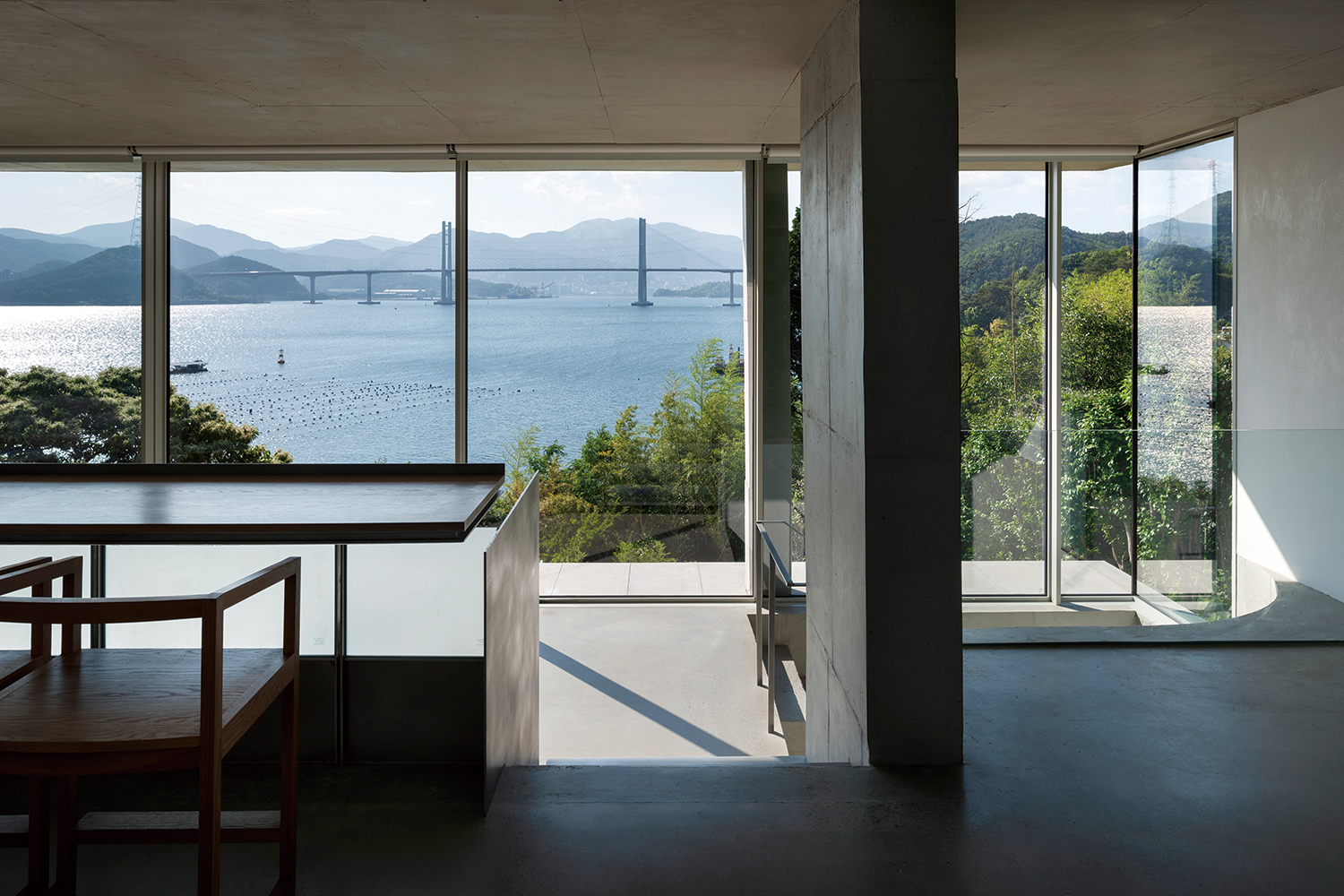
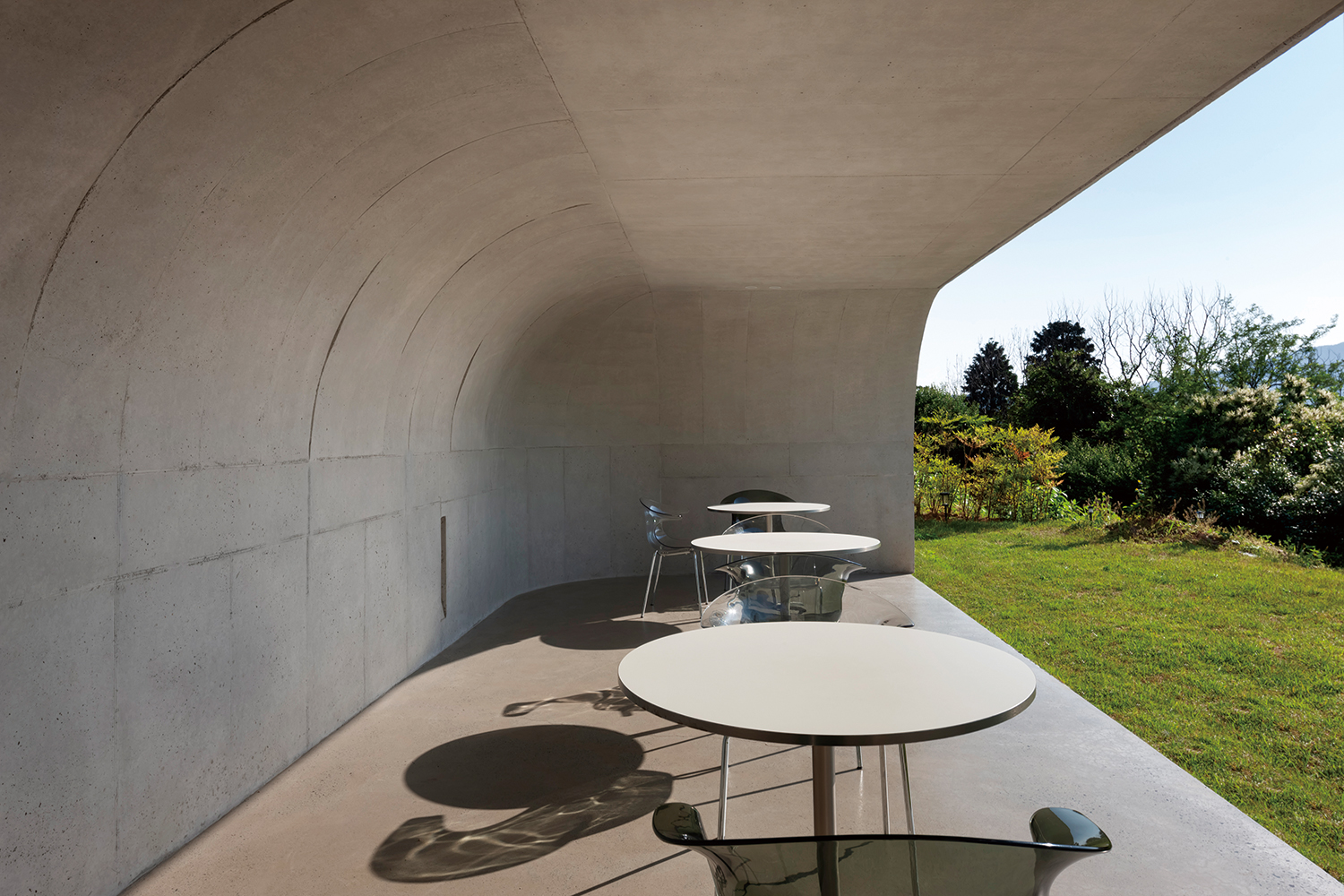
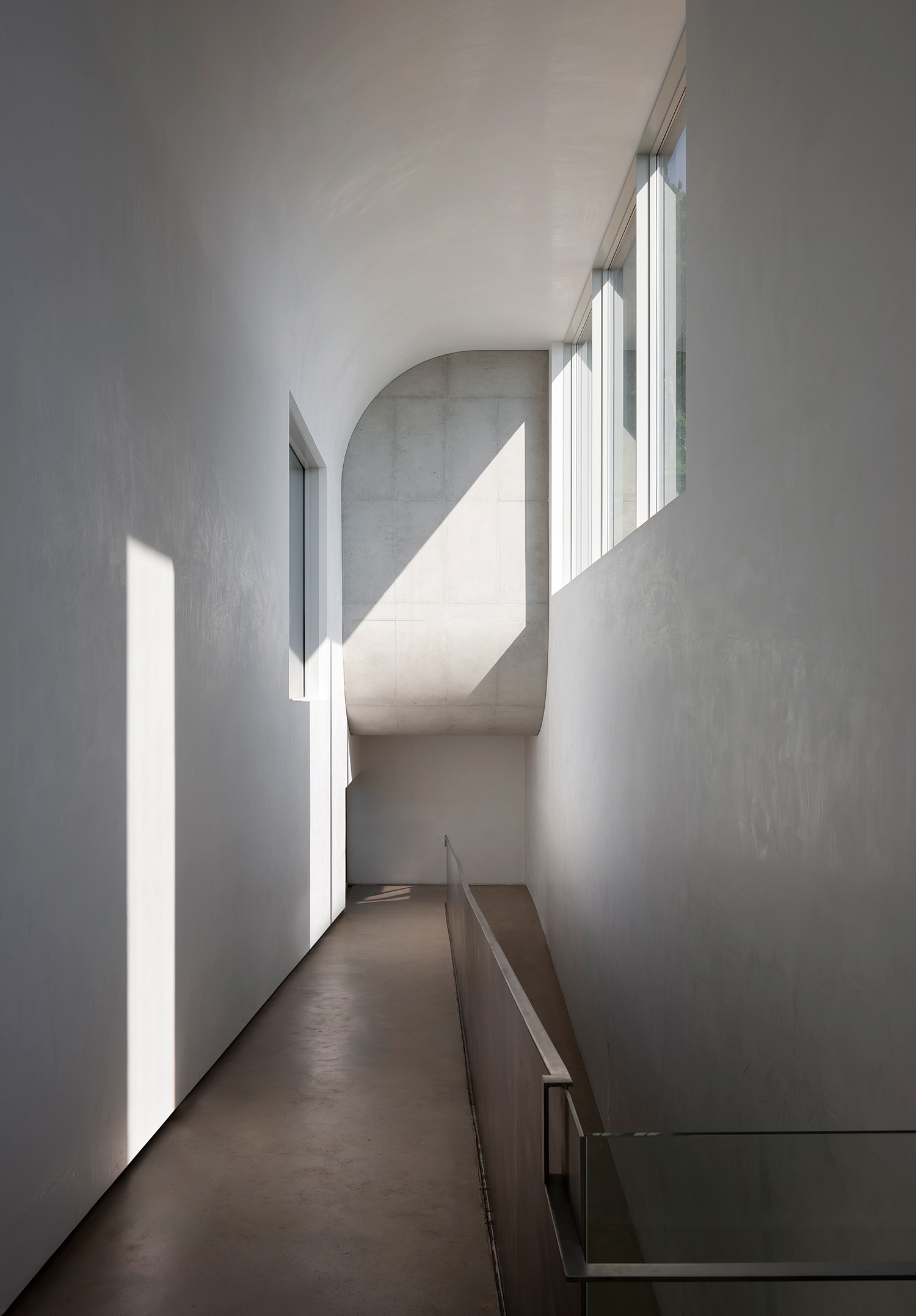
Inside, the circulation unfolds seamlessly from the sloped ramp to the main level, forming a continuous sequence without interruption. Rather than dividing scenes into fragments, movement generates a natural, unbroken flow. Visitors do not consciously decide their direction; instead, their bodies synchronise effortlessly with the rhythm of space. The soft light filtering through the tall windows, the firmness of the sloped floor beneath their feet, the fleeting glimpses of the garden past the inner courtyard, and the echo of music resonating against the walls—these impressions do not fix themselves as distinct memories but instead pass through, amplifying sensations. A stairway on the right descending from the main level leads visitors outward into a semicircular, cave-like space where a new landscape unfolds. The circular staircase first encountered upon arrival guides them to the building’s highest point, inviting them to sense what lies beyond the wall.
Likewise, GAENGGO BANJIHA is the result of efforts to awaken an awareness of boundaries, through designs that are grounded in the site, considering the gaze and movements of those experiencing the building. We hope that within this choreography of time and motion, each person’s sensory experience will reveal a new kind of landscape—one that allows GAENGGO BANJIHA to be remembered as a place uniquely its own.
eSou Architects (Kim Hyunsu, An Youngju)
Kim Hyejin, Lee Jueun, Lee Dakyeng, Park Seungjin
530, Samgwi-ro, Seongsan-gu, Changwon-si, Gyeongs
neighbourhood living facility (café)
330m²
182.1m²
224.97m²
B1, 2F
2
11m
55.18%
57.04%
RC
exposed concrete
exposed concrete, antico stucco, vibration finish
Hanshin Structural Engineering Inc.
Daemyung Engineering
Nuri Electric Engineering
Dohae Engineering & Construction (Gwon Byeongguk
Nov. 2020 – Sep. 2021
Oct. 2022 – Feb. 2024
Lee Jonghwan, Cho Younghee
Parts
HEA, SMGG
Studio Kiminseok