




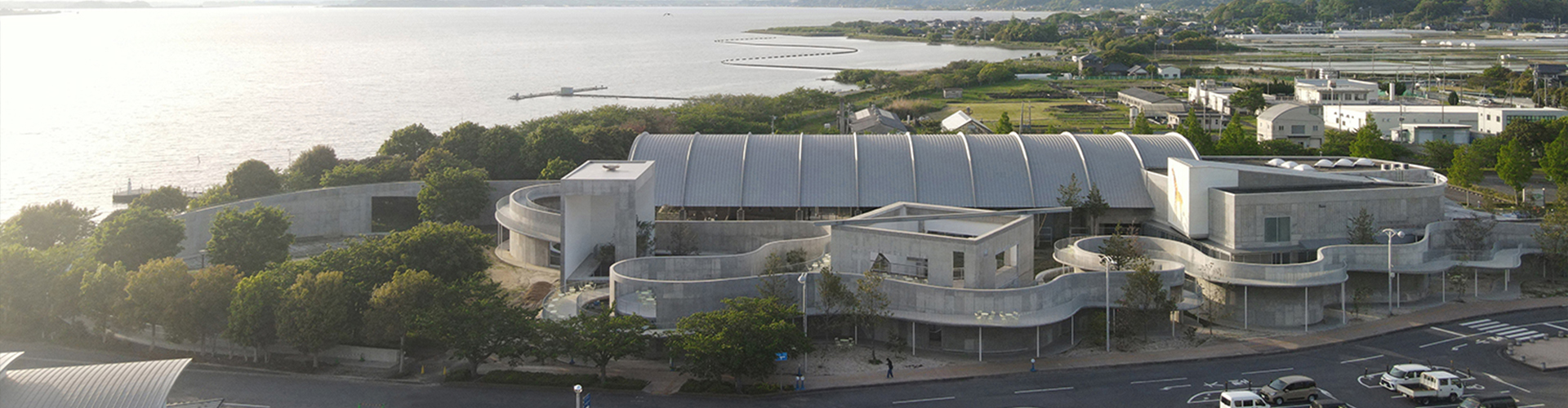
SPACE December2025 (No. 697)
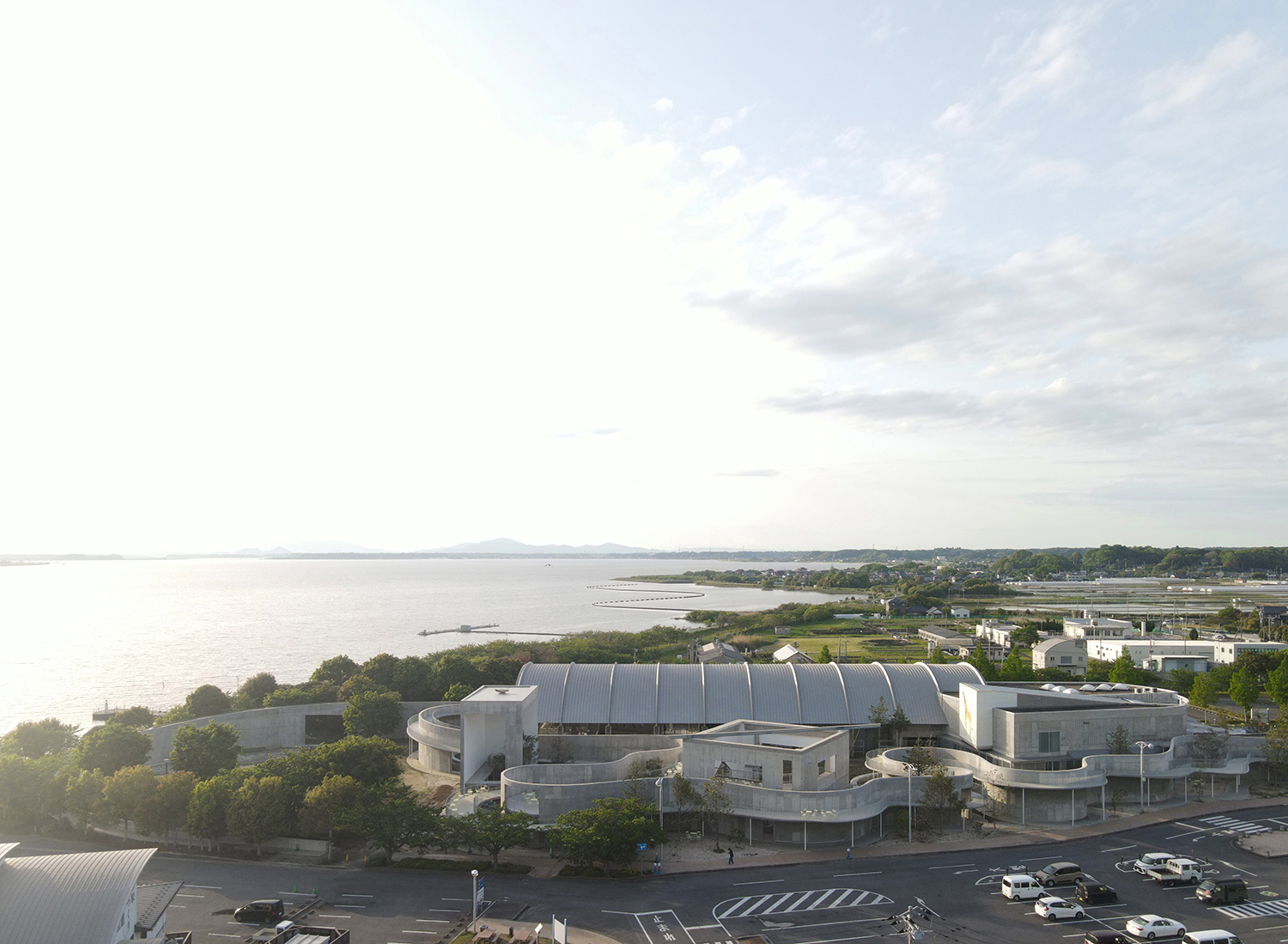
Interview Takahashi Ippei principal, TAKAHASHI IPPEI OFFICE × Lee Sowoon
Lee Sowoon (Lee): The Kasumigaura Lake Community Place (2024) is a public project which took on the renovation of an old museum facility. What were your first impressions of this site, and what direction did you propose to take as an architect?
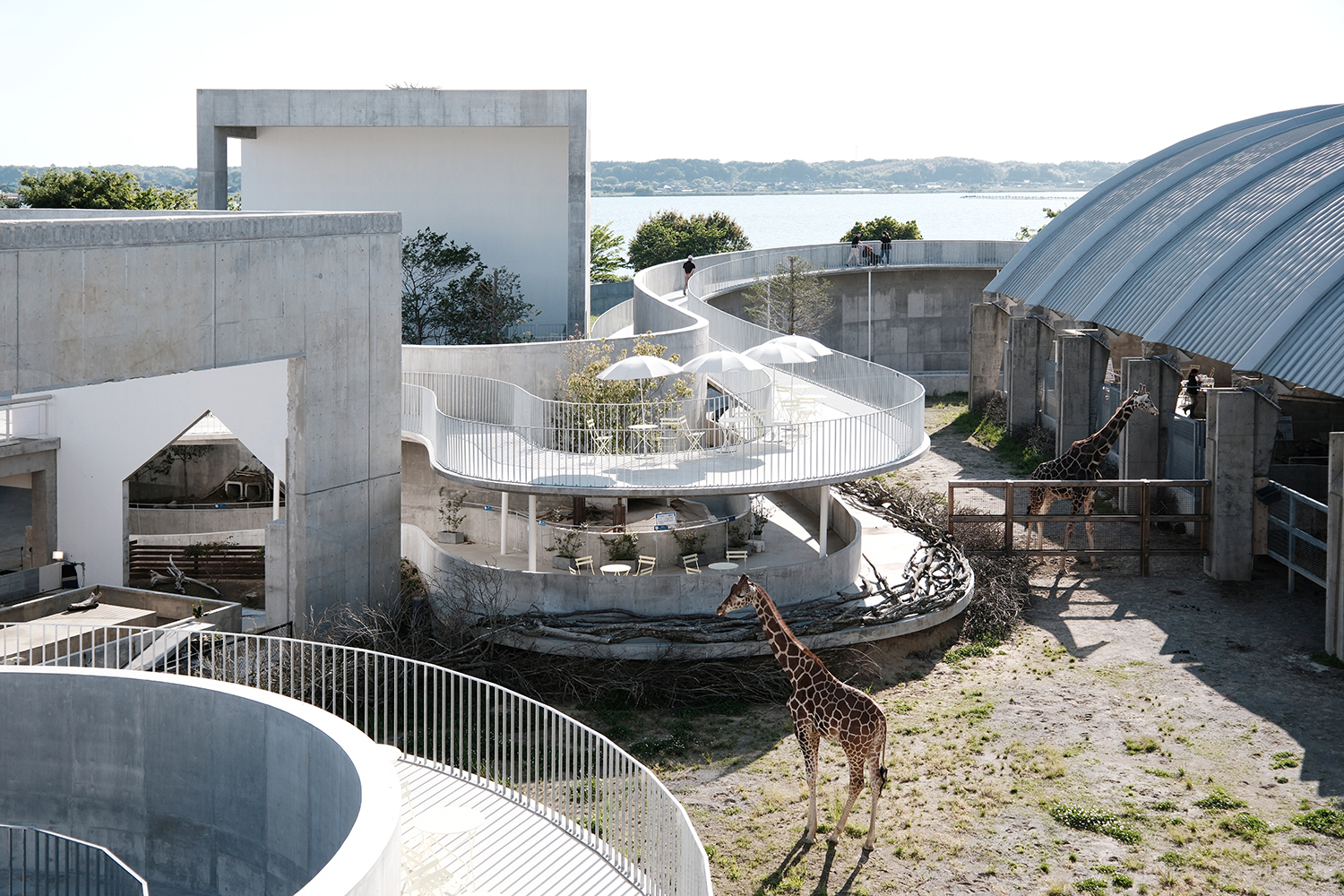
Lee: In converting the former museum into an animal sanctuary, Buildings A and B were partially dismantled while new structures such as the walkway and the reception building were added. How is this mixture of preservation, demolition, and extension connected to the way you think about architecture?
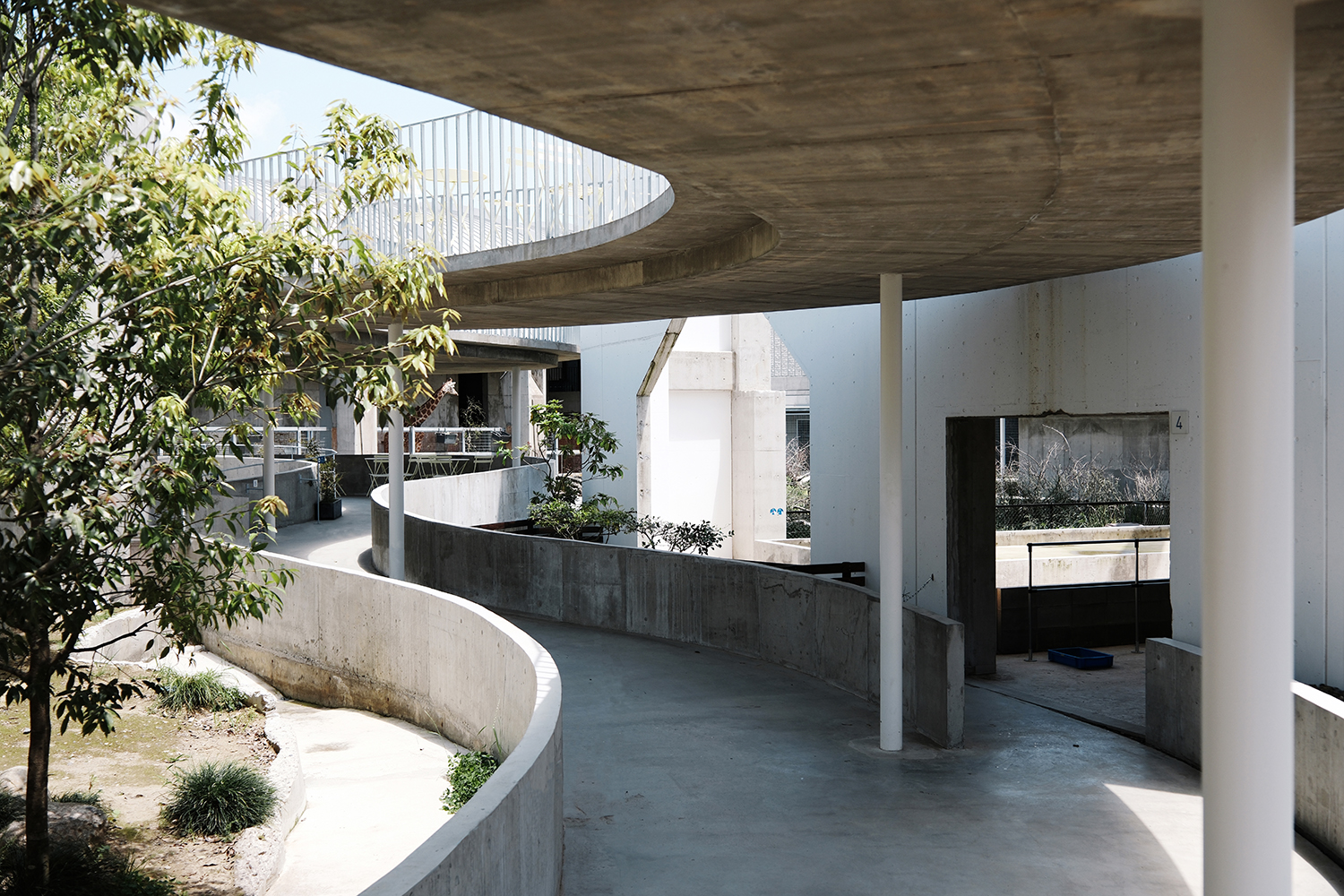
Takahashi: Now I try to innovate the ‘outside’ and the ‘externality’ in the modern architectural space. In this sense, externality refers to the way the notion of the outside becomes manifest through architectural actions. In this project I combined all types of construction such as new construction, demolition, renovation. With them, the entire area could be transformed into a new spatial experience, creating a new architectural concept: building an ‘environment’ where both humans and nature are the subjects, rather than a human-centred construction of ‘space’ that has persisted throughout the modern era. One is the extensions, particularly TERRACE and LANDMARK. TERRACE is a long walkway made of concrete, running along the site and meandering between the buildings and the surroundings. It brings about a ‘change’, shifting the situation of the former site to that of the latter. LANDMARK is the ‘outside’ building; tall, high, and open enough to assimilate into its natural surroundings. The other aspect was the demolitions. For animals to live here, the existing buildings are needed to be open to nature with light, wind, rain, and vegetation. So, I tried and began to dismantle the world that human beings once built, allowing nature to move in.
Lee: The meandering walkway and large openings in the walls frame and dissolve the views, creating a continuous scenic sequence. What kind of cognitive effect did you intend to achieve through this circulation design?
Takahashi: The walkway creates a sequential experience, but it can make it hard for one to figure out how the elements of the architecture co-exist. It allows us to forget established hierarchies such as the relationship between the new constructions and the existing ones. The two look so similar to one another that we cannot tell which is which, moving along the walkway and taking a closer look at the many fleeting moments and encounters.
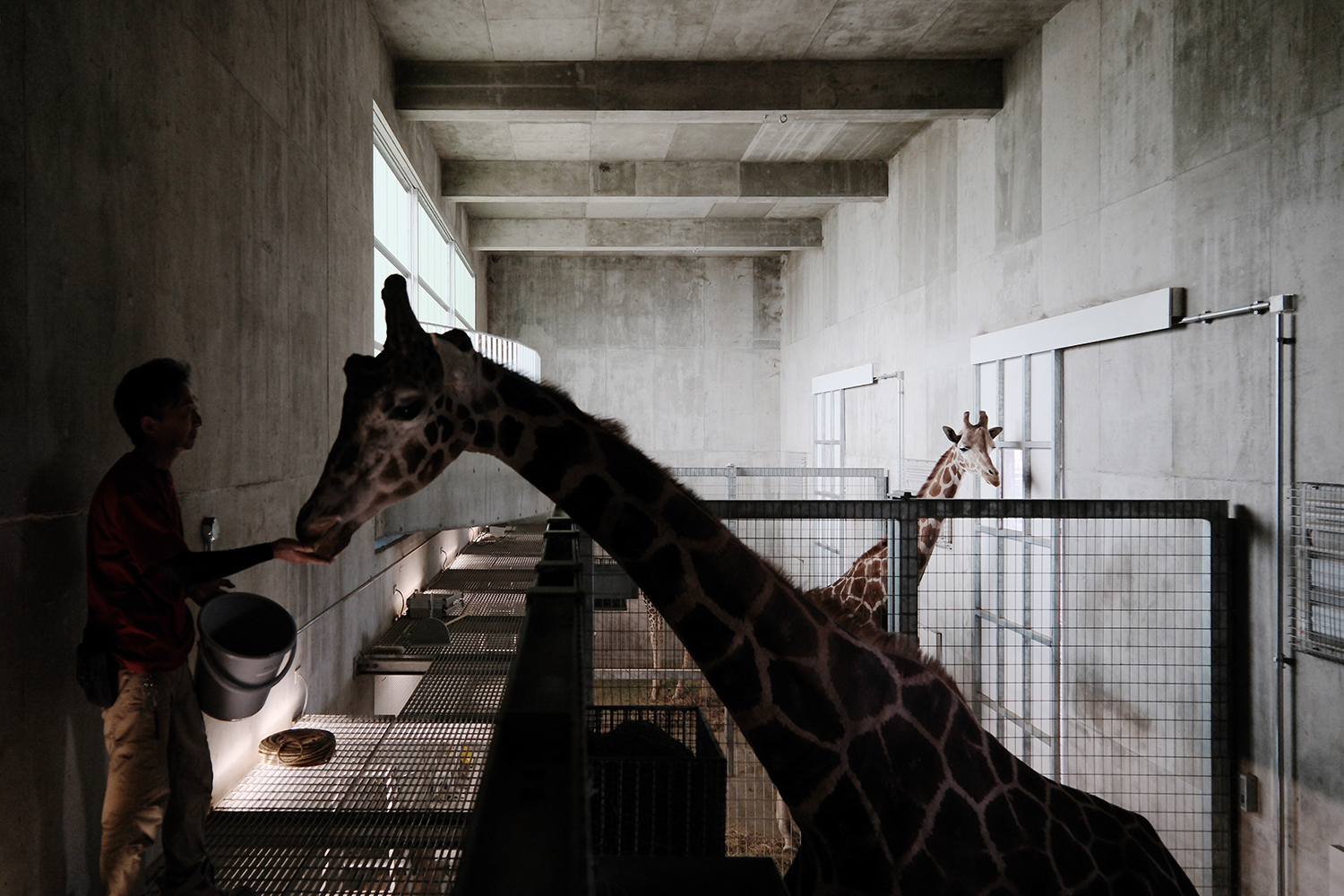
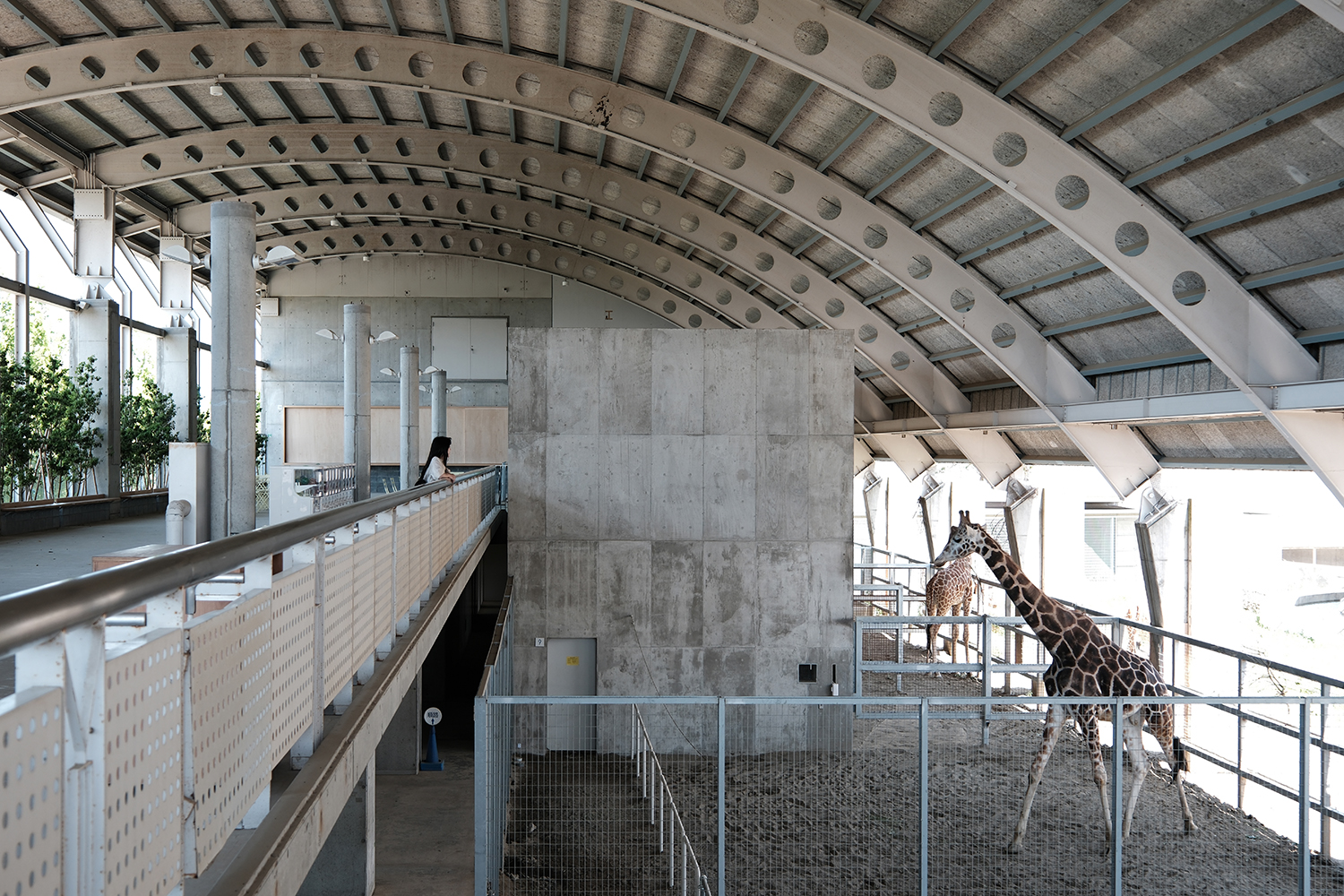
Lee: To open the building to nature, most of the interior walls of Building A were removed, and the roof of Building B was taken away. What criteria guided these decisions?
Takahashi: In general, a project of renovation and regeneration begins with research, solving the current problems of the existing building. One is a functional comfortlessness and others are degradations. In fact, the removal of the roof was due to the rain leaking and deterioration, while main wall structures of concrete were in good condition and will endure. The large hole through the centre of the grand staircase both introduces a void inside and opens the space out to the animals and nature.
Lee: Beyond the architectural interventions you describe, the presence of the giraffe itself seems to transform the site’s situation. In what ways does this non-human species reshape the environment?
Takahashi: The giraffe is simply much bigger and taller than us and it is an obvious fact that the giraffe looks so different from human beings in appearance. That is why I assumed the giraffes would be a symbol of the natural world. I wish we could achieve a situation where the giraffes could suggest that the nature comes from outside and into our artificial world.
Lee: One striking aspect of the project is that the habitats of giraffes and human visitors are placed on the same level. What design strategies did you employ to redefine the relationship between humans and animals?
Takahashi: In a typical zoo, the animals live downstairs in the landscape or are enclosed by the metal fences or moats, otherwise they are locked in the building so that they cannot get away, and the visitors cannot do anything other than see the animals through these barriers. But here we do the opposite. Humans are watched by animals and we are encased. The spaces for animals are first and foremost, and take priority here. For example, the former exhibition room was altered into a new outdoor space with just a roof, so that the giraffe can live comfortably and both the humans and the giraffes can experience the elements of wind and light. Moreover, the new walkway TERRACE places at on the same terrain as the animals. Other additional passways along the perimeter of the existing building appear like ‘human cages’.
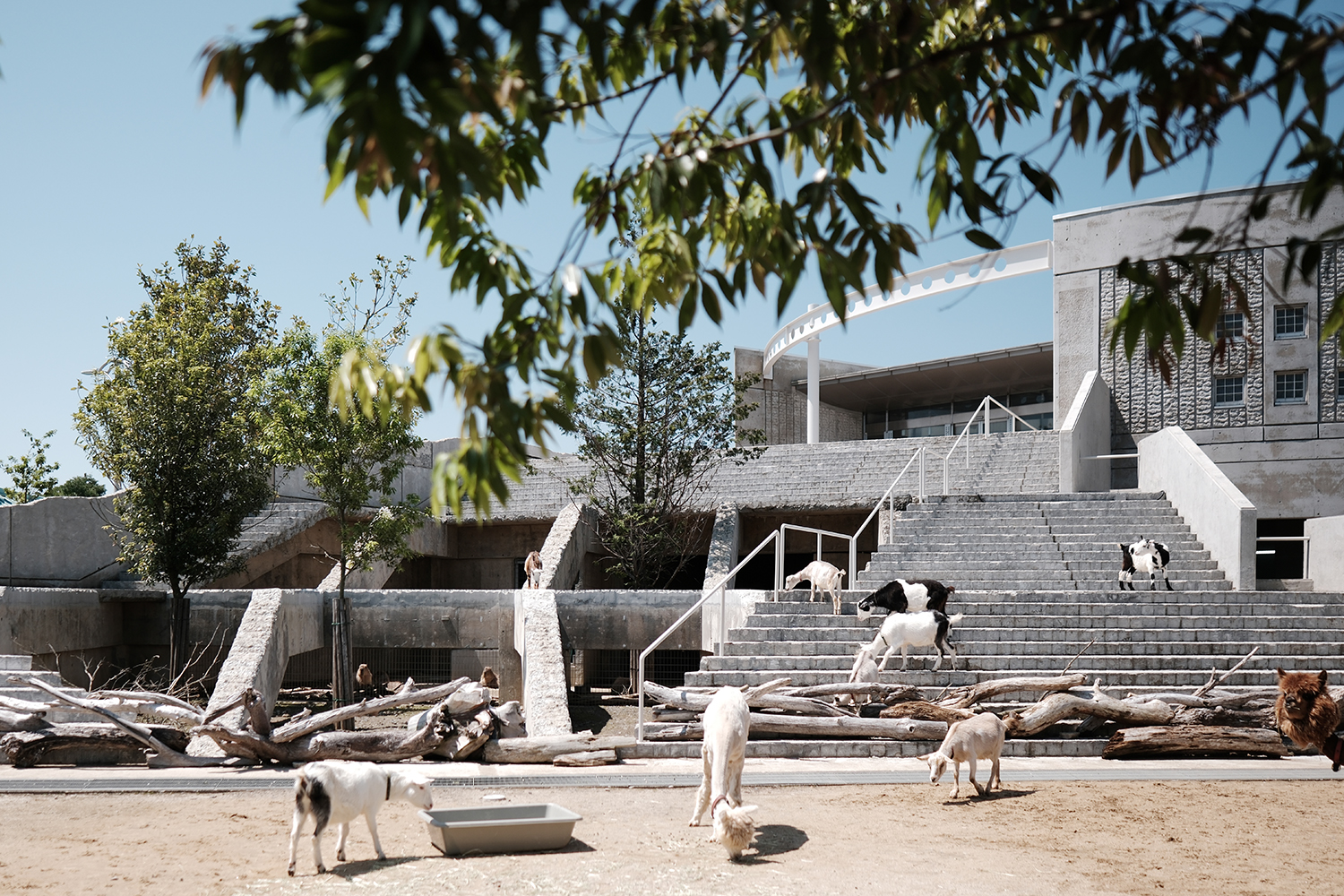
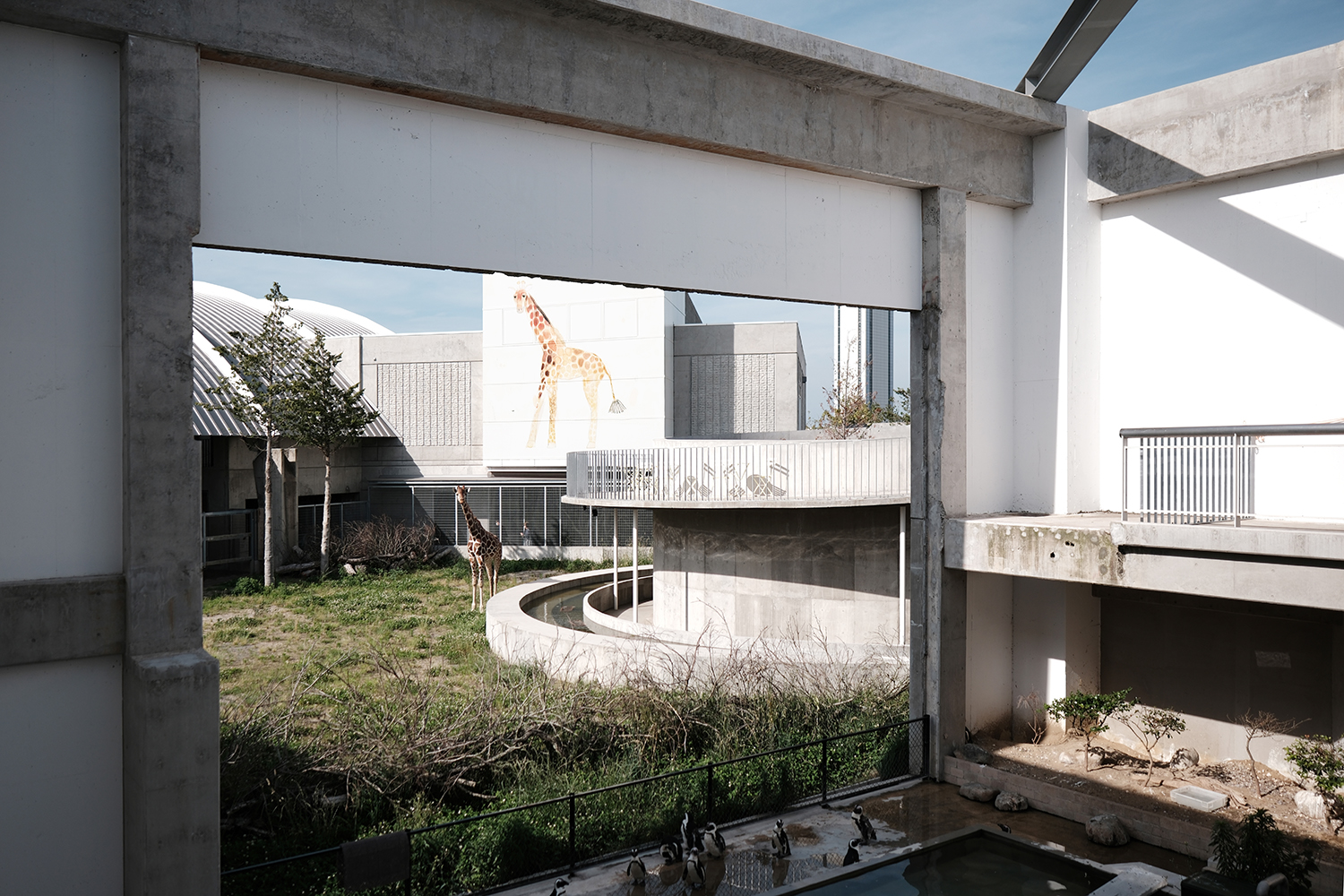
Lee: Besides the giraffes, what other species inhabit the site today? As you reconfigured the existing buildings, what considerations guided your planning for different animal habitats?
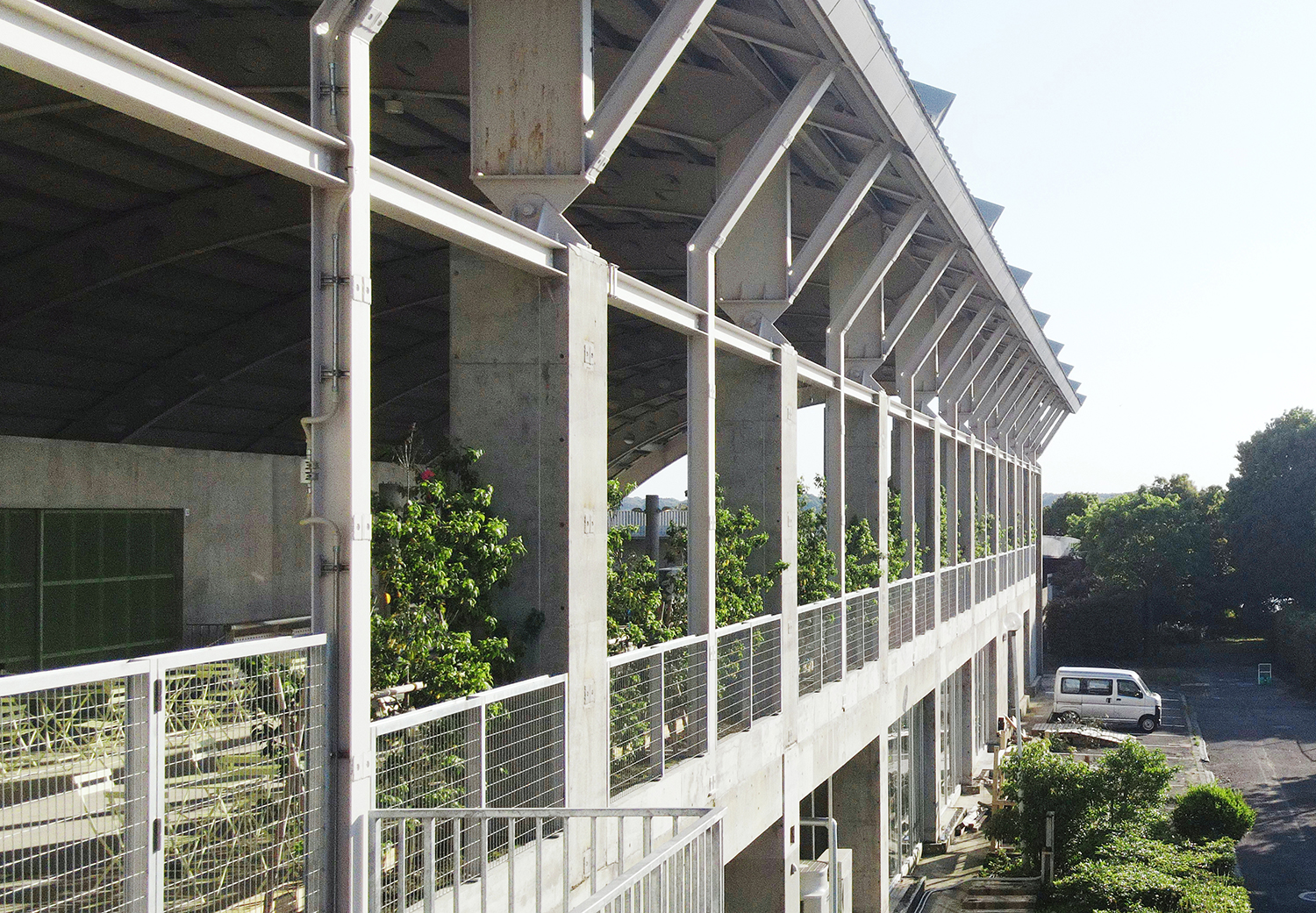
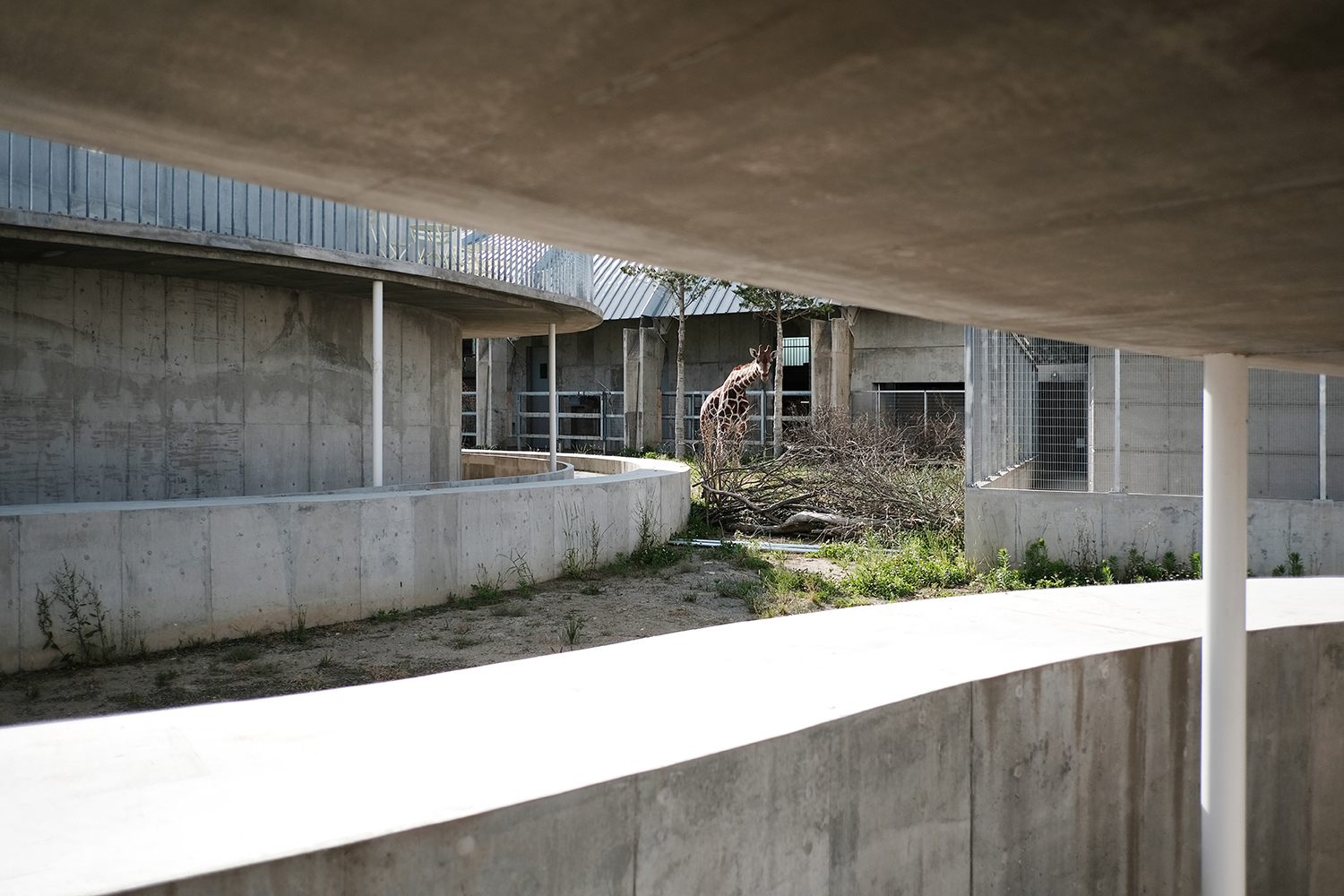
1 When Takahashi refers to ‘architecture from the inside’, he is critiquing architectural paradigms that justify themselves through closed, internal logics, such as the designer’s own conceptual framework and rational problem-solving structures. He describes this tendency as a form of ‘phenomenon-following realism’. In contrast, his notion of ‘architecture from the outside’ suggests that architecture should be shaped by forces external to human intention or reasoning, such as nature, non-human presences, and environmental conditions, rather than by internalised conceptual systems.
TAKAHASHI IPPEI OFFICE (Takahashi Ippei)
Izumi Fuko, Ueda Masato
Ibaraki, Japan
community centre, museum, zoo
21,756.86㎡
4,025.27㎡
4,968.29㎡
12.9m
18.5%
22.8%
concrete, steel
exposed concrete, paint
exposed concrete, ceramic tile, paint, etc.
Yasutaka Konishi (Konishi Structural Engineers)
Hiroshi Takayama (Kankyo Engineering)
Takanori Hirai (Kankyo Engineering)
Okabe
Apr. 2020 – May 2022
June 2022 – July 2024
Namegata City