




SPACE October 2026 (No. 707)
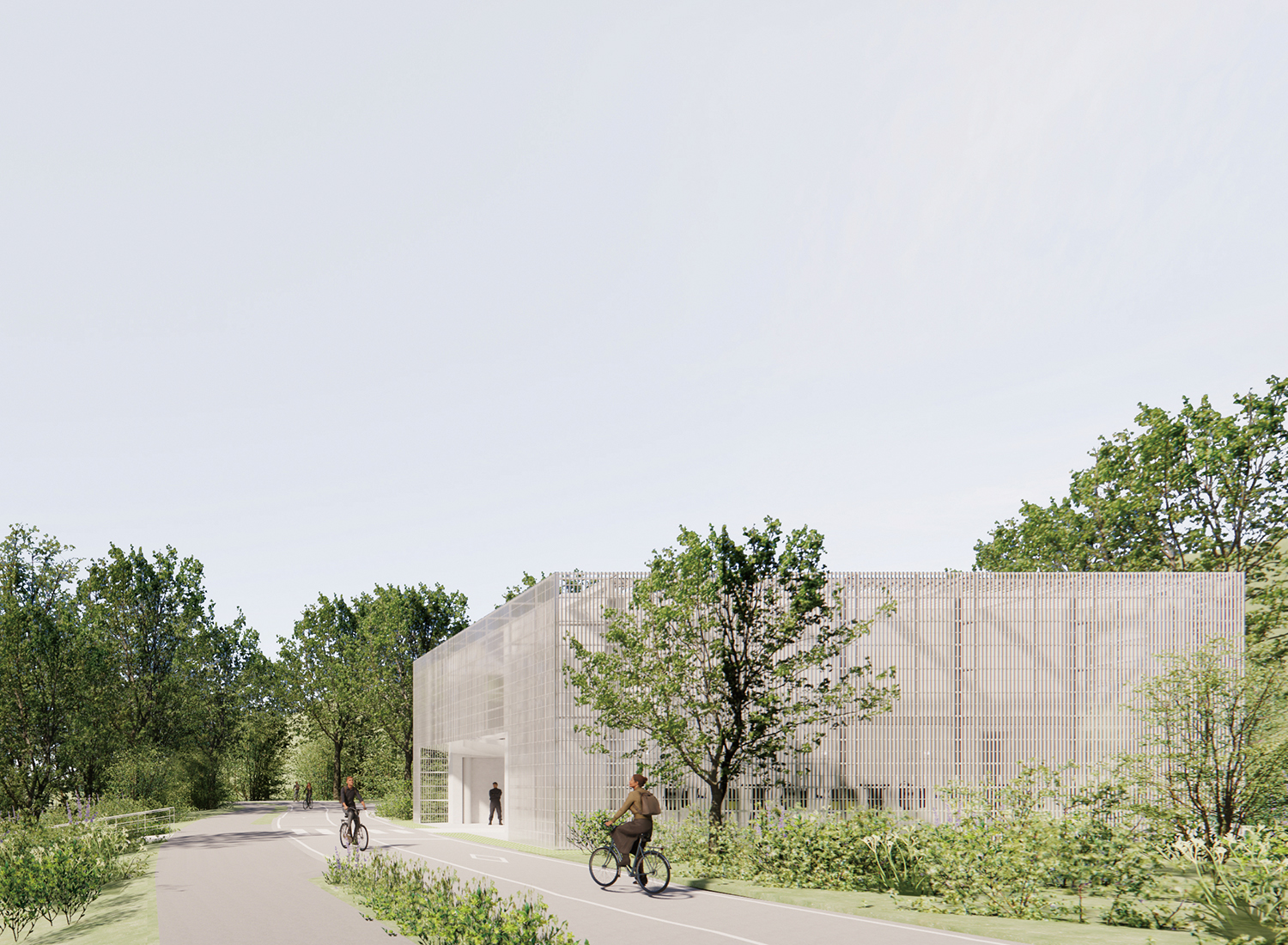
Winning proposal for the Design Competition for the Hangang Police Unit Nanji Center Relocation and New Construction ©soowasun architects
On Aug. 26, the Seoul Metropolitan Government selected, ‘Part of a Landscape, a Signal for Dispatch’ by soowasun architects (Principal, Yoo Seungki) as the winning design for the Hangang Police Unit Nanji Center relocation and new construction design competition. The competition was launched to respond to policing demand on the western side of the Hangang River by relocating the Mangwon Center in Mangwon Hangang Park to Nanji Hangang Park. Yoo Seungki noted that, unlike most Hangang Police Unit sites, which are broadly open to the riverside, the Nanji Center site is surrounded by dense vegetation. He explained, ‘We wanted to create architecture that recedes into the landscape as part of its everyday setting, yet becomes clearly present when a dispatch is required’.
As a floating facility on the waterfront, the building was planned with a nearly square floor plan to accommodate water-level fluctuations and ensure buoyant stability without bias toward a particular direction. Inside, waiting and maintenance, as well as dispatch and return movements, are organised into four distinct spatial zones to prevent circulation conflicts. The level difference between the central straight staircase and the mooring area is minimised to shorten emergency dispatch times. The building envelope combines metal T-bar grating that reflects and mirrors the surrounding vegetation with glass and white-toned interior finishes. Together, these materials change shade over time, enabling the facility to blend into its landscape under normal conditions. In an emergency, however, sensor-activated lighting at the dedicated dispatch entrance sends red light across the entire building, visually signaling an active deployment to users of the adjacent bicycle path. The design thus responds to two contrasting conditions: rest and standby in everyday use, and rapid dispatch in an emergency. The jury praised its clear integration of structure, programme, and circulation, selecting the project unanimously. Construction is scheduled to begin in April 2027, with completion expected in December of the same year.
