




SPACE October 2026 (No. 707)
On Sep. 5, the 16th Gwangju Biennale opened. Singaporean visual artist and curator Ho Tzu Nyen, who this year serves as Artistic Director, has long explored the diversity of Asian cultures. The biennale takes its theme from the final line of a poem by Rainer Maria Rilke. In the poem, this line, ‘You must change your life,’ was spoken after narrator confronts a broken ancient sculpture and suddenly finds their way of seeing overturned. Ho Tzu Nyen suggested that a demand without an action plan or specific instructions can lead us toward deeper reflection.
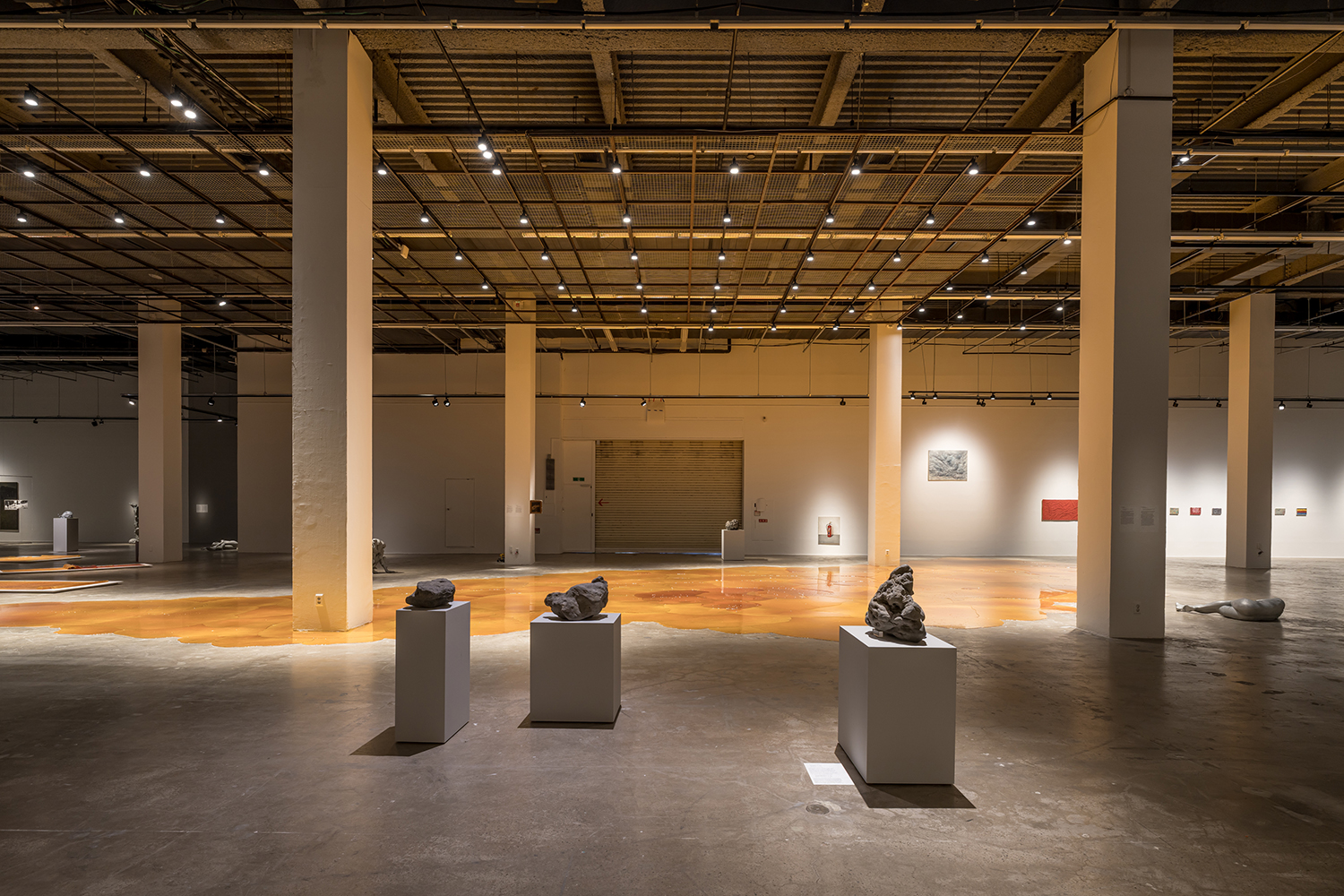
Installation view of ‘Molecules and Me’ (Gallery 1), the 16th Gwangju Biennale ‘You Must Change Your Life’ / Image courtesy of Gwangju Biennale
Exploring this theme, the biennale examines changes in the world at different scales and from different perspectives. Spanning five galleries, the exhibition unfolds sequentially through the subthemes ‘Molecules and Me’, ‘Bodies and Bonds’, ‘Landscapes and Learning’, ‘Cosmos and Change’, ‘Air and Articulations’. Behind this thematic narrative, which expands from molecules through the body and community to the cosmos, another theme, time, coexists. To highlight the temporality of change, the exhibition introduces Jeju volcanic rocks to signal the accumulation of both explosive and glacial speeds of change as a key ‘participant’. This homogeneous material contains different scales of time through a prolonged process: it is formed through geological pressure accumulated over thousands of years, released in an eruption lasting mere seconds, and followed by a process of cooling and transformation.
Even before its opening, this year’s biennale already drew attention in different layers. In terms of scale, the number of artists was reduced to 43 artists and teams. It is the smallest figure in its history. By presenting diverse works by selected artists, the exhibition could be freed from the conventional obsession of a biennale, bringing together as many artists and works as possible. Moreover, the exhibition was also concentrated entirely within a single venue, Gwangju Biennale Exhibition Hall, creating a more immersive experience. This decision, which allows visitors more time and space to engage with individual works, seems to have been successful one. Detailed captions and a comprehensive guidebook further provide substantial information on each artist. Indeed, presenting multiple works by individual artists allows visitors to observe different changes in their oeuvres including changes in time, message and perspective. Another sophisticated curatorial strategy was to vary circulation routes and lighting from gallery to gallery in response to the characteristics of different media, including painting, video, and sound. Transparent glass partitions further open visual connectivity between works, to create the third relationship. Despite these efforts, however, a fundamental question still remains unresolved. It is unclear how the exhibition’s overarching imperative, ‘You must change your life’, resonates with the individual works, or what kind of practical message that can be derived from it. This is the case in which literature consumed as a slogan, without developing into a deeper artistic or philosophical inquiry, exposing the limitations of the exhibition’s curatorial framework.
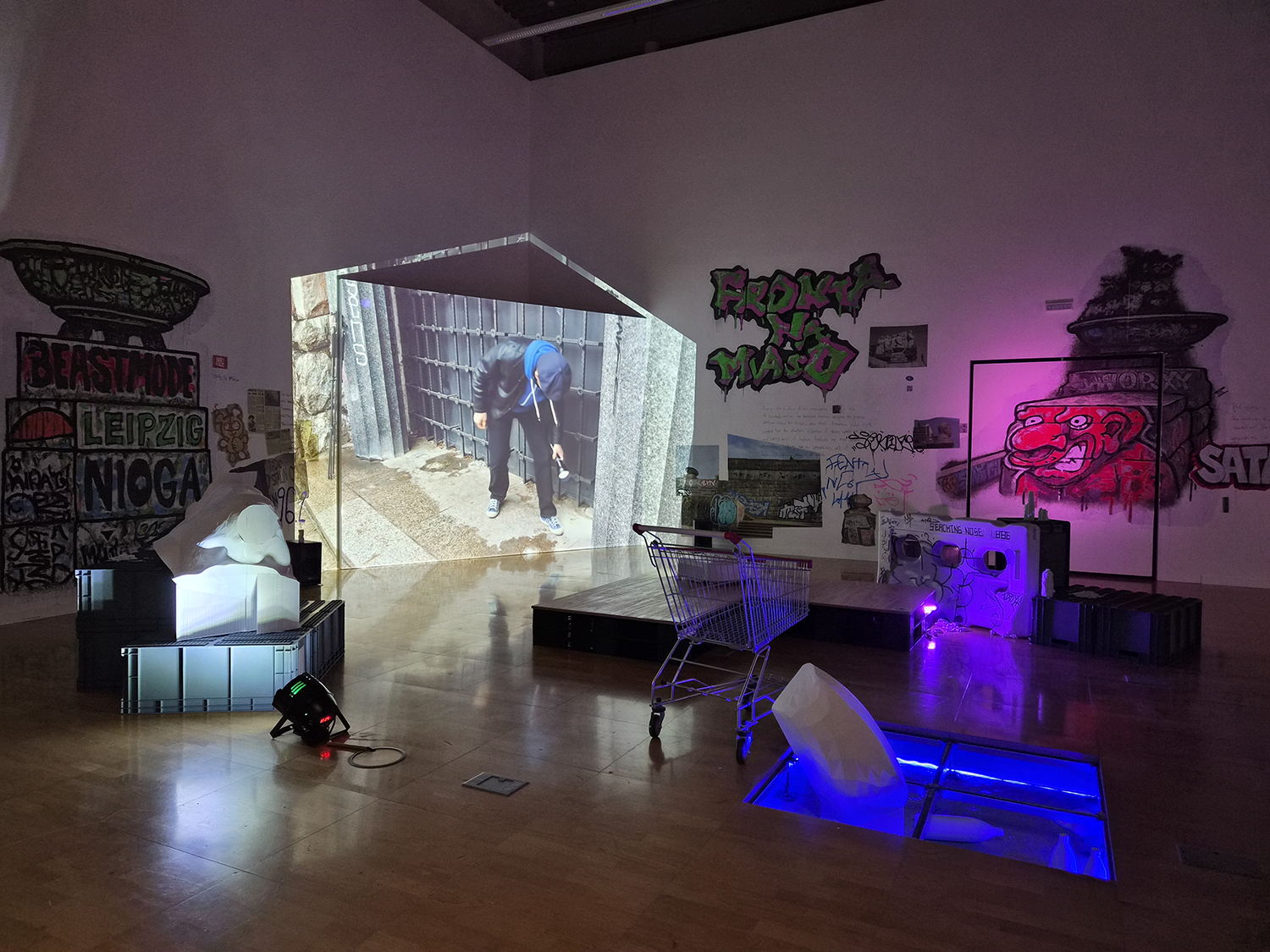
Installation view of Ruan Bai-Yuan’s Searching for the Nose Beneath ‘Fronta na Maso’ (2026), at the Taiwan Pavilion ‘Instant Dungeon: Gray Zone’ ©Bang Yukyung
On the other side, Pavilion Project also became the subject of political controversy as well. As the Taiwan Pavilion was ultimately permitted to use the autonomous name ‘Taiwan Pavilion’, China, insisting on ‘One China’ principle, withdrew its pavilion from the biennale a day before the opening. Gwangju Biennale Foundation explained that the unexpected issue arose from administrative procedures rather than any political position. Nevertheless, it is regrettable that such controversy arose in Gwangju, the birthplace of Korean democracy. It is equally unfortunate that the Taiwan Pavilion itself has received less attention. Under the theme ‘Instance Dungeon: Grey Zone’, the exhibition successfully examines the political, social, and cultural conflicts, tensions, and dynamics around Taiwan’s liminal position, however the resonance and depth of the exhibition have been overshadowed by the dispute.

0