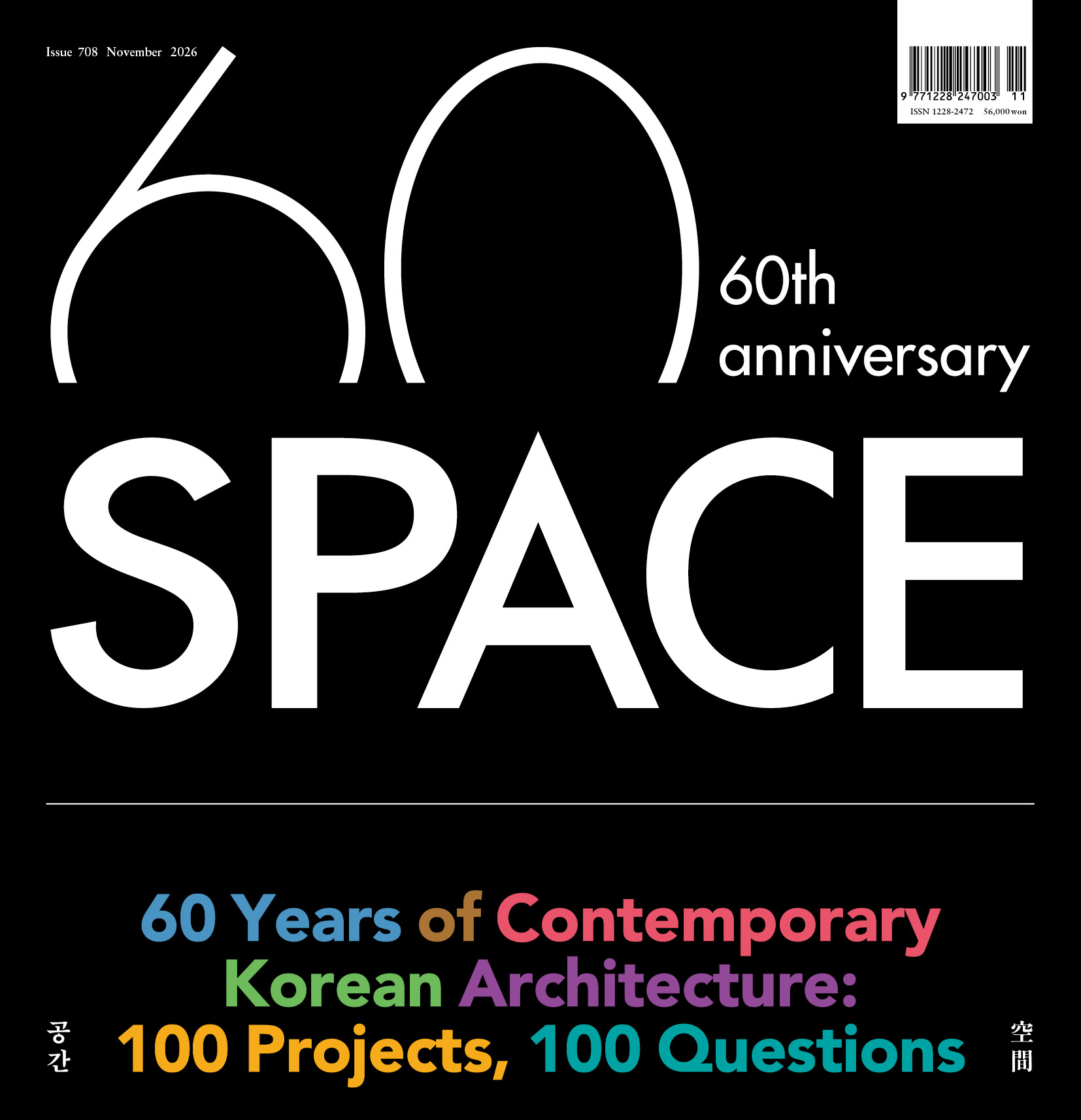

SPACE November 2026 (No. 708)
Ahead of the opening of new arts and cultural facilities in Hong Kong’s West Kowloon Cultural District (WestK) in 2027, M+ has announced its 2027 exhibition and moving image programmes, along with the full launch of M+ Academy. Since opening in 2021, M+ has expanded its international collaborations over the past five years through partnerships with museums in Asia and beyond. Marking its fifth anniversary this year, M+ is also presenting ‘Herzog & de Meuron: In Focus’, an exhibition which opened in September and showcases works from a major second donation by Herzog & de Meuron, the architecture firm that designed M+.
The special exhibition ‘Landmarks: Architecture in Asia for the 21st Century’, to be on view in the M+ West Gallery from June to Nov. 2027, is the first exhibition to showcase twenty-first century architecture across Asia. It examines fifty projects from seventeen countries in Asia, spanning the early 2000s to the present, through four themes: ‘Defining Identities’, ‘Embracing Nature’, ‘Building Communities’, and ‘Regenerating Heritage’. Alongside landmark buildings in major cities, the exhibition considers socially engaged architecture in outlying areas, expanding the idea of the ‘landmark’ beyond a symbol of an institution or city to encompass architecture that forms relationships with the natural environment, communities, and memory.
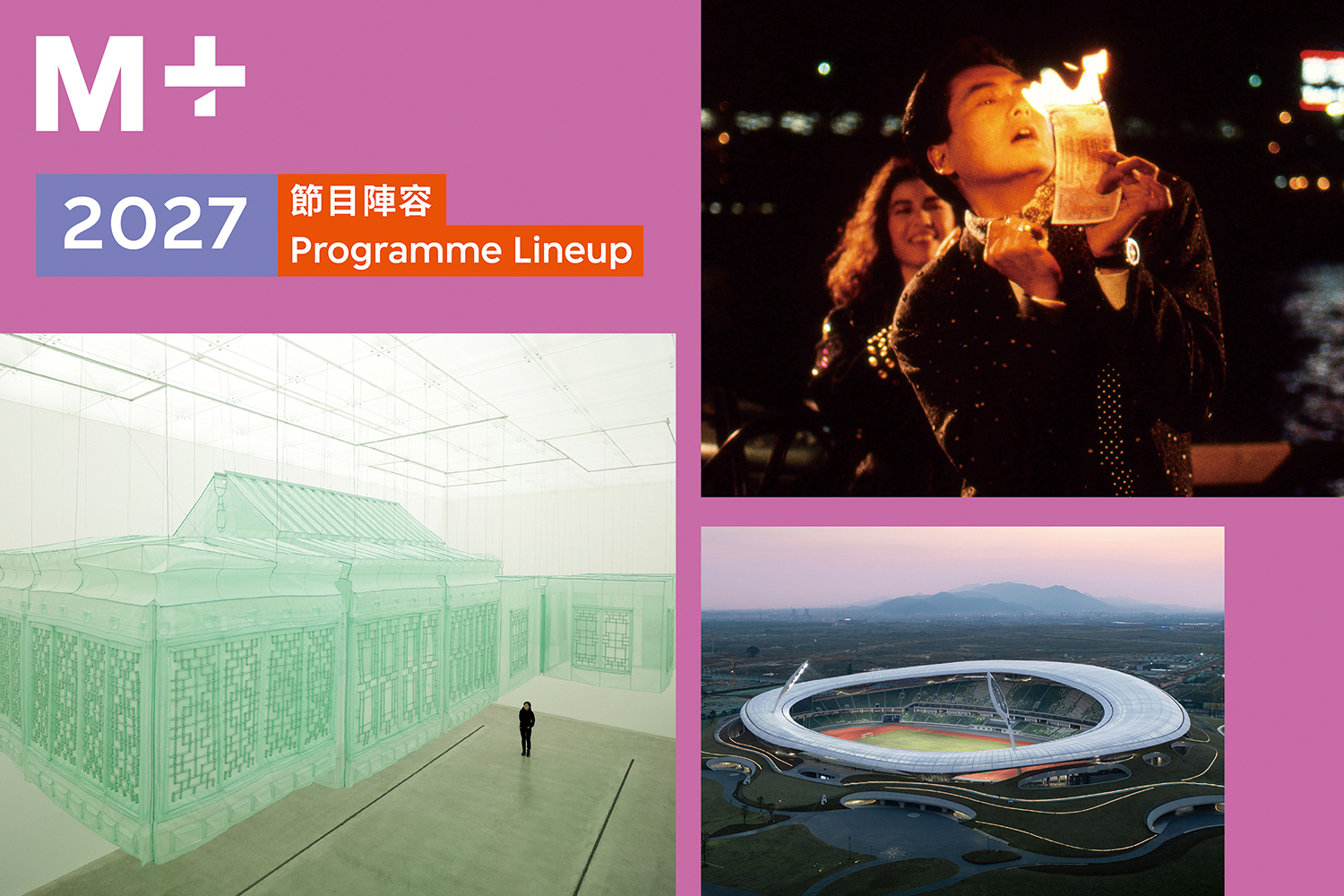
M+’s 2027 programme lineup. Image courtesy of M+
Also opening in June 2027, ‘Geoffrey Bawa: Architecture for the Senses’ is jointly organised by the Vitra Design Museum and M+, in collaboration with the Geoffrey Bawa Trust and the Wüstenrot Foundation. First presented at the Vitra Design Museum in Sep. 2026, the exhibition will travel to Hong Kong. It looks back on fifty years of work by Geoffrey Bawa, a leading architect in Sri Lanka’s post-independence era, who responded to the context and topography of each site while combining modernism with Sri Lanka’s architectural history. Through drawings, models, furniture, archival footage, and photographs, the exhibition explores the relationship between architecture, identity, and political discourse, as well as Bawa’s collaborative work, social projects, and approach to ecology.
Facing Victoria Harbour, the M+ Facade, approximately 66 metres high and 110 metres wide, was conceived from the outset as another exhibition space facing the city and has become a stage for the museum’s moving image programmes. In 2027, the programme will begin with a new work by Sarah Sze, followed over the seasons by M+’s sixth co-commission with Art Basel Hong Kong and works by Fruit Chan and Theo Triantafyllidis. Selected works from the fifteen existing M+ Facade commissions will also be presented at Centre Pompidou Francilien in Massy, near Paris, which is scheduled to open in 2027.
Launching in autumn 2026, M+ Academy is a programme through which M+ shares its accumulated operational experience and professional expertise with the arts and cultural sector across Asia. Aimed at established and emerging arts and cultural management professionals in Asia, the Academy comprises three tracks – Leaders, Rising, and Bespoke – with the first Leaders track beginning in Nov. 2026 and the Rising track in May 2027. It is an Asia-focused, practice-based programme responding to the demand for professional training within the region’s rapidly expanding museum ecosystem.
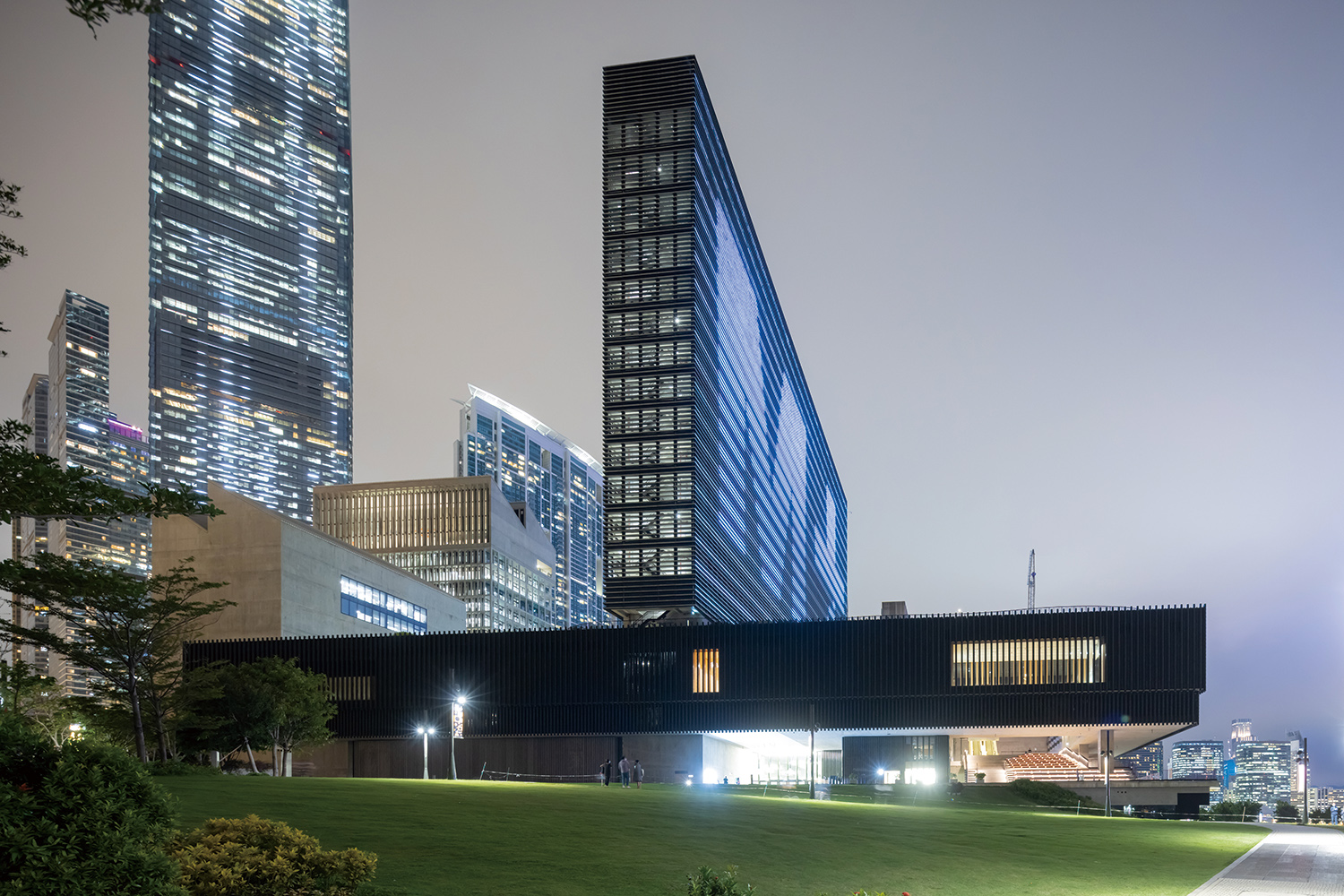
M+ Facade. Image courtesy of Herzog & de Meuron / ©Iwan Baan
The name M+ grew out of the idea of creating a twenty-first-century institution that would be more than a twentieth-century museum (covered in SPACE No. 650). At the time, the ‘plus (+)’ signified bringing different fields – including visual art, design and architecture, and moving image – together within a single institution. Five years after its opening, the scope of that ‘more’ is taking on increasingly concrete form. Exhibitions are created with other institutions and travel between them; the museum’s façade becomes an exhibition space facing the city; and the knowledge accumulated by the institution is shared, in turn, with arts and cultural professionals across Asia. In this way, the name ‘M+’ is taking on tangible form not only in the genres the museum encompasses, but also in the ways it operates and builds relationships.