
SPACE July 2026 (No. 704)
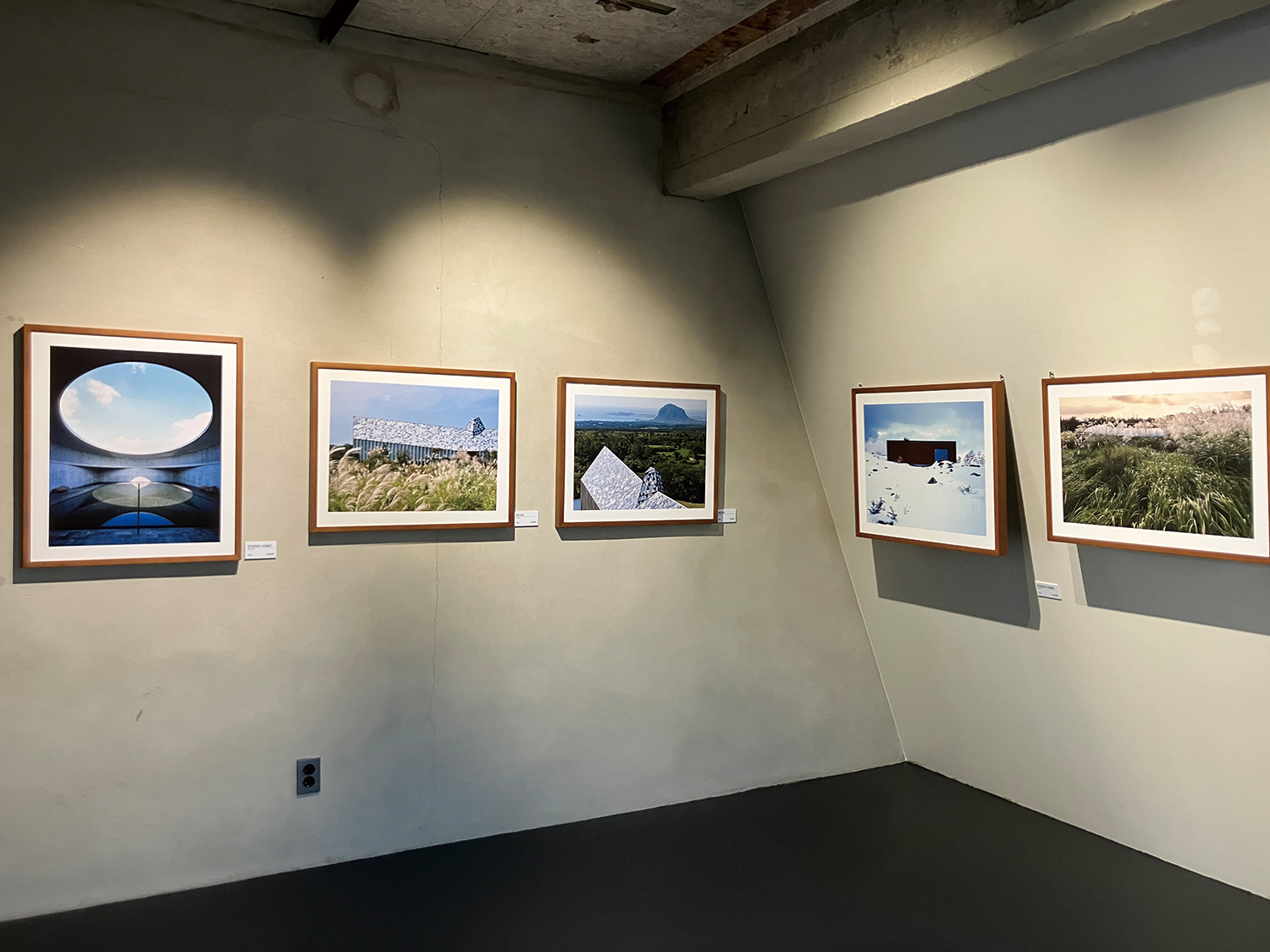
Exhibition view of ‘Architecture as Landscape’ in the 2F room ©Lee Sowoon
The solo exhibition ‘Architecture as Landscape’ by architectural photographer Kim Yongkwan has been on exhibition at JUNGEUM SPACE since the May 29. While architecture is often understood as an art form inherently tied to a specific place, most people encounter architecture through photographs. In some cases, a carefully framed image can convey a richer narrative than the experience of the physical building itself. From this perspective, the exhibition regards architectural photography not as a supplementary record of a built object, but as an independent act capable of generating new meanings.
Kim Yongkwan describes his approach to photography as ‘architecture as landscape’. Rather than documenting architecture as an isolated object, he understands it to inhabit layered landscapes where nature, the city, and time intersect. Photography critic Choi Bonglim has commented on this approach, stating that ‘the primary function of architectural photography is to appropriately document a commissioned building, but Kim Yongkwan never stops there.’ By viewing architecture as one component within a larger landscape and investigating the reciprocal relationship between the two, his photographs become acts of interpretation rather than mere documentation.
The exhibition presents major works that explore the interaction between architecture and landscape. Featured projects include Sodae/Miradouro at Sayuwon Park by Álvaro Siza, the Water Museum by Itami Jun, the Kosmos Resort by THE_SYSTEM LAB, and the Gapado Artist in Residence by ONE O ONE architects.
Alongside these commissioned architectural works, the exhibition also introduces independent projects undertaken without requests from architects or media organisations. These photographs capture office buildings in business districts, clusters of multi-family housing, and the demolition of informal hillside neighbourhoods, revealing the similarities and repetitions, contrasts and patterns embedded within the built environment. The exhibition runs until July 31.