
SPACE May 2026 (No. 702)
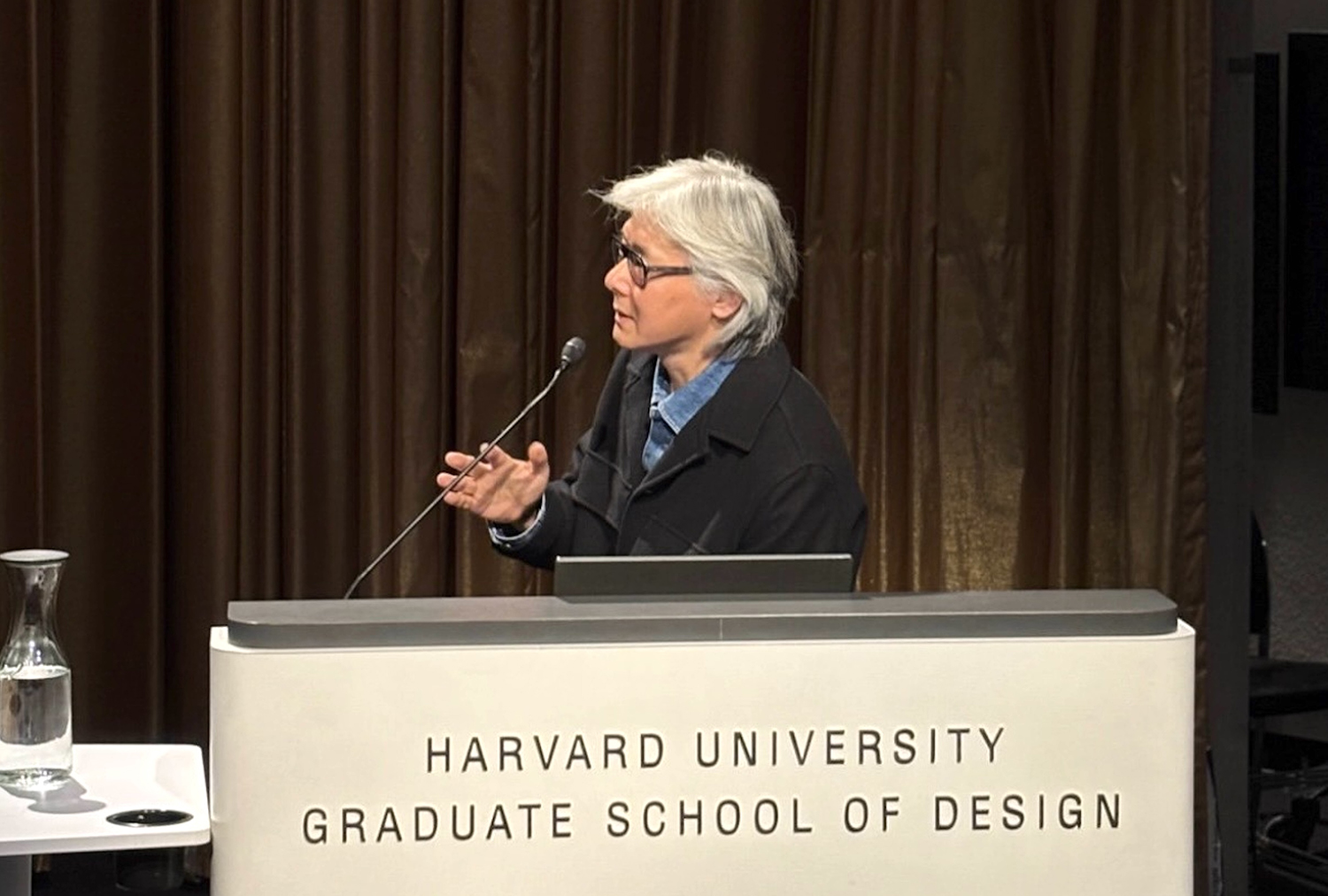
Suh Jaewon’s lecture. Image courtesy of Suh Jaewon
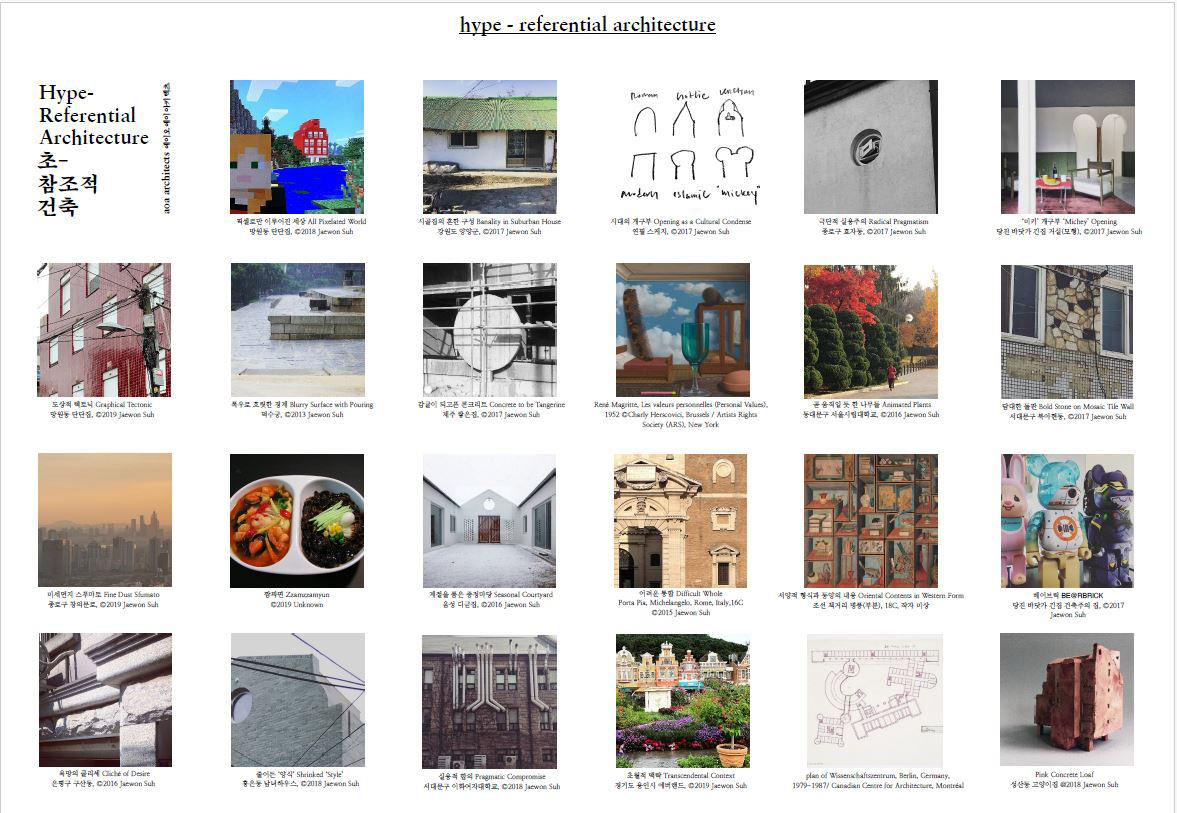
Suh Jawon’s lecture material. Image courtesy of Suh Jaewon
On Mar. 4, Suh Jaewon (Principal, aoa architects) gave his lecture titled ‘Rigor and Joke in Architecture, or Love and Resignation’ as a part of the ‘_positions’ lecture series at Harvard GSD. _positions is a series of talks and lectures aimed at revealing the positions and directions taken by various players, including architects, historians, and theorists through their modes of thinking and project record. Besides, Suh Jaewon, in Spring 2026 semester, Angela Pang (Principal, PangArchitect), Giovanna Borasi (Director, Canadian Centre for Architecture), Mohsen Mostafavi (Professor, Harvard University) and Homi Bhabha (Professor, Harvard University) were invited to this event.
Suh Jaewon opened his lecture with a sketch depicting everyday life during the Coronavirus Disease-19 pandemic (2020, covered in SPACE No. 631). In his drawing, the architect, dressed in a formal suit jacket but no pants, conducts an online class via Zoom from a home scattered with philosophy books, a desktop computer, a tablet, a cat, and even a child. This unfiltered image, exposing the ‘bare face’ of contemporary life rather than concealing its complexity and chaos, reflects his architectural stance and mode of thinking. Subsequently, he listed key historical events, such as Japanese colonial rule, the Korean War, the Miracle on the Hangang River, the Sinking of MV Sewol, and recent martial law crisis, to introduce various issues confronting Korean society, including cultural conflict and disconnection, a capital-first ideology, and the crisis of democracy. He also argued that grand ideologies such as revolution are no longer viable in the contemporary era, and that rather than carrying the full weight of the past toward a single convergent goal to deliver a ‘big punch’, it is more fitting to differentiate the past and throw ‘jabs’ at the complexities of the present. While the frustration may appear to be an inevitable condition of the present, Suh Jaewon mentioned other media, music, film, and art which engage with the complex reality in their own way, could possibly guide us in a direction. These media reinterpret reality, ironically, playfully, aesthetically, and satirically, and transform a chaotic condition into a meaningful paradigm. This, in turn, raises a question: how can architecture embrace reality?
At this point, Suh Jaewon suggested his own architectural methodology, ‘Hype-Referential Architecture’, as an alternative approach. Assembling more than seventy images throughout his presentation, they range widely: from Jjamjjamyeon, a hybrid dish catering to those who prioritise efficiency yet struggle with choice; to a ventilation duct projecting out from a window like a parasitic organism, recalling Parasyte; Porta Pia by Michelangelo, a symbol of Mannerist architecture; and works by Francis Bacon, who render brutal reality and existential dilemmas through distorted bodies. These associative images, spanning public consciousness shaped by contemporary complexity, everyday streetscapes, architectural discourse, and modes of representation, operate across multiple registers and establish his architectural theory. Within architectural history, references have typically been used as strategies of restoration, distortion, or quotation, and have often been categorised as fetishes or pastiches depending on whether they uphold historical depth or not. Here, ‘Hype (advertising or coolness)’-Referential Architecture is inherently humorous and offers a satirical view of reality, traversing these boundaries. One example is Chubby Cat House (2017), a multi-family housing project that satisfies both the demands for maximum FAR (floor area ratio) and its street-level visibility, while simultaneously imprinting the image of a cat’s face across its entire façade. By referencing the stray cats as a sign, the elevation both brings an immediate sense of familiarity and, at the same time, masking the underlying logic of real estate speculation, reading as a joke to the general public and as satire to those who understand the architectural system. In this sense, the ‘humour’ operates as both a gesture cast from the edge and a mechanism of endurance for the subject who produces it. Other works presented include Cascade House (2019, covered in SPACE No. 625), Seogyo Geunsaeng (2021, covered in SPACE No. 651), HOJI (2022, covered in SPACE No. 661). The lecture is available to view on the official YouTube channel of the Harvard GSD.