
SPACE May 2026 (No. 702)
©SUPA Song Schweitzer
Exhibition views of ‘12 Houses’ ©SUPA Song Schweitzer
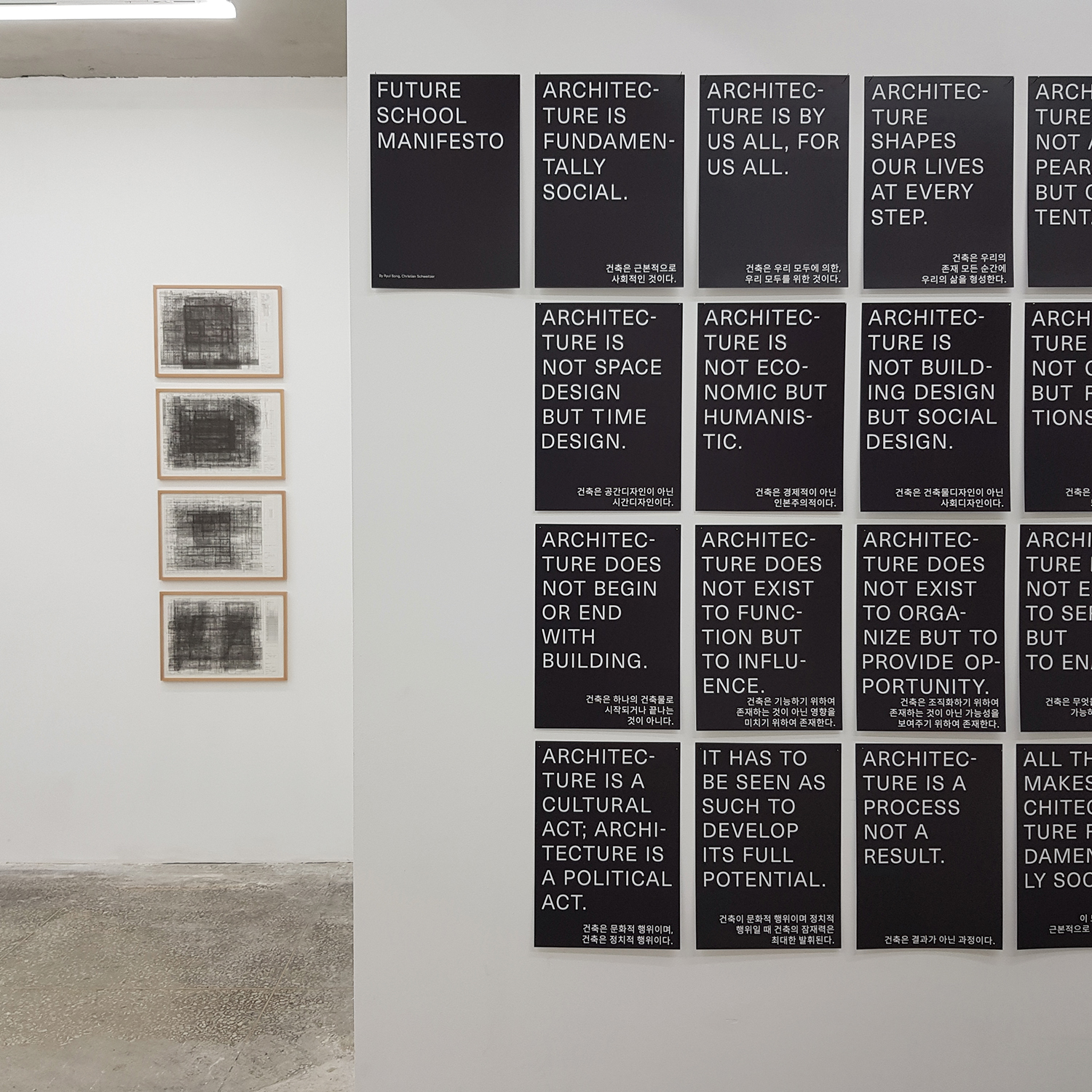
The exhibition ‘12 Houses’ by SUPA Song Schweitzer (Co-Principals, Ryul Song, Christian Schweitzer, hereafter SUPA) was held at SPACE TUM this Mar. 19 to 29. Upon entering the gallery, the first work that comes into view is the architectural manifesto mounted on the wall, Architecture is Fundamentally Social (2019). It contains 17 statements outlining SUPA’s position on architecture. According to these, architecture is made by all and for all; it is a cultural and political act, and it exists not merely to function but to exert influence. These ideas form the foundation of the works presented throughout the exhibition.
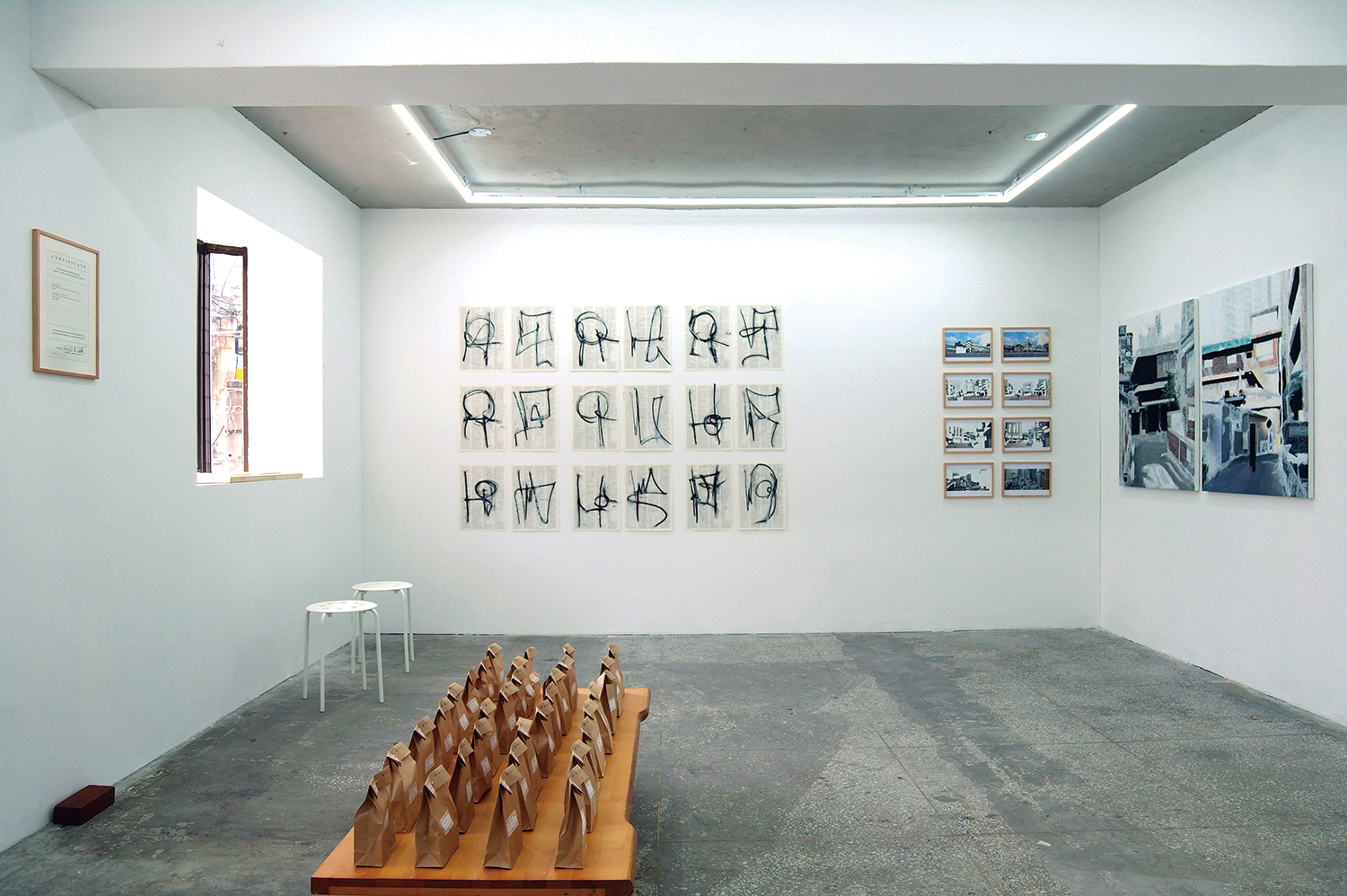
‘Architecture does not exist to organize but to provide opportunity’: this notion relates to the Erase series (2018 – 2019), in which buildings are erased from urban landscape photographs using correction tape and white out. Inspired by the overpainting works of Arnulf Rainer, who expressed the trauma, anxieties, fears located deep in his subconscious by impulsively overlaying oil crayon on photographs of his own face, SUPA’s work likewise foregrounds emotional and personal expression. At the same time, it points out that existing knowledge, education, and research are constructed within systems of power, proposing instead a new space of liberation.
Brick Building (2024) takes the form of a certificate for a brick structure, requesting that a ‘standard brick’ be placed ‘at a desired location’, implying that neither the form of the brick nor its placement is of primary importance. In contrast, the certificate itself, engraved with an edition number, is irreplaceable. Thus, the work suggests that ‘Architecture is not appearance but content’. Also on display was SUPTEXT, a publication SUPA has been issuing since 2018, corresponding to the idea that ‘architecture is a process not a result’. Beneath architectural drawings lie the labour of countless individuals, stacks of accumulating documents, technical constraints, materials, sleepless nights, and fear. SUPTEXT explores why we work, how we work, what sustains our work, and how outcomes in turn influence future processes and argues that a full understanding of these complexities should be central to how value is assessed.
The Naked Plan series (2015 ‒) focuses on the layered process of producing construction drawings. By overlapping around one hundred working drawings stripped down to only essential lines – revealing relationships of scale, geometry, density, time, and traces of thought – the work challenges prevailing tendencies that flatten subjectivity and processes, effort, and constraints.
In addition to the works mentioned above, the exhibition is composed of a total of twelve ‘pieces’. By titling them as 12 ‘houses’, SUPA positions the pieces themselves within the hierarchy of architecture. The exhibition enacts its own manifesto, expanding the boundaries of architecture beyond the physical, functional, and visible into the realms of discourse production, knowledge circulation, and institutional critique. Rather than lamenting the economic difficulties of building, it critiques an era in which architecture proliferates under the logic of capital. Much like how the far left has the force to shift not only the left but even the right incrementally leftward, this exhibition, too, leads us somewhere.