
SPACE May 2026 (No. 702)
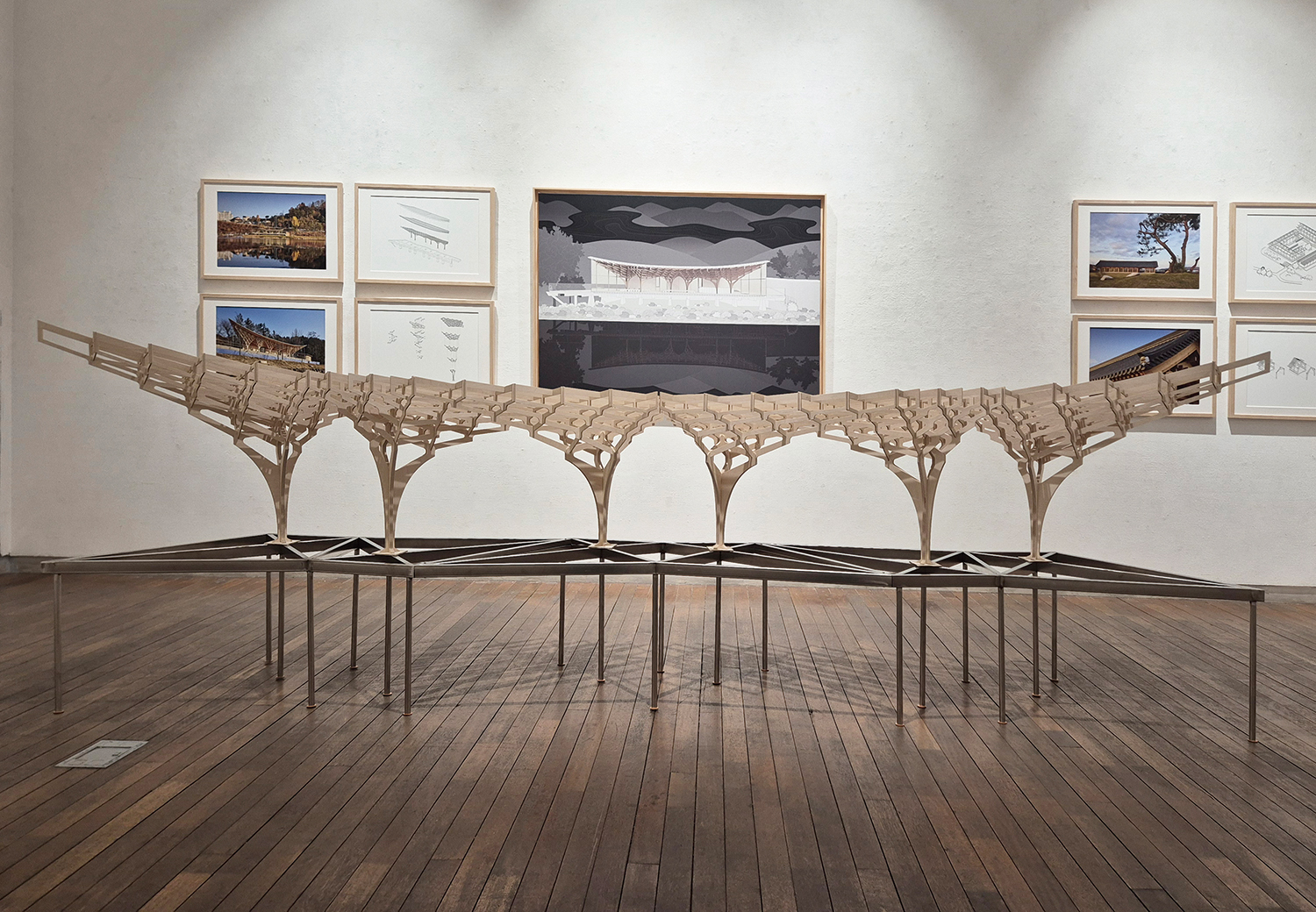
Exhibition view of ‘TIMBERCRAFT’, foreground: model of the Pavilion of Floating Lights ©Kim Jaekyung
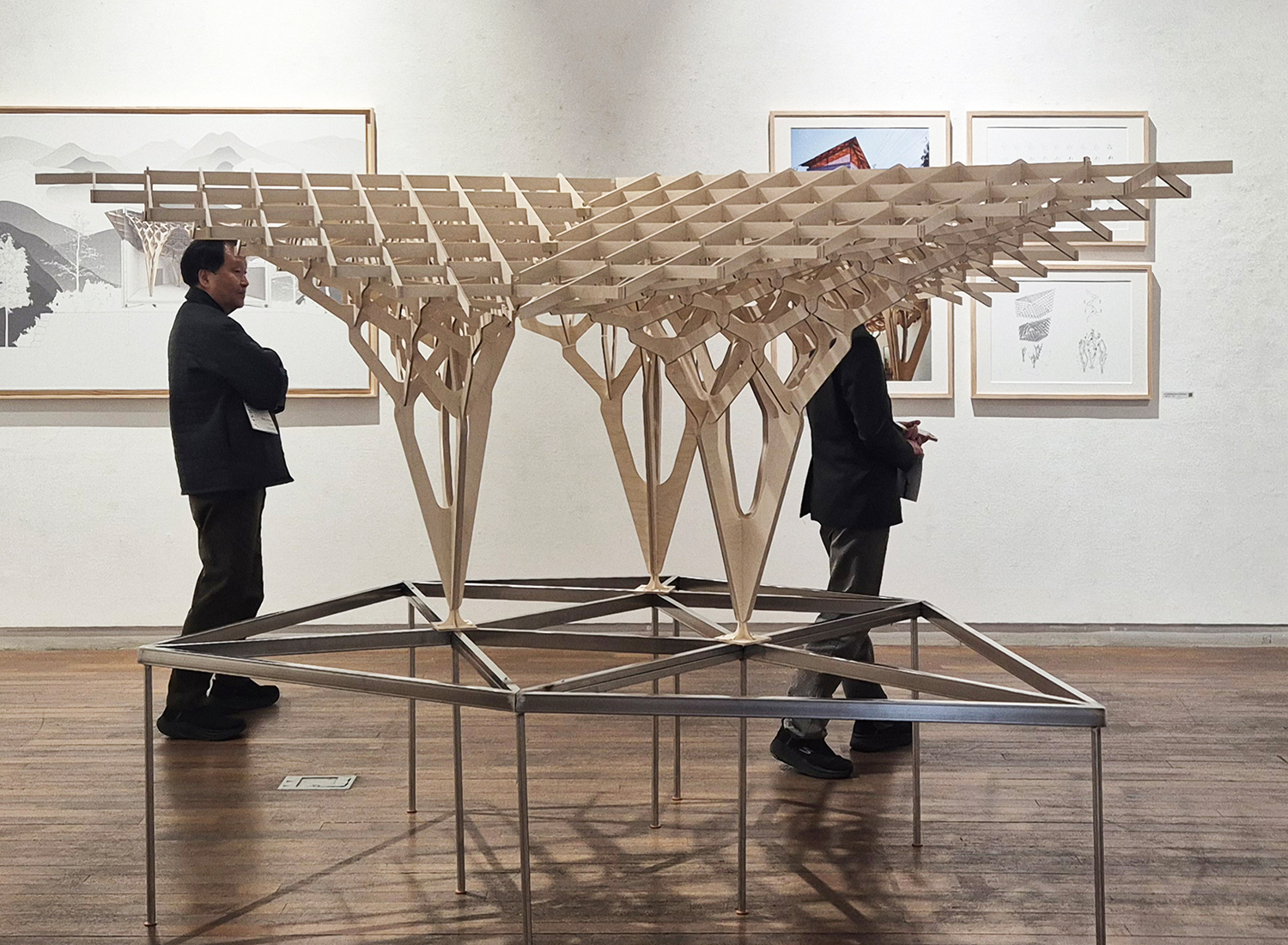 Model of the House of Three Trees ©Kim Jaekyung
From Apr. 1 to 13, the launch event for a publication, TIMBERCRAFT: Lost Tectonics from East Asia by Kim Jaekyung (Professor, Hanyang University) was held in TOPOHAUS, Seoul.
Since 2015, Kim Jaekyung has immersed himself in timber structure studies. Through this long-term inquiry, he has analysed and categorised traditional construction methods, including joinery techniques and assembly details. His research interest is not limited to domestic structures but extends to a number of international cases such as Chinese or Japanese landmarks. The comparative study of these three East Asian contexts has led him to a deeper disciplinary engagement with compositional principles and the complex meanings embedded within them. In order to share his research findings and spread the excellence of East Asian architecture, he has gradually compiled and reorganised his extensive archive into a publication. While the majority of precedents tend to focus on final outcomes, such as text and image, his approach centres on the practical dimensions of architecture, from the design process and structural framework to methods of assembly. The book, developed over the course of a decade, brings together a wide range of materials across nine projects, including as-built drawings and analytical essays. The accompanying exhibition, ‘TIMBERCRAFT’, is a concise showcase to present his intellectual interest and philosophy on structural logic and modern reinterpretation of East Asian timber structures.
Upon entering the exhibition space, visitors are greeted by images and analytical diagrams of six distinct temples from Korea (Buseok-sa and Geumsan-sa), Japan (Todai-ji and Horyu-ji), and China (Baoguo-si and Fogong-si). Selected images and drawings, also included in the publication, reveal the tectonic logic of these structures. In addition, the exhibition presents a selection of Kim’s own works, including House of Rejuvenation (2025, covered in SPACE, No. 695), Pavilion of Floating Lights (2022, covered in No. 662), and House of Three Trees (2019, covered in No. 620), alongside an Isotropic Tree model that demonstrates the potential for both horizontal and vertical expansion.
First, House of Three Trees is a project that contemporarily reconfigures the joinery principles and structural logic of East Asian timber architecture through parametric tools, while maintaining structural performance. In the timber structure system, the roof is supported by the timber joinery. Second, House for Rejuvenation is a contemporary hanok in which the beams have been omitted. It tests how two different timber constructions – the traditional joint method and gongpo (the bracket) – could create structural beauty. Meanwhile, the Pavilion of Floating Lights is an experimental work that actively incorporates new technologies, including digital fabrication, assembly manuals based on three-dimensional drawings, and the use of augmented reality (AR). As a homage to the six columns of the Chokseongnu Pavilion, the project operates on two levels: the reinterpretation of traditional architectural forms in a contemporary language, and the expansion of fabrication processes through current technologies.
Each project is presented three-dimensionally through photographs, diagrams, and models that directly convey the material properties of wood. The models were developed through careful consideration of structural aesthetics with the unnecessary ornamental elements removed. Furthermore, to draw a deeper connection to the original buildings, the models are fabricated by the same materials used in construction: birch plywood for House of Three Trees and Pavilion of Floating Lights, and glulam for the House for Rejuvenation. Through these works, the exhibition reactivates the lost tectonics of East Asian timber architecture within a contemporary architectural language.