
SPACE April 2026 (No. 701)
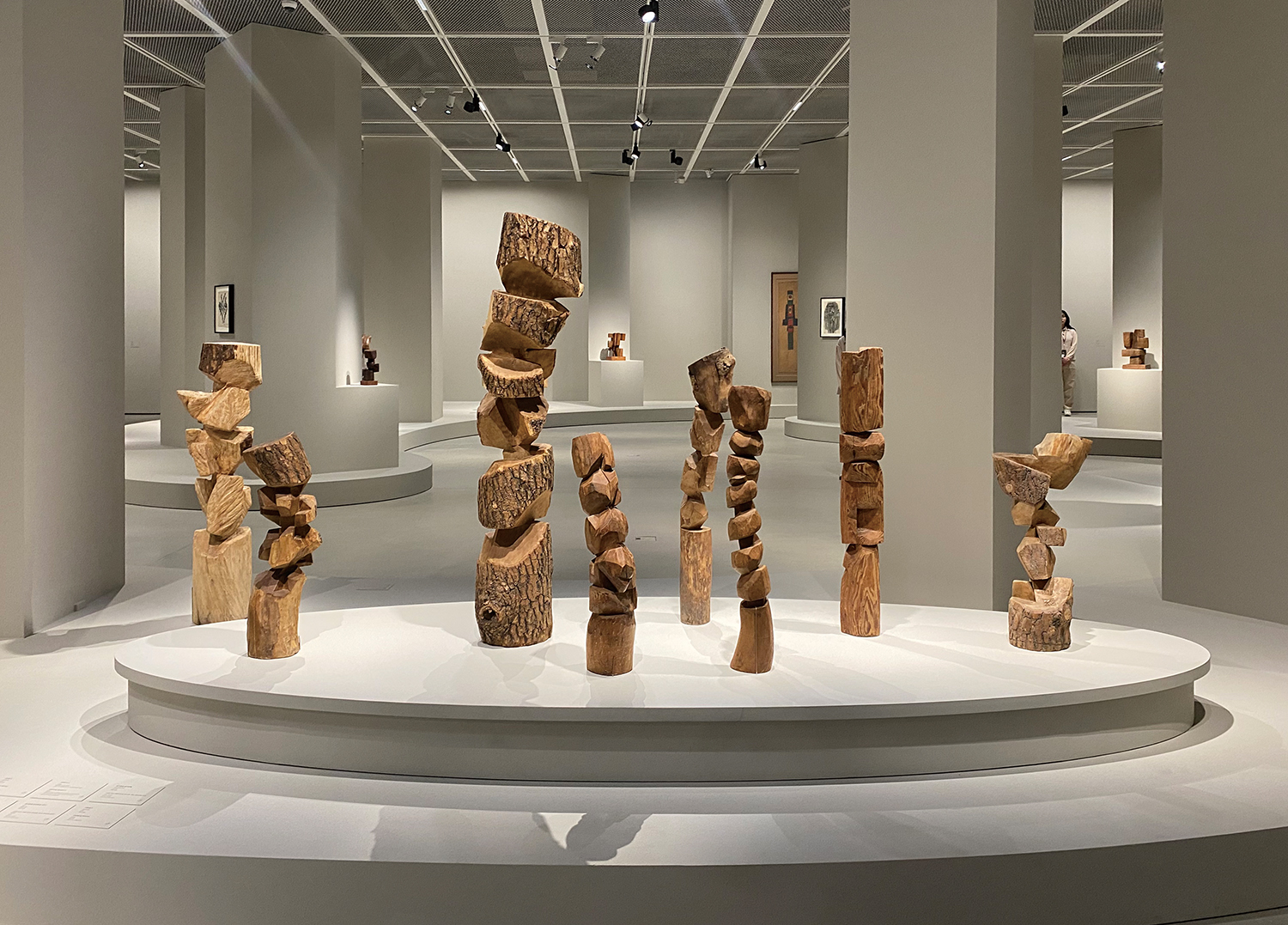
Exhibition view of ‘Kim Yun Shin: Two Be One’ ©Kim Hyerin
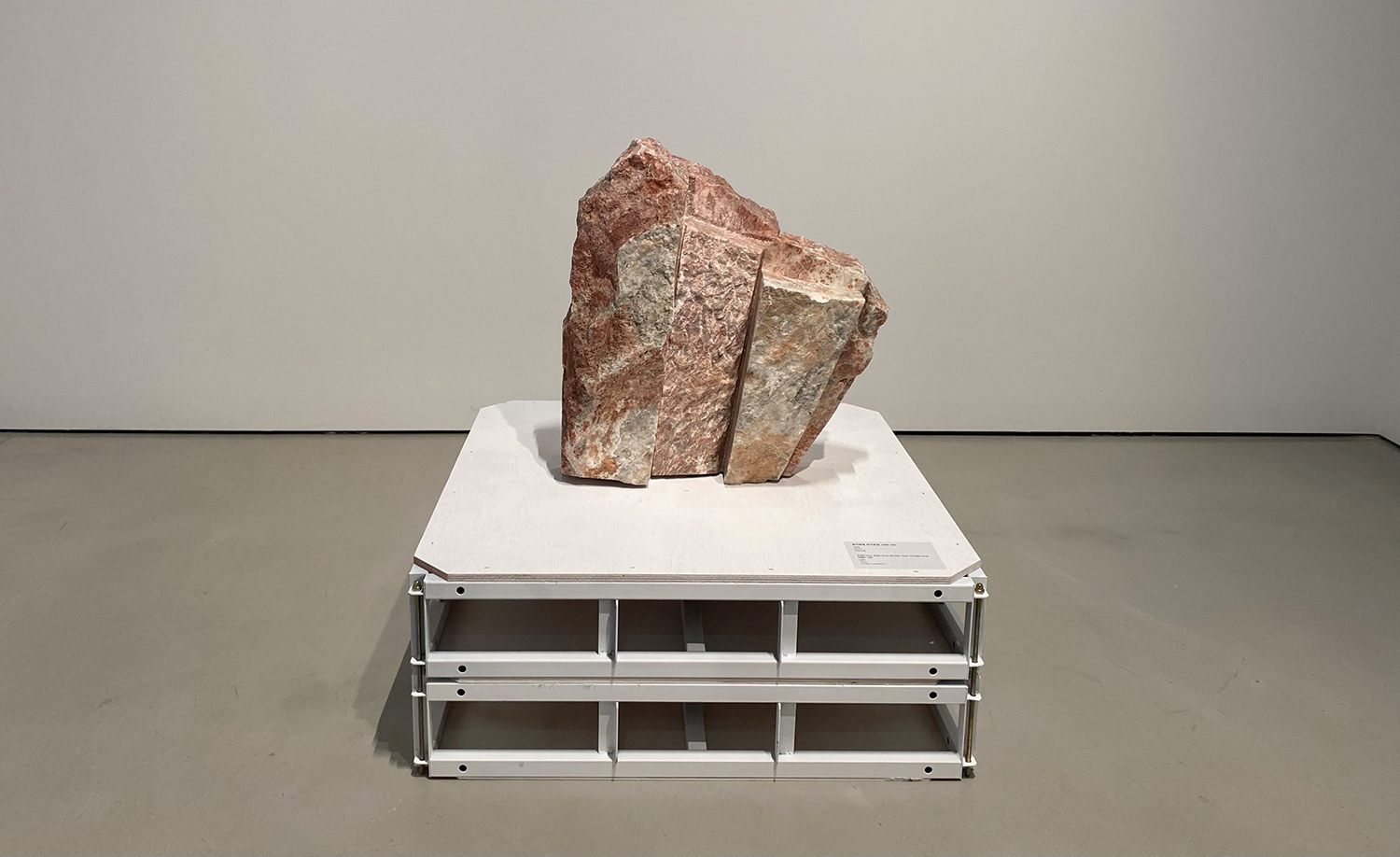
Installation view of Add Two Add One Divide Two Divide One 1989 -185 (1989) ©Kim Hyerin
On Mar. 17, the Hoam Museum of Art opened its retrospective, ‘Kim Yun Shin: Two Be One’, honoring the first-generation Korean female sculptor Kim Yun Shin (b. 1935). Kim is an artist who communicates with the world through natural media like wood and stone, having pioneered a singular sculptural methodology centred on the use of the chainsaw. This exhibition surveys the arc of her life and practice, presenting everything from her earliest extant prints and paintings from her 1960s student days in Paris to her definitive wood and stone sculptures.
The first-floor gallery traces the genesis of Kim’s aesthetic through her Stacking Wishes series and the early iterations of Add Two Add One Divide Two Divide One. In the early 1970s, inspired by the joinery of traditional hanok architecture, the artist began creating wood sculptures that could be assembled and disassembled. The Stacking Wishes series uses the verticality of structures reminiscent of stone pagodas to give form to the act of yearning. As the artist describes them, these sculptures are, in essence, ‘a single prayer’. From the late 1970s, Kim began using the philosophy of Add Two Add One Divide Two Divide One as a recurring title, establishing her unique formal universe. This concept posits that a work is born through a process where the artist and the object merge into one, subsequently dividing back into work and maker. While her early method involved notched logs refined with chisels and adzes, her practice reached a decisive turning point after her 1983 move to Argentina. To master the dense South American hardwoods, she adopted the chainsaw as her primary tool. After long periods of gazing at the wood, the artist begins sculpting with a chainsaw the moment an image emerges—foregoing any preliminary sketches. In this state of total unity where artist, tool, and timber interlock, she carves apertures into the logs to create space. For Kim, ‘to create space is art’, defining fine art specifically as ‘the art of space’. These sculptures render the raw vitality of nature palpable, leaving the marks of the chainsaw and the rugged texture of the wood exposed.
The second-floor gallery showcases stone sculpture – the other pillar of her practice – alongside woodworks that have evolved in diverse directions since the 2000s. During extended stays at quarries in Mexico and Brazil in 1989 and 2001, the artist produced a new Add Two Add One Divide Two Divide One series by machine-cutting and hand-hammering raw gemstones like onyx. This expanded her formal vocabulary, introducing a new variety of ‘expressions’ to her wooden works from the 1990s onward. In Kim’s wood sculptures from the early 2000s, one can discern colours and patterns influenced by the indigenous Mapuche people of Argentina. Later, during the Coronavirus Disease-19 pandemic, the artist began using colour more assertively, treating each wooden fragment as a canvas. These pandemic-era works are characterised by the use of salvaged wood – leftovers from previous works or scraps from nearby construction sites – capturing a period of resonance with nature and ‘conversations with the stars’. In the outdoor space on the second floor, visitors can encounter the recent work Tree Full of Songs 2013-16V1 (2025). This ‘painting-sculpture’ is an aluminum cast of a 2013 woodcarving, finished with acrylic paint—a technique Kim devised with her dream of future outdoor exhibitions in mind. Offering an intimate look at an artist who has shifted continuously in relation to her environment and nature, the exhibition runs through June 28.