
SPACE June 2026 (No. 703)
Design studio COMPANY describes itself as a detective agency. The design duo, composed of Korean designer Aamu Song and Finnish designer Johan Olin, has devoted the past 20 years to collaborating with local artisans from various countries, including Russia, Mexico, Japan, Peru, Pakistan, the U.S., India, and Korea. More specifically, their work, known as the Secret Project, can be understood as a process of discovery: they first encounter an intriguing object during their travels, investigate the artisan who made it, and then commission a new object. Since Apr. 3, piknic has presented this long journey in the form of an exhibition titled ‘COMPANY World Affair’.
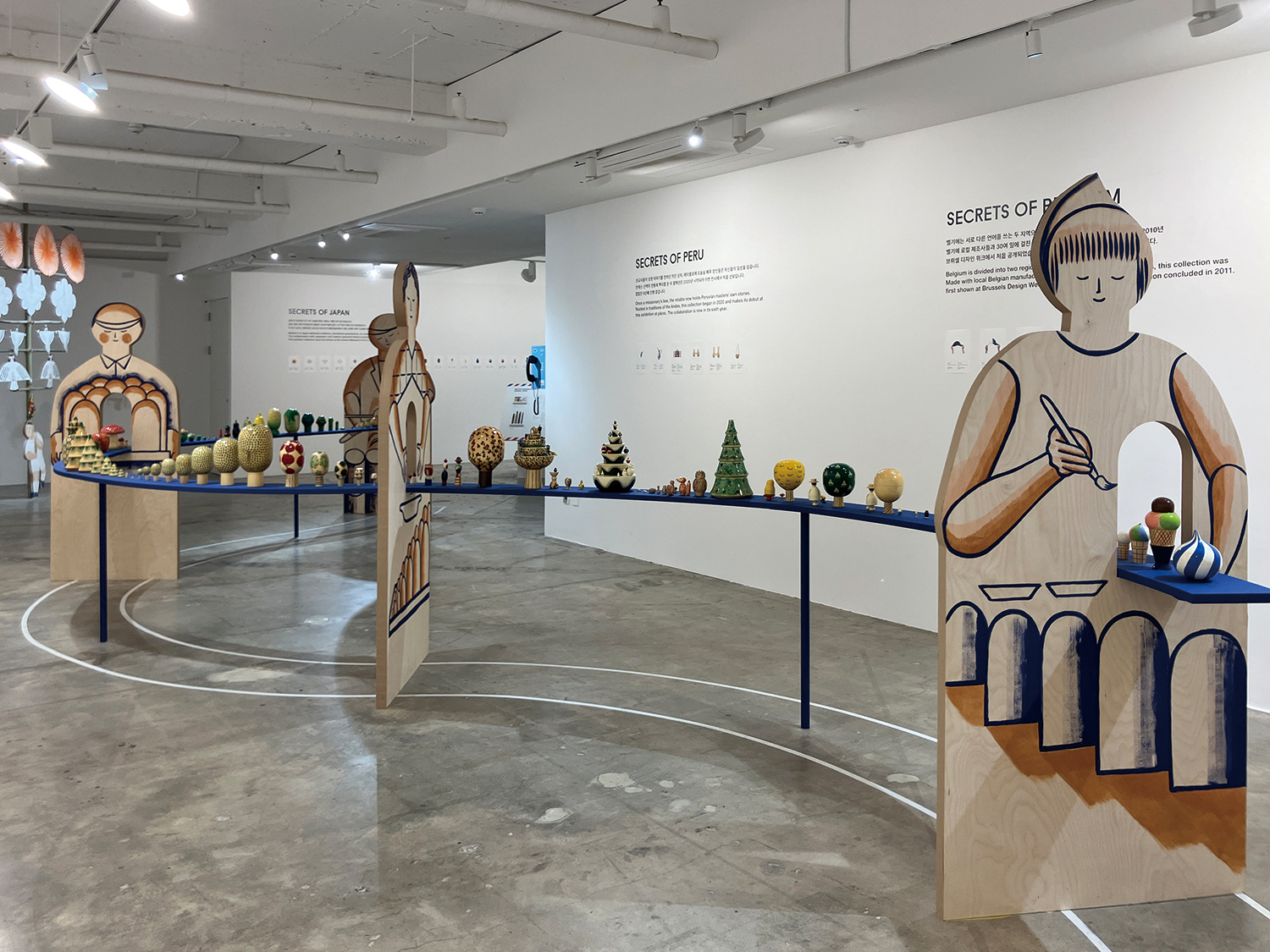
Exhibition view of ‘SECRETS OF RUSSIA’ on second floor ©Lee Sowoon
Products can be manufactured outside the logic of modernised mass production. Instead of seeking cost-efficient factories, their project, the Secret Project, begins by finding local artisans who have mastered regional materials and techniques. By spending a decent amount time with these artisans, the design duo were able to learn about the local culture and ways of life through the universal language, drawing. Small drawings scattered throughout the exhibition space are not merely production instructions, but proposals for collaboration. Their respect for vanishing local technologies and traditions is captured in these drawings. COMPANY’s design principle can be understood as adding their imagination onto long-standing ways of life. The approximately 270 Matryoshka dolls presented on the second floor of the exhibition space are a good example of this principle. In collaboration with Russian artisans, the design duo created non-traditional dolls in the shapes of cabbages, aubergines, whales, and ice cream. According to COMPANY, when the artisans first received the drawings, they felt compelled to carve the dolls into these unusual forms.
COMPANY’s products permeate our small yet deeply private inner world. The initial idea for Dance Shoes (2007), made in collaboration with a Finnish artisan, came from observing a child dancing on top of their parent’s feet. The moment in which two pairs of feet touched each other was directly transformed into an object. Another example is Candlestick. Initially, the designers were hesitant to make a non-functional object, but later adopted the form of a candlestick to give the object a functional meaning.
In this exhibition, new collaborative works with Korean artisans are introduced to the public for the first time. One of them is a moktak, a Buddhist wooden percussion instrument, shaped as a human figure wearing headphones. It was produced in collaboration with a three-generation artisan family from Yeongcheon. This work demonstrates COMPANY’s sense of humour, layered onto the sophistication of Buddhist craft traditions.
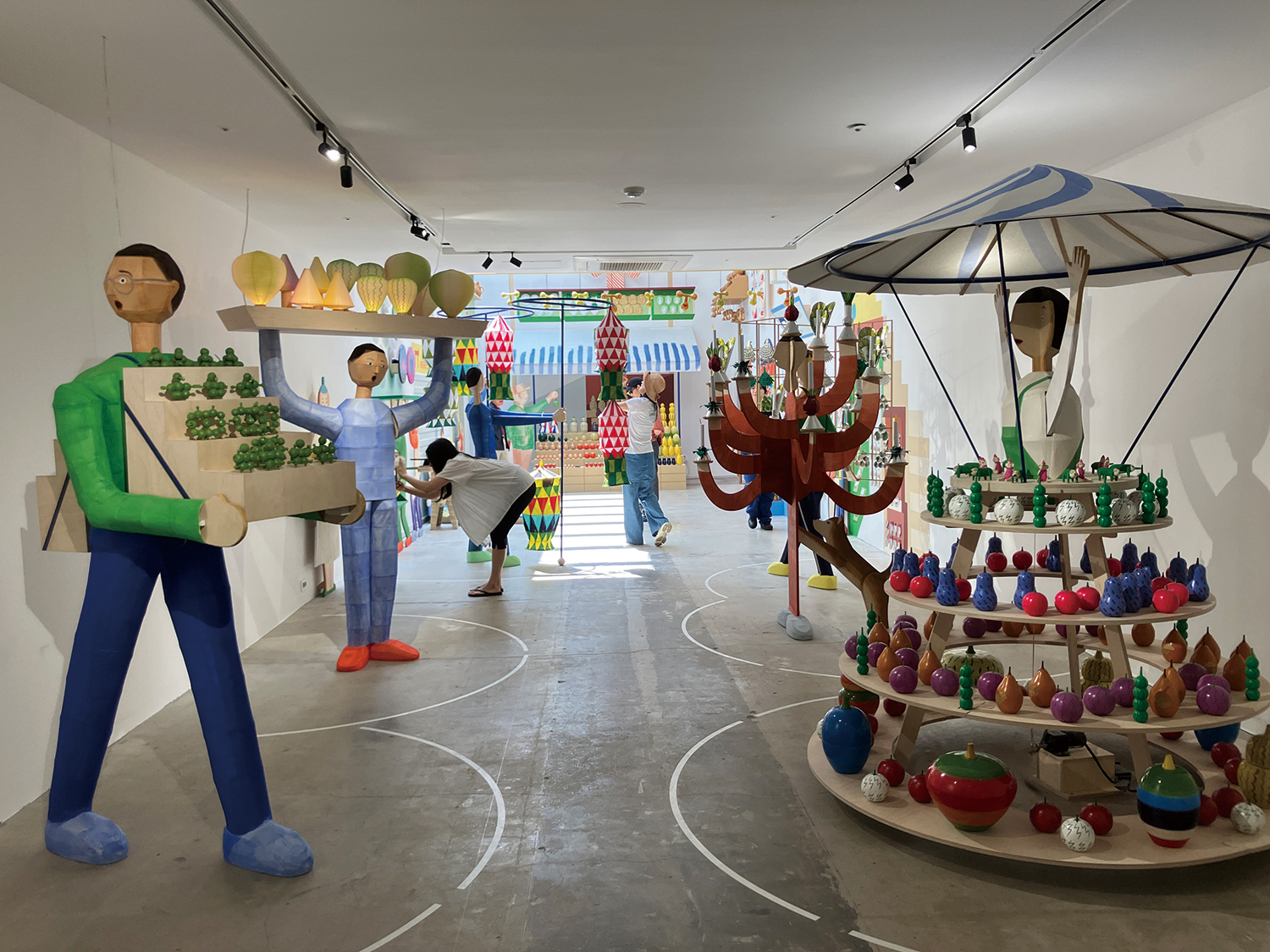
Exhibition view of ‘All The Shops In The World’ on third floor ©Lee Sowoon
A market evoking street stalls from different regions unfolds on the third floor. It draws into the exhibition space the process by which objects made in workshops meet people, are sold, and move into someone’s home. Seven sculptures in the form of vendors become plinths for COMPANY’s objects, which face visitors without acrylic barriers. The scene also connects to Salakauppa, the design house COMPANY has run in Helsinki—its name meaning ‘secret shop’ in Finnish.
The exhibition concludes on the rooftop, where bird-shaped mobiles sway in the wind. It invites visitors to imagine the time after objects have moved into someone’s home: being used and loved, before one day disappearing and being remembered. The exhibition runs until Sep. 6.